'Oscar Murillo on collectivity and making yourself count’ by Nicolas Vamvouklis
2026
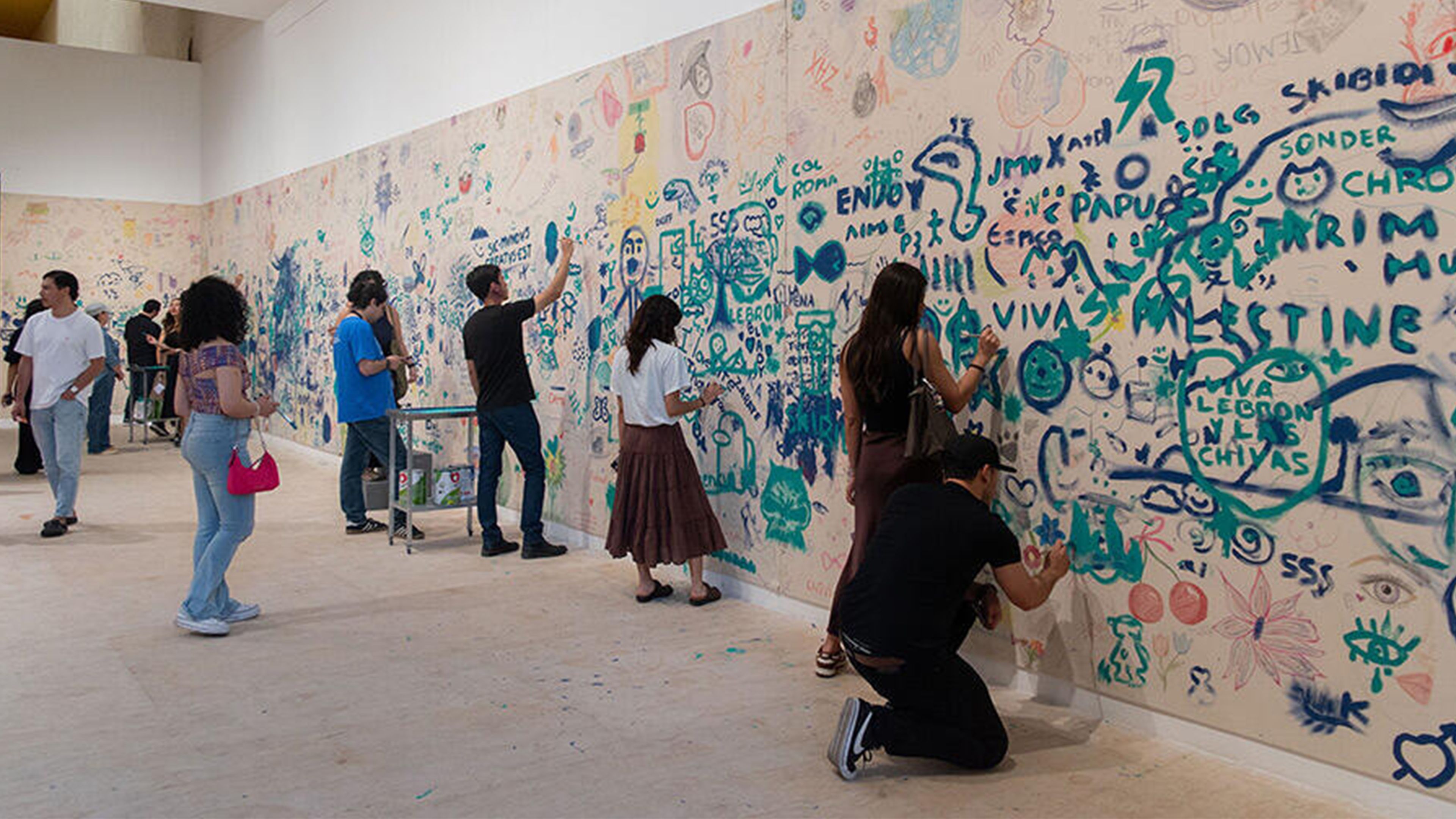
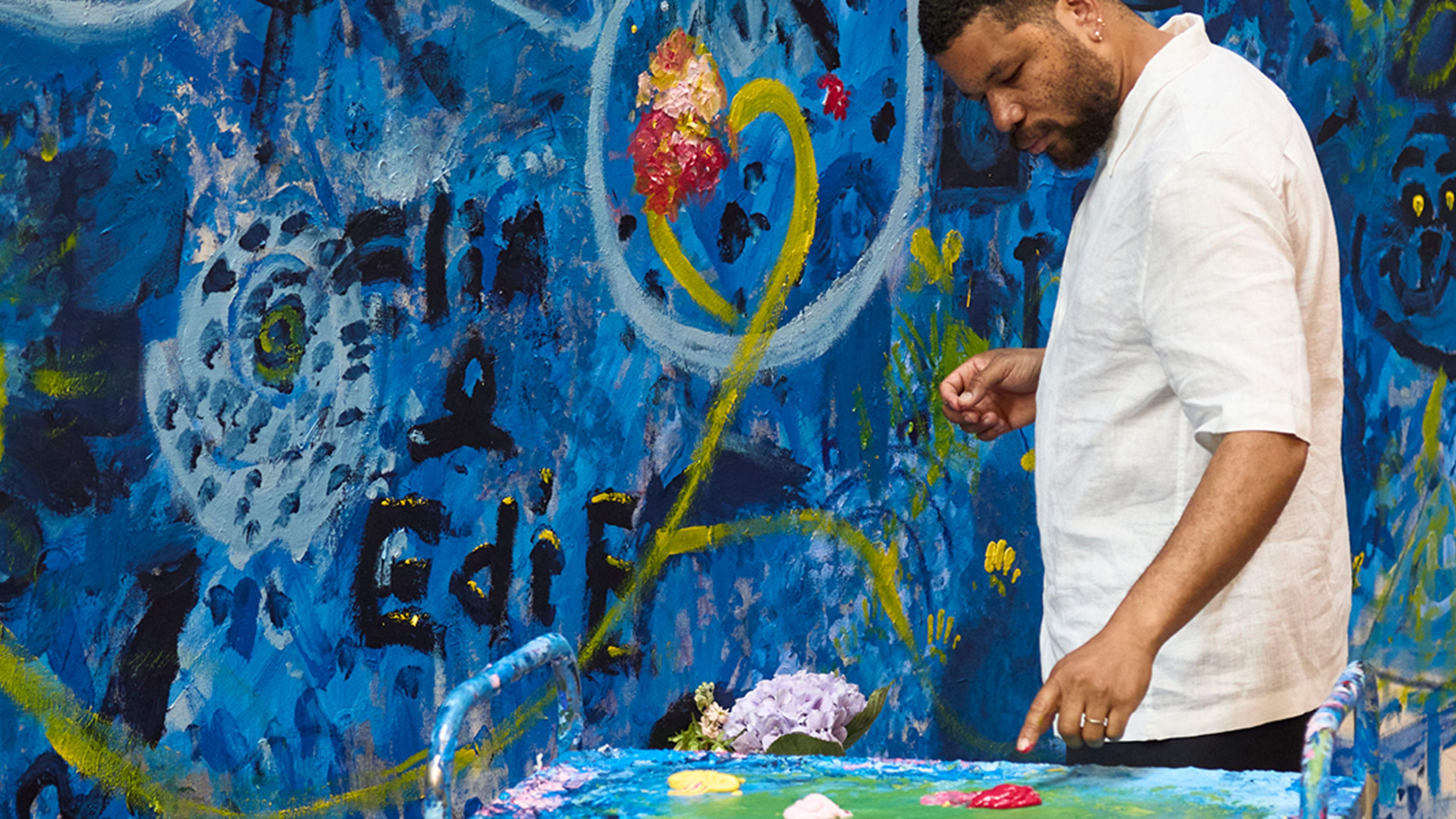
Colombian artist Oscar Murillo is known for paintings, participatory projects, and installations that turn exchange into form. His new solo exhibition, Collective Osmosis, spans two venues in Potsdam, marking the first collaboration between DAS MINSK and Museum Barberini. Bringing together recent and earlier works, it reflects on visibility, landscape, and the political charge of making art across borders.
For Murillo, mark-making is both communication and freedom, whether on his own canvases or through public actions that invite others to leave a trace. A dialogue with Claude Monet introduces another register, with the Impressionist’s cataracts and altered vision offering a lens through which Murillo considers social blind spots and the possibility of new perception. We spoke before the opening about permeability, shared values, and how he connects the museum to the city, and Germany to the world beyond.
How did the exhibition title come about?
I’ve been going to Germany since I was 19. I’m 40 now, and I still remember my first trip to Berlin. Back then, it was a city where you could eat for free, squat, and believe in a kind of utopia for young artists and outsiders alike. I kept returning for exhibitions and made friends there. Collective Osmosis comes from a desire for this project not to remain a purely institutional show, but to use formality to ask how we might still dream and hope in these difficult times. It expresses the need for more oxygen and room for optimism.
Read more at EE72.