Thomas Ruff: In Series, 1979–2024
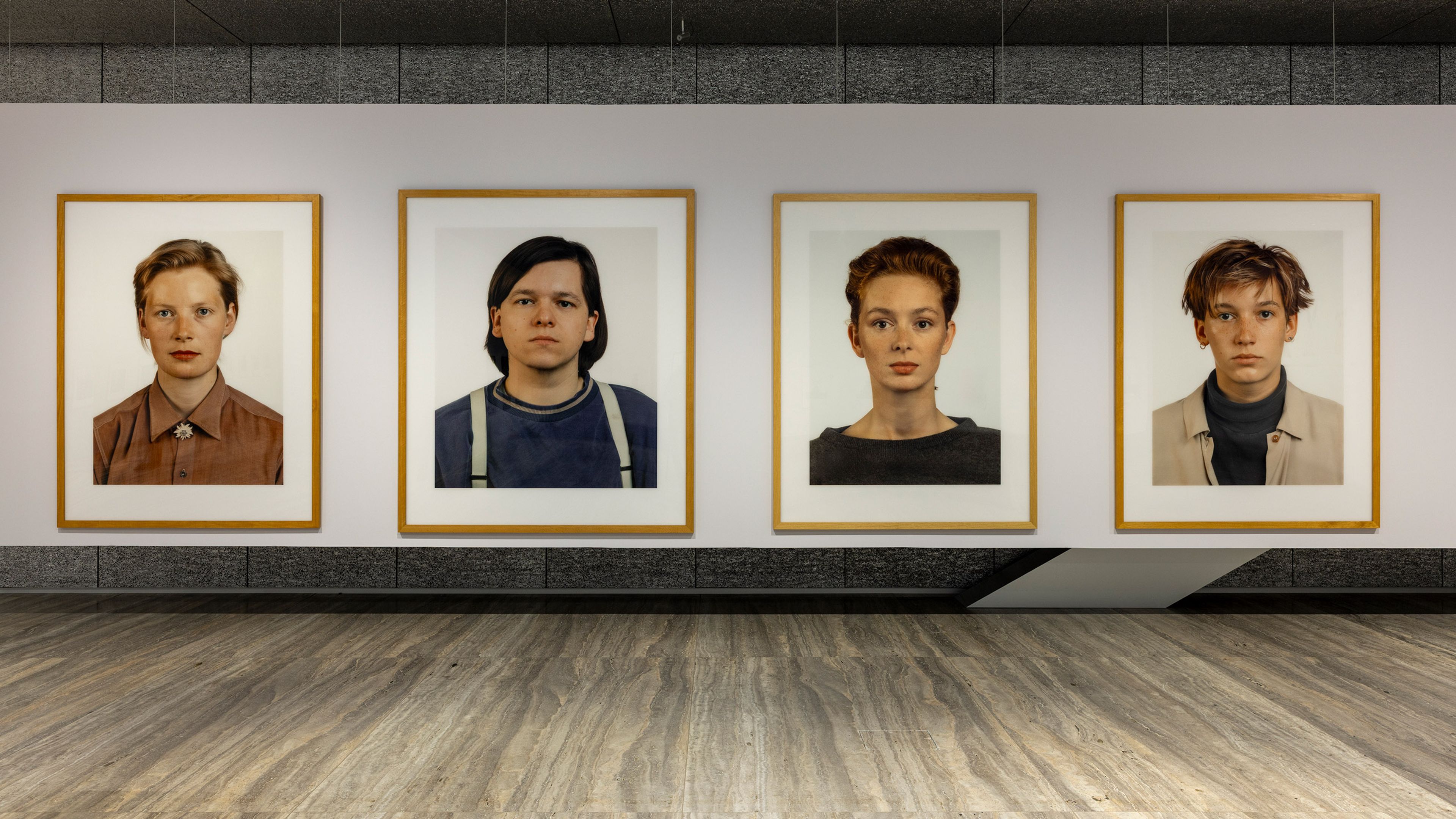
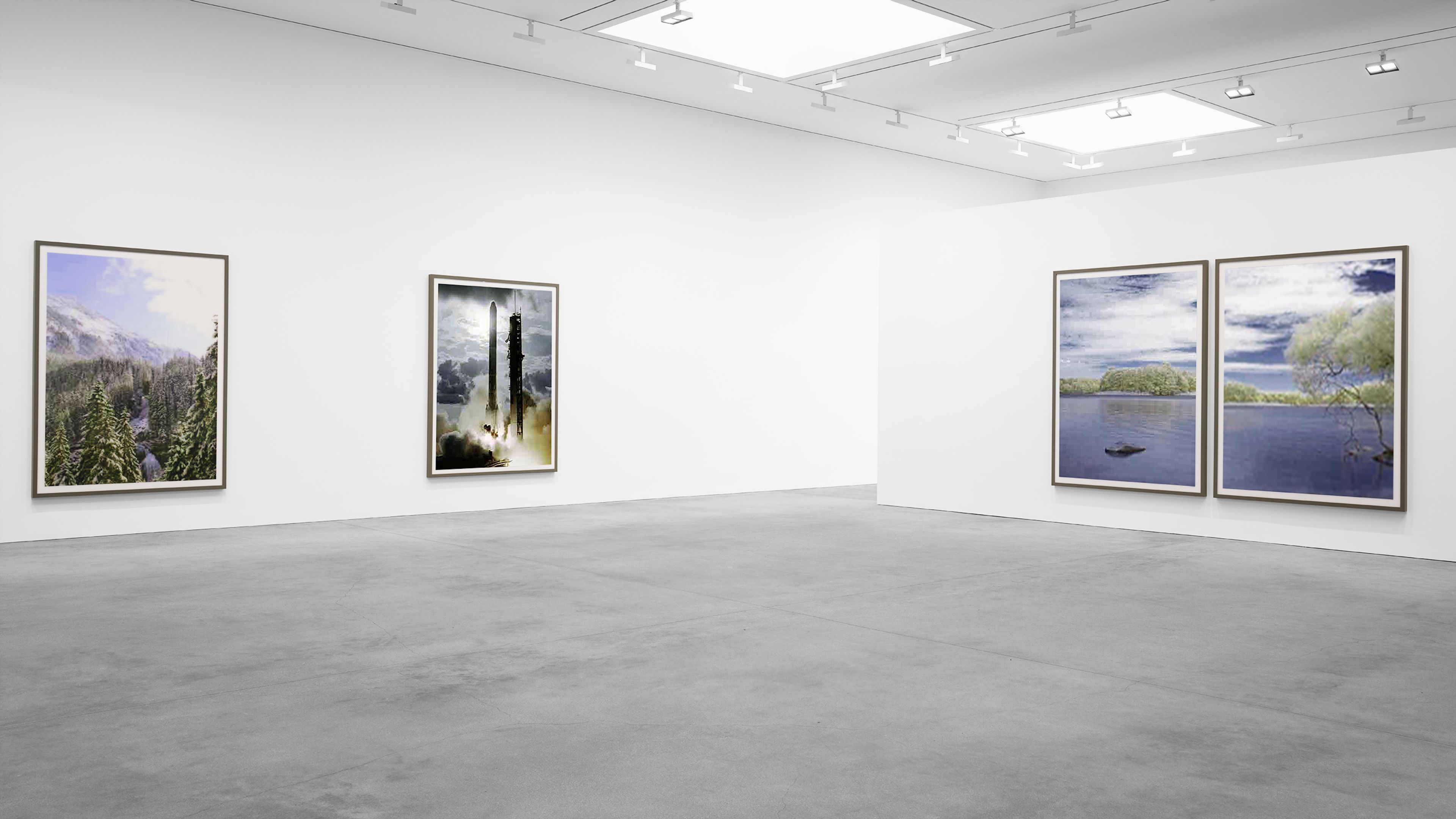
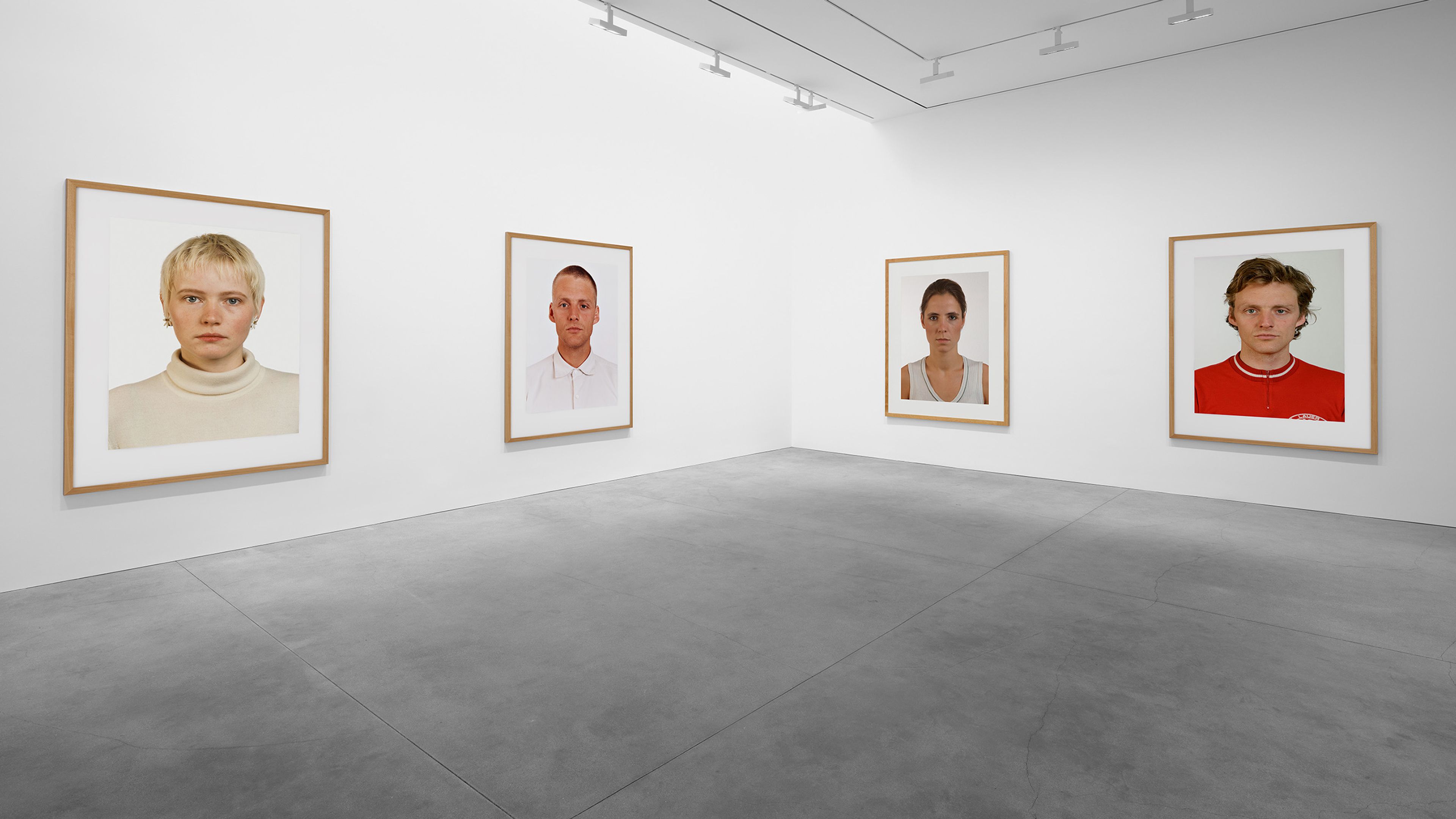
Installation view, Thomas Ruff: In Series, 1979–2024, David Zwirner, Los Angeles, 2026

Now Open

November 13, 2026—February 6, 2027

Opening Reception

Friday, November 13, 6–8 PM

Location

Los Angeles

606 N Western Avenue

Los Angeles, CA 90004

One of the most influential photographers working today, Thomas Ruff has throughout his career asserted that the photographic method used to create an image is for him a means to an end. This exhibition surveys the artist’s production spanning over four decades, highlighting the multiplicity of procedures he deploys. Providing an overview of Ruff’s most important bodies of work and his in-depth examination of a variety of genres, the photographs on view trace his arc from the analogue to the digital, both underscoring his incorporation of new technologies as they emerge and simultaneous reliance on the old.

As part of Paris Photo 2026’s celebration of the photography medium’s bicentennial, the fair will feature a prominent installation of work by Thomas Ruff in collaboration with five representing galleries: David Zwirner, Konrad Fischer, MAI 36, Lia Rumma, and Sprüth Magers. Works by the artist will also be shown concurrently at The Broad, Los Angeles, in the group presentation Has the myth been shattered, which will be on view from November 21, 2026, to April 4, 2027.

Explore

“There’s not one way of making photographs. There are thousands of possibilities…. I am just interested in the result and if the result is worth discussing.”

—Thomas Ruff
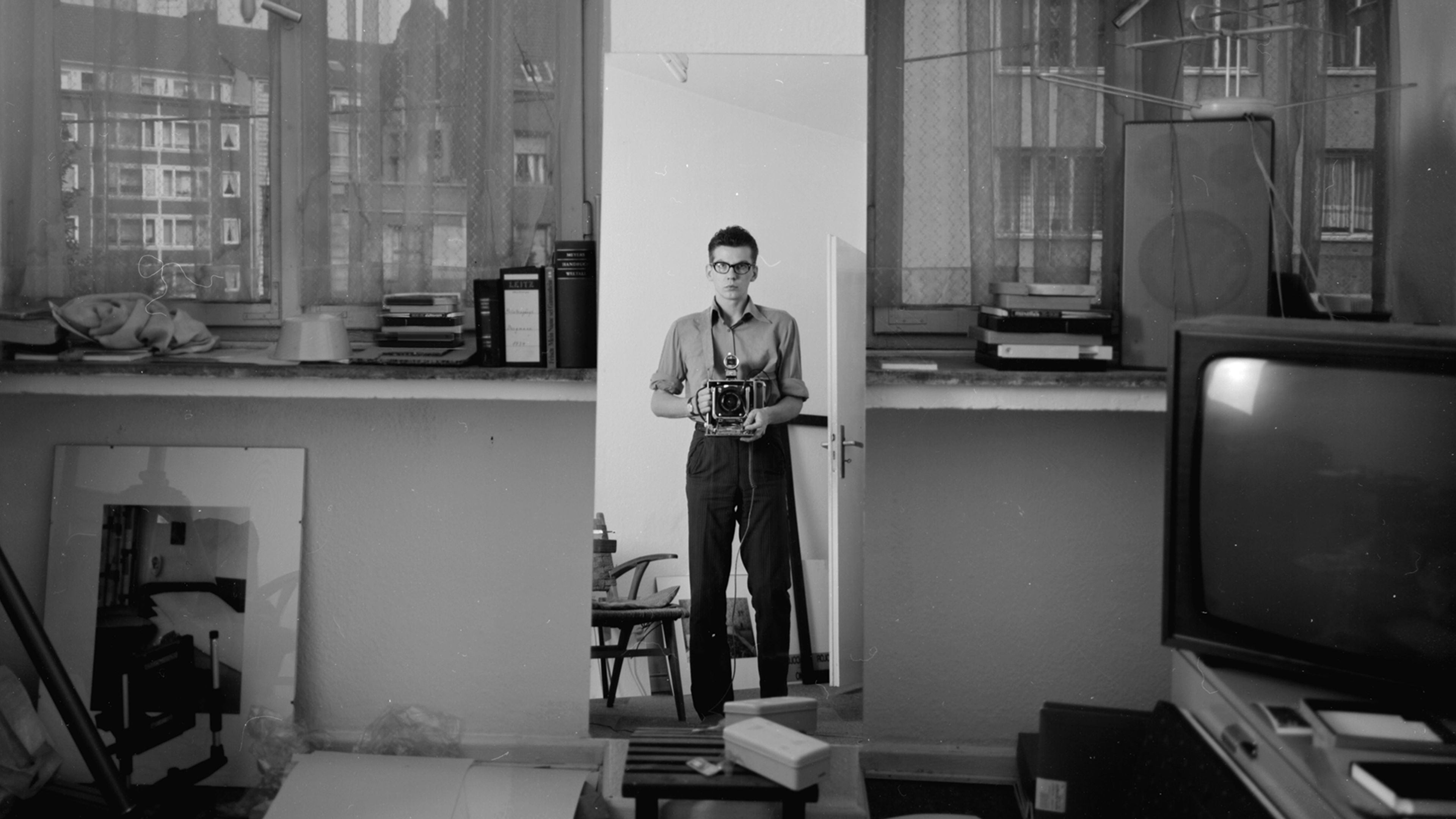
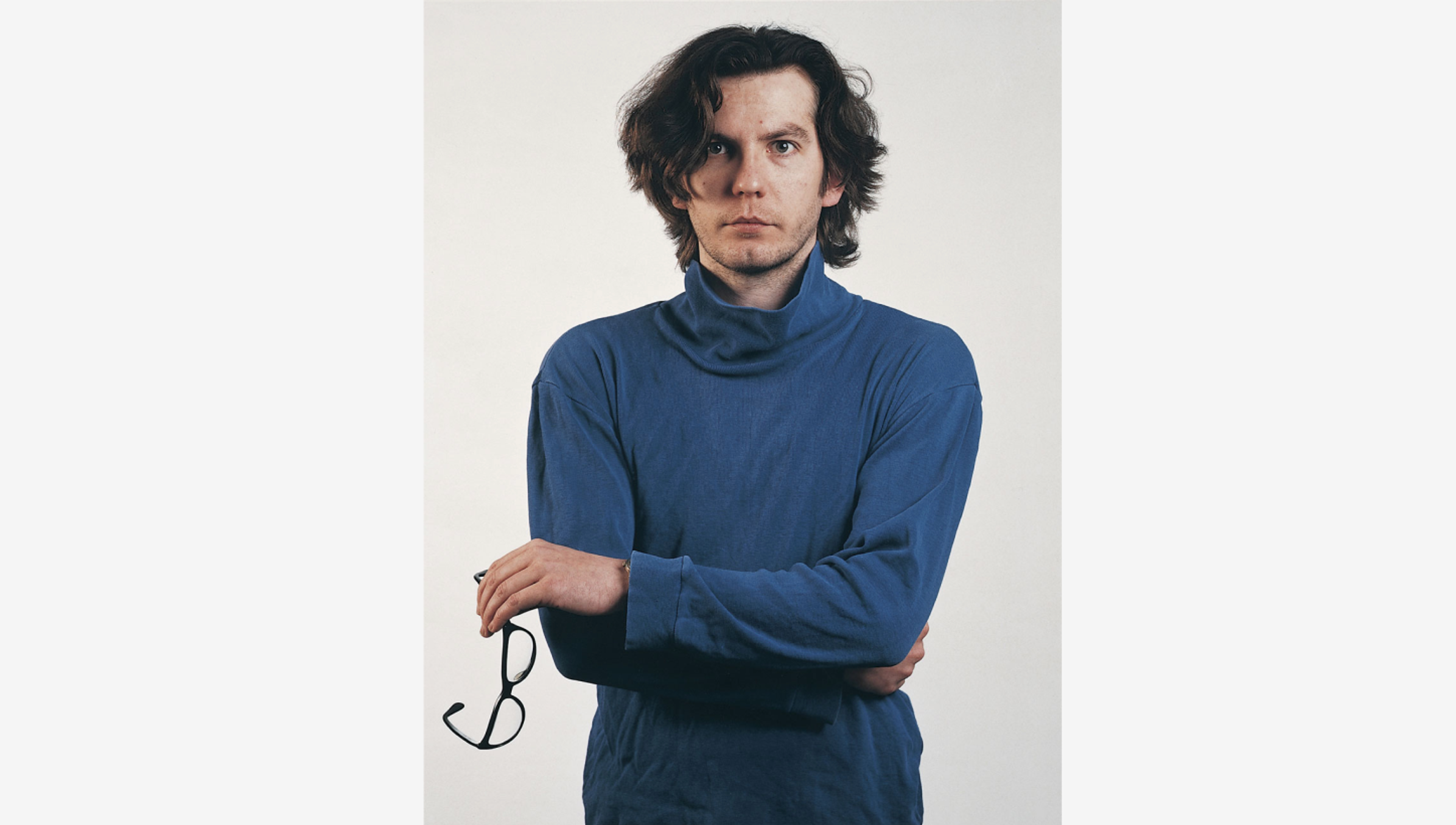
Thomas Ruff, Self-Portrait, 1980 (detail)
Explore All Works
Ruff rose to international prominence in the late 1980s as a member of the Düsseldorf School, a group of young photographers who had studied under the renowned Bernd and Hilla Becher. Ruff in particular made a radical break with the style of his teachers, establishing a distinct approach to conceptual photography through a variety of strategies, including the use of color, the manipulation of source imagery, and the enlargement of photographic prints to the scale of monumental painting.

“In his work lies a core interest,” the curator, critic, and art historian Okwui Enwezor observed, “to reflect a rigorous or exacting aesthetic analysis of the different species and domains of images, to explore the public and private roles, as well as the contexts, of image reception and production.”

Installation view, Thomas Ruff: In Series, 1979–2024, David Zwirner, Los Angeles, 2026
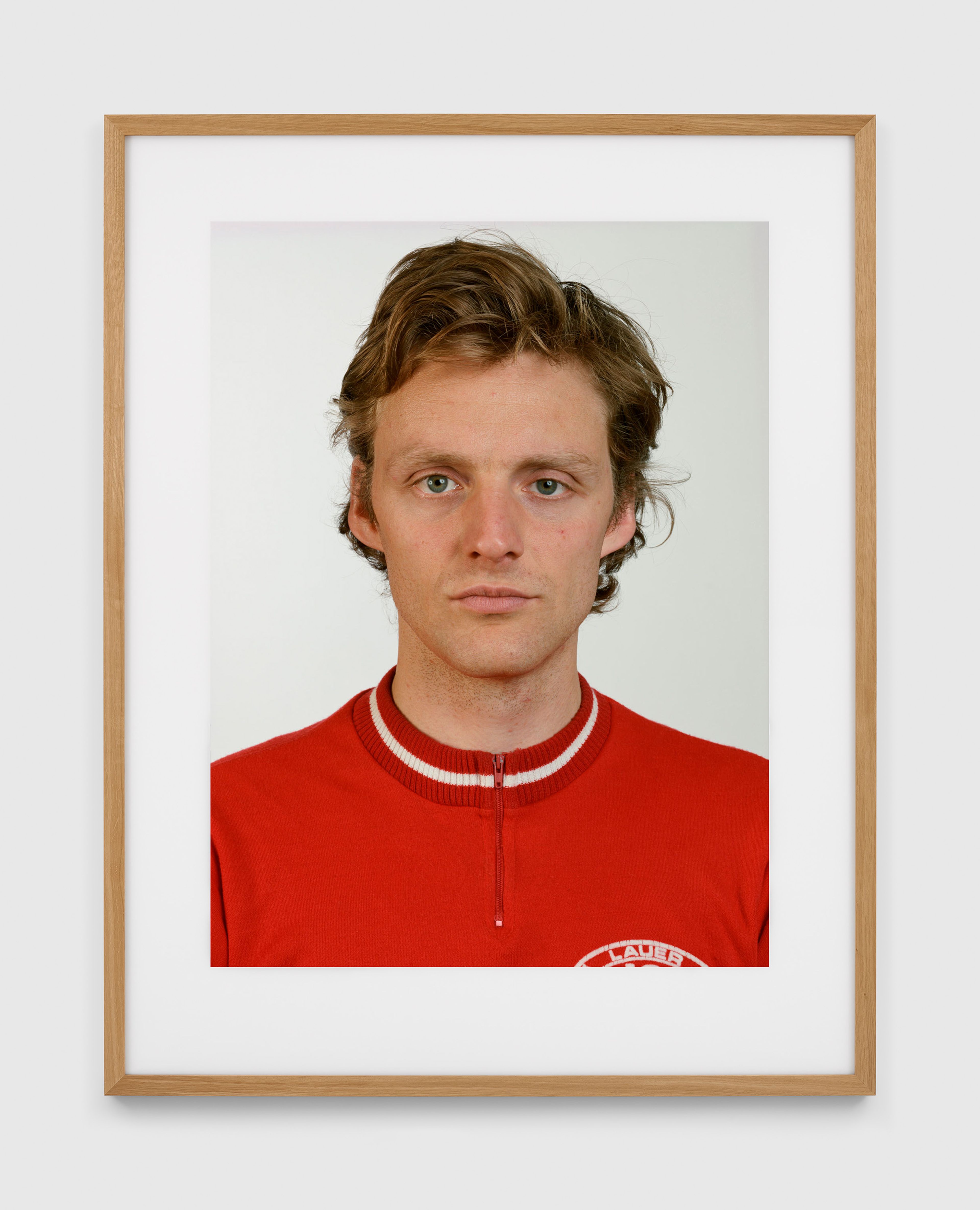
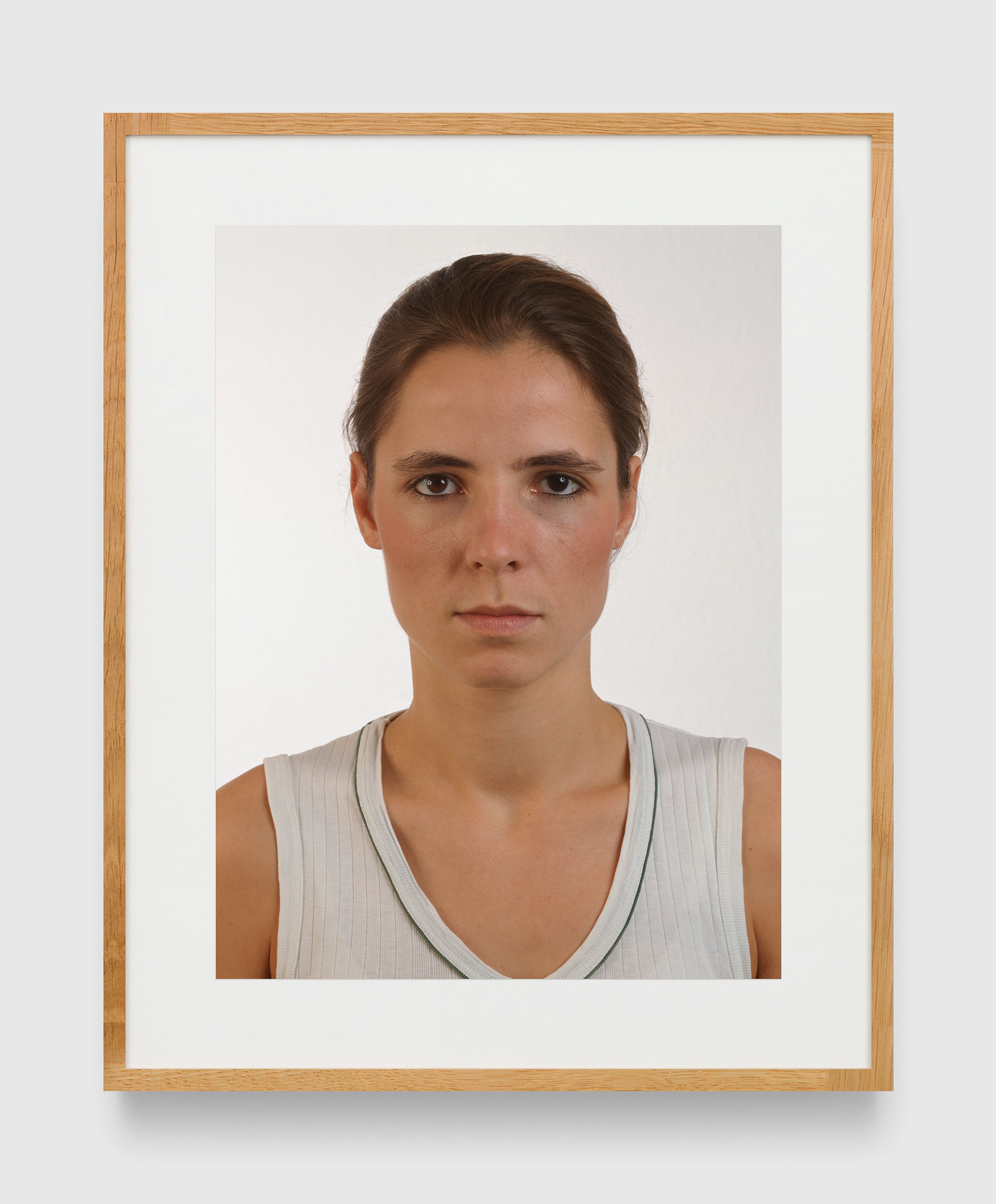
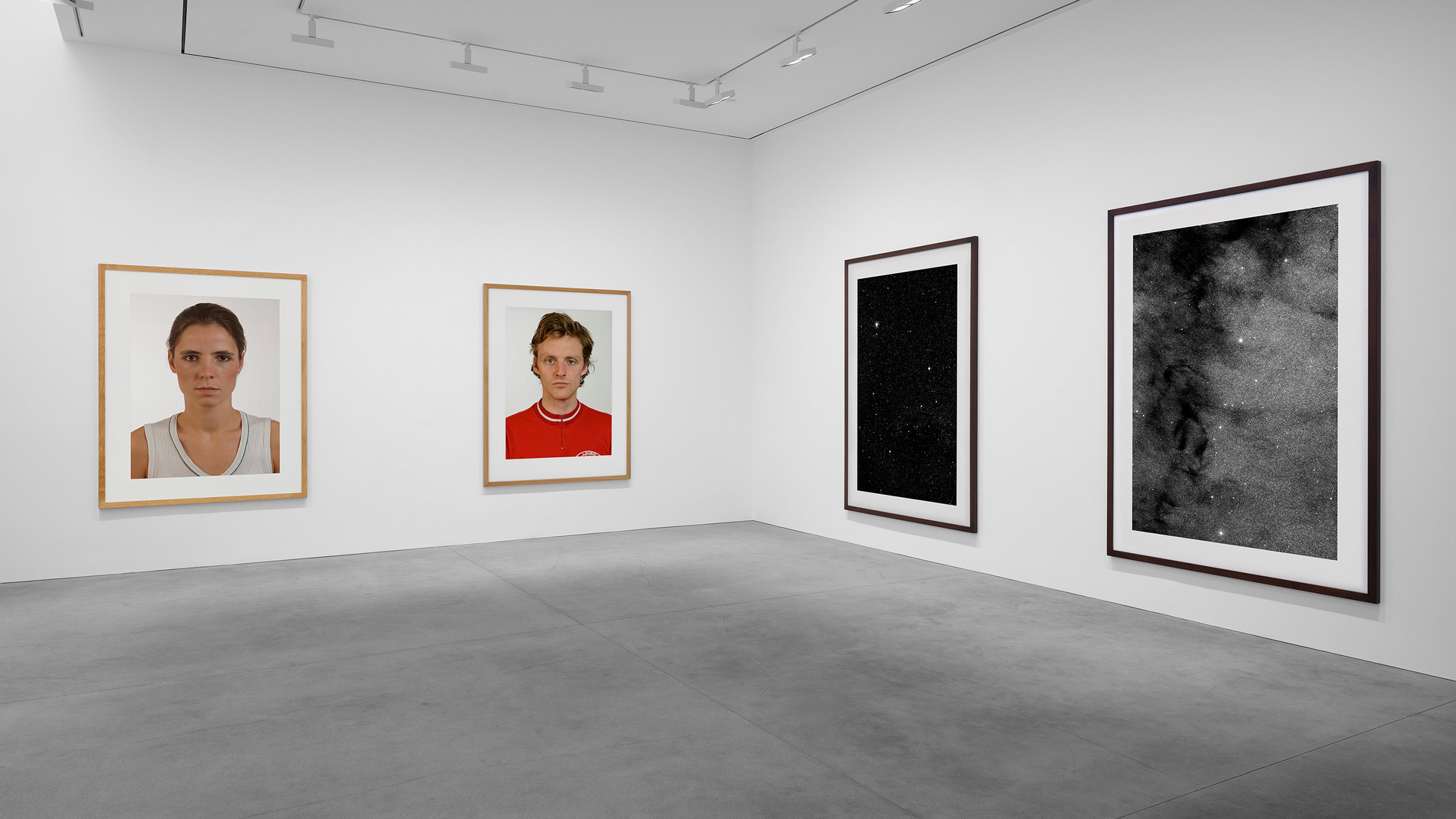
In Series, 1979–2024 opens with a group of Ruff’s breakthrough Porträts (Portraits) from the 1980s, which the artist began while he was still a student at the Kunstakademie Düsseldorf. The large-scale images of his friends, fellow students, and colleagues sought to capture his subjects—always expressionless, set against a neutral background and often looking directly at the viewer—in a neutral, unsentimental manner that defies traditional notions of portraiture.

Thomas Ruff, Porträt (T. Ruff), 1987

“I developed the idea of trying to make the most minimalist portrait, to really bring the portrait back to point zero, erasing everything—conventions and tradition—and showing only the face.”

—Thomas Ruff

Installation view, Typologien: Photography in 20th-Century Germany, Fondazione Prada, Milan, 2025

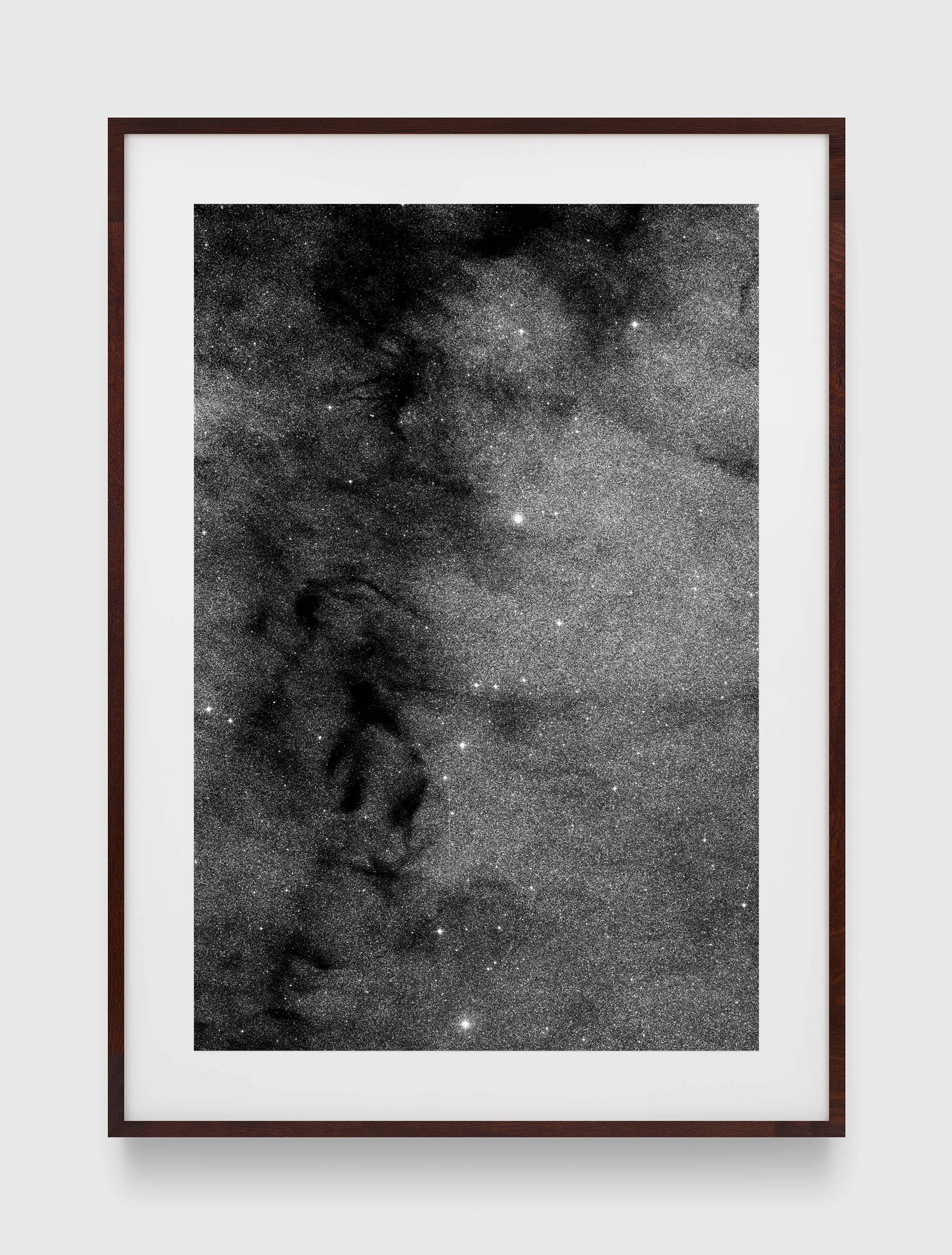
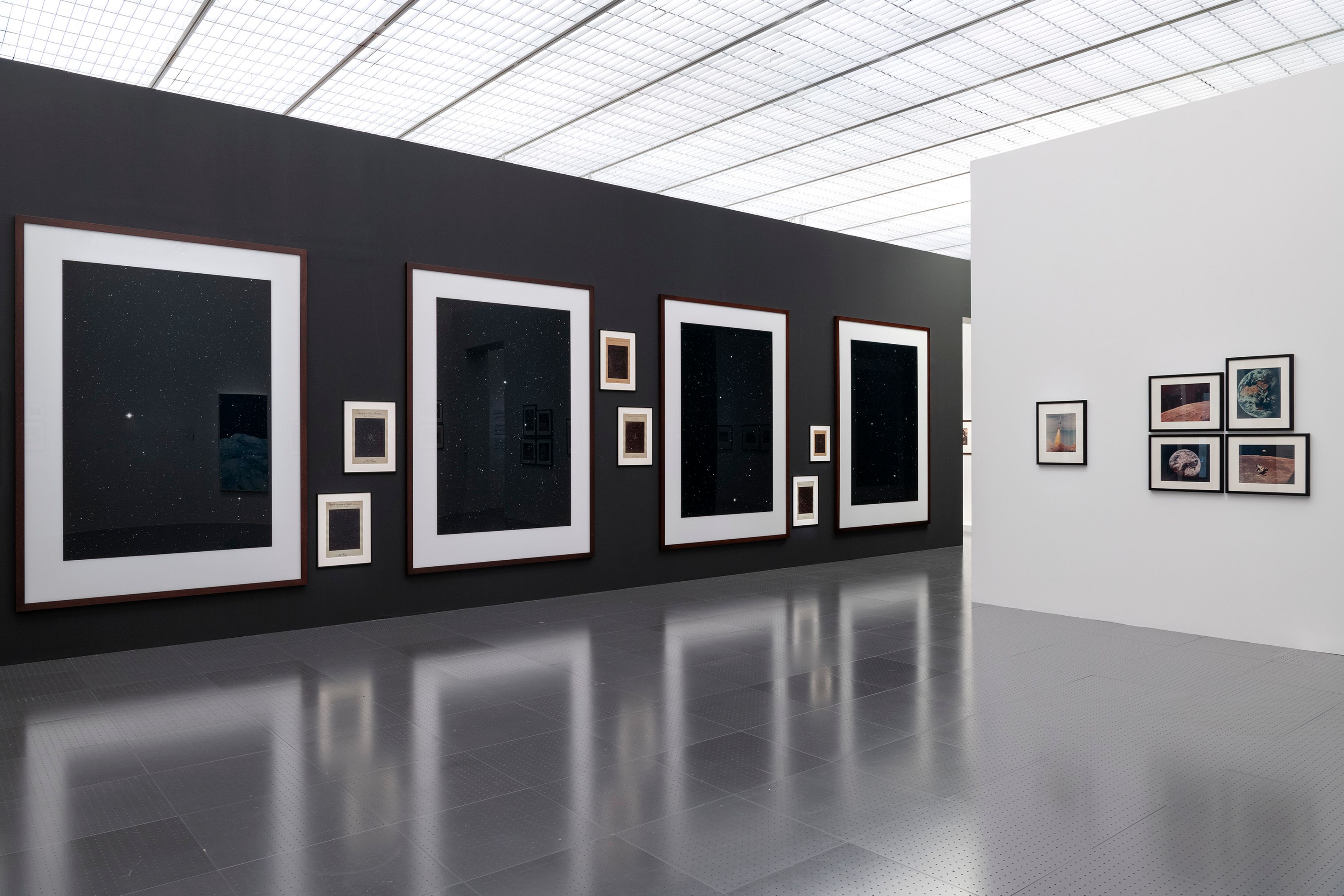
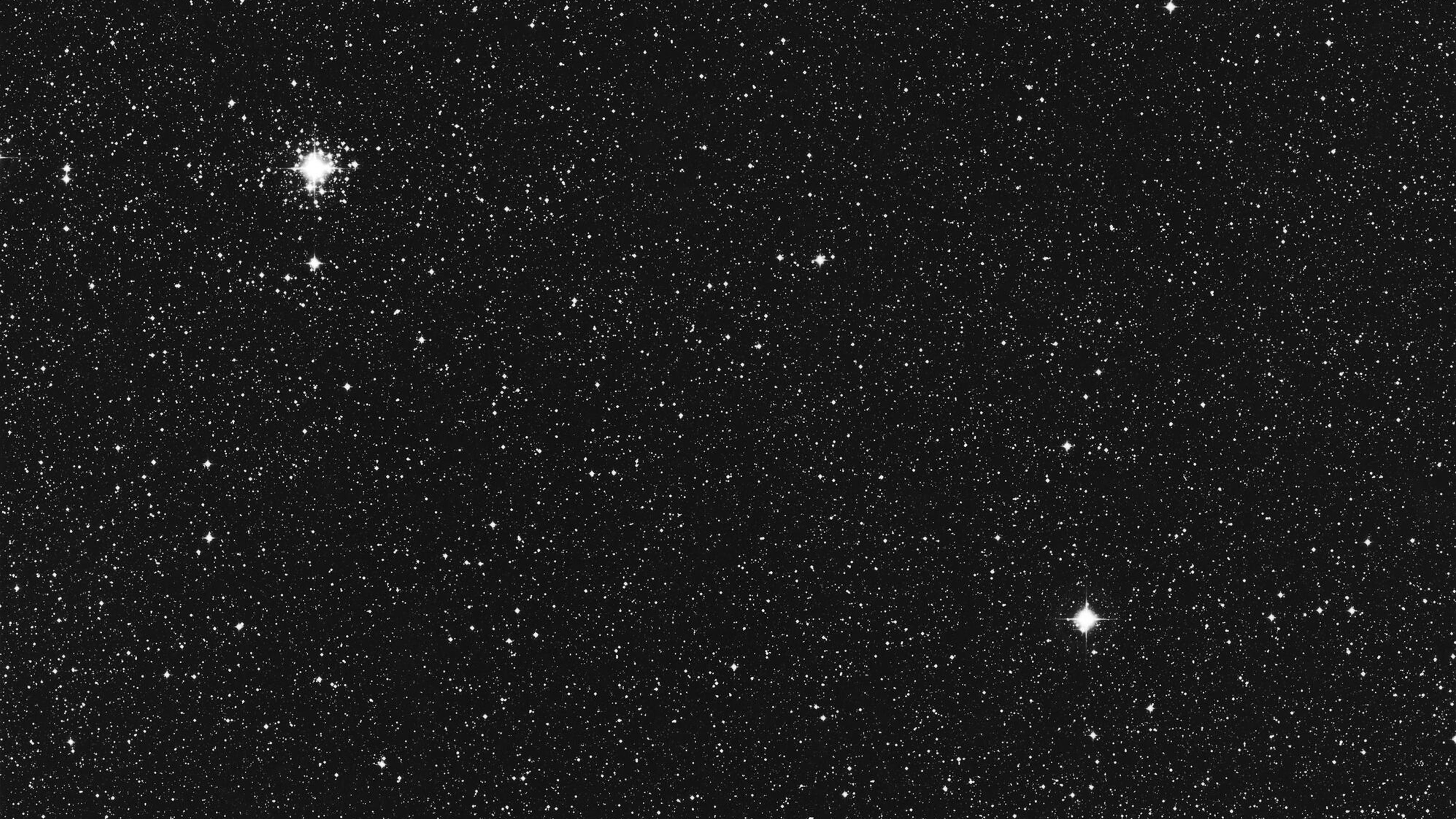
Ruff has long been interested in astronomy. Frustrated by his inability to create images of the night sky without specialized equipment, he purchased a collection of negatives from the European Southern Observatory (an international research center in Chile) that were taken between 1974 and 1987 as part of a mapping project. He used these to print the large-scale, nearly abstract starscapes that make up his Sterne (Stars) series (1989–1992).

Installation view, Seeing time in colour (Voir le temps en couleurs), Centre Pompidou Metz, 2024

“His approach is neither the romantic’s nor the stargazer’s; rather, he looks at the density of the stars—at the distribution, in other words, of tone and pattern. The sky becomes a place, a plane, of esthetic decision-making, with the factor under consideration being the relationship between the noncolors black and white. Perhaps more simply, the sky becomes a ground to be sampled.”

—Annelie Pohlen, art historian

Thomas Ruff, 17h 14m/-25°, 1990 (detail)

Ruff’s prescient perspectives on photography’s shift towards the digital are apparent in nudes (1999–), Substrat (Substratum, 2001–), and jpegs (2004–), three key bodies of work that experiment with the manipulation of early digital formats while continuing to engage various themes and techniques in the artist’s repertoire.

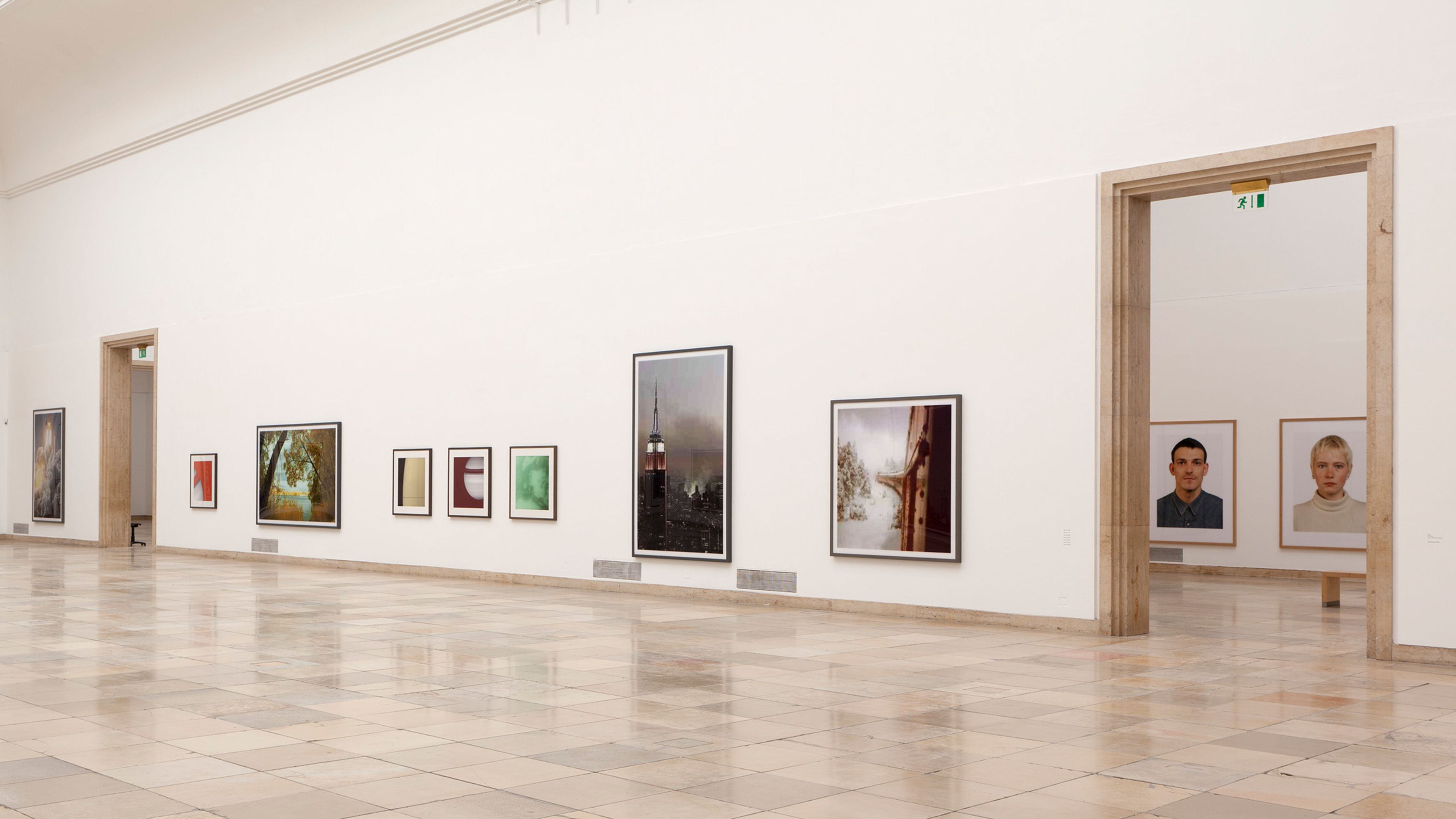
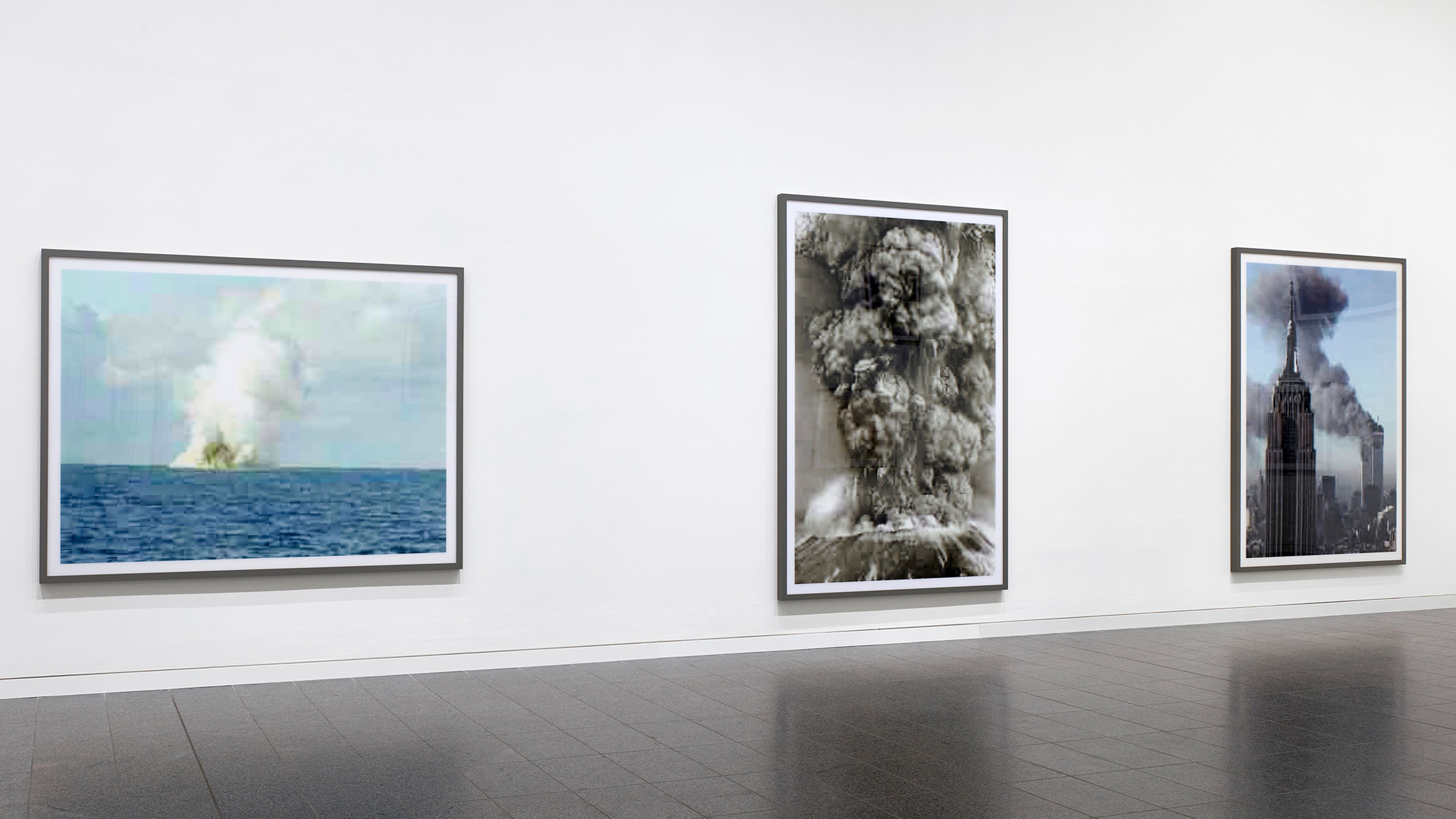
For his ongoing jpegs series, Ruff amasses the virtual equivalent to a collection of newspaper cuttings in jpeg form, creating an archive of digital images based on broad, loosely defined categories, including catastrophes created by humankind or nature, nature conquering human-made creations, and idylls. Often visibly pixelated, appearing painterly and almost abstract, these images explore the ways in which visual information is circulated and received.

Installation view, Thomas Ruff: In Series, 1979–2024, David Zwirner, Los Angeles, 2026
Installation view, Thomas Ruff: In Series, 1979–2024, David Zwirner, Los Angeles, 2026
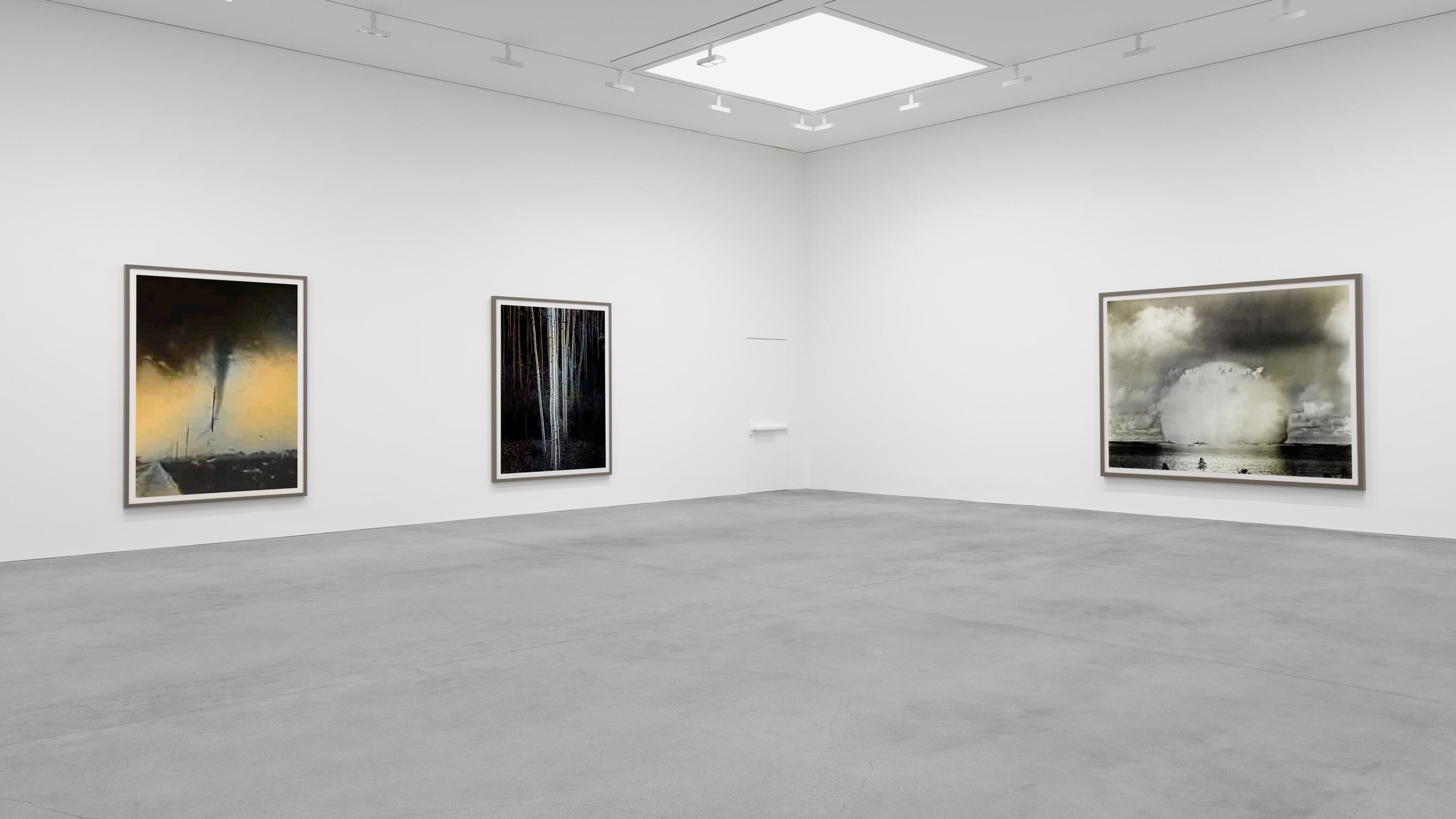
Installation view, Thomas Ruff: In Series, 1979–2024, David Zwirner, Los Angeles, 2026
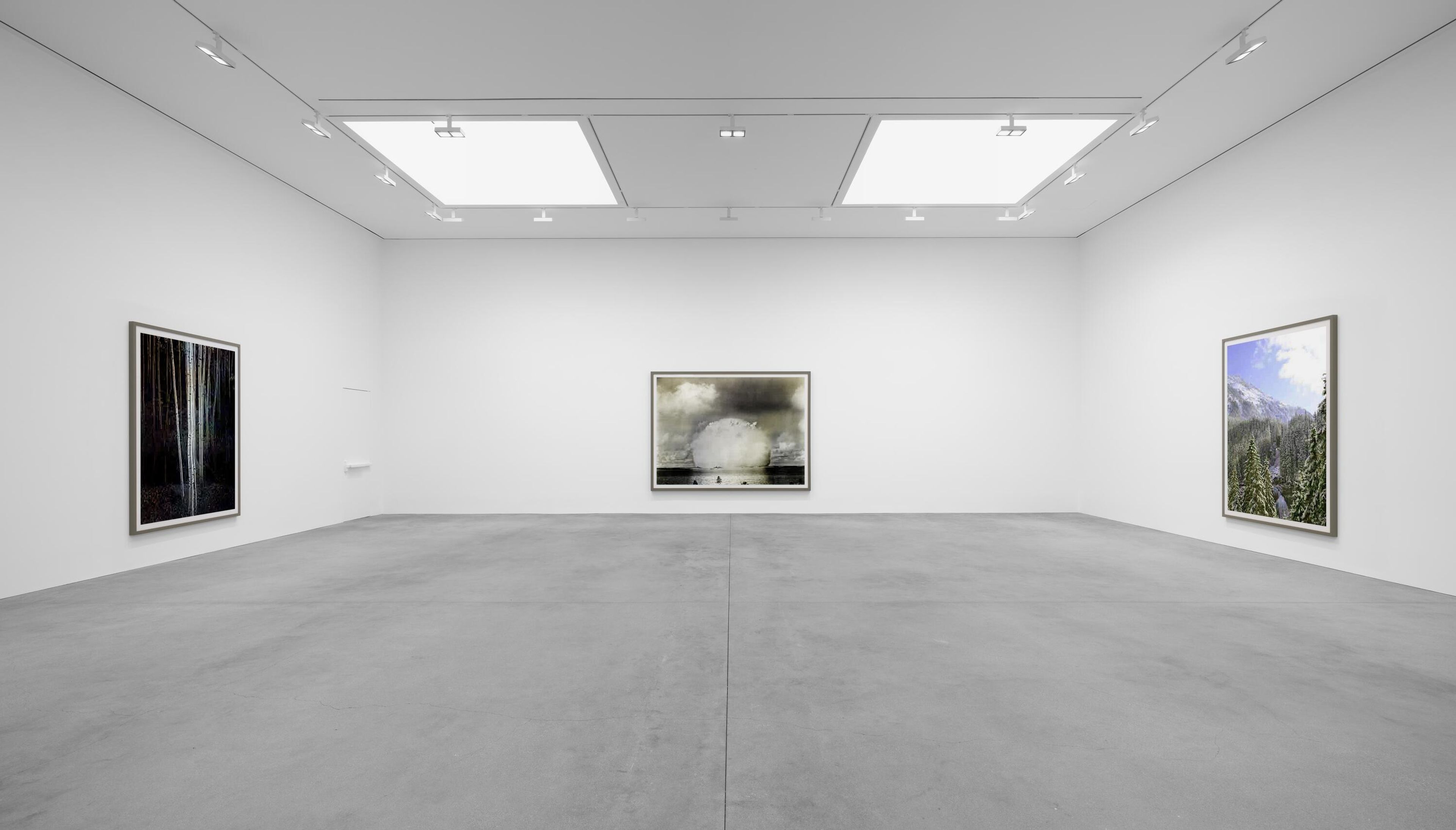
 

“If I see an image that attracts, upsets, or astonishes me—one that stays in my mind for a long time—I begin working. This is the starting point of the research: I try to find out how the image was created and in what context—historical, political, or social—the image belongs.”

—Thomas Ruff
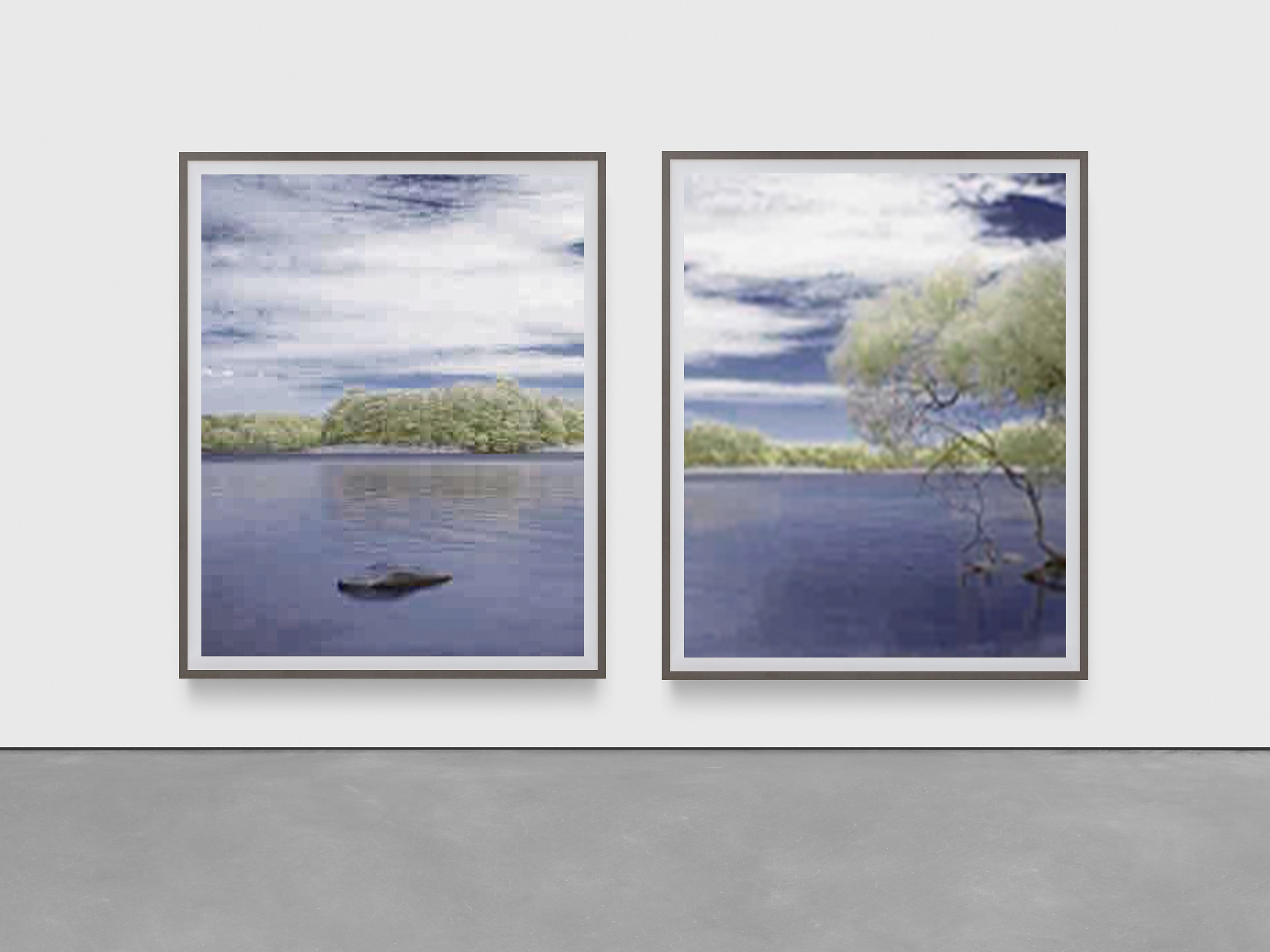
 

Installation view, Thomas Ruff, Haus der Kunst, 2012
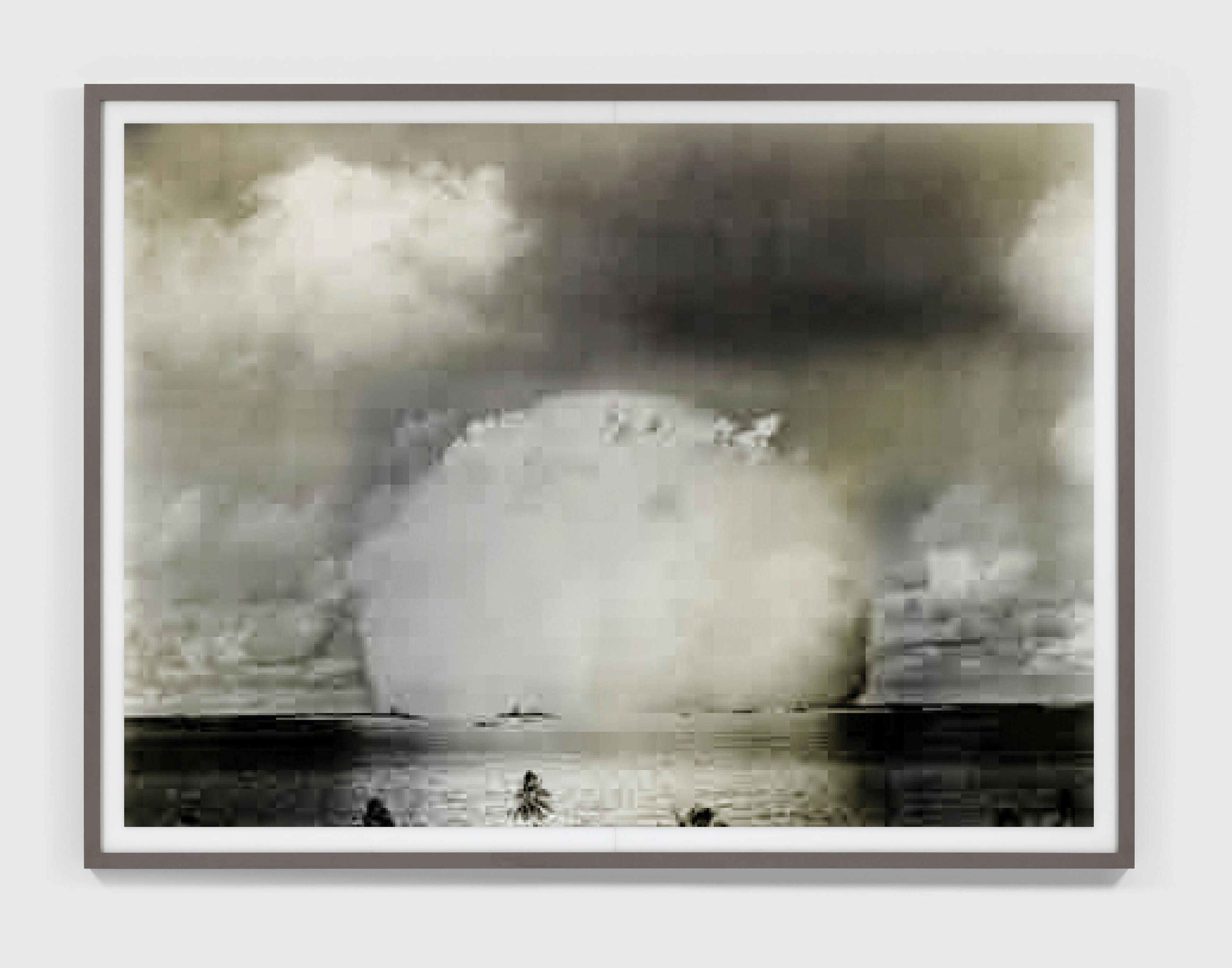
Installation view, Thomas Ruff, Haus der Kunst, 2012
“I didn’t realize immediately, but only after ten or twenty years it became obvious that my work also connects with an ongoing exploration of technology, history, and perception of photography. There’s a kind of addition to the image: What does it mean if you take a photograph? What does it represent? How is it perceived? The subjects that I choose are all still autobiographical.”

—Thomas Ruff
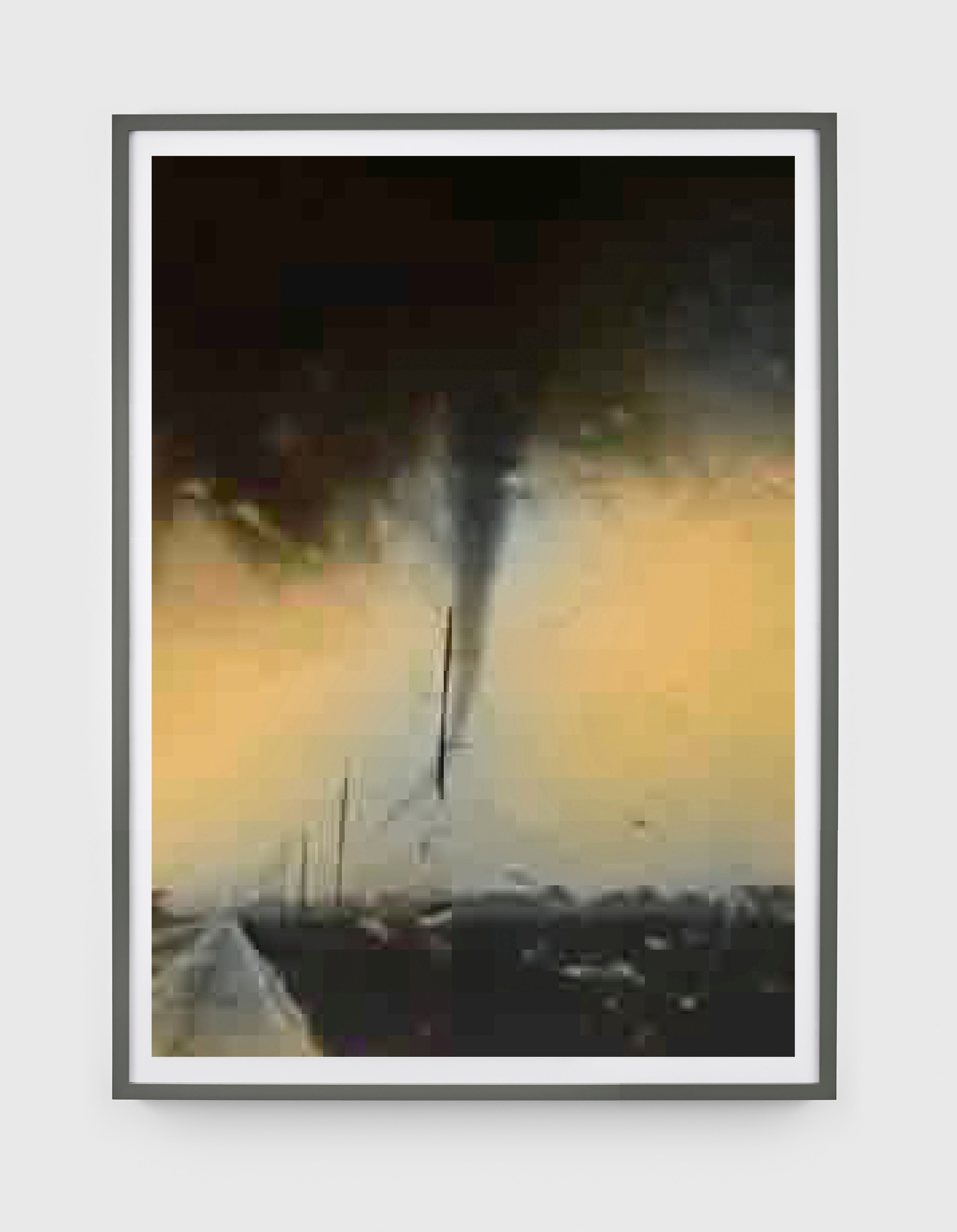
Thomas Ruff, jpeg to01, 2022 (detail)
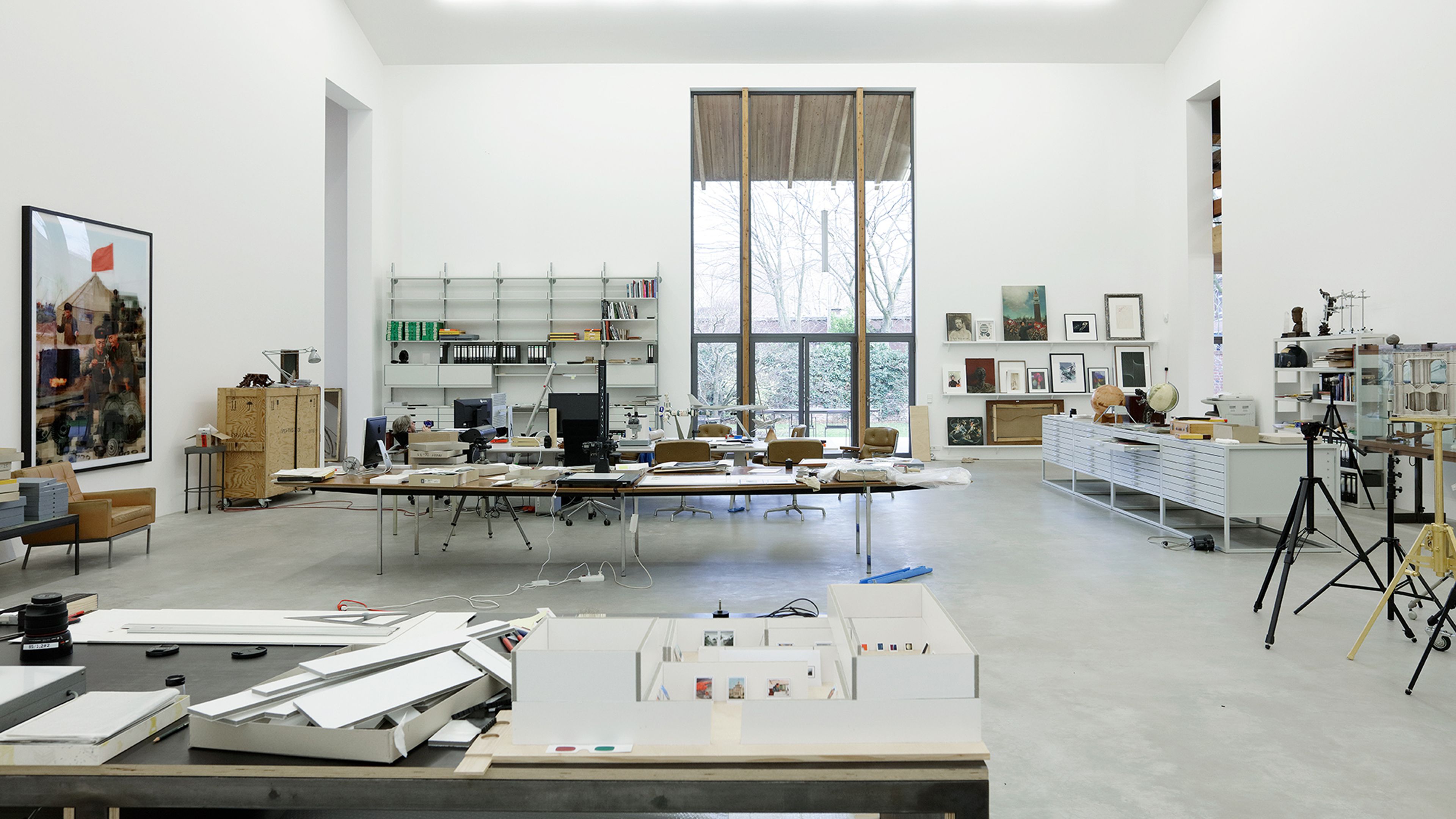
Thomas Ruff’s studio, Düsseldorf

“My images are not images of reality but show a kind of second reality, the image of the image.”

—Thomas Ruff
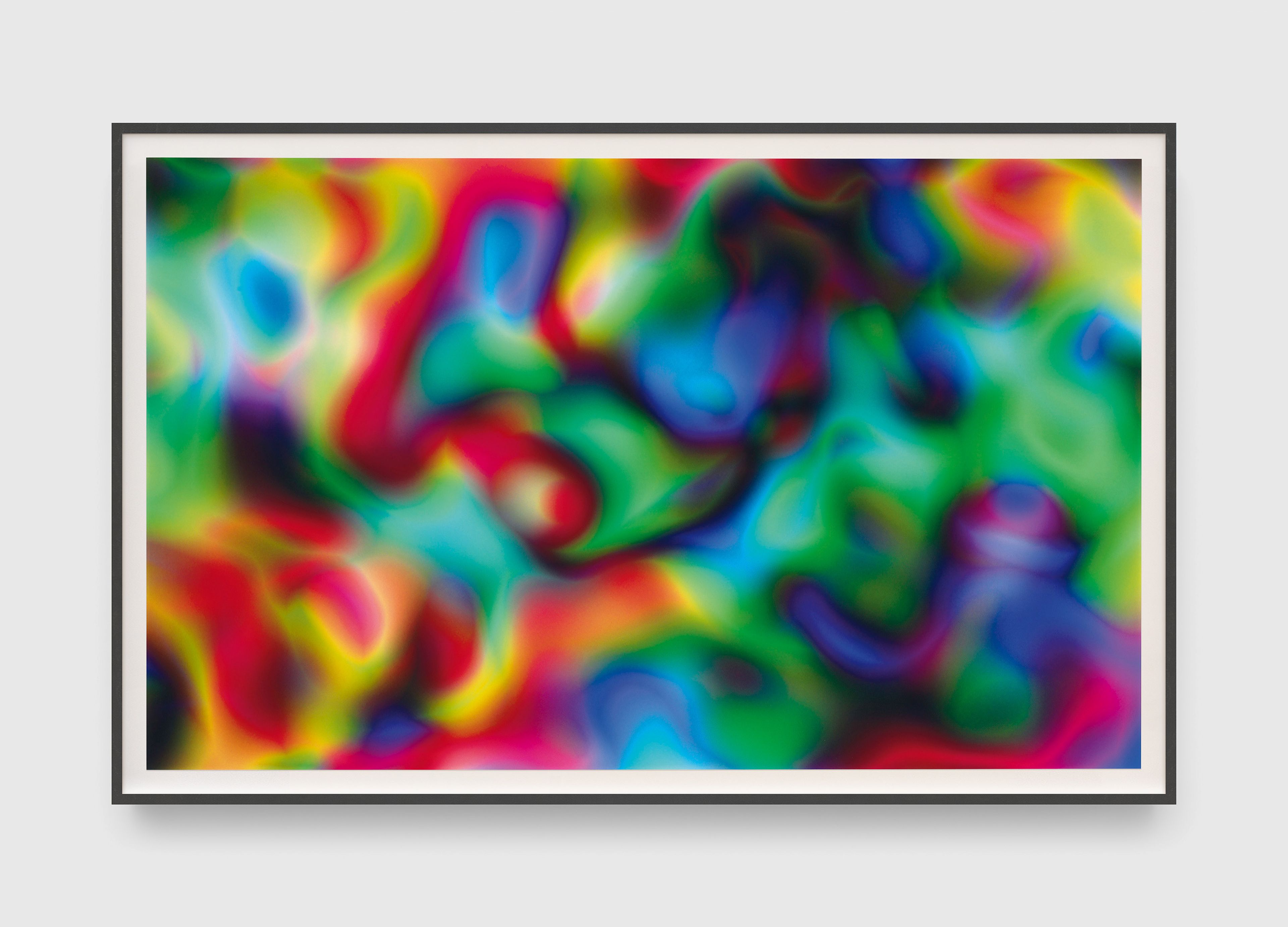
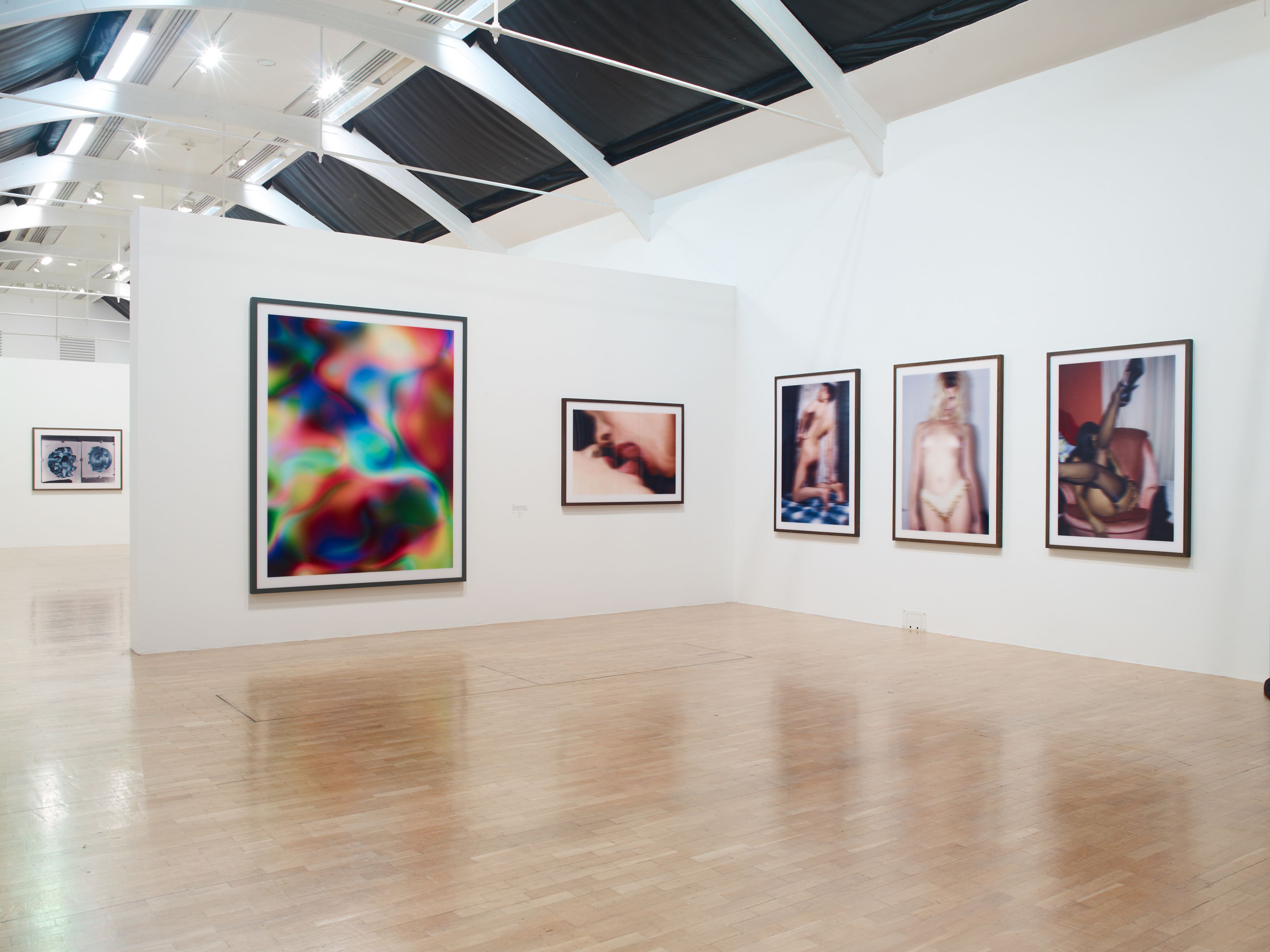
Substrat 24 II (2004) belongs to Ruff’s Substrat series, begun in 2001. Seeking to create a purely abstract photographic image, the artist found that he could do so by blowing up images from Japanese manga cartoons to the point where all identifiable detail is lost, resulting only in psychedelically hued, amorphous forms. This body of work stems from the artist’s interest in virtual imagery that no longer seems to depict reality, but rather functions as a means of transmitting visual information electronically.

Installation view, Thomas Ruff: Photographs 1979 – 2017, Whitechapel Gallery, 2017

“The title Substrat provides the key to understanding the series, and indicates that Ruff is engaged in creating a new genre of abstract photography. In biochemistry, a ‘substrate’ is a molecule modified by an enzyme, while in linguistics, a ‘substratum’ is an element of a language identified as being a relic of an earlier language that is now extinct. The word also refers to geological layers. In short, a substrate is a layered structure that is subject to intervention.”

—Valentina Sonzogni, art historian
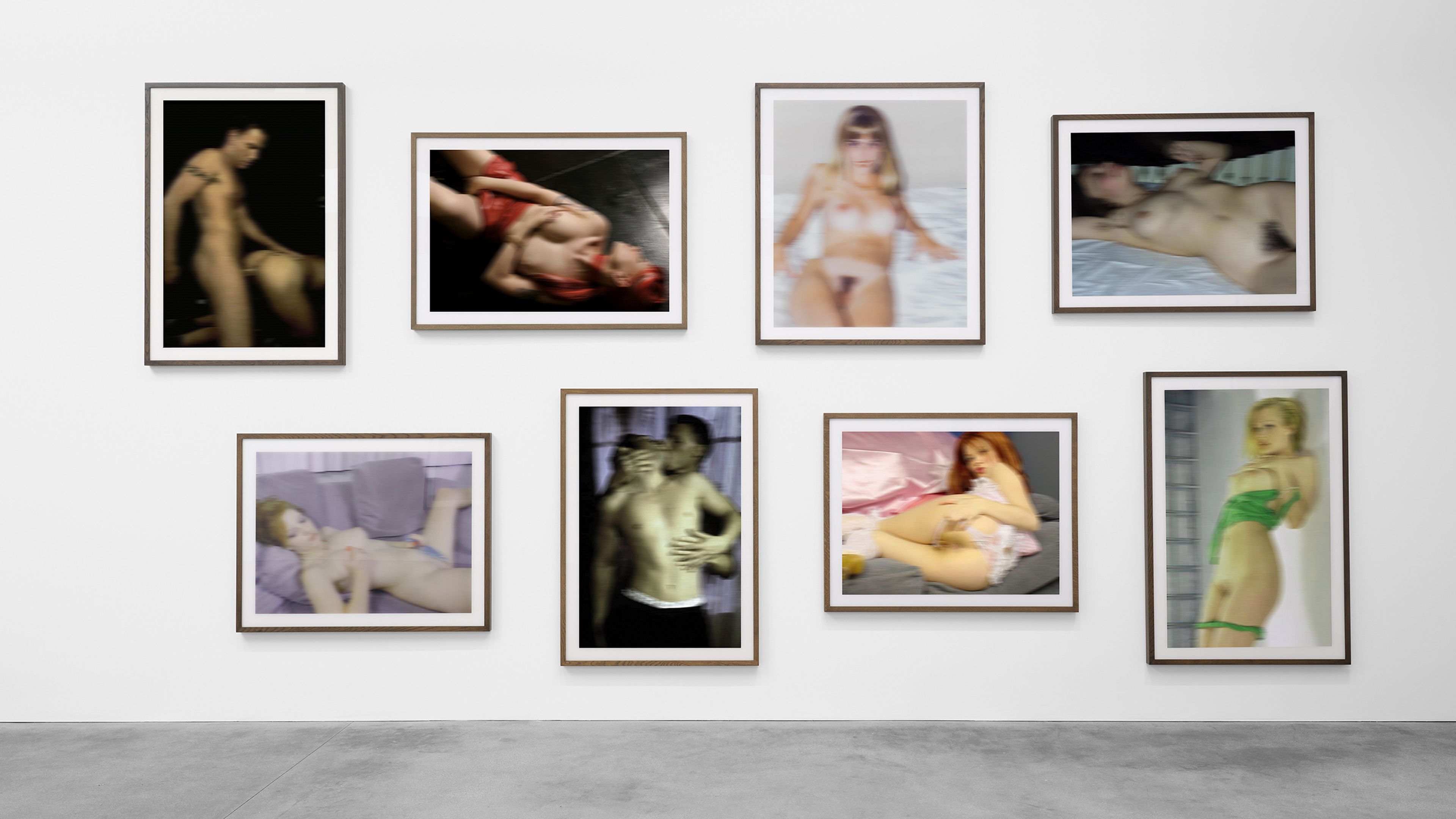
Installation view, Thomas Ruff: In Series, 1979–2024, David Zwirner, Los Angeles, 2026
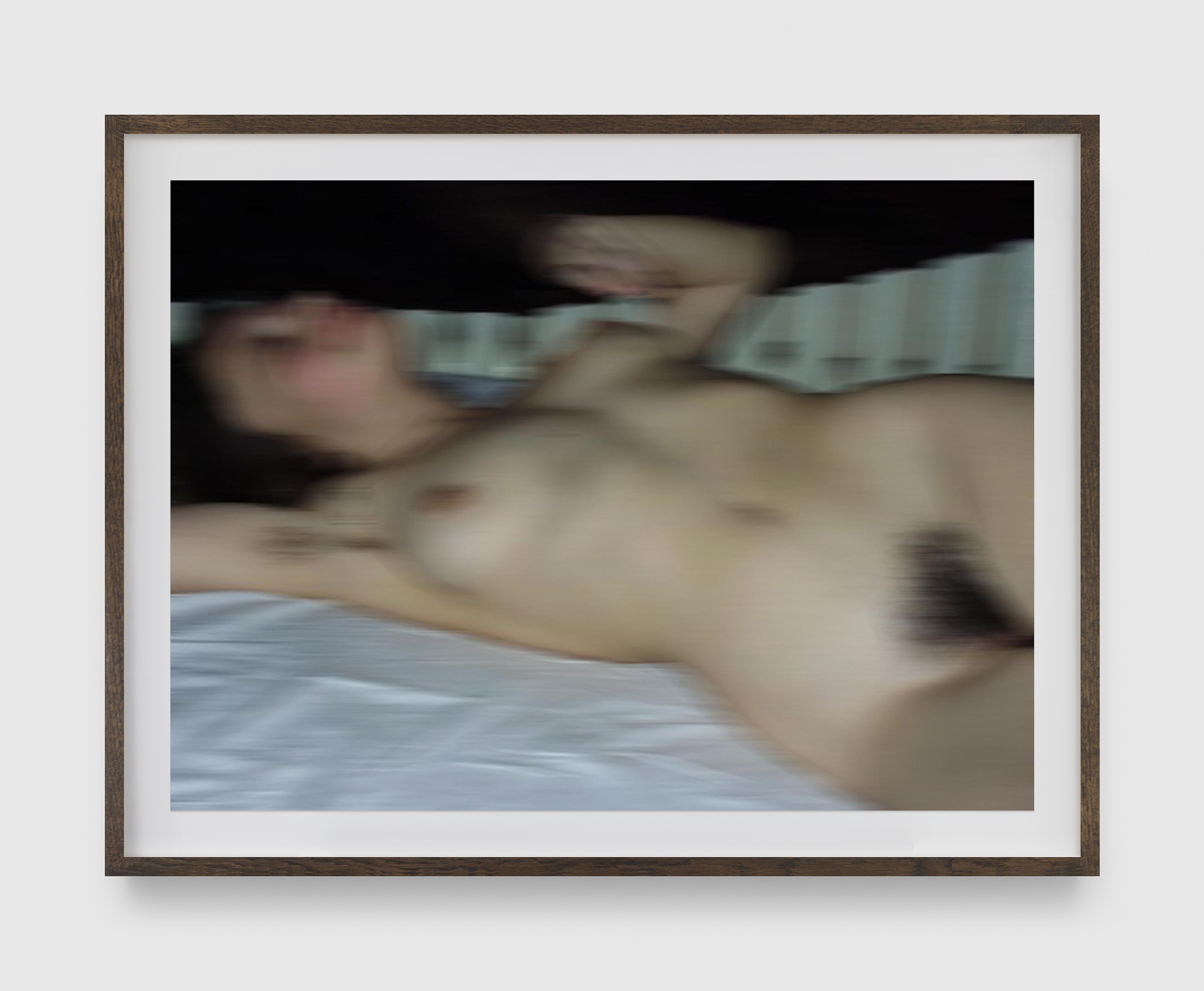
To create his nudes, Ruff downloaded images from online pornographic thumbnail galleries, enlarging and distorting them to varying degrees so that the resulting works are disengaged from their original source. The artist’s images literally and figuratively blur the boundaries between pornography, formalist nude photography, and the art-historical genre of the nude.

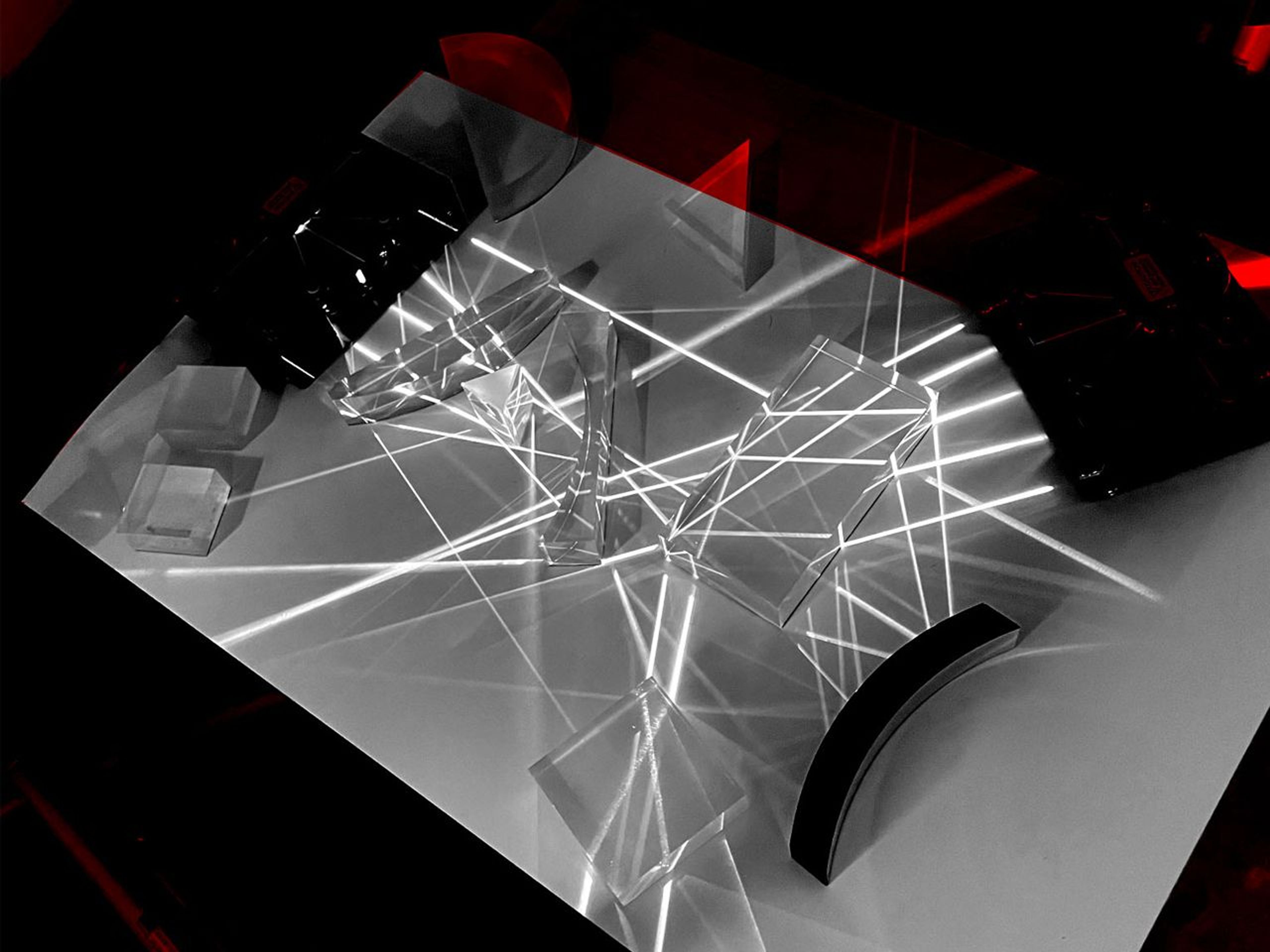
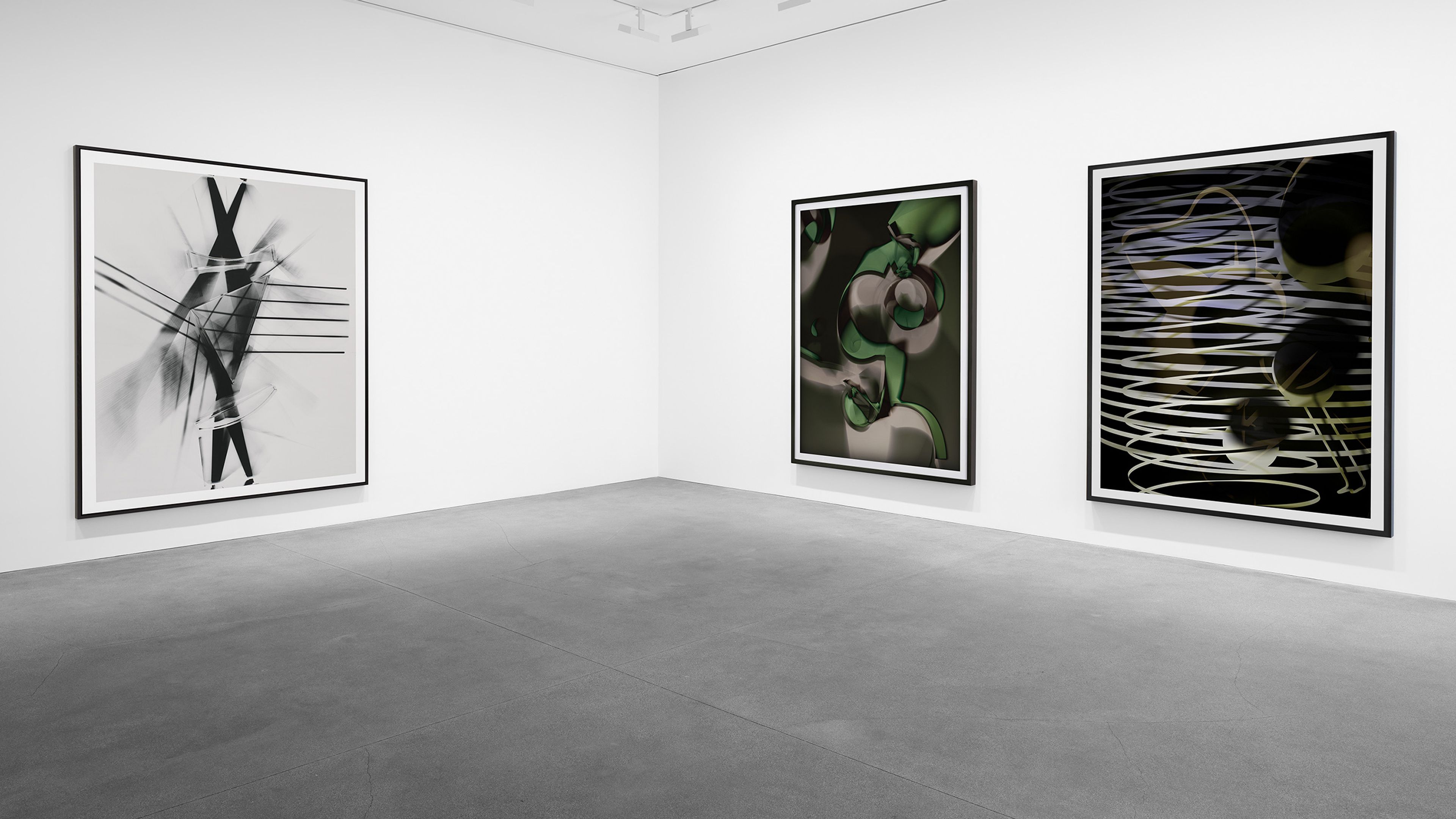
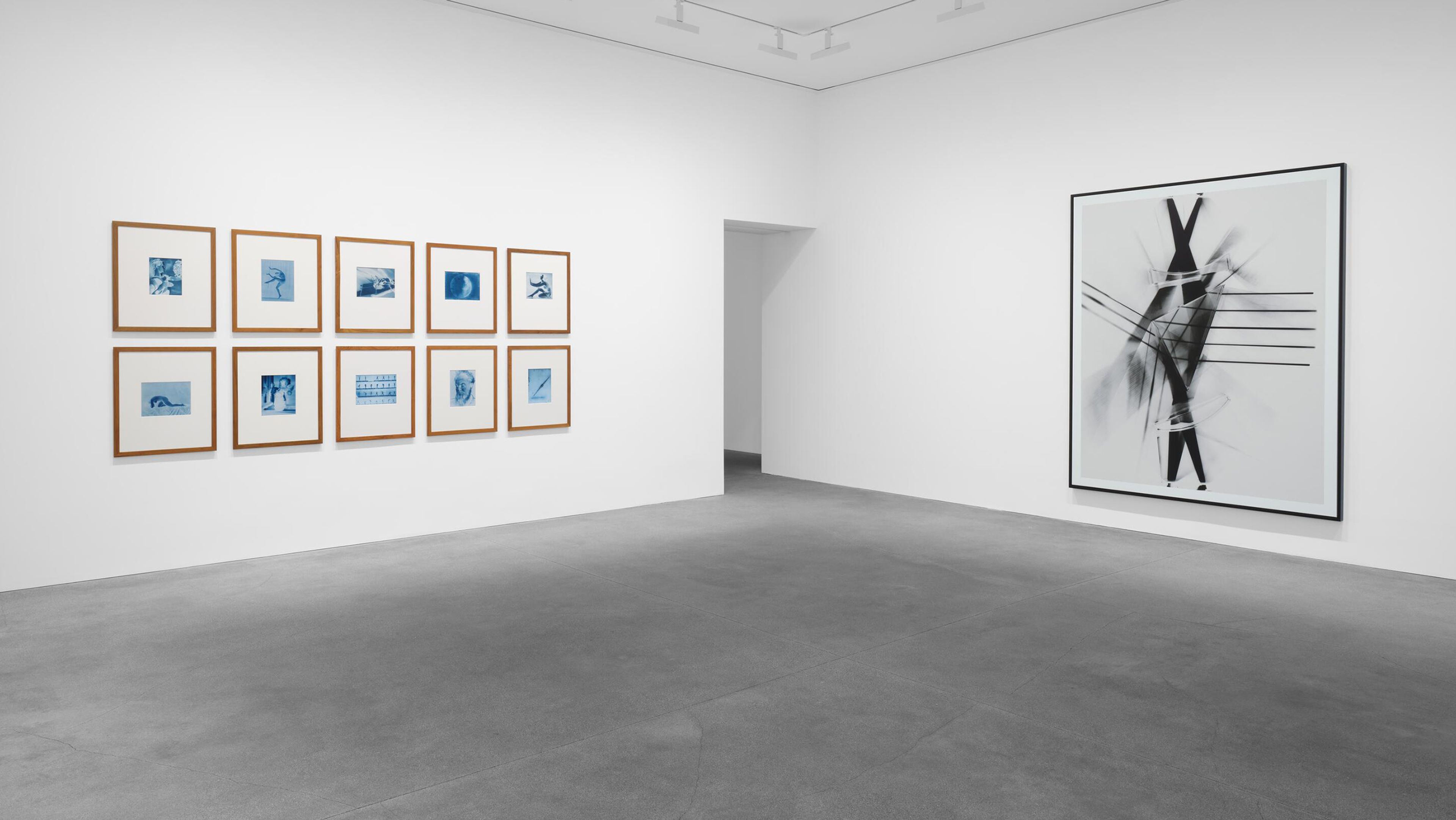
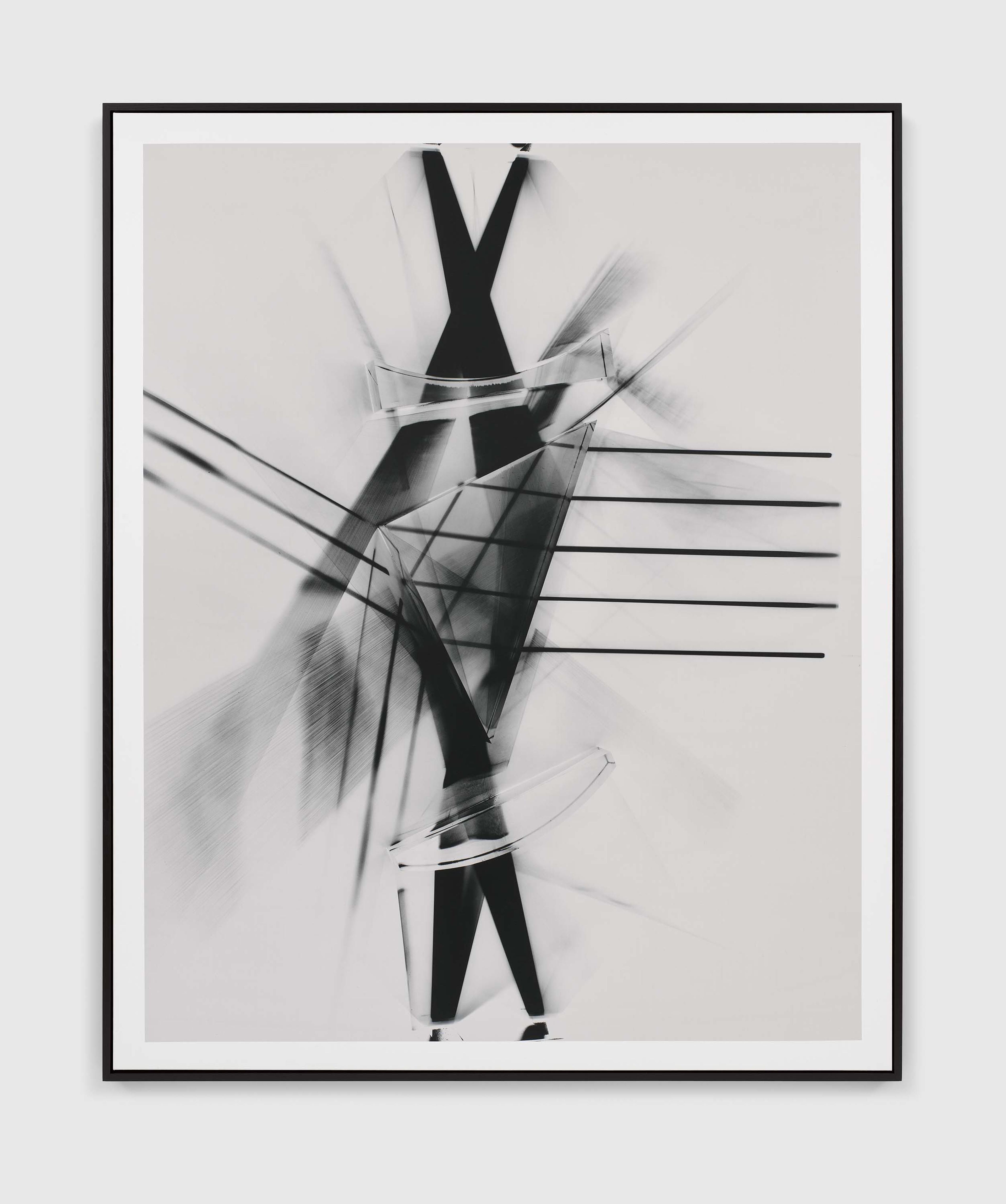
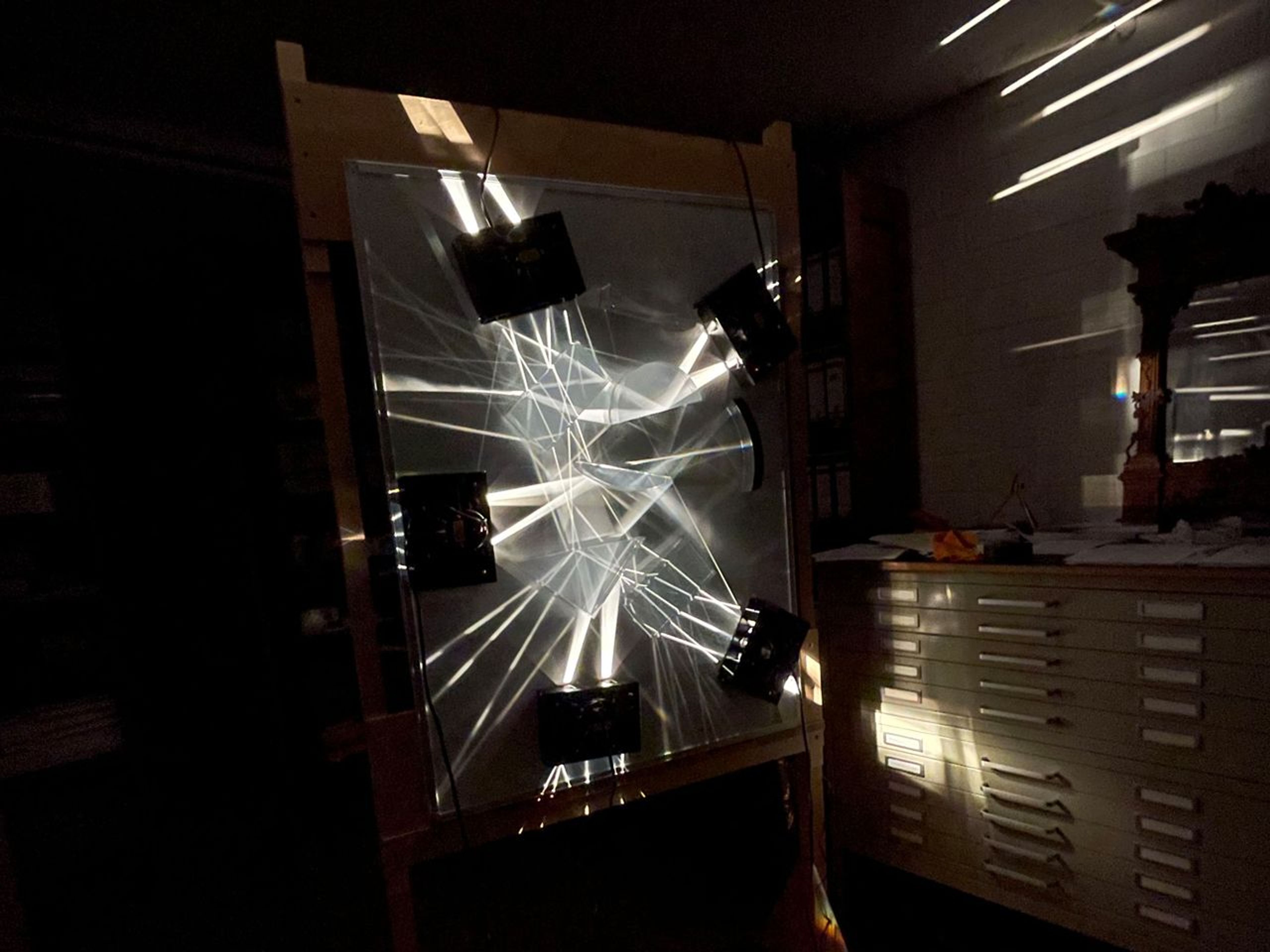
In the series expériences lumineuses, begun in 2024, Ruff approaches the photographic image from a scientific perspective, endeavoring to devise a method of picturing pure light. To create these works, Ruff turned to a simple physics experiment that helps visualize the electromagnetic spectrum. In his studio, he placed a number of glass objects—such as lenses, mirrors, and prisms—on top of a whiteboard and passed through them multiple beams of light. After photographing the reflections and refractions that resulted from these arrangements, Ruff then digitally inverted the images so that the play of light would appear as dynamically intersecting lines or stripes in the composition. Printed on velvety matte surfaces, these works on canvas appear almost as painterly abstractions, though they are actually photographs documenting scientific phenomena, engaging with the earliest critiques of the medium that decried photography as a lesser art form than painting.

Process photo showing the making of expériences lumineuses, 2024

expériences lumineuses

“Each of the seven images in the [expériences lumineuses] series ... is a contemporary response to [Berenice] Abbott’s studies of light refraction.... While Abbott’s small images were well suited to reproduction in book form, Ruff’s images resemble charcoal drawings and, at more than two meters tall, his monumental canvases demand to be seen in person.”

—Susanna Brown, curator

Installation view, Thomas Ruff: In Series, 1979–2024, David Zwirner, Los Angeles, 2026
Installation view, Thomas Ruff: In Series, 1979–2024, David Zwirner, Los Angeles, 2026
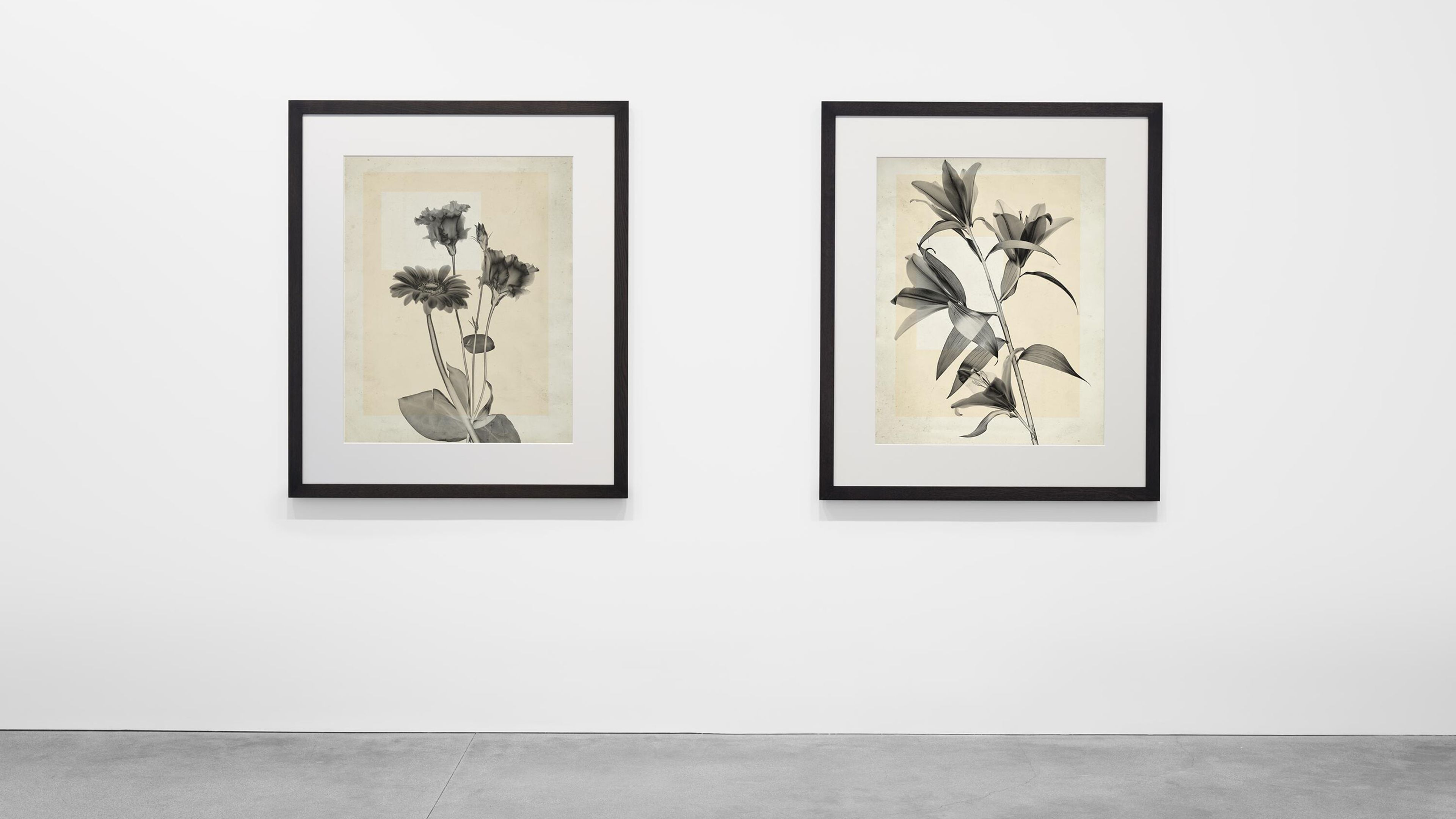
 

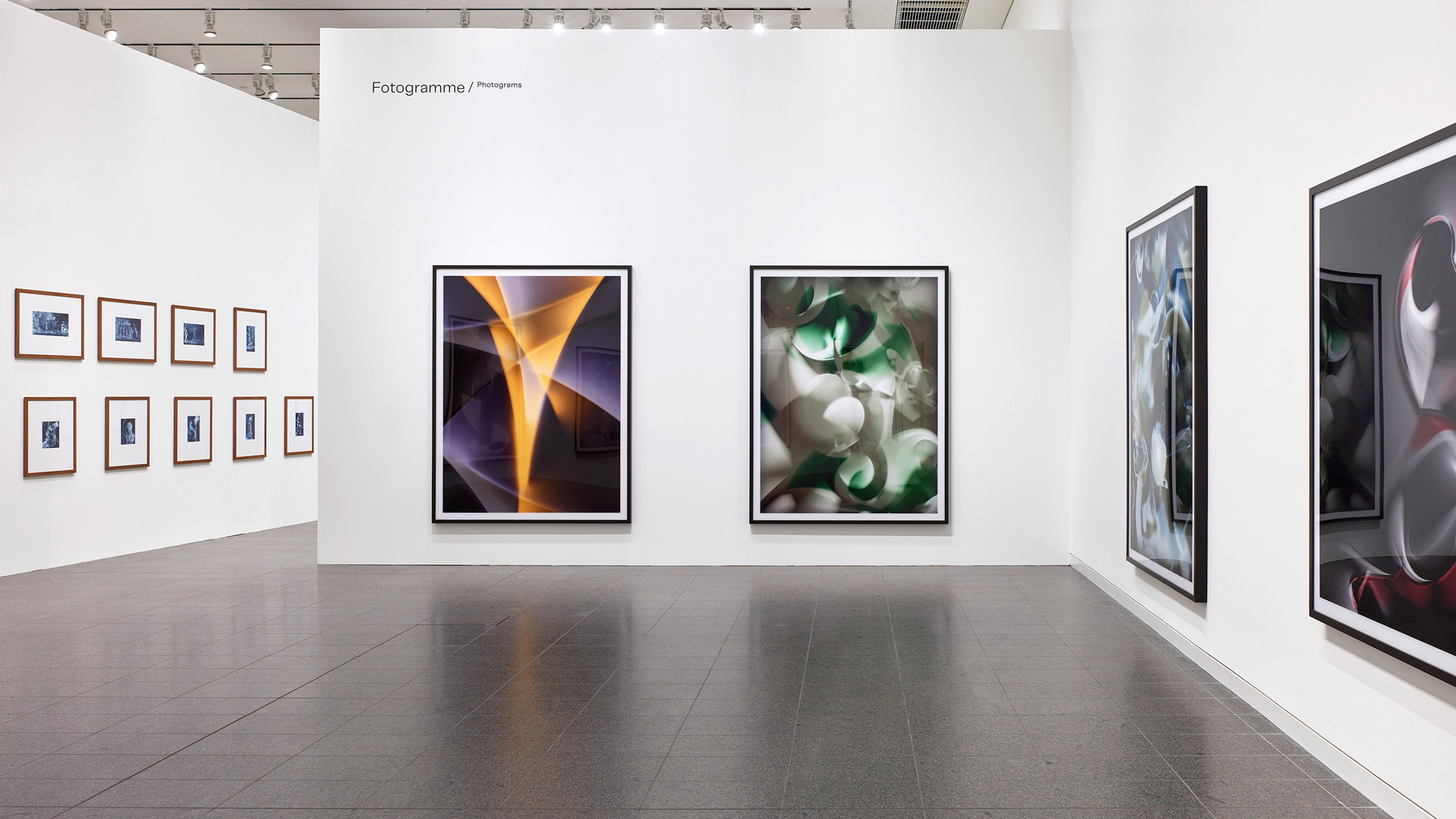
Fotogramme (Photograms, 2012–), a body of work depicting abstract shapes, lines, and spirals in seemingly random formations with varying degrees of transparency and illumination, references the photograms made by surrealist artists in the 1920s; however, Ruff’s works are created entirely in digital darkrooms, allowing the artist more control over their outcome.

“It’s camera-less photography. You don’t see the objects, but only shadows, which reminds me of Plato’s cave. The goal was really to make a kind of ‘new generation’ of the photogram.... Maybe I just want to recall that artists used techniques in photography that enabled them to make completely artificial and abstract photographs and that these techniques are, unfortunately, nearly forgotten.”

—Thomas Ruff

Installation view, Thomas Ruff, Kunstsammlung Nordrhein-Westfalen, Düsseldorf, 2020

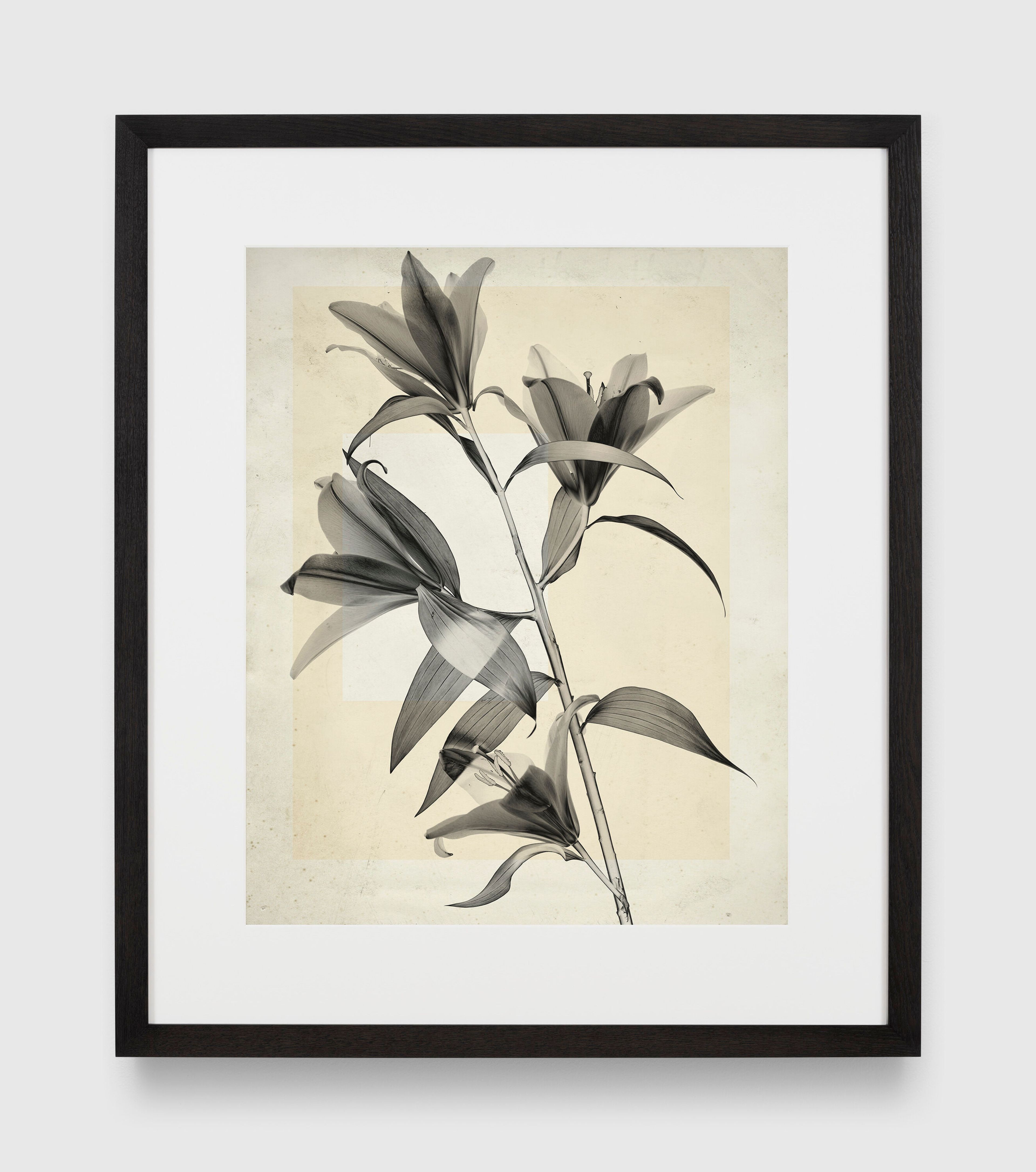
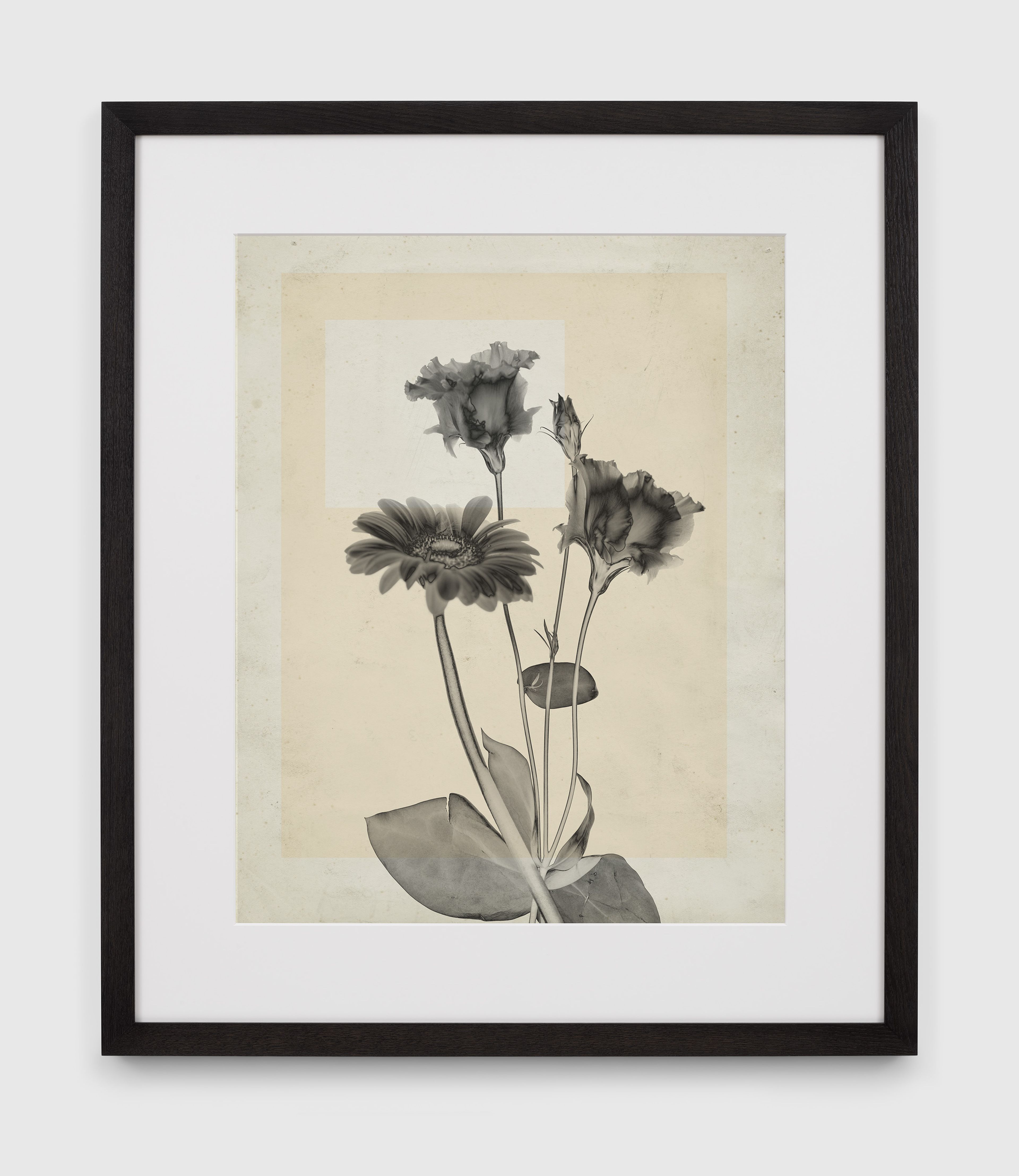
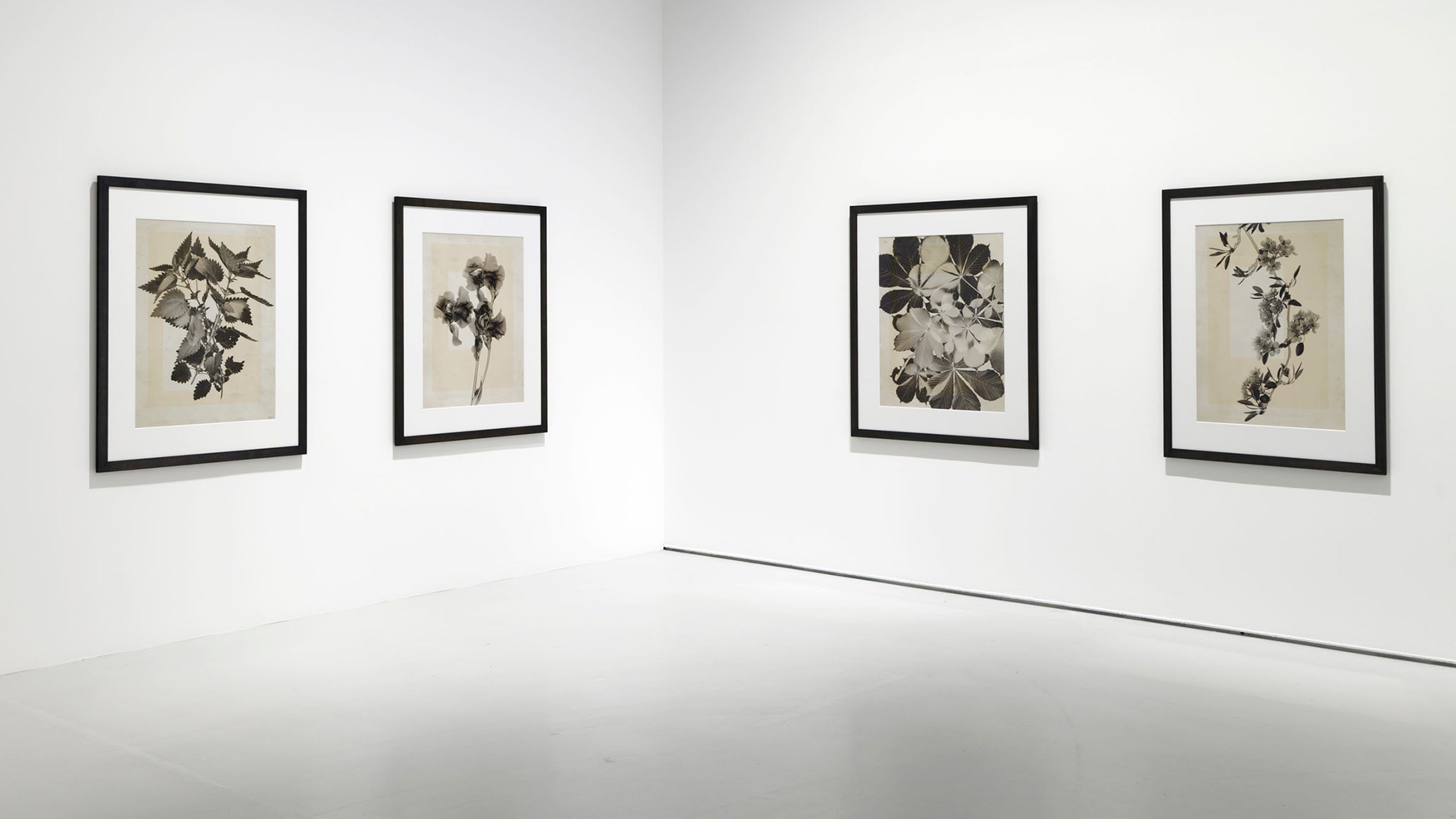
The Photograms are juxtaposed in the exhibition with works from flower.s (2018–), another series that revisits an analogue technique popular with the surrealists, using digital technologies to achieve the appearance of pseudo-solarization—or the Sabattier effect—that inverts light and dark areas of an image that Ruff has first created.

By invoking early twentieth-century processes achieved through digital means, Ruff’s flower.s raise broader questions about what constitutes photography, and ultimately touch upon the issue of the medium’s veracity. As such, they continue the artist’s interest in exploring the limits of photographic representation, in the process reinventing many of its familiar genres.

Installation view, Thomas Ruff: Metaphotography, MAMC+, Musée d'art moderne et contemporain, Saint-Étienne Métropole, 2022

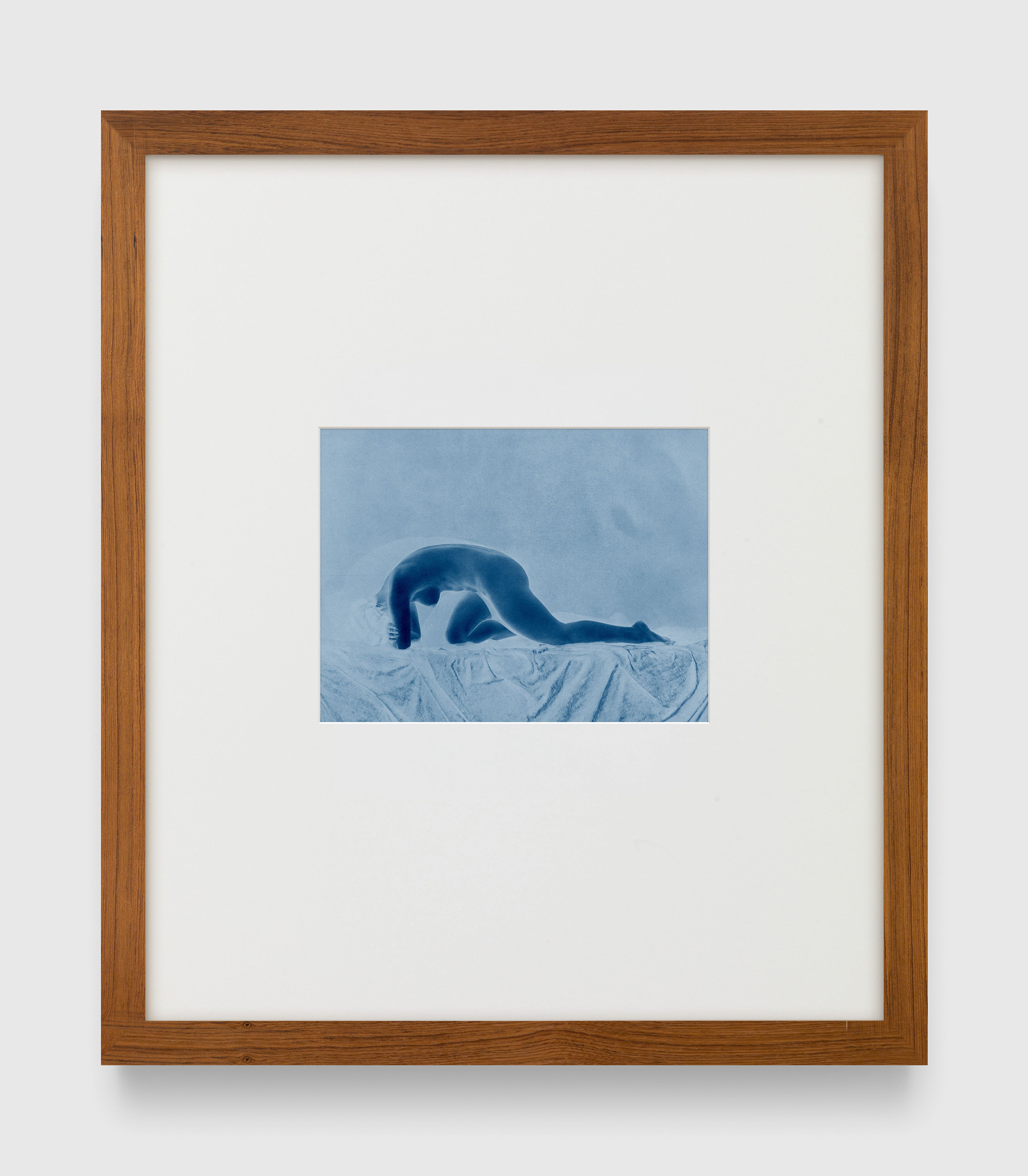
“The negative, with which I have worked for more than twenty-five years and used nearly every day, has almost disappeared thanks to digital photography.... [It] was actually never considered for itself, it was always only a means to an end. It was the ‘master’ from which the photographic print was made, and I think it is worth looking at these ‘masters’.... [I turned] photographs into negatives in order to see their photographic reality reversed.”

—Thomas Ruff

Installation view, Thomas Ruff: In Series, 1979–2024, David Zwirner, Los Angeles, 2026

Thomas Ruff, neg◊stil_08, 2015 (detail)
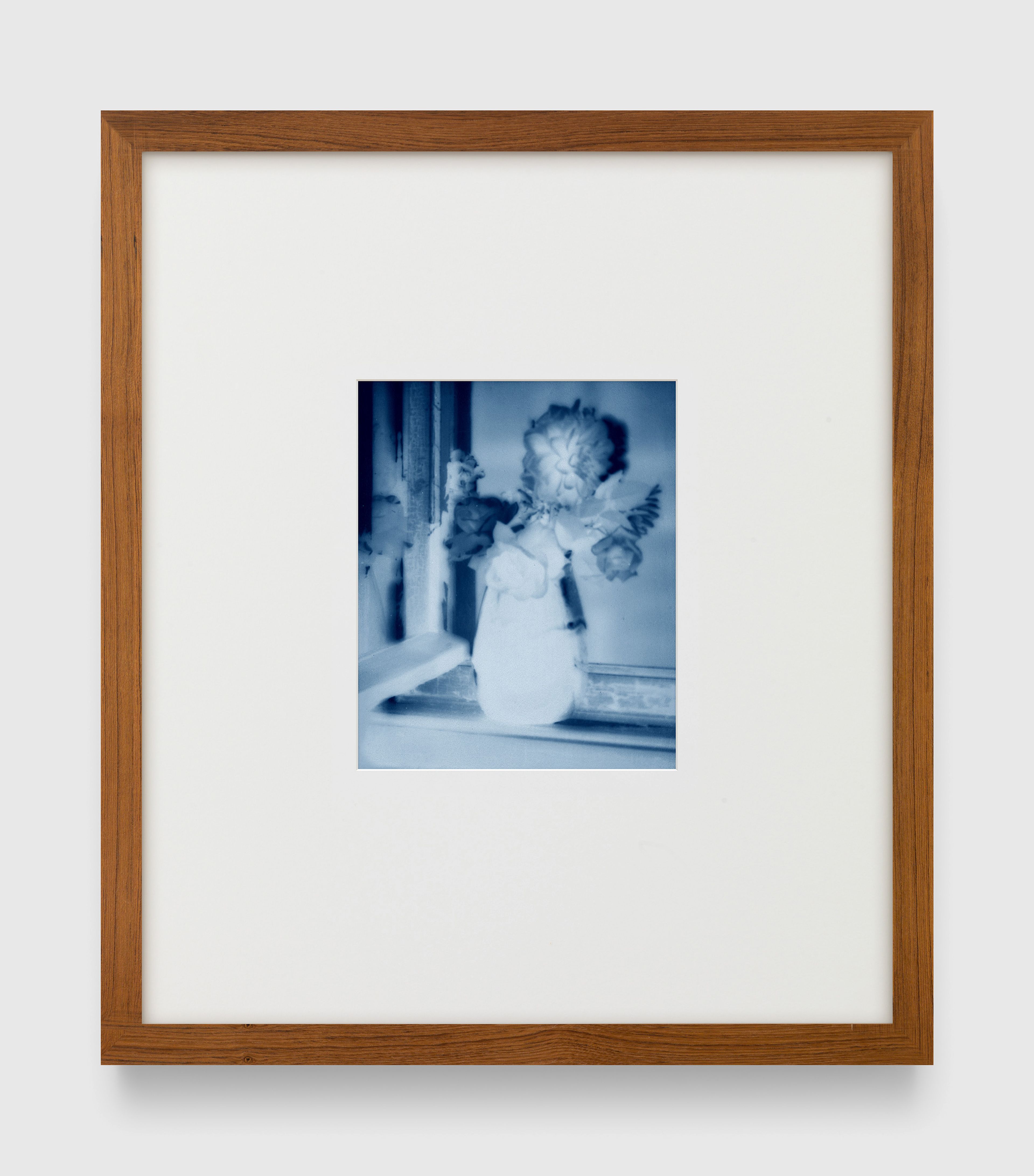
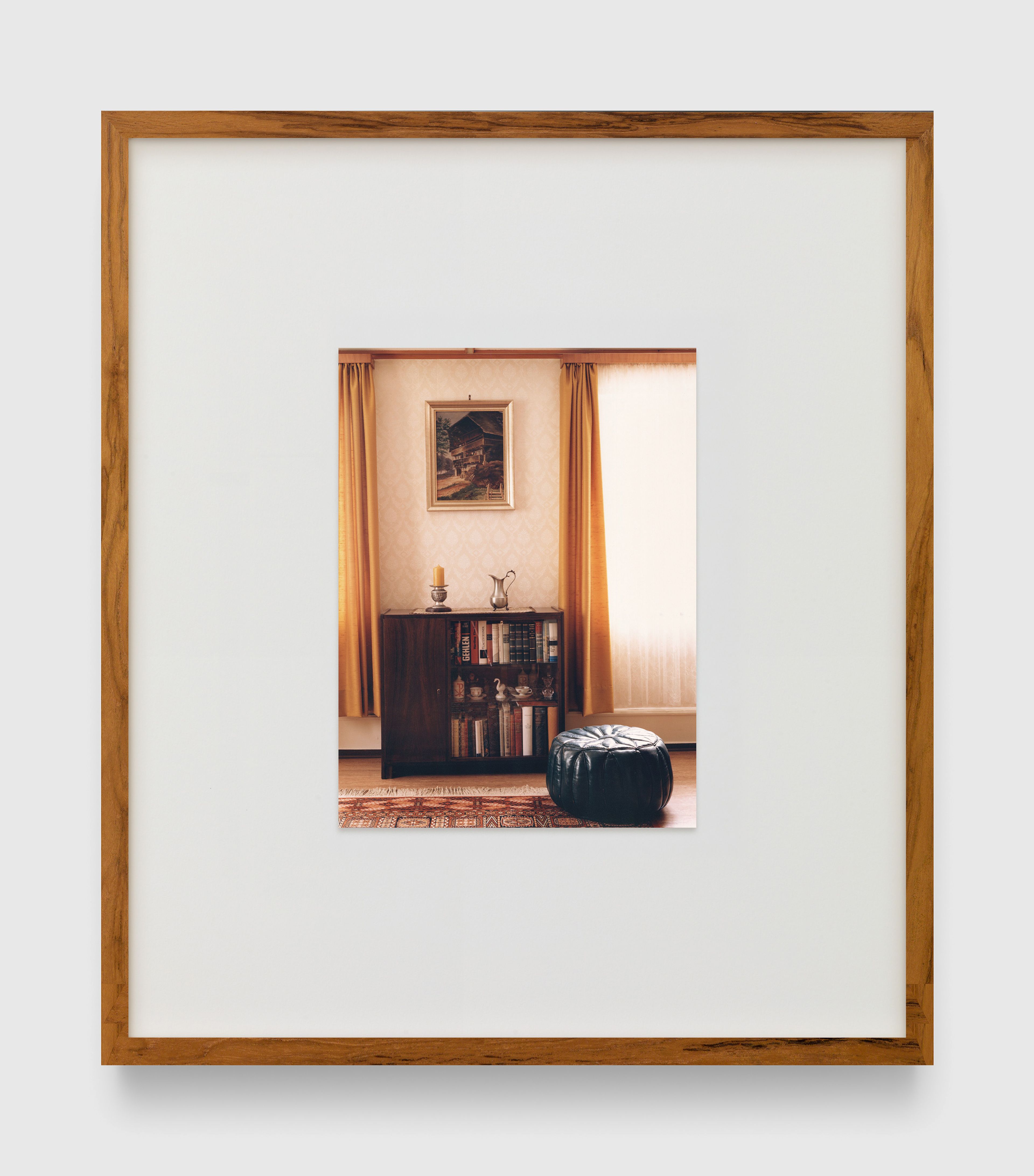
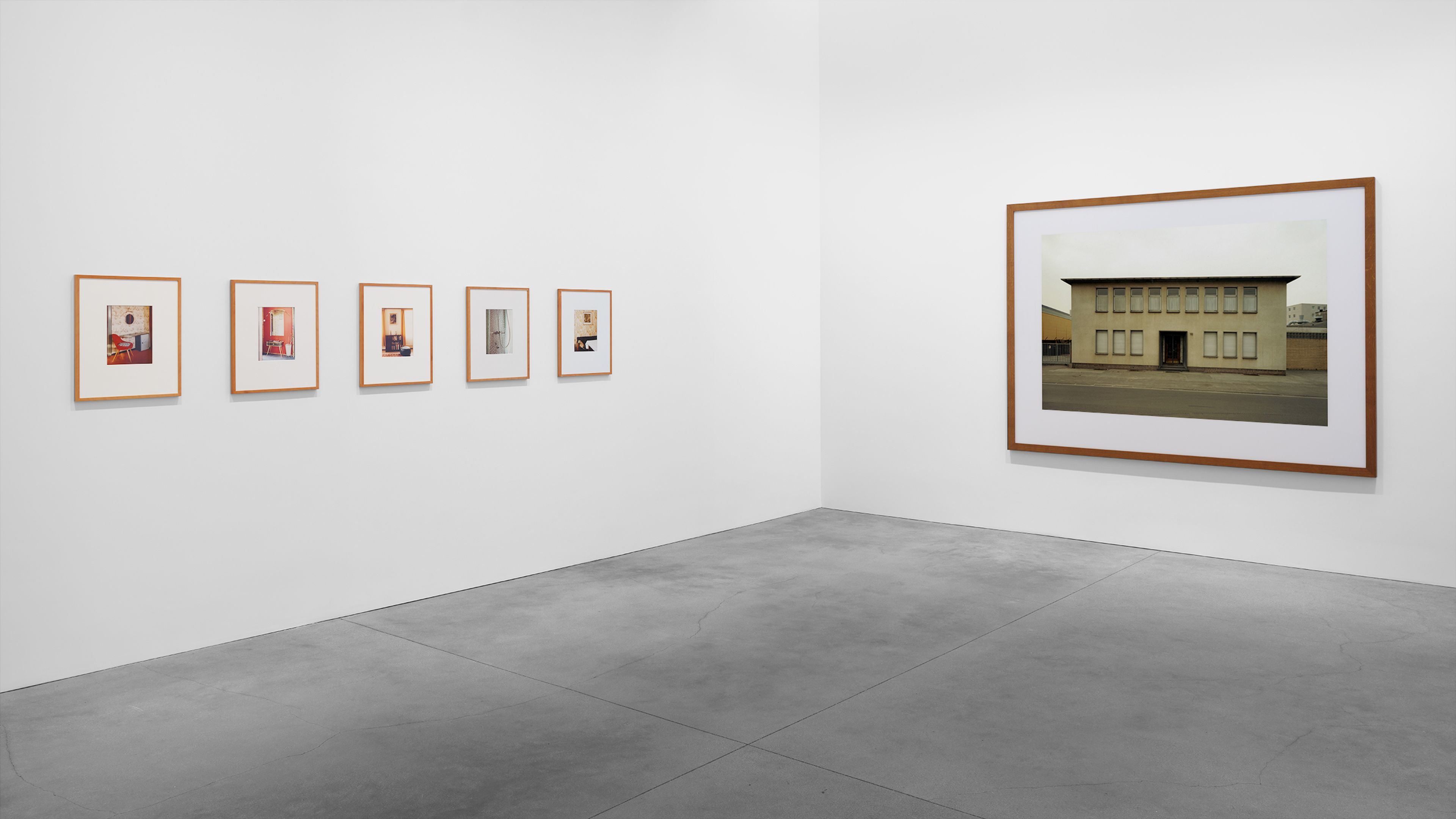
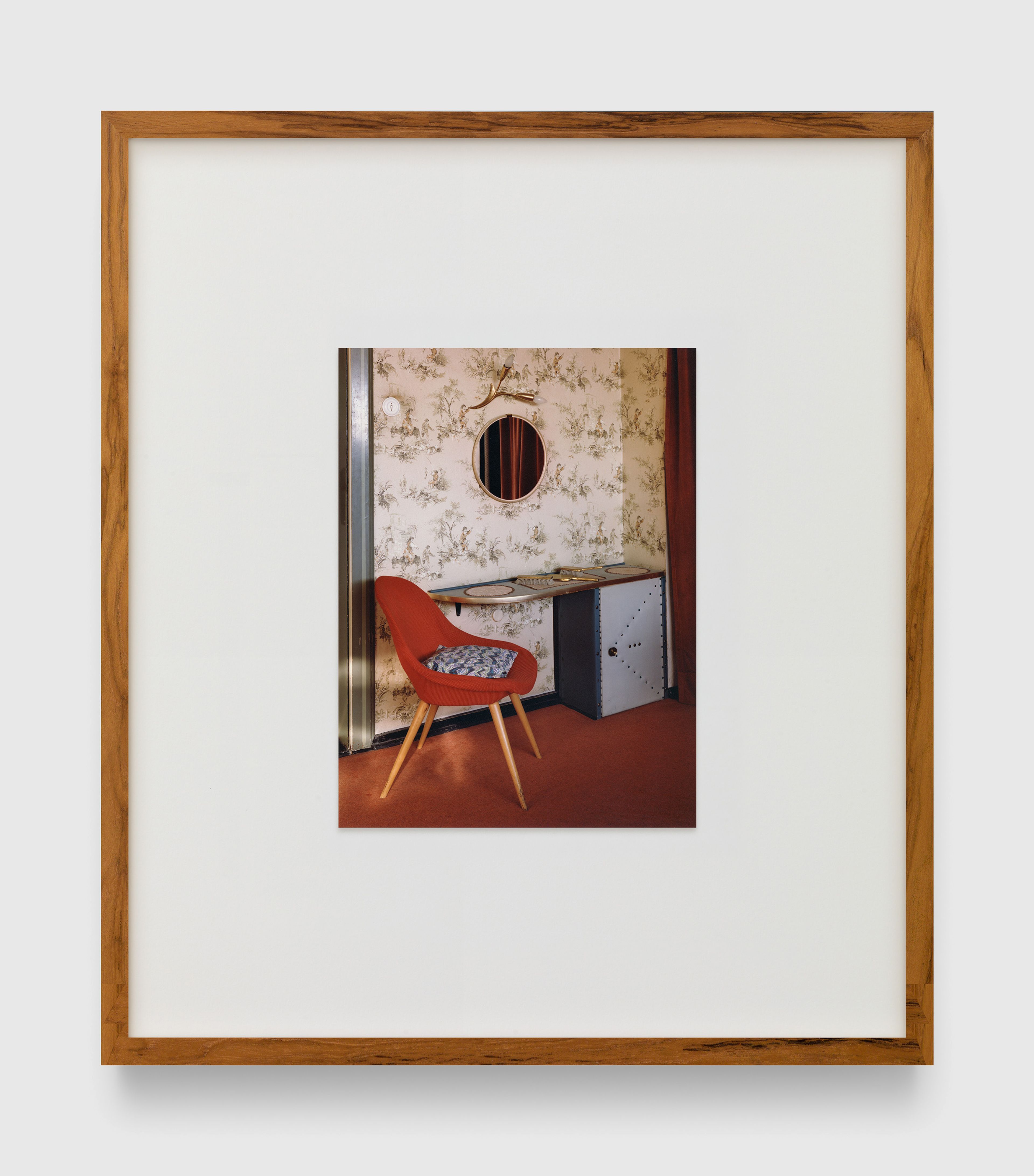
In other series, Ruff presents his own take on architectural photography, the genre for which his mentors the Bechers were best known. The earliest body of work on view is Interieurs (Interiors, 1979–1983), which consists of small-scale, domestic scenes, usually depicting the artist’s own apartment and his family home, a conceptual riff on the Bechers’ “typologies.”

Häuser (Houses, 1987–1991) further developed these ideas, and was inspired by photographers such as August Sander as well as postwar architectural photography. For Häuser, Ruff drove around Düsseldorf during winter in search of unassuming postwar buildings, which he would photograph from a distance, beneath a bleak or expressionless sky and during early-morning hours in order to limit any signs of life.

Installation view, Thomas Ruff: In Series, 1979–2024, David Zwirner, Los Angeles, 2026
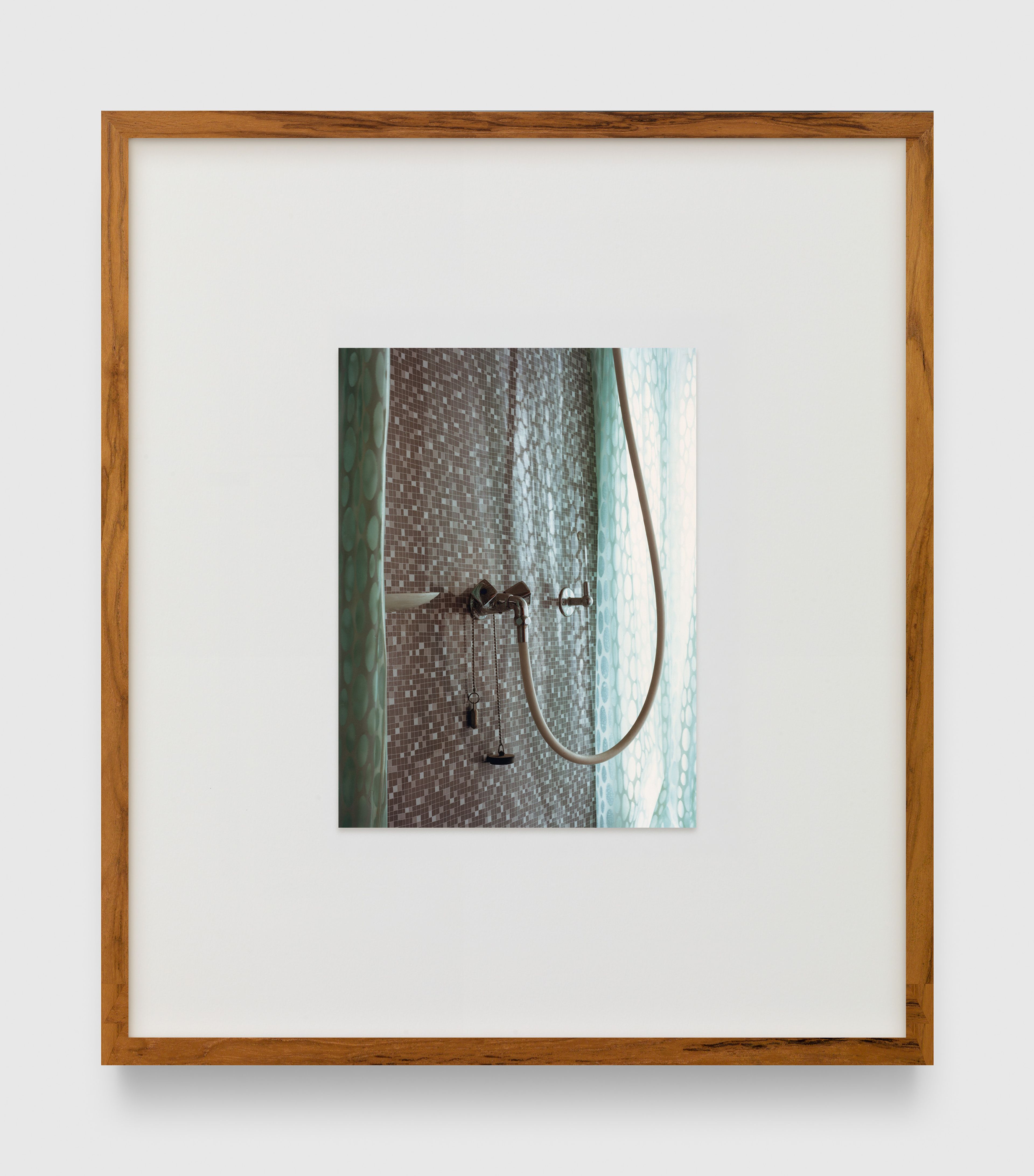
“When I started shooting the Interiors, I had just left my parents’ home to go to Düsseldorf to study photography with Bernd Becher. So that was definitely autobiographical shooting after leaving home: the apartments, houses, interiors of my family and the parents of my friends at that time.”

—Thomas Ruff
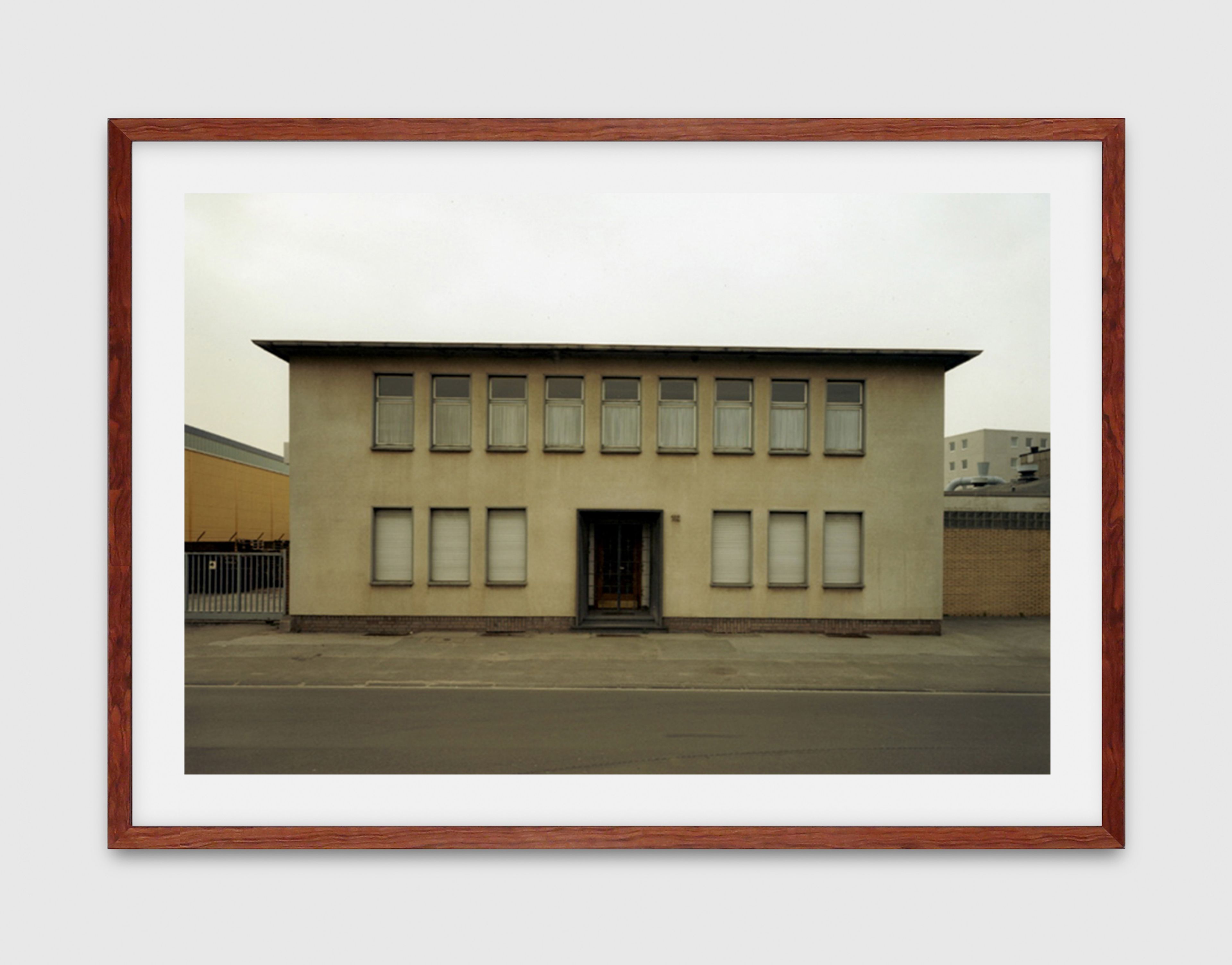
“I think it was once said that ‘the illiterate of the future is not the person who cannot read, but the one who cannot read photographs properly.’ And maybe this is something that has followed me.”

—Thomas Ruff

Black background, no image

Inquire about Works by

Thomas Ruff