“Merrill Wagner: Marking Time” by Alfred Mac Adam
2026
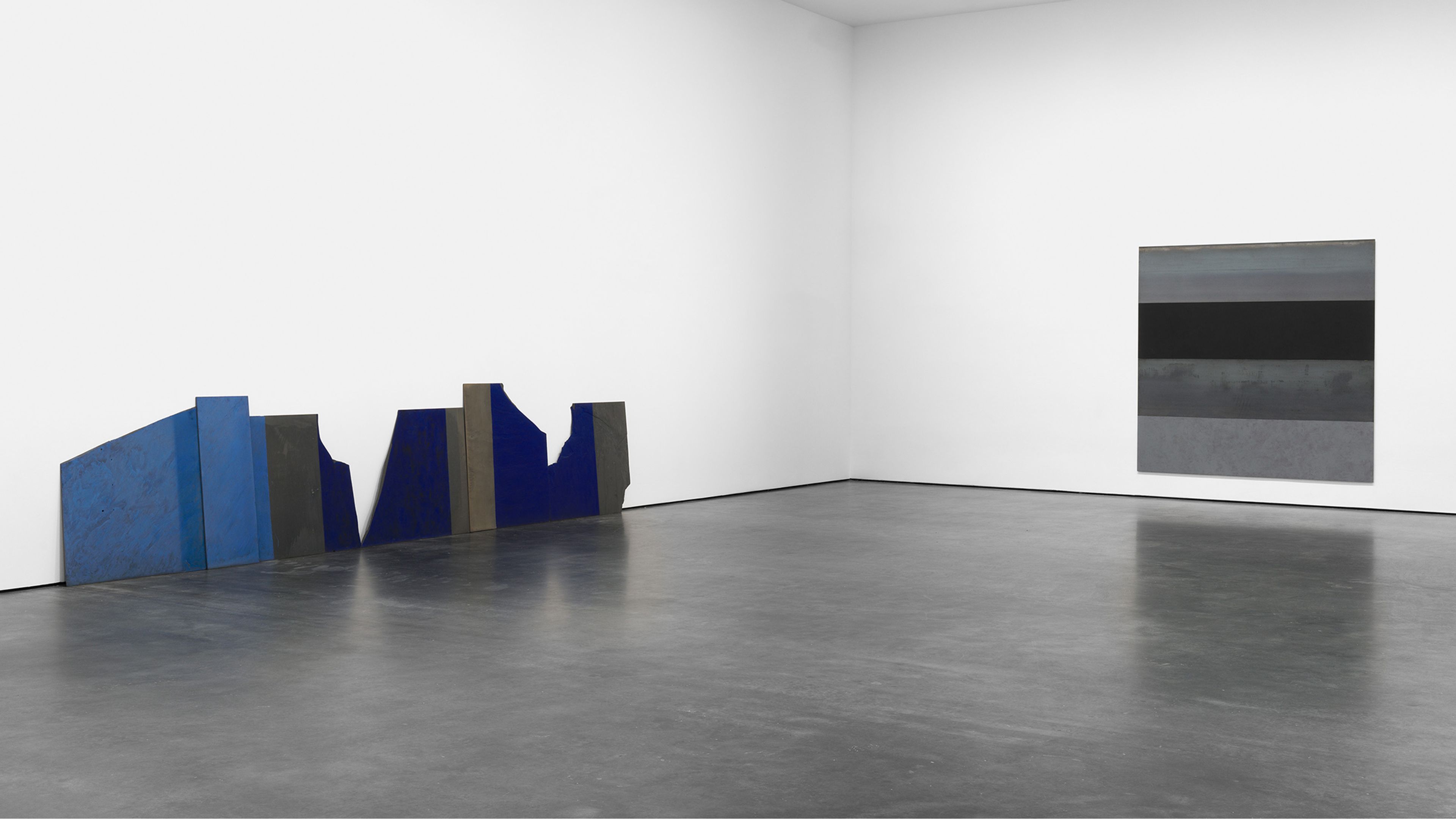
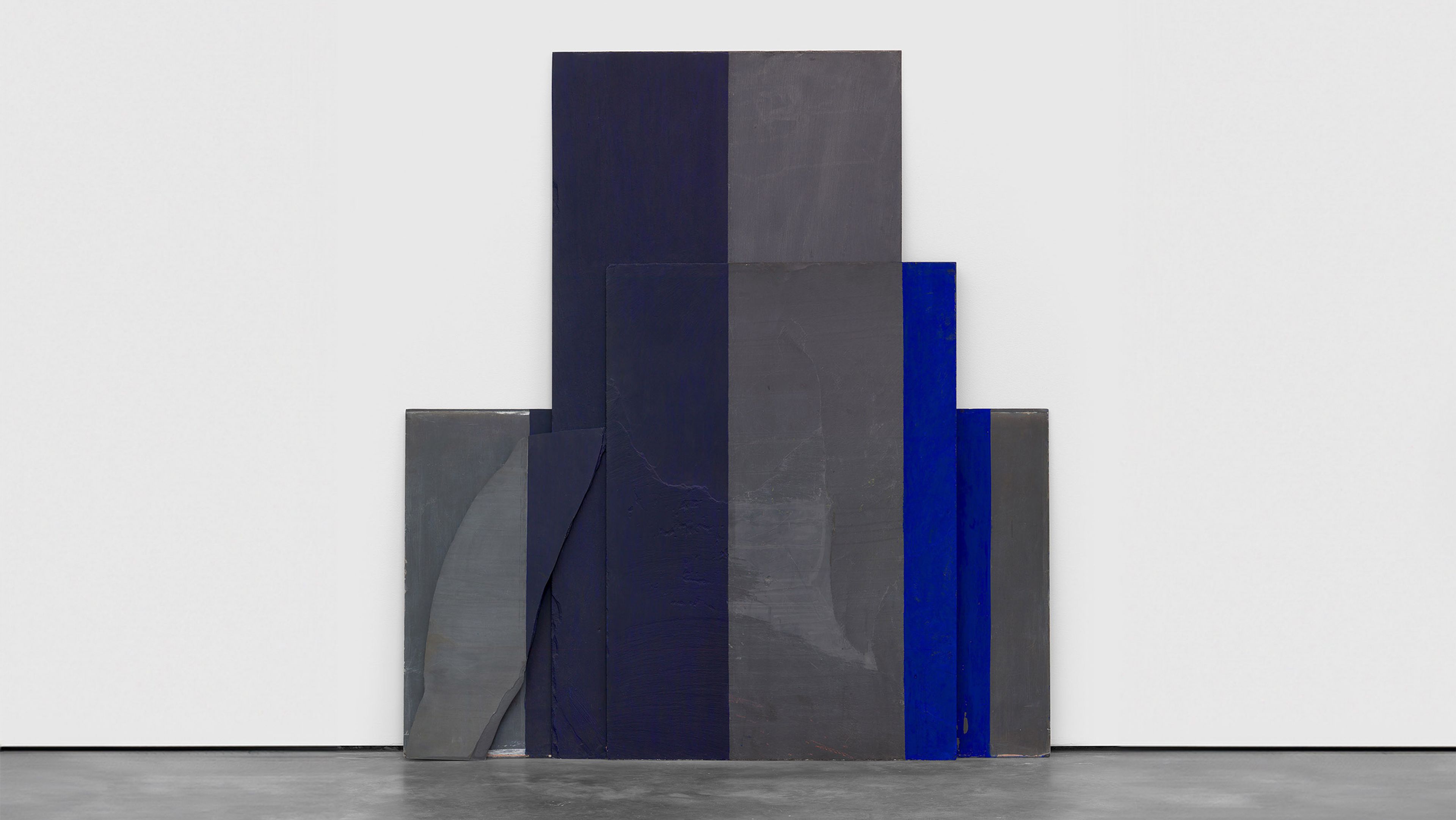
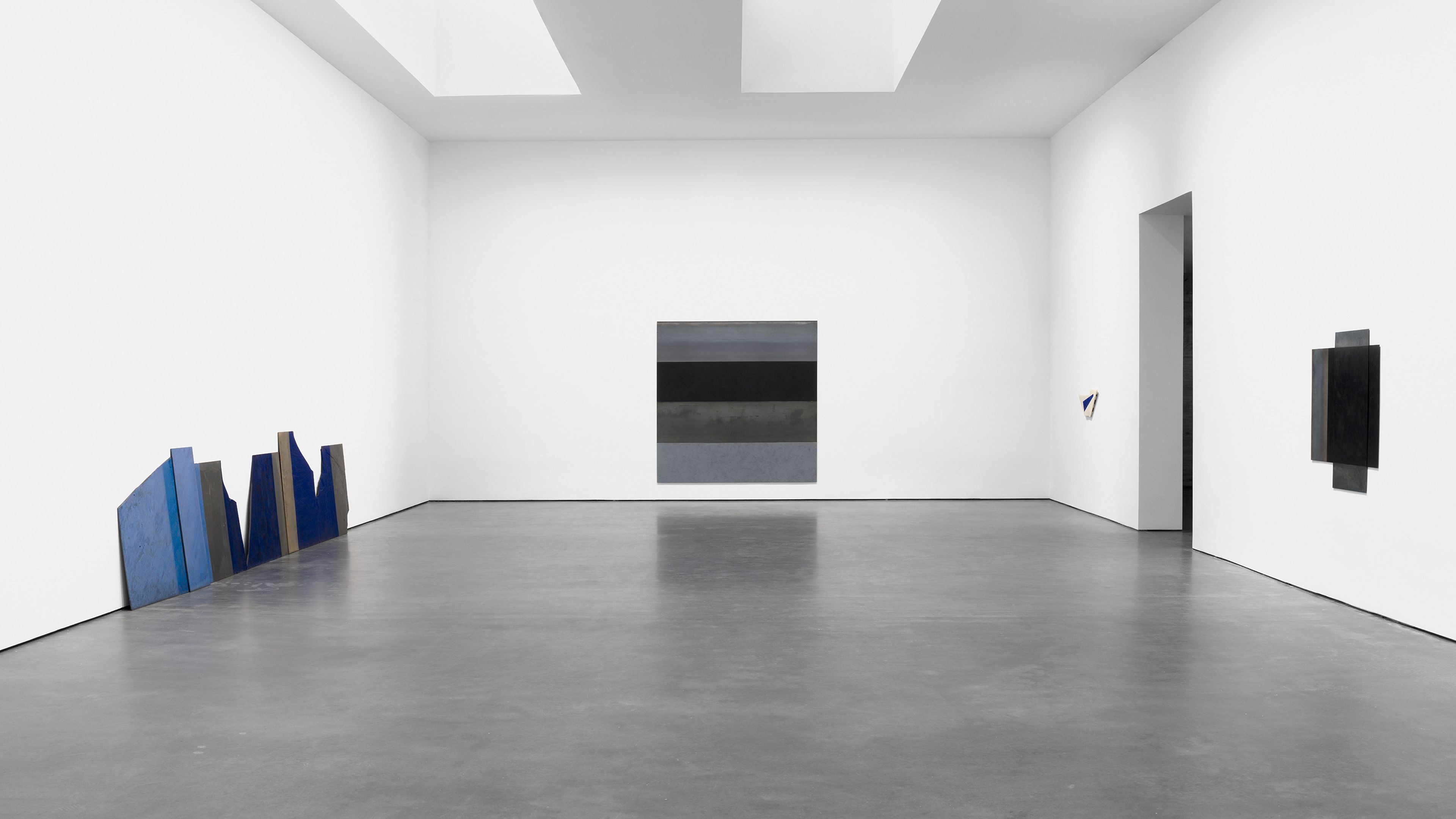
When artists find their style, something like a religious conversion takes place. David Zwirner’s superb exhibition of Merrill Wagner’s work shows us the history of such a mystical marriage. Ranging from 1967 to 2017, the work on view here testifies to Wagner’s union with a style we could call found geometry: the geometry of fragmented stone or the planks in a fence. The interface between the artist and the world she inhabits takes the form of a combination of nature, banal artifacts, and a highly charged sensibility.
By 1967, Wagner’s artmaking had assumed a specific identity. She is a Minimalist, and like others of that school—Donald Judd, Agnes Martin, Anne Truitt, Carl Andre—her work hovers on the frontier between painting and sculpture. For Wagner, the very distinction between those two modalities has no validity. A look at the earliest piece in this large, twenty-one work show, brings us to her point of departure. Untitled (1967) is a large acrylic on linen, 72 inches square. An essentially monochrome painting, the surface is marked by barely visible vertical columns and three horizontal lines. It would be easy to overlook this self-effacing work, but it exemplifies several qualities that reappear throughout Wagner’s career. The surface is space, the vertical lines a fence or demarcation, the horizontal stripes a sealing-off of the pictorial plane. The painting is a Hortus Conclusus, an enclosed garden, but not in any religious sense: Wagner has created the private universe she inhabits.