Merrill Wagner: Marking Time
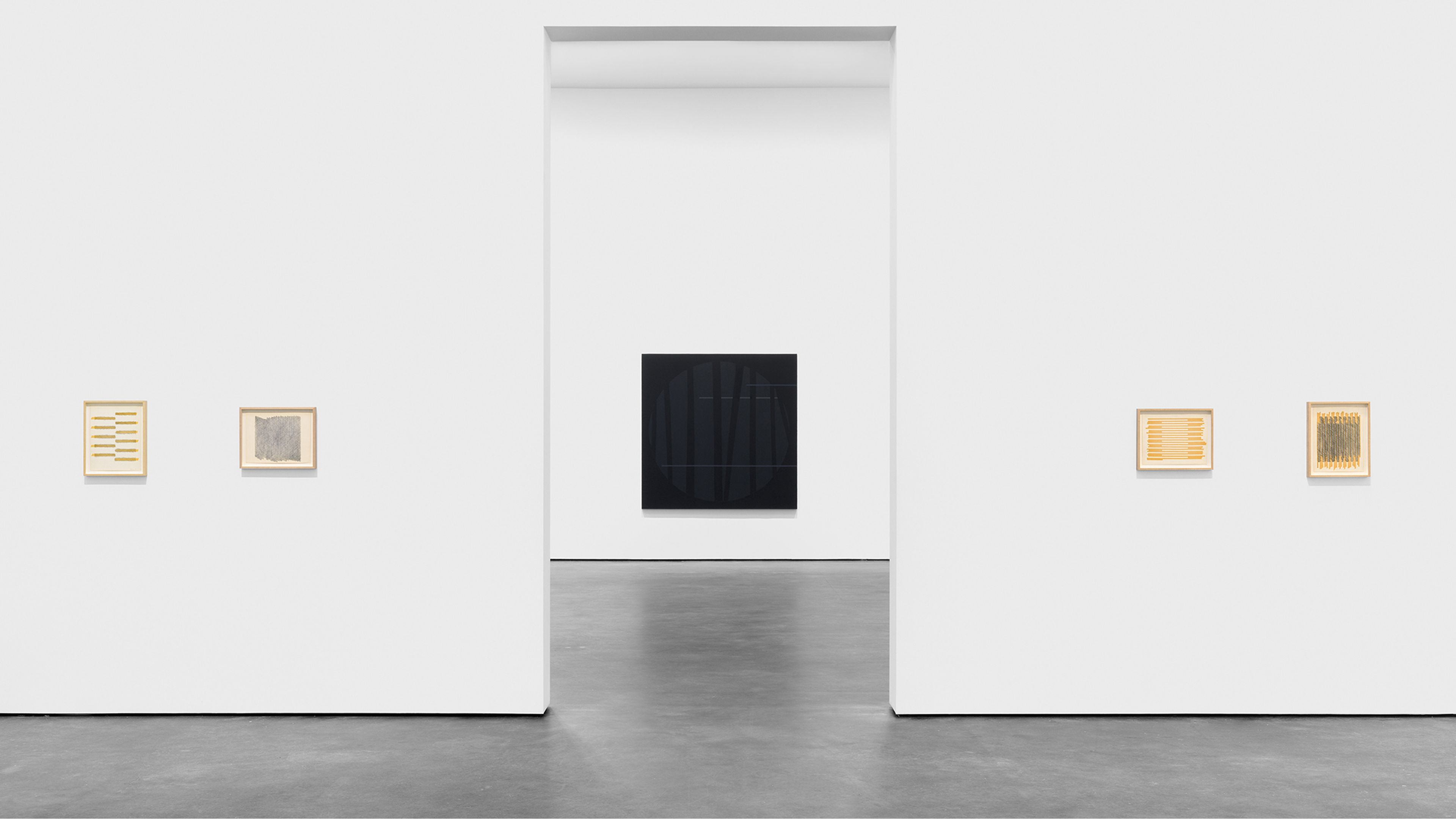
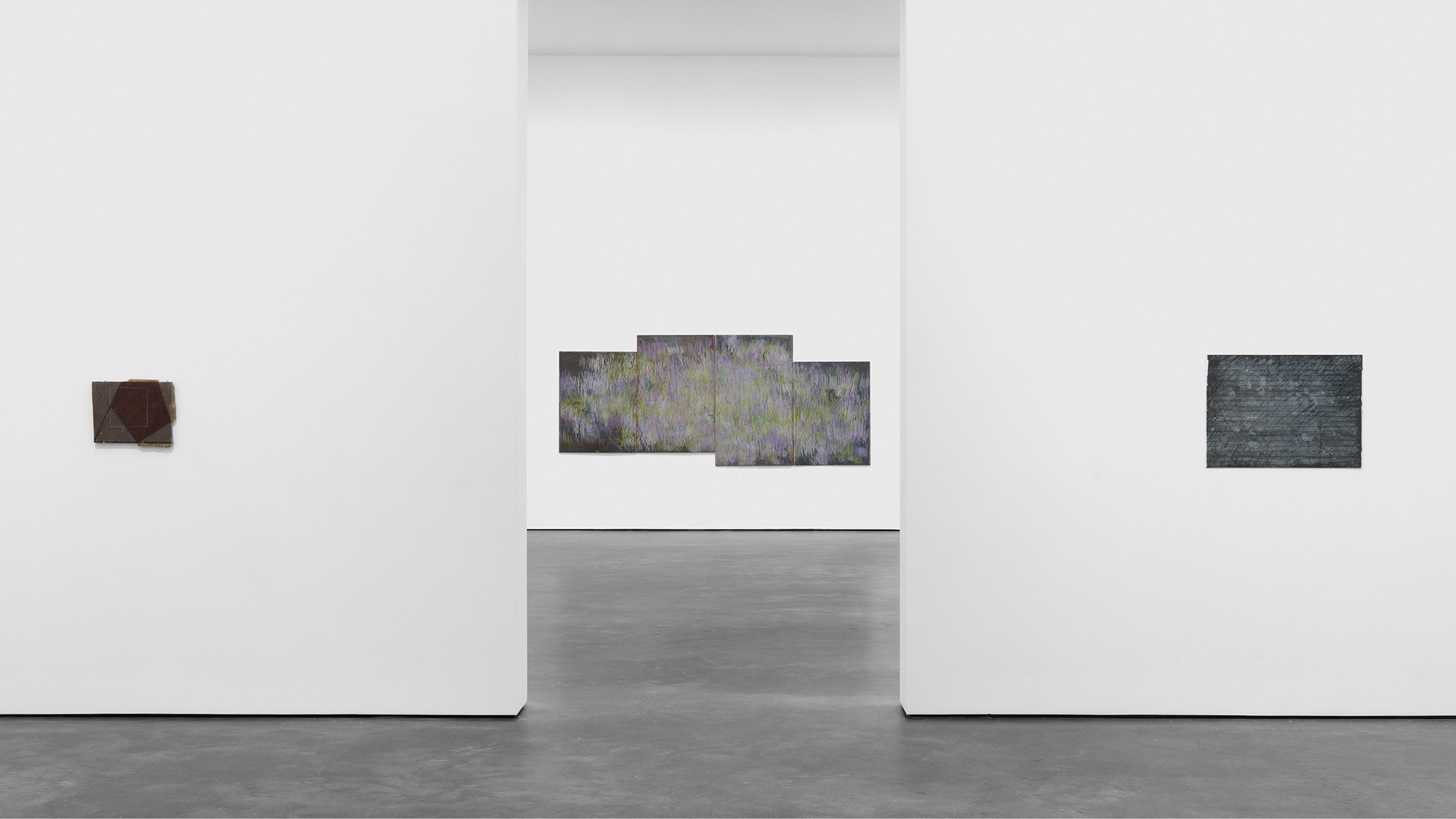
Installation view, Merrill Wagner: Marking Time, David Zwirner, New York, 2026

Now Open

March 12—April 18, 2026

Opening Reception

Thursday, March 12, 6–8 PM

Location

New York: 20th Street

537 West 20th Street

New York, New York 10011

Tue, Wed, Thu, Fri, Sat: 10 AM-6 PM

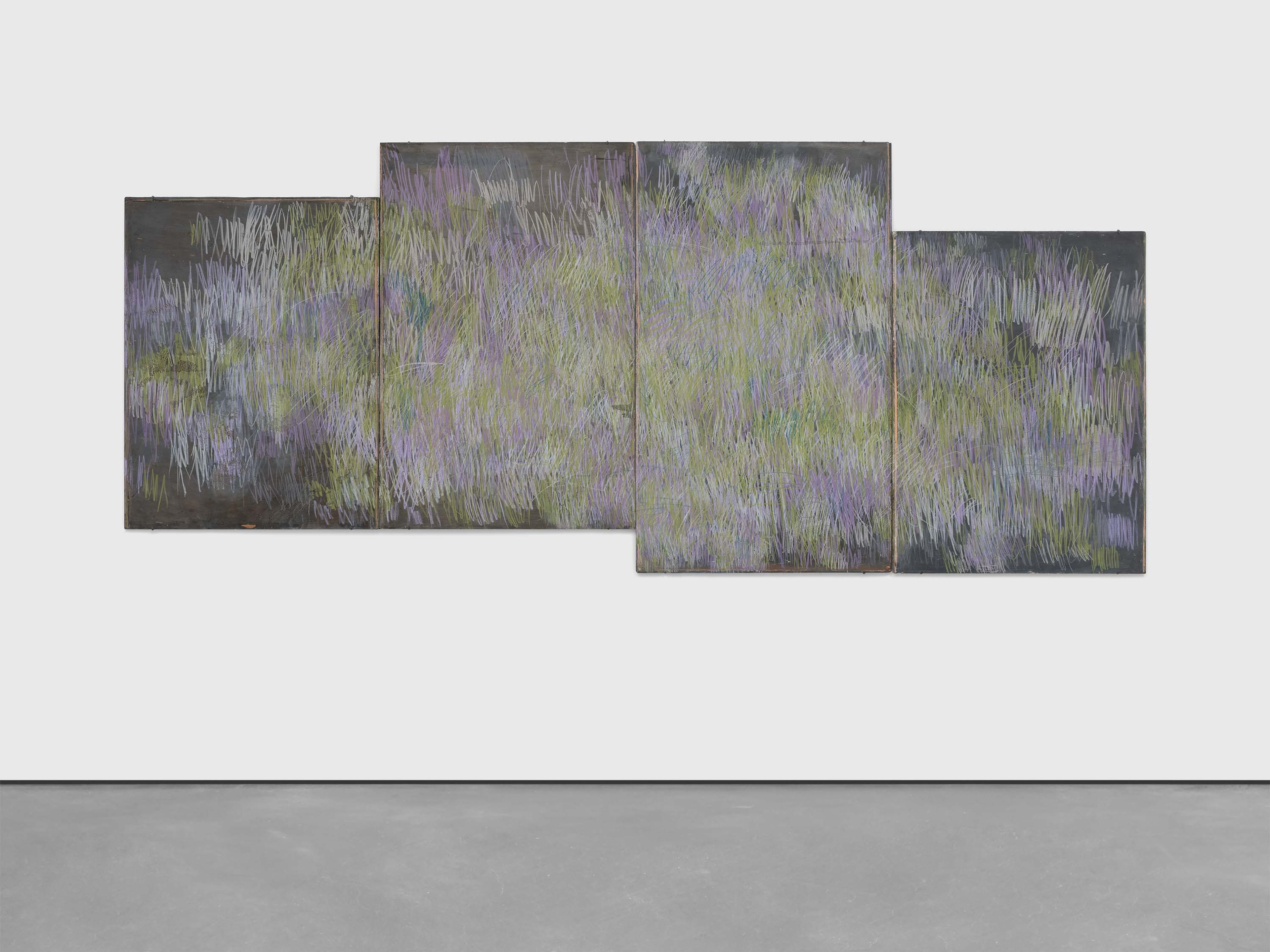
David Zwirner is pleased to present an exhibition of work by American artist Merrill Wagner at the gallery’s 537 West 20th Street location in New York. Featuring sculptures, paintings, works on paper, and photographs spanning the 1960s to the 2010s, Marking Time sheds new light on Wagner’s pioneering use of industrial and natural materials in her process-based approach, as well as her ongoing interest in the transformational effects of time. This is the artist’s third solo exhibition with David Zwirner, following presentations at 34 East 69th Street, New York, in 2022, and Hong Kong in 2024.

Explore

Explore All Works

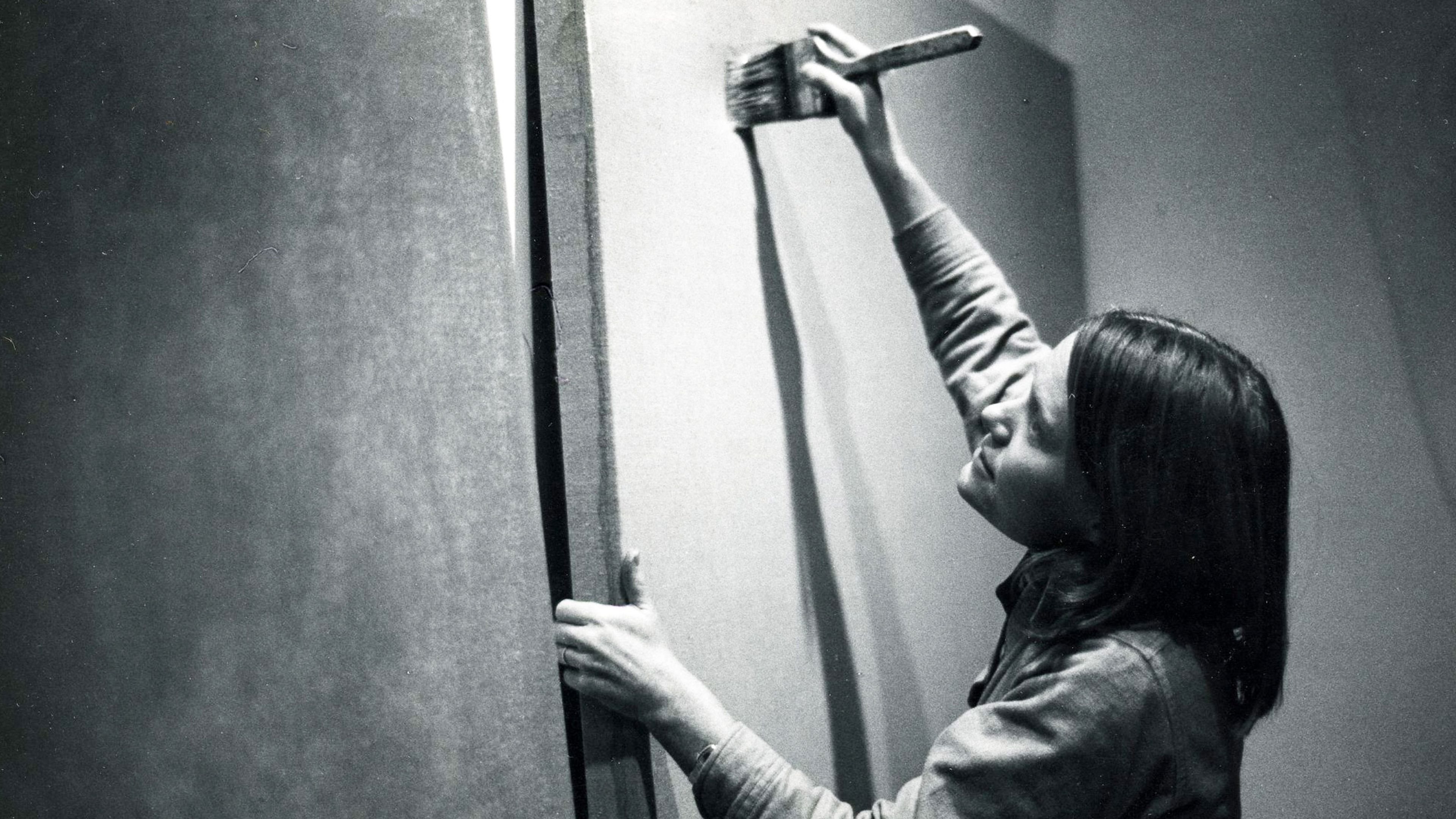
Merrill Wagner in the studio, c. 1974

“To show these works together would not be about a formal comparison, but rather a more poetic distribution of the paintings placed in relation to the steel works. There is no formula for this, only a sense that the works somehow manage to play off one another in the most understated, yet illuminating way.”

—Robert C. Morgan, art historian, 2004
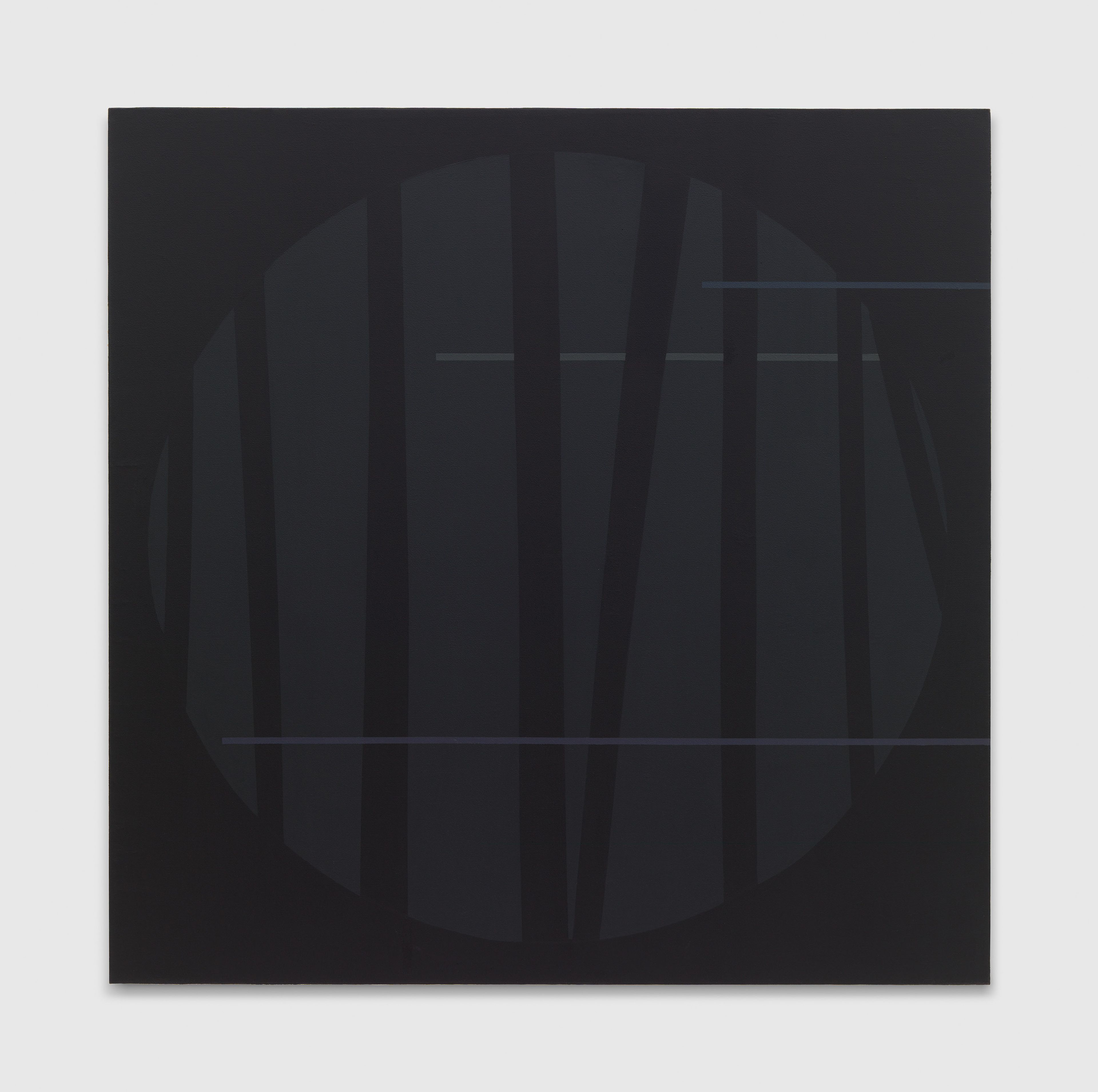
In its emphasis on materiality and mutability, Wagner’s inventive work elides traditional categories of painting, relief, sculpture, and installation. Emerging in the 1960s, at a moment when minimalism and post-minimalism became dominant idioms, Wagner both eschewed and embraced their primary concerns, creating rigorous, hard-edged abstract compositions that subtly referenced the genre of landscape.

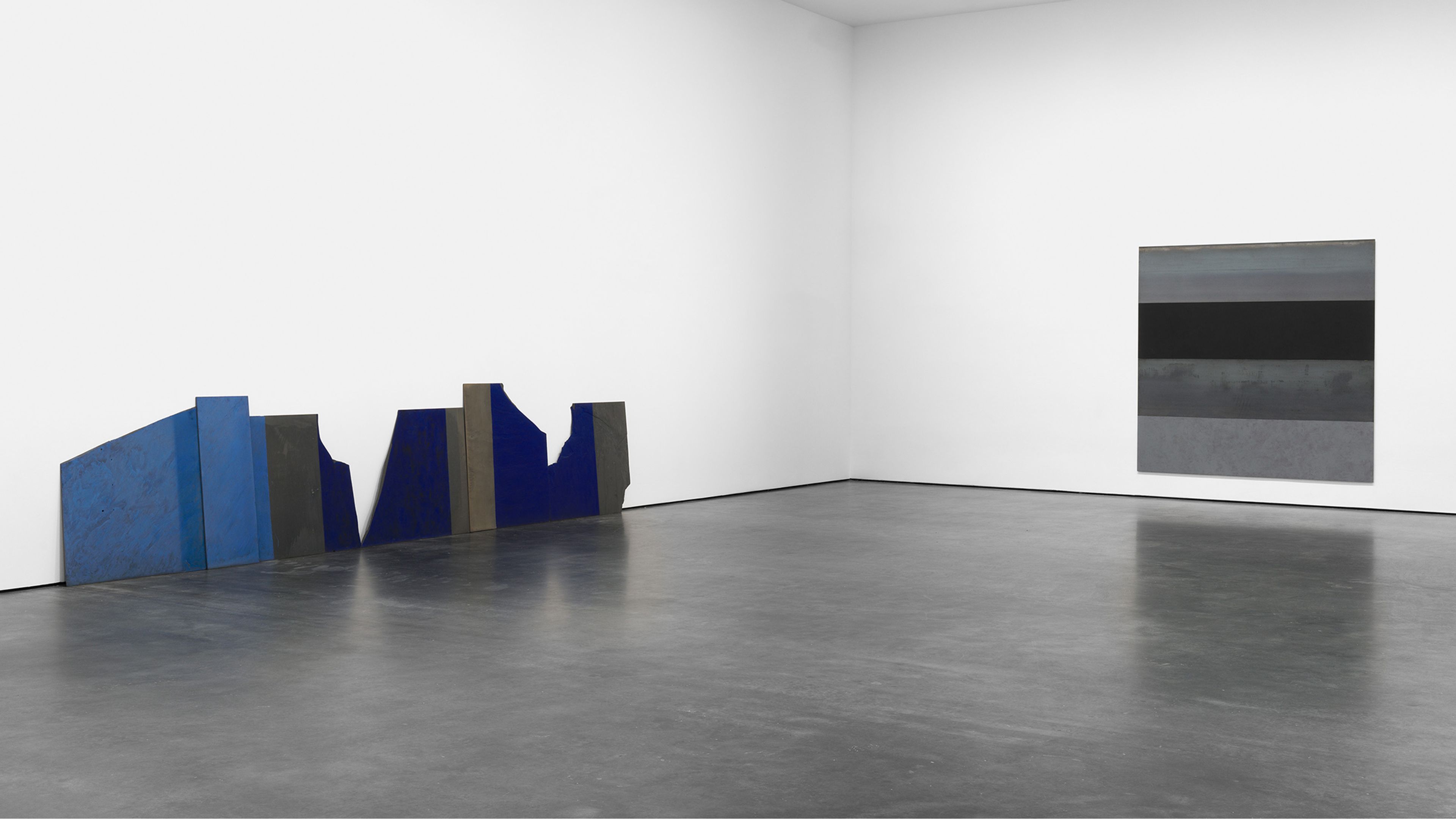
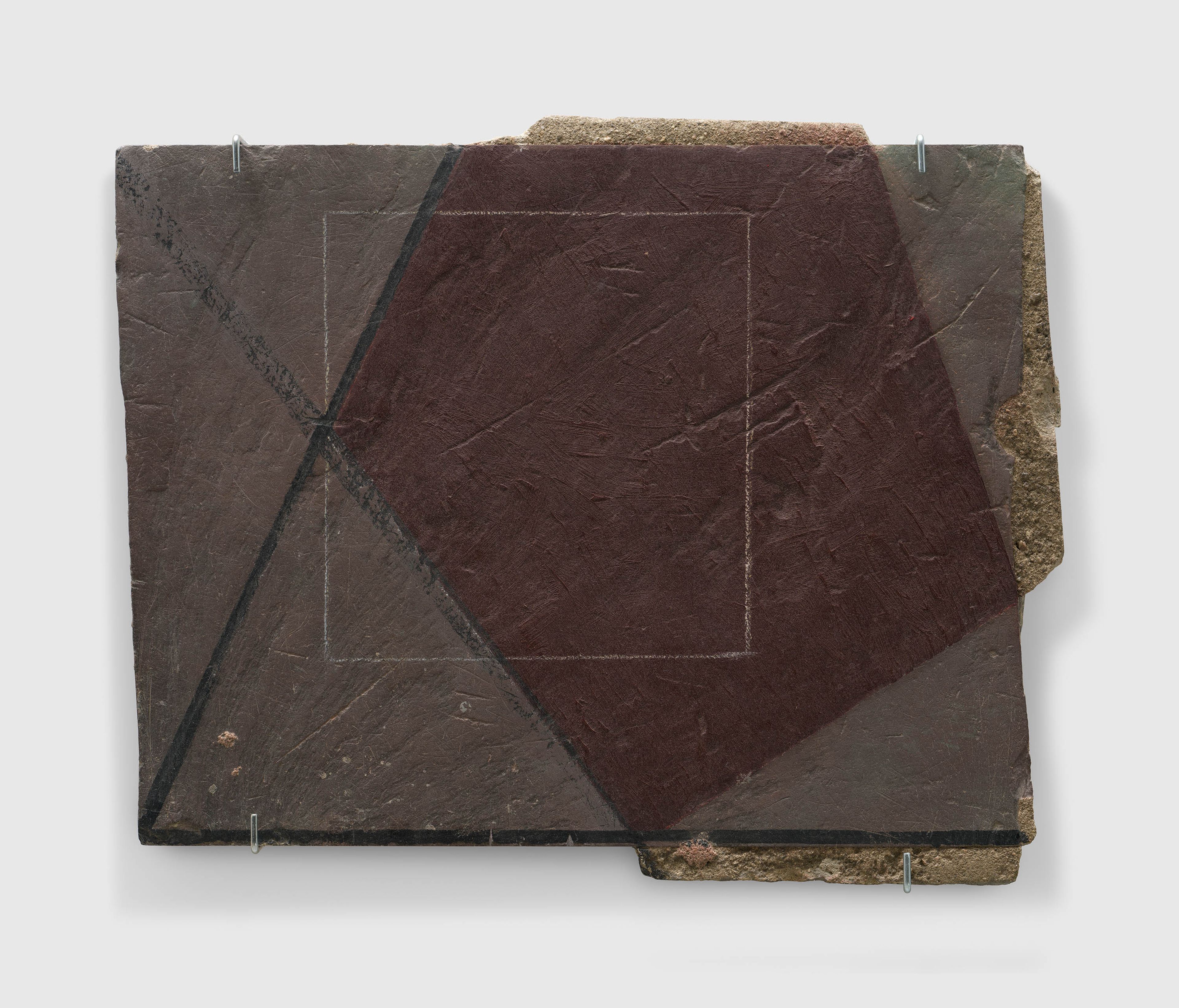
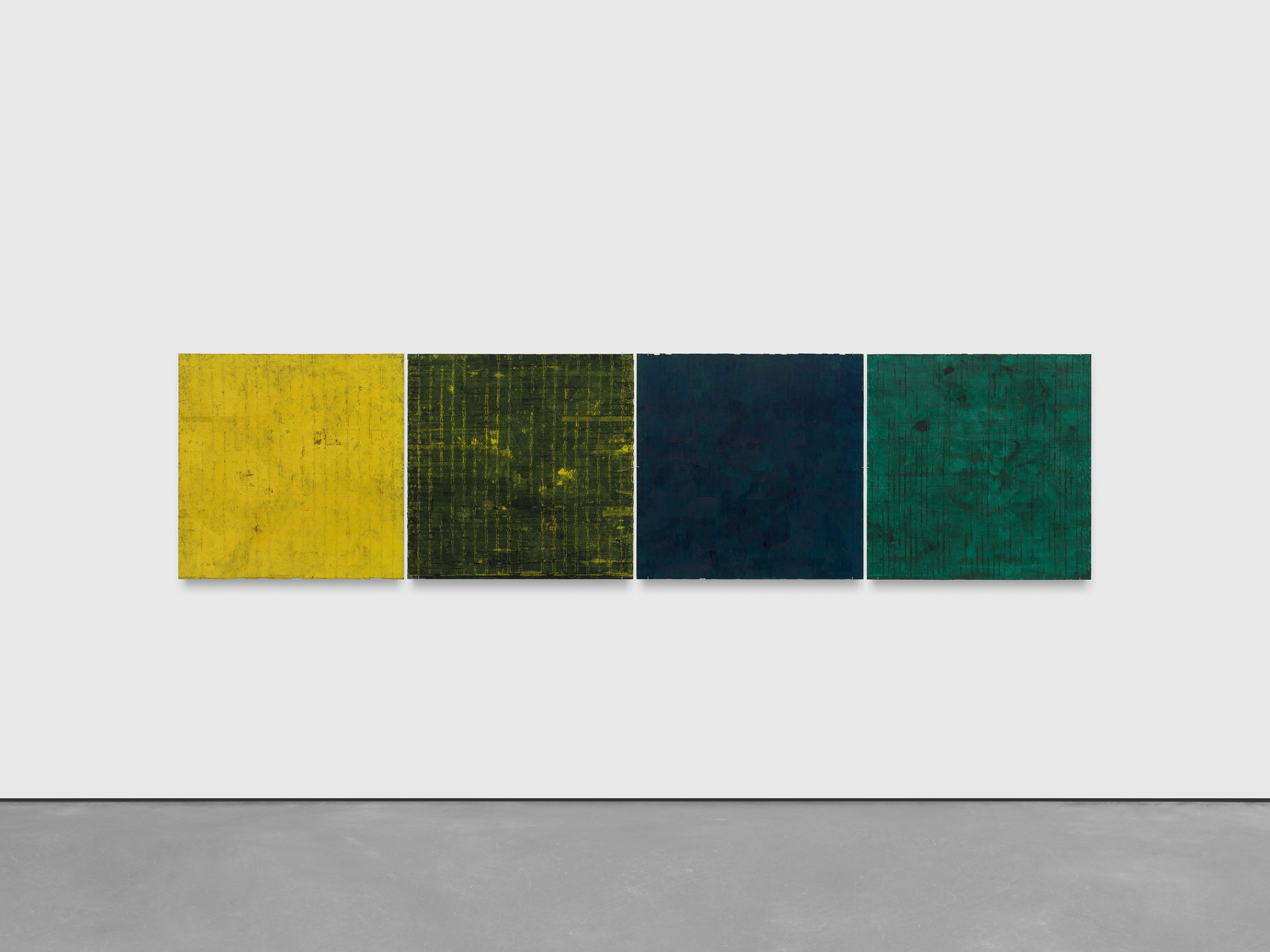
Painted works on steel and slate from the 1980s and 1990s installed in the front room of the gallery testify to Wagner’s innovative use of materials traditionally reserved for sculpture. Through the artist’s methods of markmaking and juxtaposition, these heavy surfaces are transformed into light and nimble compositions that utilize the language of painting.

By the mid-1970s, the artist largely moved away from canvas and looked to nontraditional supports as surfaces for color. Soon after, she received a large quantity of slate chalkboards and fragments that had been removed during the renovation of P.S. 1 Contemporary Art Center in New York.

While the artist had previously used slate as a support, this donation made it her primary focus throughout that period. These alternative substrates interested Wagner not only for their textural appearance but also for their allusions to the natural world and their inherent connection to process and chance.

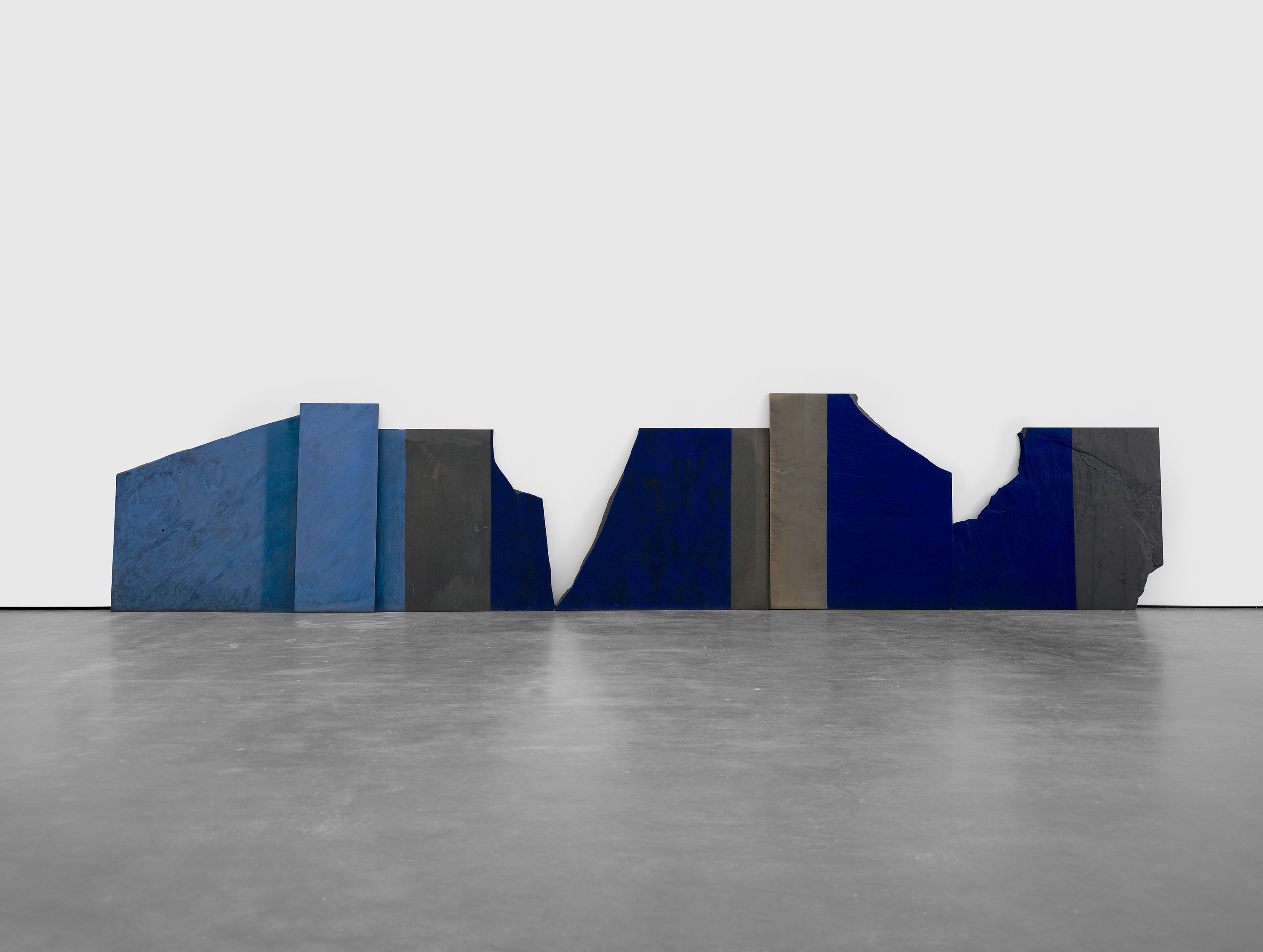
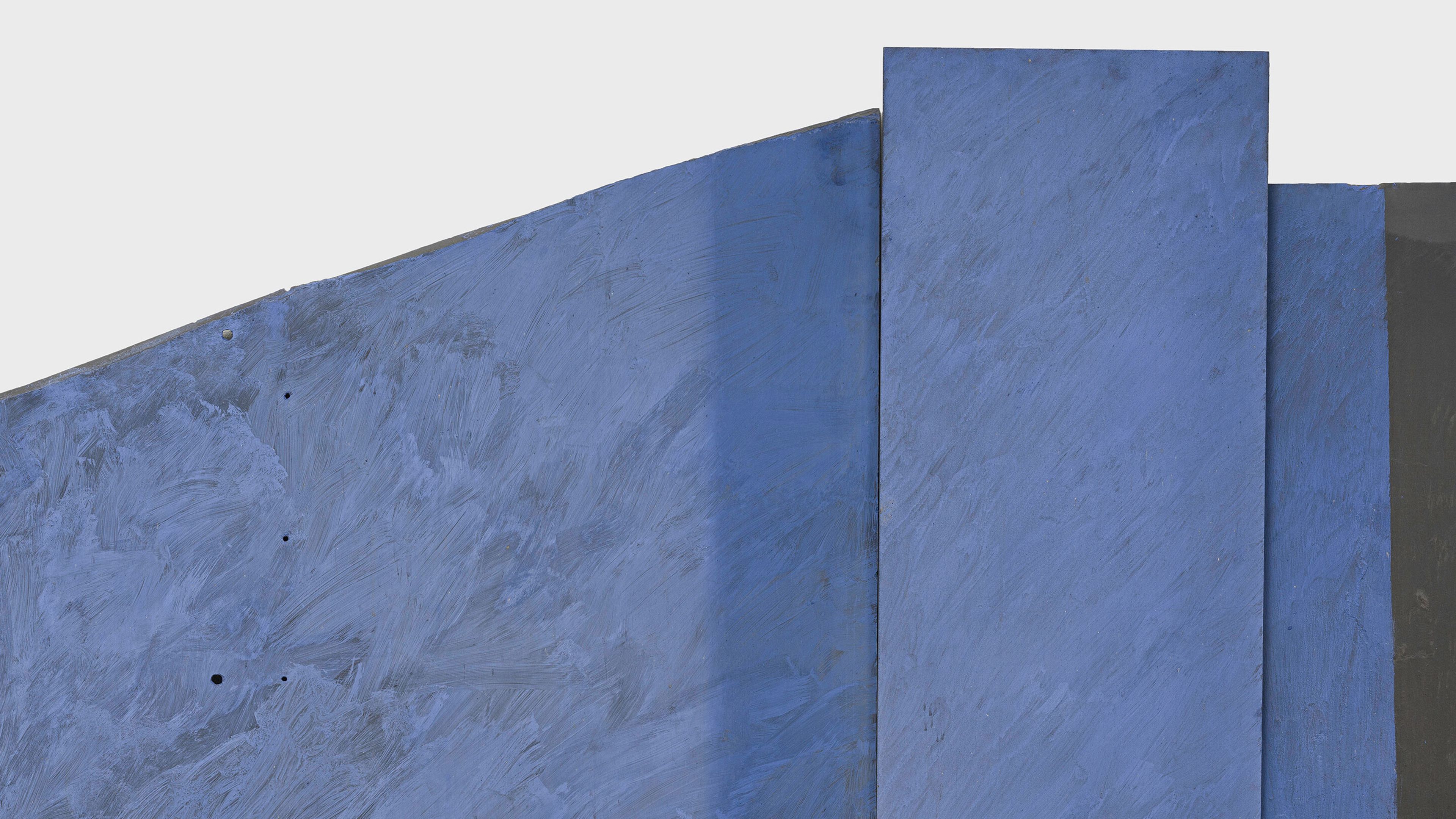
The largest such work on display, Gorges (1986), measures twenty feet across and is composed of a sequence of irregularly shaped slate fragments that lean against the wall and have been partially painted in shades of blue. With its craggy silhouette and tranquil palette, Gorges reads at once like a mountain range, a quarry, a horizon line, or the watery ravines for which it is named.

Merrill Wagner, Gorges, 1986 (detail)

“Not only is the secondhand quality of her material unchanged, but its idiosyncratic nature is also highlighted by the juxtapositions and additions Wagner makes. A jagged edge plays off a straight one; a square is imposed on the irregular rectangular shape of the support; or holes become arbitrary focal points…. Wagner’s art sets up an opposition between the arbitrary and the ordered.”

—Tiffany Bell, curator and critic, in her catalogue essay for Merrill Wagner, New York Studio School, 2016
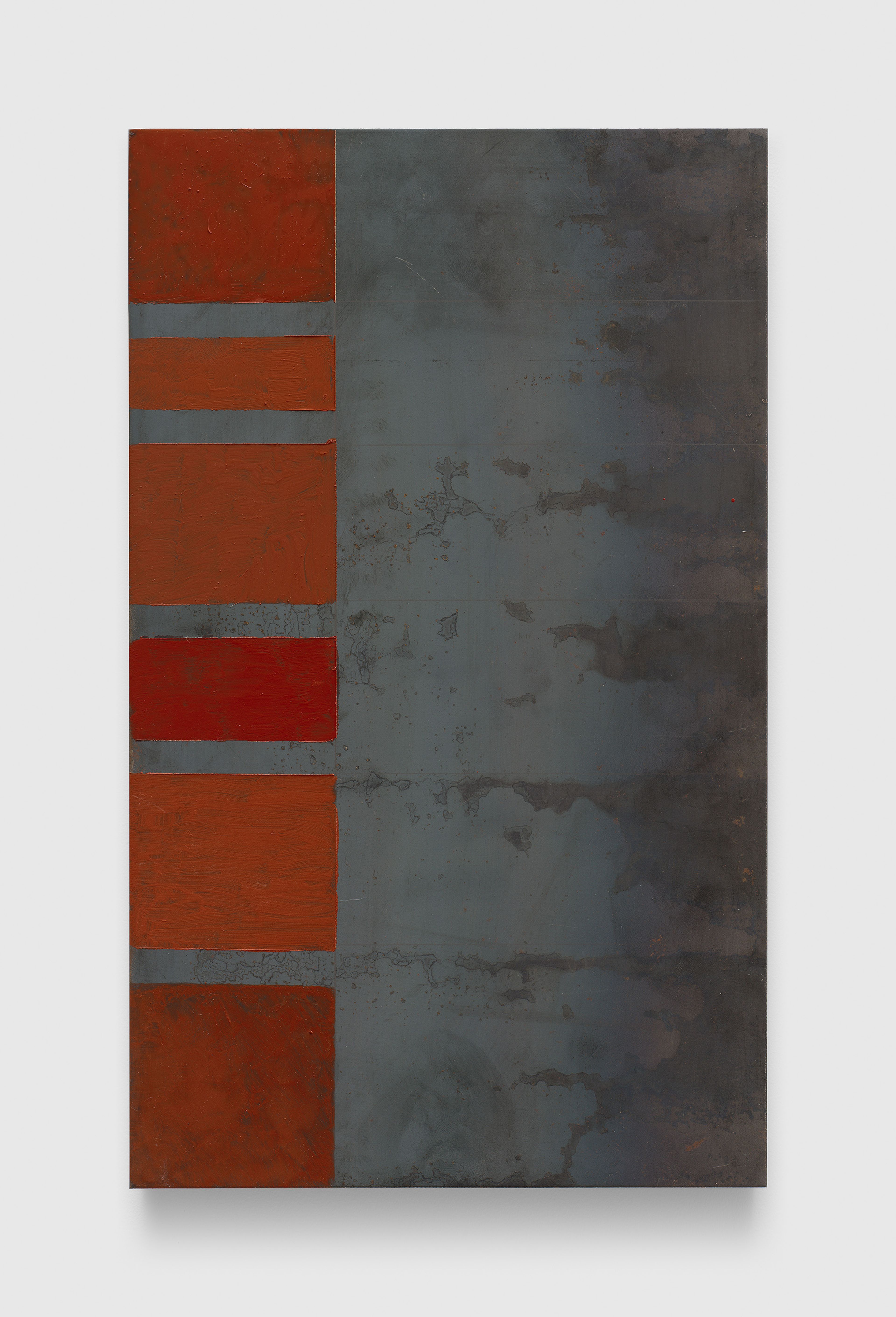
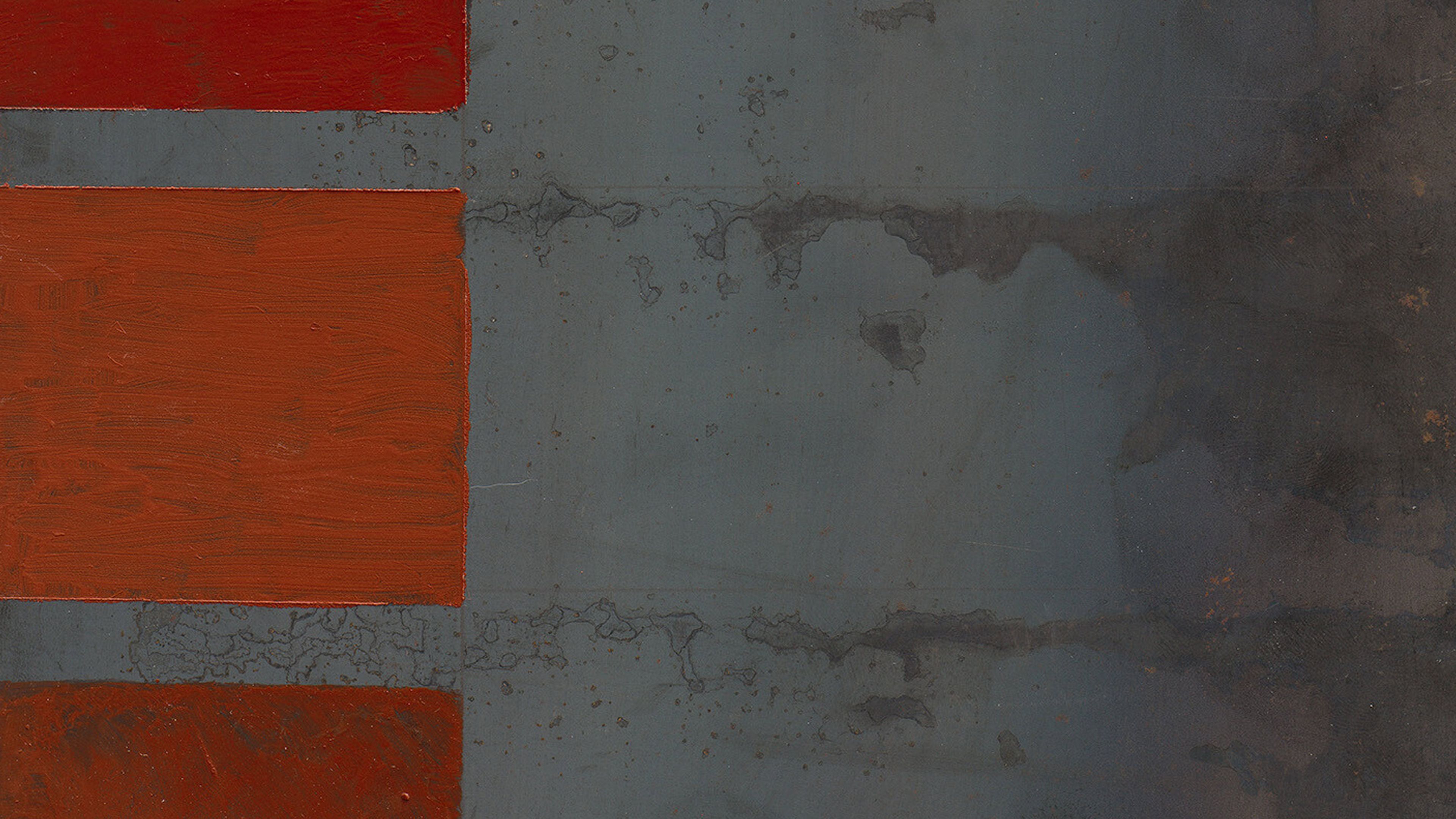
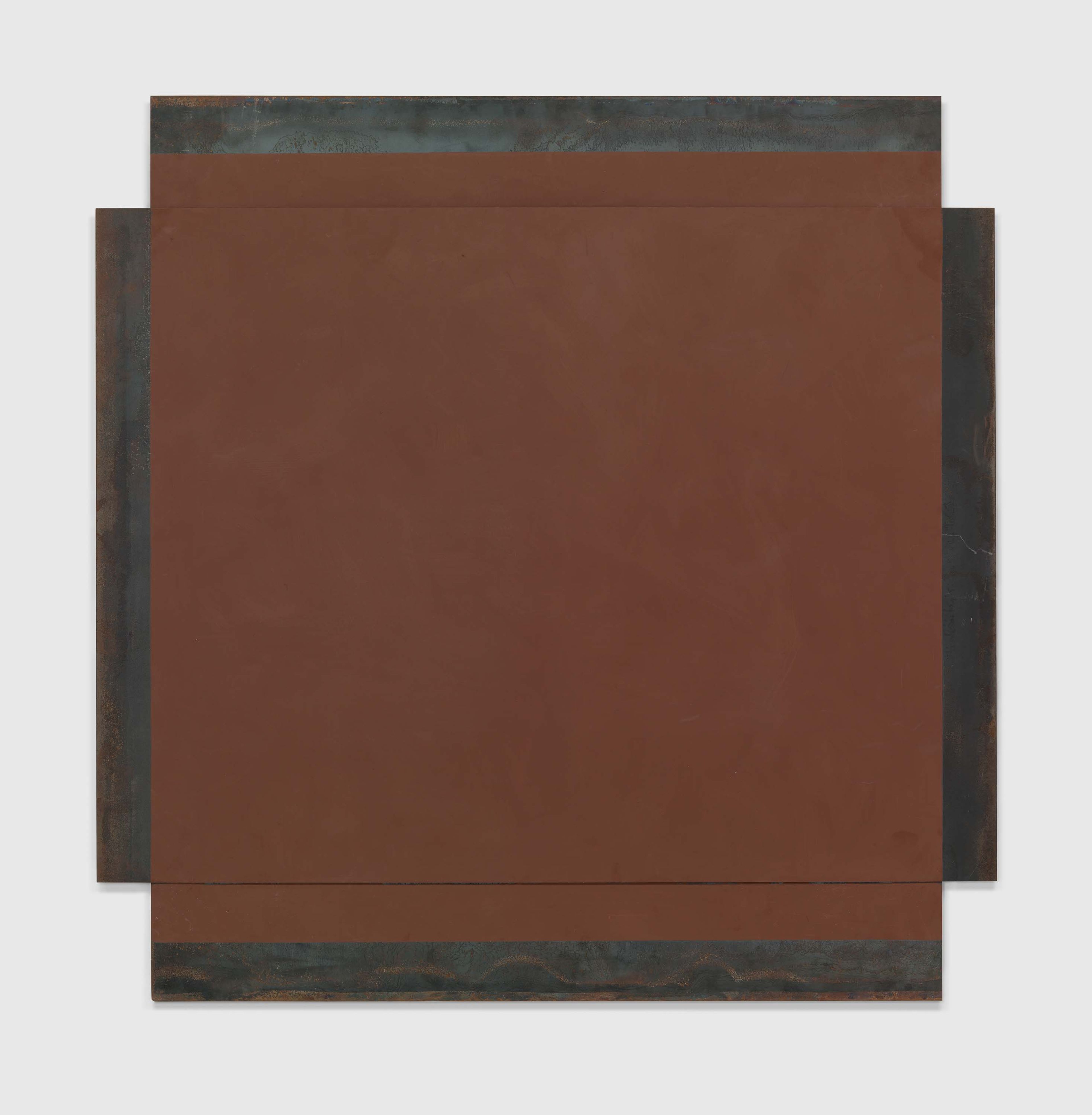
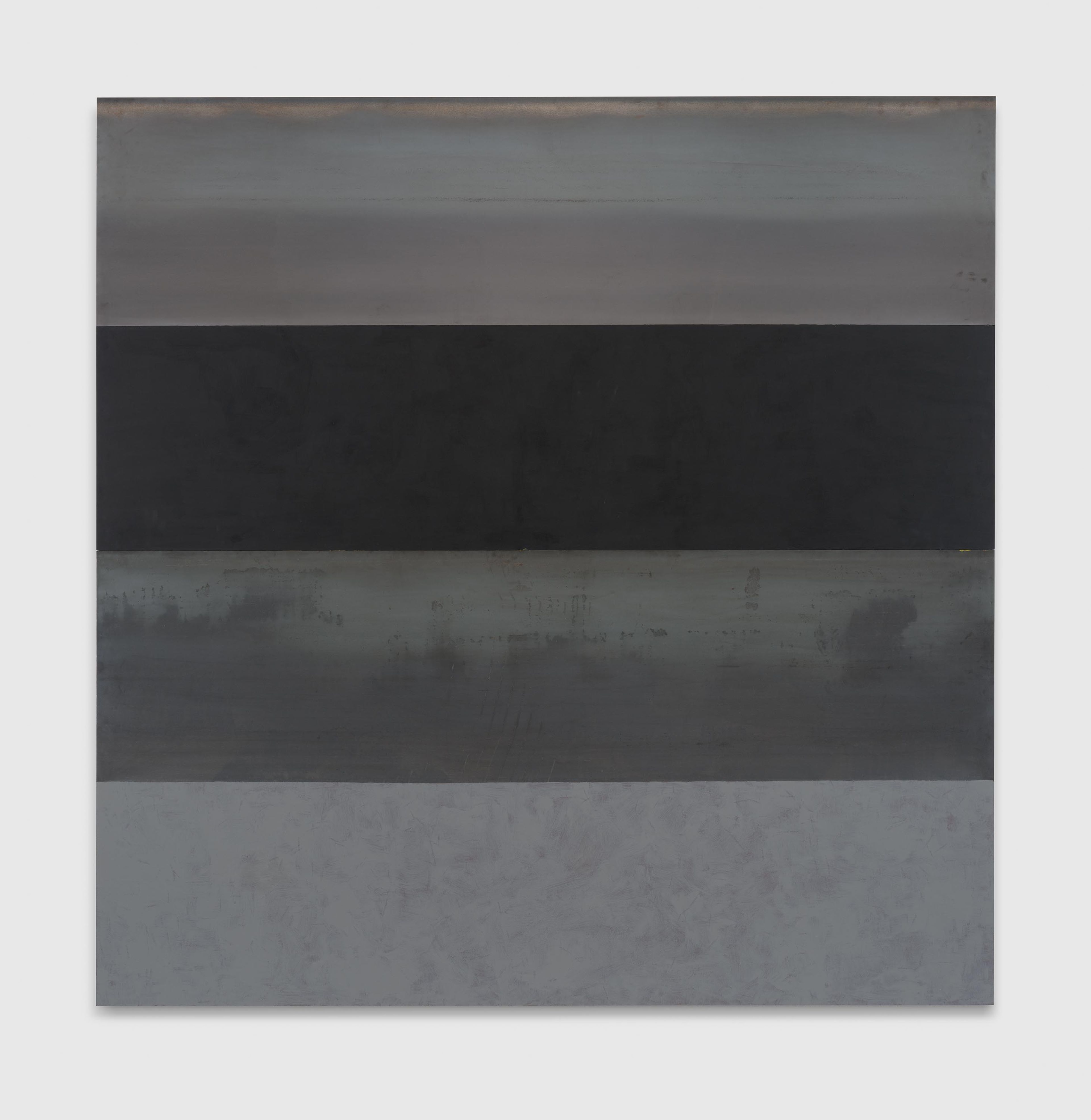
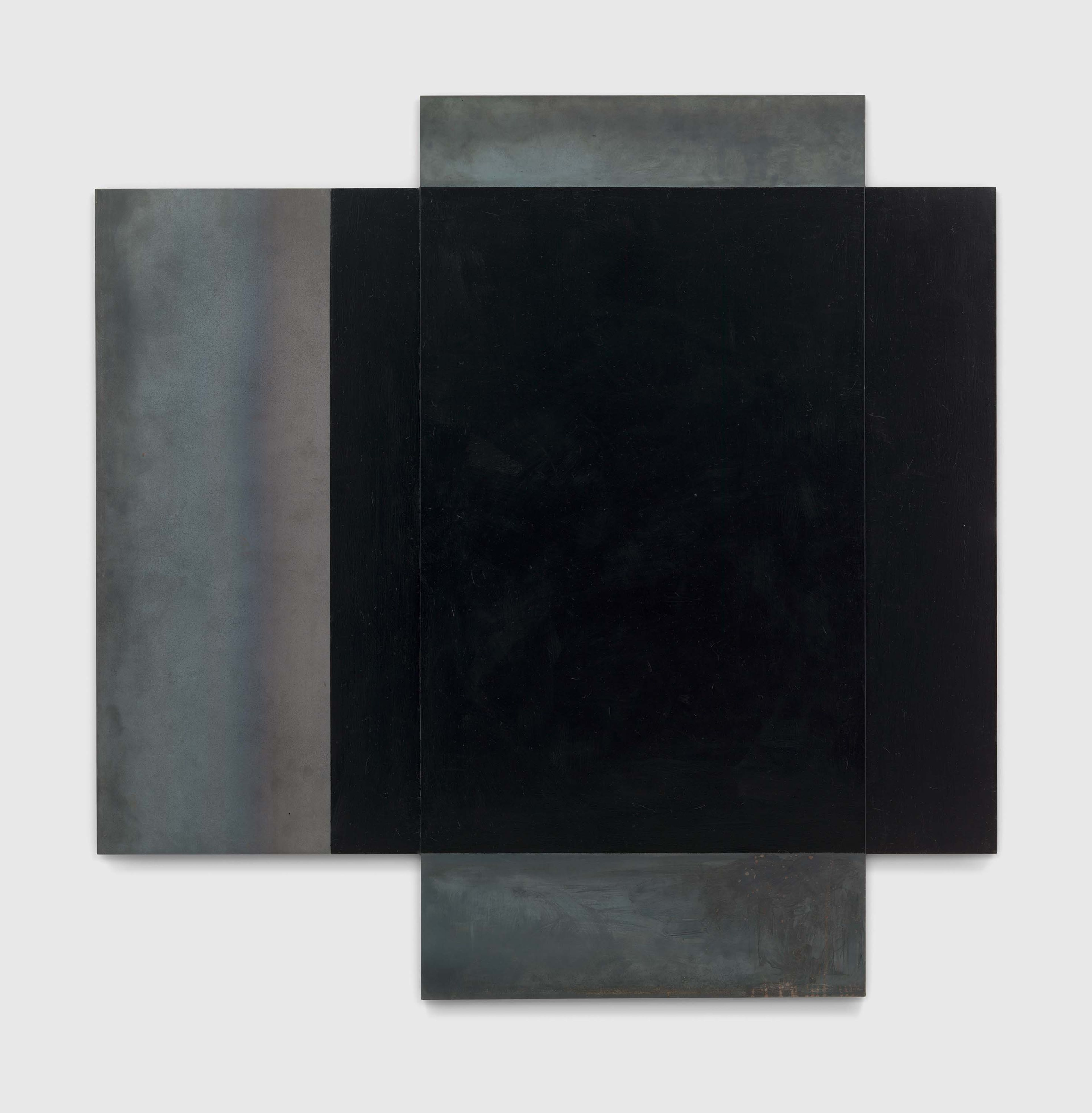
Likewise, the paintings on steel—part of a body of work that Wagner began in the late 1980s—seamlessly juxtapose the organic and the industrial; using primarily rust preventative paint on cold-rolled steel, Wagner applies swathes of color to the steel’s glossy surface. These reflective works, with their industrial materiality and their bands of pigment, are reminiscent of minimalist sculpture.

Merrill Wagner, Untitled (Study), 2005 (detail)

“The addition of paint has as much to do with editing out some of the information that’s already there as it does with building a more explicit composition. These paintings seem related to the late, very dark paintings of Mark Rothko, with similarly brooding power.... Unerring judgment about the particulars of texture, shape and placement give these quiet, almost plain works a power that color and complexity cannot match without it.”

—Barry Schwabsky, The New York Times, 1996
Installation view, Merrill Wagner: Marking Time, David Zwirner, New York, 2026
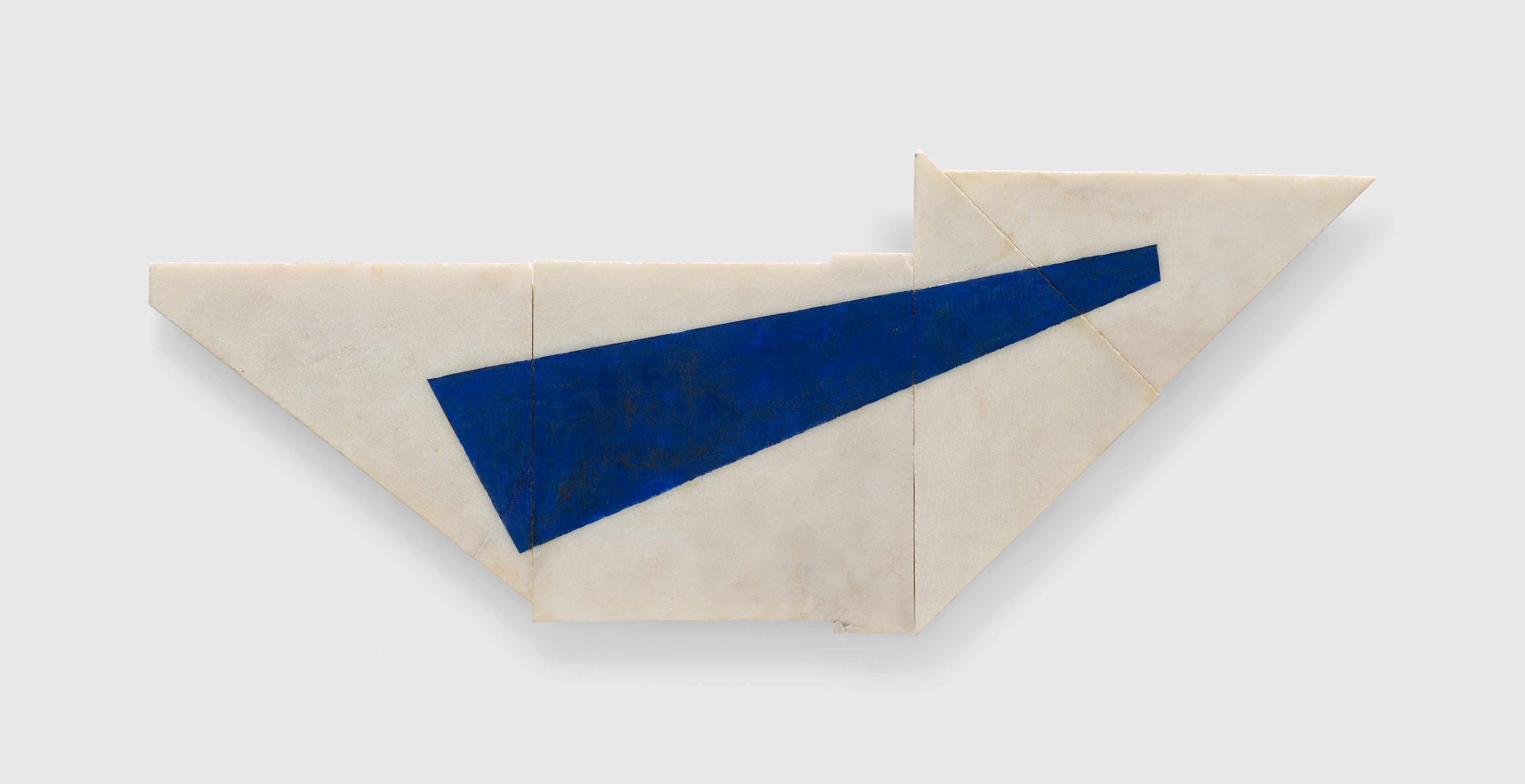
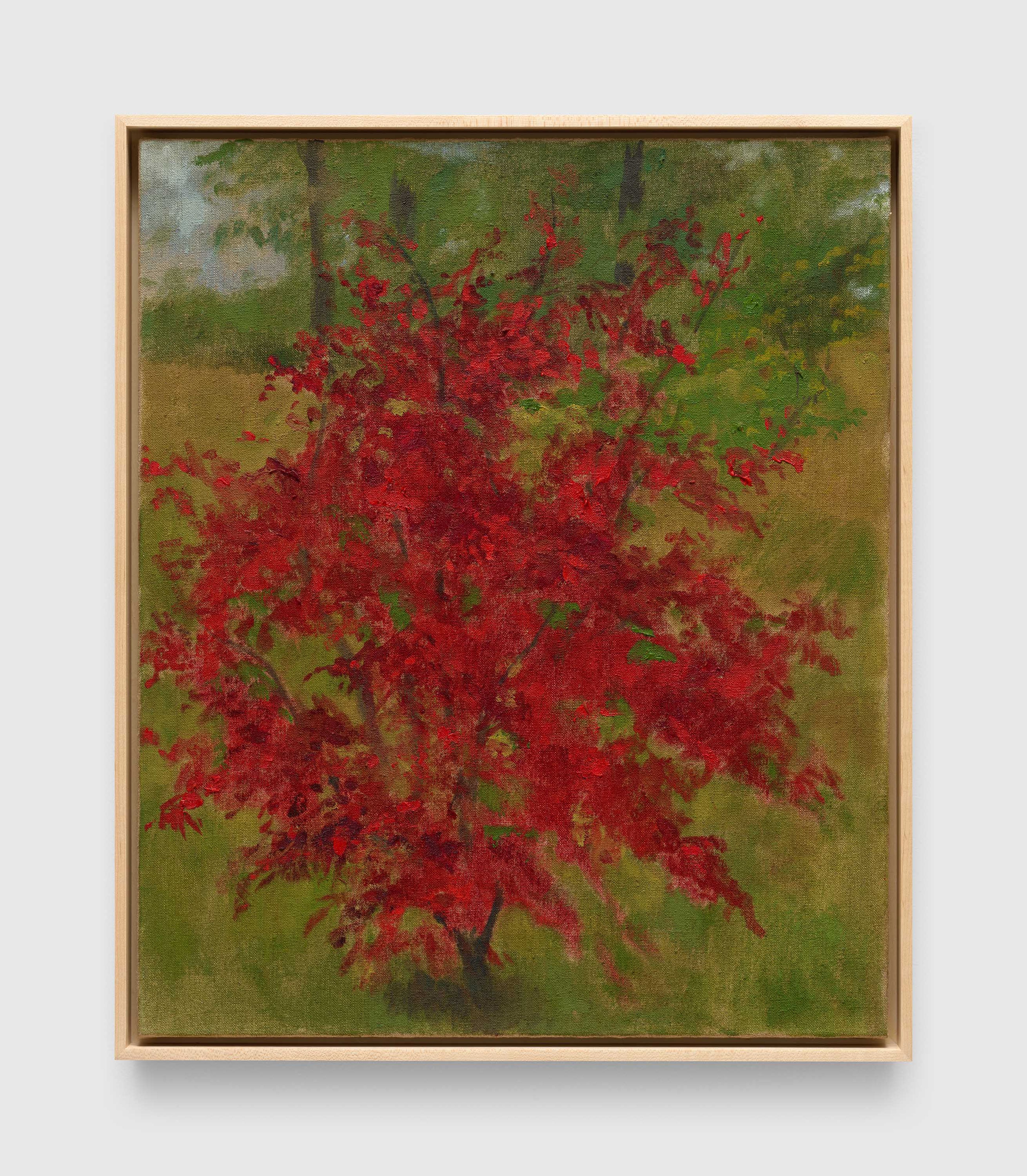
Wagner’s Pacific Northwest upbringing is resonant throughout her practice, and she has continued to make work outdoors throughout her career. By integrating the support within the compositional logic of her works, and ordering and joining fragments by adding painted elements, Wagner mediates between the natural and the constructed.

“Rock—mainly conglomerate dug up and discarded in the process of municipal street repair—provides a found surface to coopt as a painting support. After all, such drilled rubble provokes textural anomalies that exaggerate the nature of the paving itself. With the surface of the street still visible on one facet, an erratically reconstructed equivalent generates another sort of surface that advertises its deviance from the functional one found outside one's home.”

—Marjorie Welish, artist and critic, in her catalogue essay for Merrill Wagner: Works for Walls, Floors, and Fields, Ben Shahn Gallery, William Paterson College, Wayne, New Jersey, 1996
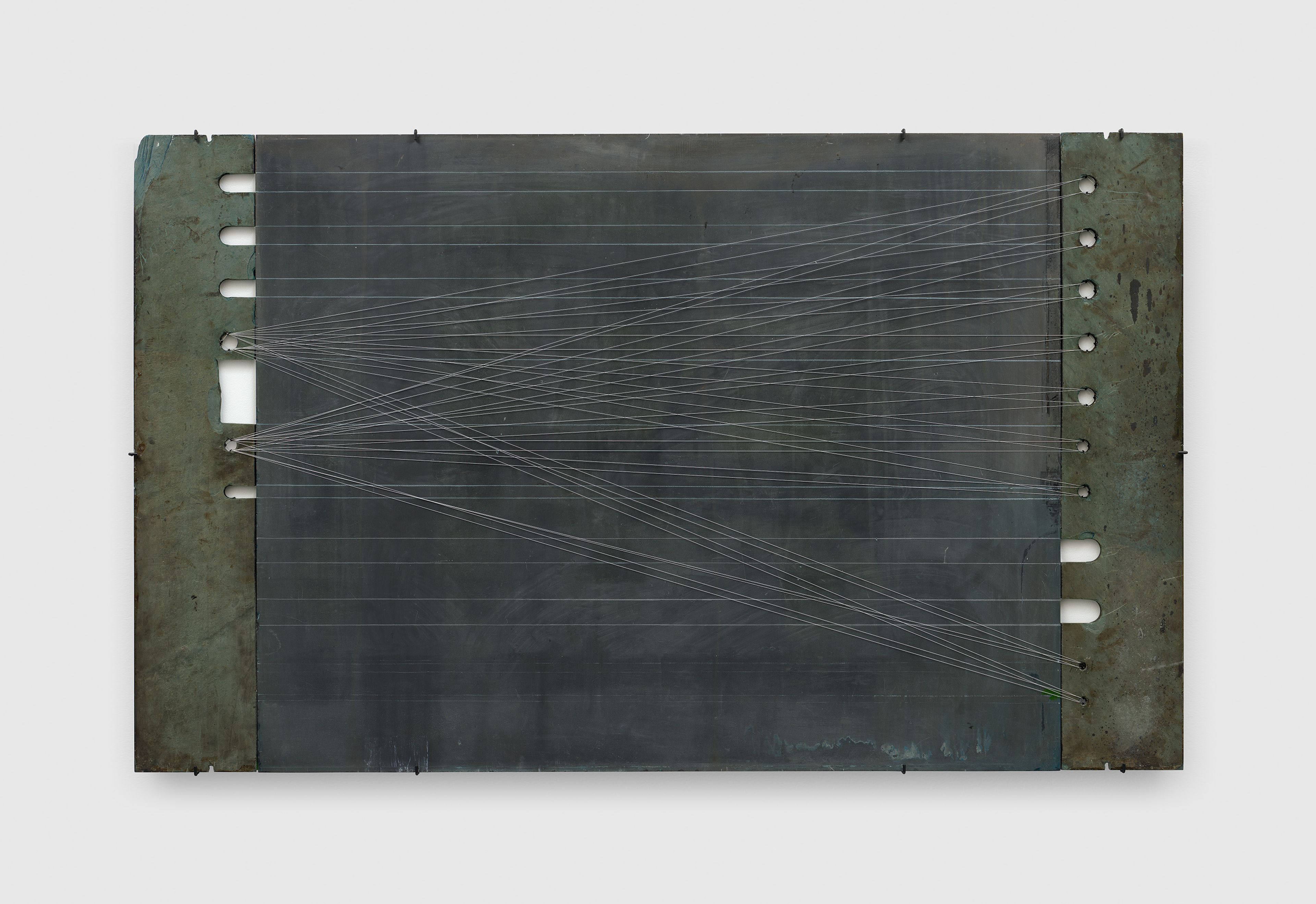
The middle room of the exhibition foregrounds Wagner’s expansive engagement with the practice of drawing, which provides another avenue for the artist to embed the passage of time in her works.

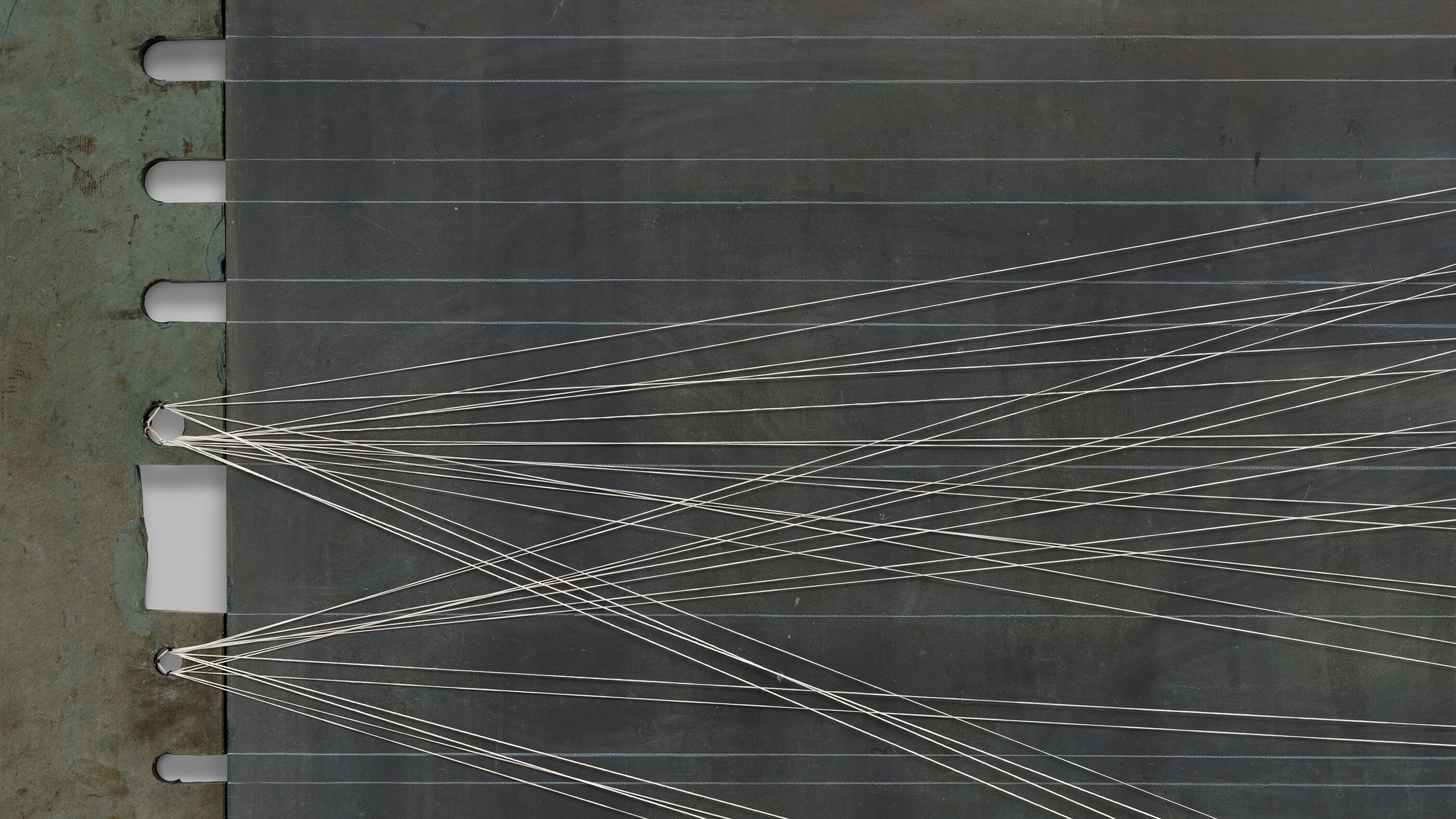
In the major sculpture Cat’s Cradle (1989), white waxed thread is wound around sewing hooks at either side of the work and stretched in a triangular pattern across a large piece of slate, which is itself marked with horizontal lines in white oil pastel. Drawn and threaded lines are woven together, forming a kind of optical illusion that traverses physical dimensions.

Merrill Wagner, Cat’s Cradle, 1989 (detail)

“In her pieces that incorporate string, it is sometimes difficult to distinguish a drawn line from an actual string line. Ambiguity and tension exists between the real, which is represented by the material quality of the work, and the non-real or artificial, embodied in the painted and drawn image.”

—Tiffany Bell, curator and critic, in her catalogue essay for Merrill Wagner, New York Studio School, 2016
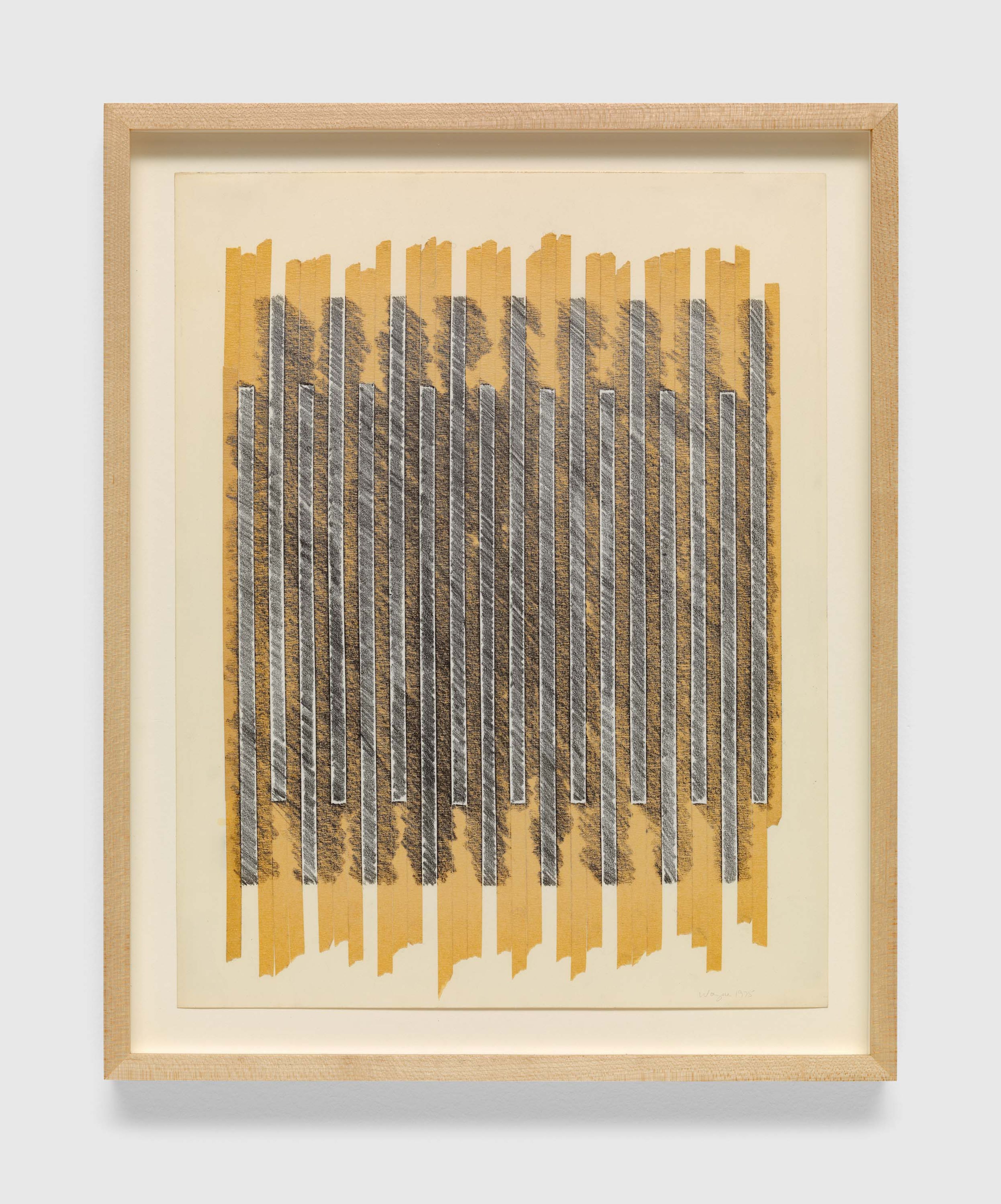
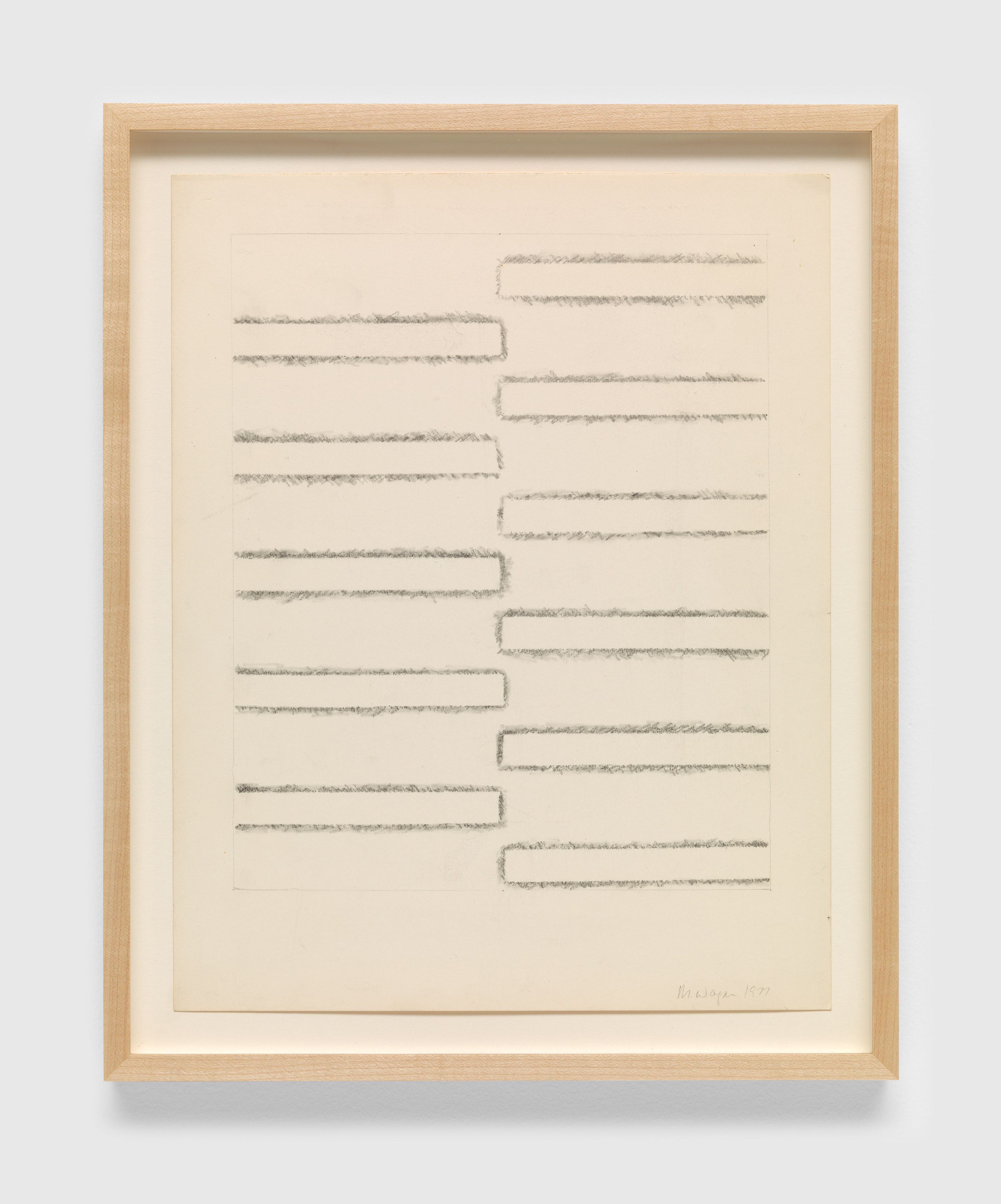
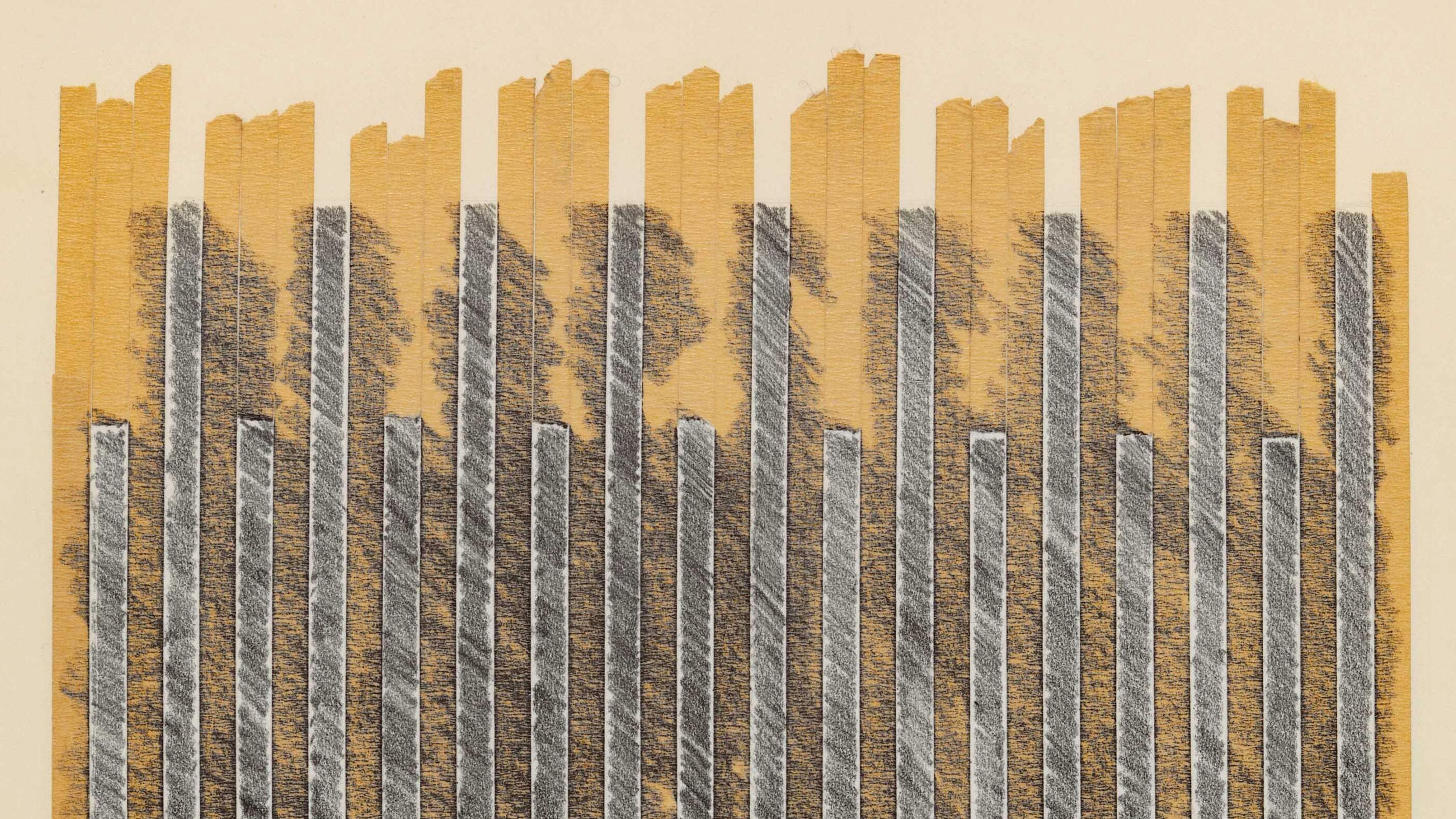
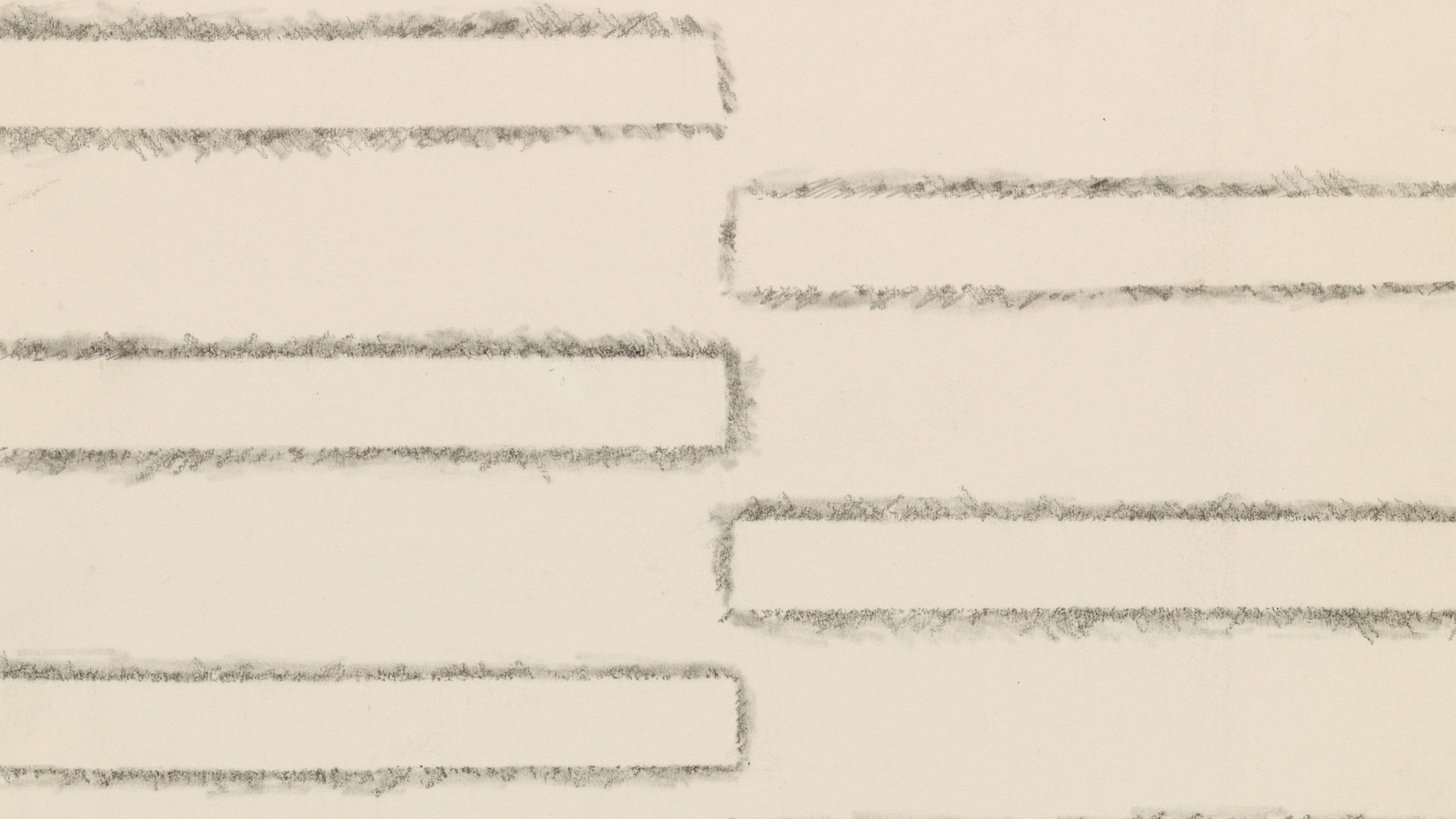
In a group of works on paper from the mid-1970s, Wagner uses the unorthodox material of masking tape to guide the appearance and outcome of her drawings, using it as a temporary stencil, or at times, incorporating tape in the final composition itself. These works represent an important evolution in the artist’s approach wherein process and form become intrinsically linked and the transient nature of material is revealed.

Merrill Wagner, Untitled, 1977 (detail)

Merrill Wagner, Untitled, 1975 (detail)


“Wagner wants the tape—which is used in the construction and painting of countless rooms—to be seen, rather than thrown away. Her interest in the material susceptibility of paint, and in memorializing a blandly colored, throwaway aid, speaks to something deep in us all: our feelings of vulnerability and our fear of being forgotten.”

—John Yau, poet, critic, and curator, in his catalogue essay for Merrill Wagner, New York Studio School, 2016
Installation view, Merrill Wagner: Marking Time, David Zwirner, New York, 2026

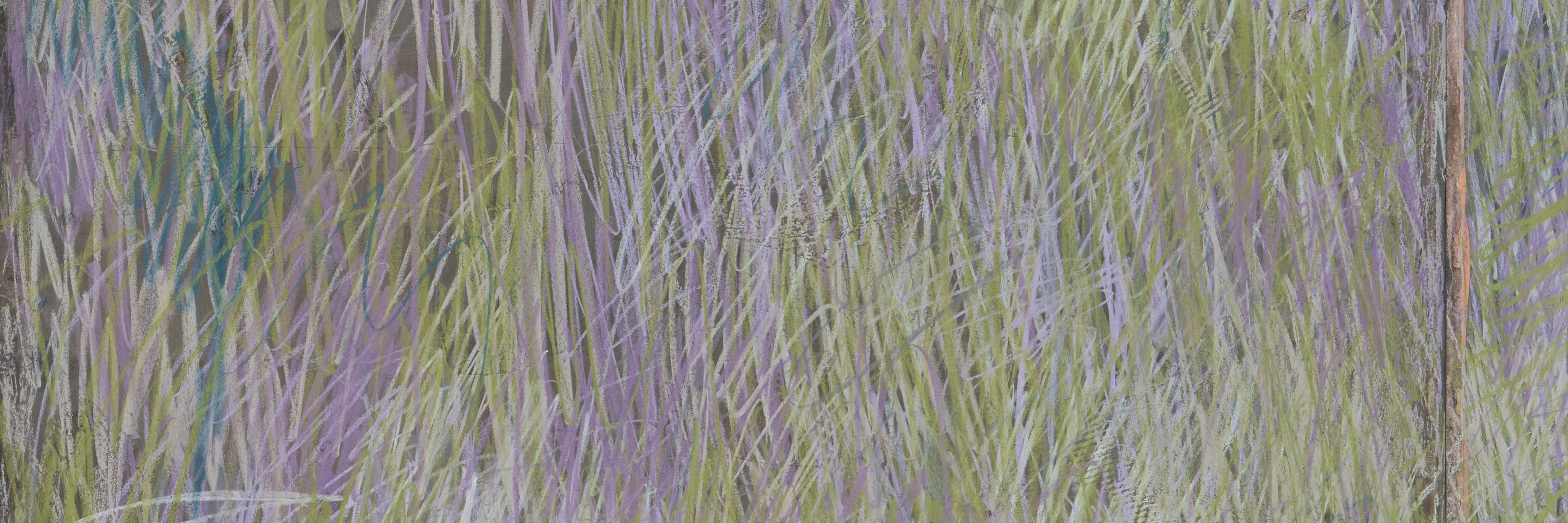
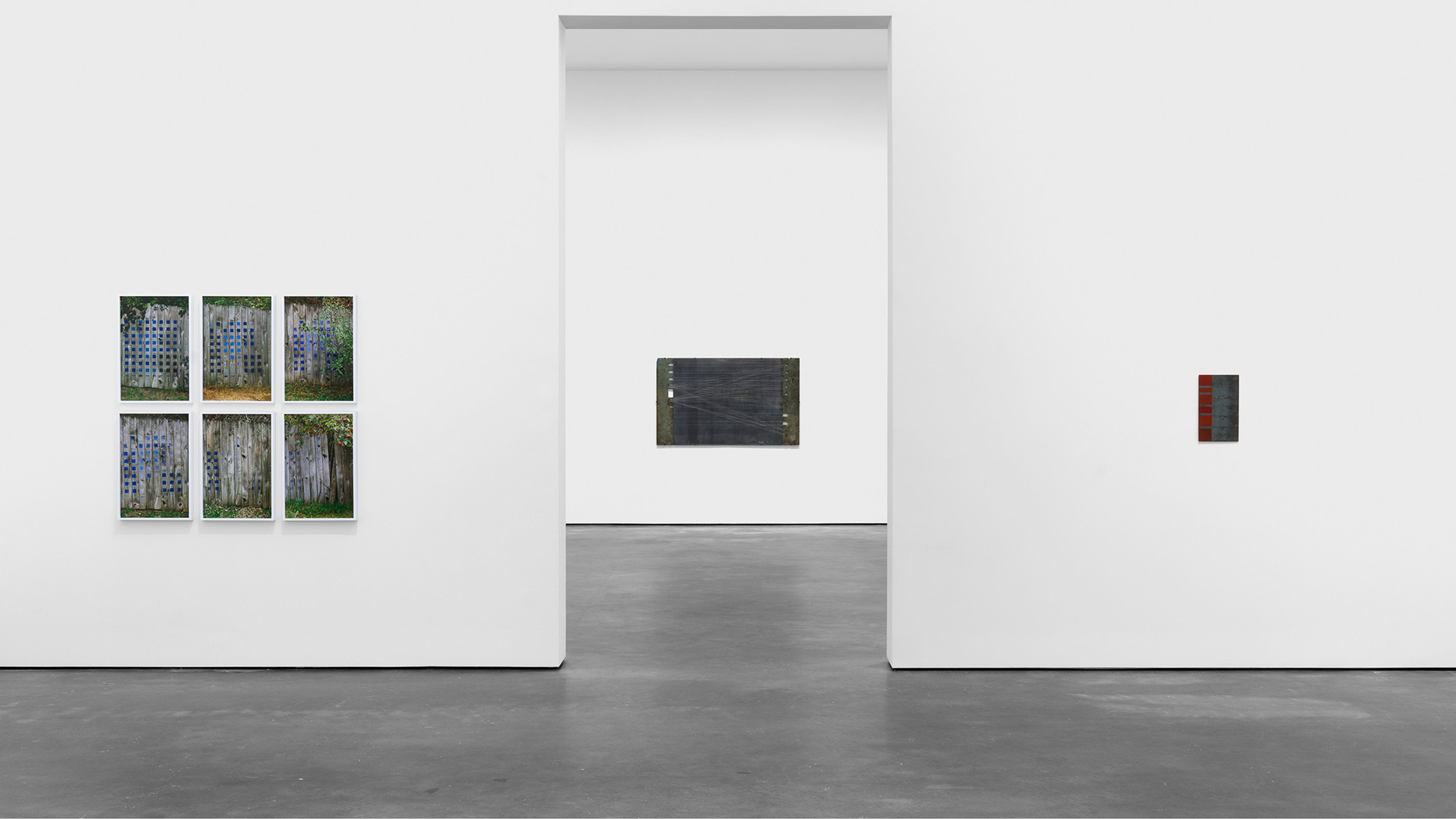
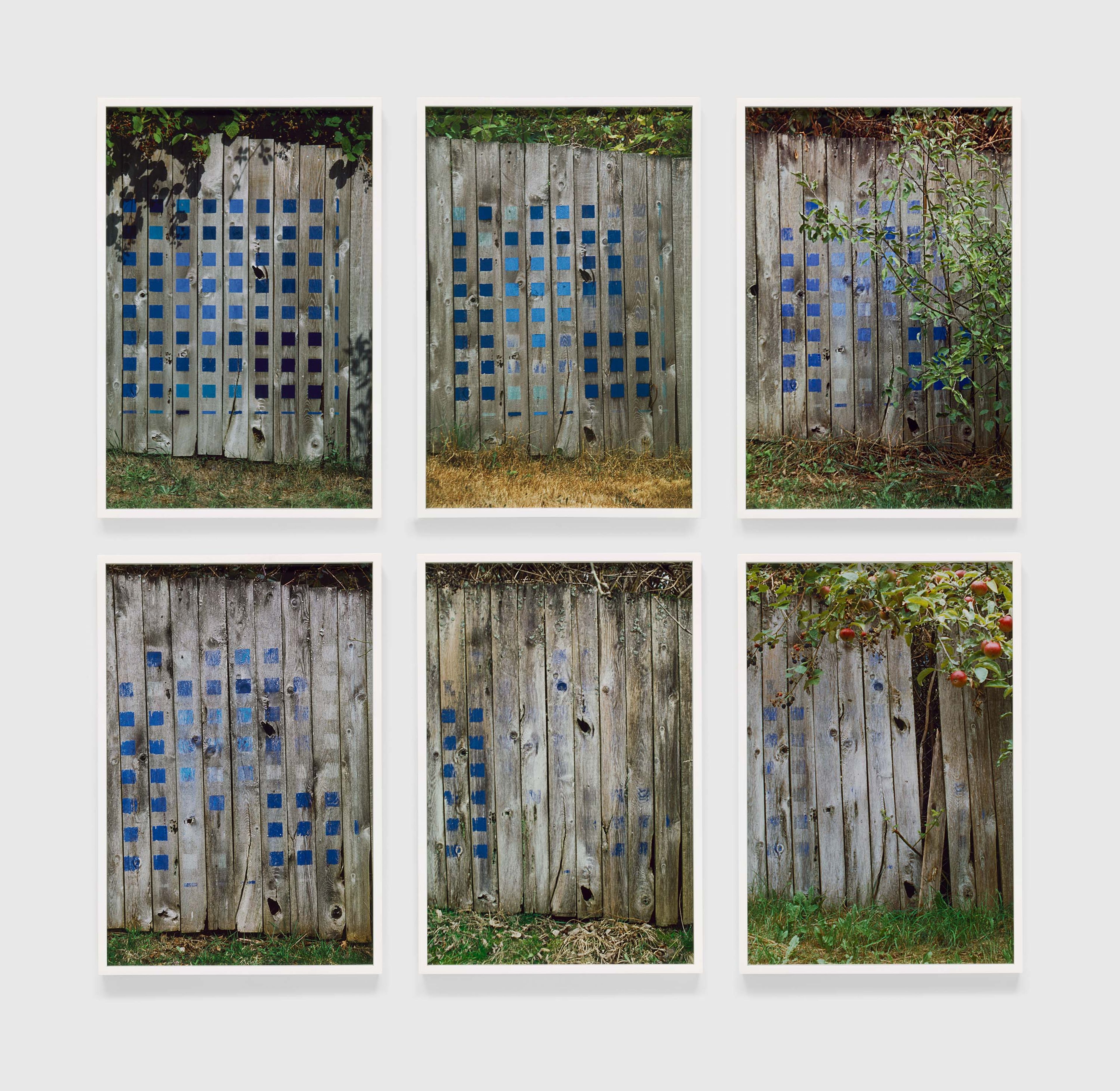
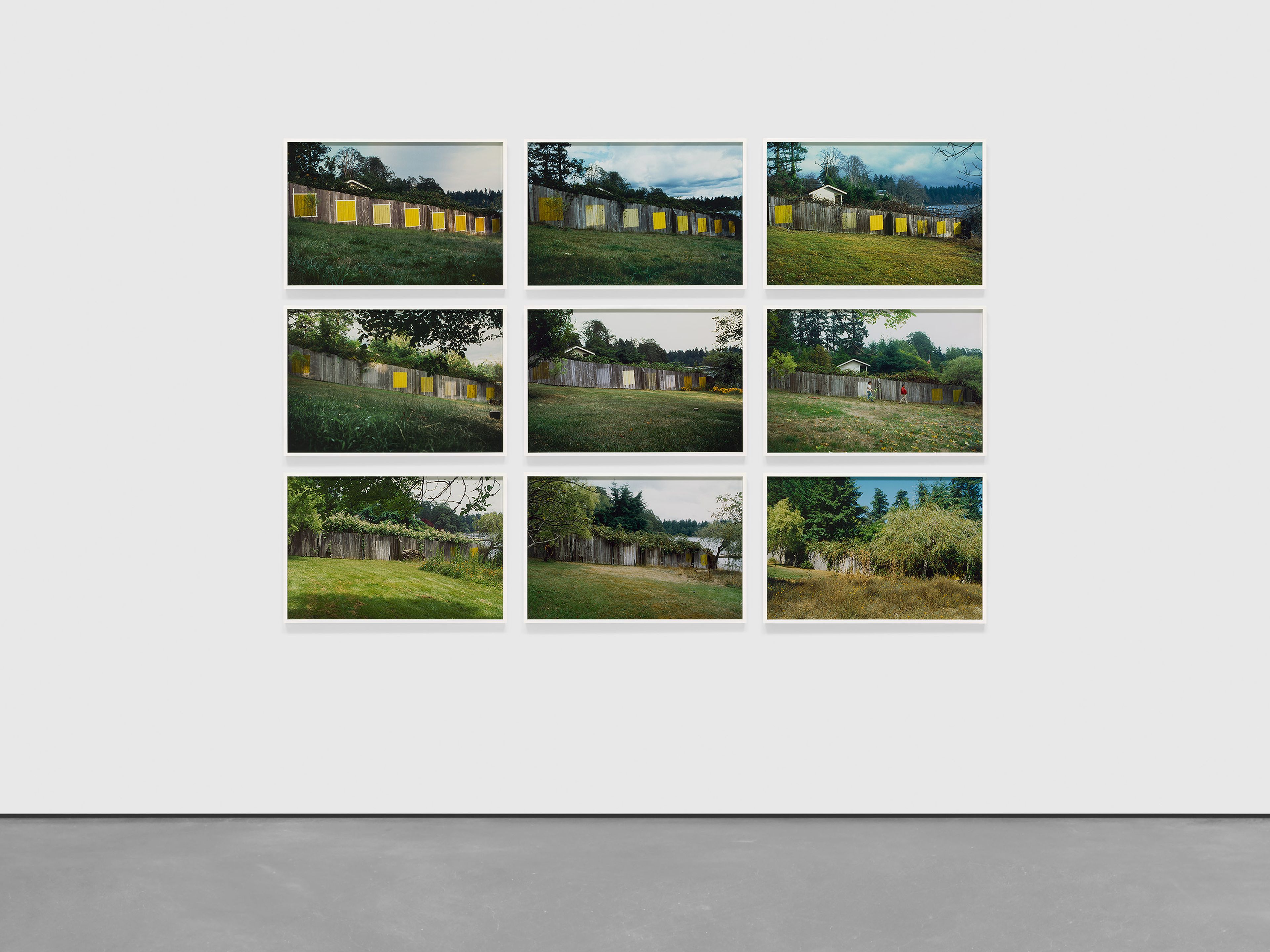
Centrally featured in Marking Time are photographs that document Wagner’s practice of creating outdoor site-specific interventions on unassuming surfaces, such as on fences and rock outcroppings, that she leaves unprotected from the elements to fade over a long period of time—a conceptual process that she likened to a scientific experiment.

“Wagner gives plein air painting literal meaning. Locating her work outdoors, placing it directly into the landscape and leaving it there, she redefines landscape painting. lt is ultimately a gallant and quixotic gesture, the willful act of an artist who wants to make her mark on nature while soliciting nature's active participation.”

—Lily Wei, critic and curator, in her catalogue essay for Merrill Wagner, Art Resources Transfer, New York, 2003

While some of Wagner’s chosen materials are naturally occurring and others are human-made, they are united by a common thread: they have all borne witness to time, conjuring associations with geological histories. As much about the evolution of the surrounding landscape as it is about the artist’s painted intervention, these photographic suites occasion a poetic meditation on the role of chance and entropy in the formation of built environments and the natural world.

As the exhibition’s title suggests, Wagner’s practice is concerned with the recording of time in multiple registers. Moving with ease between a range of supports—including canvas, paper, slate, stone, and steel—she draws and paints directly on the surface of her works, allowing pigments to fade and mutate as they, in turn, mark the cycling of the seasons.

“In reply to anyone who would be tempted to say that Wagner's work is about as interesting as watching paint dry, she counters by urging us to watch paint dry in all the various circumstances within which this quiet event occurs. She thereby demonstrates that the process is indeed an event and that perceiving the subtle differences inherent in how this actually unfolds across what reveals itself to be a full spectrum of a given hue is, in the final analysis, of serious intent.”

—Robert Storr, curator and critic, in his catalogue essay for Merrill Wagner, New York Studio School, 2016
Installation view, Merrill Wagner: Marking Time, David Zwirner, New York, 2026
Black background, no image

Inquire about works by Merrill Wagner