'The Future Did Not Have to Be Luxury Condos: Revisiting Gordon Matta-Clark' by Sarah Cowan
2018
In the film "Day’s End," the artist Gordon Matta-Clark rides a whale-size piece of corrugated metal as it is hoisted away from the wall from which he just cut it. He’s a young man, age thirty-two. The feat was filmed in the summer of 1975, in Chelsea’s abandoned Pier 52 building, where Matta-Clark attempted to make an "indoor park." His silhouette, against the sunlight streaming in from his new view of the Hudson River, is heroic.
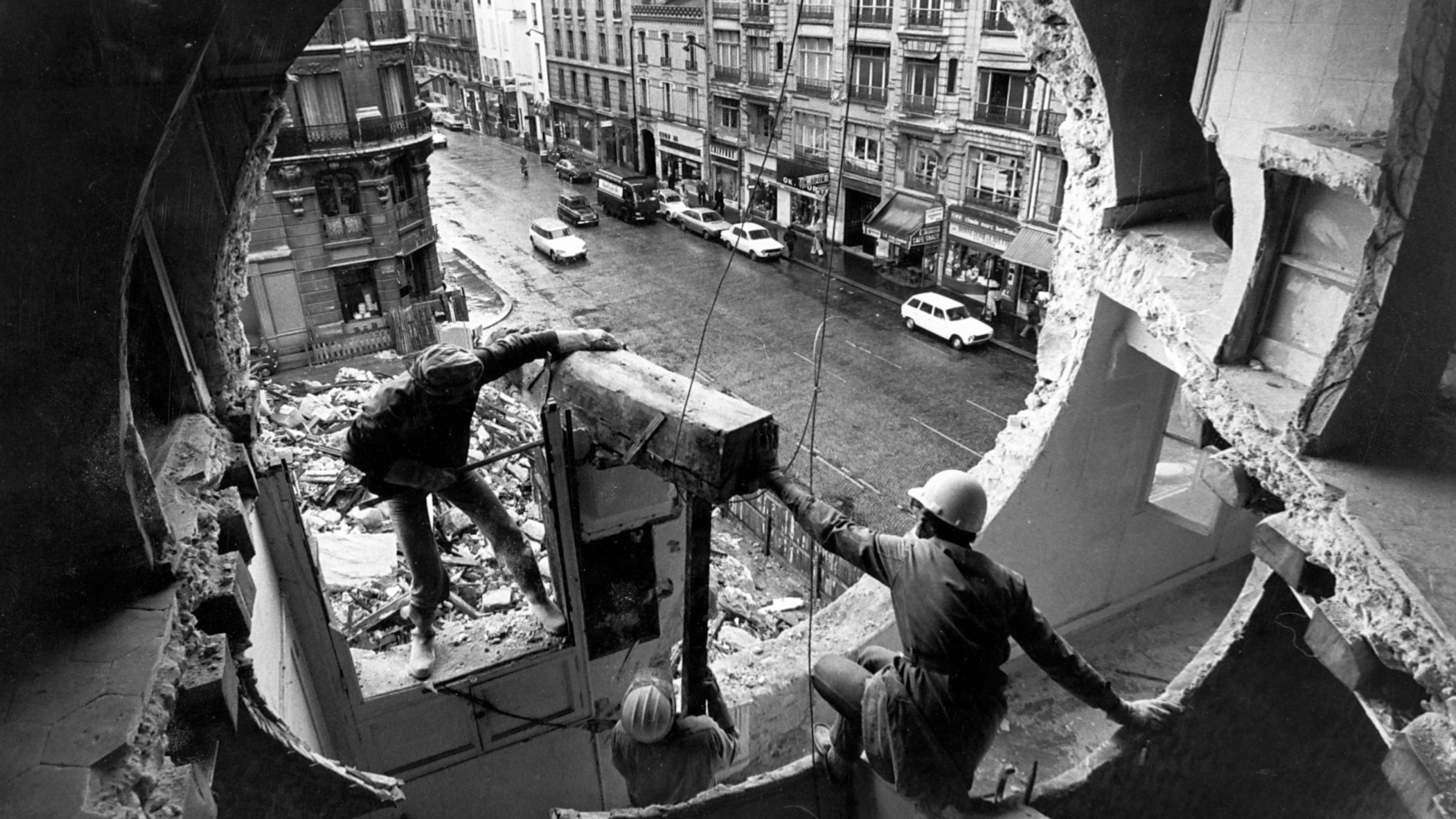
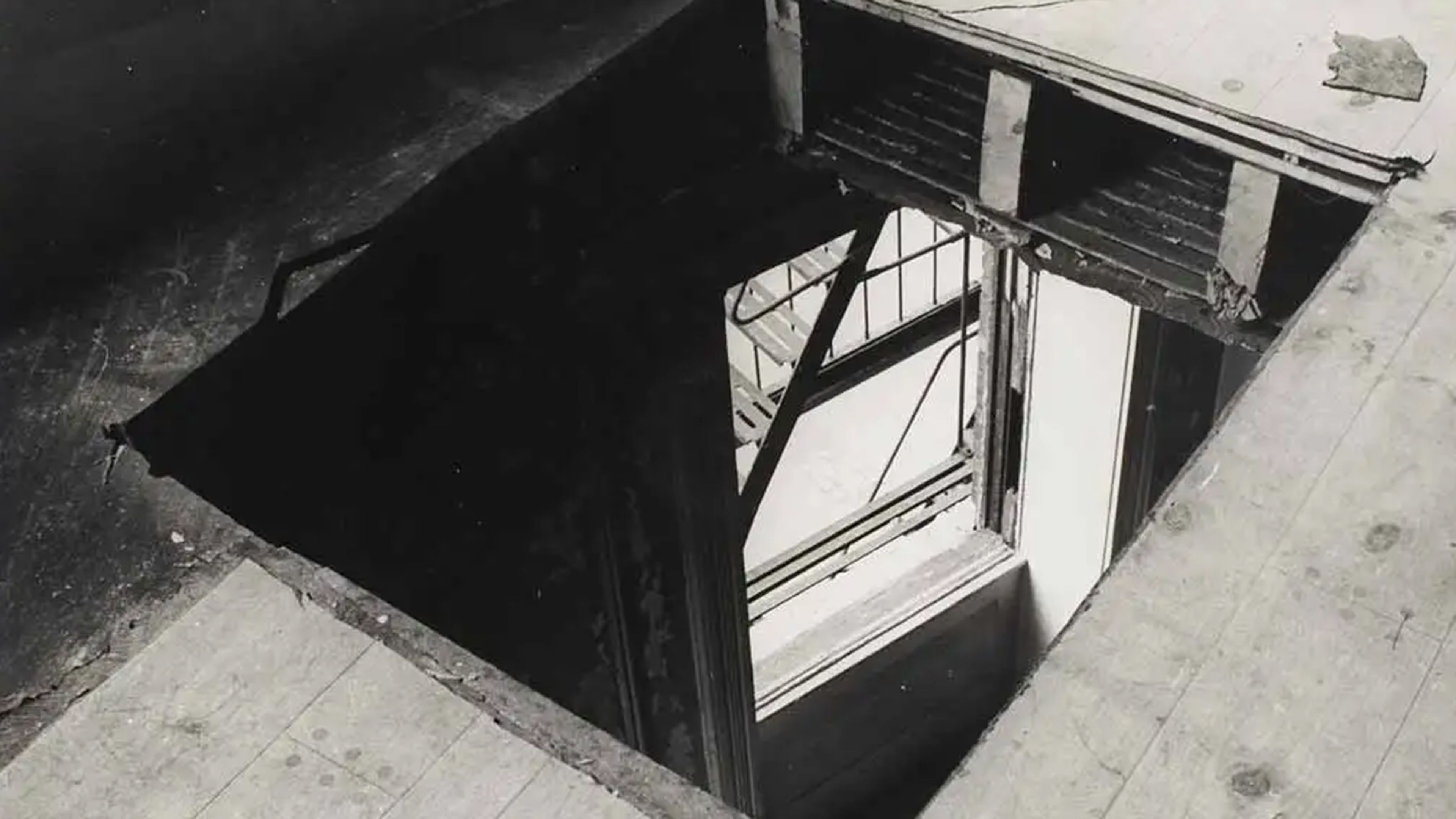
The exodus of middle-class whites and the manufacturing industry had left New York City sliding toward bankruptcy, and it was at this crucial point of economic transition that Matta-Clark turned his training in architecture toward art. He used the tools of construction, demolition, and scale to grip the edges of the city’s rupture and pull it into refined shapes, making urban decay (and possibility) more conspicuous. Of his choice of locations, he said, "The determining factor is the degree to which my intervention can transform the structure into an act of communication."
Move ahead forty years and the city’s debris is from new development, which has seized vacant space throughout Manhattan and Brooklyn. But the underlying inequalities that Matta-Clark addressed in his work remain. It’s fitting that “Day’s End” is currently screening in "Gordon Matta-Clark: Anarchitect," an exhibition at the Bronx Museum of the Arts. The Bronx has become the contemporary battleground where the ideas that motivated Matta-Clark—gentrification, displacement, who decides a city’s future—are being disputed.
Read more at The New Yorker.