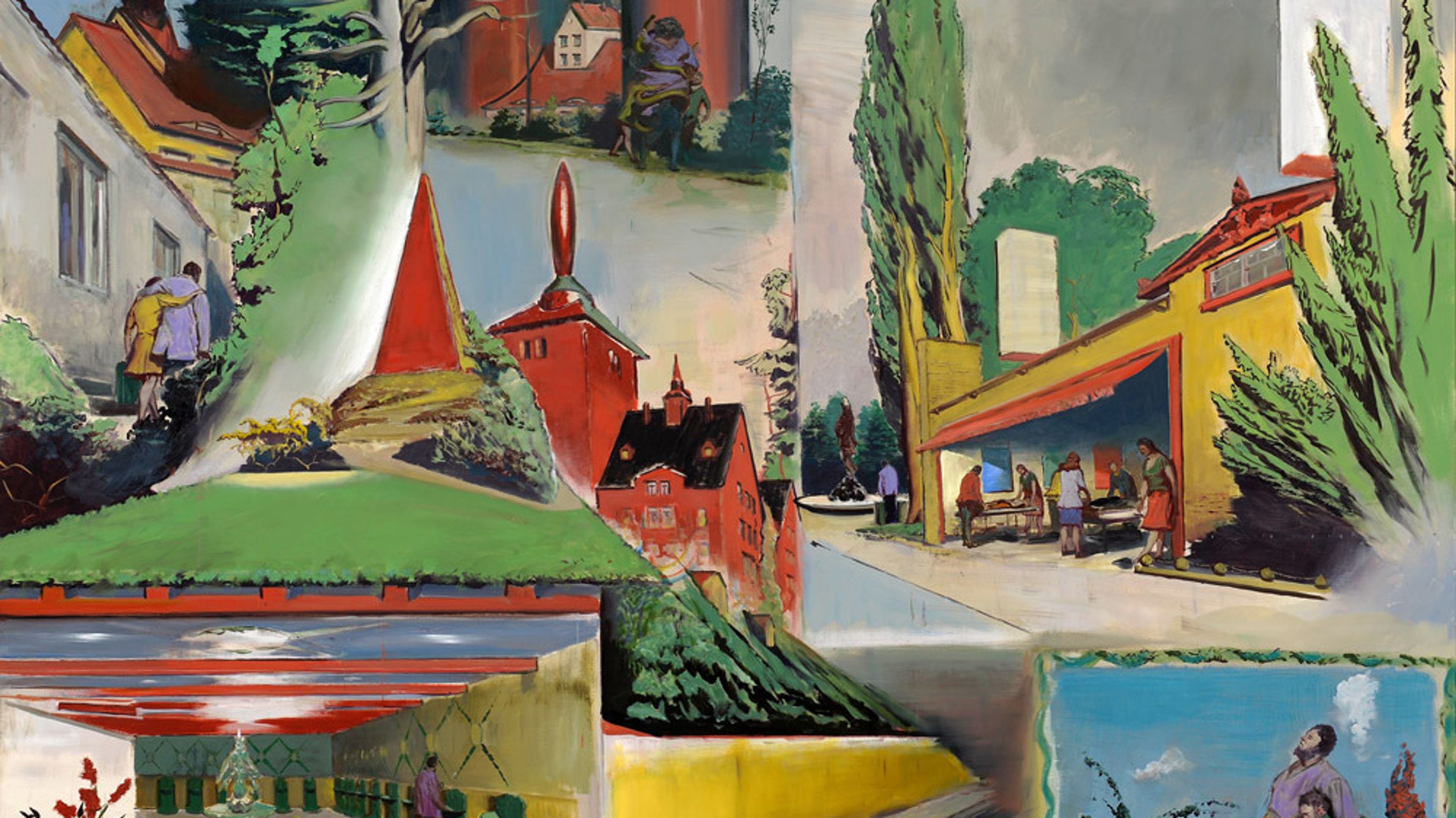
Neo Rauch was born in 1960 in Leipzig, once a major artistic center despite the inhibiting strictures—propagandistic and utilitarian—imposed by the USSR on the art of the Eastern Zone. Yet these past two decades have seen Rauch rise from local star to international idol, owing to his virtuoso, ironic reworking of socialist realist tropes—a mode of considerable stylistic fascination especially following the fall of the Wall in 1989. When now seen, whether in the US or in Germany, Rauch’s paintings possess an incongruous punch quite different from that of works by East German artists who fled to the West before reunification. In the headiness of their escape, Sigmar Polke and Georg Baselitz struck out from the tabula rasa once forbidden to them, while Rauch, ever at home in Leipzig, continued to create large, illustrative figure compositions. But for all his skilled command, more than a touch of farcical camp attends his May Day romps—a seriousness that resists being taken seriously. Since name is destiny, one is tempted to imagine that “New Smoke”—after all, that is what "Neo Rauch" means—would also have felt the need for a radical new beginning. Smoke is a loaded word in Germany, invoking as it does the lingering odor of the crematoria—an essential subject for Polke or Anselm Kiefer—and officious repression: "Rauchen Streng Veroboten!" (Smoking Strictly Prohibited!), for example, is a command particularly evocative of Germany’s authoritarian national character. But no reinvention overtook Rauch, save perhaps for a dose of comedic Surrealism.
Read more at Artforum.