London: 24 Grafton Street
September 18—October 31, 2026
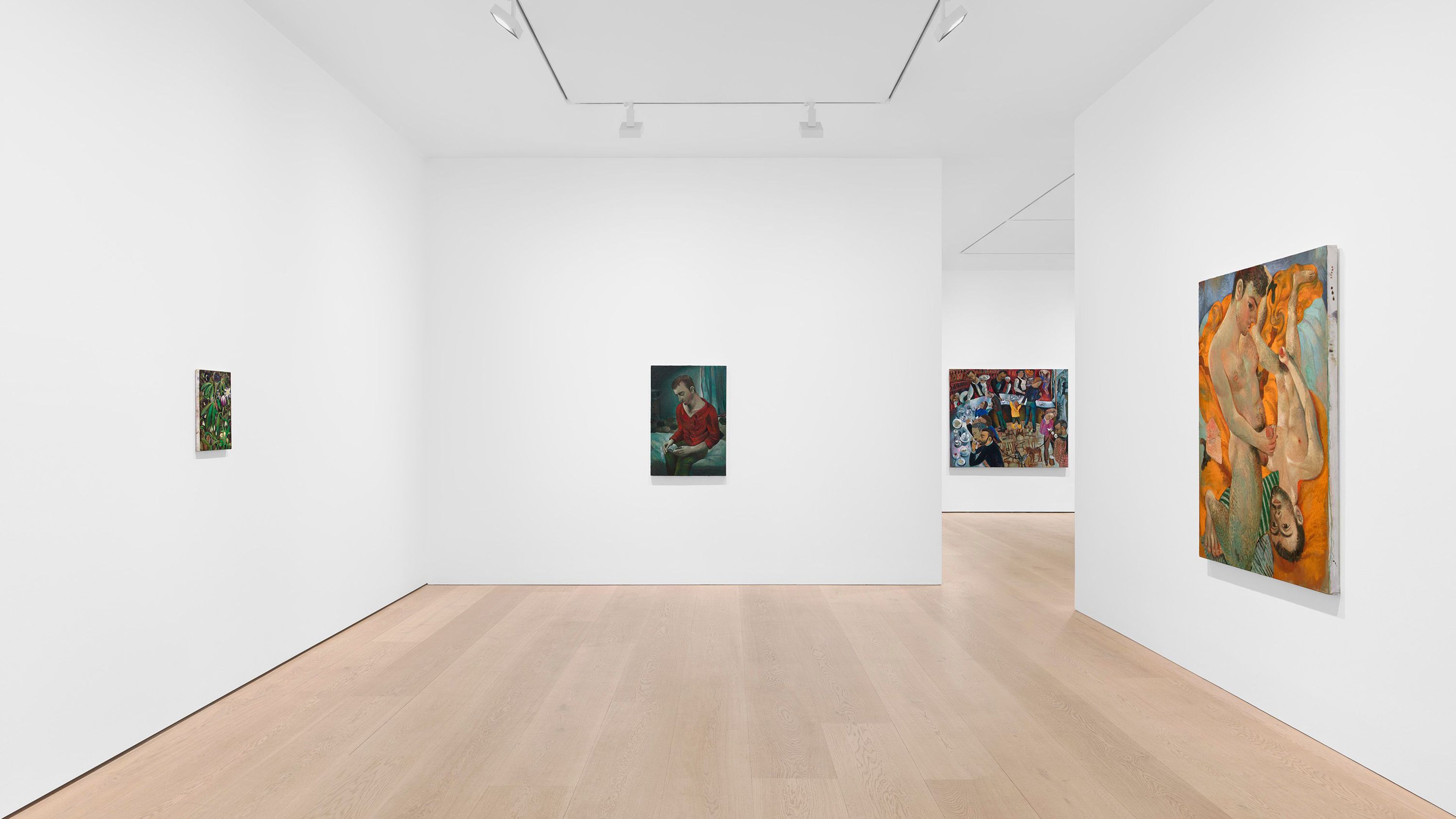
David Zwirner is pleased to announce Prose, a presentation of work by Louis Fratino on view at our location in London. Prose features new paintings that expand his thematic repertoire, bringing his distinctive attention to the glorious and the everyday in both public and private life. New works elaborate on Fratino’s engagement with his immediate surroundings and the history of painting. Prose marks the New York–based artist’s first solo exhibition in London and his first with the gallery since the announcement of his representation earlier this year.
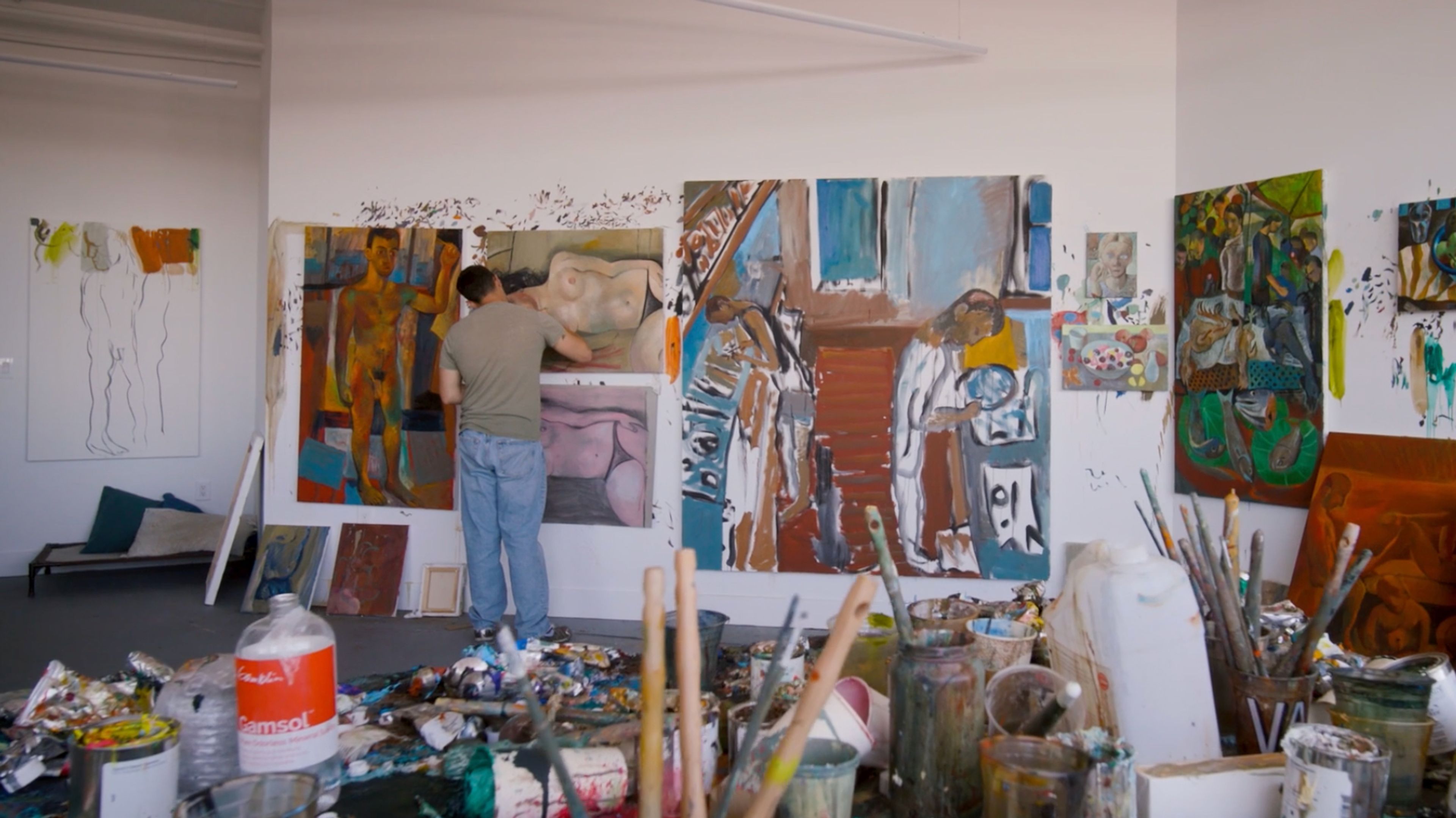
Fratino creates paintings, drawings, and sculptures that depict intimate personal experiences, frequently centring contemporary queer life and the male body. In portraying all manner of subjects garnered from his immediate circles and through observation, he connects an exuberant palette of bold colours with an expressive figuration that cites his ongoing study of art history and literature. The artist illuminates relations between his subjects – familial, romantic, fraternal, erotic – to reveal the pleasures and tensions that operate within private spheres, as well as distinct social and cultural tremors that reverberate throughout public life and determine how difference is navigated. In his work, Fratino interprets these storied pasts and approaches anew, his striking compositions simultaneously representing tender portraits of those near to him and uncovering expansive links to narratives across time.
The title Prose connotes the ordinary and the commonplace – much like the subjects the artist transforms in his paintings – and signals the literary traits of Fratino’s depictions. Colour, material, and homage are as central to his compositions as his sitters, their associations, and attendant emotions. In an ongoing expansion of diverse themes for the artist, several paintings in Prose show larger scenes in public realms, in which people from all backgrounds collide, exposing the erotics of the everyday within varied civic spaces. Documenting the teeming activities of a New York City subway station, Summer in the city (2026) references British modernist artist Edward Burra’s watercolour The Torturers (c. 1935) and metaphorises the intensity and chaos of urban existence. Fratino’s slice-of-life viewpoint also recalls Weimar-era compositions by expressionist artists such as Otto Dix and Max Beckmann, whose works similarly reflected the varying affective registers of their moment. While Summer in the city captures the feverish disorder of New York’s warmest season, Fratino also represents the complexities of communal spaces in works such as Coffee, The subway car, or The sauna (all 2026) which nod to the frenetic urban scenes painted by Leon Kossoff.
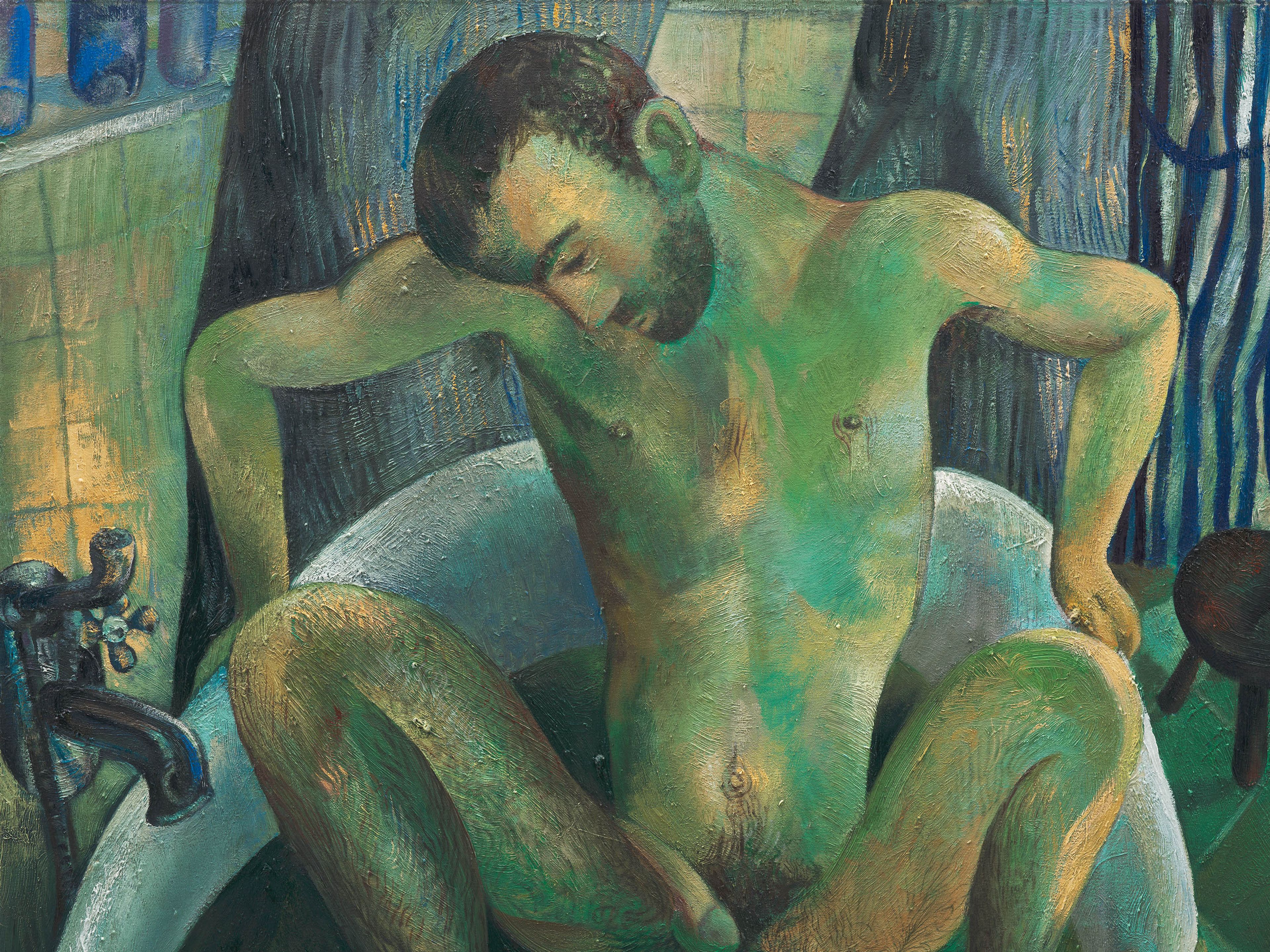
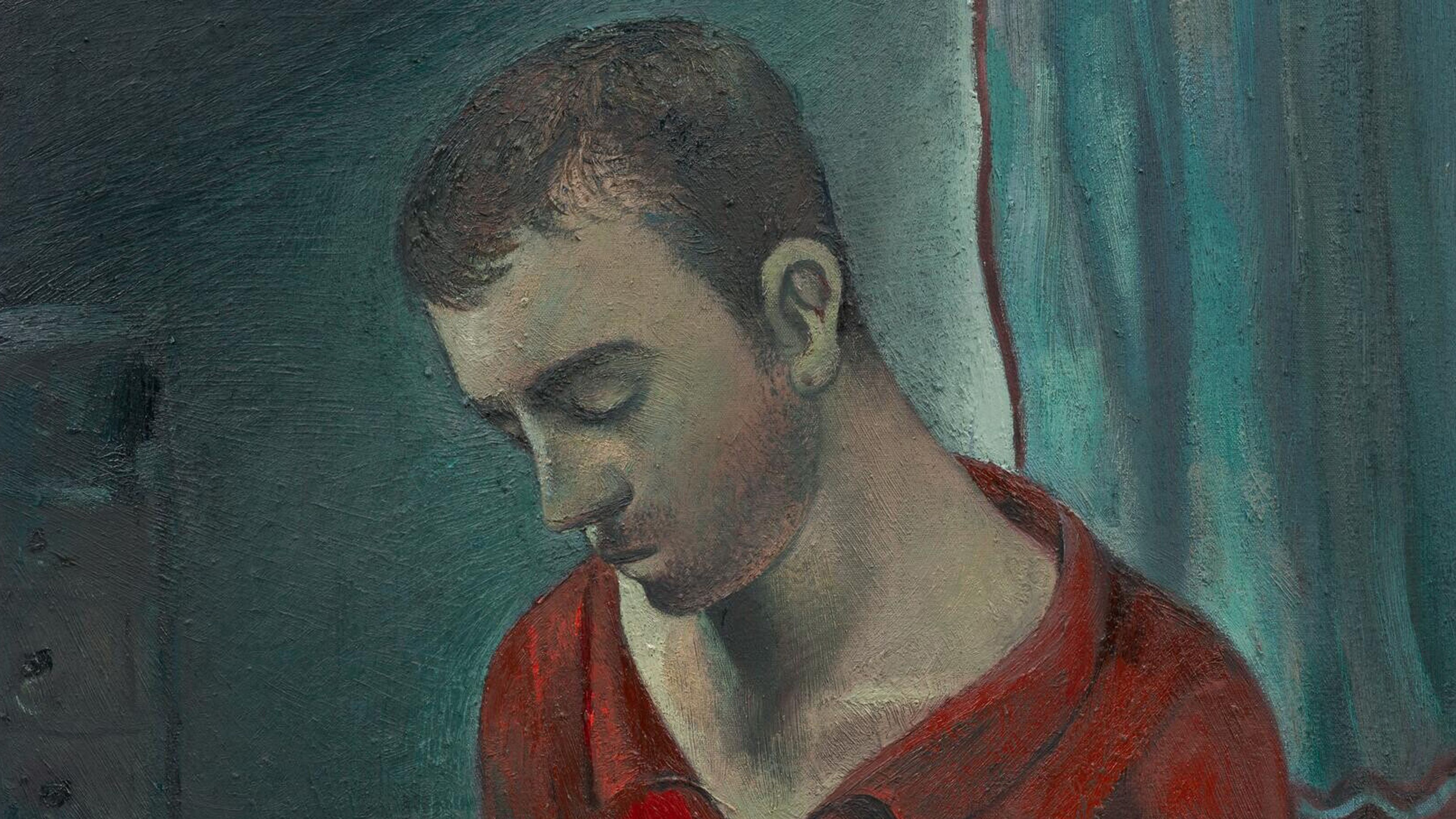
In Prose, Fratino expands an array of contrasting painterly languages and subject matter, merging them and engaging with recognisable motifs that speak both to the medium’s history and his present observations. Titled after the four-island archipelago off the coast of Marseille, Frioul (2026) depicts a solitary landscape indebted to J. M. W. Turner’s dramatic representations of the sky. Ale in his mom’s bedroom (after Corot) (2026) channels the mood of contemplation and internal solitude found in Jean-Baptiste-Camille Corot’s A Girl Reading (c. 1845–1850). The sitter also wears an open-collared, blood-red shirt, and is perched on a bed in a room suffused with a cool blue-green light that is borrowed from the French painter’s delicate atmospheres. A centrepiece of the exhibition, the large-scale Jasmine, which envisions a view of the artist’s family situated in landscape, and The bathroom mirror (both 2026) allude to Pierre Bonnard’s sweeping portraits made of the Terrasse family and intimate interior scenes that fuse mark-making and the phenomena of light.
Across Fratino’s body of work, the nude becomes a conduit of formal, social, cultural, psychosexual, and historical understanding. Composed from life, Nude with black hair (2026) points to the legacy of Lucian Freud in both his subject matter and process. The exhibition’s namesake, Prose (2026), is a frank depiction of sex that gives as much attention to textiles and pattern as the male body, drawing a connection to the early homoerotic works of David Hockney. Self-portrait in studio (after F.N. Souza) (2026) pays tribute to the eponymous postwar Indian painter. Fratino’s work takes after Souza’s Self-Portrait on Tiled Floor (1949), in which the namesake artist was processing his own studies of early twentieth-century modernists such as Pablo Picasso and Henri Matisse. Through this paean to Souza, and the countless other voices present in Prose, Fratino continues to add to his ever-growing list of correspondents across time, honouring the importance of living memory in painting that he believes is crucial to its existence and development as an art form.
Louis Fratino (b. 1993) was born in Annapolis, Maryland. He received a BFA from Maryland Institute College of Art, Baltimore, in 2015. In 2014, Fratino was selected to participate in the Ellen Battell Stoeckel Fellowship at Yale Summer School of Art and Music, Norfolk, Connecticut, and, in 2016, he received a Fulbright Research Fellowship in Painting and Printmaking to study in Berlin.
Fratino has been the subject of numerous solo and two-person global exhibitions. His first solo presentation, REASONS: Works by Louis Fratino, was held at Platform Gallery, Baltimore, in 2016. Additional exhibitions of his work have been presented at Cabinet Printemps, Düsseldorf (2017); Ciaccia Levi, Paris (2018, 2019, 2021) and Milan (2022); Sikkema Malloy Jenkins, New York (2019, 2020, 2021, and 2023); Galerie Neu, Berlin (2022, 2025), and Litografia Bulla, Rome (2023), among others.
In 2024, the solo presentation Satura was held at Centro per l’arte contemporanea Luigi Pecci in Prato, Italy. The exhibition was accompanied by a fully illustrated monograph printed by Mousse Publishing. Spotlight: Louis Fratino was presented at the FLAG Art Foundation, New York, in 2025. A two-person presentation placing Fratino’s work in dialogue with that of Henri Matisse was on view at the Baltimore Museum of Art through September 2026.
The artist’s work was presented in the Central Pavilion at the 60th Venice Biennale, Foreigners Everywhere, in 2024. Fratino has also been included in group exhibitions at institutions worldwide, including FLAG Art Foundation, New York; Columbus Museum of Art, Ohio; Musée Zadkine, Paris; Institute of Contemporary Art, Boston; Rudolph Tegners Museum og Statuepark, Dronningmølle, Denmark; Museum de Fundatie, Zwolle, The Netherlands; and Museum Brandhorst, Munich.
Work by Fratino is held in numerous institutional collections, including the Art Gallery of New South Wales, Sydney; Art Institute of Chicago; Baltimore Museum of Art; British Museum, London; Centre national des arts plastiques (CNAP), Paris; Institute of Contemporary Art, Boston; Institute of Contemporary Art, Miami; Hammer Museum, Los Angeles; The Metropolitan Museum of Art, New York; The Morgan Library & Museum, New York; Museum Brandhorst, Munich; Museum of Contemporary Art Chicago; Museum of Contemporary Art, Los Angeles; Museum of Contemporary Art, San Diego; Museum of Fine Arts, Boston; Museum of Fine Arts, Houston; The Museum of Modern Art, New York; Portland Museum of Art, Maine; RISD Museum, Rhode Island School of Design, Providence; San Francisco Museum of Modern Art; and Whitney Museum of American Art, New York. For all press inquiries, contact:
Sara Chan sara@davidzwirner.com
Ilaria Bevan ilaria@davidzwirner.com