Léon Spilliaert
Léon Spilliaert (1881–1946) was born in the coastal city of Ostend, Belgium. Predominantly self-taught, Spilliaert was enrolled for a short time at the Academy of Fine Arts Bruges. His expressive compositions often depict solitary figures in dreamlike spaces, scenes of ordinary life, and the Belgian landscape, as well as self-portraits.
Learn More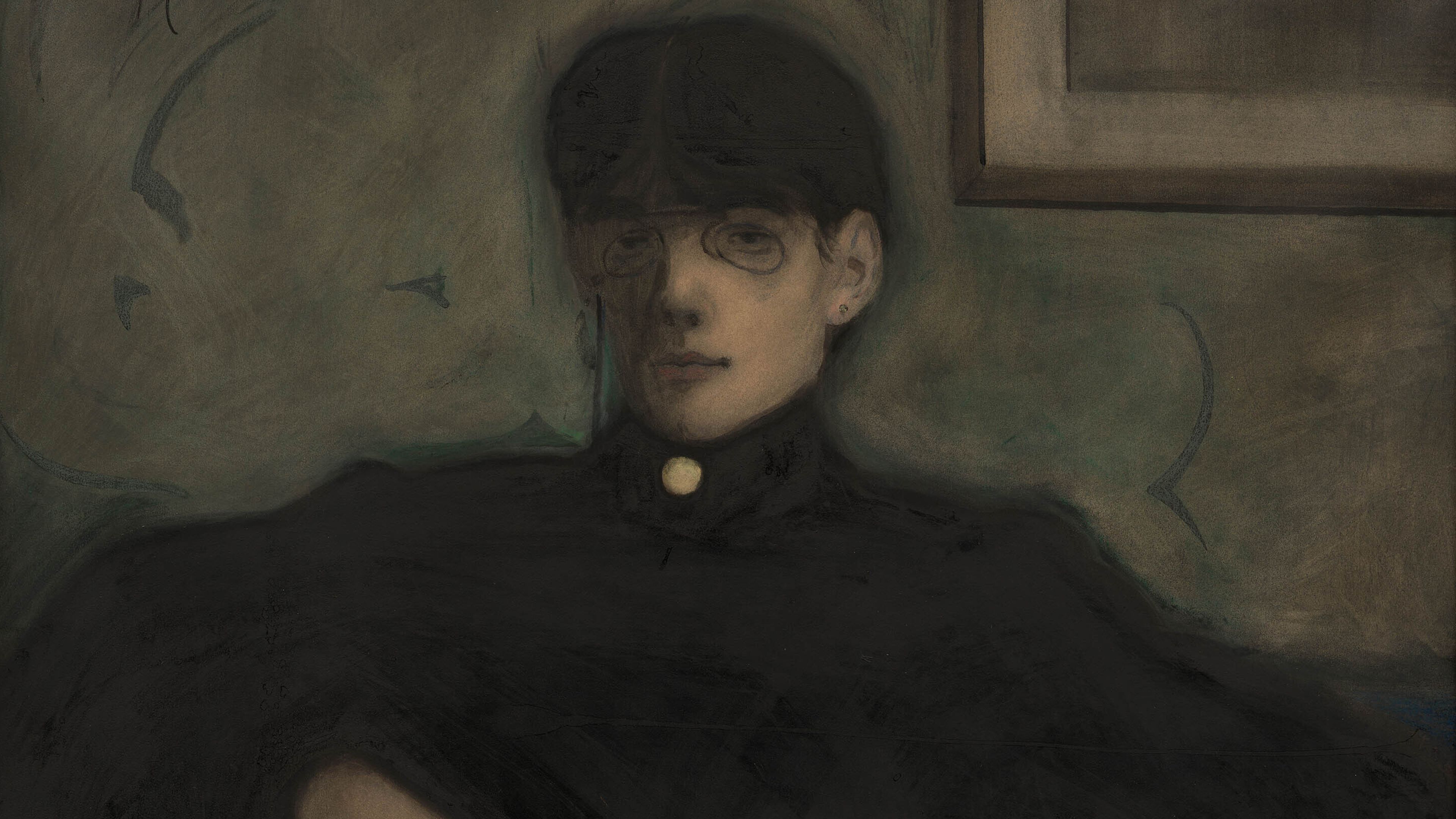
Léon Spilliaert, Dame au pince-nez (Lady with Lorgnette), 1907 (detail)
Exhibitions
Explore Exhibitions
Biography
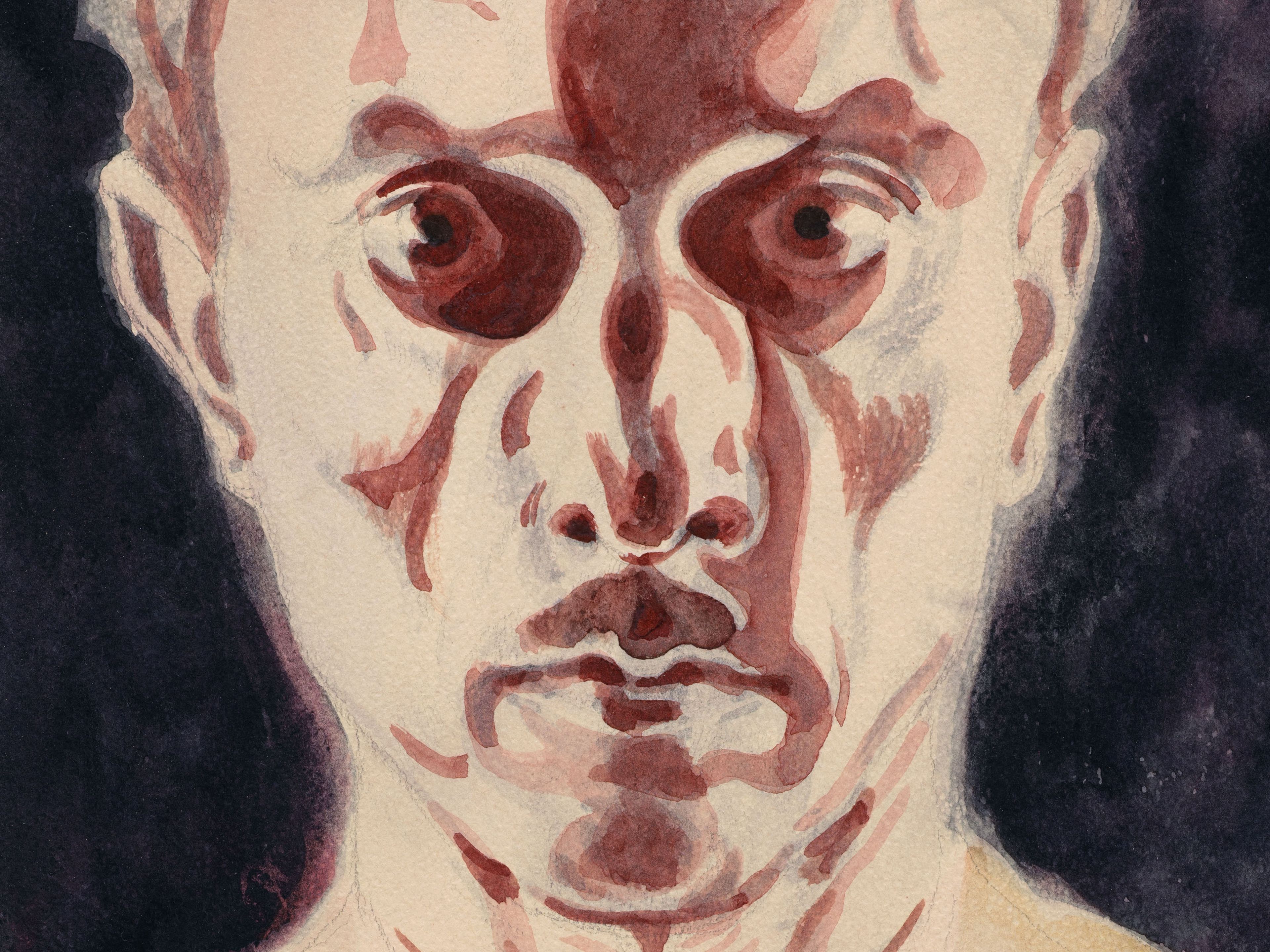
Léon Spilliaert, Autoportrait au gilet jaune (Self-Portrait with Yellow Waistcoat), 1911
Léon Spilliaert (1881–1946) was born in the coastal city of Ostend, Belgium. Raised in a prosperous family as one of seven children, the artist was plagued by periods of ill health throughout most of his life; he suffered from chronic stomach ulcers that resulted in bouts of insomnia and nightwalking that came to be read in the physical and psychological darkness of his artwork. Spilliaert began his career as an illustrator for bookseller Edmond Deman (1857–1918), who published nineteenth-century symbolist writers including Stéphane Mallarmé and translations of Edgar Allan Poe, before initiating his own artistic practice, which would come to be defined by melancholic, moody color palettes influenced by artists like Odilon Redon. Predominantly self-taught, Spilliaert was enrolled for a short time at the Academy of Fine Arts Bruges; the brevity of his formal instruction allowed for the development of his highly unique style. His expressive compositions often depict solitary figures in dreamlike spaces, scenes of ordinary life, and the Belgian landscape, as well as self-portraits. Like his contemporary James Ensor, Spilliaert lived primarily in Ostend before settling in Brussels, and the city’s coastal setting informed his seascapes late into his career.
As early as 1904, Spilliaert began exhibiting his work in group shows at a number of galleries in Paris and Brussels, including the Salon de Printemps (1909) and Bruxelles des Indépendants (1911). The artist’s first solo exhibition was held in Paris in 1913, organized by Belgian poet and gallerist Henri Vandeputte. Spilliaert’s work has since been the subject of several solo exhibitions at institutions including Galerie Sneyers, Brussels (1917, 1927); Center for Fine Arts, Brussels (1936, 1944, 1947, 1953); Museum voor Schone Kunsten Ghent, Belgium (1953-54); Stedelijk Museum, Amsterdam (1954); Museum voor Schone Kunsten Elsene, Brussels (1961, 1971); Royal Museums of Fine Arts of Belgium, Brussels (1972); and Kunstnernes Hus, Oslo (1977), among others. In 1980, Spilliaert’s work was featured in a solo exhibition that toured the United States: Léon Spilliaert, Symbol and Expression in 20th Century Belgian Art opened at The Phillips Collection, Washington, DC, and traveled to The Metropolitan Museum of Art, New York.
In 2007, the Musée d’Orsay, Paris, presented a solo exhibition of Spilliaert’s self-portraits, and in 2020, together with the Royal Academy of Arts, London, the museum organized Léon Spilliaert (traveled to the Musée d’Orsay as Léon Spilliaert: Lumière et solitude). Also in 2020, Mu.ZEE, Ostend, presented James Ensor and Léon Spilliaert: Two Masters of Ostend. In 2023, Spilliaert’s work was the subject of solo exhibitions at Fondation de l’Hermitage, Lausanne, Switzerland; Royal Museums of Fine Arts of Belgium, Brussels; and Clemens Sels Museum Neuss, Germany. In 2025, the Royal Museums of Fine Arts of Belgium installed a gallery of Spilliaert’s work as part of a rotating program dedicated to modern works on paper.
Spilliaert’s work has been featured in numerous group exhibitions at prominent institutions, including the 1920 Venice Biennale; Belgian Artists of Today, Rijksmuseum, Amsterdam (1940); One Hundred Years of Belgian Art, Haus der Kunst, Munich (1959); 20th Century Sources: European Art 1884–1914, Musée National d’Art Moderne, Paris (1960–61); From Ensor to Permeke, Musée de l’Orangerie, Paris (1970); Painters of the Imaginary: Belgian Symbolists and Surrealists, Galeries Nationales du Grand Palais, Paris (1974); Painters of the Mind’s Eye, New York Cultural Center and Museum of Fine Arts, Houston (1974); Flemish Expressionists, from Ensor to Permeke, Galleria Nazionale d’Arte Moderna, Rome (1977); and Belgian Art 1880–1914, Brooklyn Museum, New York (1980). More recently, his work was included in Nature’s Mirror: Reality and Symbol in Belgian Landscape, McMullen Museum of Art, Boston College (2017), and was selected by the Belgian artist Luc Tuymans (b. 1958) to appear in his curated exhibitions The Forbidden Empire: Visions of the World by Chinese and Flemish Masters, Palais des Beaux-Arts, Brussels, and Palace Museum, Beijing (2007); and James Ensor by Luc Tuymans, Royal Academy of Arts, London (2016).
Work by the artist is included in public collections worldwide including the Art Institute of Chicago; Himeji City Museum of Art, Japan; Koninklijk Museum voor Schone Kunsten (KMSKA), Antwerp; The Metropolitan Museum of Art, New York; Musée de Grenoble, France; Musée d’Ixelles, Brussels; Musée d’Orsay, Paris; Museum Dhondt-Dhaenens, Deurle, Belgium; Museum Plantin-Moretus, Antwerp; Museum voor Schone Kunsten, Ghent; Mu.ZEE, Ostend, Belgium; and Royal Museums of Fine Arts of Belgium, Brussels.