Ruth Asawa: A Retrospective
The Museum of Modern Art, New York
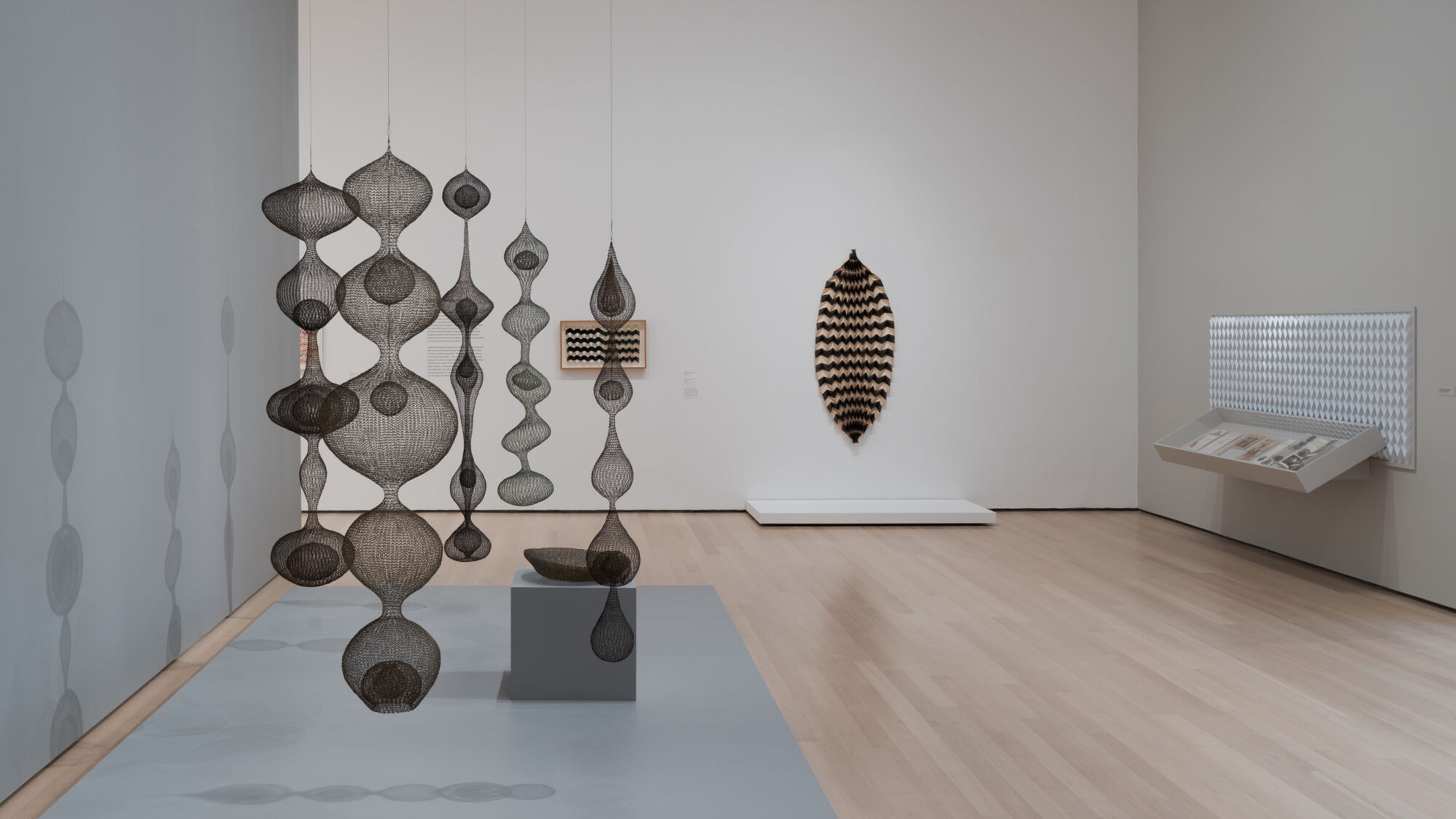
Installation view, Ruth Asawa: A Retrospective, The Museum of Modern Art, New York, 2025 © 2025 The Museum of Modern Art, New York. Photo by Jonathan Dorado. Artworks © 2025 Ruth Asawa Lanier, Inc.
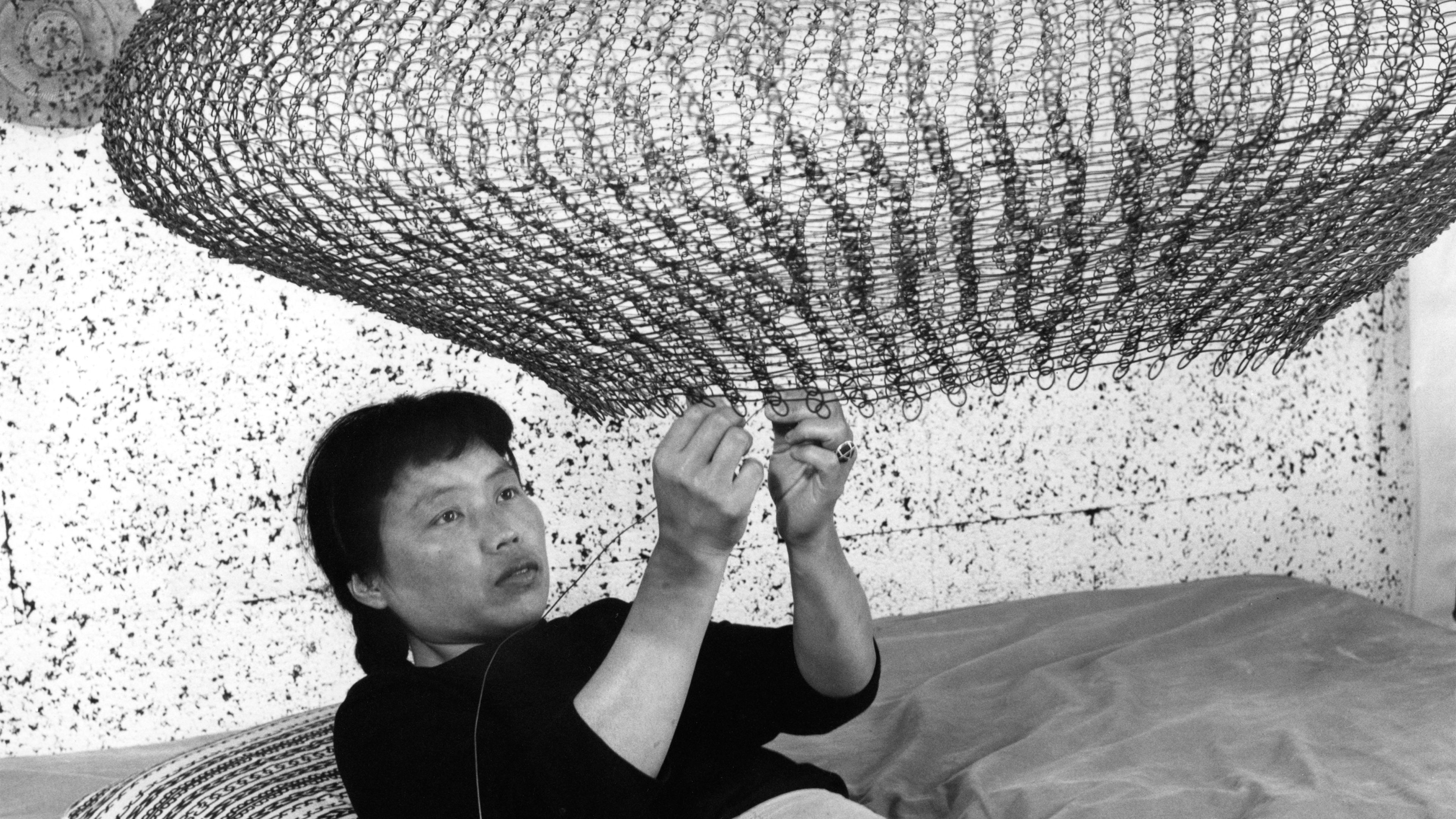
Ruth Asawa at work, 1957. Photo © Imogen Cunningham Trust
The artist at work. Excerpt from Ruth Asawa: Of Forms and Growth, directed by Robert Snyder, 1978. © Masters and Masterworks Productions, Inc
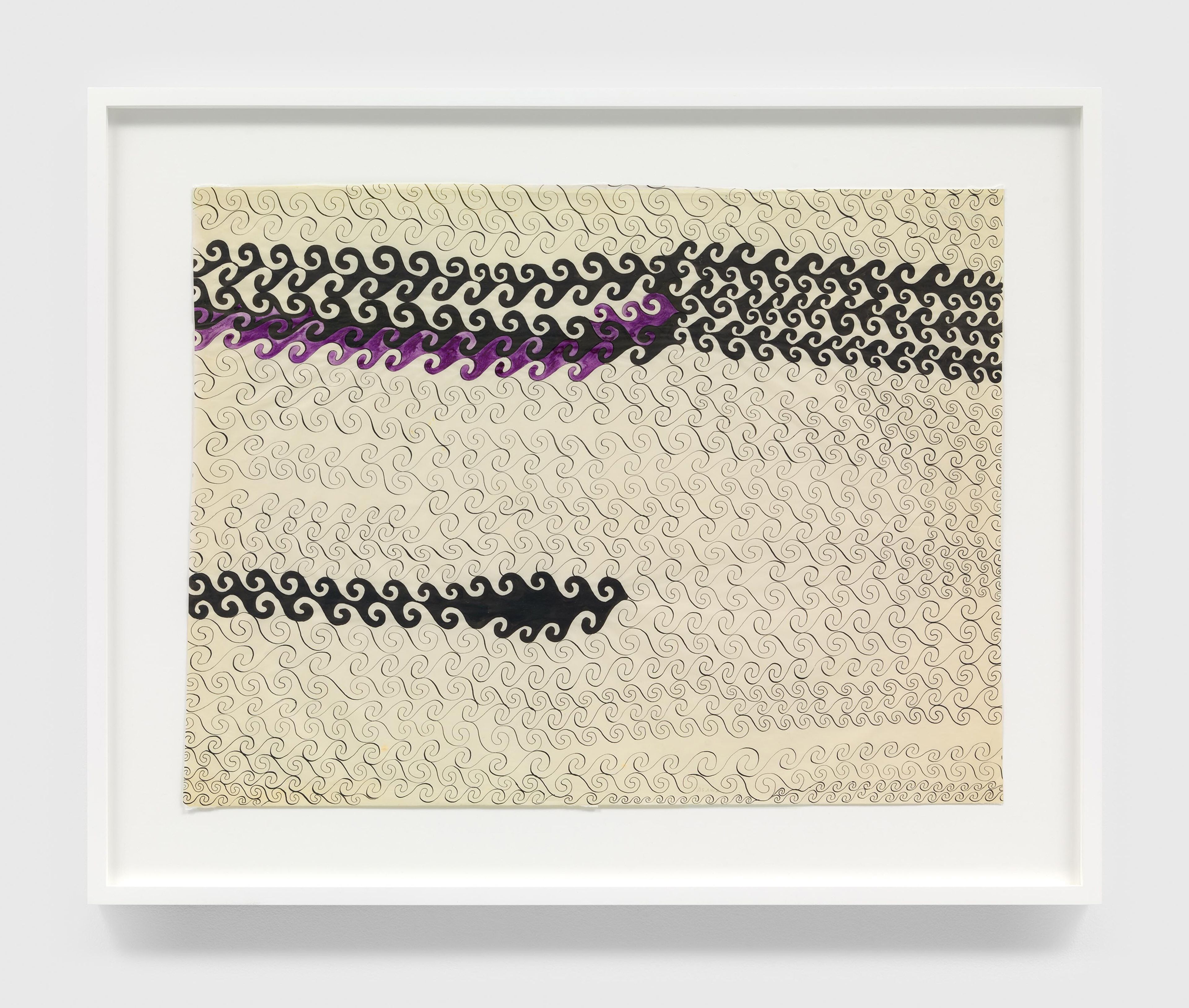
Along with wire sculptures, the presentation of works made by Asawa at Black Mountain College in A Retrospective includes collages, prints, and drawings such as Untitled (BMC.58, Meander - Curved Lines), c. 1948 (above). Artworks © 2025 Ruth Asawa Lanier, Inc.
Following a loose chronological arc interwoven with thematic sections elaborating on the artist’s inspirations and methods, A Retrospective, which is one of the largest shows ever devoted to a woman artist at MoMA, begins with a selection of works from Asawa’s time at Black Mountain College, where she enrolled in 1946. Born in rural California, Asawa first studied under professional artists while her family and other people of Japanese descent were unlawfully detained by the government during World War II at Santa Anita, California, in 1942. Following her release from an incarceration camp in Rohwer, Arkansas, she enrolled in 1943 in Milwaukee State Teachers College. Unable to receive her degree due to continued hostility against Japanese Americans, Asawa left Milwaukee in 1946 to study at Black Mountain College. There, she found all manner of artistic possibilities in ordinary materials. It was on the Asheville, North Carolina campus she first developed her now signature technique for looping wire, after learning a basket-making technique during a 1947 trip to Mexico. This would lead to Asawa’s signature contribution to abstract sculpture in the 20th century: a radical body of suspended, intricate looped-wire sculptures.
“What’s exceptional about Asawa’s practice is the multiplicity of her artistic pursuits and the marvelous ability to turn the simplest things into subjects of lifelong creative contemplation. The exhibition aims to offer multiple points of entry into her work, reflecting what Asawa described as the ‘total act’ of artmaking.”
—Cara Manes, curator of Ruth Asawa: A Retrospective
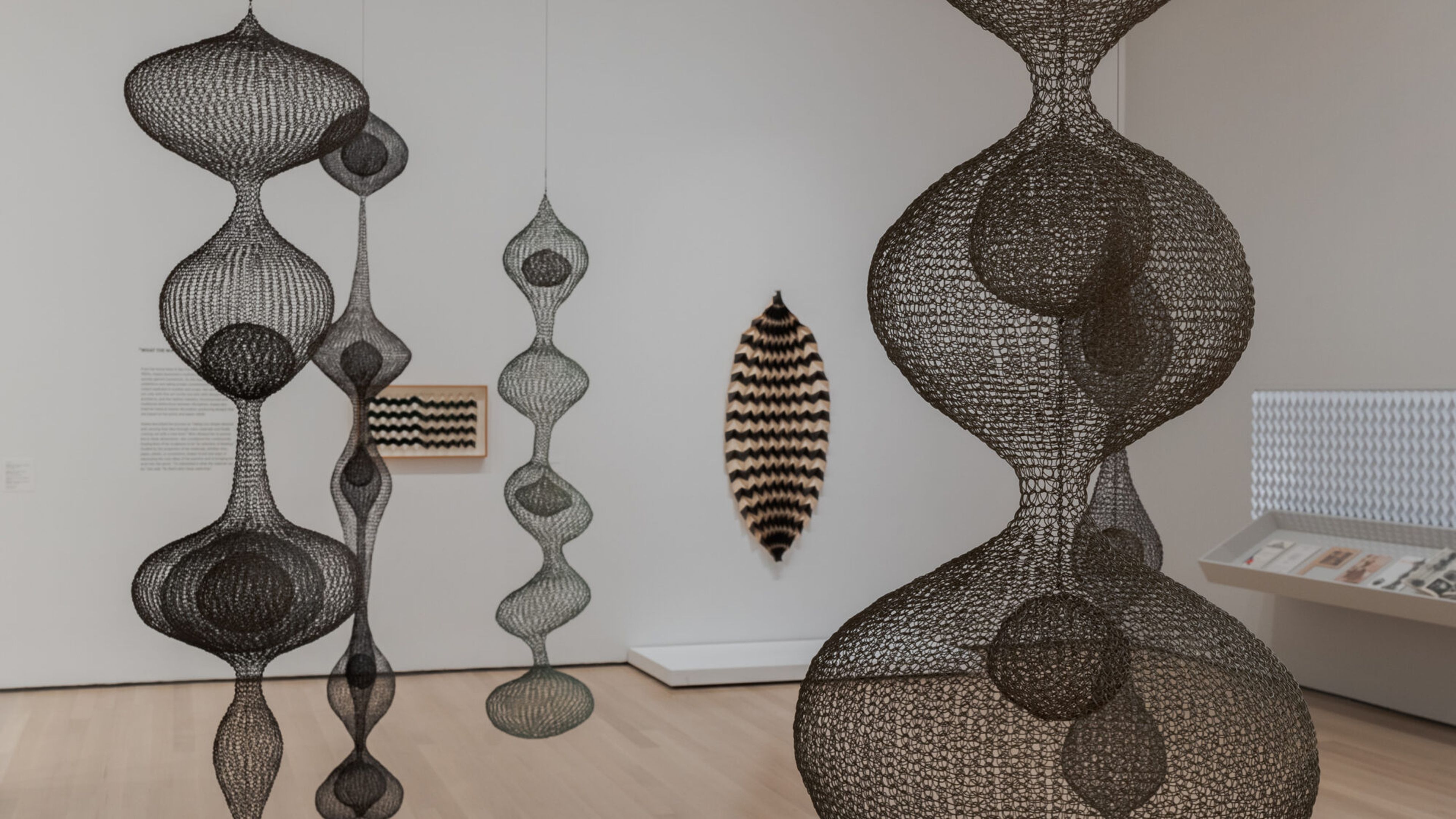
Installation view, Ruth Asawa: A Retrospective, The Museum of Modern Art, New York, 2025 © 2025 The Museum of Modern Art, New York. Photo by Jonathan Dorado. Artworks © 2025 Ruth Asawa Lanier, Inc.
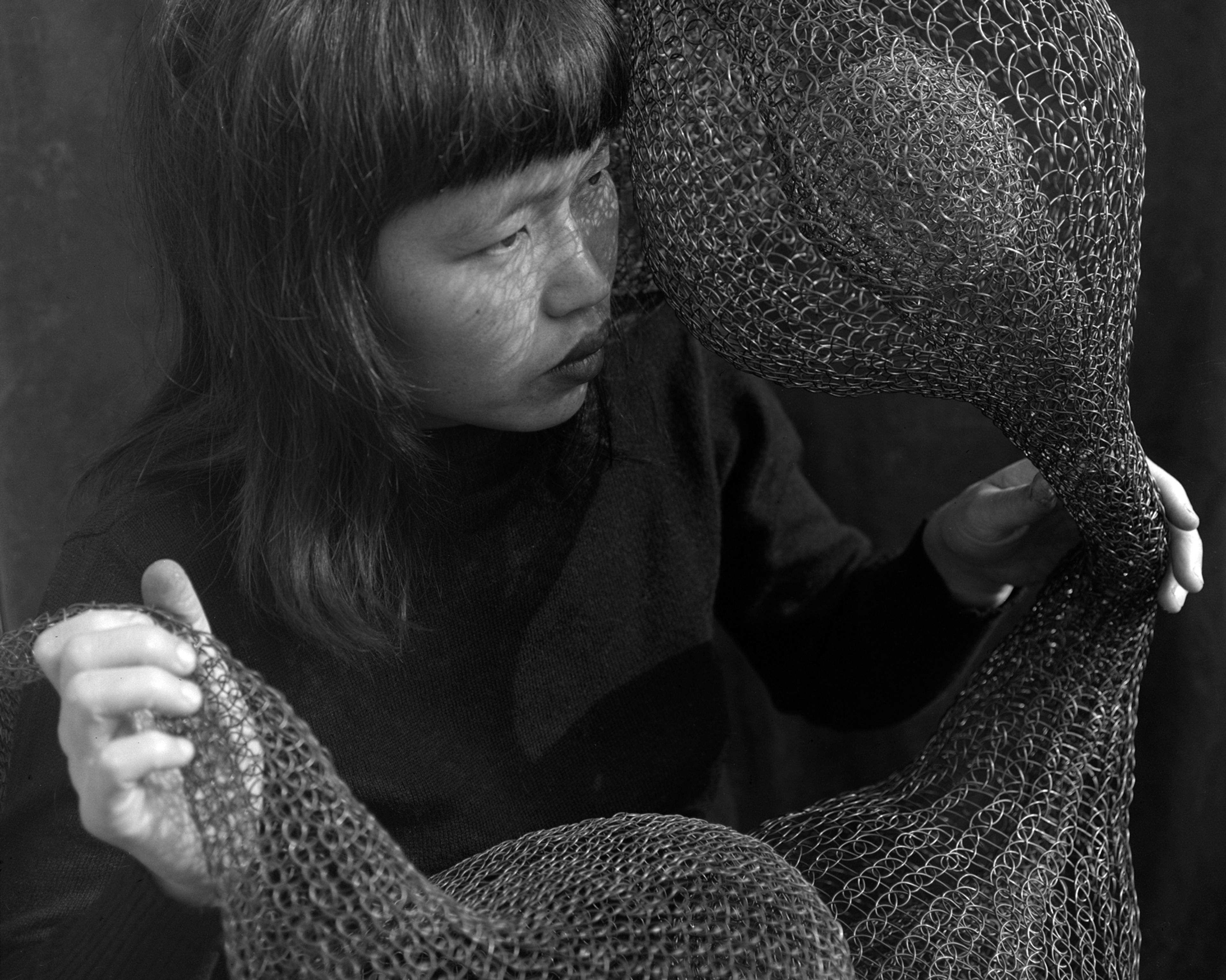
Holding a form-within-a-form sculpture, 1951. © Imogen Cunningham Trust
Asawa continued her material experimentation in wire and paper following her 1949 move to San Francisco, the city that would be the center of her artistic activities for the rest of her life, and where she established a tightly knit family and community. Shortly after her arrival there, she articulated the key motifs and shapes in her looped wire forms .
“I was interested in wire because of the economy of a line, making something in space, enclosing it without blocking it out. It’s still transparent. I realized that if I was going to make these forms, which interlock and interweave, it can only be done with a line because a line can go anywhere.”
—Ruth Asawa
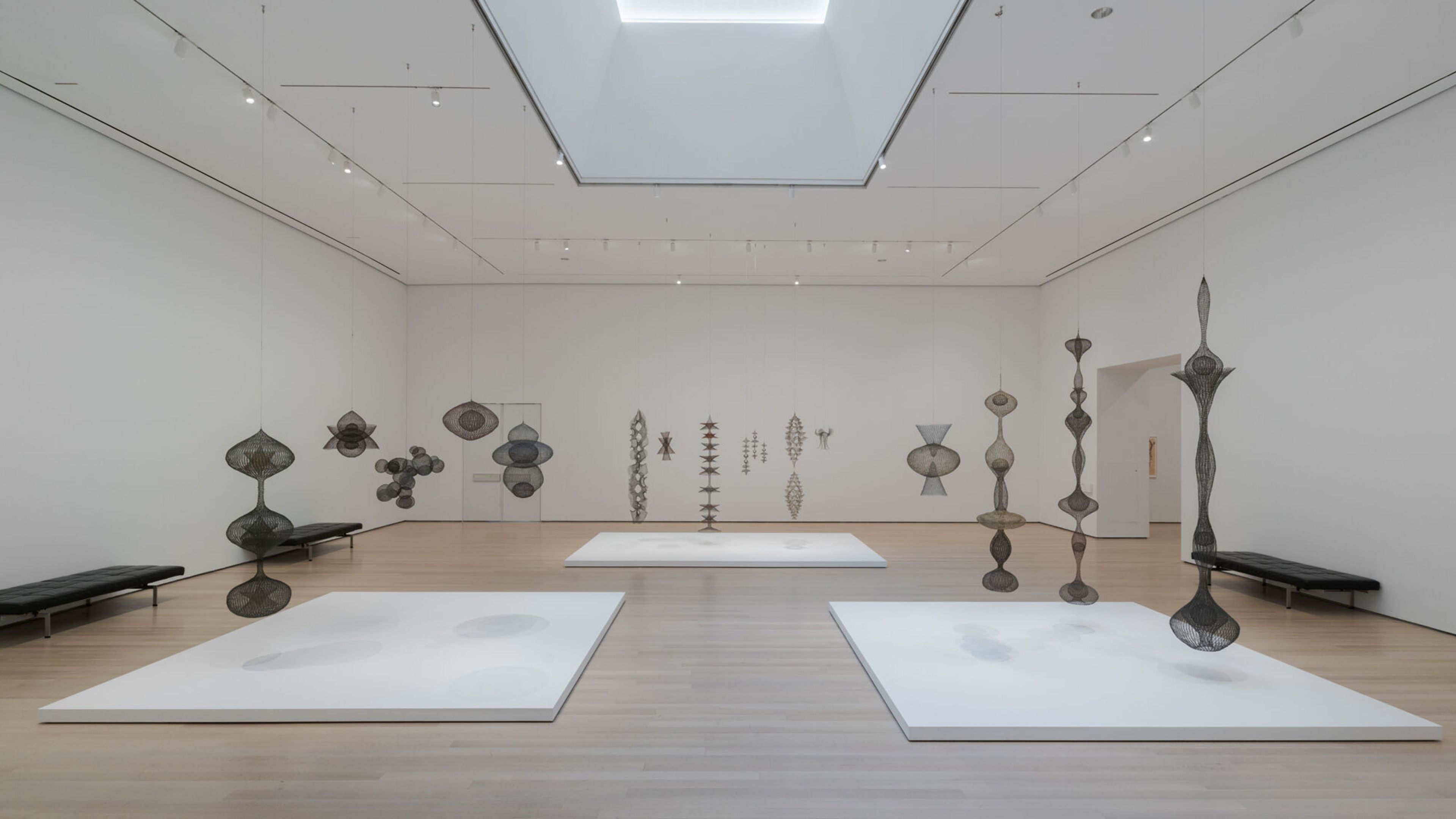
Installation view, Ruth Asawa: A Retrospective, The Museum of Modern Art, New York, 2025 © 2025 The Museum of Modern Art, New York. Photo by Jonathan Dorado. Artworks © 2025 Ruth Asawa Lanier, Inc.
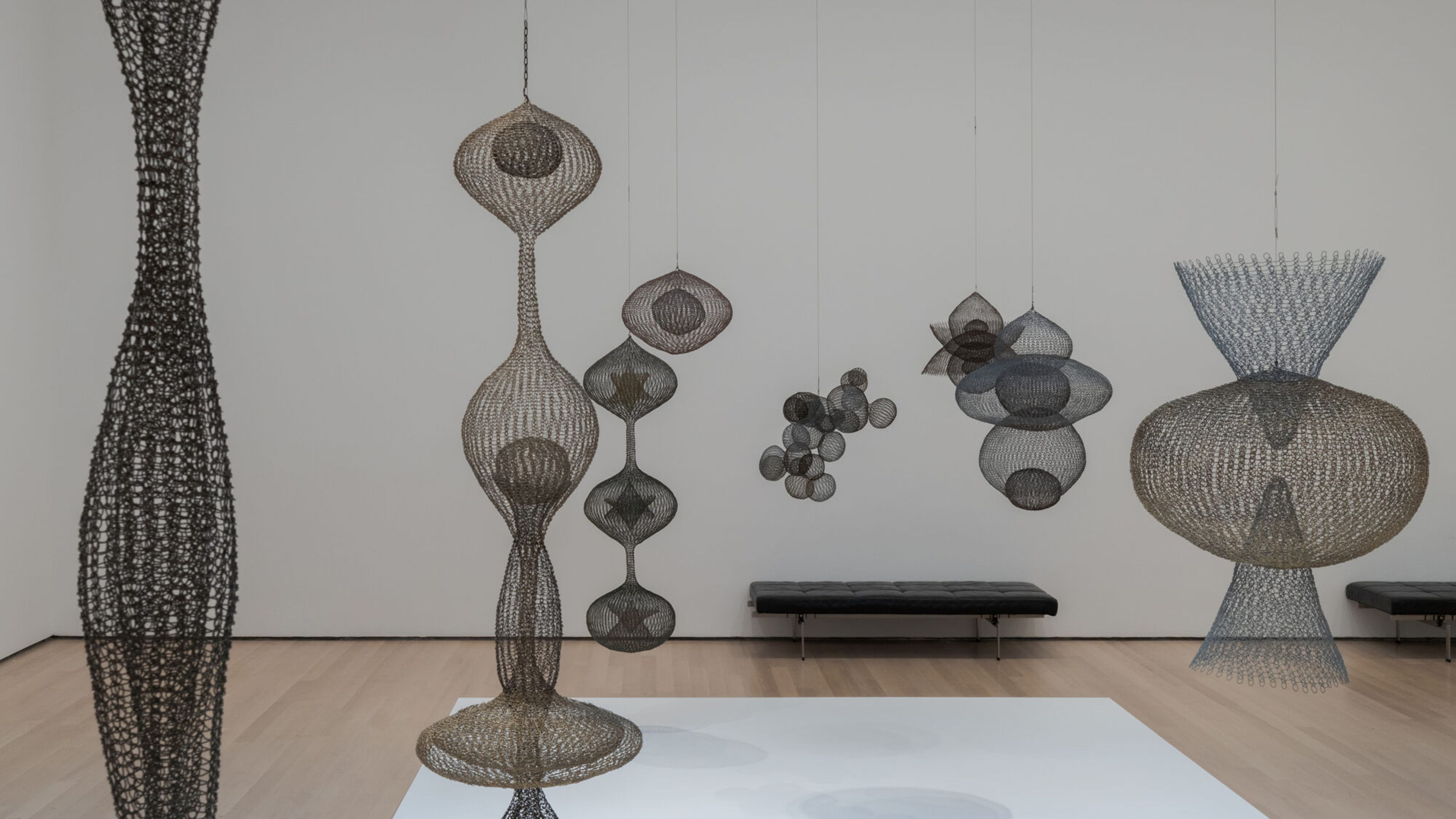
Installation view, Ruth Asawa: A Retrospective, The Museum of Modern Art, New York, 2025 © 2025 The Museum of Modern Art, New York. Photo by Jonathan Dorado. Artworks © 2025 Ruth Asawa Lanier, Inc.
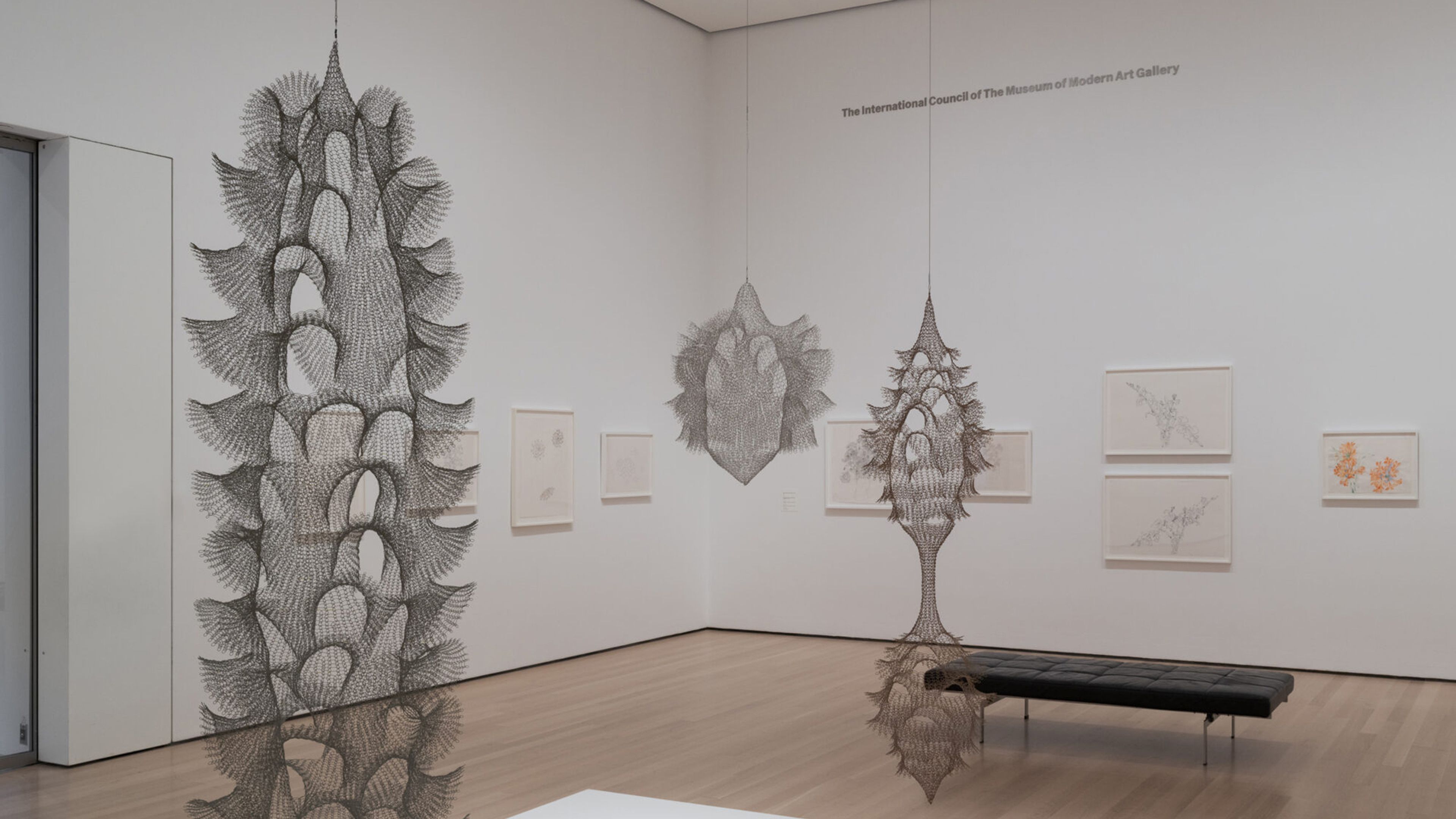
Installation view, Ruth Asawa: A Retrospective, The Museum of Modern Art, New York, 2025 © 2025 The Museum of Modern Art, New York. Photo by Jonathan Dorado. Artworks © 2025 Ruth Asawa Lanier, Inc.
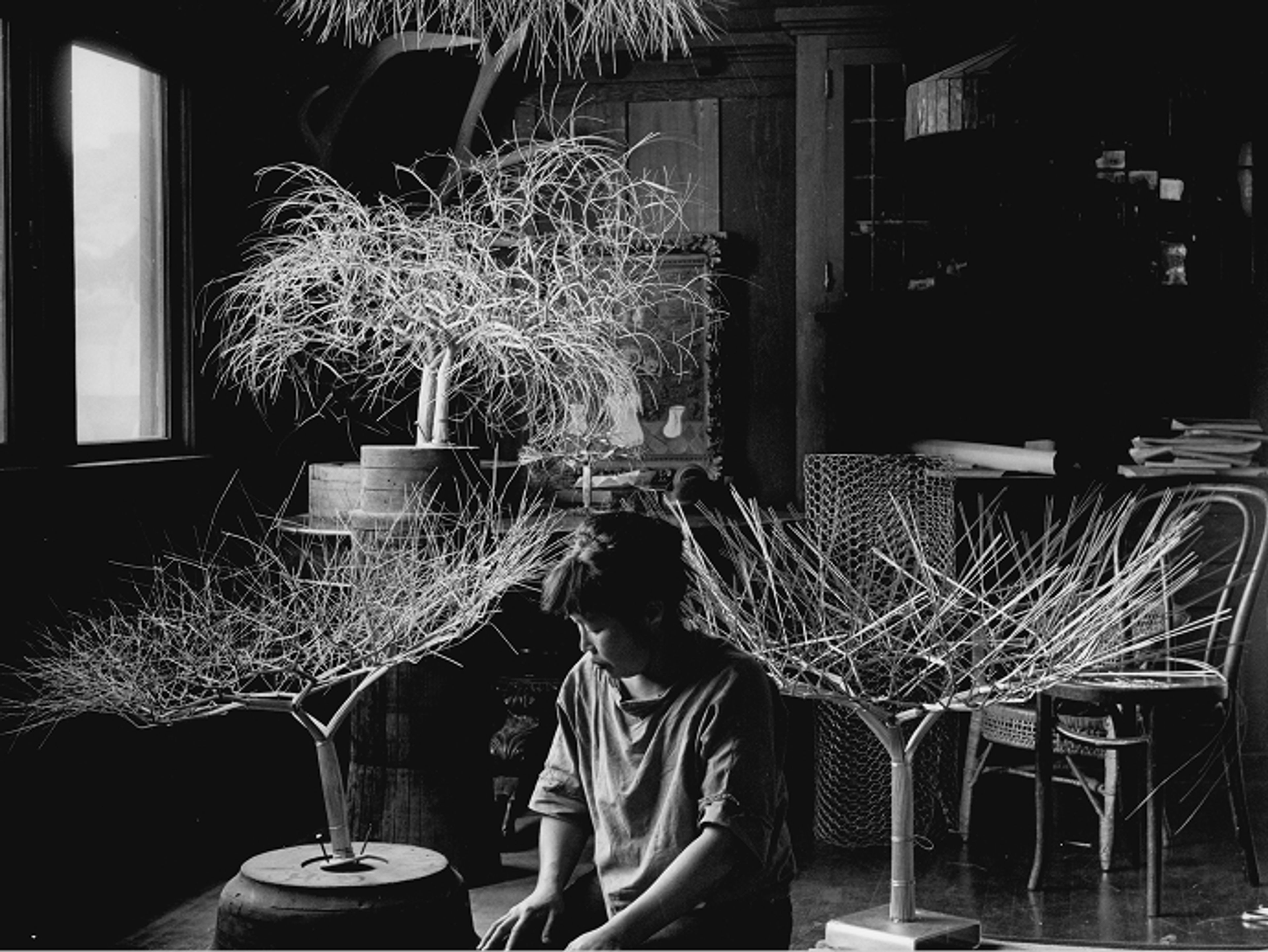
The artist in her San Francisco dining room with tied-wire sculptures, 1963. Photo © Imogen Cunningham Trust
Asawa was raised on a farm in Norwalk, California, and had a lifelong love of observing plants and nature, which she often drew from life. In the early 1960s, when gifted a desert plant whose branches split exponentially, Asawa developed a new method of working with wire by tying and splaying it in ways that evoke these organic structures.
“My curiosity was aroused by the idea of giving structural form to the images in my drawings. These forms come from observing plants, the spiral shell of a snail, seeing light through insect wings, watching spiders repair their webs in the early morning, and seeing the sun through the droplets of water suspended from the tips of pine needles while watering my garden.”
—Ruth Asawa
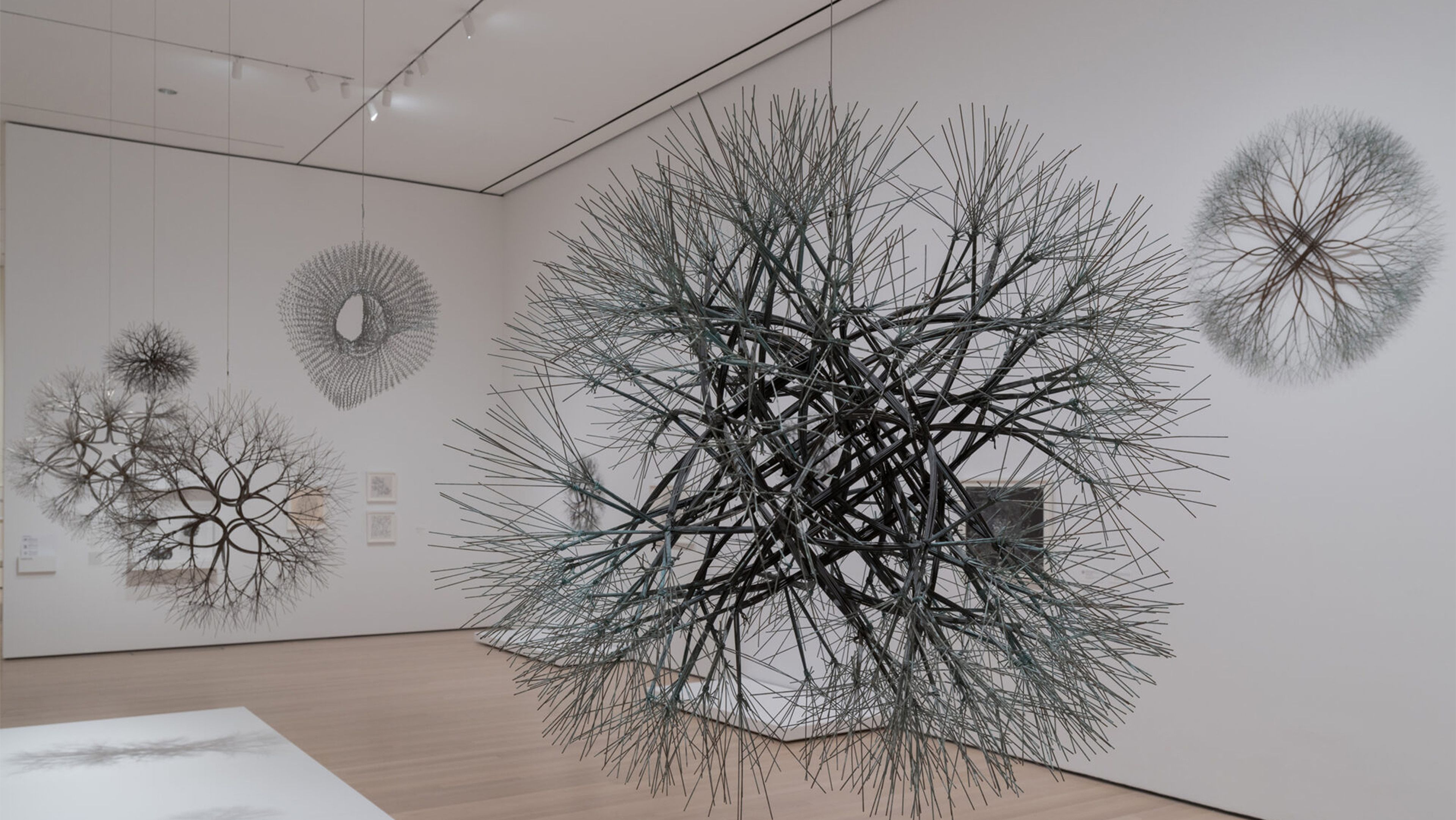
Installation view, Ruth Asawa: A Retrospective, The Museum of Modern Art, New York, 2025 © 2025 The Museum of Modern Art, New York. Photo by Jonathan Dorado. Artworks © 2025 Ruth Asawa Lanier, Inc.
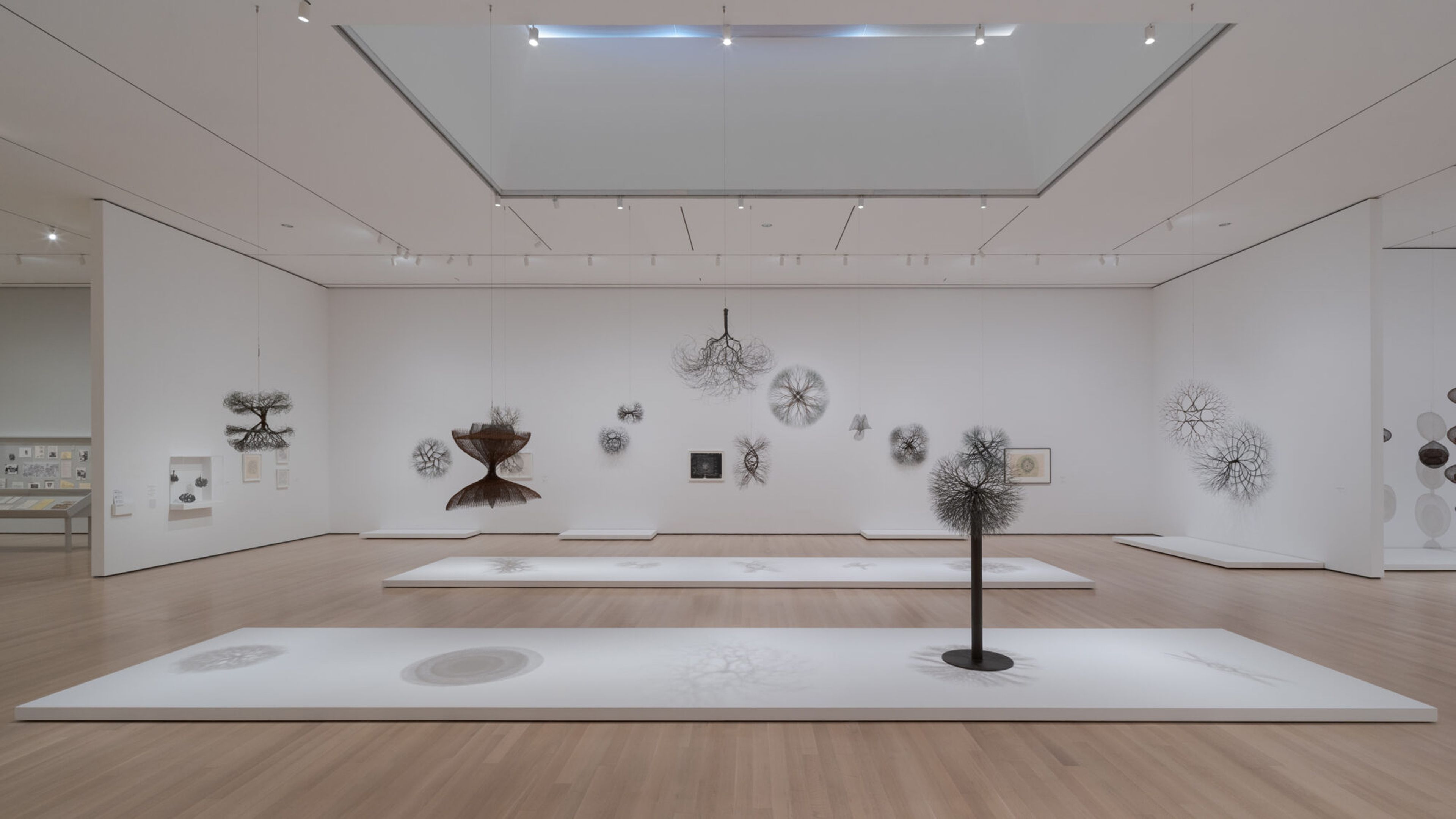
Installation view, Ruth Asawa: A Retrospective, The Museum of Modern Art, New York, 2025 © 2025 The Museum of Modern Art, New York. Photo by Jonathan Dorado. Artworks © 2025 Ruth Asawa Lanier, Inc.
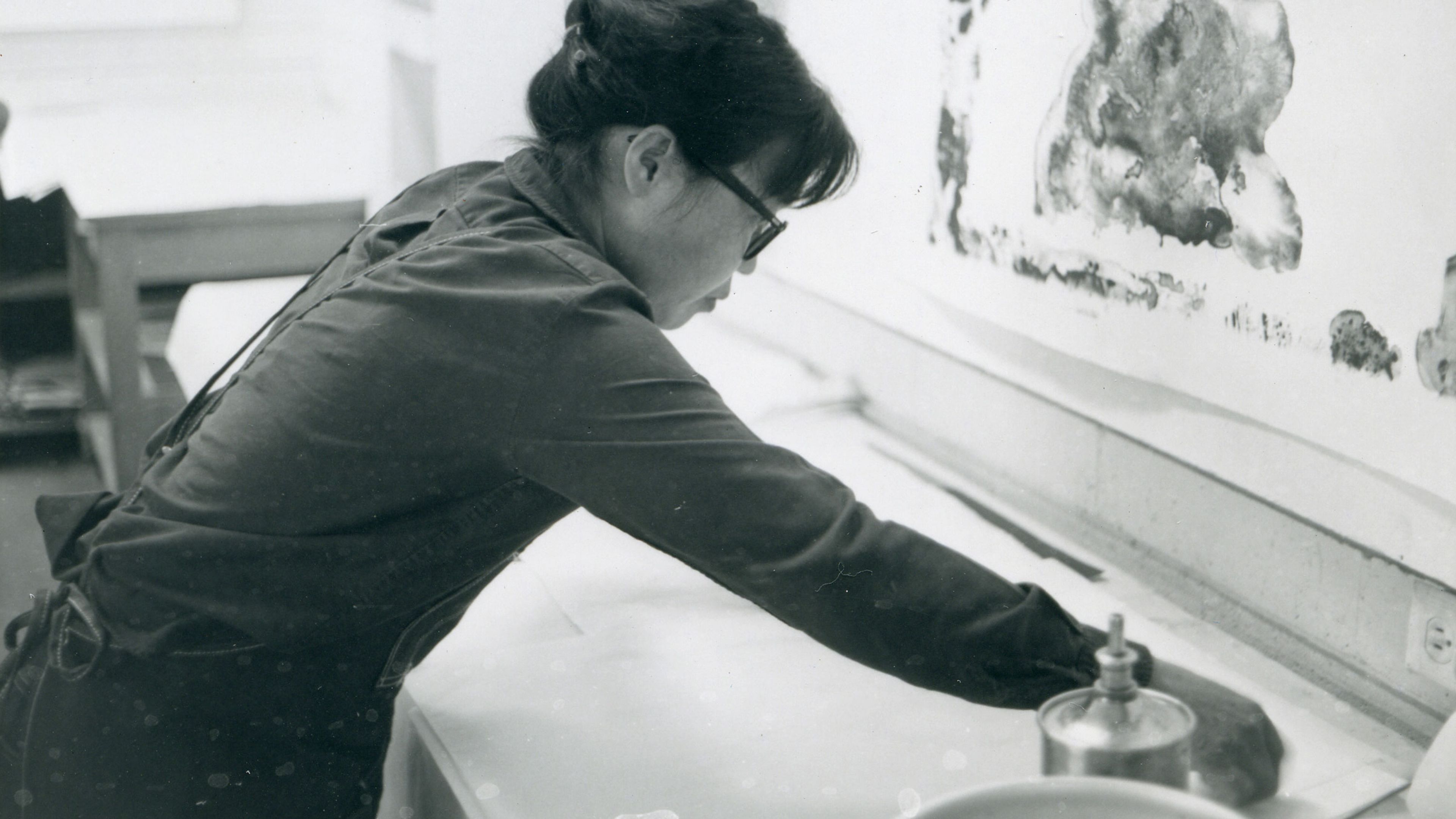
Ruth Asawa at the Tamarind Lithography Workshop. Courtesy Tamarind Institute Pictorial Collection, Center for Southwest Research, University of New Mexico
Asawa continued to experiment with natural forms during a residency at the Tamarind Lithography Workshop in Los Angeles in 1965, where she produced a group of diverse, formally rigorous and experimental prints. Drawing from MoMA’s collection, which includes a full set of the prints Asawa made at Tamarind, a selection of lithographs is included in the exhibition.
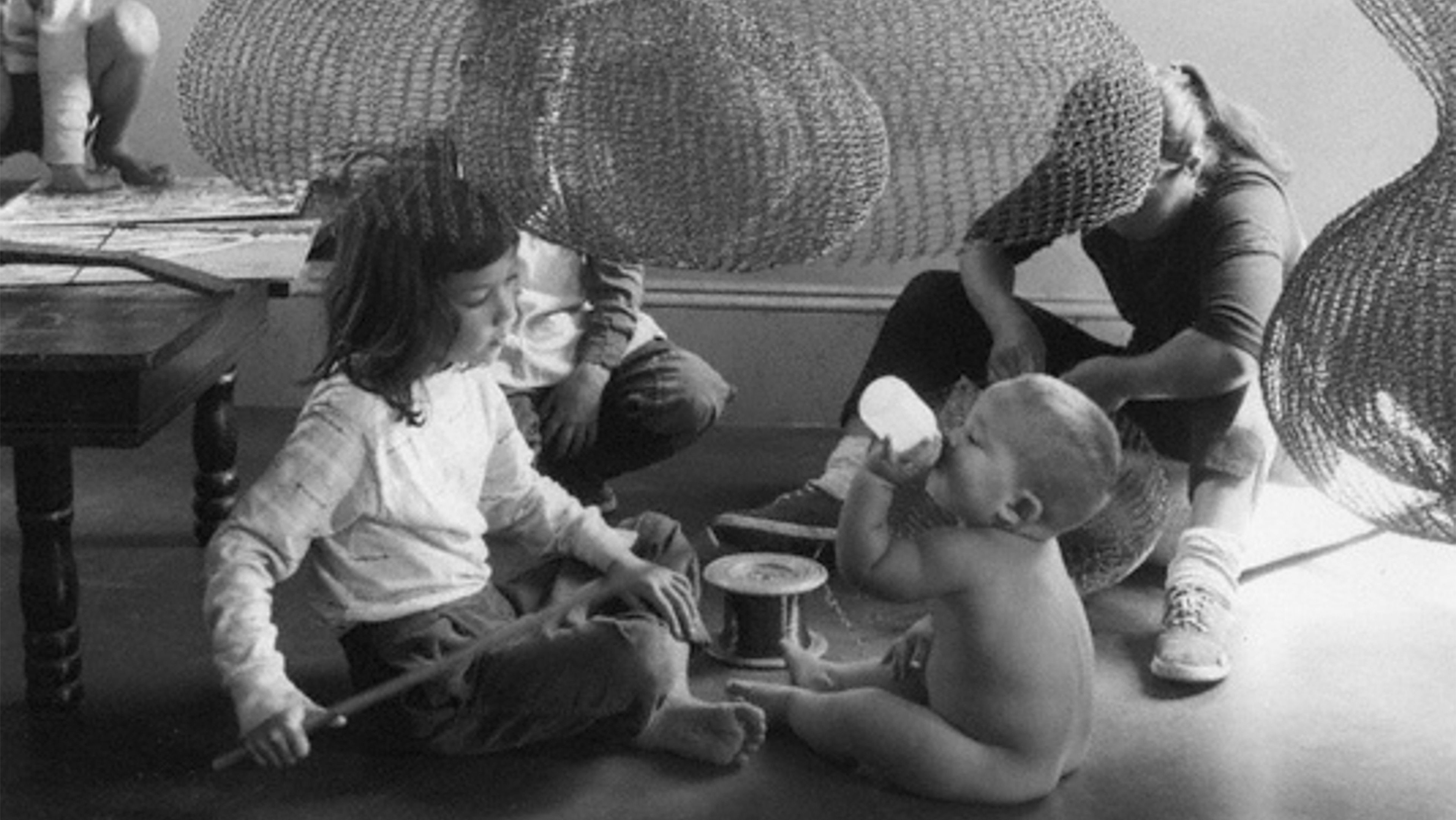
Asawa with her children at home, 1957. Photo © Imogen Cunningham Trust
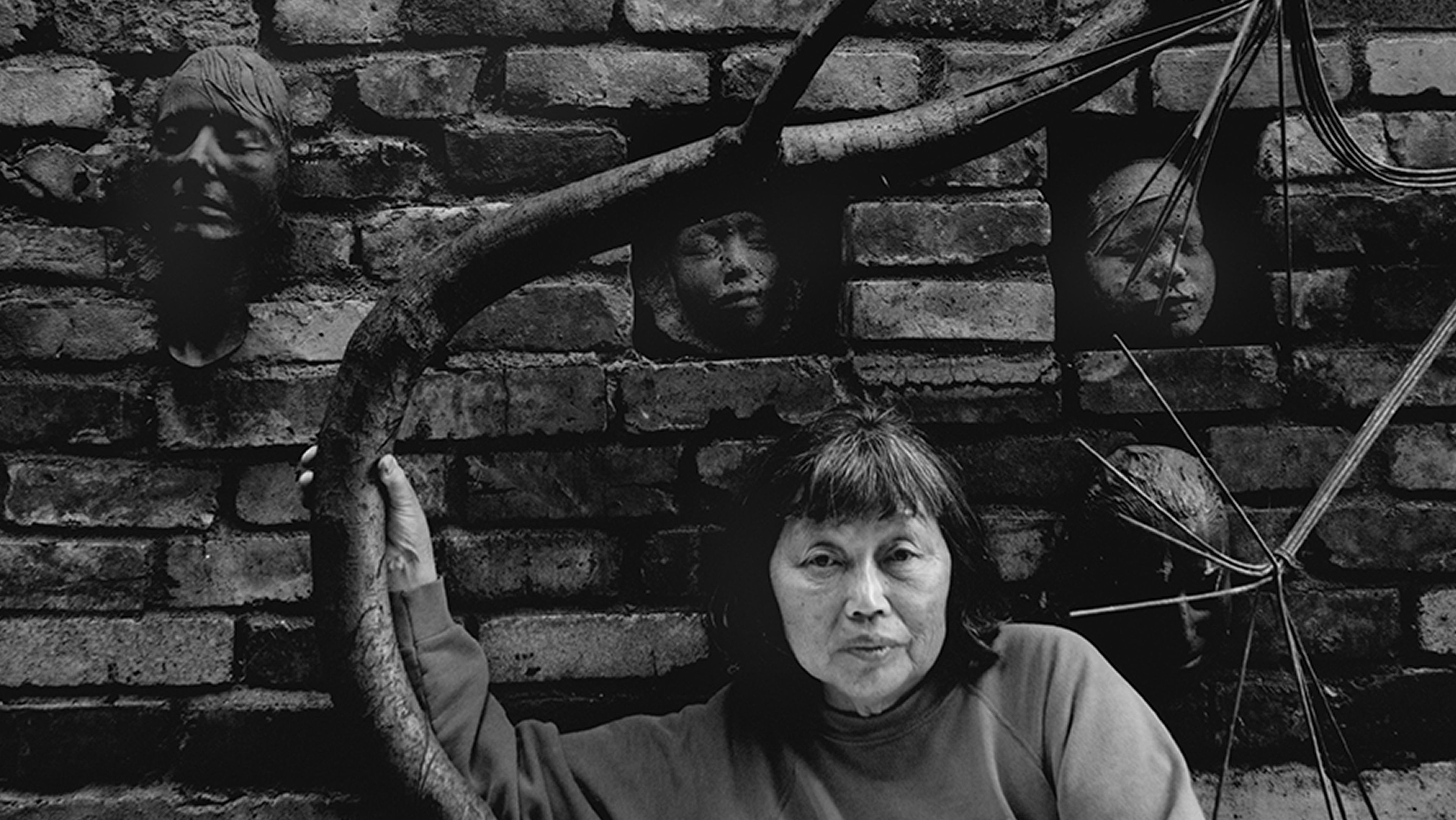
The artist with masks cast from friends in her San Francisco community, 1991. Photo © Laurence Cuneo
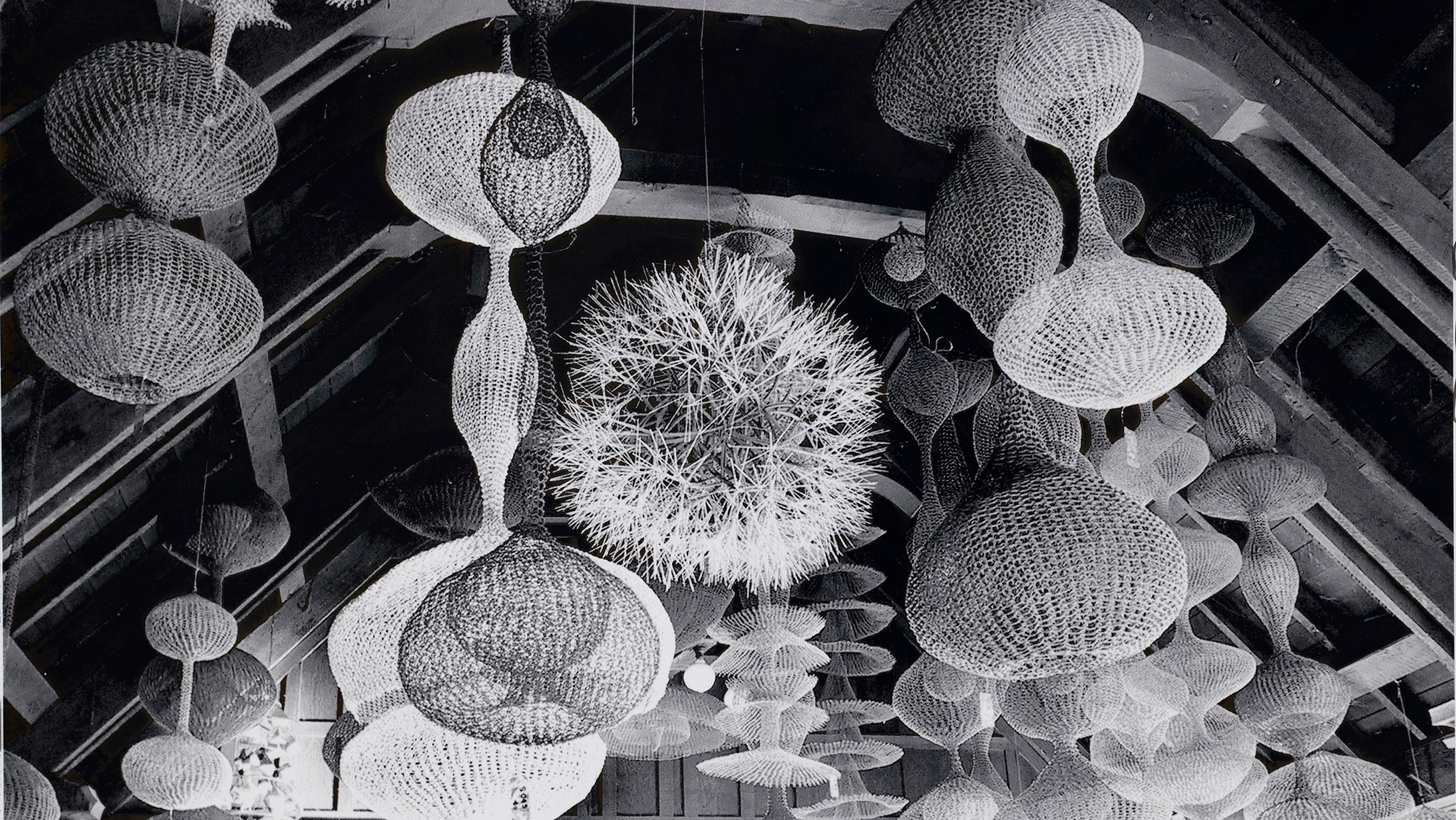
The Asawa-Lanier living room, 1995. Photo © Laurence Cuneo
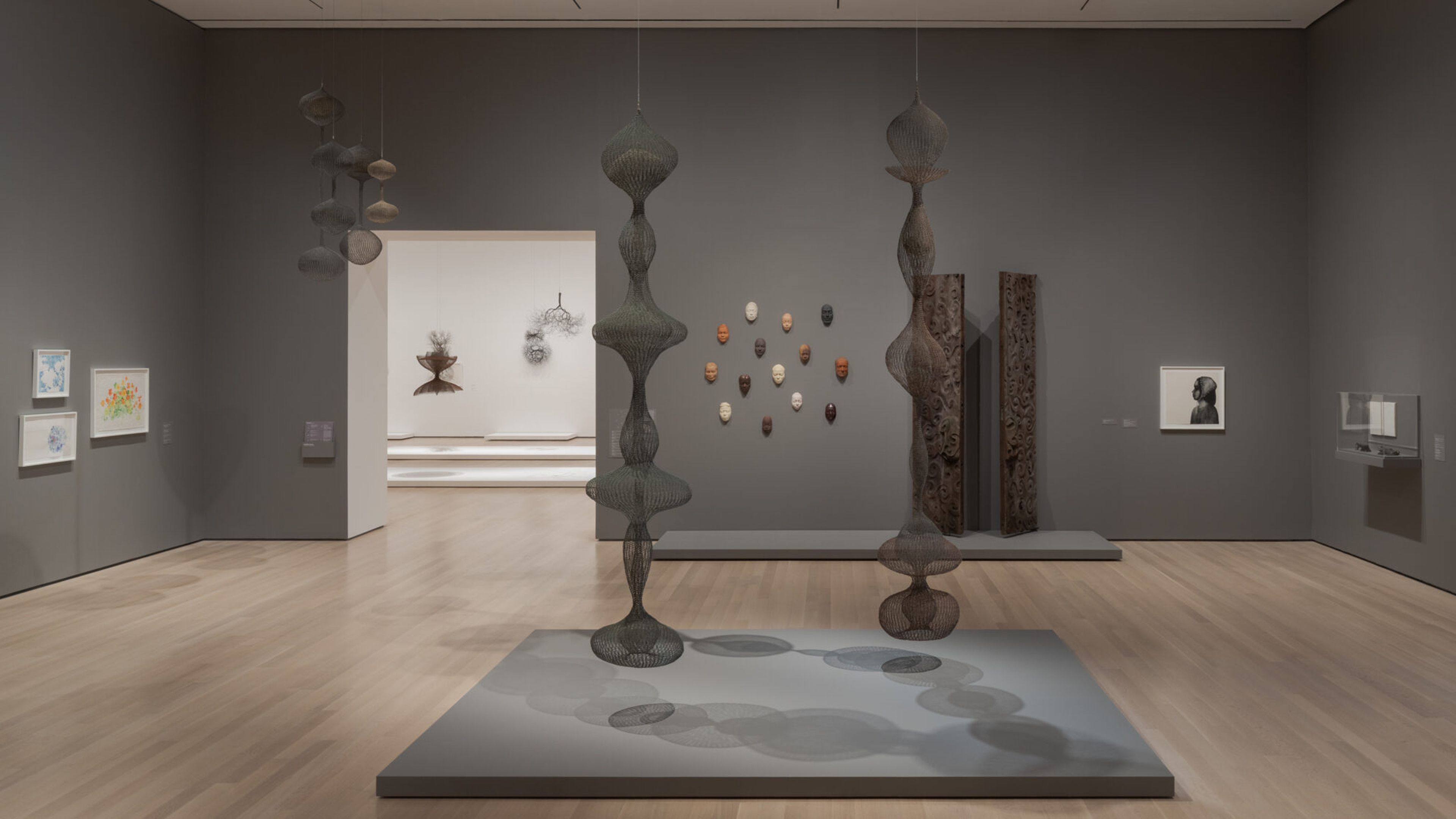
Installation view, Ruth Asawa: A Retrospective, The Museum of Modern Art, New York, 2025 © 2025 The Museum of Modern Art, New York. Photo by Jonathan Dorado. Artworks © 2025 Ruth Asawa Lanier, Inc.
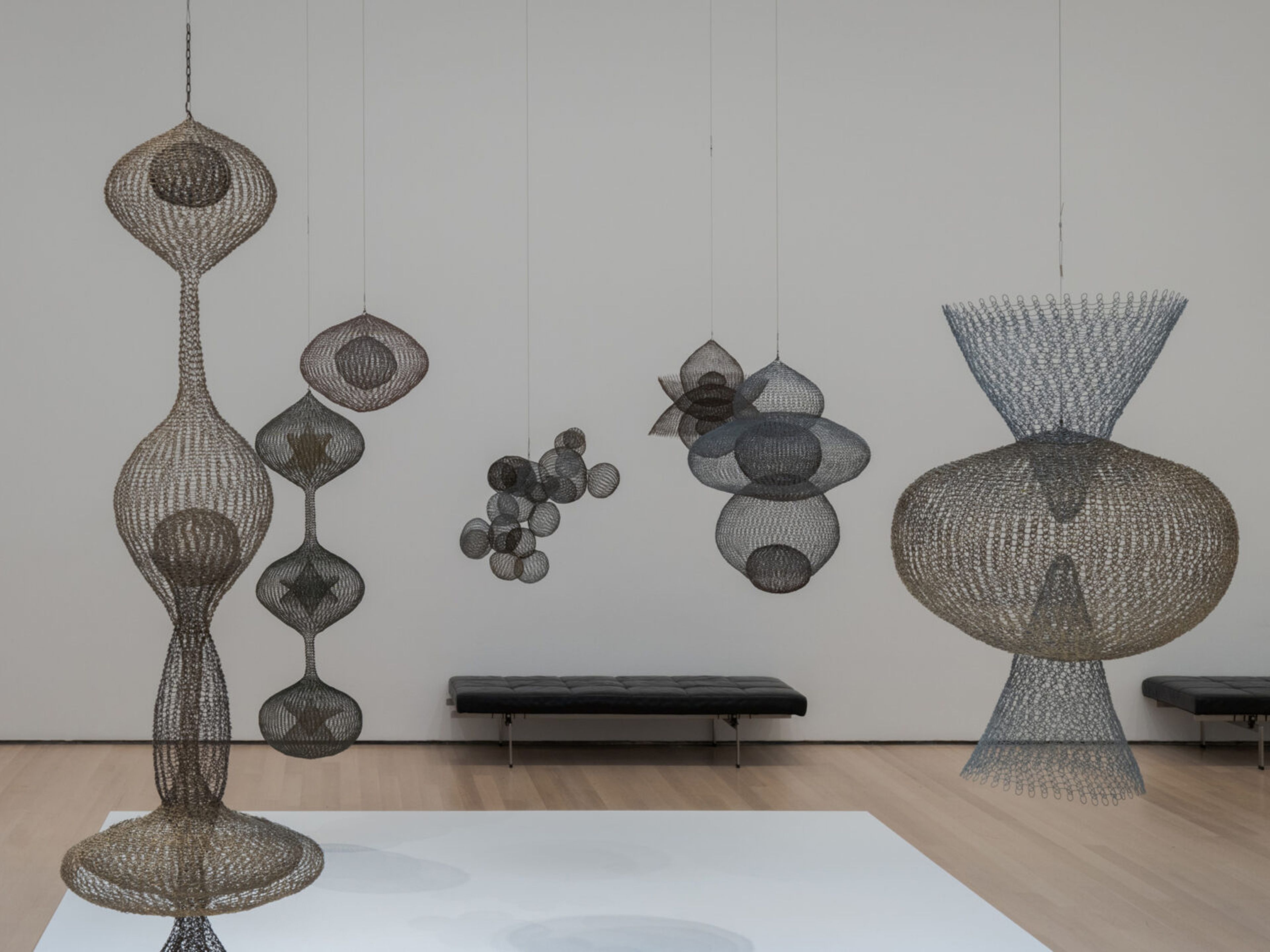
Installation view, Ruth Asawa: A Retrospective, The Museum of Modern Art, New York, 2025 © 2025 The Museum of Modern Art, New York. Photo by Jonathan Dorado. Artworks © 2025 Ruth Asawa Lanier, Inc.
Plan Your Visit
Ruth Asawa: A Retrospective is on view through February 07, 2026 at The Museum of Modern Art, New York. You can view a schedule for public programming and reserve tickets here at moma.org.
Learn more about Ruth Asawa