In Focus

Oscar Murillo

36th Bienal de São Paulo
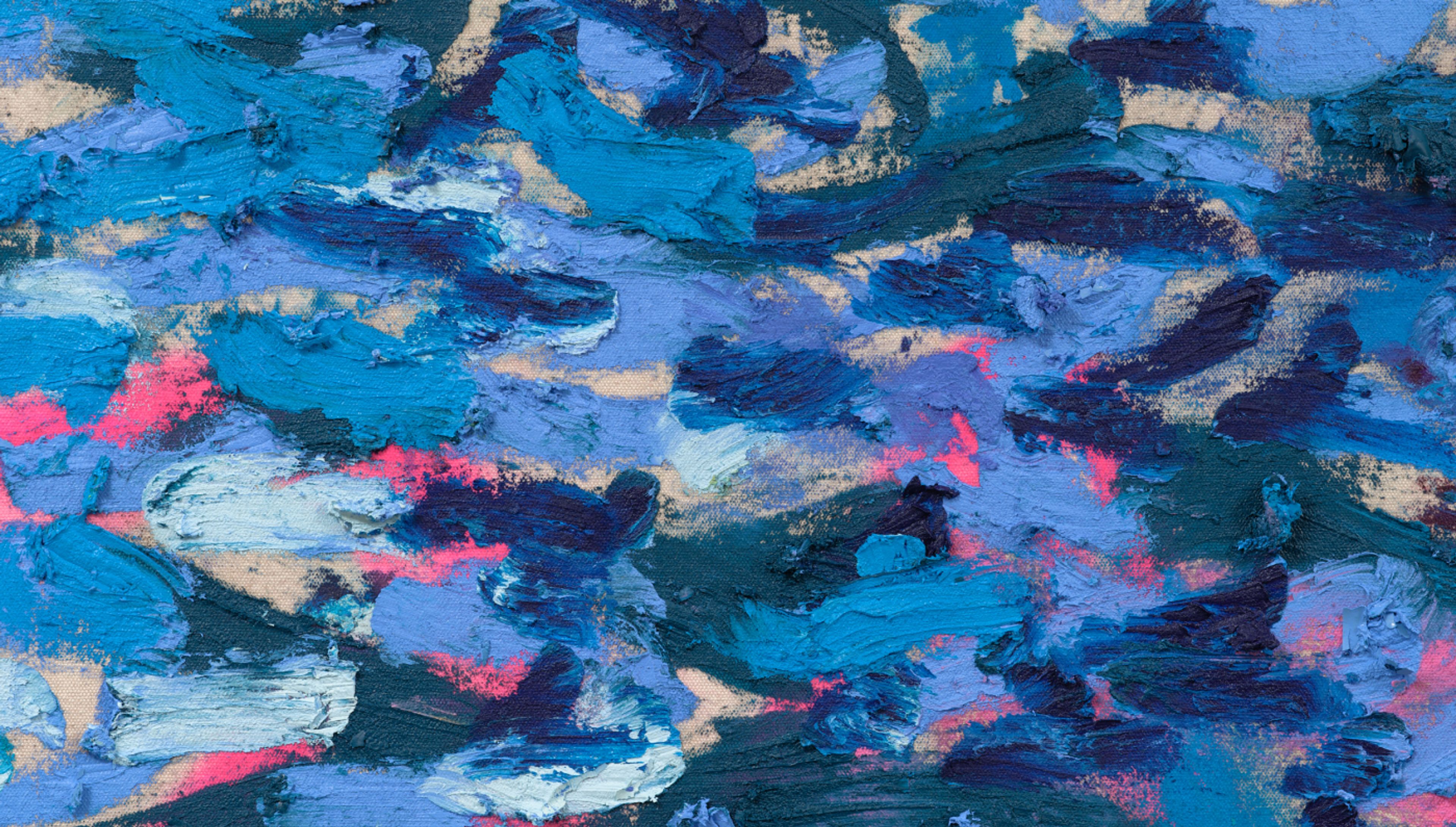
A detail from a painting by Oscar Murillo titled surge (social cataracts) dated 2025.

Oscar Murillo, surge (social cataracts), 2025 (detail)
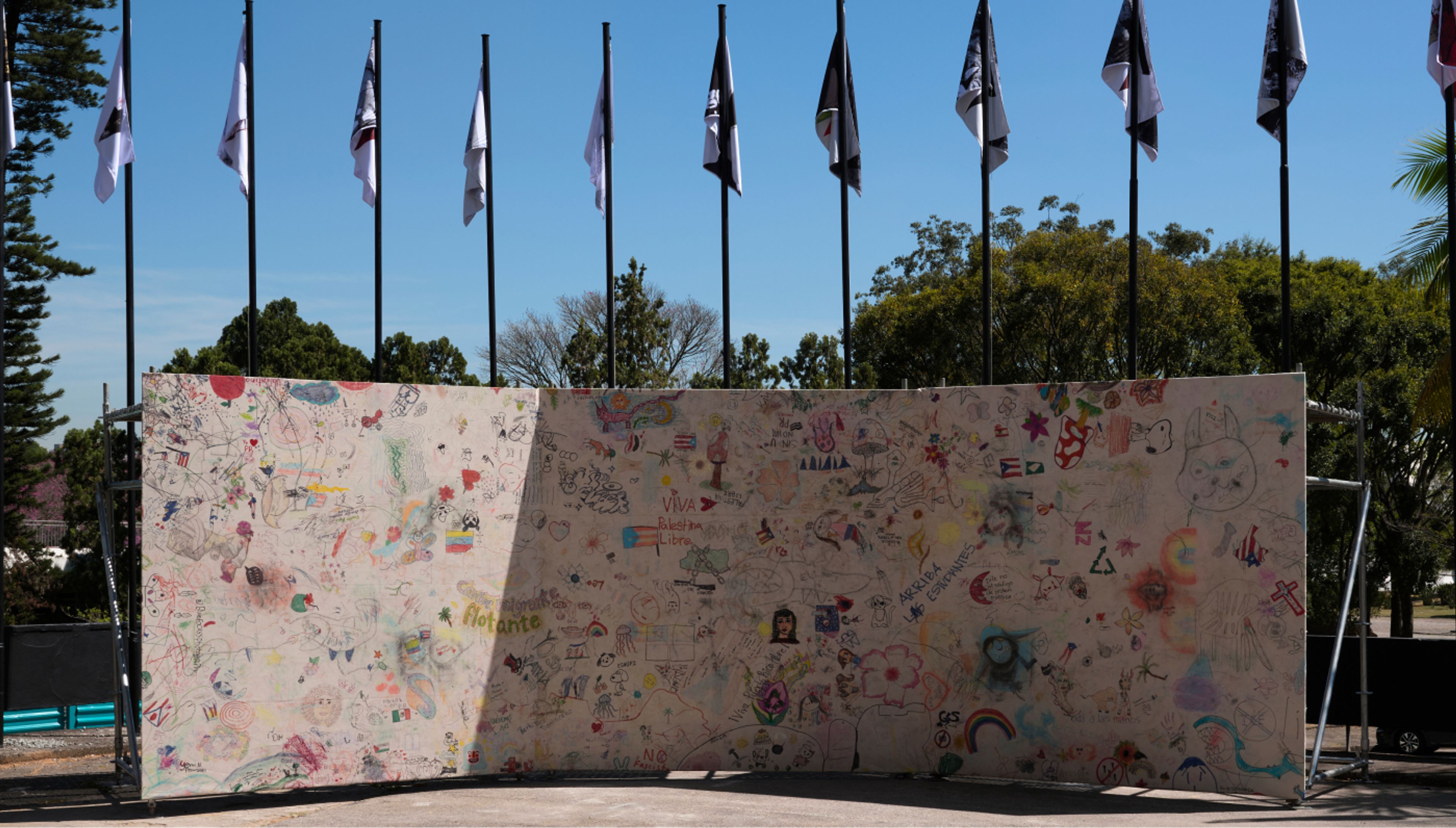
A song to a tearful garden is Oscar Murillo’s site-specific, collective painting in São Paulo’s Ibirapuera Park, on view during the Bienal from September 6, 2025 to January 11, 2026.

 Visitors to the Bienal will encounter curved scaffolding structures positioned either side of the Ciccillo Matarazzo Pavilion, each with a wall of canvas and art materials present, allowing the public to create a series of large-scale paintings. Every week, the public's marks will create an index of painted layers, providing a place of reflection against a backdrop of cosmopolitan energy.

An artwork by Oscar Murillo titled A song to a tearful garden dated 2025.

Oscar Murillo, A song to a tearful garden, 2025. 36th São Paulo Bienial. Photo by: Reinis Lismanis. Copyright © Oscar Murillo
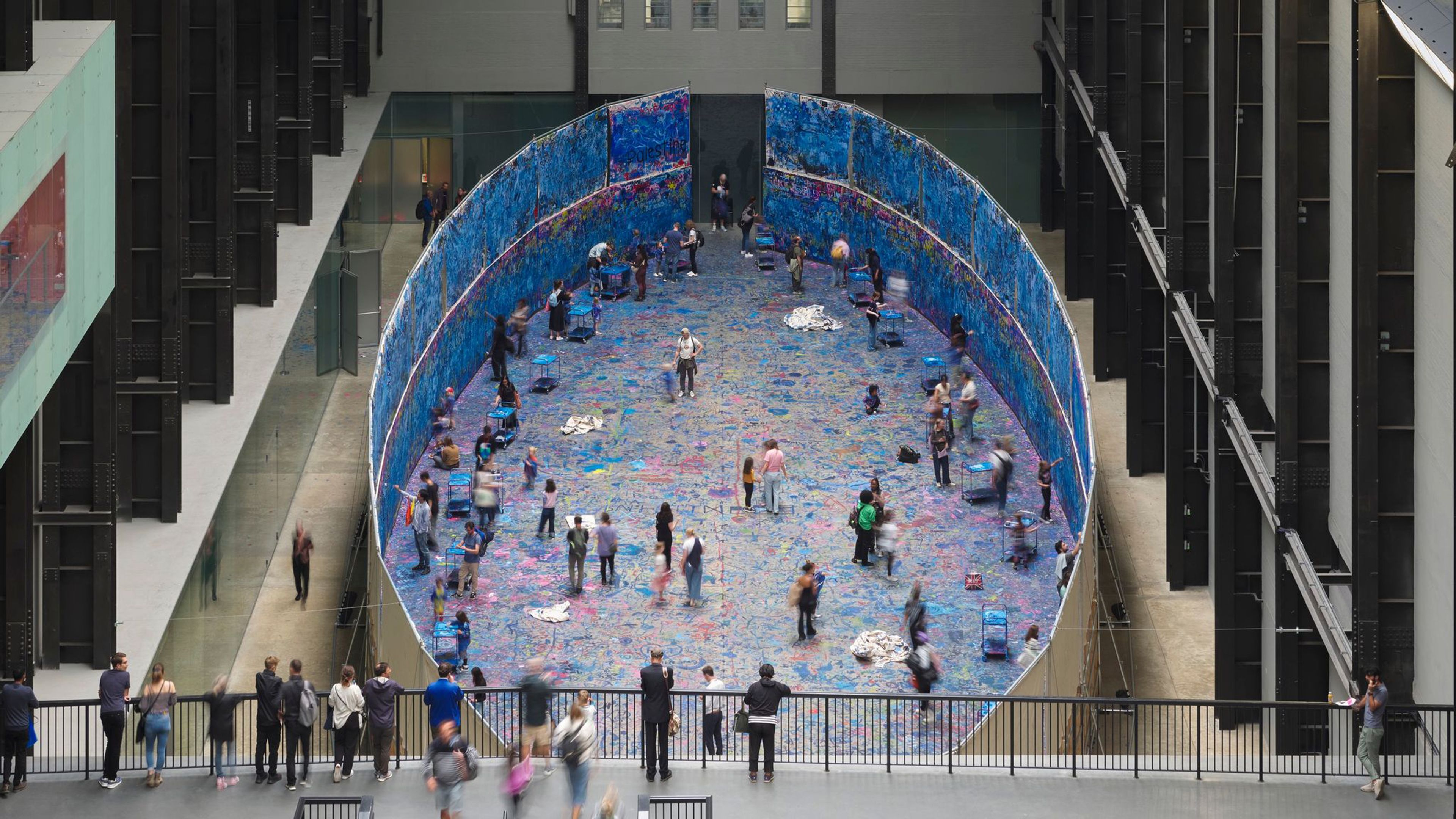
This follows other recent large-scale participatory works, including at the Public Art Abu Dhabi Biennial in 2024, where Murillo invited crowds to make marks upon a painted black canvas stretched against a vast 80 meter-long scaffolding structure on the Abu Dhabi waterfront; at the Museo de Arte Contemporáneo de Monterrey, Mexico, where his recent solo exhibition featured a “collective” mural painted by the public on the museum’s free-admission days; at his current solo show at the Museo Tamayo in Mexico City, where canvases made by visitors fill the central atrium of the museum; and, notably, at Murillo’s 2024 solo presentation at the Tate Modern in London. There, the artist transformed its famous Turbine Hall into The flooded garden, where visitors were invited to paint water and waves onto a monumental wall of canvas to create a layered, collaborative painting of epic proportions.

Oscar Murillo, The flooded garden, Tate Modern, 2024. Photo by Tim Bowditch. Copyright © Oscar Murillo
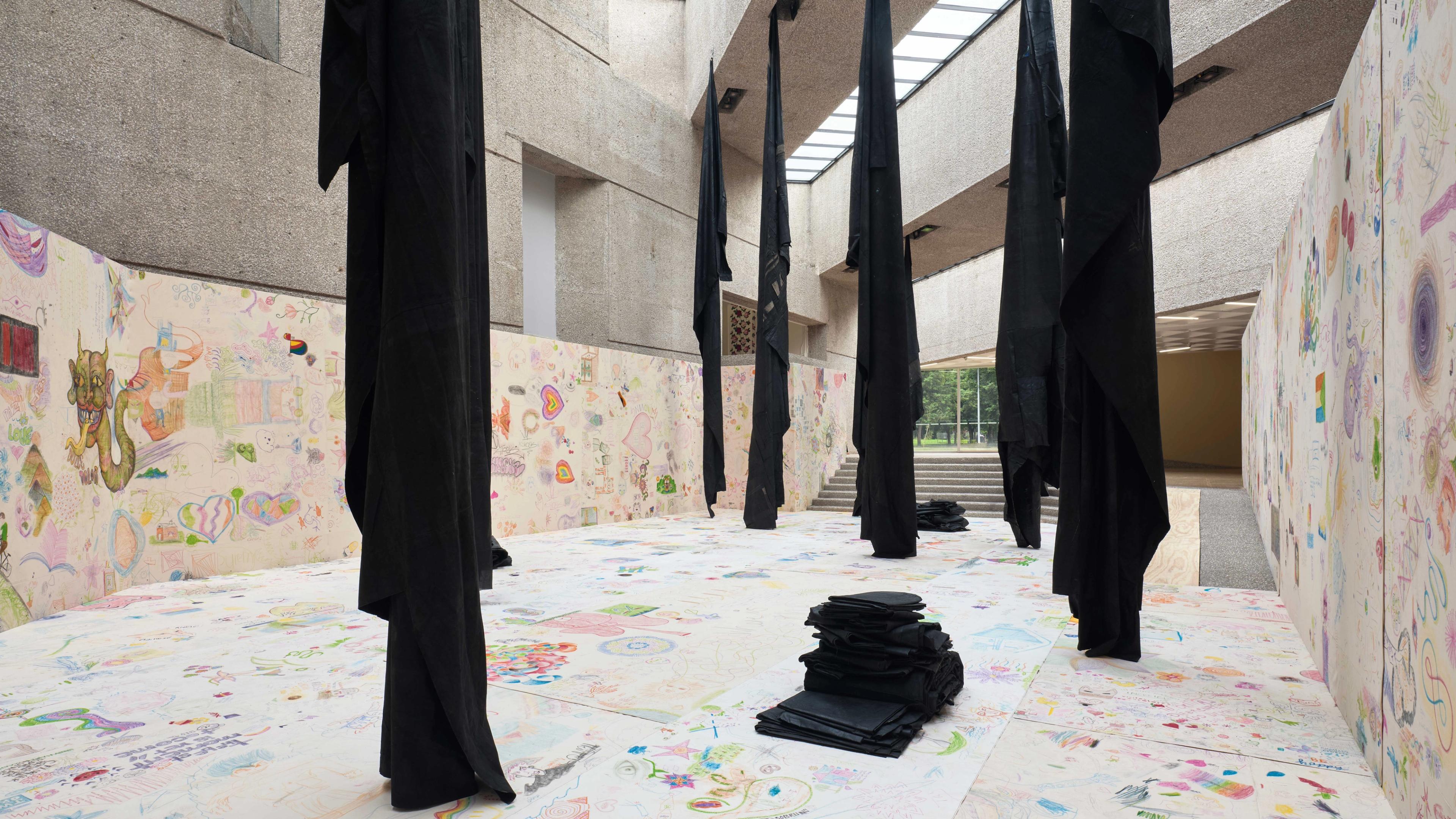
Installation view, Oscar Murillo: Espíritus en el pantano, Museo Tamayo,2025. Photo by Reinis Lismanis. Copyright © Oscar Murillo
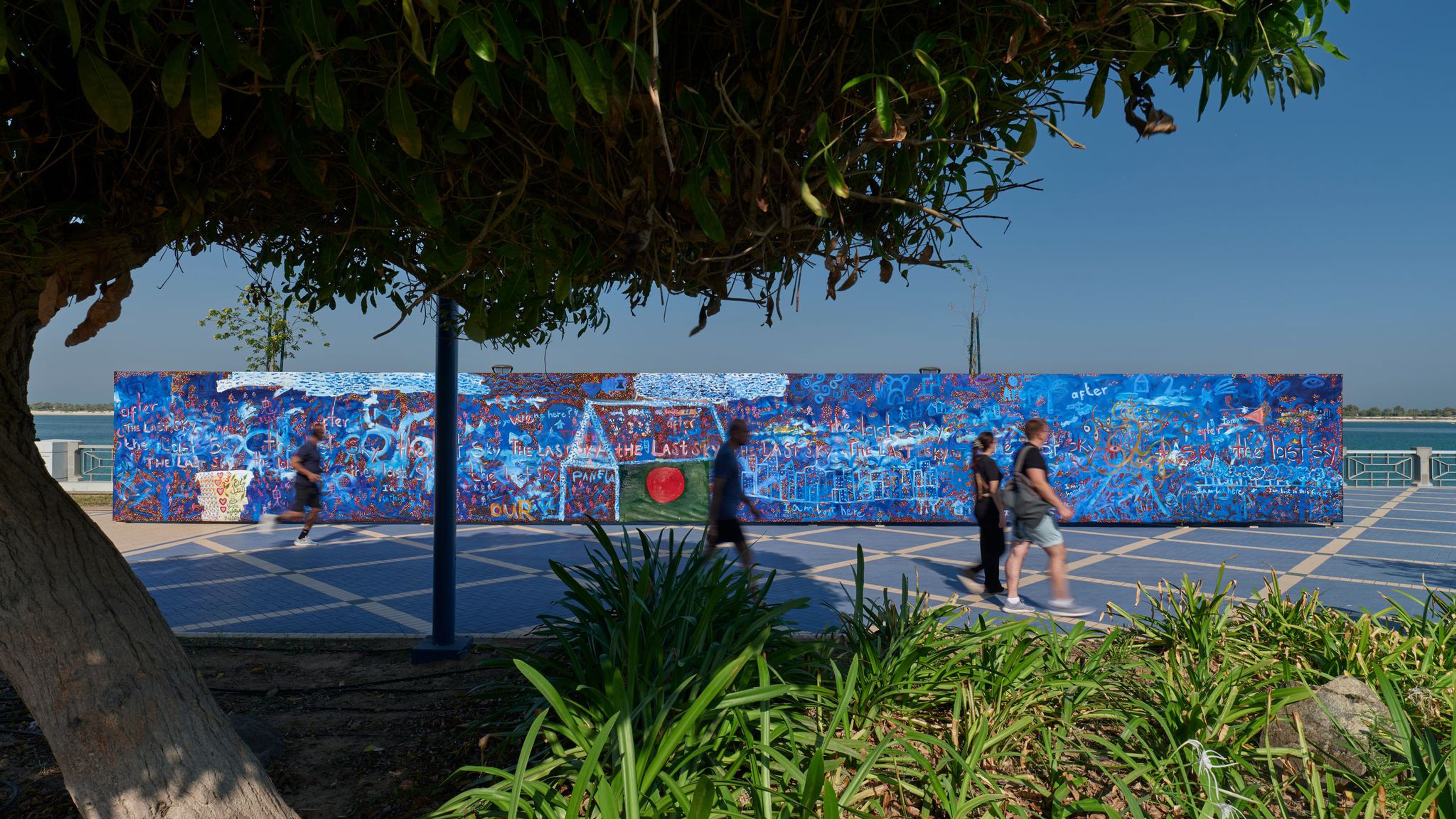
Installation view, Oscar Murillo: A 1% offering: collective messages to our ancestors, Public Art Abu Dhabi, 2024-25. Photo by Reinis Lismanis. Copyright © Oscar Murillo
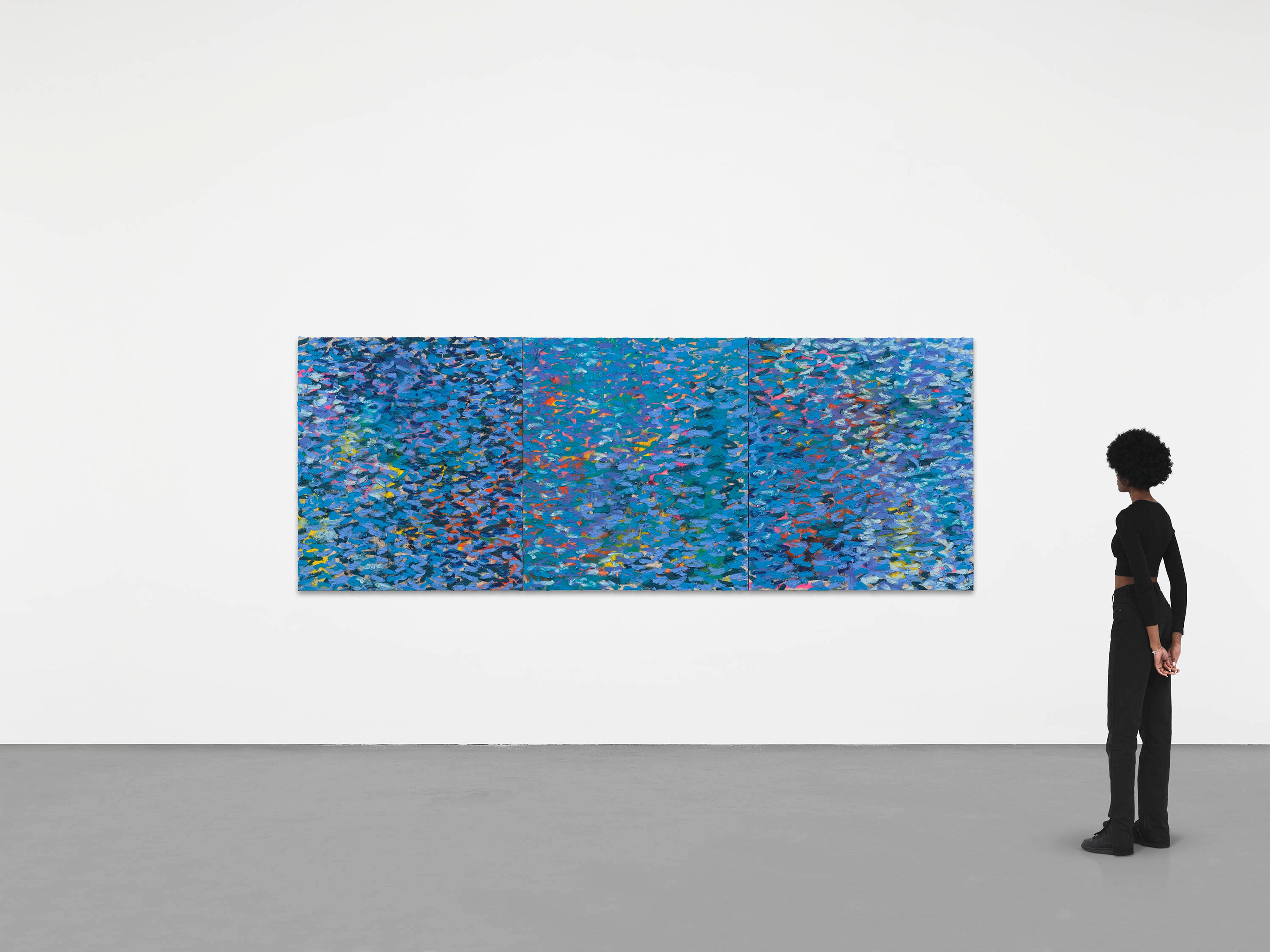
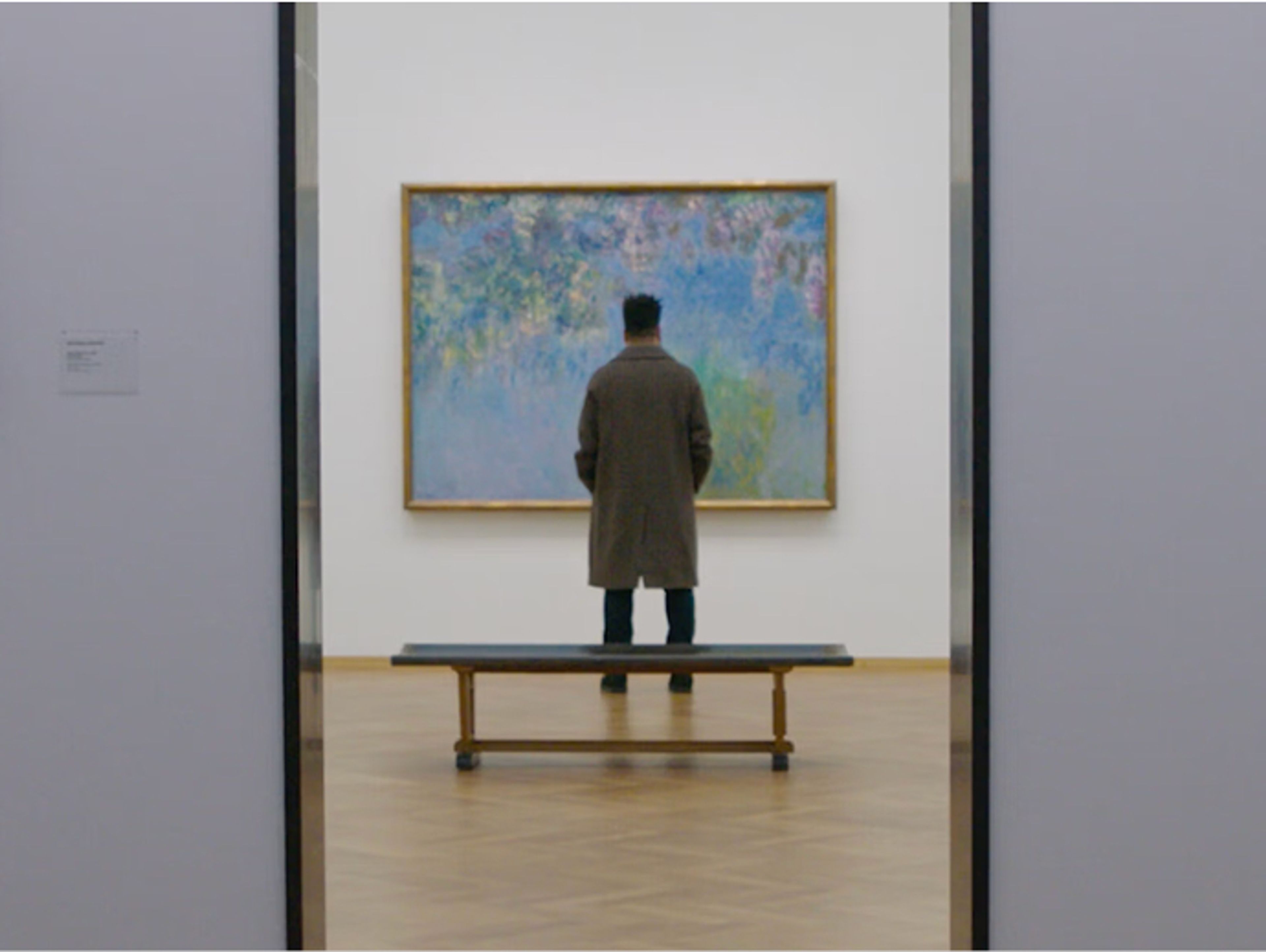
 

Like several other such participatory presentations, A song to a tearful garden took inspiration from Claude Monet’s Water Lilies series and the garden in which he painted them. Situated within this duality of nature and urban modernity, the canvases bear witness to the idea of darkness haunting a harmonious surface. This is a frequent concern in Murillo’s work, often alluding to the biography of Monet and his infamous Water Lilies, created in spite of the artist’s debilitating loss of vision.

Oscar Murillo in front of one of Monet’s Water Lilies. Still from video by Woestwerk. Courtesy KM21, The Hague, Netherlands

This present triptych is a new example of Murillo’s surge paintings—a body of work initiated by the artist in 2018 that represents an evolution in his studio practice. The composition is inspired in part by Monet’s paintings of water lilies, which interest Murillo not just for their formal and historical significance, but also for their global commodification and circulation—a phenomenon that has also, counterintuitively, caused these artworks to become associated with a lowbrow notion of beauty.

Murillo has described the surge paintings as “social cataracts,” an allusion to the visual affliction that Monet famously developed later in life, as a way of pointing to society’s inability to see the world for what it truly is.

Through an associative working method, the artist builds up layers of both found and invented imagery and phrases as well as gestural markings in intuitively placed planes, resulting in dense, visually layered surfaces. As the final step in the process, Murillo covers the topmost layer of the canvas in a rush of undulating colors, conveying a sense of motion and defined depth across the surface of the work through the repetitive gesture used to create it.

Referencing both the surge of energy used to make the works, as well as the ability of water to flow indiscriminately without regard to arbitrary constructs such as maps or borders, Murillo conjures an utopic and cautionary vision of contemporary geopolitics.
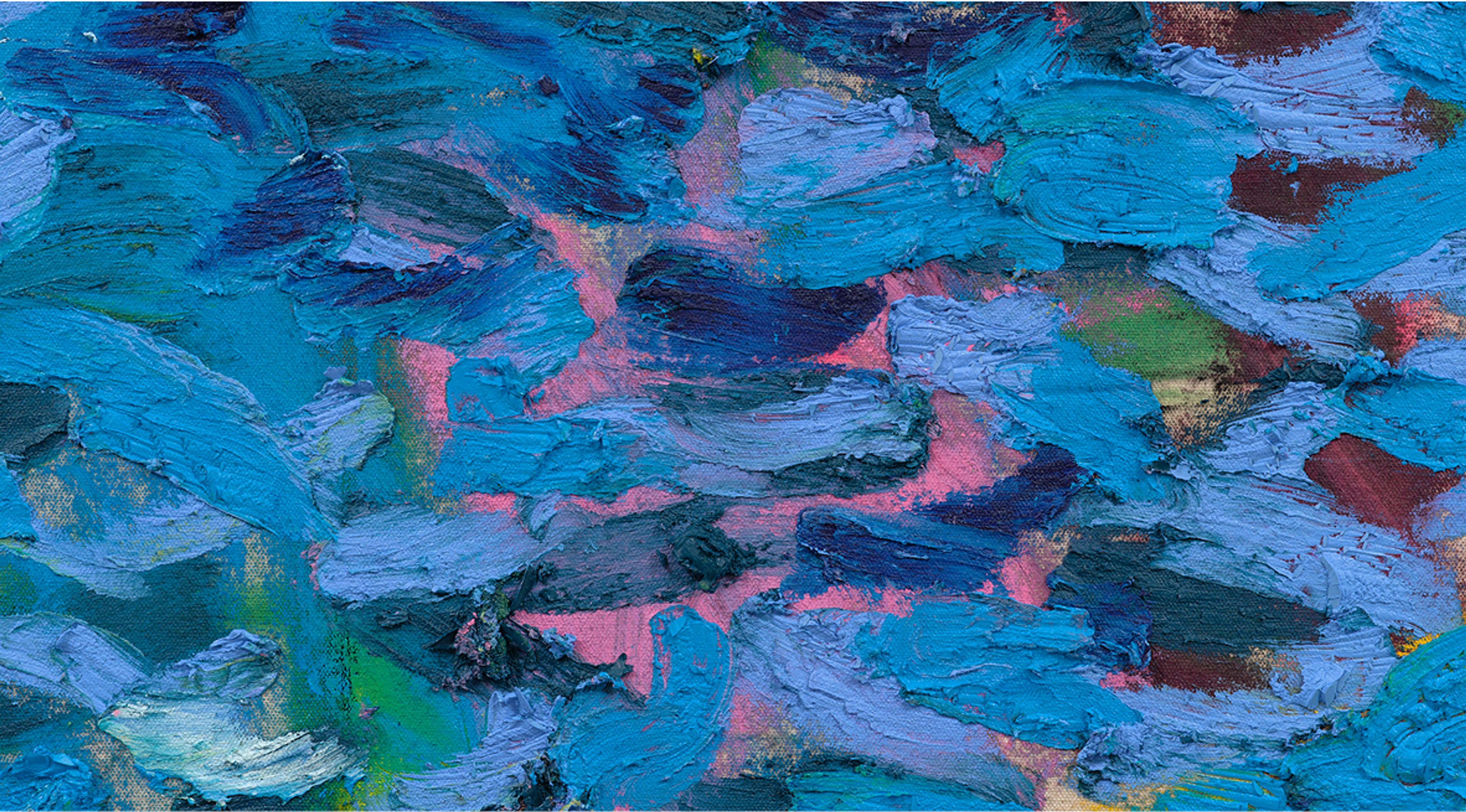
Oscar Murillo, surge (social cataracts), 2025 (detail)
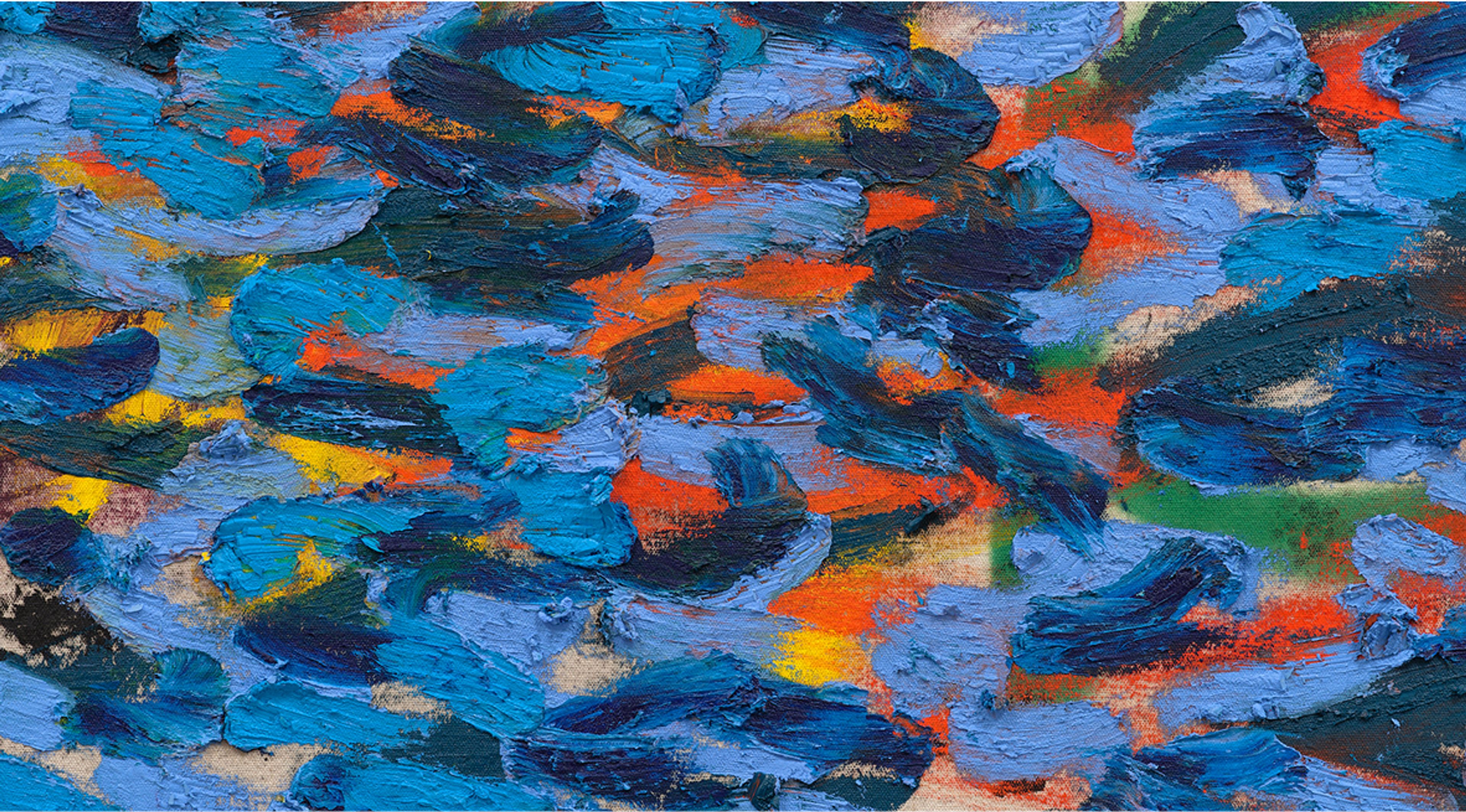
Oscar Murillo, surge (social cataracts), 2025 (detail)
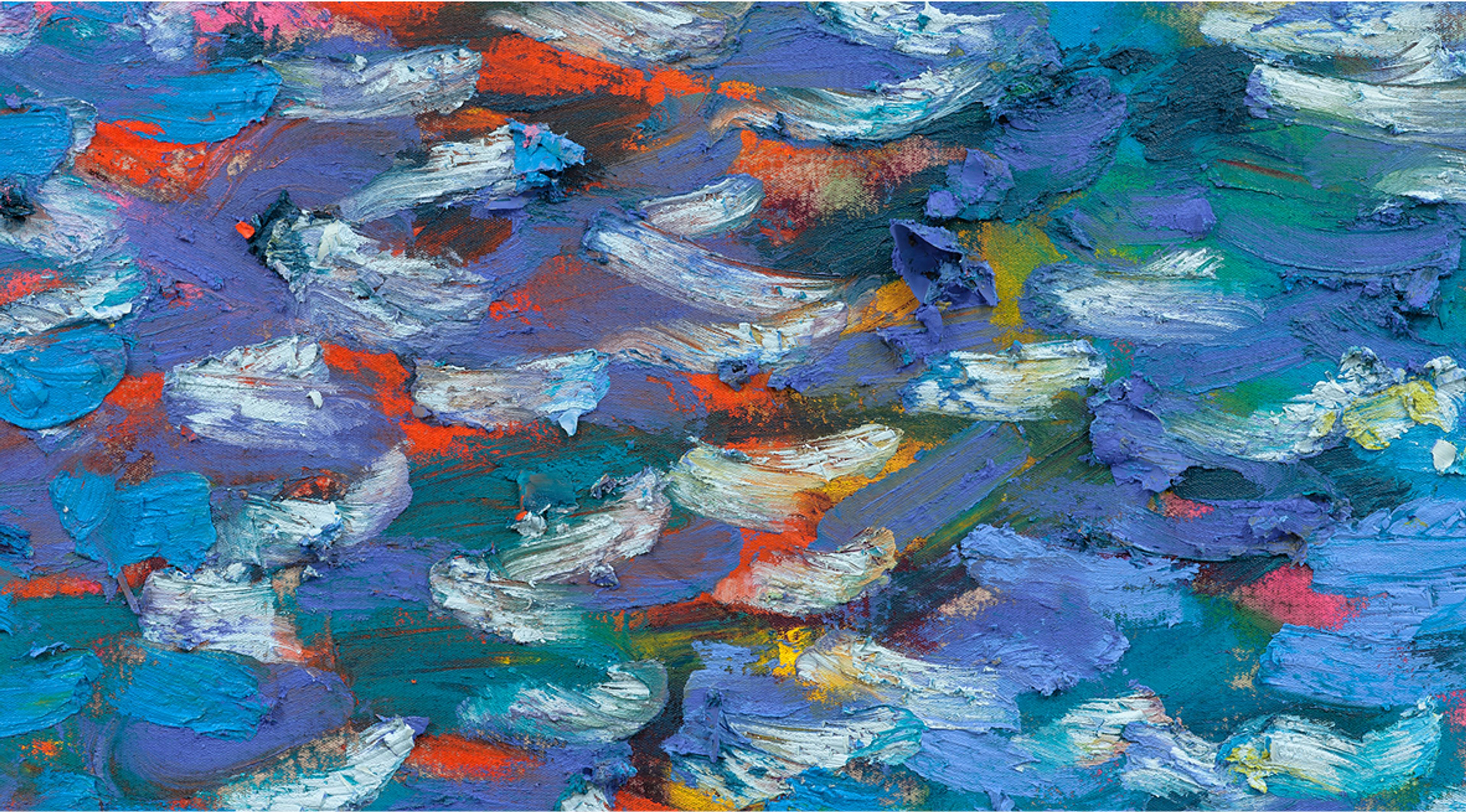
Oscar Murillo, surge (social cataracts), 2025 (detail)
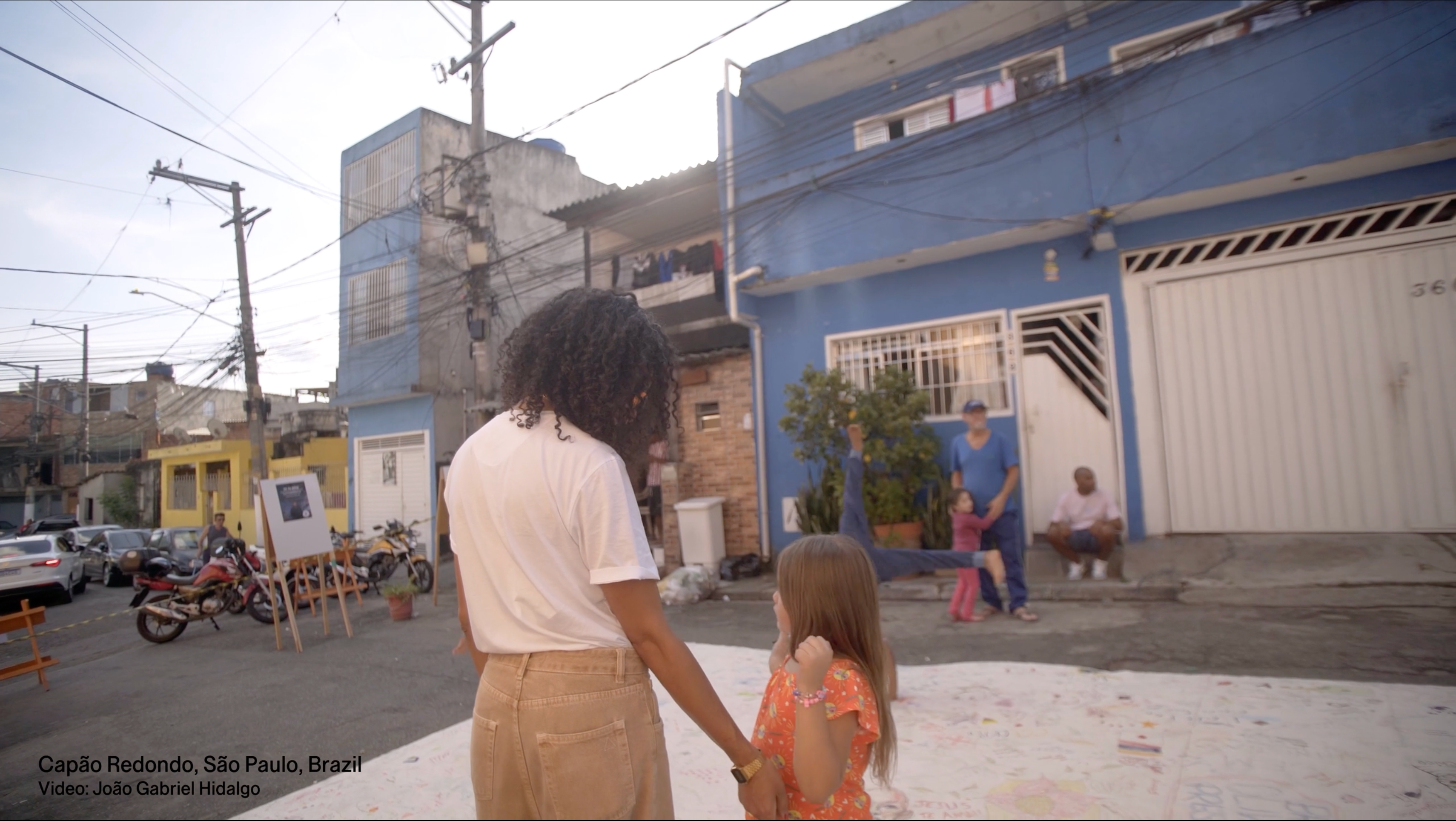
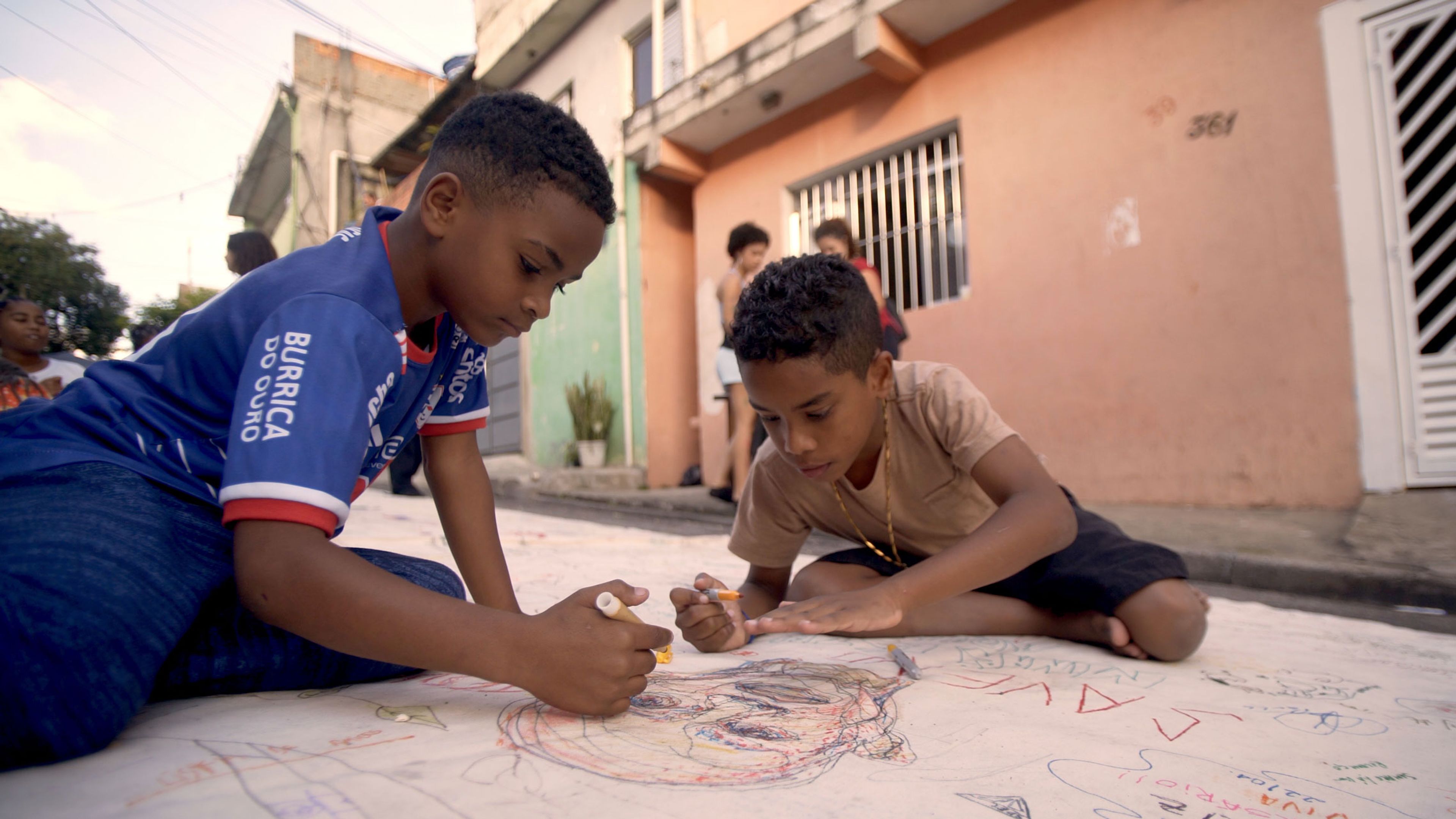
 

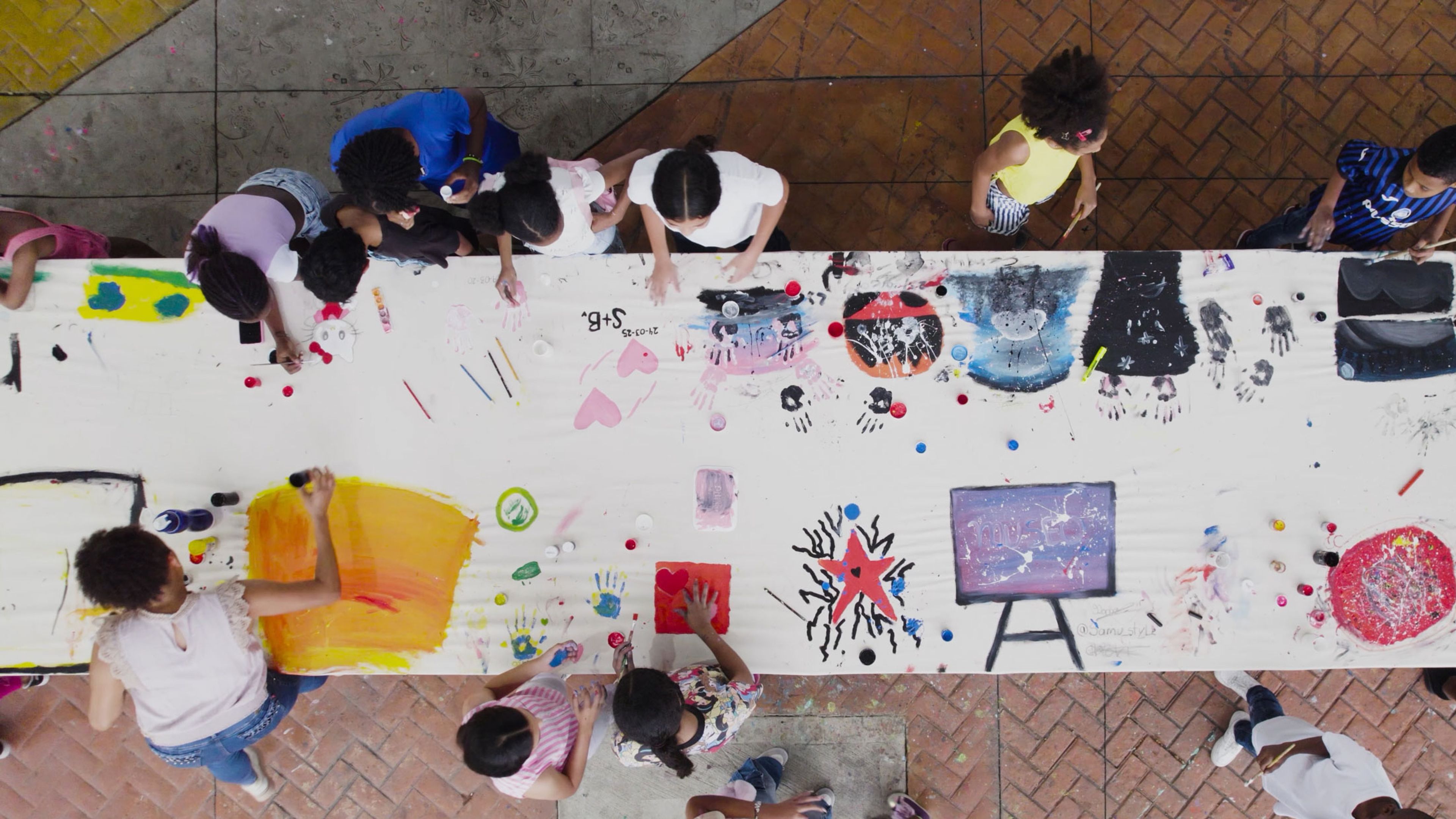
Ahead of the installation of A song to a tearful garden at São Paulo’s Ibirapuera Park, Murillo invited friends, family, and members of the public to form the painting’s base layer in a series of drawing sessions held around the world. Canvases traveled to São Paulo across the Atlantic from throughout Africa, Latin America, and the Caribbean in a celebration of collective spirit anchored by the exercise of mark-making, a process Murillo refers to as social mapping.

Capão Redondo, São Paulo, Brazil. Video (still): João Gabriel Hidalgo
La Paila, Valle del Cauca, Colombia. Video (still): Julian Valderrama
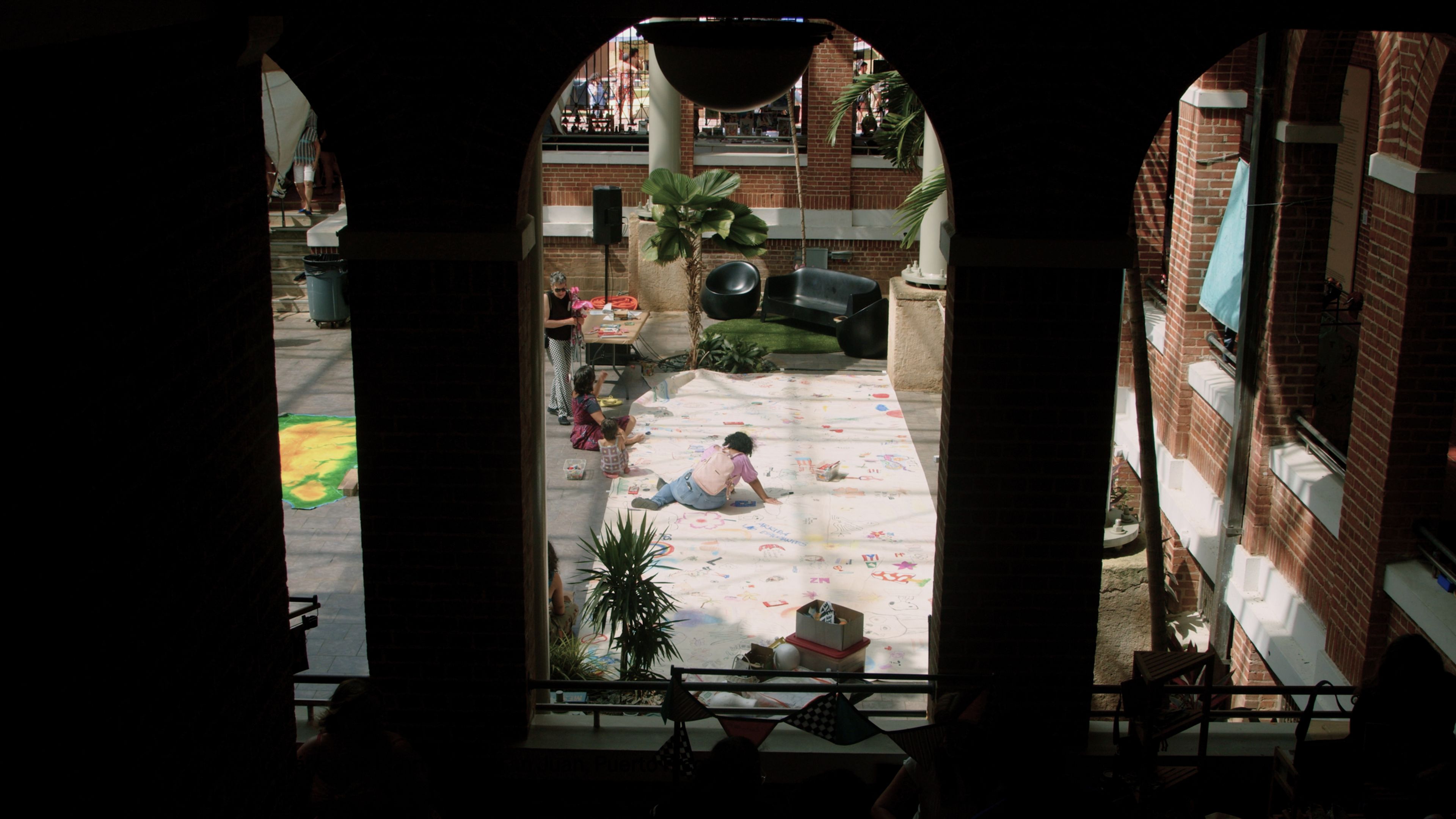
Museo de Arte Contemporáneo de Puerto Rico, San Juan, Puerto Rico. Video (still): Oswaldo Colón Ortiz
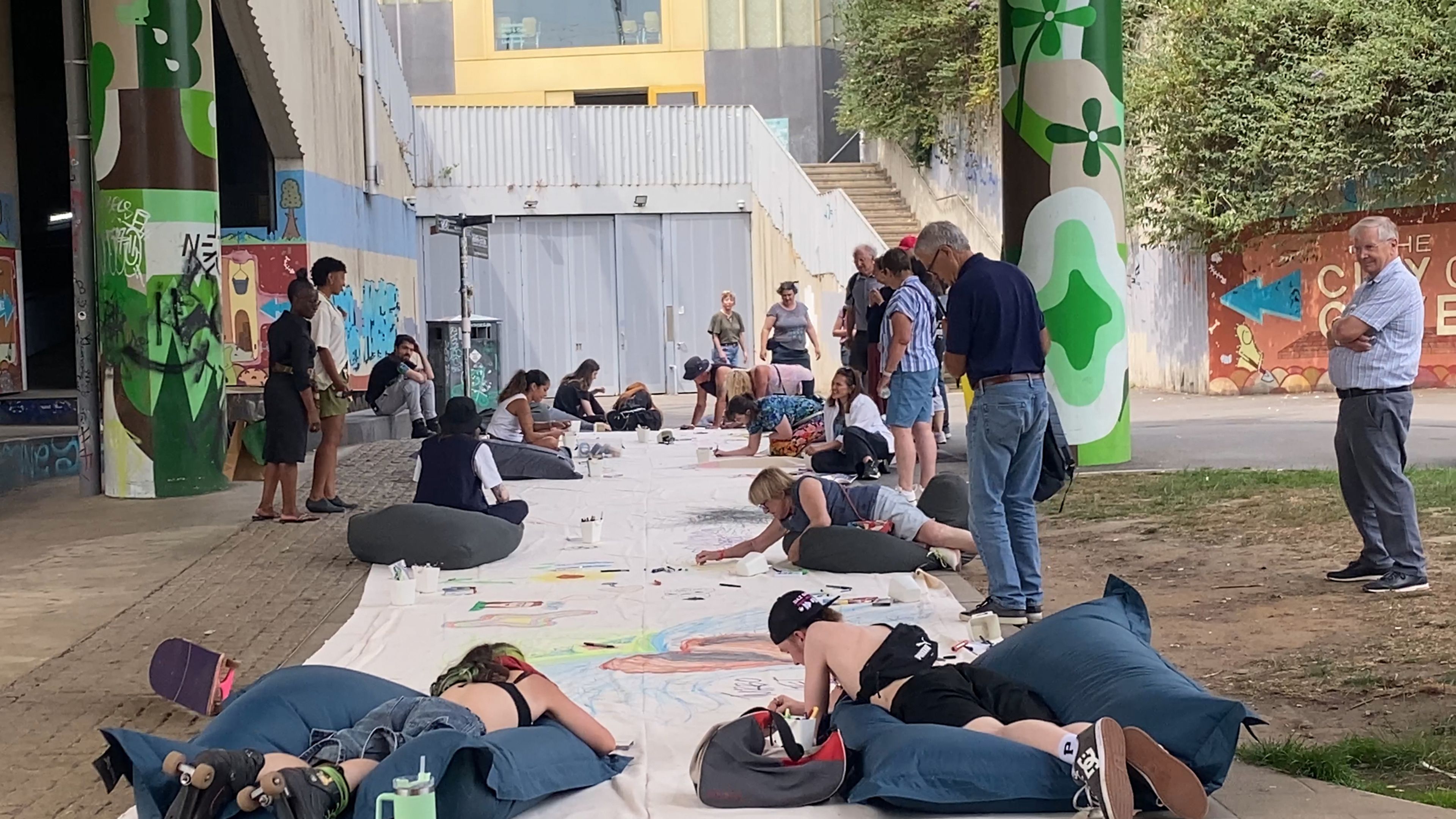
Nottingham Contemporary, Nottingham, UK. Video (still): Maite de Orbe
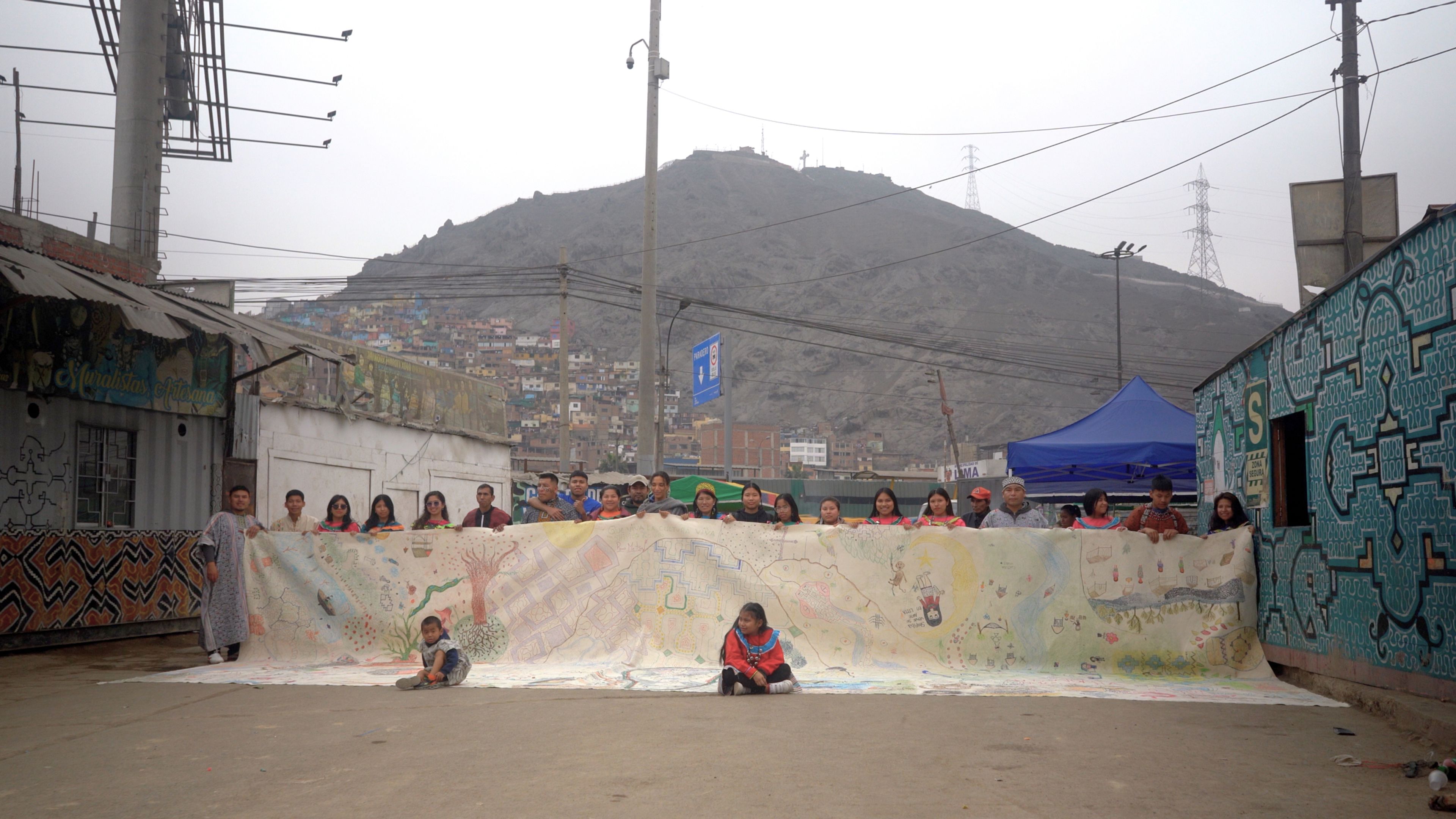
Shipibo-Konibo, Lima, Peru. Video (still): Noelia Vallvé
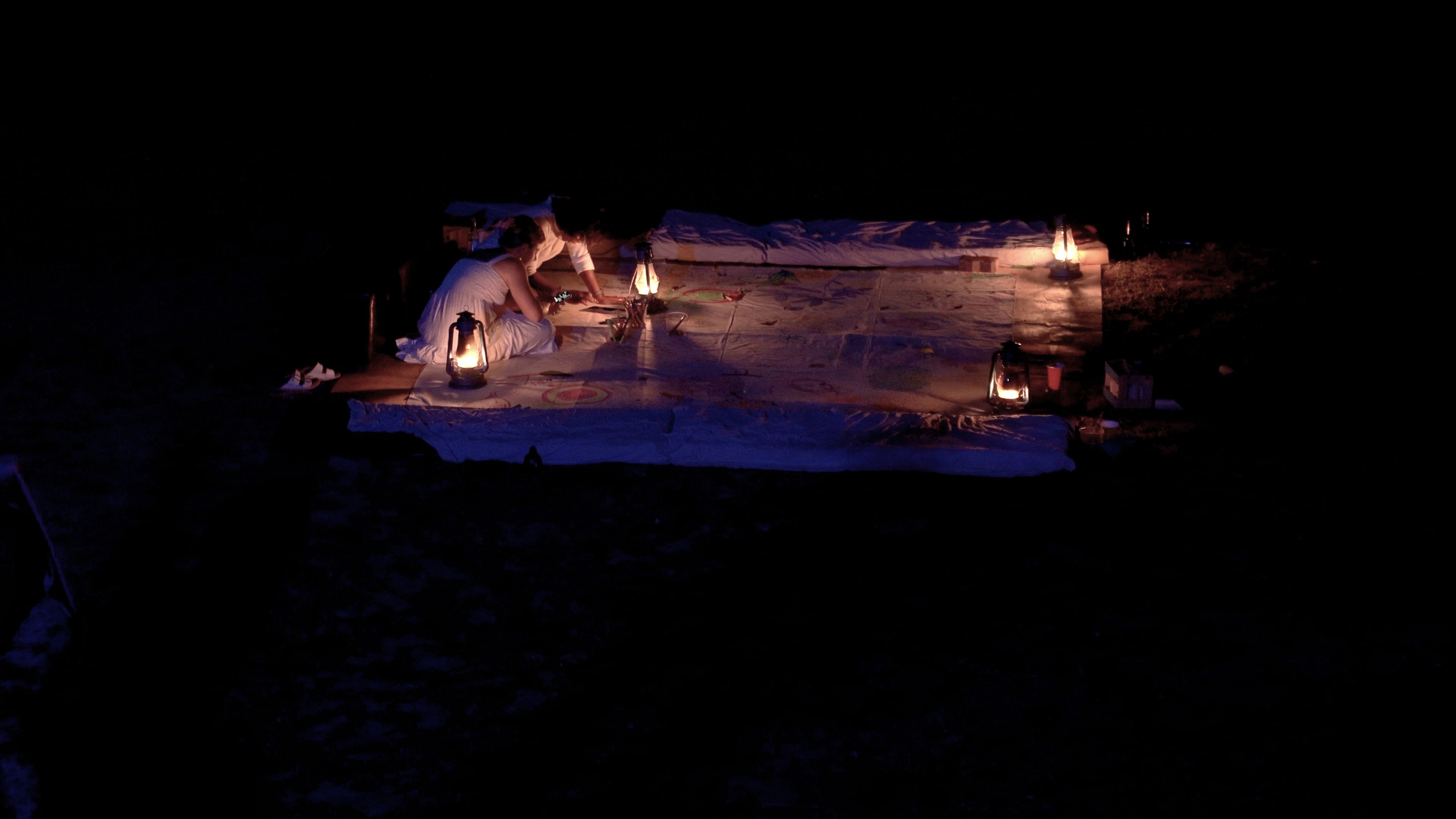
ajabu ajabu, Dar es Salaam, Tanzania. Video (still): Gertrude Malizeni
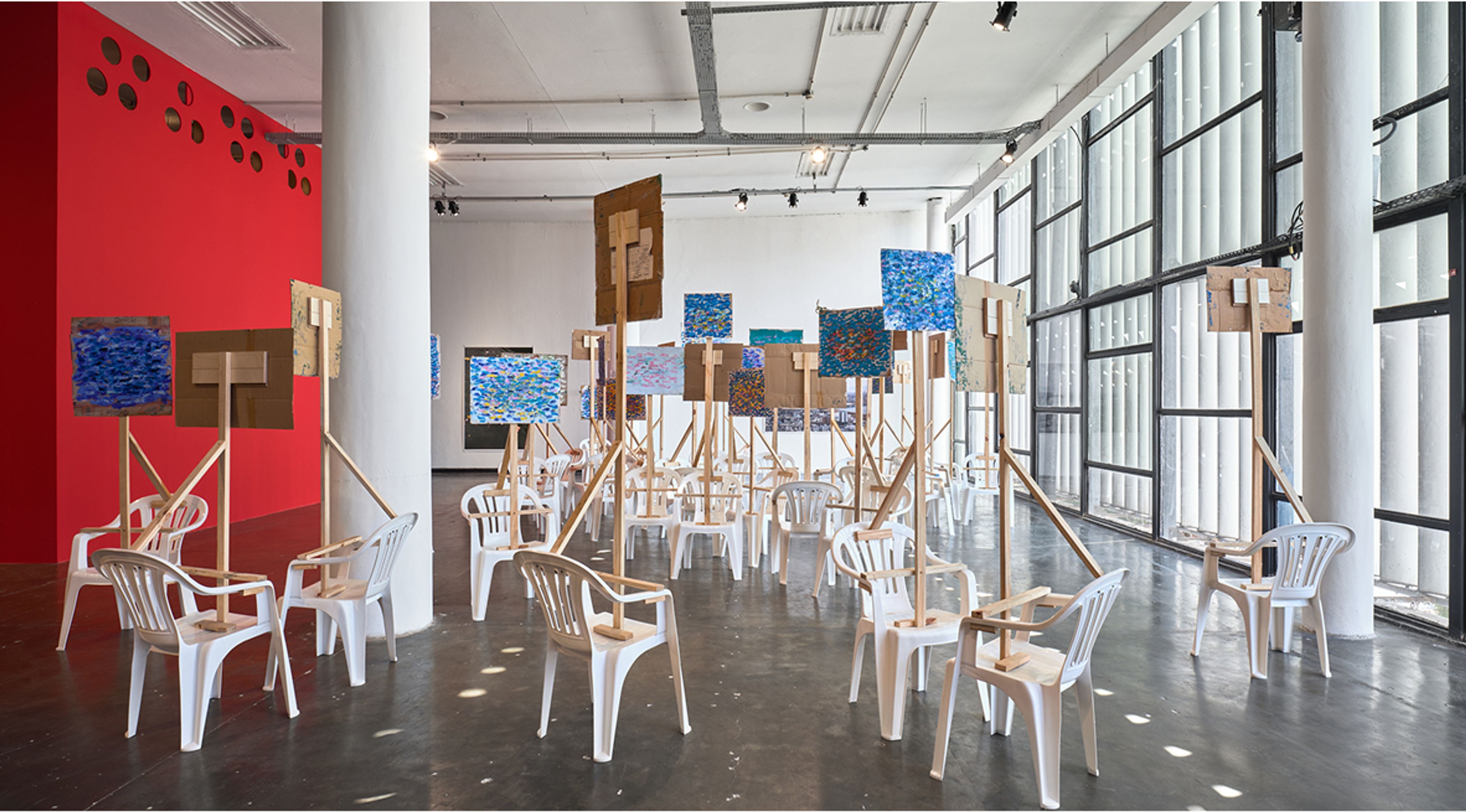
 

These ideas of collective energy are mirrored in the artist’s Mesmerizing Beauty installation, presented inside the Bienal pavilion. The work comprises a series of oil-painted seascapes on cardboard, with traces of their former life as traded goods visible beneath Murillo’s gestural marks. Propped up by vertical lengths of wood and secured to disposable plastic chairs, the installation manifests a sense of dissonance echoing the poetic aspirations of the public participation unfolding outside.

Oscar Murillo, Mesmerizing Beauty, 2025. 36th São Paulo Bienial. Photo by: Reinis Lismanis. Copyright © Oscar Murillo
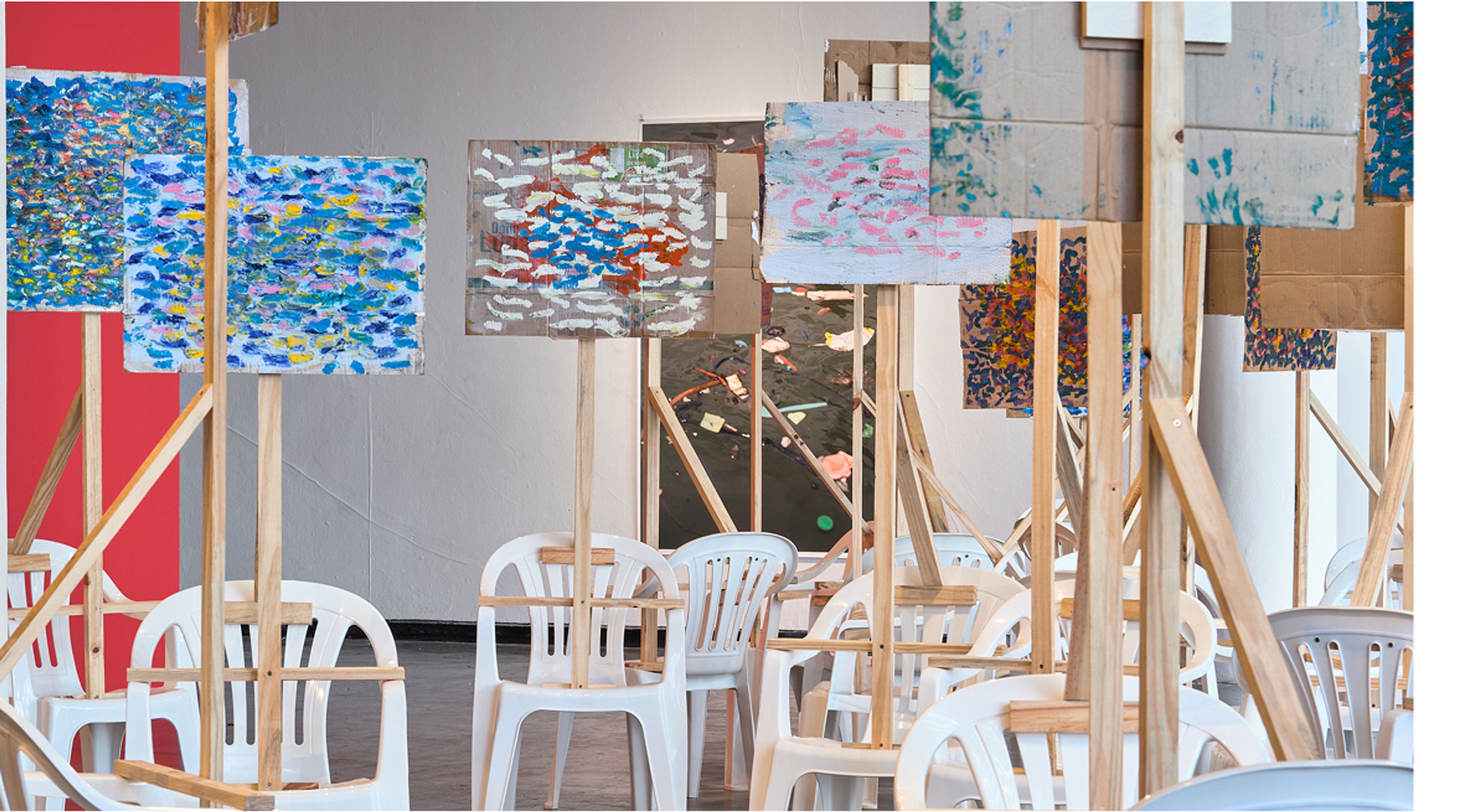
Oscar Murillo, Mesmerizing Beauty, 2025. 36th São Paulo Bienial. Photo by: Reinis Lismanis. Copyright © Oscar Murillo
 

“Murillo’s [recent exhibitions] reward the curious viewer ... with demonstrations of collaborative, transnational creativity ... His argument is persuasive: the incisive and emotional artwork on view subtly asserts what is gained through more expansive, liberatory notions of nationhood, kinship and art itself.”

—Claudia Ross, Frieze

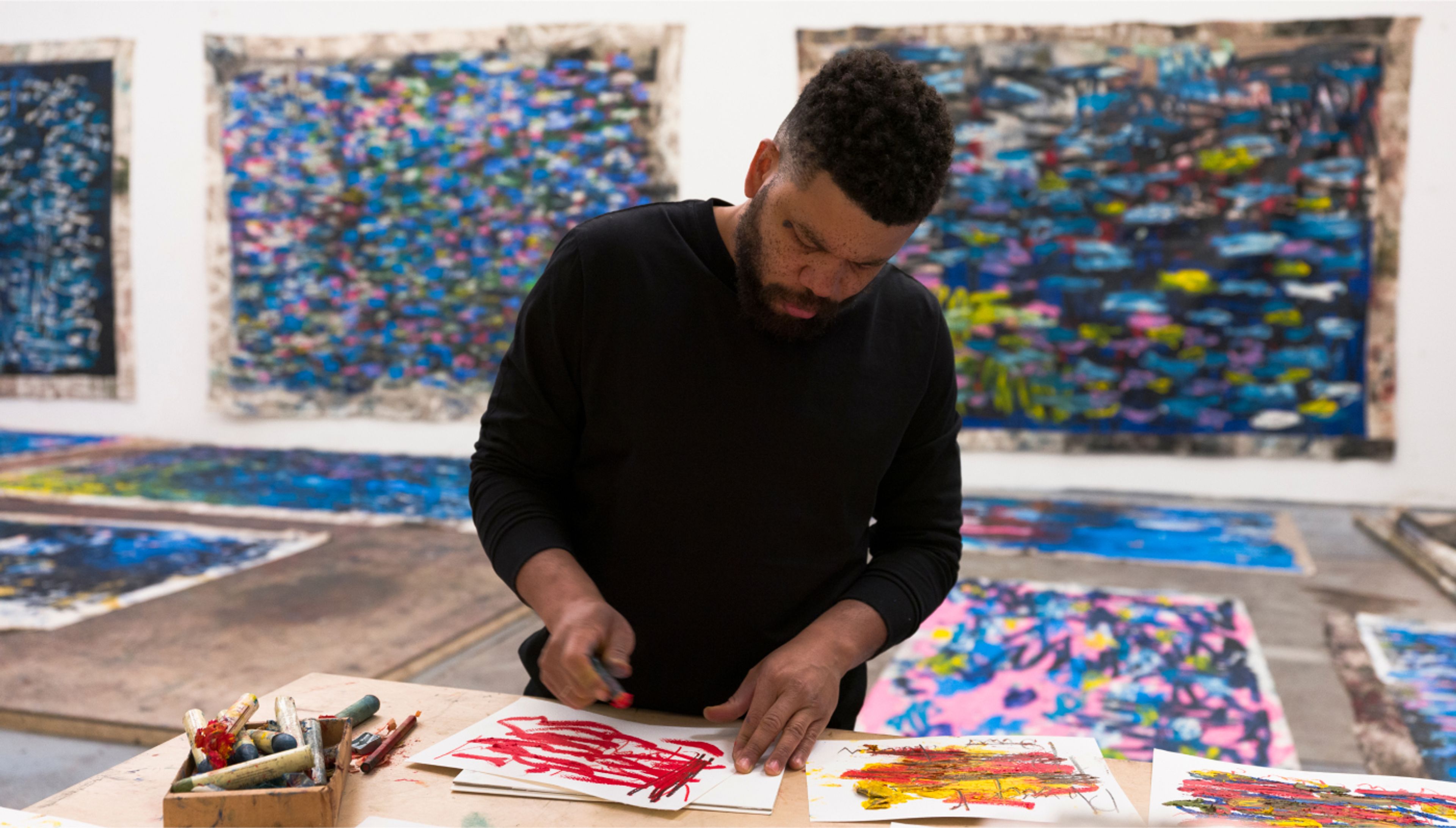
The artist in his studio, 2022. Photo by Tim Bowditch

A detail from a painting by Oscar Murillo titled surge (social cataracts) dated 2025.

Inquire about works by Oscar Murillo