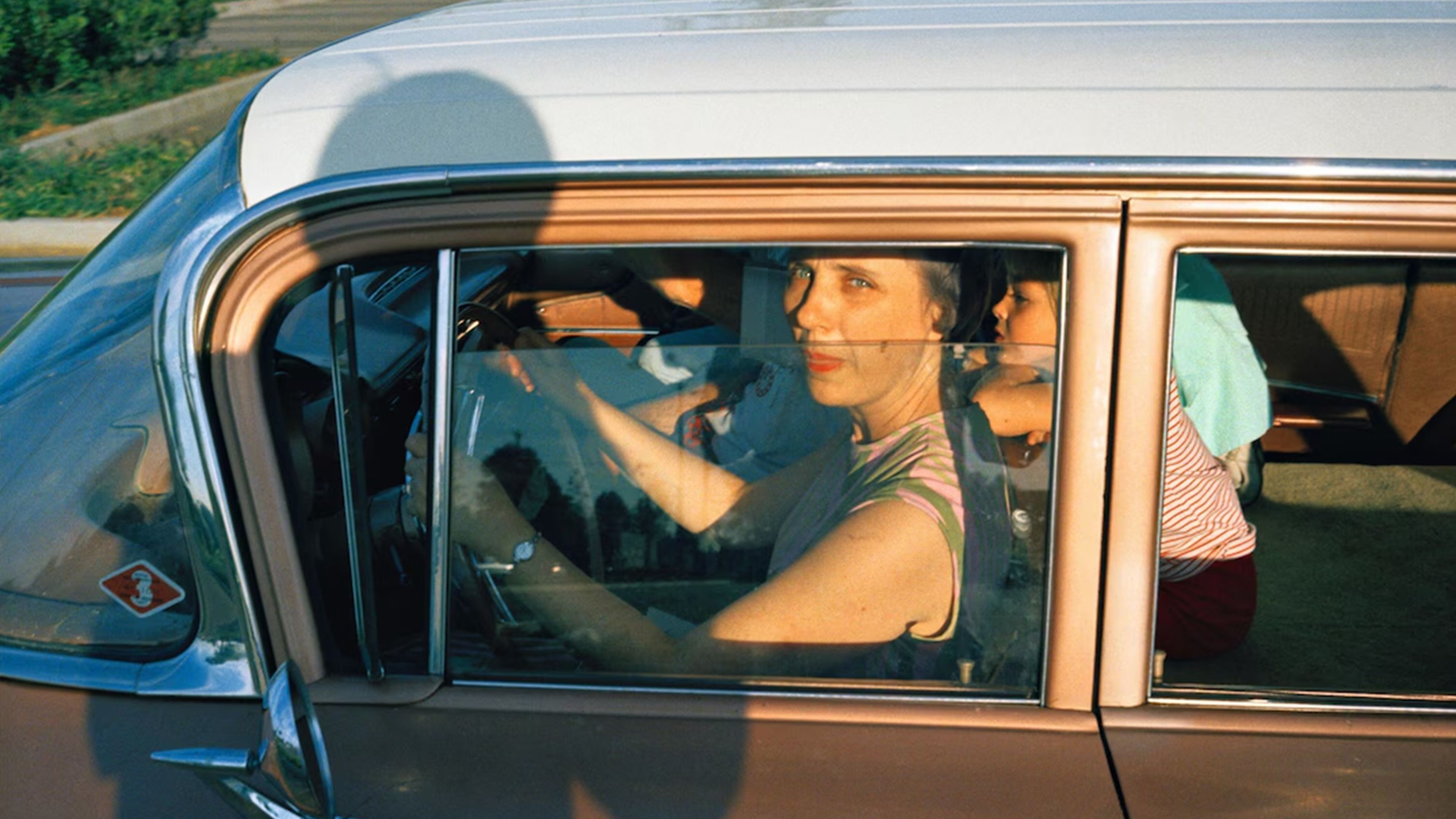
‘William Eggleston: More Southern, More Weird’ by Zak Freeman
2026
In 1967, William Eggleston arrived in Manhattan with a suitcase full of colour slides of the Mississippi Delta. From gas stations to cigarette-smoking housewives, these saturated images of rural America held an uncanny isolation. They caught the eye of John Szarkowski – then a curator at MoMA and America’s most influential photography critic – who convinced the museum to acquire a print and later give the photographer his first solo show, in 1976. At the time, ‘artistic’ photography meant black and white, a conscious separation from the colours of advertising. Photographers like Garry Winogrand and Lee Friedlander used the monochrome aesthetic to capture an America of kinetic spontaneity; playful, socially informed and inevitably centred on New York – the city where money, art and idealism were eager bedfellows. Eggleston was different; his work was less frenetic, less immaculate, more Southern, more weird. And he found the richness of colour he sought in the Kodak dye printing process used in advertising. Critics who had previously hailed the idea of prioritising everyday real-life experience in photography – ‘vernacular perspective‘ – decided Eggleston had gone too far; didn’t these images just look like overexposed holiday snaps? Szarkowski was attacked for describing them as “perfect” – “perfectly banal” was the New York Times’ response.
Yet in those off-kilter shots, Szarkowski recognised a radical new perspective. Unlike the previous generation, who treated colour, if they used it at all, as just another tool in their toolbox, Eggleston considered colour to be inherent to the photograph. For him, Szarkowski explained, “the blue and the sky were one thing”. Moreover, living in the artistic backwater of Mississippi had fostered in Eggleston the belief that the everyday could be just as profound – if not more so – than the extraordinary. When a friend suggested he photograph “boring” things, the idea became the foundation of his ‘democratic process’; he was determined to photograph anything and everything.
Read more at AnOther Magazine.