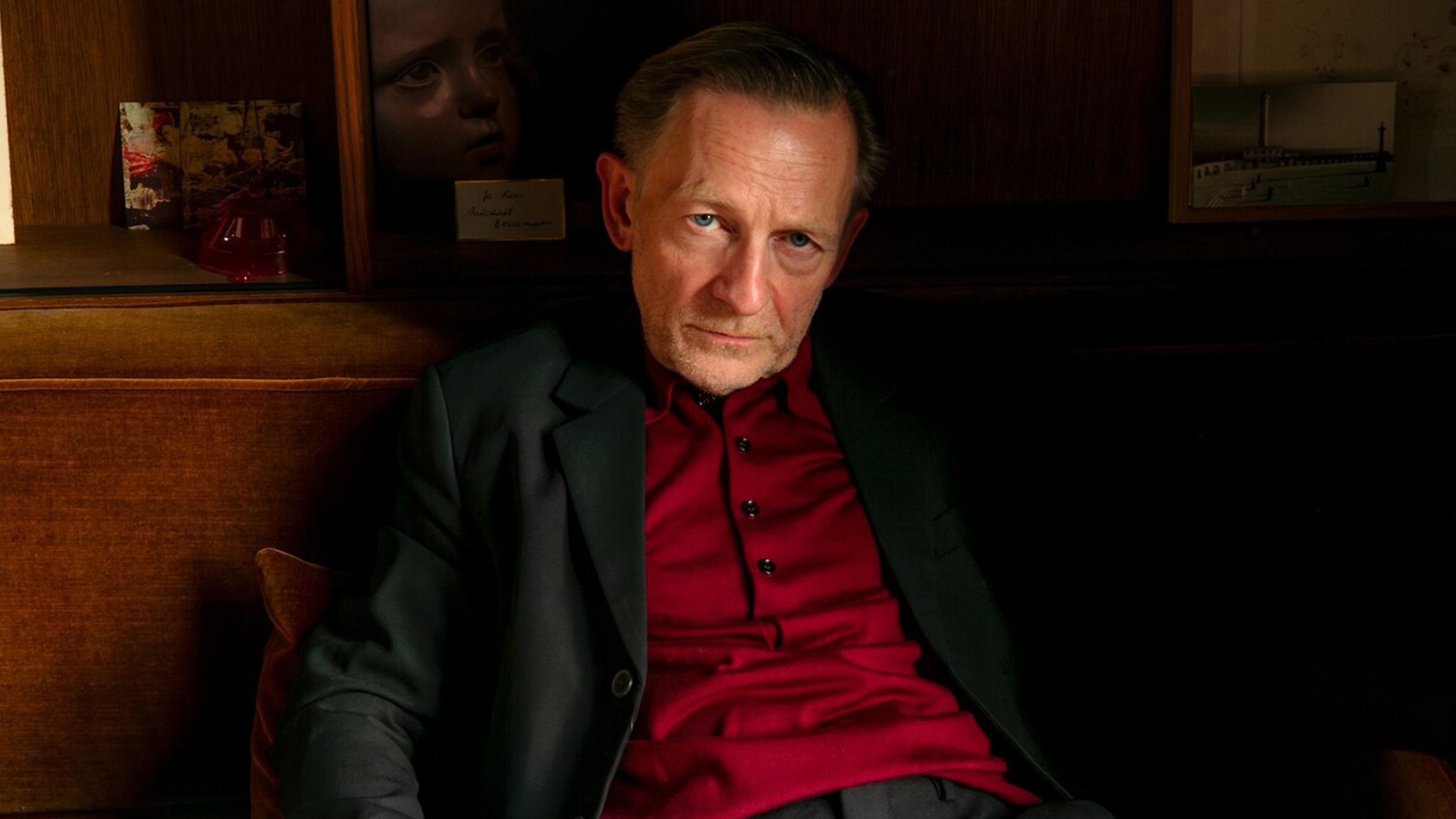
Michaël Borremans Interviewed in Burlington Contemporary
2026
The paintings of Michaël Borremans (b. 1963) are imbued with a strange, unplaceable threat. In his isolated, temporally indistinct scenes, people are abruptly truncated or submerged; heads are wrapped in transparent plastic; figures gather together in sinister-looking rituals; faces are obscured by hoods, masks or paint; and bodies are splayed on the ground, caught somewhere between sleep and death. In other paintings, this danger is hollowed out, rendered obsolete before it can take hold: missiles are constructed from wood or are given quilted fabric covers; the gazes of subjects are never direct; and many figures are clad in absurd padded suits, as though bracing against a harm that has never quite materialised. Yet however ambiguous or unresolved the subject-matter, Borremans’s paintings are staged in a resolutely pictorial tradition – one that speaks to his interest in art history, particularly the work of Antoine Watteau (1684–1721), Jean Siméon Chardin (1699–1779) and Édouard Manet (1832–83).
This lineage is especially apparent in Borremans’s current exhibition, French Painting at David Zwirner, Paris (5th June–22nd July 2026). Adopting the conventions of still lifes and portraiture, these new paintings evoke such genres while remaining distinct from them. In this conversation, which took place in Paris before the exhibition opening, Kathryn Lloyd spoke to the artist about the logic of titles, moving past the photographic source, working to the rhythms of daylight, and the role of repetition, chance and nihilism.
Read more at Burlington Contemporary.