‘Michael Armitage’s raw material’ by Arjun Sajip
2026
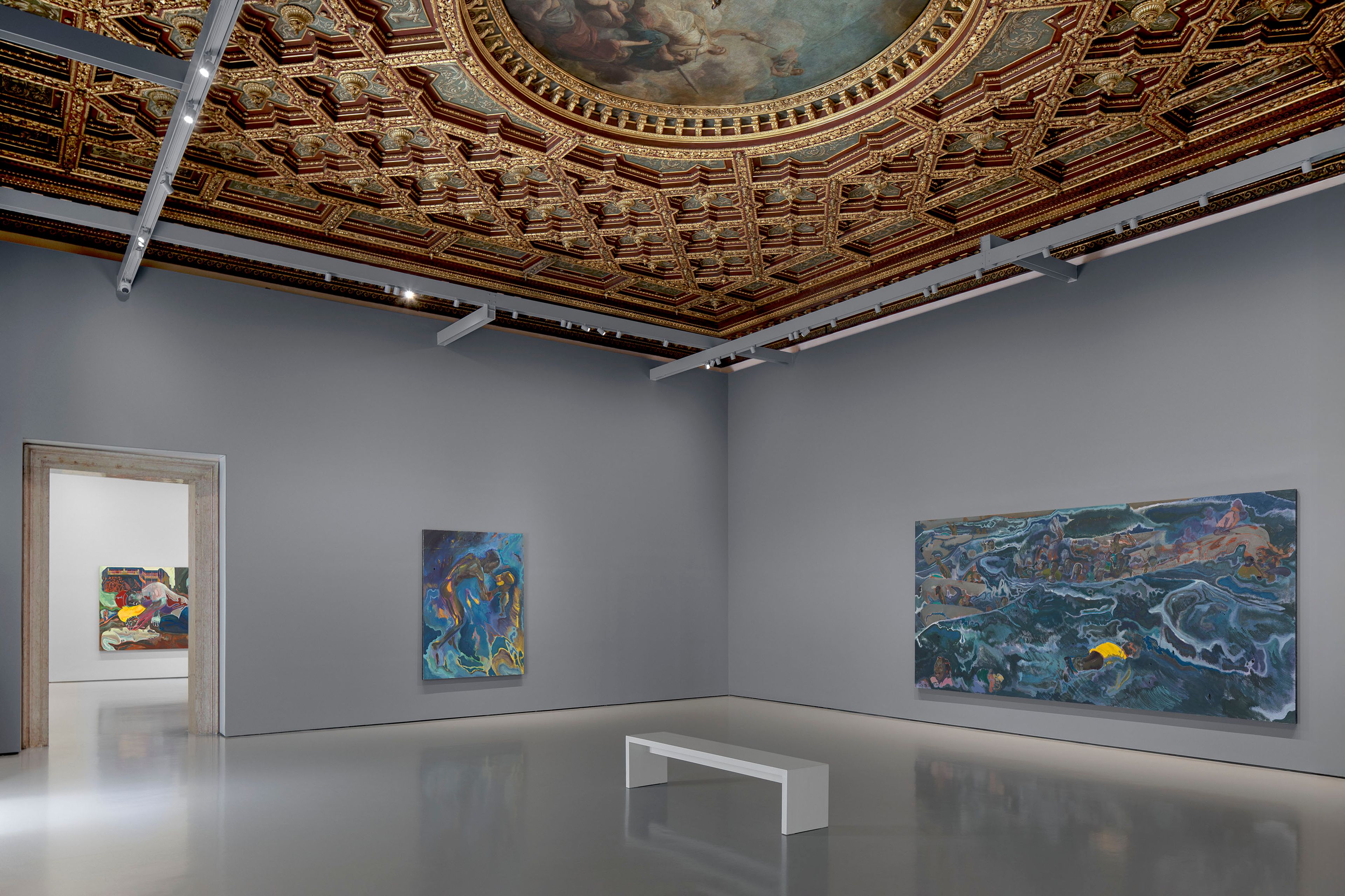
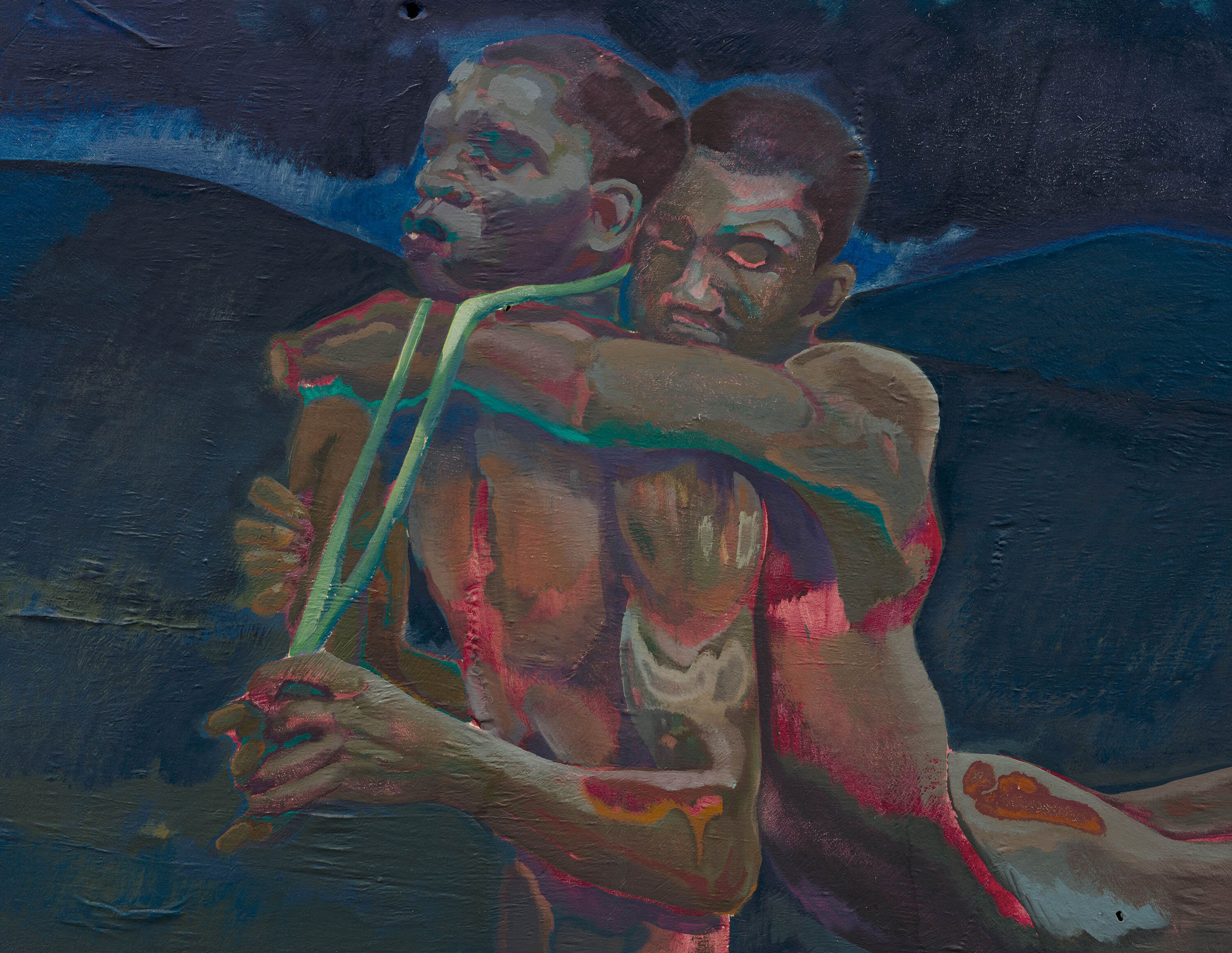
Michael Armitage has been thinking about time. About two weeks before I meet the painter at his studio in Bali, in the forested slopes north of the town of Ubud, the oldest cave art to be found so far has been discovered on the Indonesian island of Sulawesi. Faintly visible behind some slightly more recent paintings of a hunting scene are small, pale handprints surrounded by dusty red, thought to have been made some 68,000 years ago. ‘There’s something chilling about being able to put your hand in the exact same place where 70,000 years ago, somebody did the exact same thing and then blew ochre over their hand to leave an imprint,’ Armitage says. Armitage’s preoccupation with deep time, which pre-dates the discovery of the handprints, will shape ‘the next couple of years of work’, but at the moment he is also preparing for a retrospective at the Palazzo Grassi, one of the Pinault Collection’s two exhibition sites in Venice. Ever since a director at White Cube came across his work in a book of promising painters a little over a decade ago, Armitage’s star has been rising. After solo shows in museums and galleries around the world, including Berkeley Art Museum and the South London Gallery, the painter achieved a new level of prominence with ‘Paradise Edict’, his first major museum show, which opened at the Haus der Kunst in Munich in 2020 before moving to the Royal Academy of Arts in London the following year. His work was also catching the eye of private collectors: in 2019 Conservationists (2015), an elegant half-figurative study of two figures, enlivened by earthy swirls of green and blue, sold for more than $1m, a personal record that has since been comfortably surpassed by two other works.
Read more at Apollo. Read the full article here.