De La Warr Pavilion, Bexhill-on-Sea, United Kingdom
October 10, 2026–January 4, 2027
De La Warr Pavilion presents Discrete Violations, a focused exhibition of work by Gordon Matta-Clark, one of the most radical artists of the twentieth century, whose practice transformed the way we think about buildings, cities, and who architecture is really for.
Discrete Violations is not an exhibition of the cuts themselves. Instead it brings us close to the thinking behind them, through archival notebooks, index cards, letters, drawings, photographs, and film. What emerges is a portrait of an artist who navigated bureaucratic systems as carefully as he cut through concrete: corresponding with city agencies, material suppliers, and medical advisors; writing in ways where language itself seems to buckle under the pressure of his ideas.
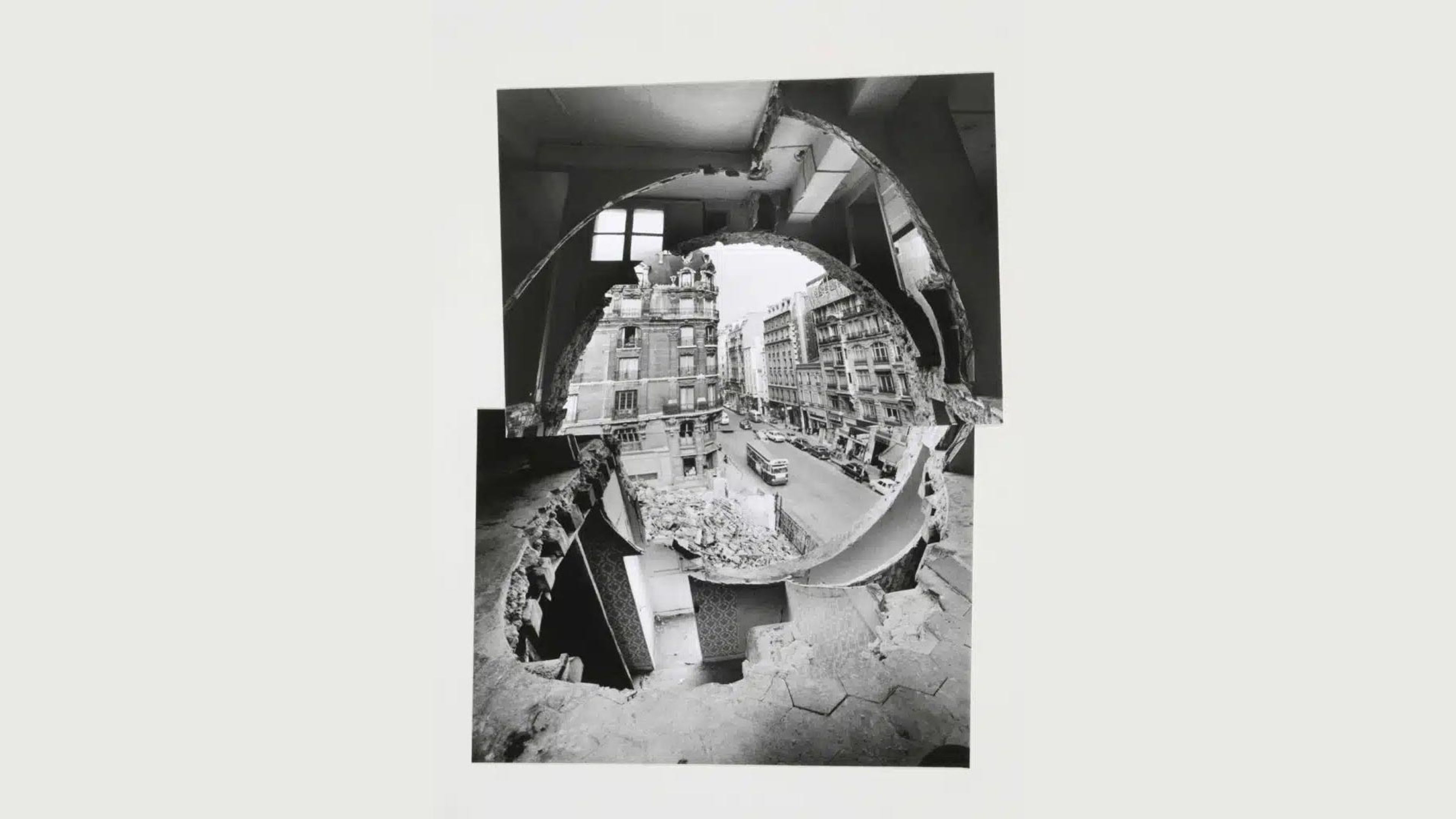
The photomontages in the exhibition are themselves objects, not just records: multiple photographs of cuts through successive floors assembled into single composite images, where the visible joins between prints enact the same logic as the architectural cuts they document. The films capture actions that exist in no other form, the sound of cutting, light falling through a newly opened void, bodies moving through a building being remade around them.
The exhibition is presented in the First Floor Gallery of the De La Warr Pavilion, a building designed by Erich Mendelsohn and Serge Chermayeff and opened in 1935 as a space for collective discussion and the integration of culture into everyday life. The Pavilion is now preparing for its own significant transformation, making the encounter between Matta-Clark’s practice and this landmark modernist building both fitting and timely. A building that has been aspired to, neglected, restored, and reimagined is exactly the kind of place Matta-Clark’s questions were made for.
Gordon Matta-Clark is best known for his building cuts: large-scale physical interventions into structures awaiting demolition, in which he carved through floors, walls, and ceilings to expose what lay hidden inside. Working in New York and Europe during the 1970s, he treated architecture not as something fixed and final, but as a contested condition, always in the process of being made, unmade, and fought over. Works including Day’s End (1975), Conical Intersect (Paris, 1975), and the Bronx Floors series (1972–73) have shaped a generation of thinking about art, architecture, and the social life of cities.
Gordon Matta-Clark: Discrete Violations is supported by The Bridget Riley Art Foundation, Henry Moore Foundation and the Art Fund Jonathan Ruffer Curatorial Grant.
Learn more at De La Warr Pavilion.