Museo Nacional del Prado, Madrid, Spain
November 18, 2025–March 8, 2026
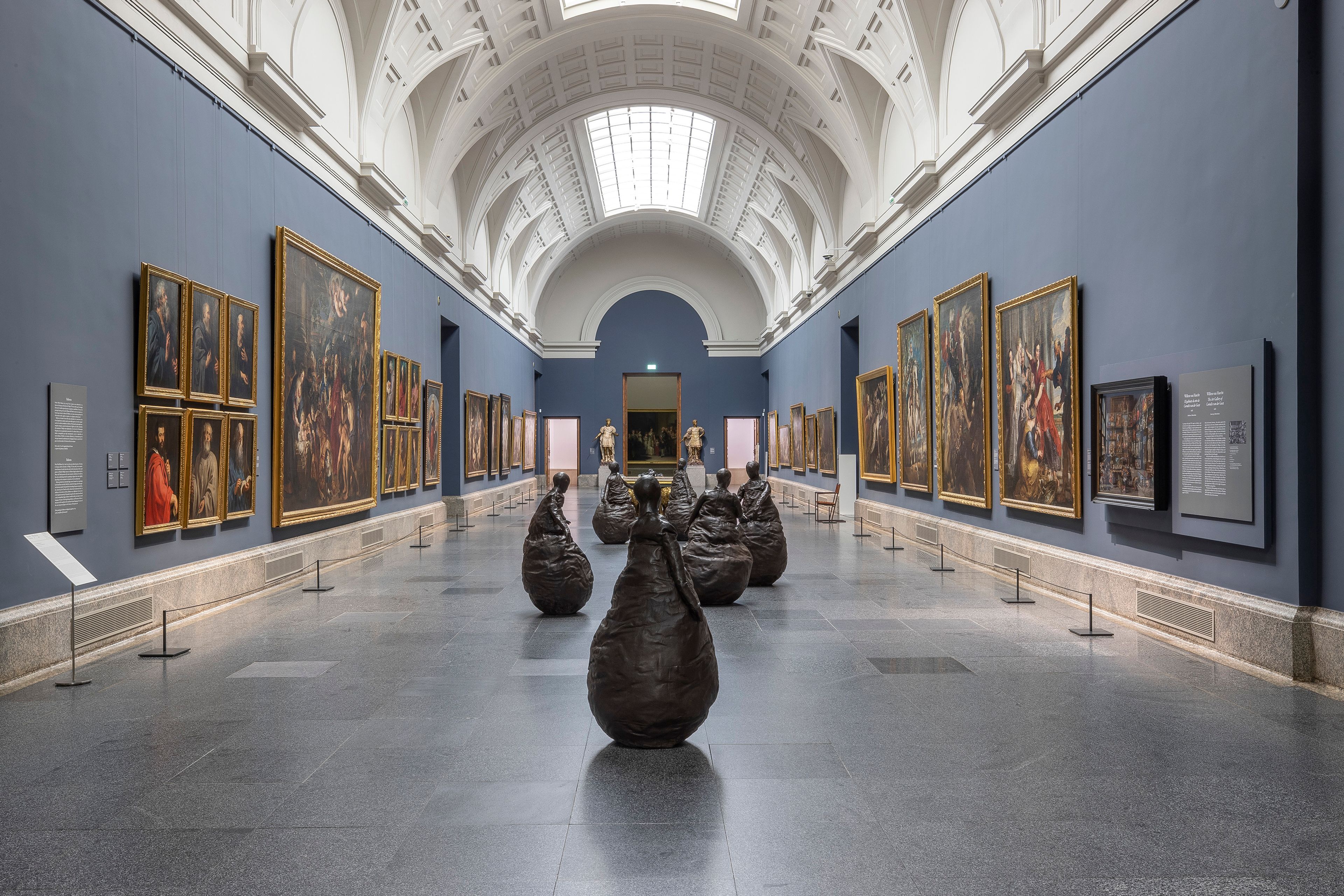
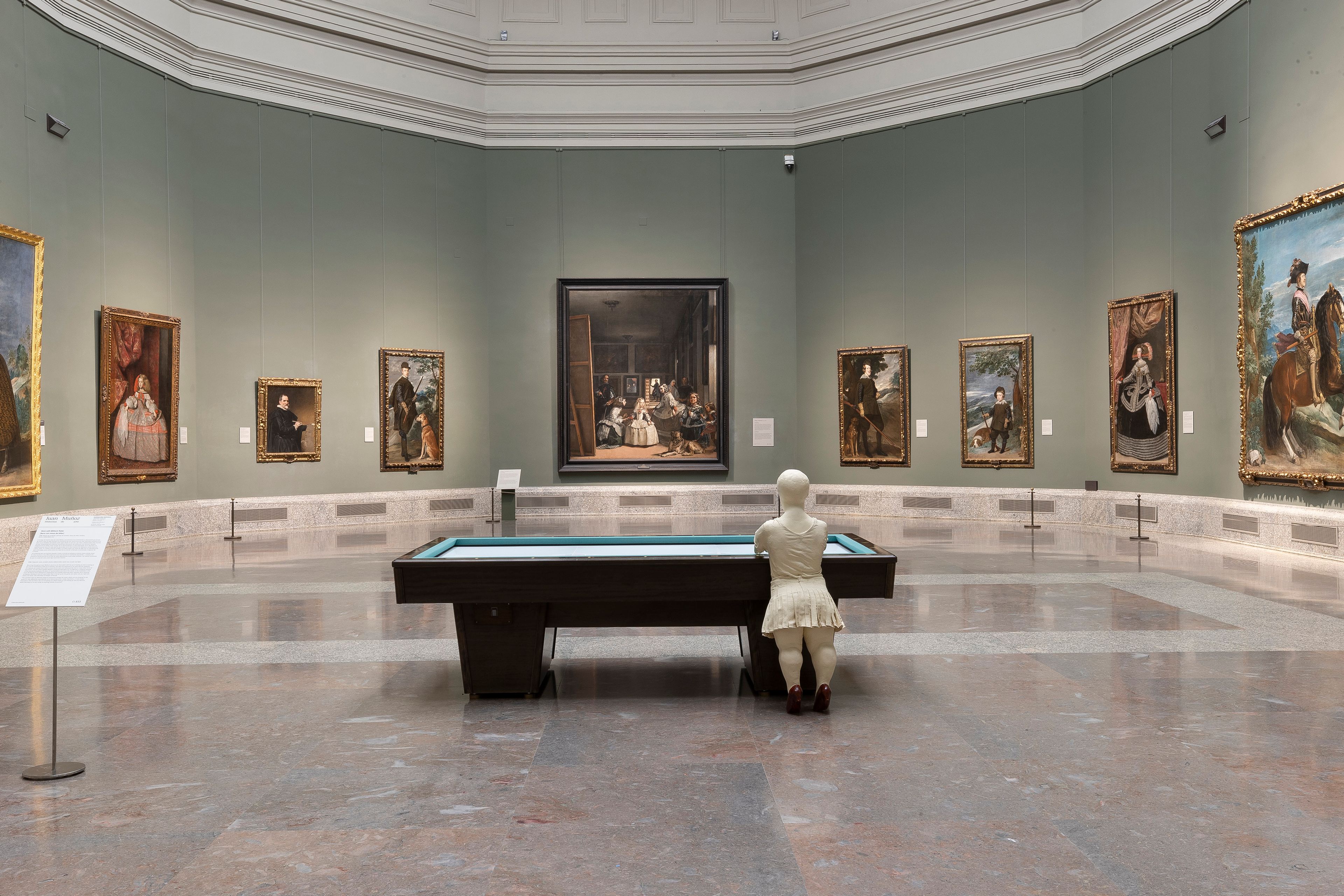
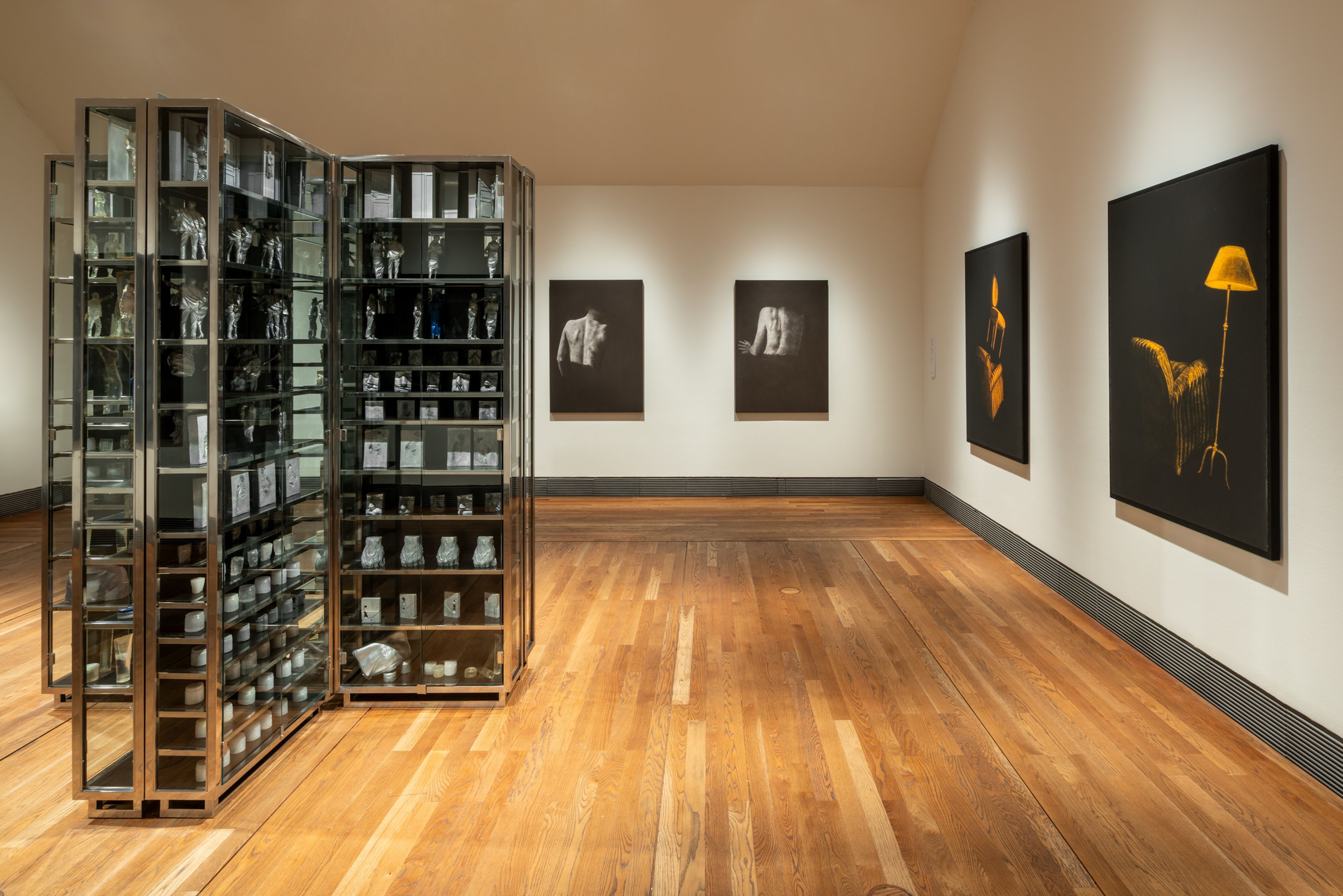
The Museo Nacional del Prado presents Juan Muñoz: Stories of Art, an expansive solo exhibition placing works by the artist in dialogue with works from the Prado’s collection. Juan Muñoz was a native of Madrid, and the Prado Museum was a key source of inspiration.
Curated by Vicente Todolí, former director of Tate Modern (2003-2010), Juan Muñoz: Stories of Art brings together installations, figures, books from the artist’s library, artifacts in the form of display cases filled with objects, canvases, drawings and prints. The works on display reveal the profound connection between the artist and the great masters represented in the Prado, such as Velázquez and Goya, as well as with the traditions of the Renaissance, Mannerism and Baroque. Featuring emblematic works by Muñoz, such as The Prompter, Conversation Piece and The Nature of Visual IIllusion, the exhibition offers an experience in which visitors encounter silent figures that seem to observe us from a universe suspended between illusion and reality.
Muñoz was an artist whose practice was marked by illusionism, theatricality and architecture as a space of fiction. Influenced by Borromini, Bernini, Velázquez and Goya, Muñoz created settings in which the viewer becomes an actor, witness and protagonist of scenes charged with psychological tension and mystery. Born in Madrid in 1953, where he always had his studio, Juan Muñoz is inseparable from his native city and within it from the Museo del Prado, which he visited throughout his life and which was a constant source of inspiration. This exhibition reveals the connection between a contemporary artist and the history of art, which Muñoz studied with passionate interest from a young age. His visits to the Prado made him a fervent admirer of the great masters, whose lessons he irreverently combined, stating: “I can take from previous artists whatever I want and whatever I need… I have no problem admitting that the Dama de Baza is as important to my work as a neon tube: I steal everything I can from the history of art.”
A sculptor conceptually nourished by painting, Muñoz acknowledged his intention to incorporate its illusionistic elements into his work. From the Renaissance artists he adopted one of their principal concerns: how to position the viewer in relation to the work as a whole, "in relation to the moment of creation, of wonder." Particularly inspired by Mannerism and the Baroque, he experimented with the distortion of forms, the manipulation of space, and the tension between viewer and object. From Borromini and Bernini he learned to conceive of architecture as a theatrical framework, capable of provoking both belief and disorientation: "I think the great Baroque artists were asked to do the same as modern artists: to construct a fictional place. To make the world larger than it is."
Enigmatic, life-size figures appear throughout his work, positioned in relation to one another in intimate settings or wandering about in groups. The viewer encounters them frozen in mysterious actions or with their mouths slightly open, as if struck dumb mid-sentence. Muñoz's avatars evoke classical Greek sculpture while simultaneously engaging in a dialogue with Borges and Beckett’s absurdist and existentialist texts.
In the mid-1980s Muñoz began to include optical floors in his installations which are reminiscent of Borromini's but also of Minimalist structures in the manner of Carl Andre, designed to be walked across. He continued to use architecture as an integral part of his work, creating dramatic environments that envelop the viewer. Works such as The Prompter and The Nature of Visual Illusion allude to the theatrical devices of the Baroque period, turning the visitor into both actor and witness.
Another recurring motif in Muñoz’s work is the balcony, evoking those depicted by both Manet and Goya, as well as the wrought-iron ones typical of Madrid. For the artist, the balcony was "a metaphor for looking at that which looks at you", a setting for mutual observation.
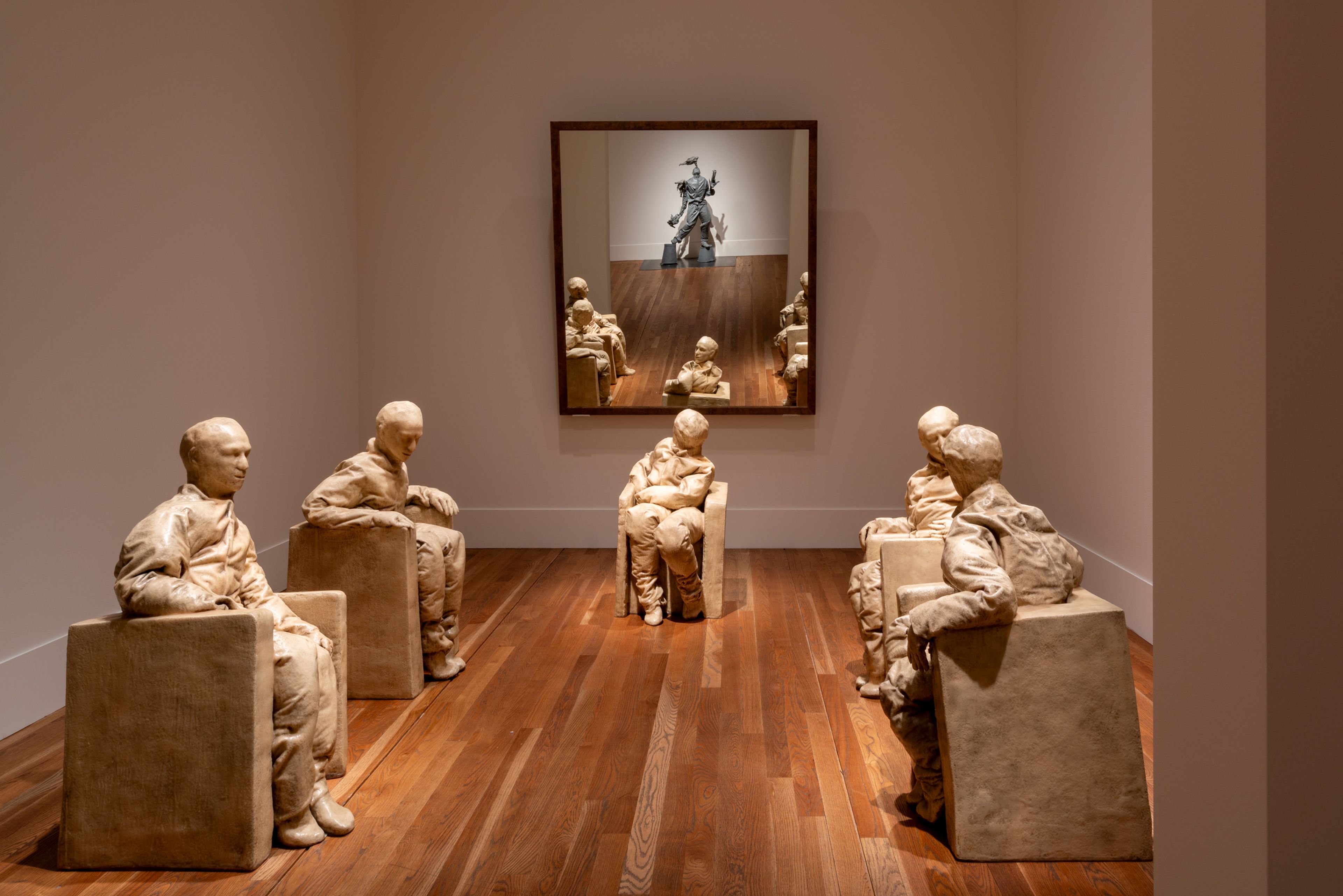
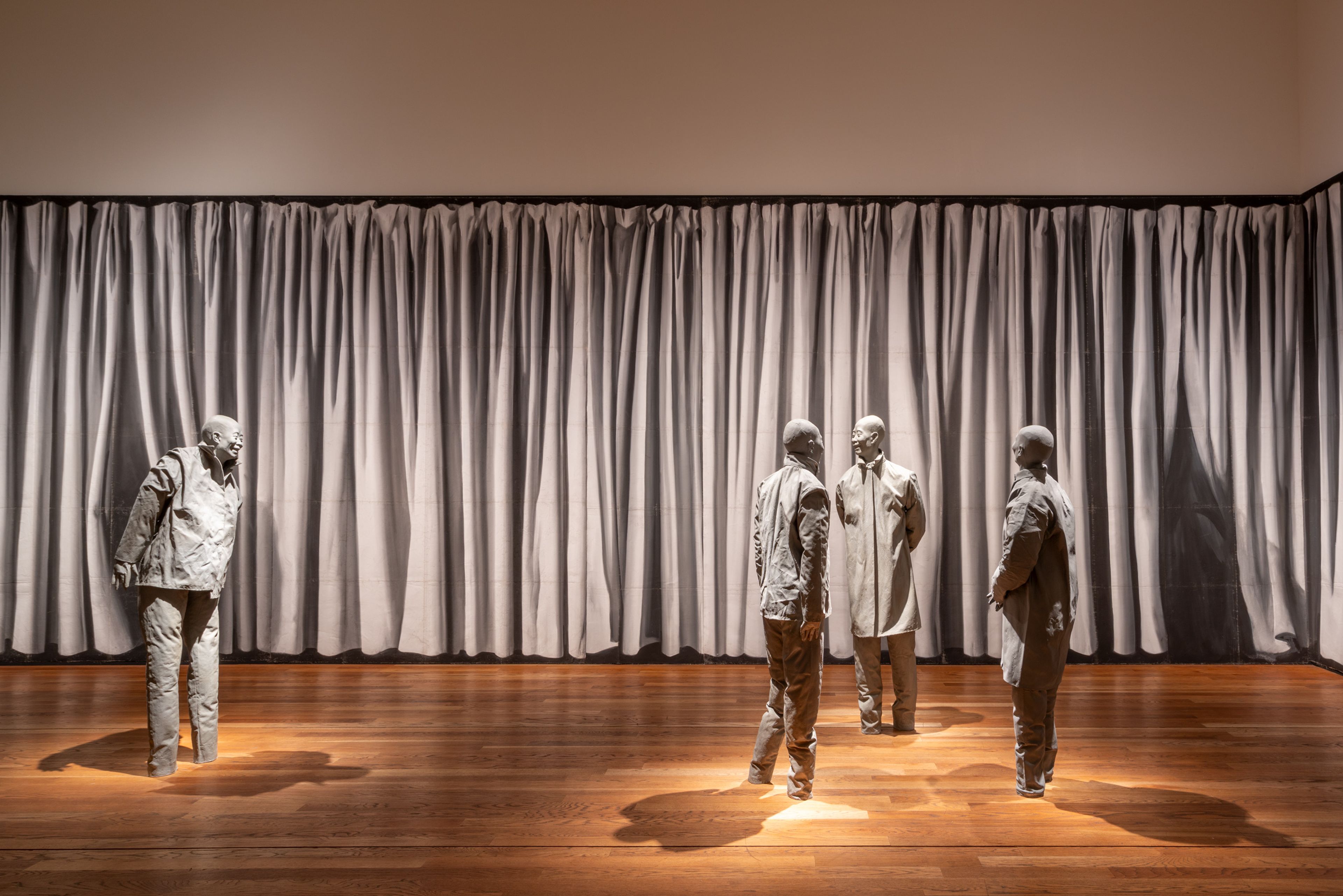
Influenced by Giacometti, the Conversation Pieces which Muñoz created throughout his career were conceived in a non-naturalistic manner, stripped of recognizable associations in order to construct compositions of intense psychological charge.
Initiated in 1991, these groups of figures with identical faces and individual gestures seem to converse with each other and invite the viewer to become part of the scene, but ultimately reject our entry and oblige us to experience our own presence in the space.
Echoes of Velázquez and Goya resonate throughout Muñoz’s work, from the mirrors that involve the viewer–as in Five Seated Figures, evoking Las Meninas–to the scenes of silent absurdity reminiscent of Goya’s Los Caprichos and The Disasters of War, dramatising the fine line between laughter and suffering that so fascinated Muñoz and which he learned from Goya.
Despite his profound commitment to art history, Juan Muñoz was an innovator who transcended the aesthetics of his time. A creator of sculptures, installations, drawings, writings and sound works, he considered himself a storyteller whose narratives ask us to suspend our disbelief and enter into his Baroque illusionism.
The exhibition is presented in collaboration with the City Council of Madrid.
Learn more at the Prado.