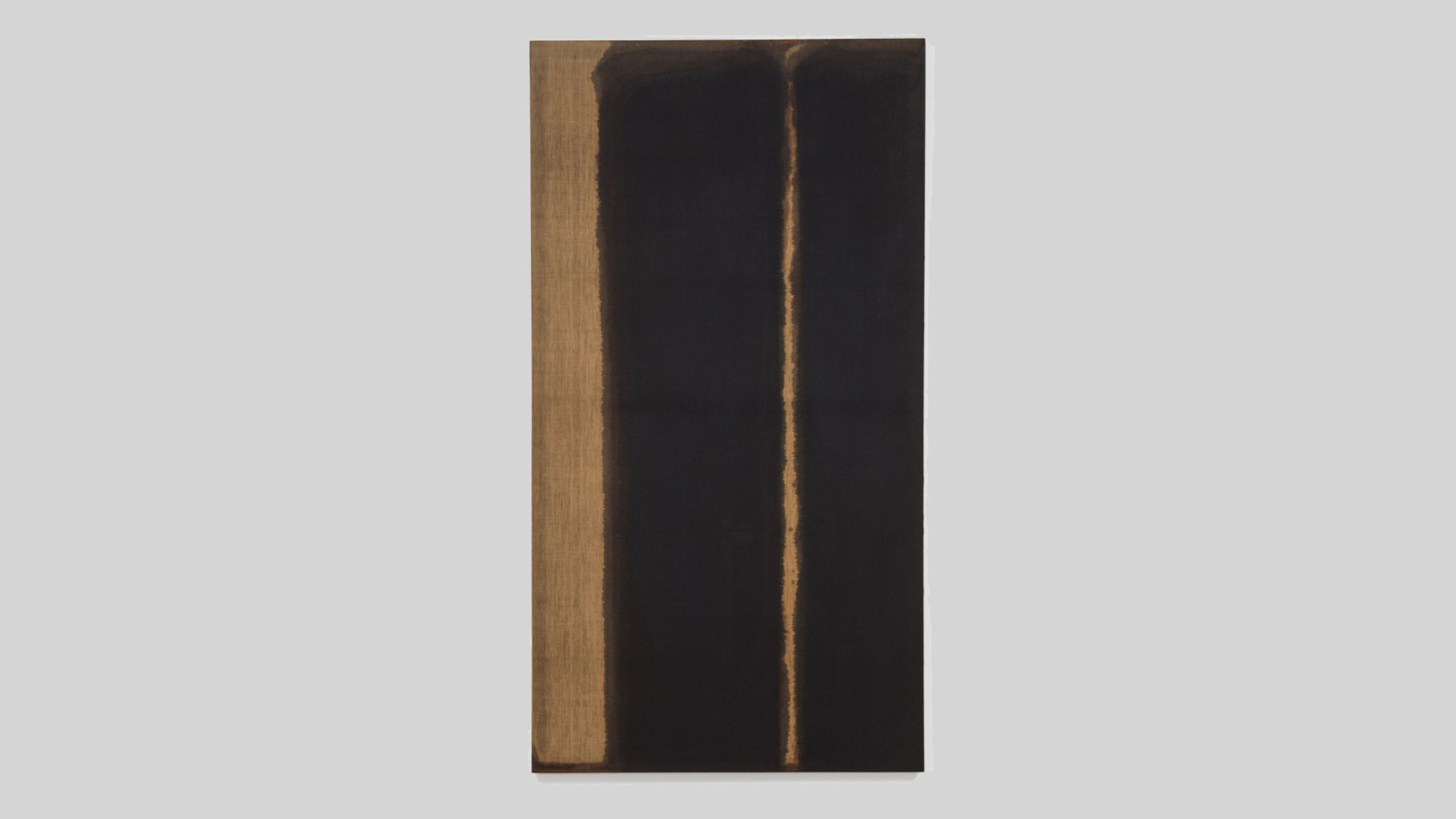
For decades, Yun Hyong-Keun has been known as a major figure—perhaps the major figure—among the monochrome painters that emerged underground during the oppressive military dictatorship of the 1970s in the Republic of Korea. Yun’s vision as an abstract painter accrued over time as a strategic political mechanism in which to assert his position as a democratic Korean. Consequently, he and his work became a visible threat to the reactionary government resulting in frequent imprisonments and, on one occasion, he was a near victim of assassination.
Curated by Kim In-Hye, in collaboration with the National Museum of Modern and Contemporary (MMCA) in Seoul, this retrospective exhibition of paintings has been perceived by many as long overdue. The reasons are varied, ranging from the politics embedded in the contemporary Korean art world to the inability of influential marketers outside Korea to accurately assess the qualitative significance of the artist’s work. The good news is that Yun has finally been given international attention more than a decade after the artist’s passing in 2007.
Read more at The Brooklyn Rail.