Online Exhibition
Nick Goss: New Prints
Interested in artworks?
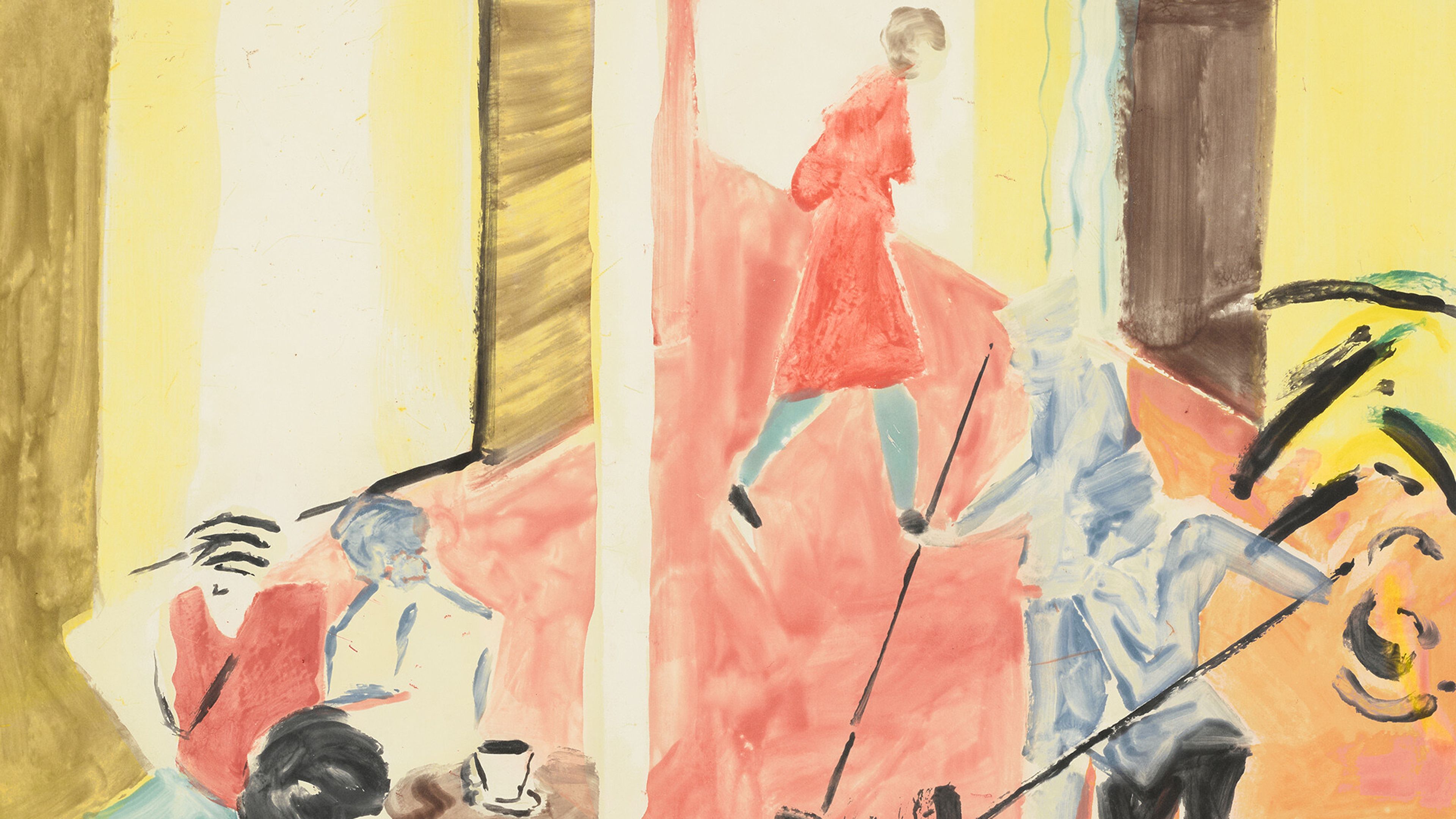
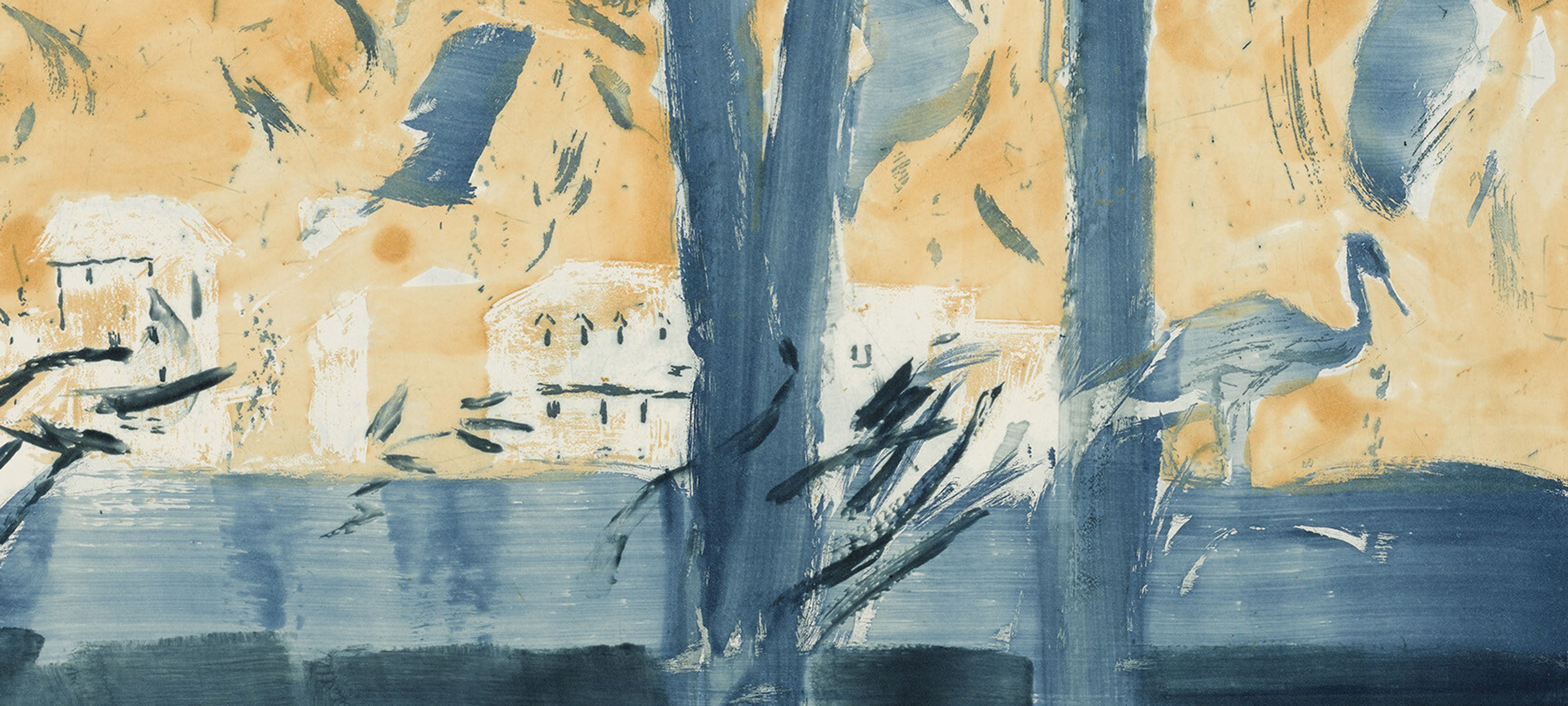
Nick Goss, Mud Angels, 2026 (detail)
Nick Goss applying spit bite aquatint to an etching plate for Mud Angels at BORCH Editions.
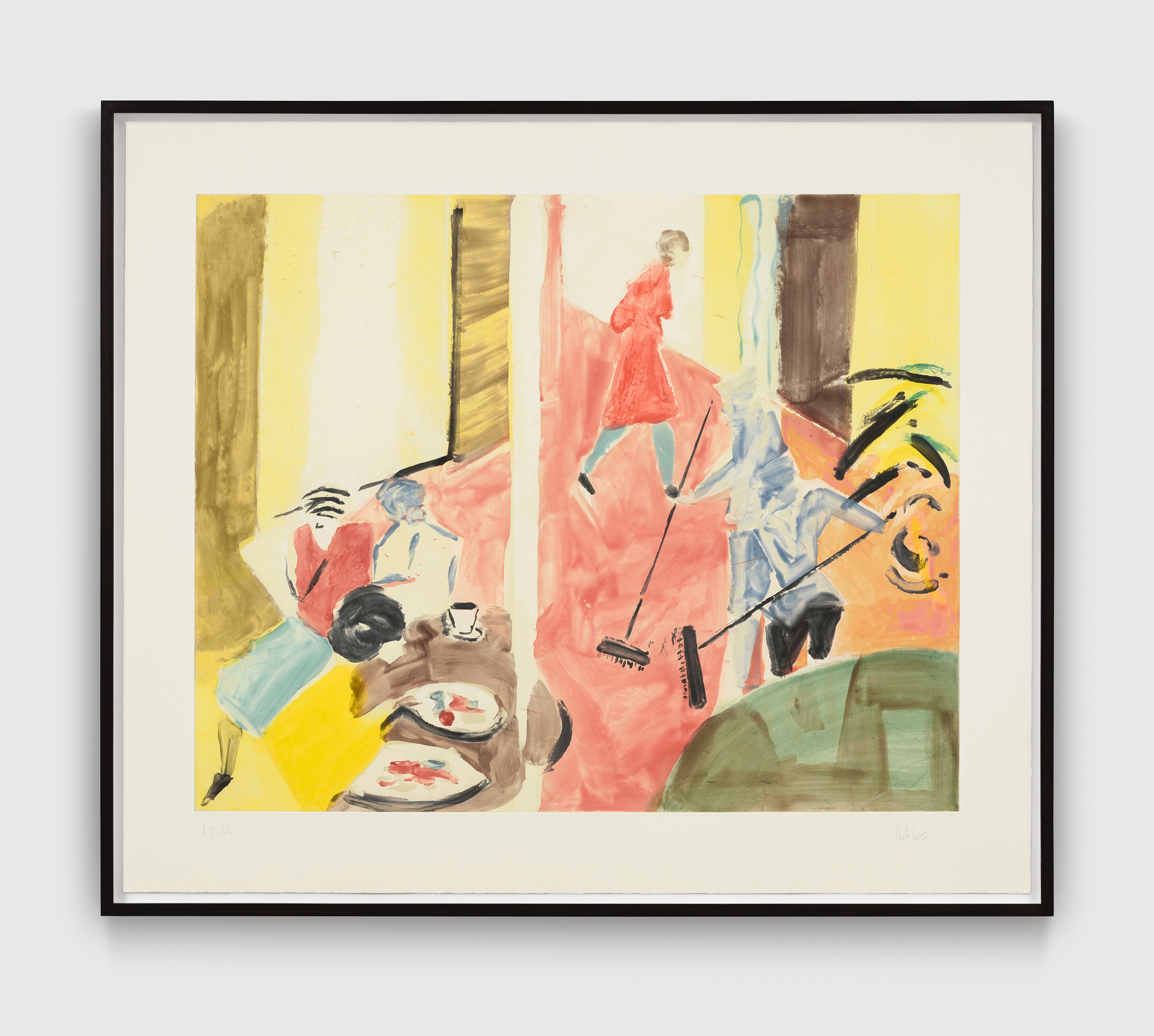
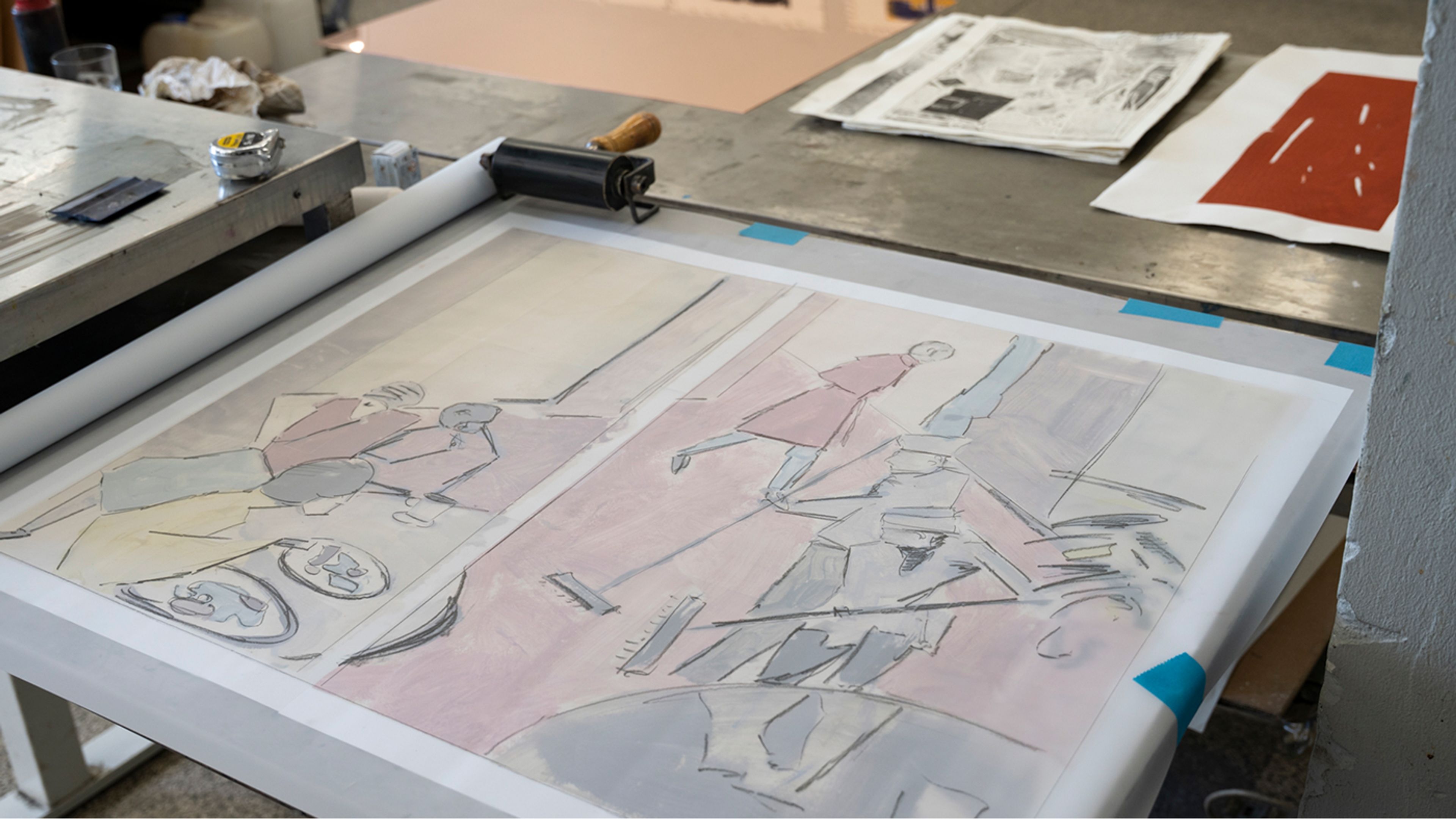
Preparatory sketches for Mud Angels.
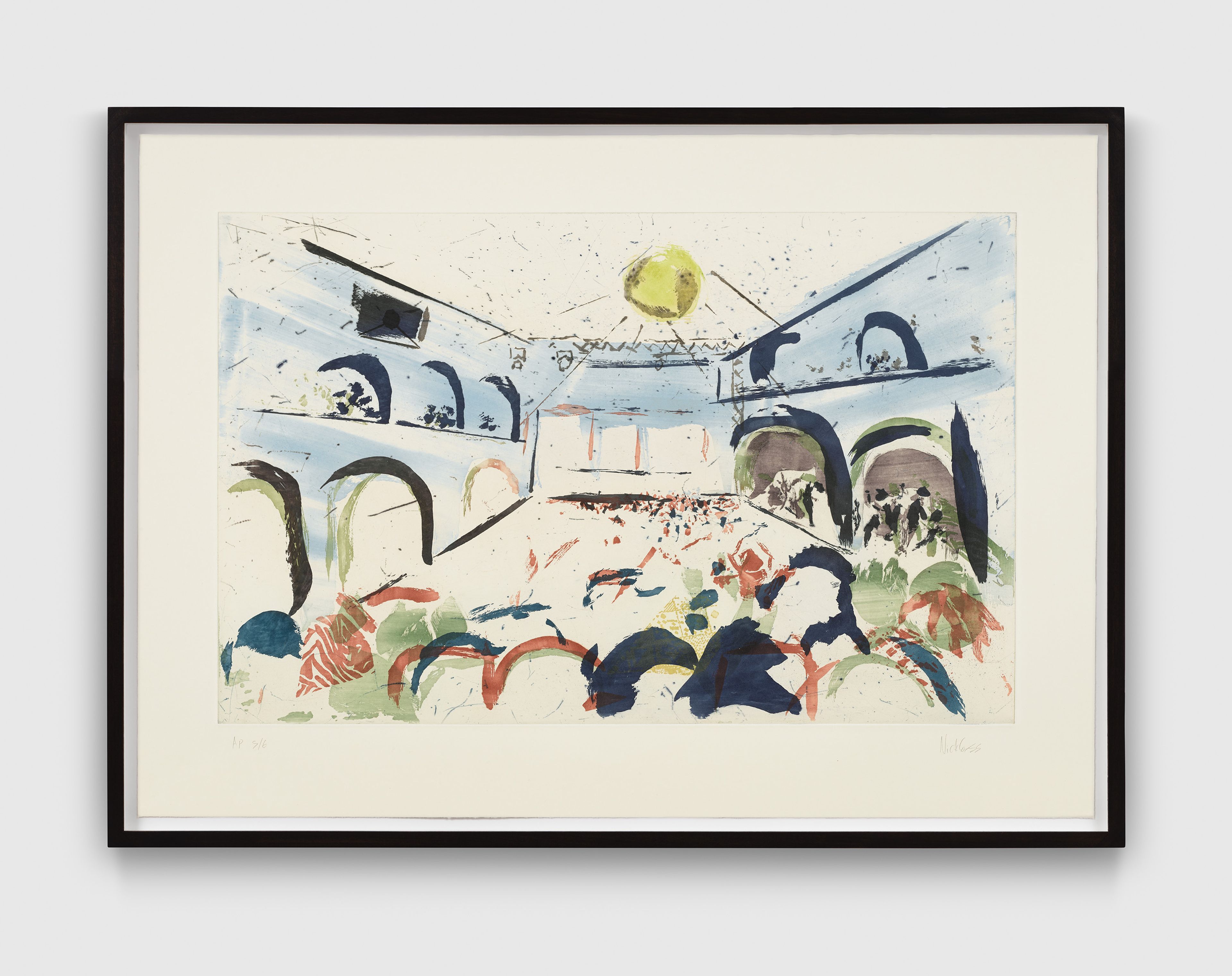
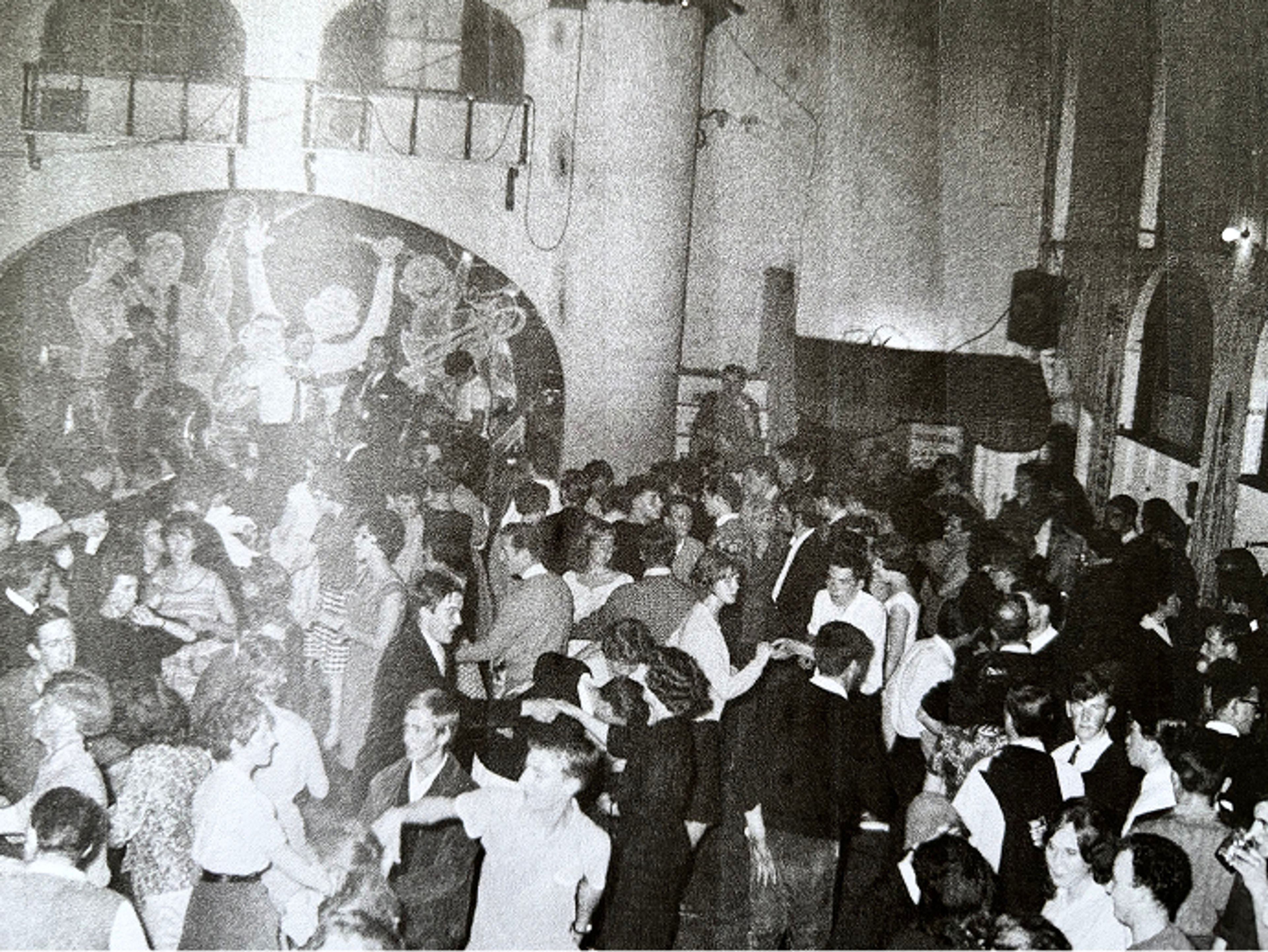
Archival photos of the lively Eel Pie Hotel Ballroom in the 1960s inspired Eel Pie Ballroom.
Eel Pie Ballroom and Eel Pie Island form part of a body of work centered on Eel Pie Island, a small, difficult to access in the middle of the River Thames in London’s Twickenham suburb.
In the 1960s, the hotel at Eel Pie Island was a hub for burgeoning musicians—a gathering place for wild nights of dancing, jazz, and performances from rock-and-roll legends including the Rolling Stones, The Who, and Pink Floyd. By the end of the decade, the deteriorating hotel was shuttered and Eel Pie became home to the United Kingdom’s largest hippie commune.
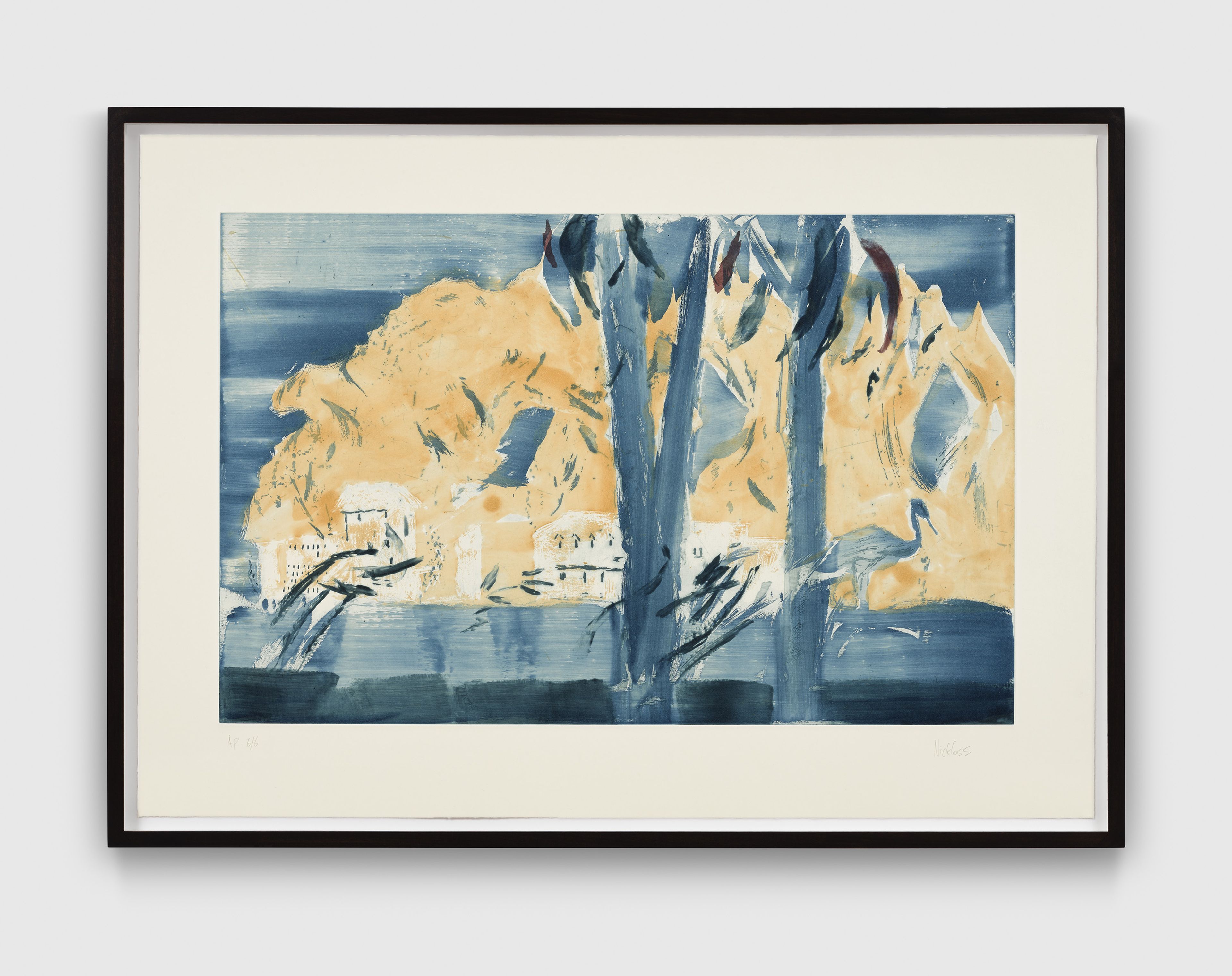
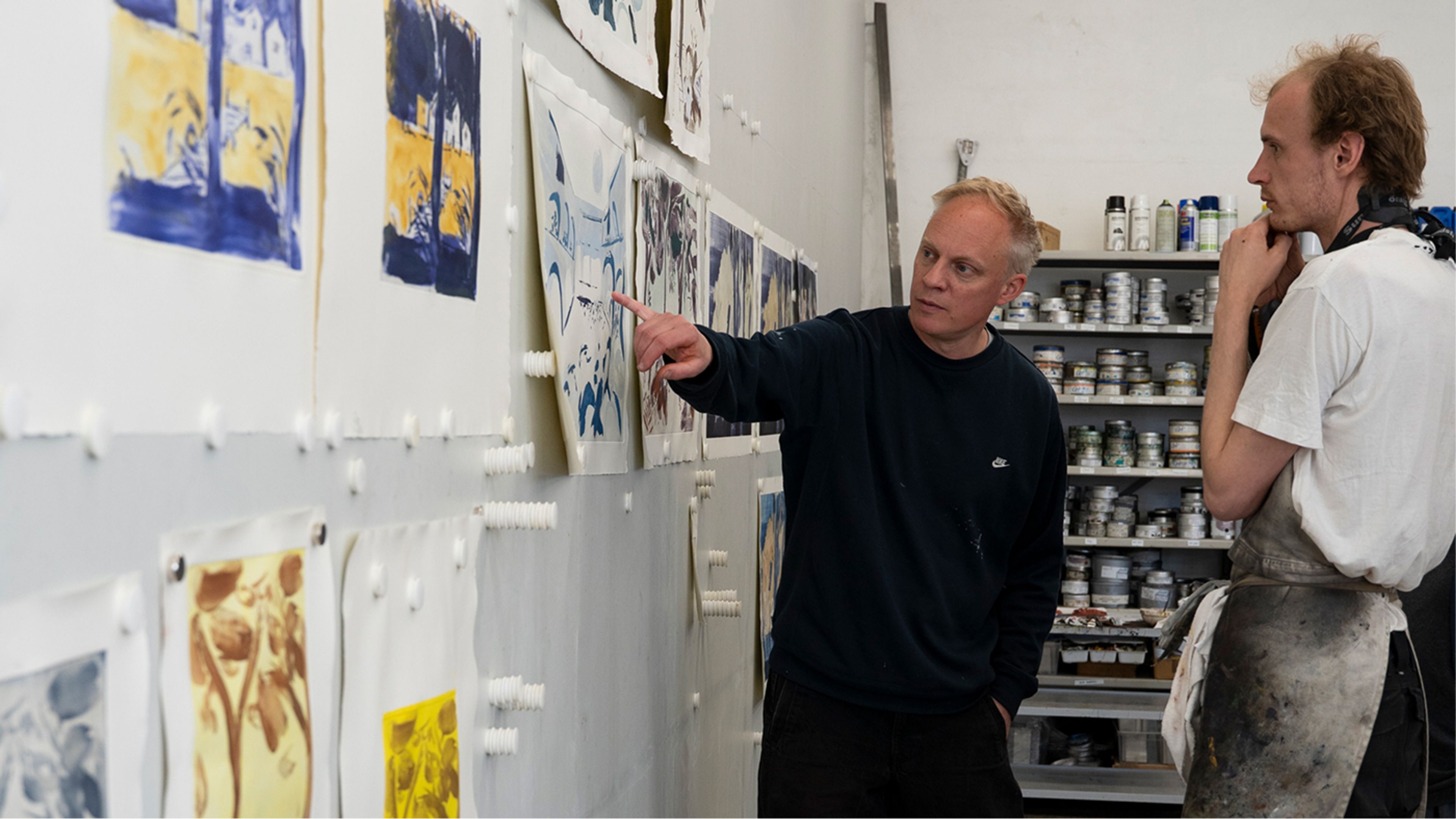
Nick Goss reviewing proofs of Eel Pie Ballroom and Eel Pie Island with printer Thomas Castenschiold Dehlholm, 2026.
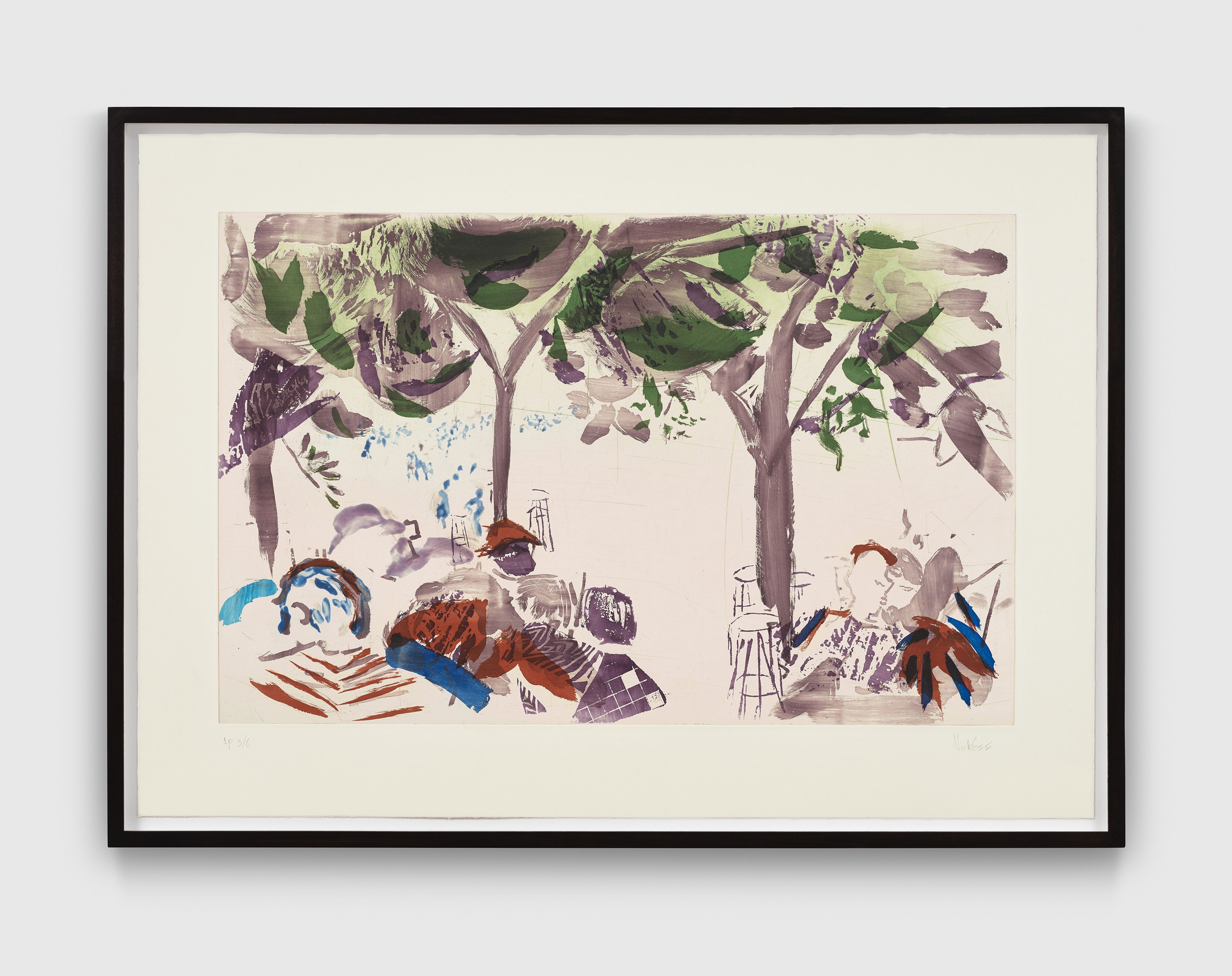
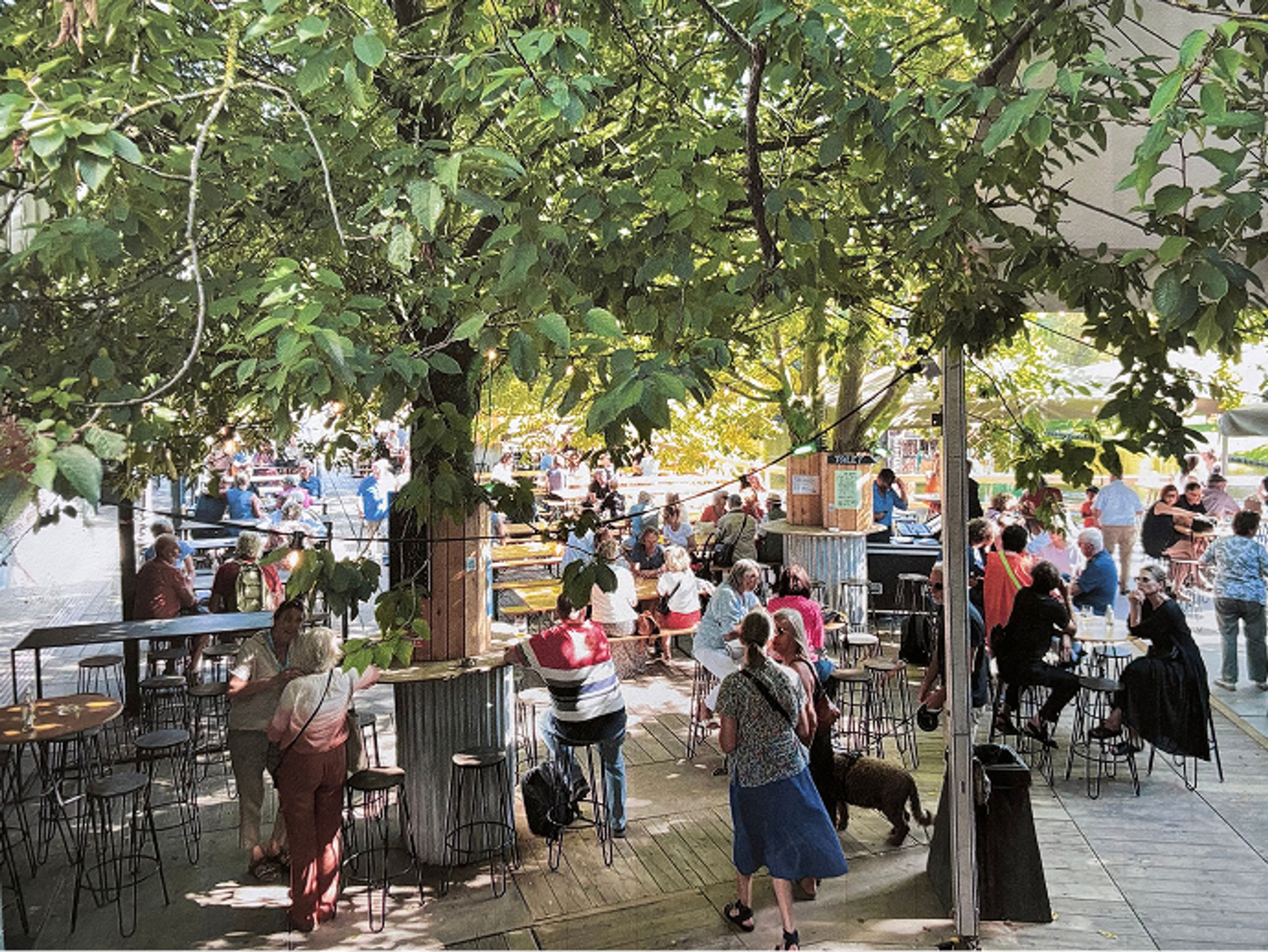
This snapshot of the bustling Leopold Park in Ostend, Belgium inspired Nick Goss’s etching, Leopold Park, 2026.
The title and source imagery for Leopold Park comes from Leopold Park in Ostend, Belgium. Fascinated by the city’s rich artistic heritage—as it was a crucial site in the lives and work of both Léon Spilliaert and James Ensor—Goss visited Ostend in 2024, making quick sketches as he walked along the streets and beaches, and capturing snapshots to reference upon returning to his studio.
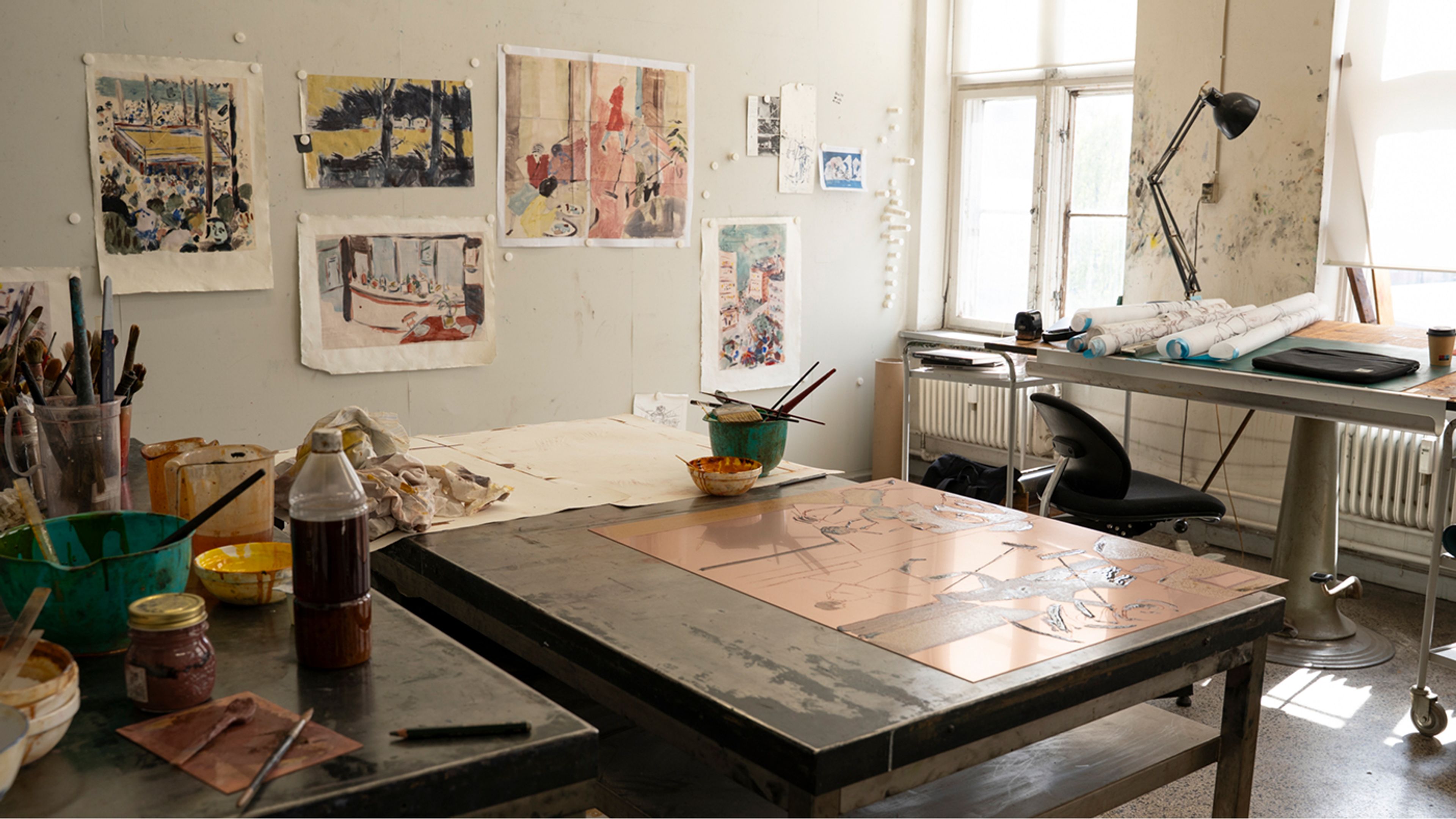
The large copper plate for Mud Angels, with the artist’s studies and reference images on the wall at BORCH Editions, 2026.
Inquire about prints and editions