Nate Lowman: Hanging Out
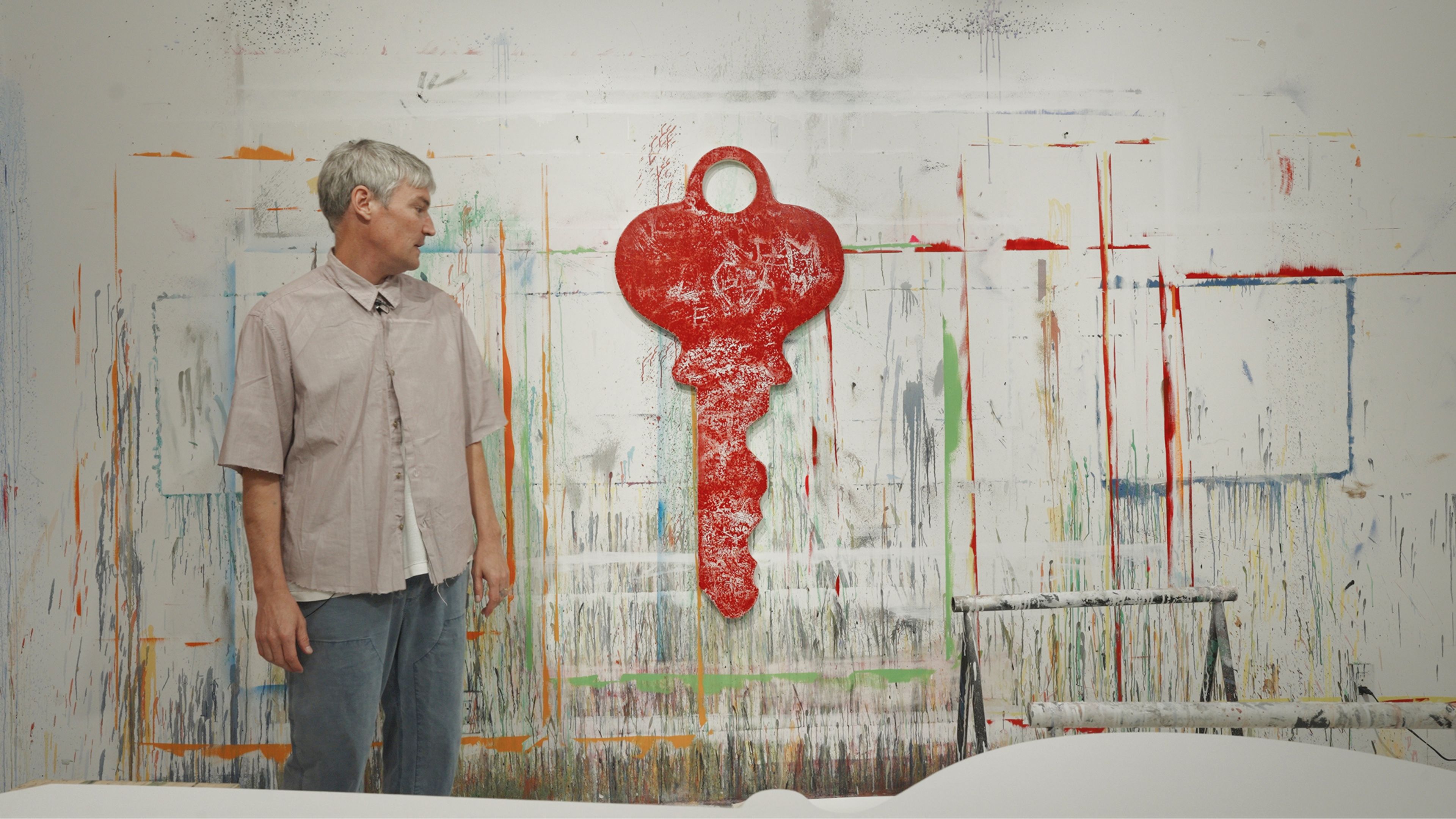
Nate Lowman in his studio, 2026
Past
September 10—October 24, 2026
Opening Reception
Thursday, September 10, 6–8 PM
Opening Reception
Thursday, September 10, 6–8 PM
Location
New York: 19th Street
519 West 19th Street
New York
Artist
Explore
Explore All Works

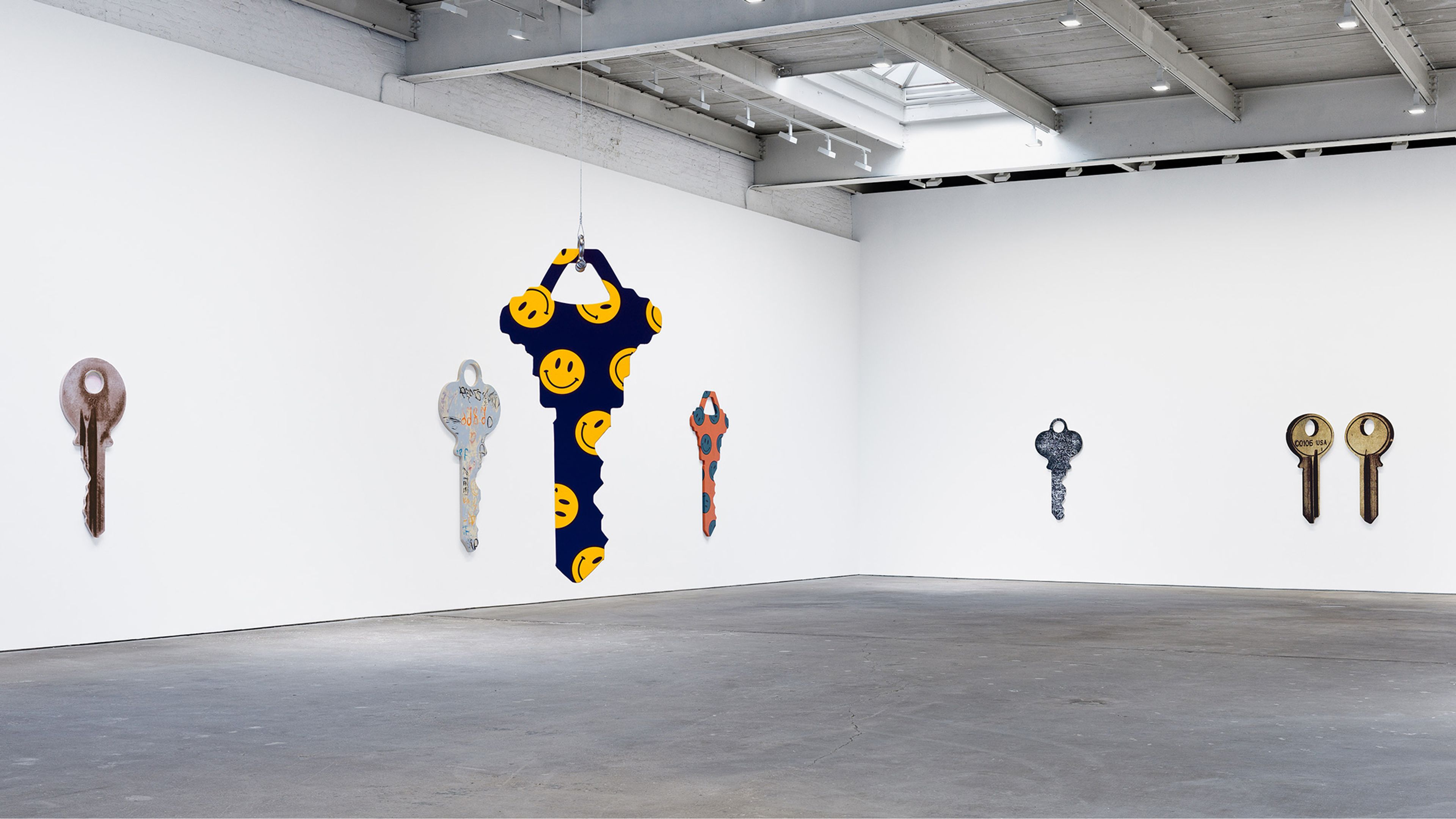
Installation view, Nate Lowman: Hanging Out, David Zwirner, New York, 2026
“The artist’s sociological impulse [is] to research and catalogue a world that is, for all its immediacy, more customarily, and more comfortably, seen at a distance.”
—David Rimanelli, critic
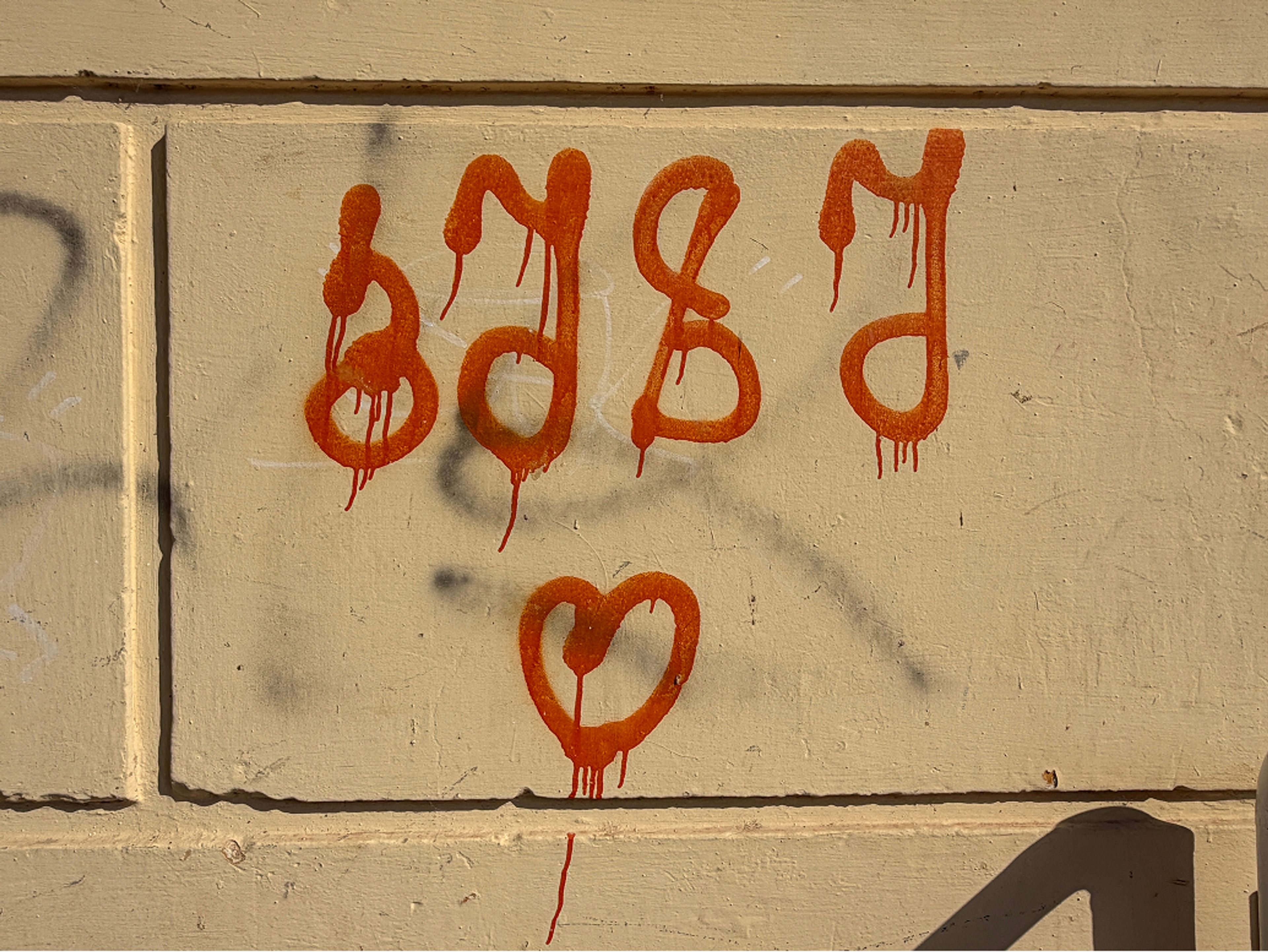
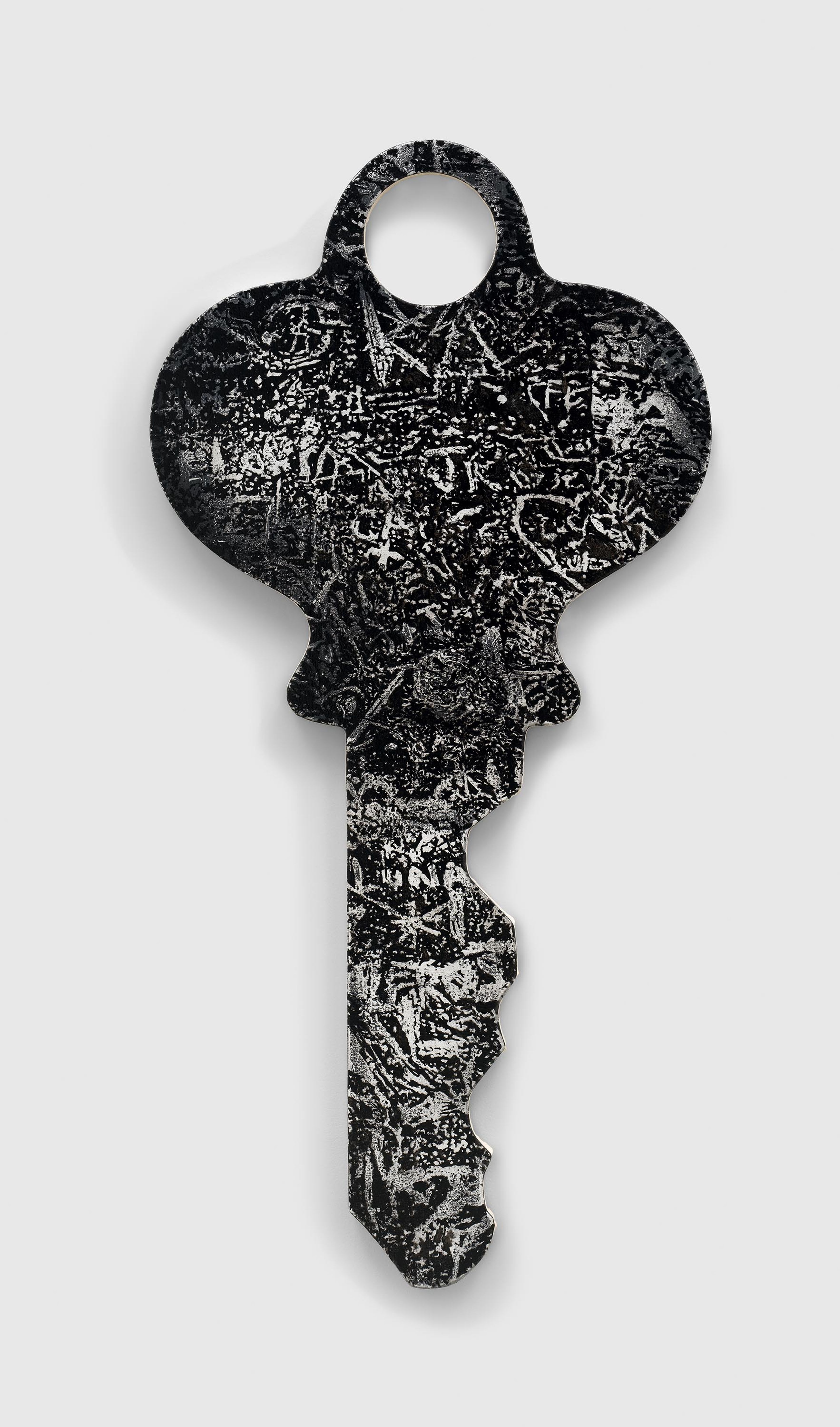
Graffiti inside the Bouboulina Museum, Spetses, Greece. Photo courtesy of the artist
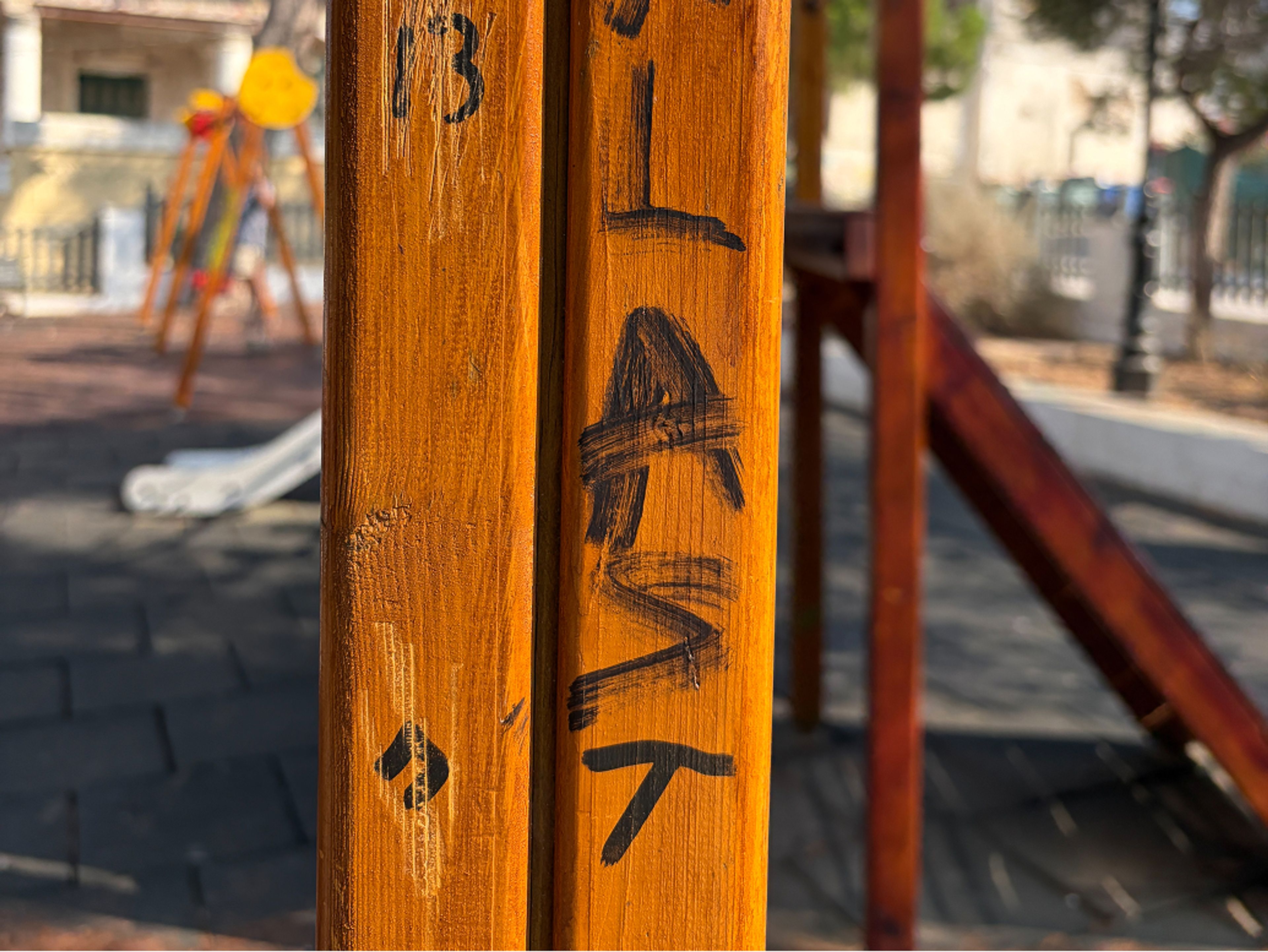
Graffiti inside the Bouboulina Museum, Spetses, Greece. Photo courtesy of the artist
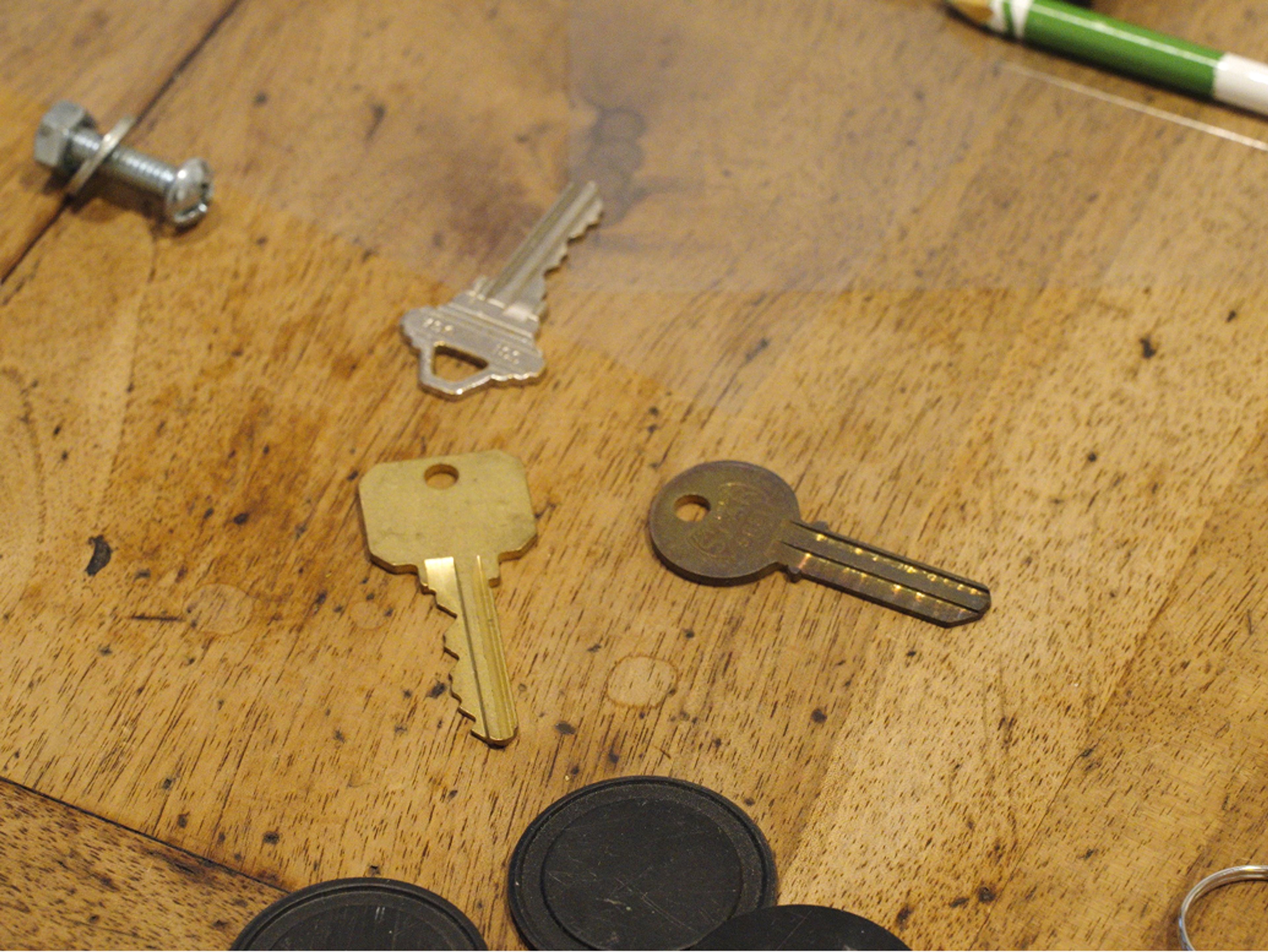
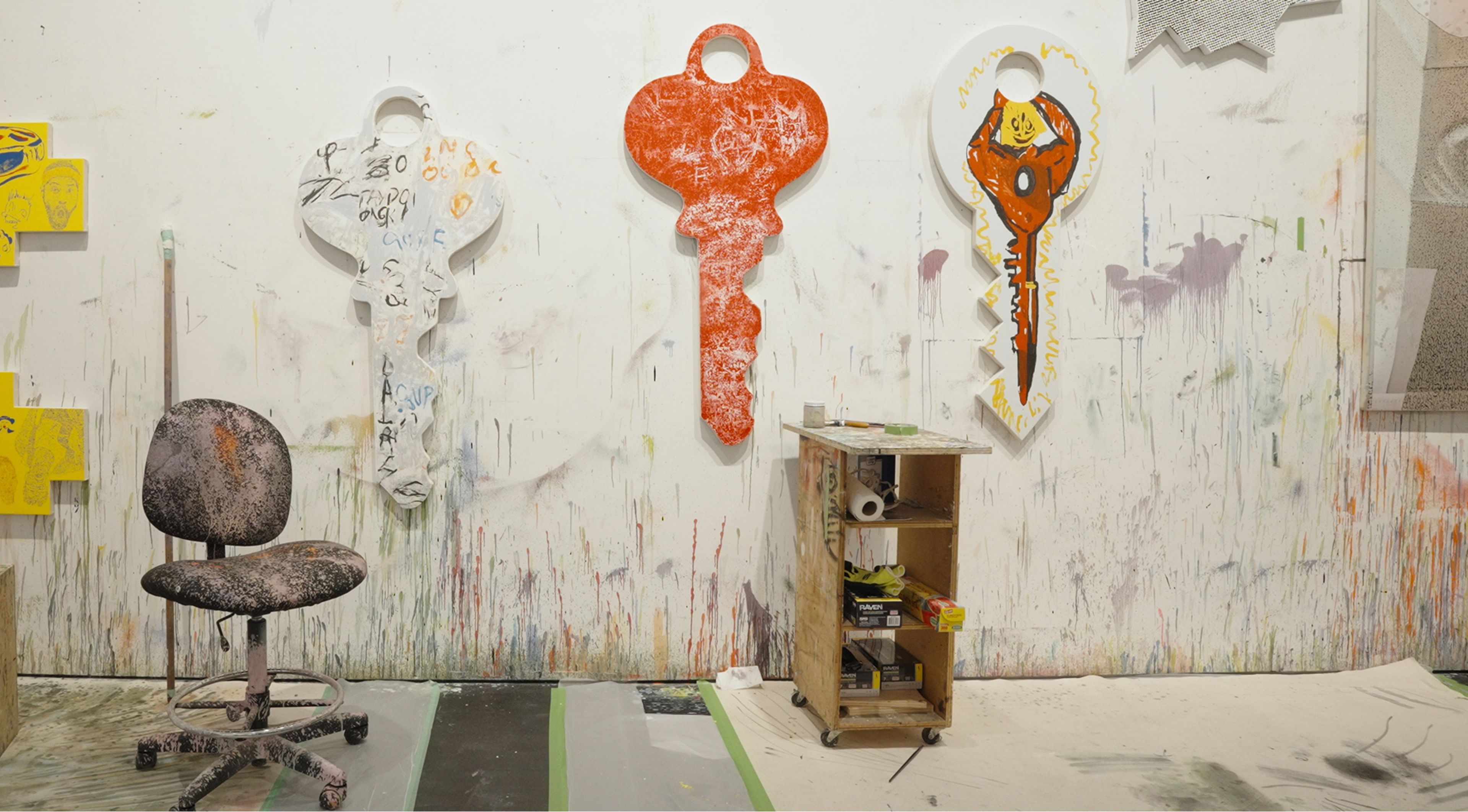
Nate Lowman’s studio, 2026
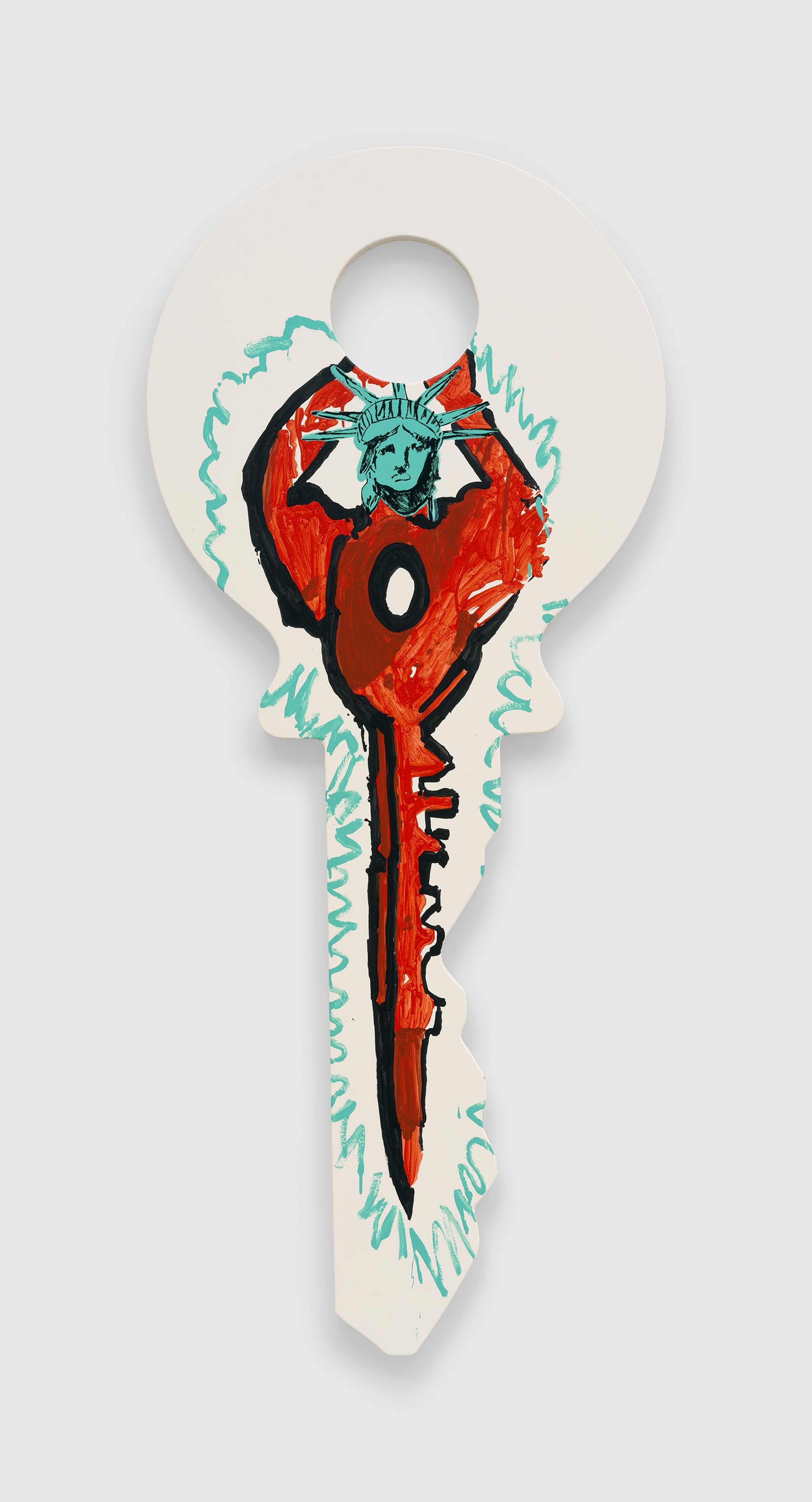
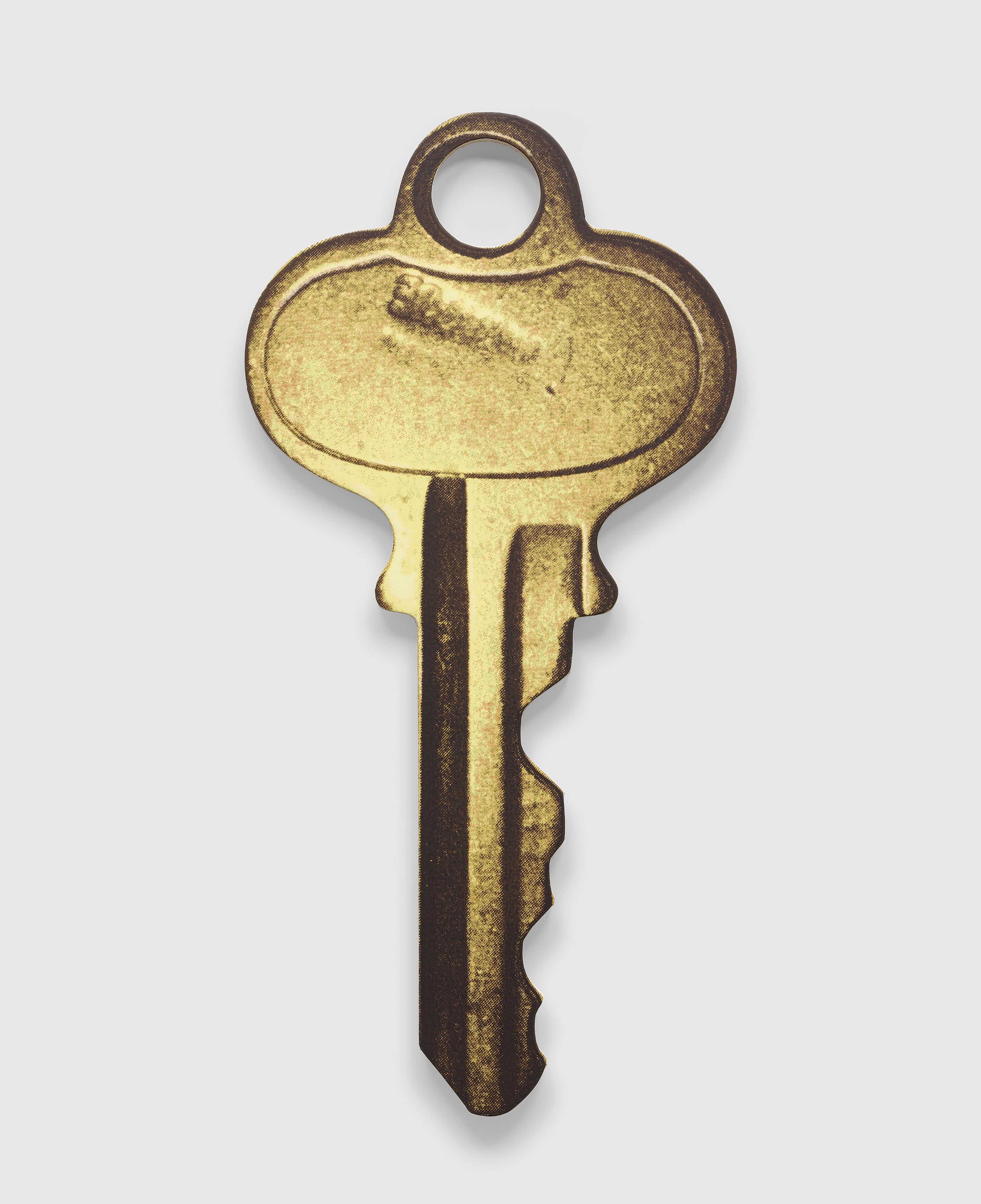
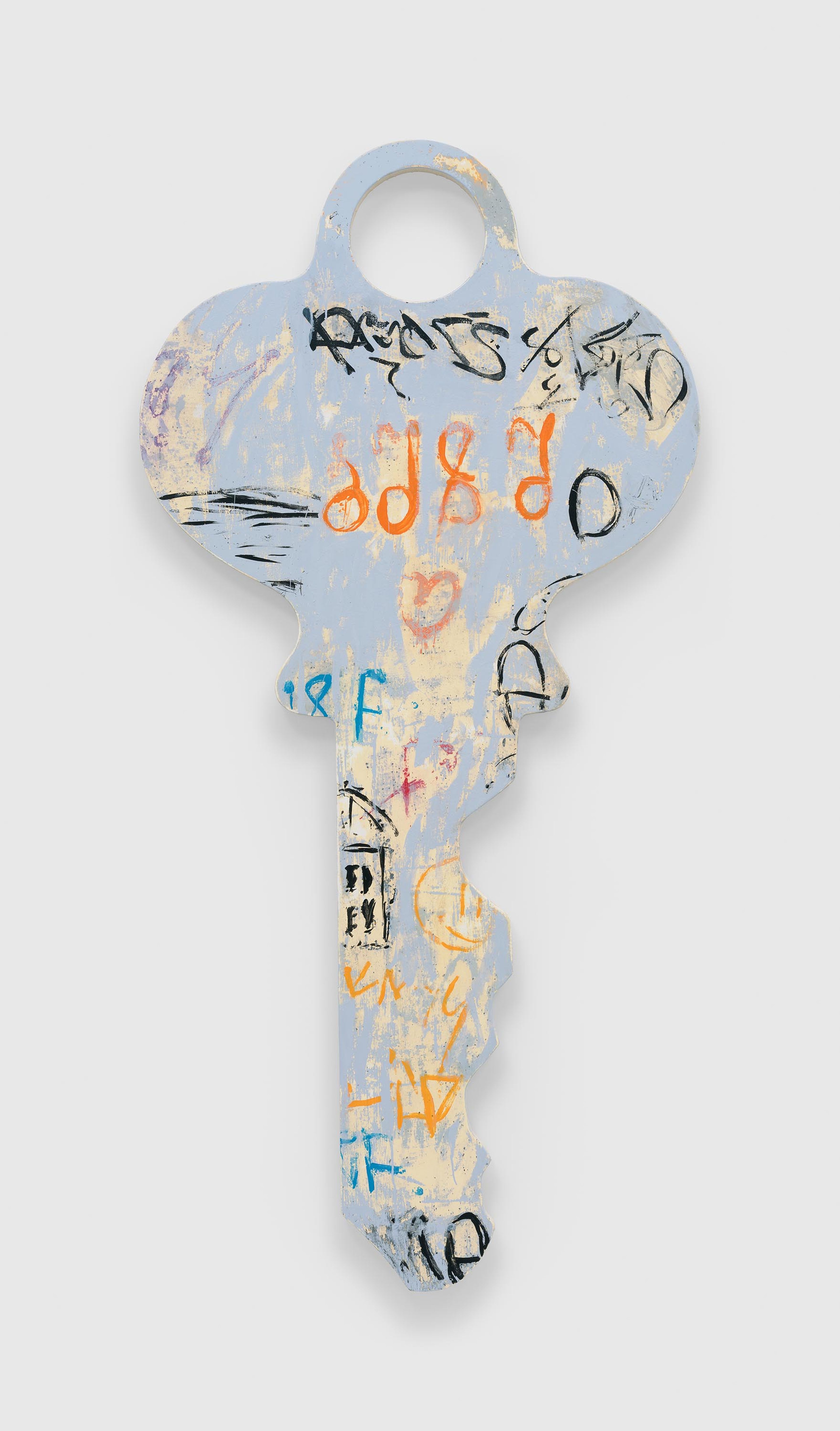
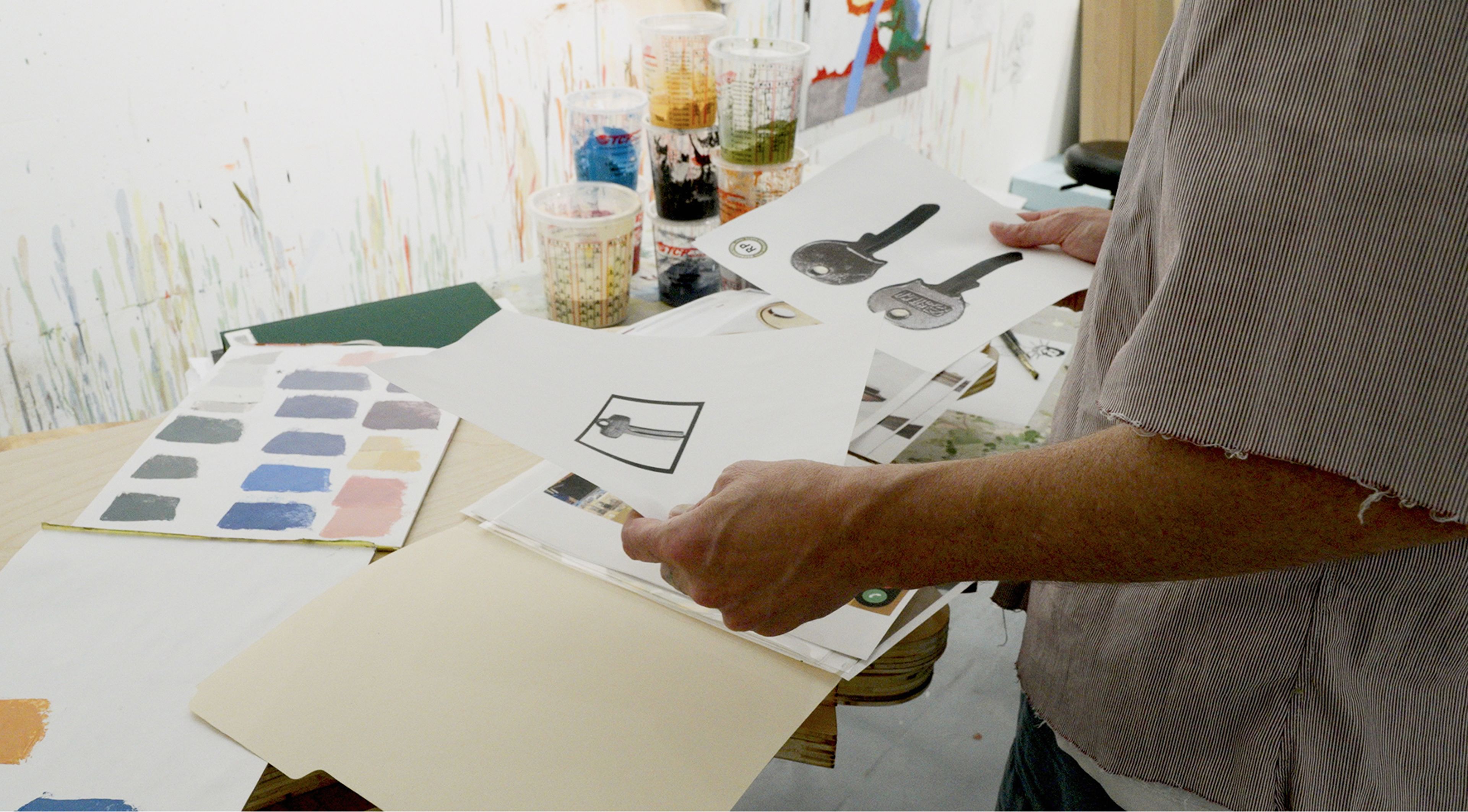
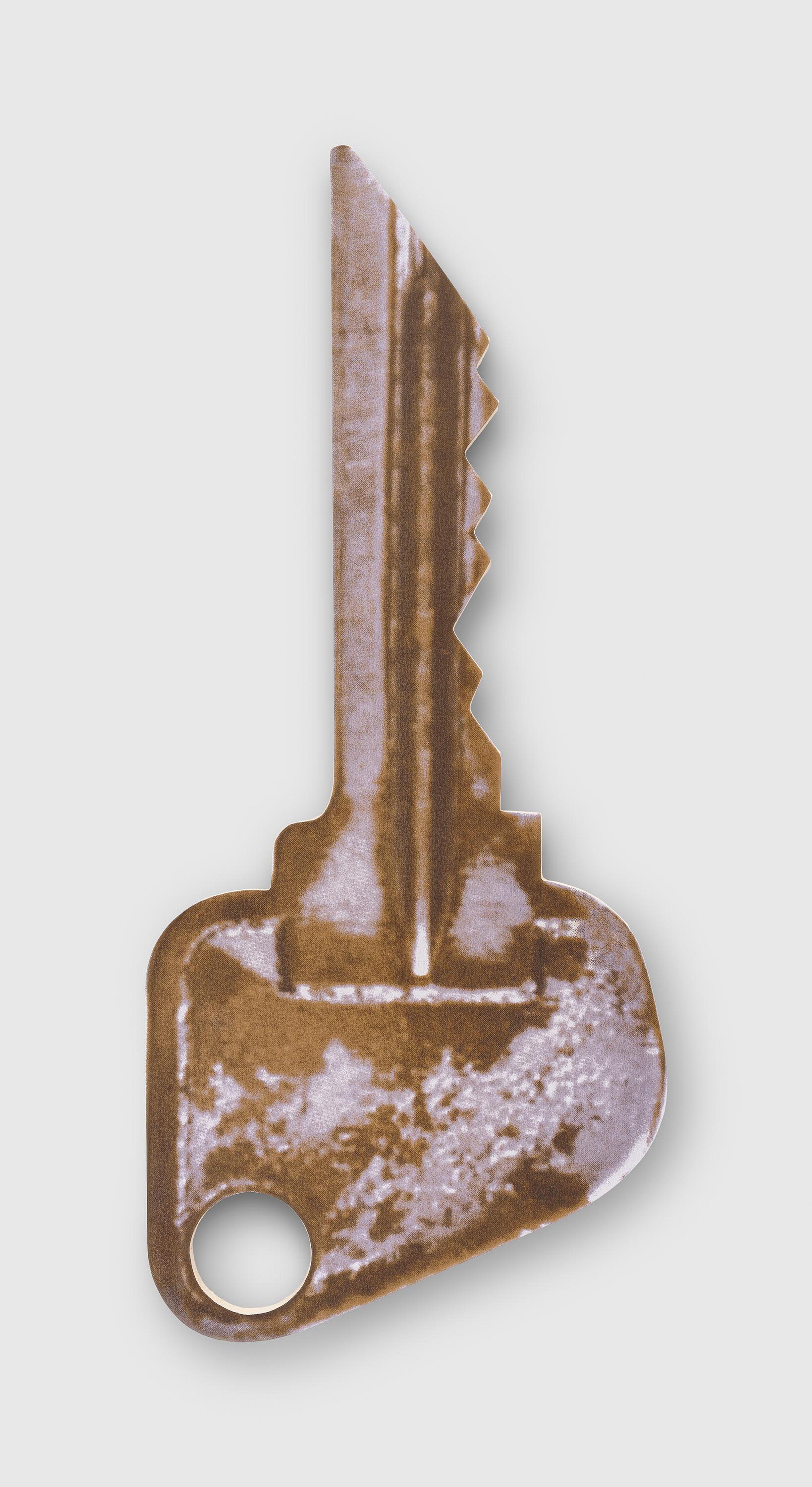
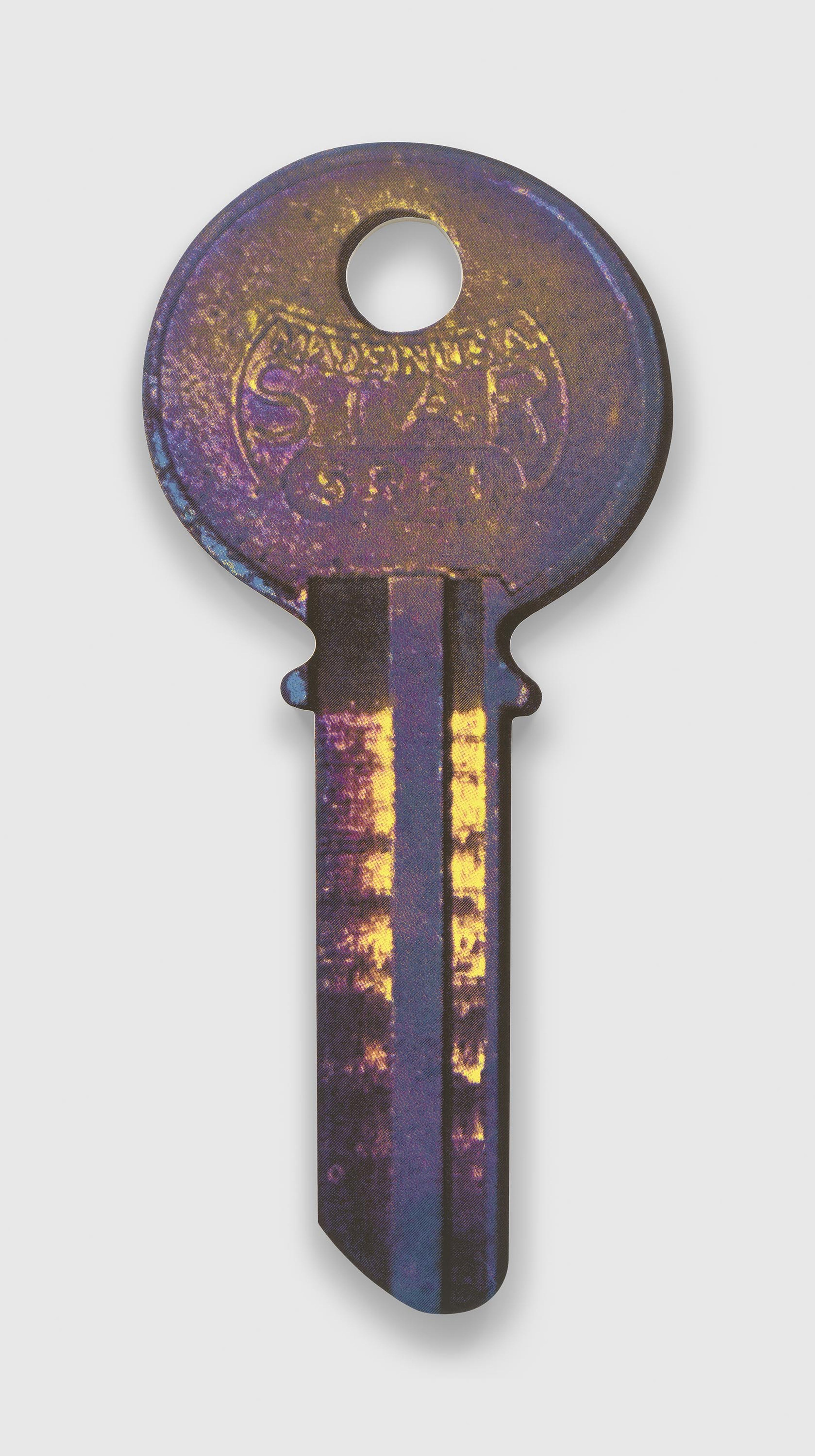
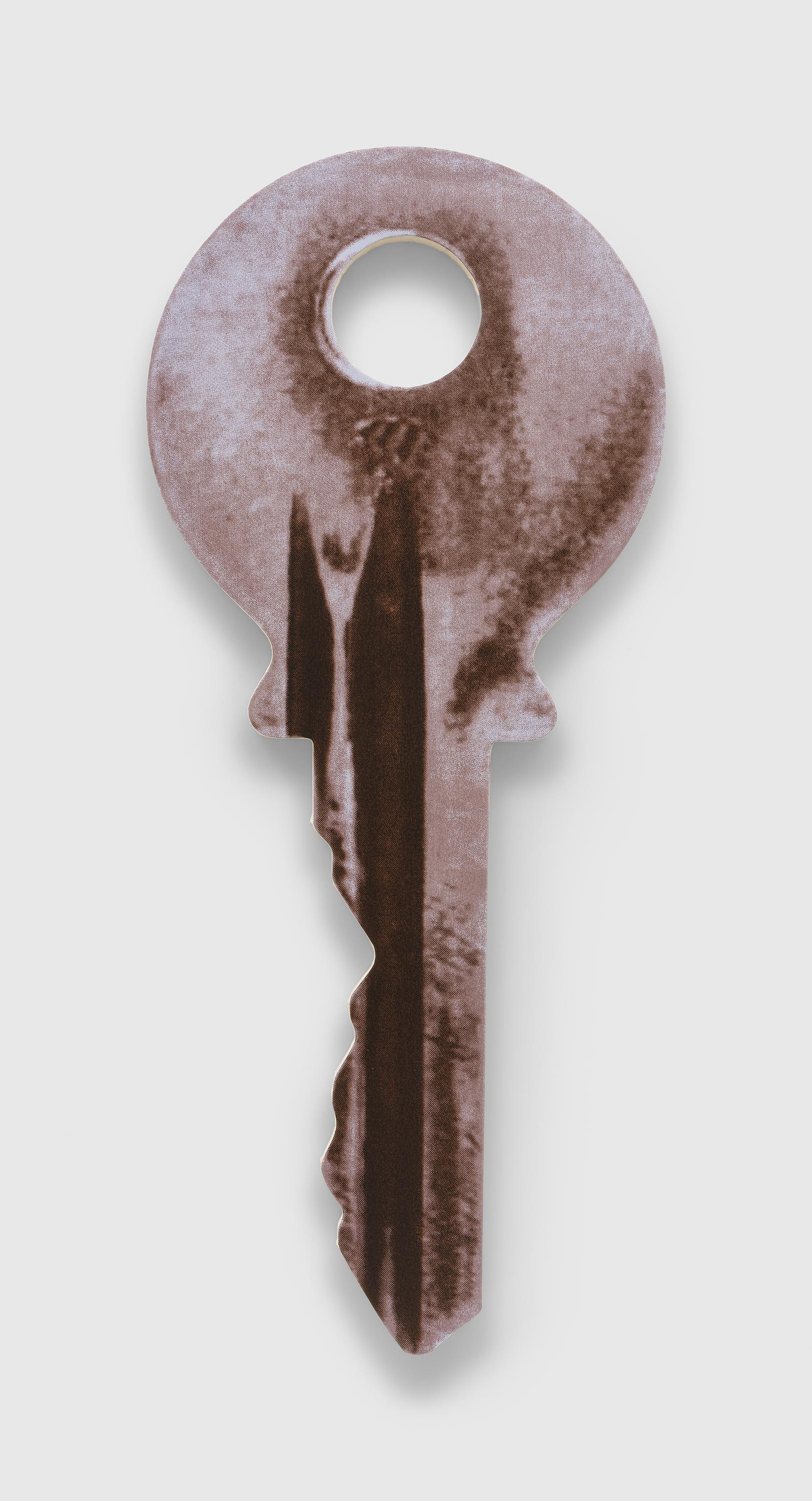
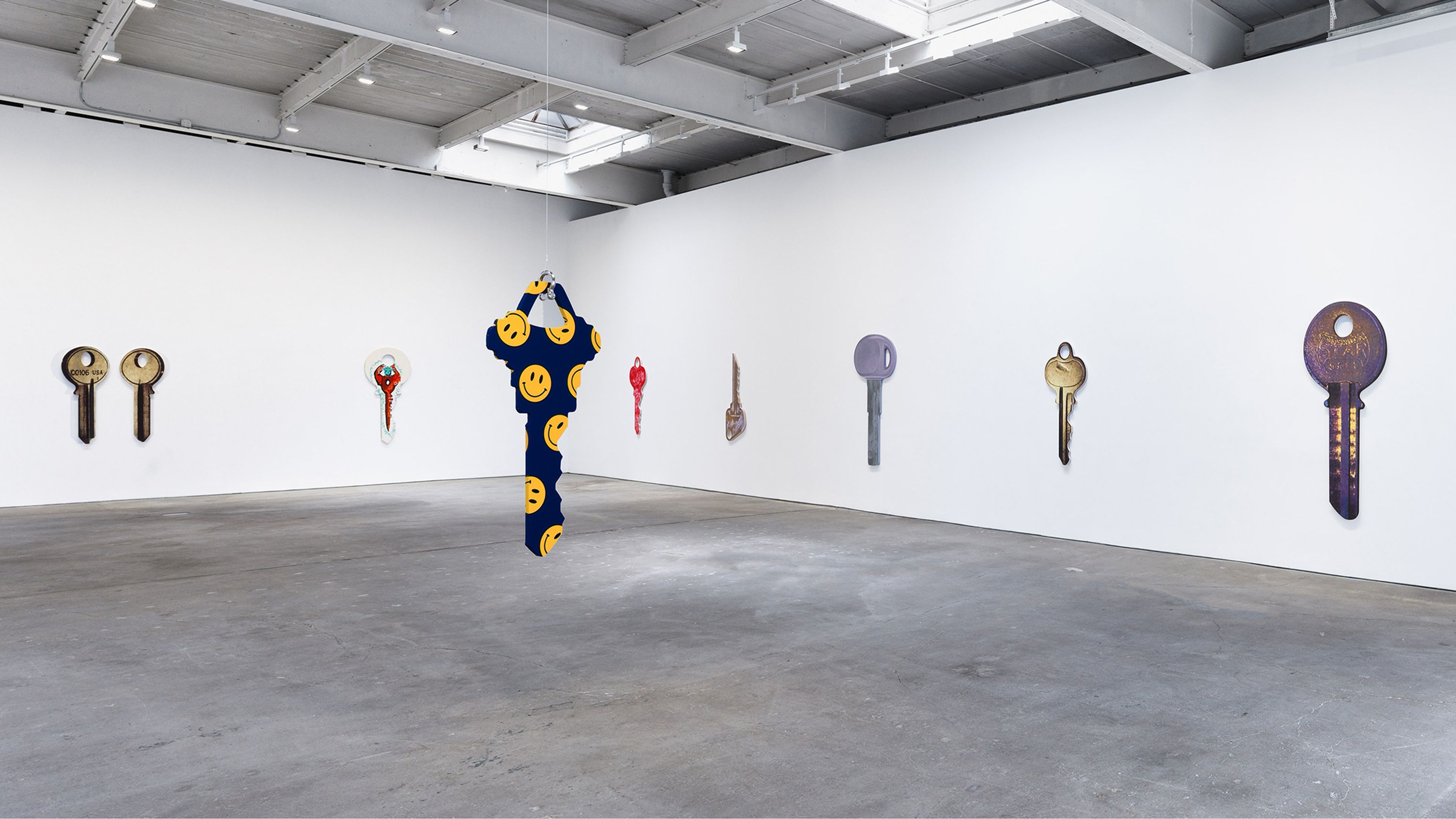
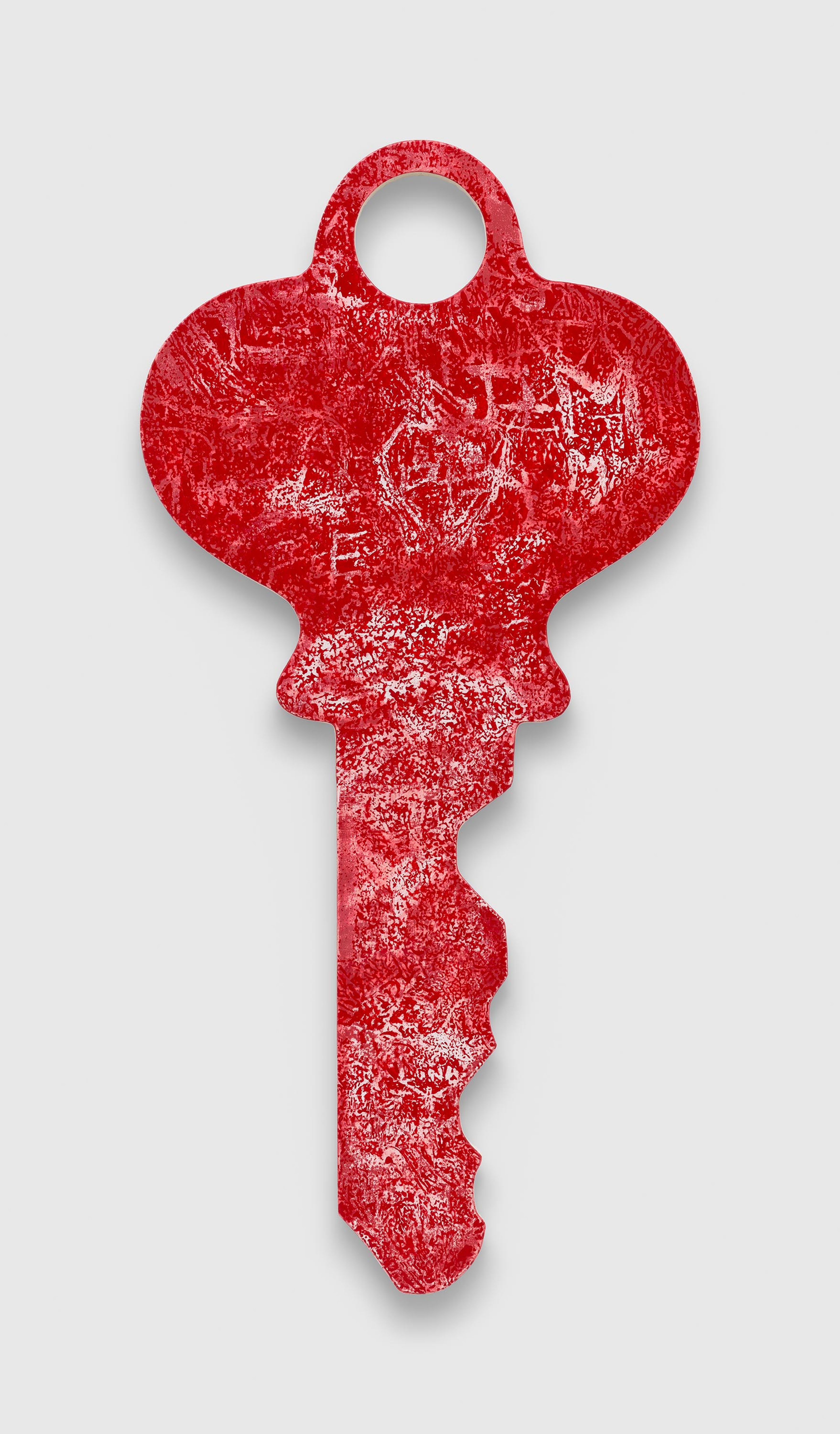
The key is not only a subject for the artist, but also a metaphor for duplication, transfer, and dilution—the same slippage his images undergo as they are copied, recirculated, and subtly altered. These works continue Lowman’s ongoing complication of figuration and abstraction, painting and object, image and meaning.
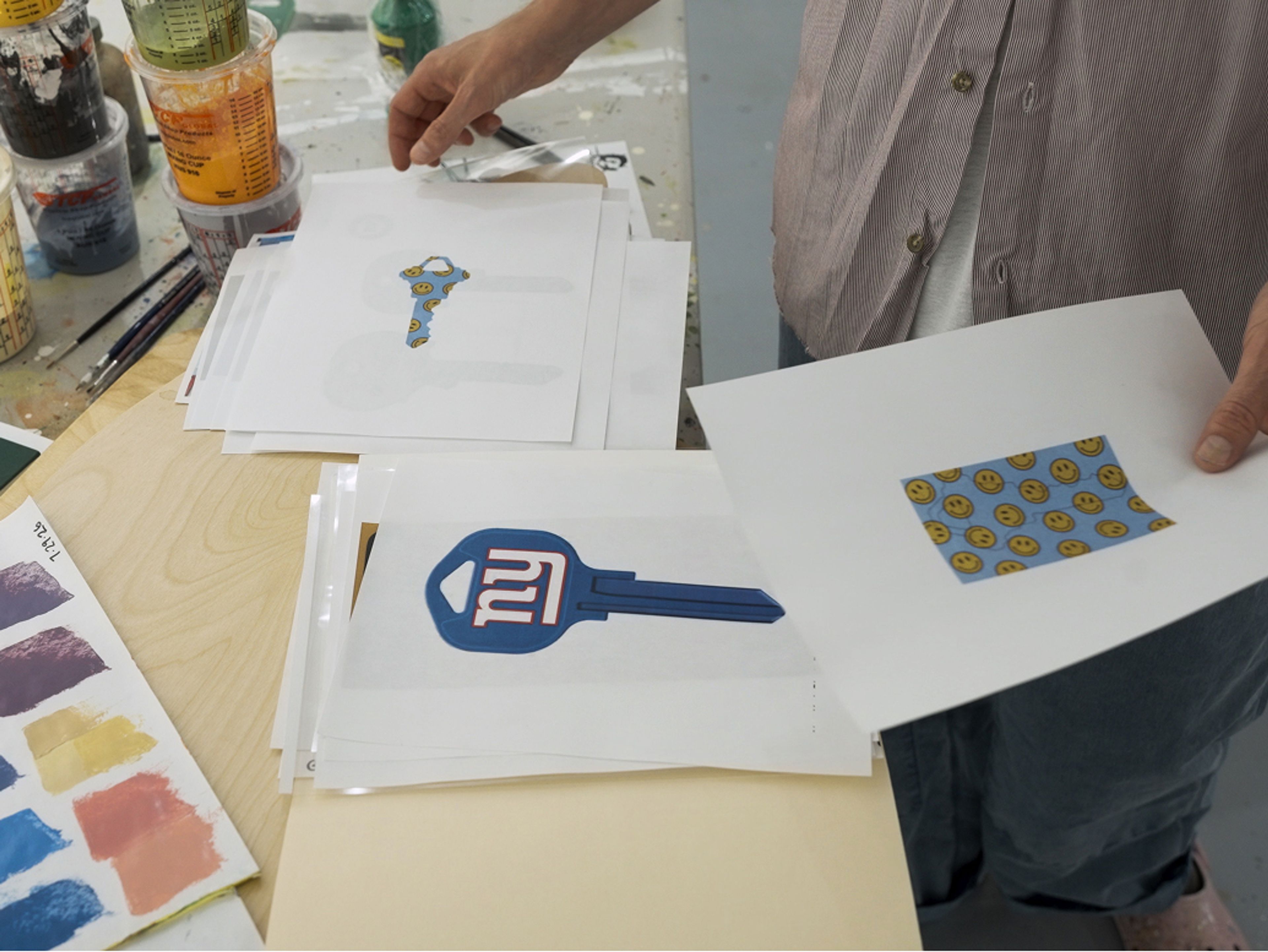
Some reproduce dissonant photographic imagery taken by the artist; others appropriate the bright, patterned novelty finishes available at hardware stores to distinguish one key from another. In one, Lowman references graffiti he found throughout the garden of the Bouboulina Museum on the Greek island of Spetses, whereas another work, a silkscreen diptych, represents an advertisement the artist found showing two keys yet to be cut into their final shape.
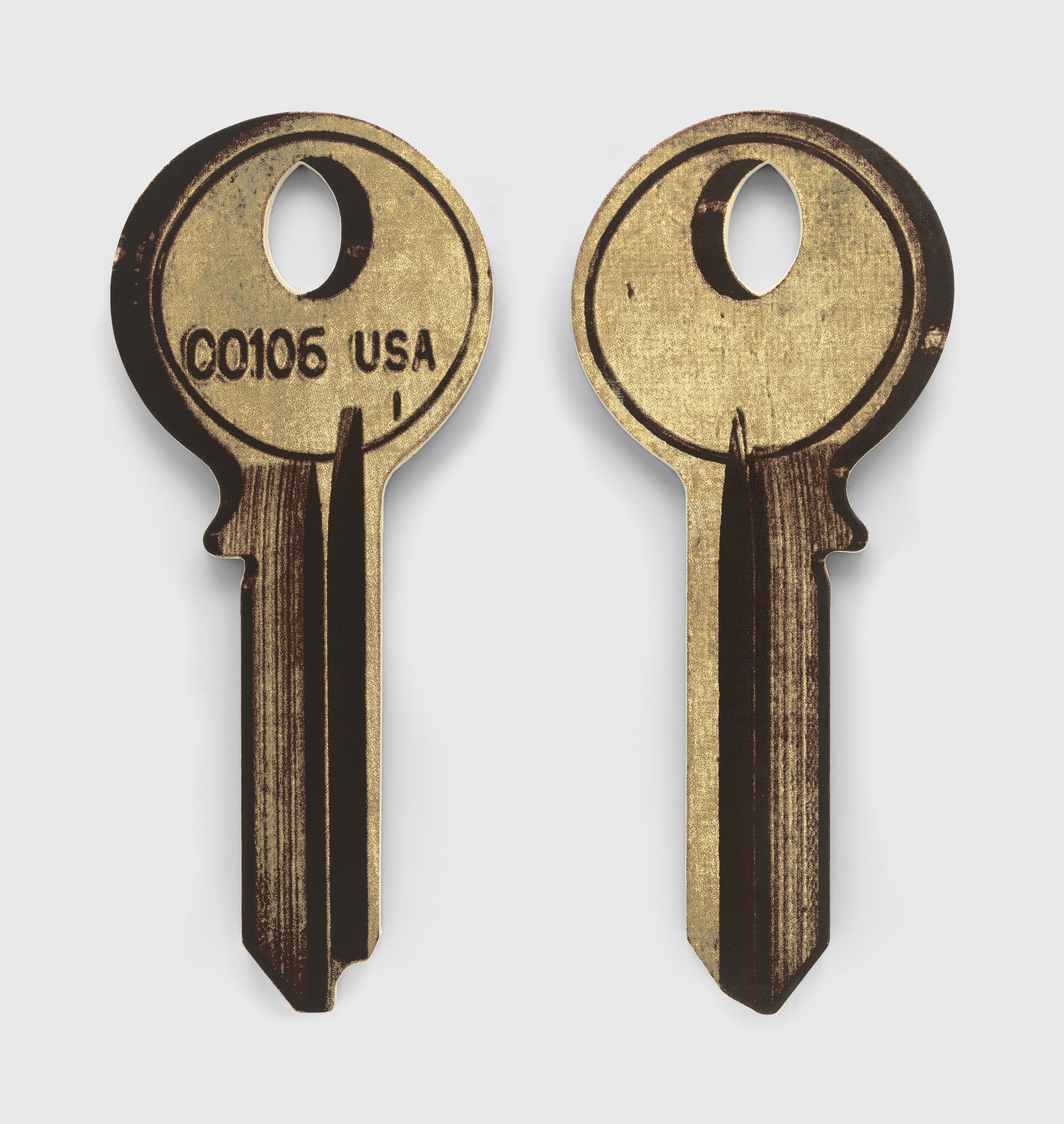
“We were talking about the keys being the bridges between eras.... I think of [Nate] as a strongly American artist—but distinct from the likes of Warhol and De Kooning in the ’60s or ’70s, or Richard Prince in the ’80s. It wasn’t the same thing to deal with Americana then. There’s a kind of melancholy in its handling in [his] work that feels very different from previous generations.”
—Donatien Grau
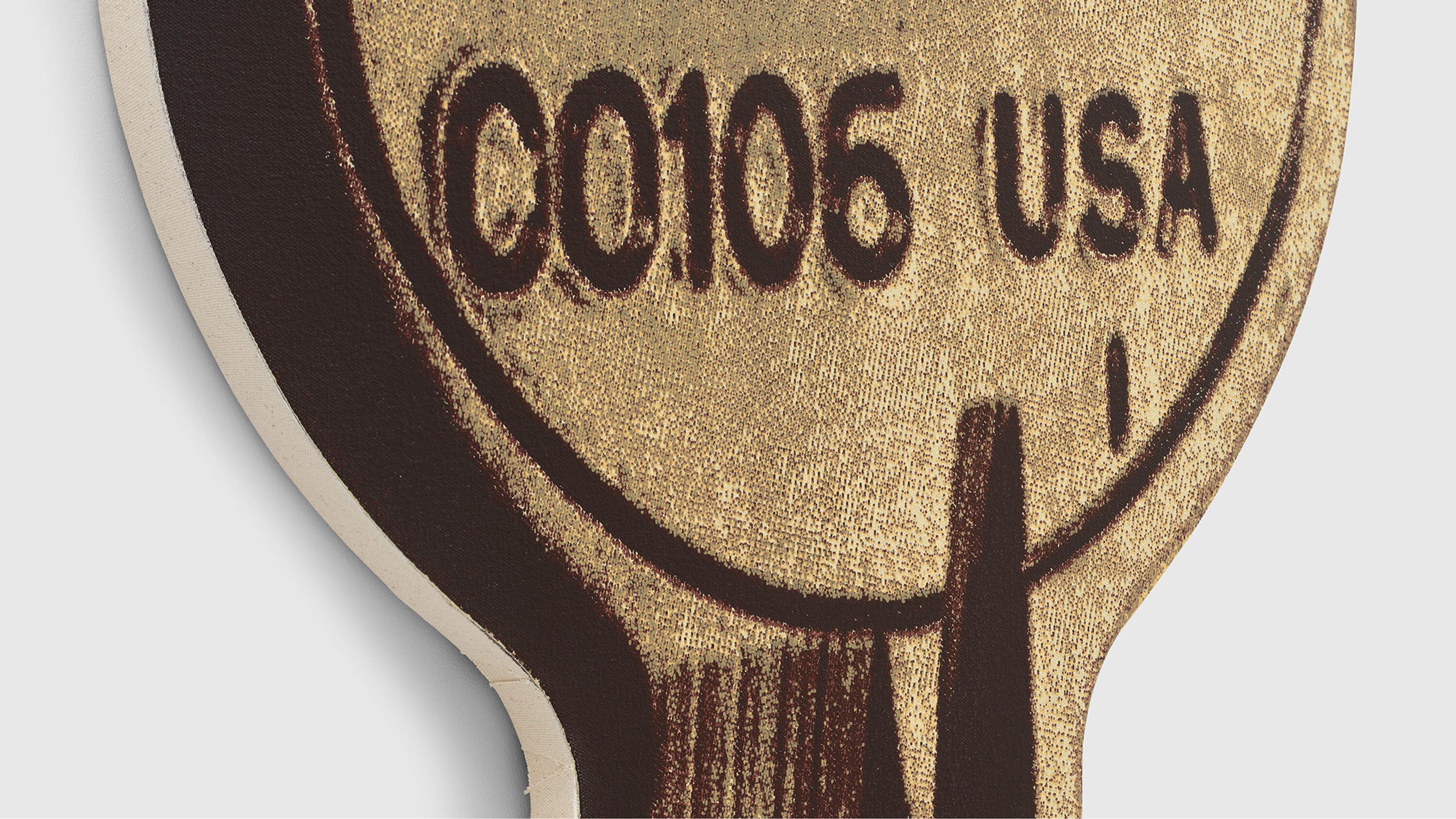
Nate Lowman, Nobody’s Home, 2026 (detail)
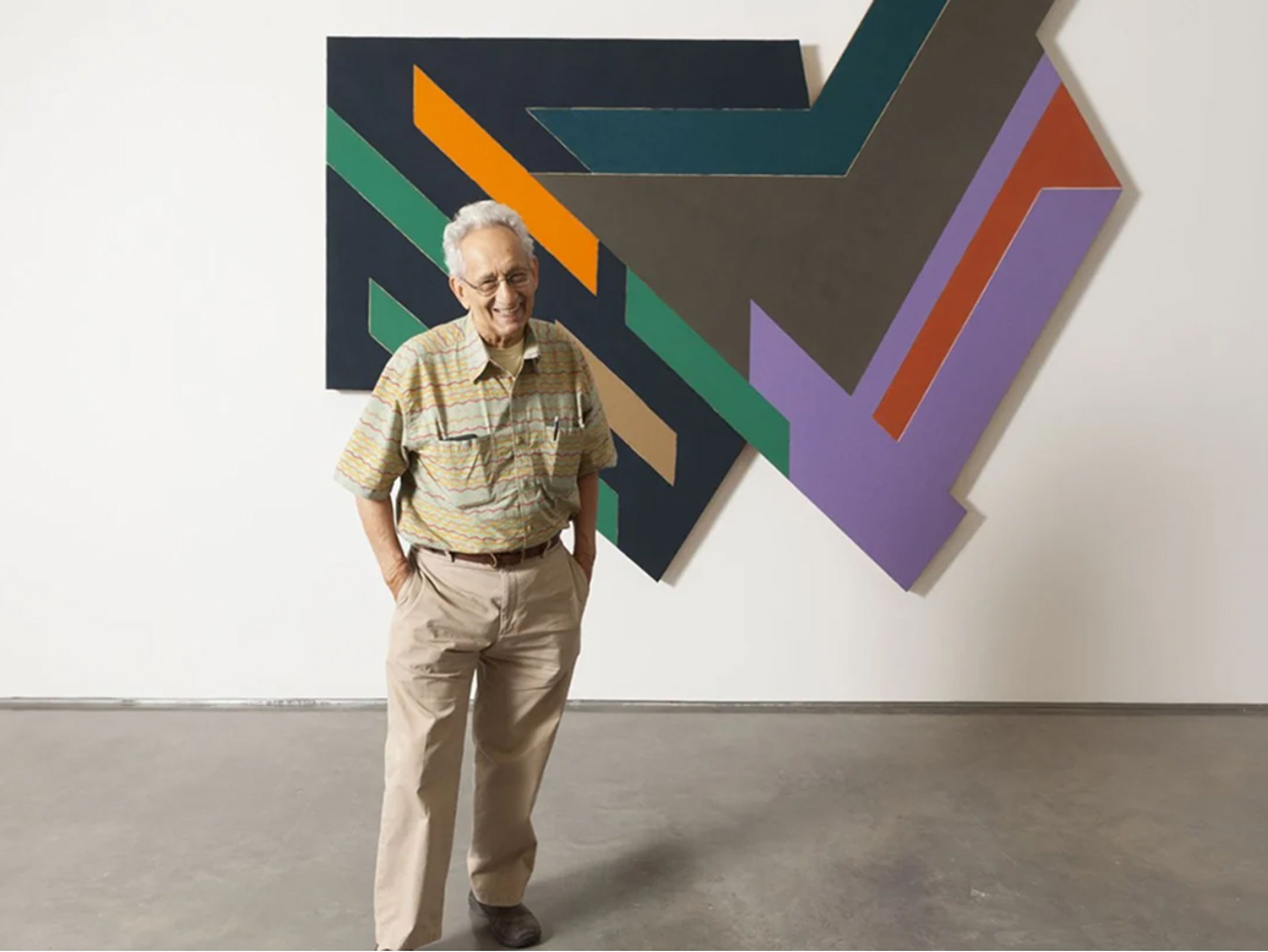
Frank Stella, New York, 2015. Photo by Kristine Larsen
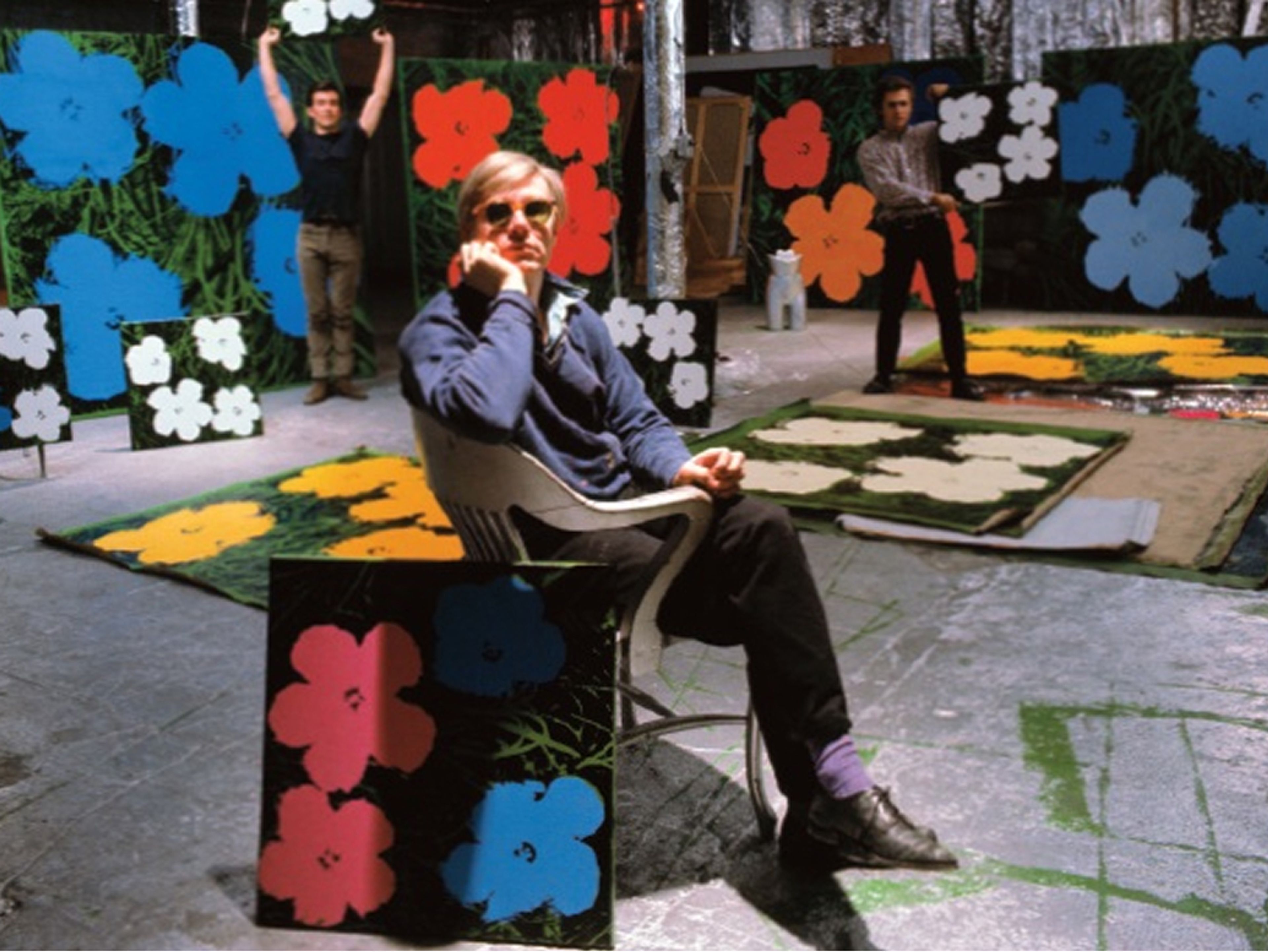
Andy Warhol, New York, 1964. Photo by Ugo Mulas
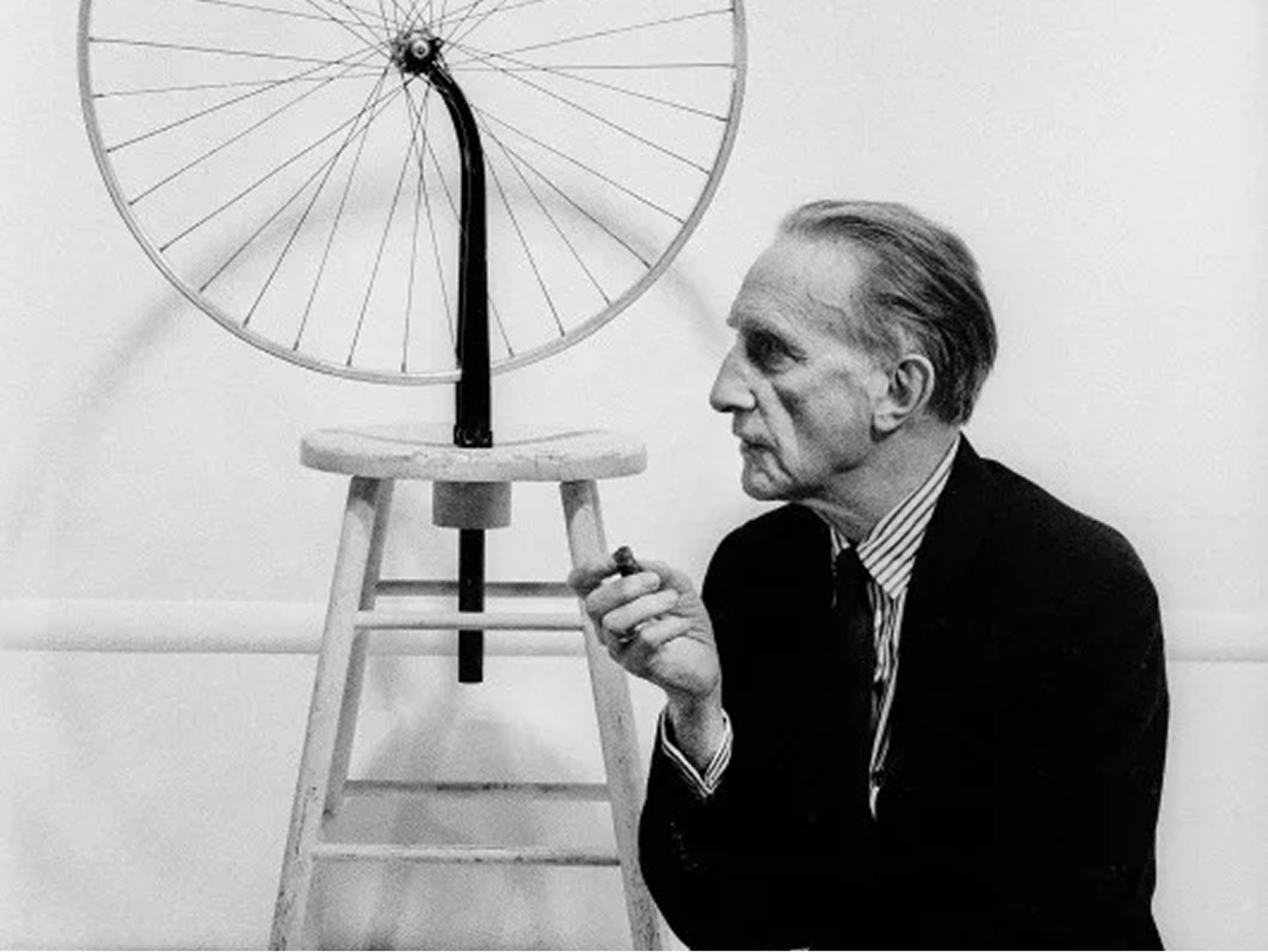
Marcel Duchamp, Pasadena, 1963. Photo by Julian Wasser
The paintings recall distinct art-historical registers—from the hard-edged geometric abstraction seen in Frank Stella's work, to the seriality of Andy Warhol or the flattened logic of Marcel Duchamp's readymades—each employing a different painterly language on the same recurring form.
Nate Lowman’s studio, 2026
Nate Lowman in his studio, 2026
“It’s a sidelong and often overlooked talent, hanging a bunch of paintings on a wall, and often a matter of instinct more than intellect.... But art schools, so far as I know, don’t teach it, and critics rarely mention it. Lowman, as I say, is especially good at it..... The shift from one to the other becomes a rhythm, as regular as breathing, your eyes squinting and relaxing as you pass from one to the next.”
—Jim Lewis, critic and author
Installation view, Nate Lowman: Hanging Out, David Zwirner, New York, 2026
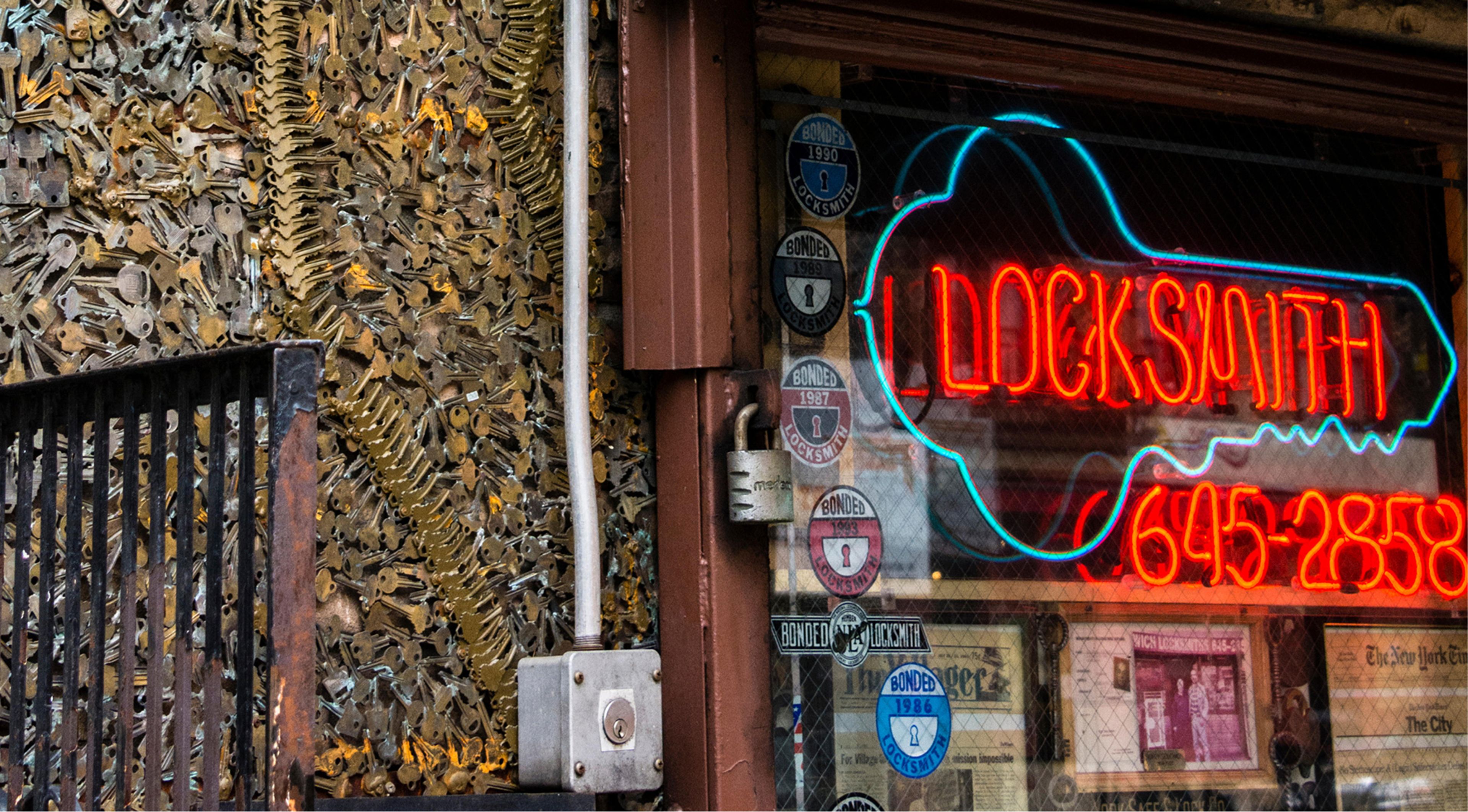
Locksmith in Greenwich Village, New York, with a facade made out of keys by the owner, Phil Mortillaro. Photo by Paulette Sinclair
Nate Lowman in his studio, 2026
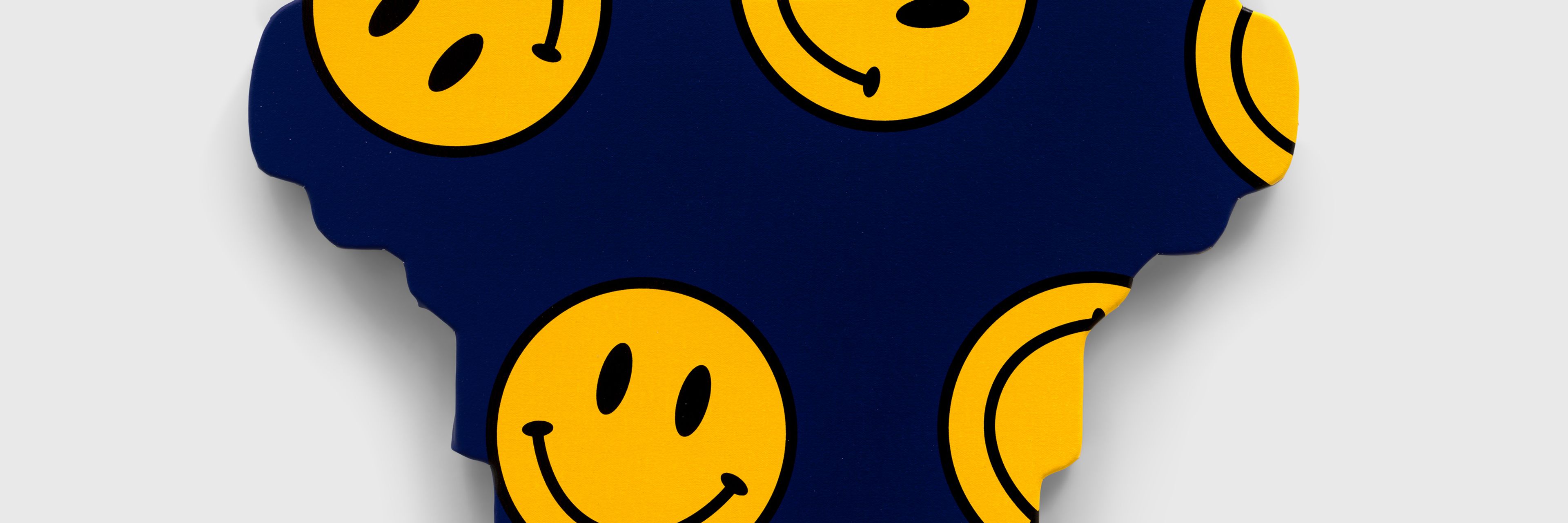
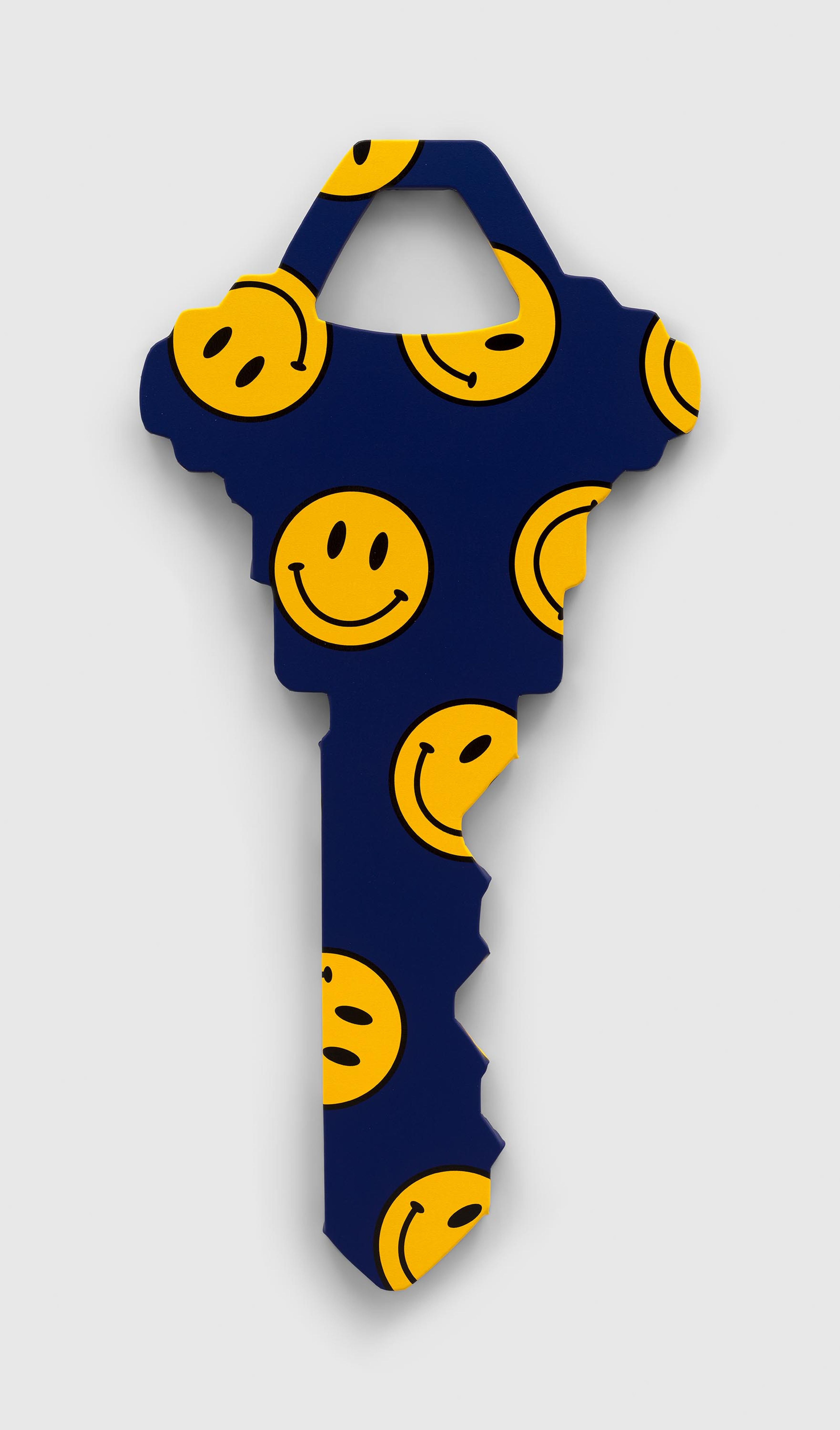
The key also marks a threshold between public and private. Several works in the series draw directly from Lowman’s own life. In his early years in New York, friends once gave him a copy of their house key—patterned with a rave-culture yellow-and-blue smiley-face motif, in a nod to the smiley-face paintings Lowman was making at the time—so he would have somewhere to stay.
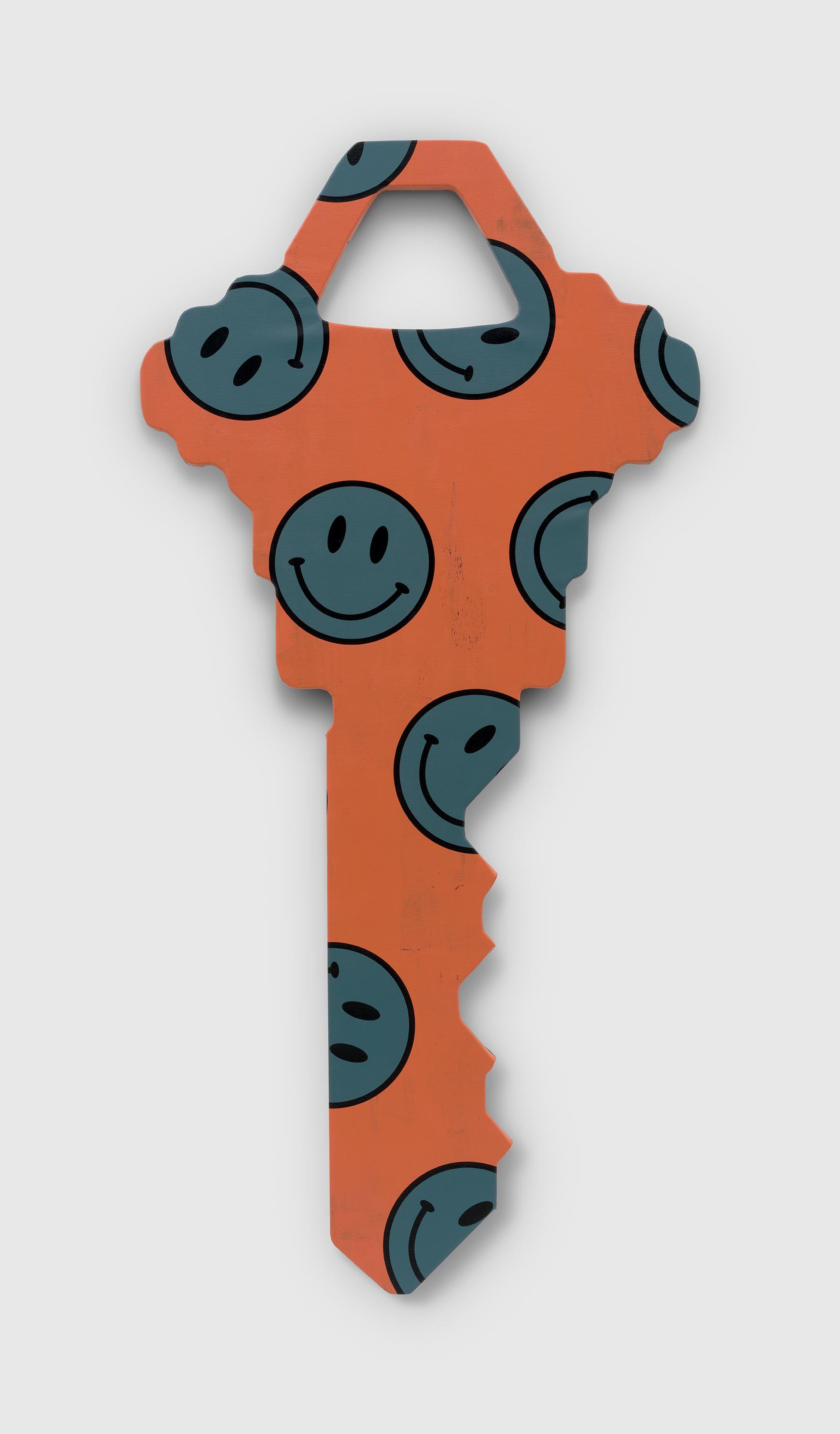
“The keys are significant in the fact that one of the shapes opens my door, one of the shapes opens the door to my friend's apartment, but what's on the surface of those keys is idiosyncratic to those realities. Some of them are shapes I like, keys I like, and want to reproduce visually for what they are. But others, it was about using the template of a favorable shape to then add another language on top of.”
—Nate Lowman
Installation view, Nate Lowman: Hanging Out, David Zwirner, New York, 2026
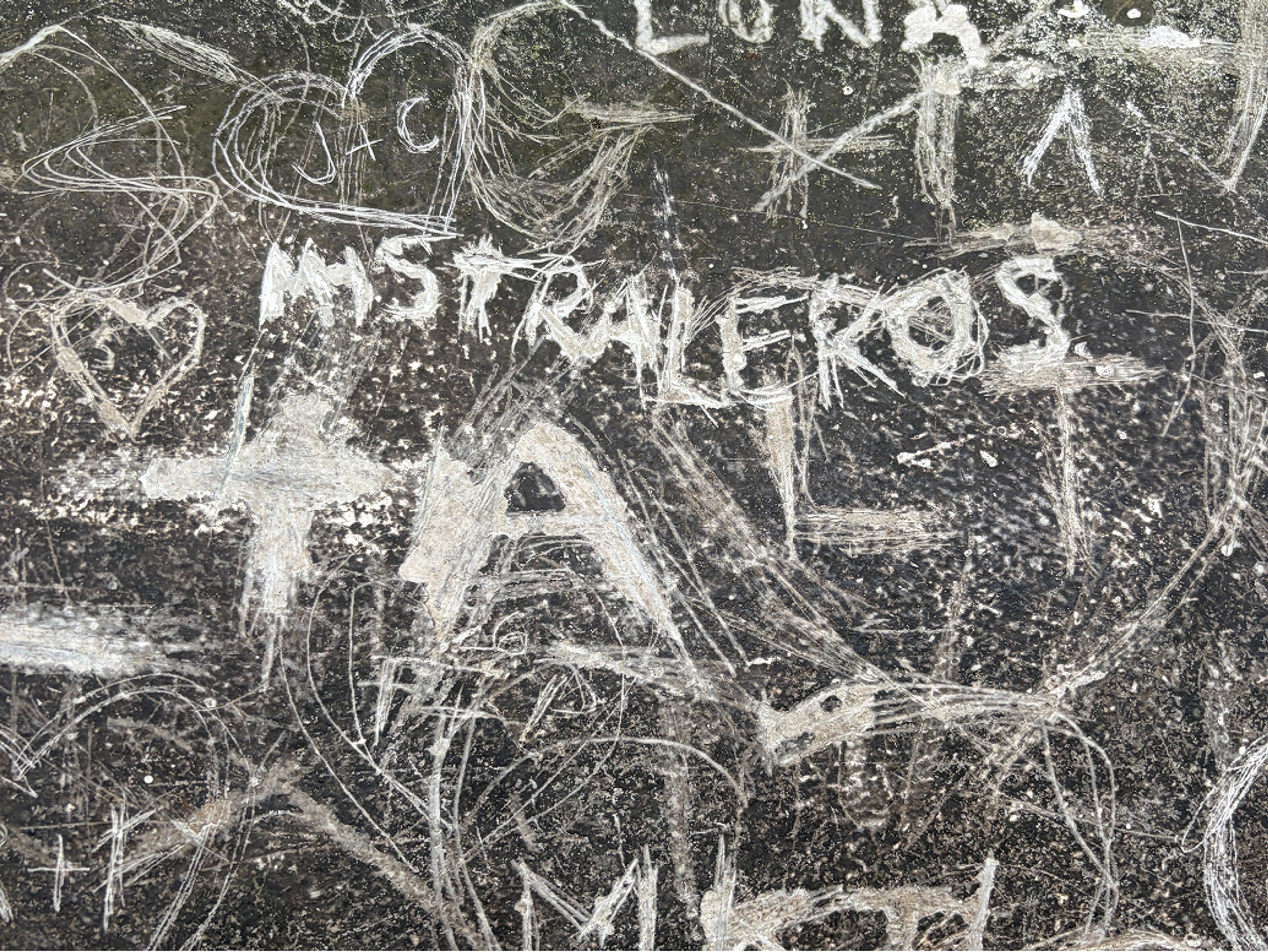
Graffiti found in Rio de Janeiro. Photo courtesy of the artist
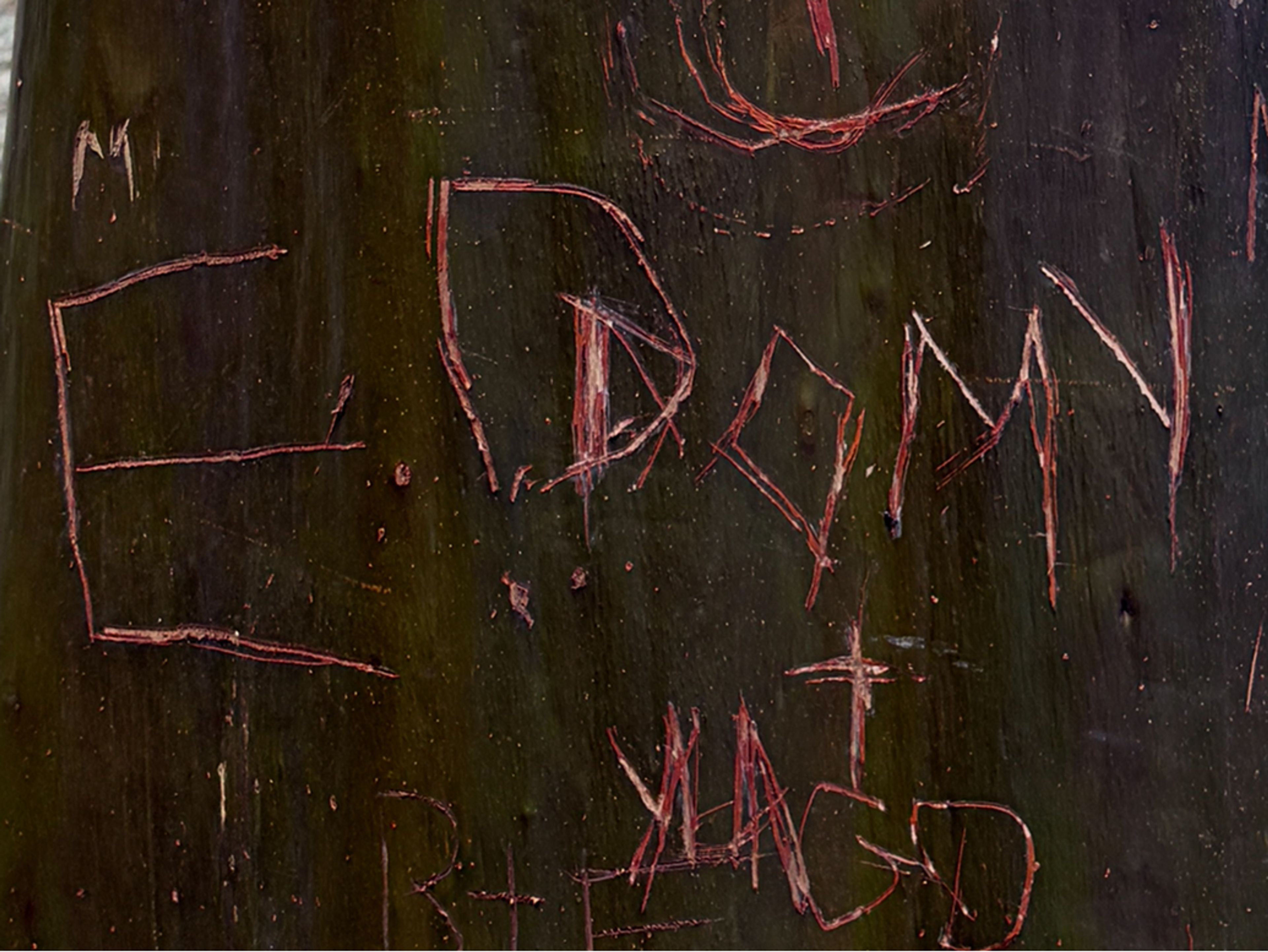
Graffiti found in Rio de Janeiro. Photo courtesy of the artist
Other works are painted from photographs Lowman took of names scratched into a bench and a tree in Rio de Janeiro. These take the shape of a close friend’s spare, kept for emergencies. The motif also represents a quieter homage, in that the form was originally prompted by the memory of Lowman’s late friend, the designer Benjamin Cho, who designed an evocative dress in 2008 that was constructed with holes and keyrings.
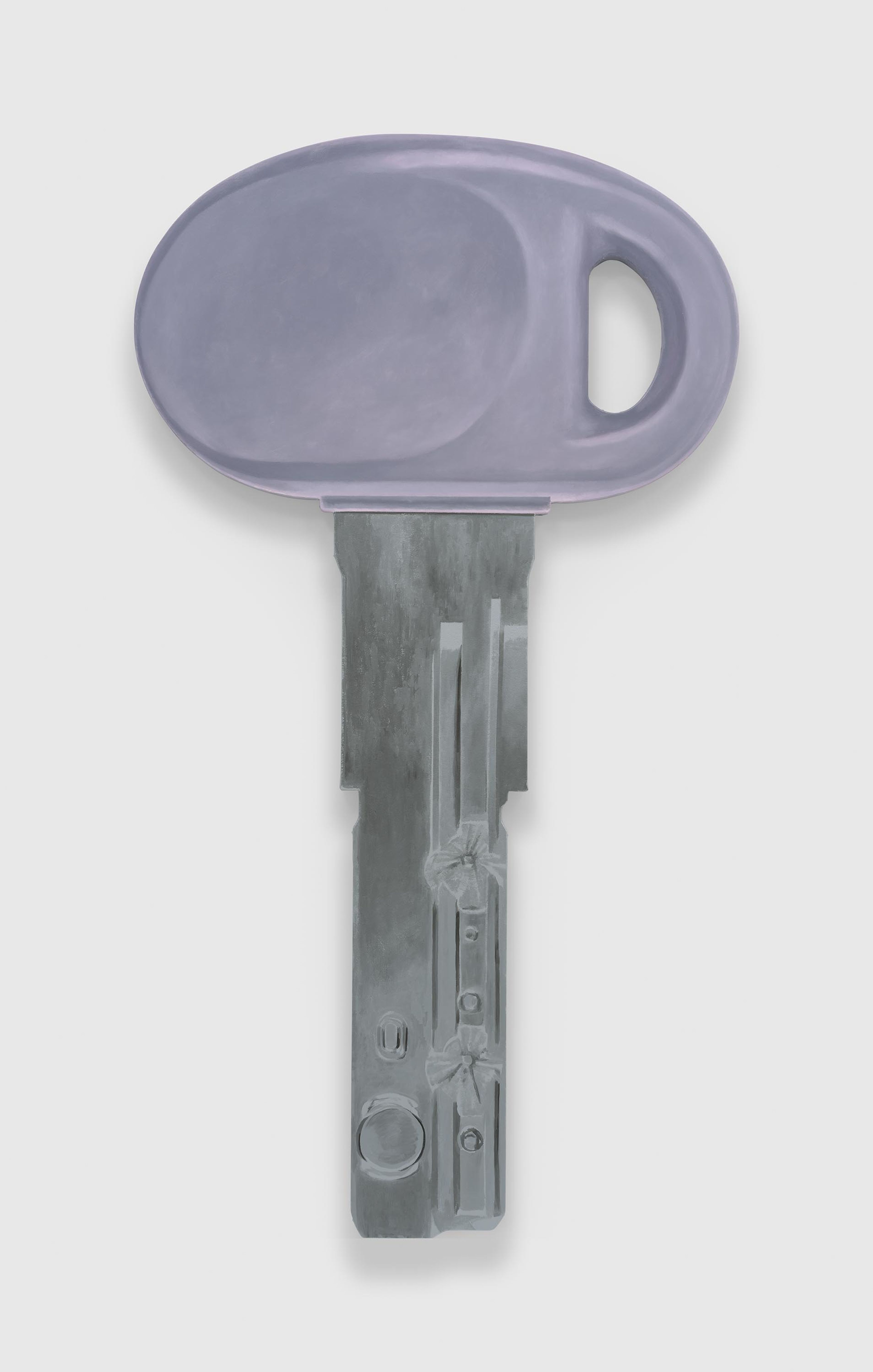
[Lowman] gathers the raw materials in his art from the news, popular media, and art history, and reconditions them through his own reading, thoughts and feelings.… He then lets these narratives flow, allowing one signifier to slip to another, creating a multiplicity of possibilities and a rich, open-ended story. It’s an art of selecting, curating, orchestrating, manipulating. Nate Lowman’s works mirror contemporary American society.”
—Gunnar B. Kvaran, curator and former director of Astrup Fearnley Museet, Oslo
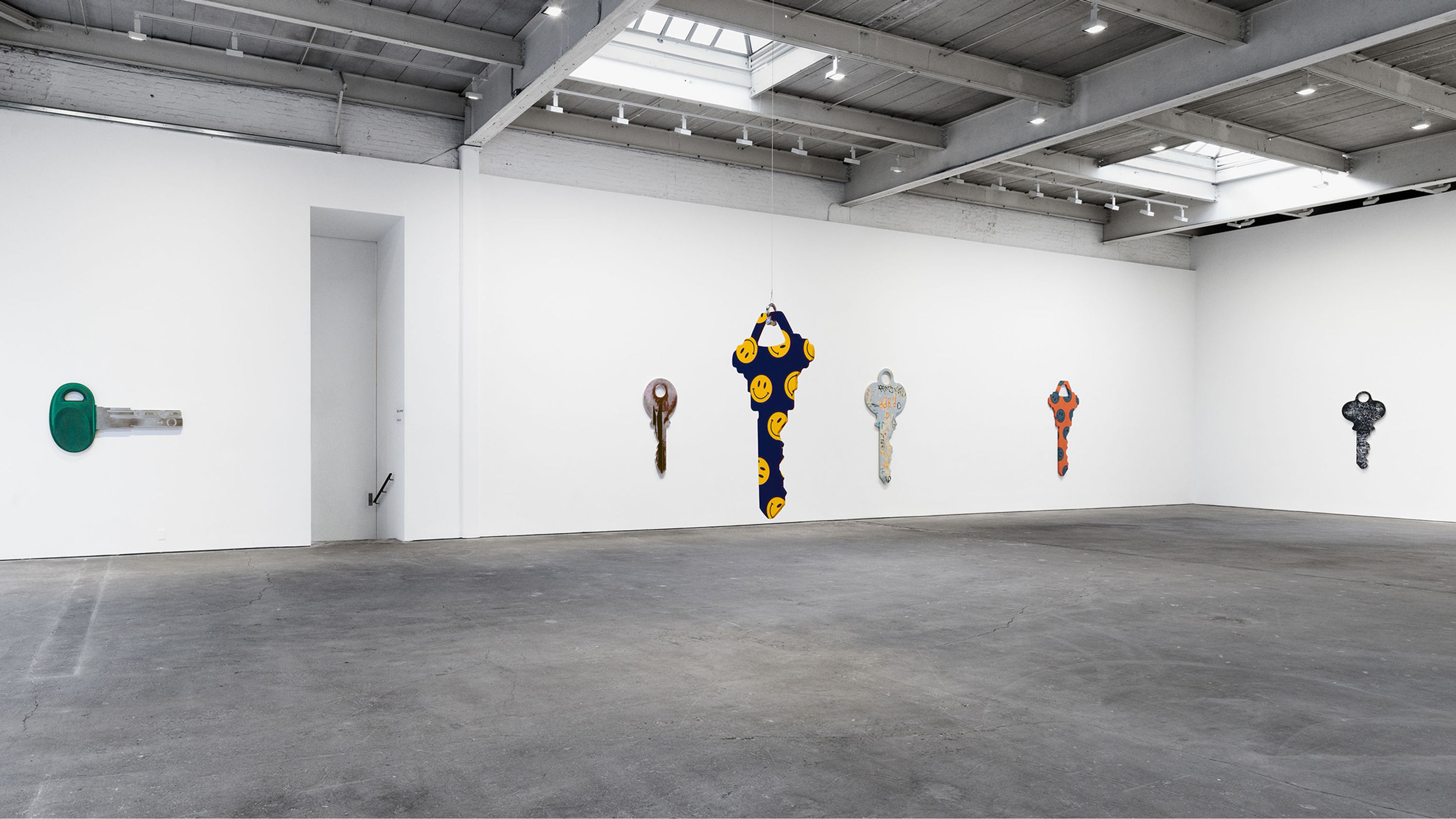
Installation view, Nate Lowman: Hanging Out, David Zwirner, New York, 2026

Inquire about works by Nate Lowman