Exceptional Works: Raymond Saunders
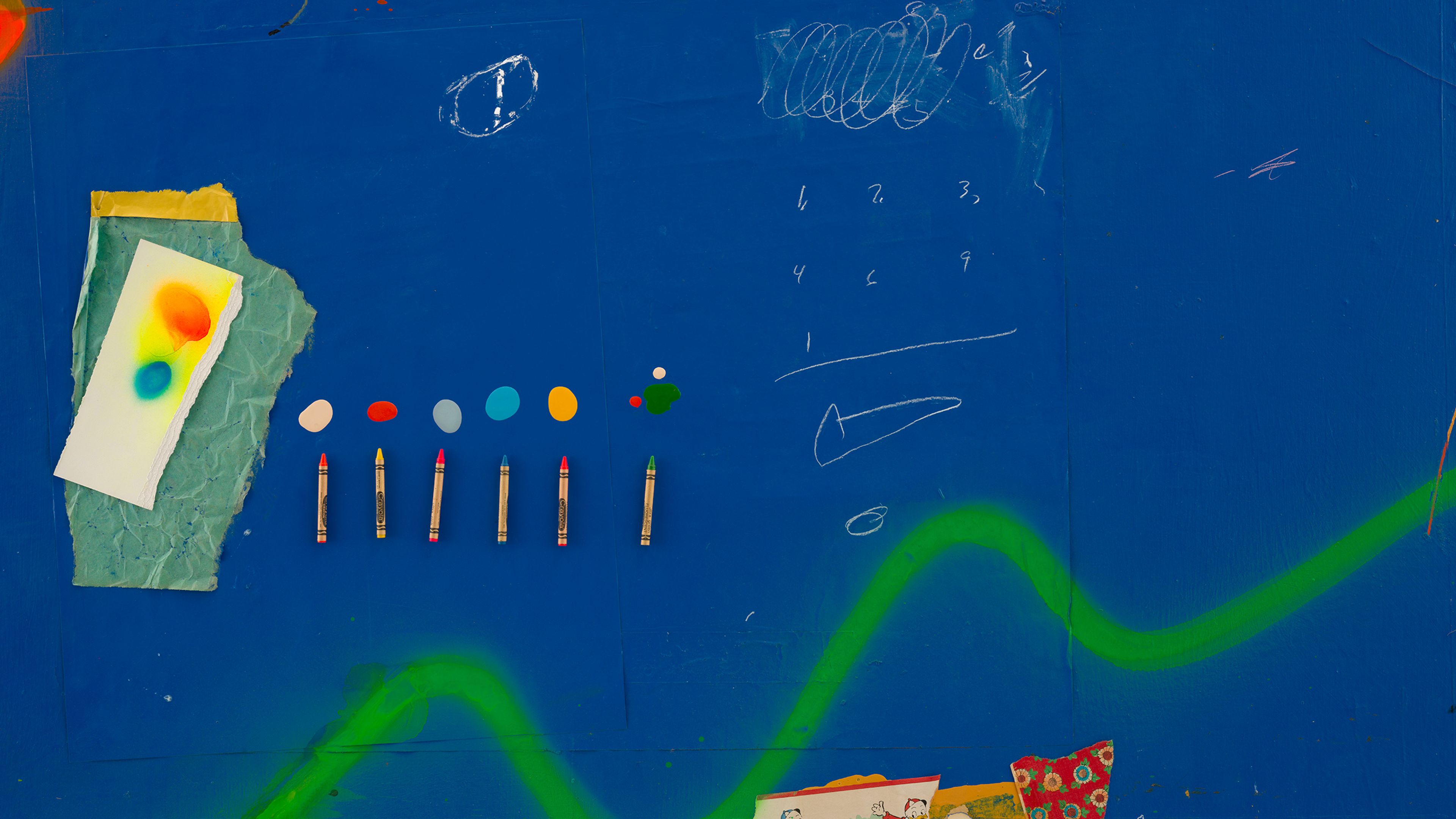
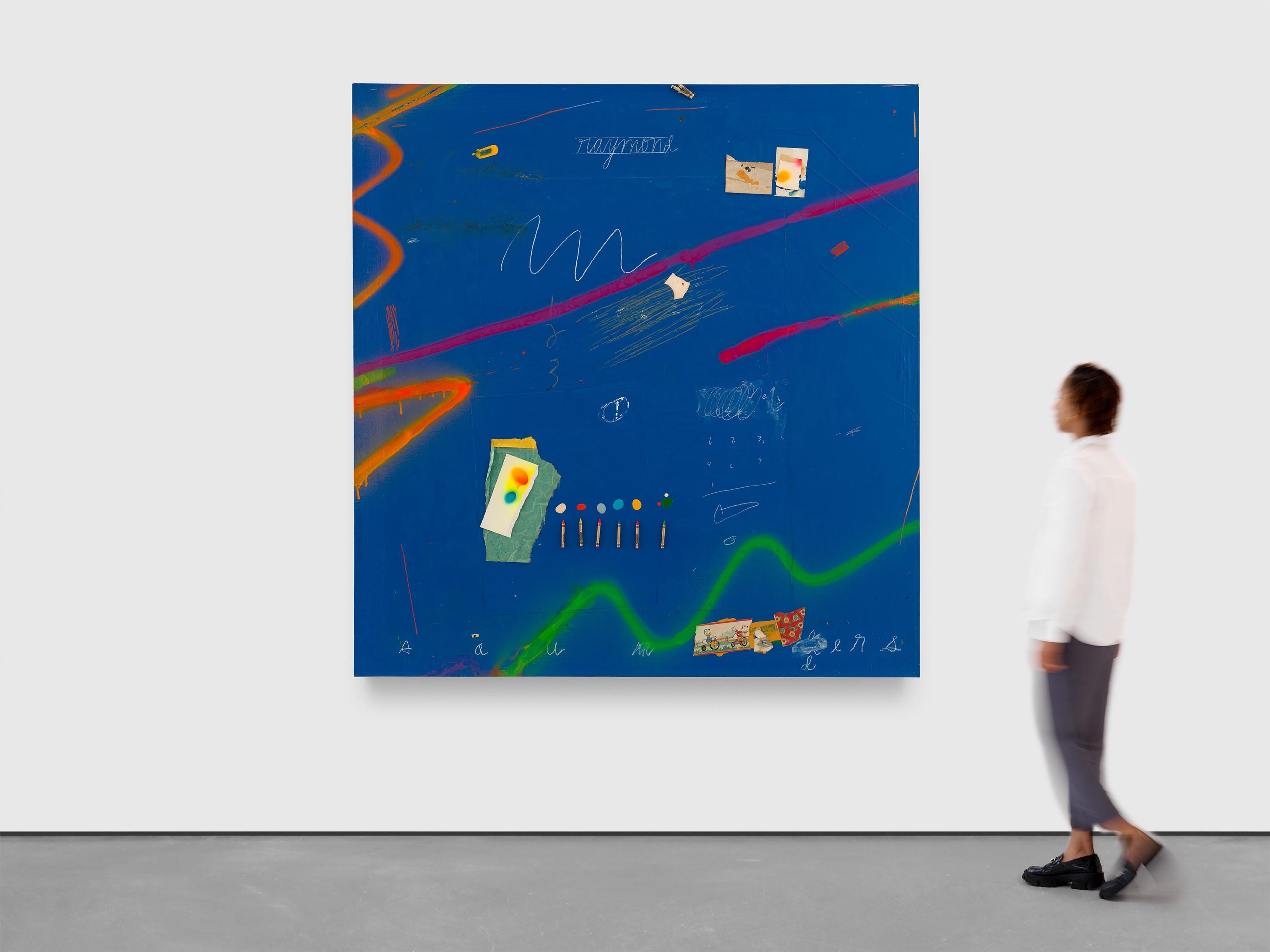
It Wasn't Easy Being a First Grader, 1979/1984
Acrylic, spray paint, chalk, collage, and mixed media on canvas 77 3/8 x 74 inches 196.5 x 188 cm
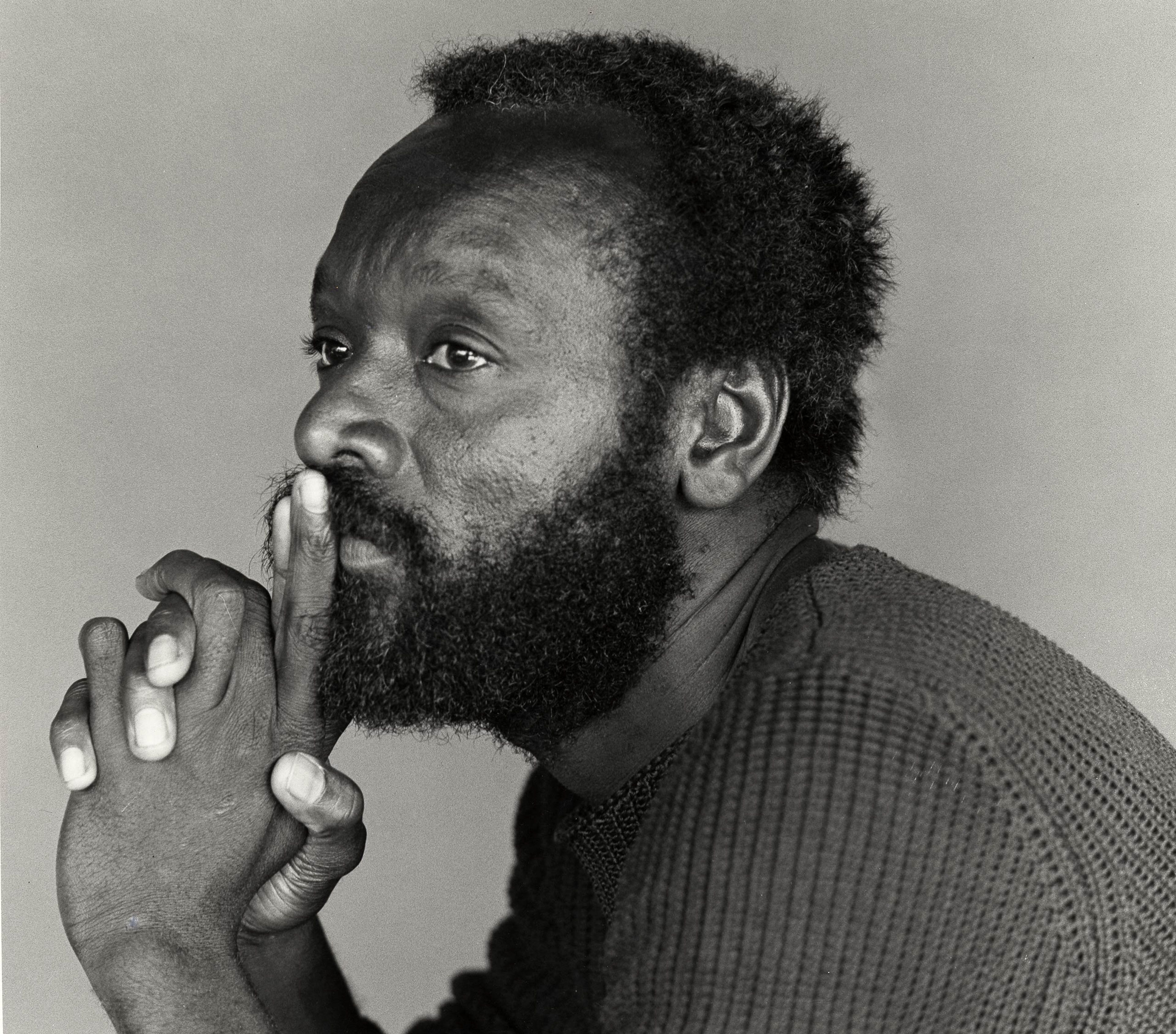
Raymond Saunders, 1981. Portrait by Mimi Jacobs. Archives of American Art, Smithsonian Institution
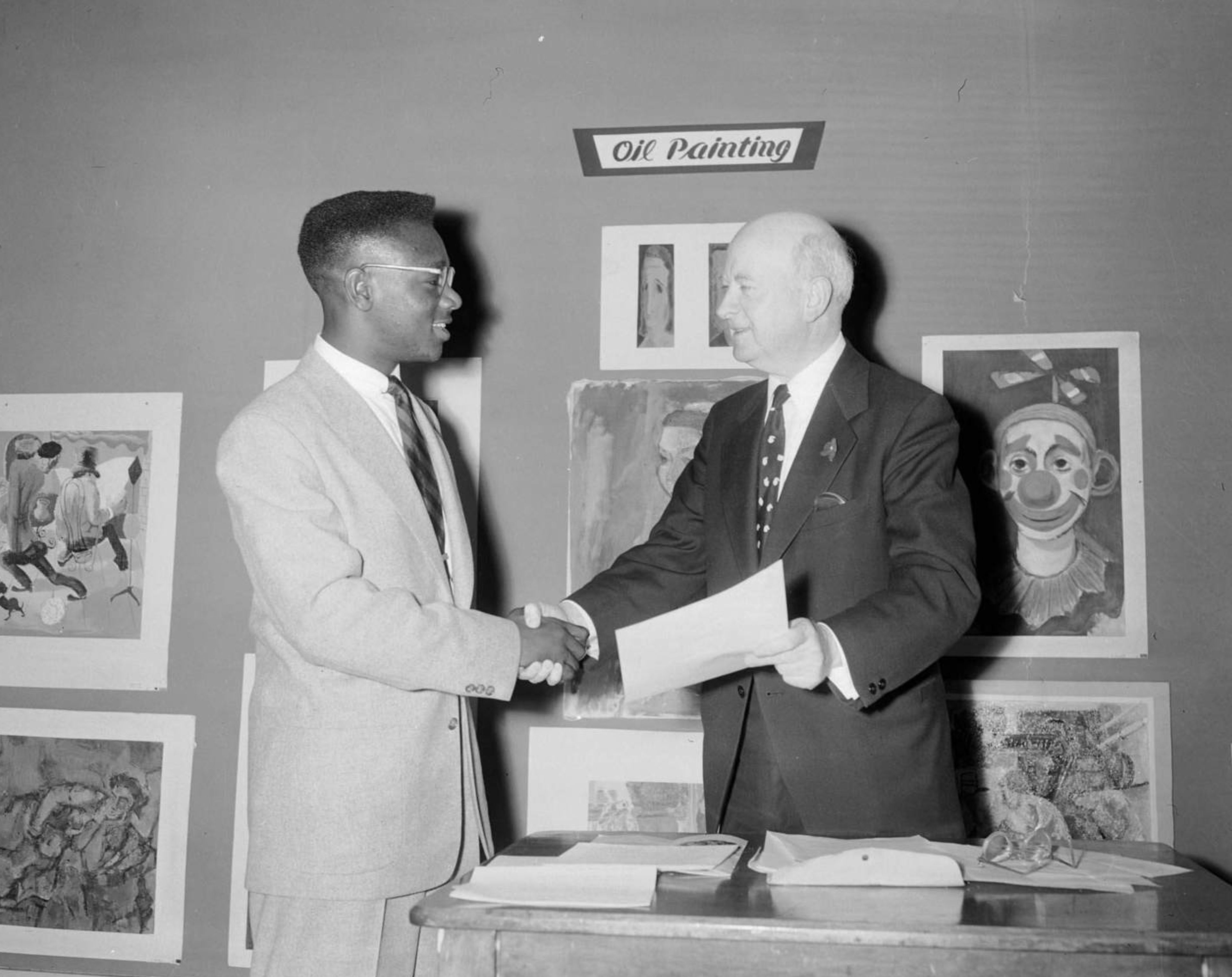
M. R. Robinson, at right, presenting award to Raymond “Ray” Saunders at National High School Art Exhibition, 1953. Photo by Charles “Teenie” Harris. © Carnegie Museum of Art, Pittsburgh
Having earned his MFA from the California College of Arts and Crafts, Oakland, in 1961, Saunders began teaching at California State University, Hayward, in 1968 and went on to join the faculty of his alma mater (later known as California College of the Arts), where he was given the distinction of professor emeritus. For Saunders, teaching and artmaking were equal pursuits, and each in turn informed the other, resulting in the frequently didactic, shorthand mode of expression that is a hallmark of his works.
Saunders’s creative and holistic approach to education was in part a response to his skepticism around traditional systems of training. As the artist stated, “I’ve had too much schooling to think of myself as either naive or childish.… I mean, children paint beautifully, but as long as the designation ‘children’s art’ exists, there will be an undermining of their content.”
A publication made in 2002 is the result of a semester-long project with Saunders and a first grade class at Park Day School, Oakland. The booklet features transcribed conversations between Saunders and the class, as well as students’ artwork.
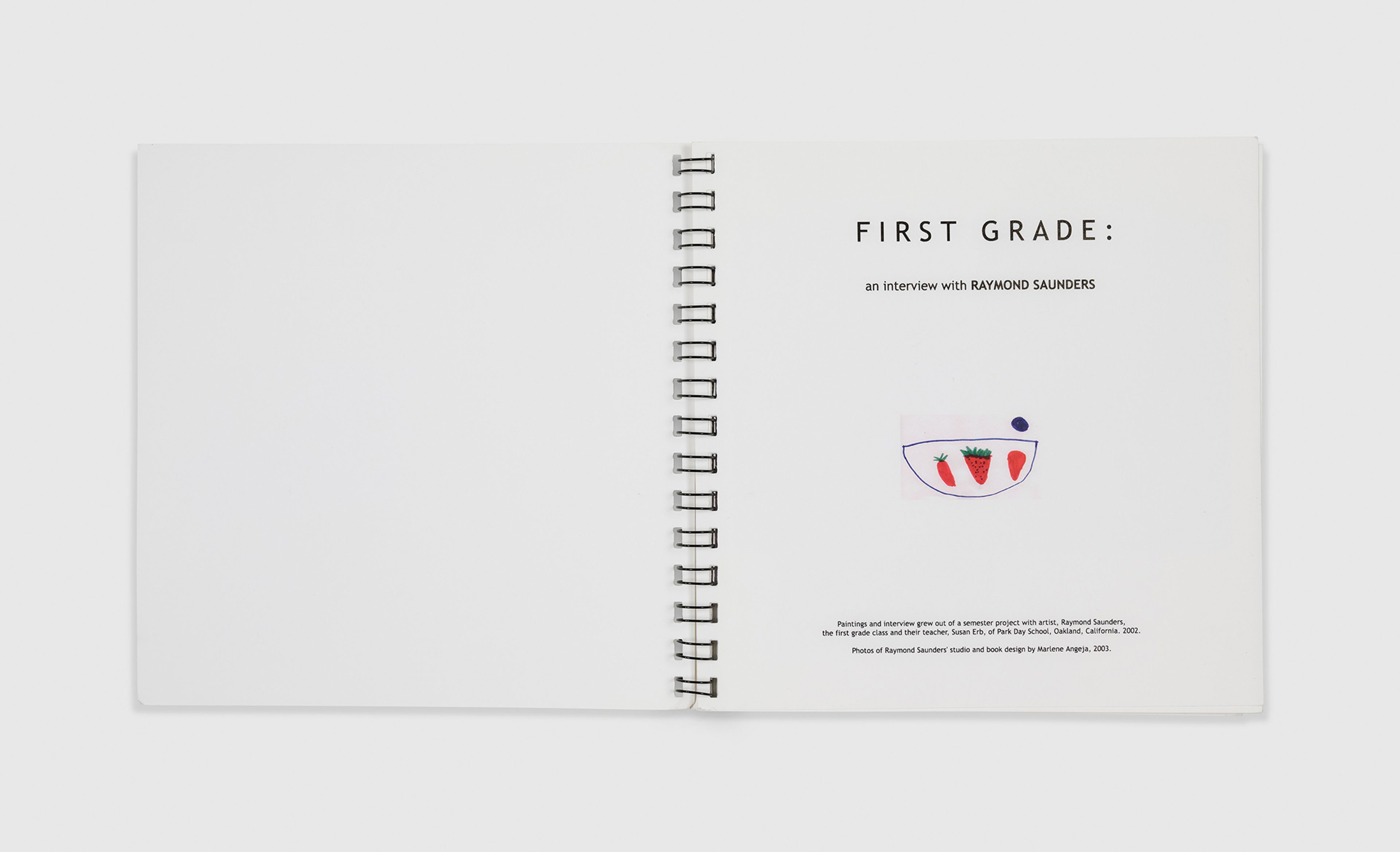
This publication is the culmination of a semester-long project with Saunders and a first grade class at Park Day School, Oakland, in 2002, and intersperses transcribed conversations between Saunders and the class with students’ artwork.
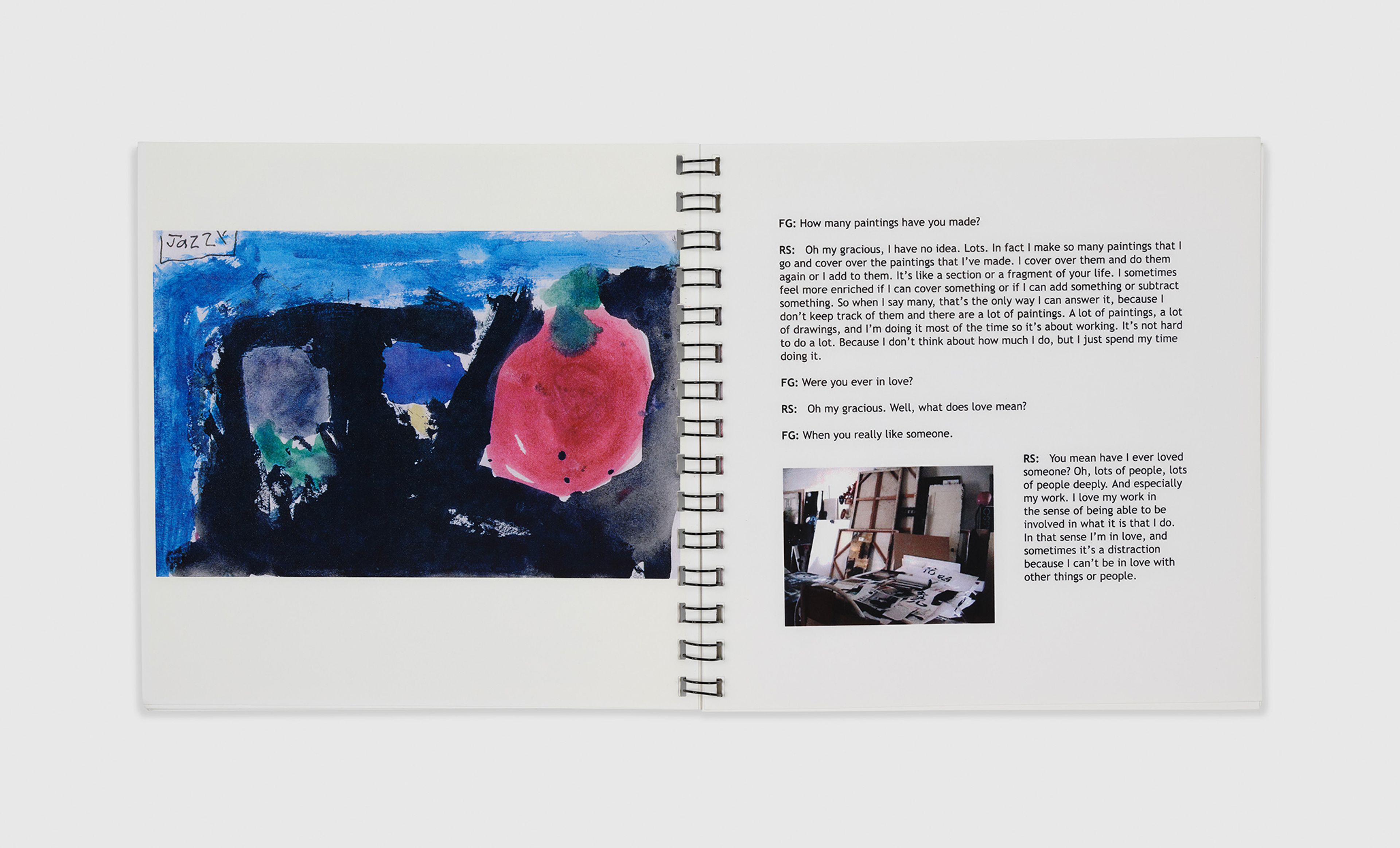
This publication is the culmination of a semester-long project with Saunders and a first grade class at Park Day School, Oakland, in 2002, and intersperses transcribed conversations between Saunders and the class with students’ artwork.
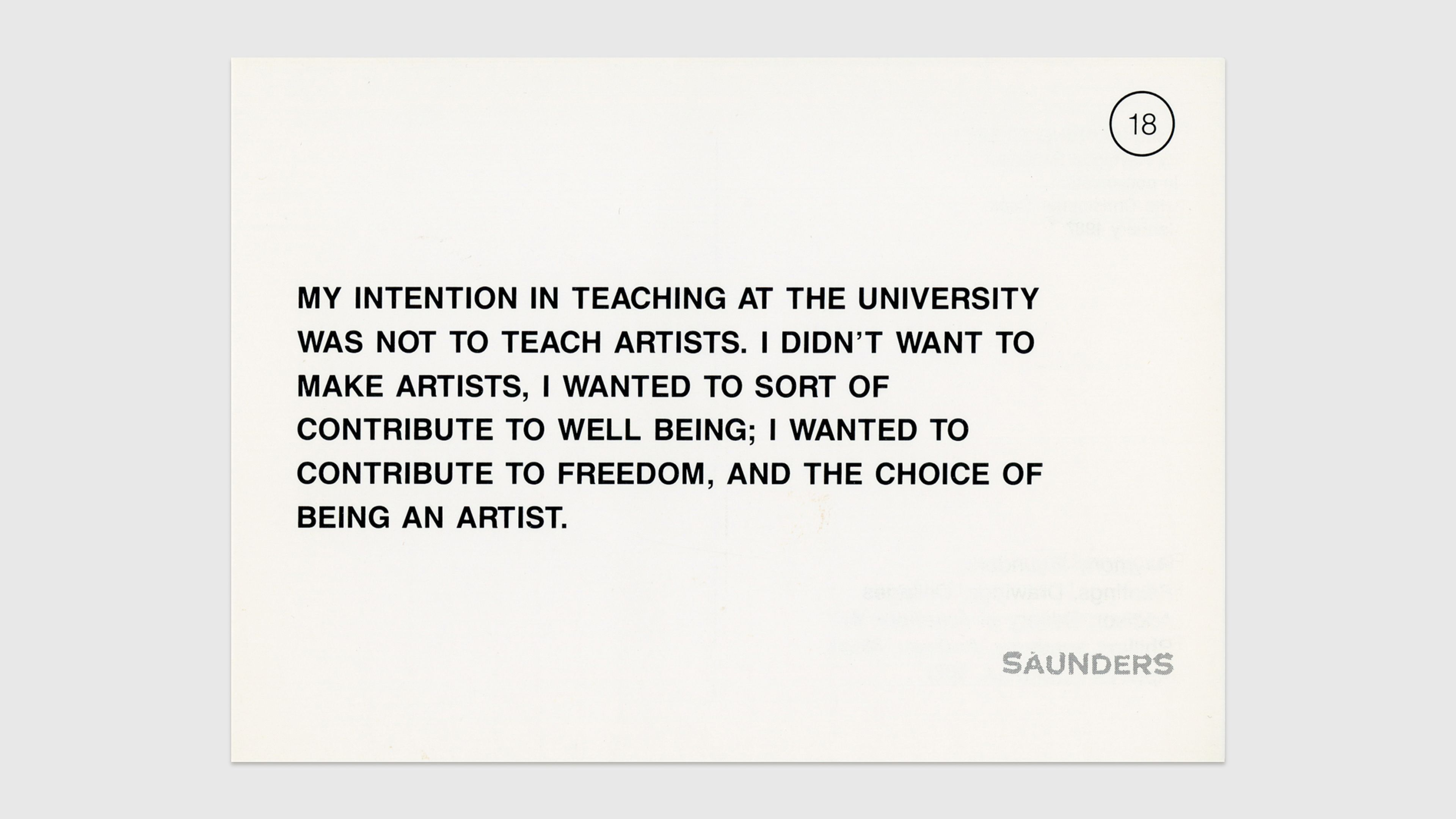
A postcard from the series Nothing to Say by Raymond Saunders in conversation with the writer Christopher Cook, 1987
Raymond Saunders, It Wasn't Easy Being a First Grader, 1979/1984 (detail)
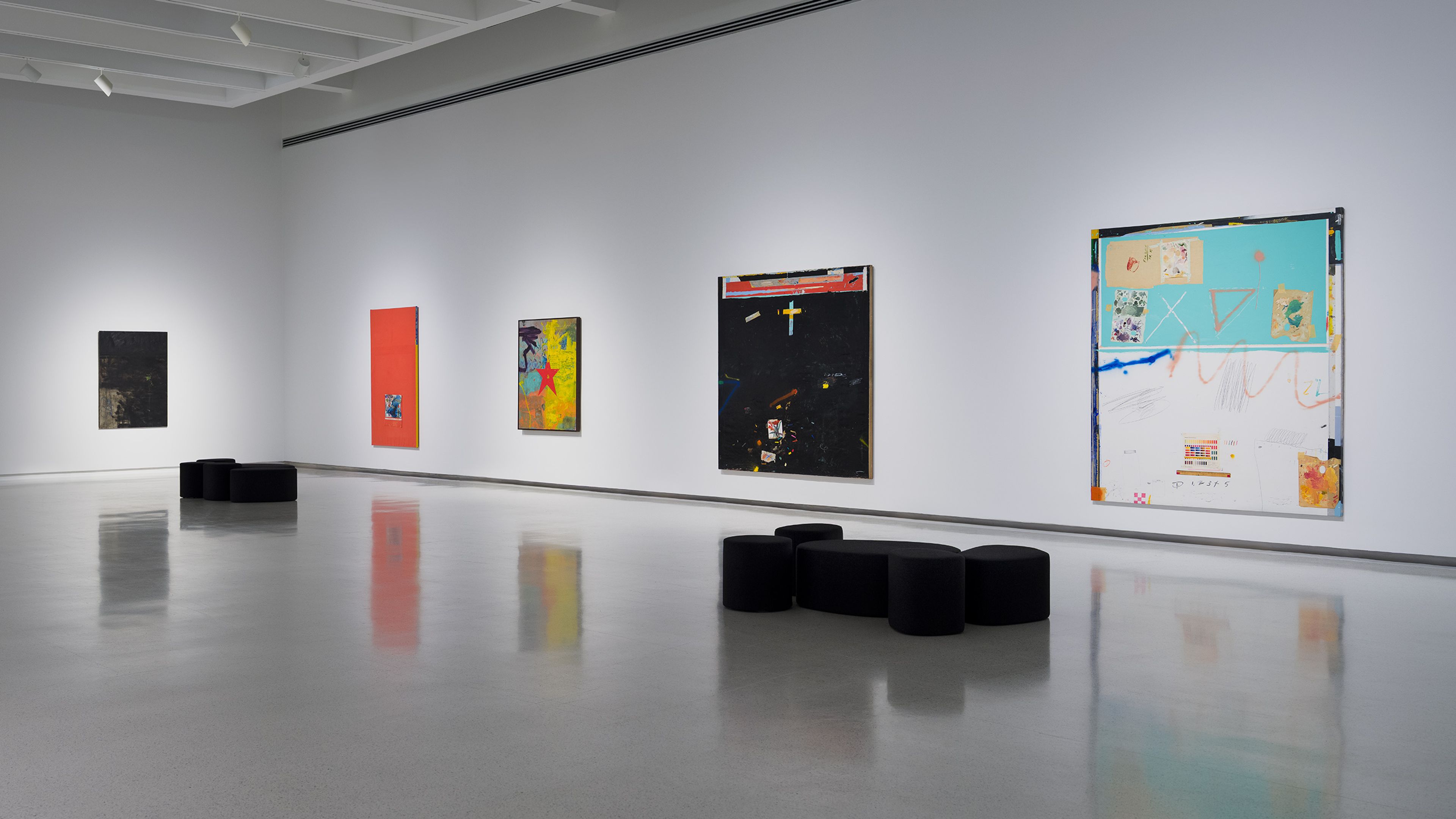
Installation view, Raymond Saunders: Flowers from a Black Garden, Carnegie Museum of Art, Pittsburgh, Pennsylvania, 2025. Photo by Zachary Riggleman
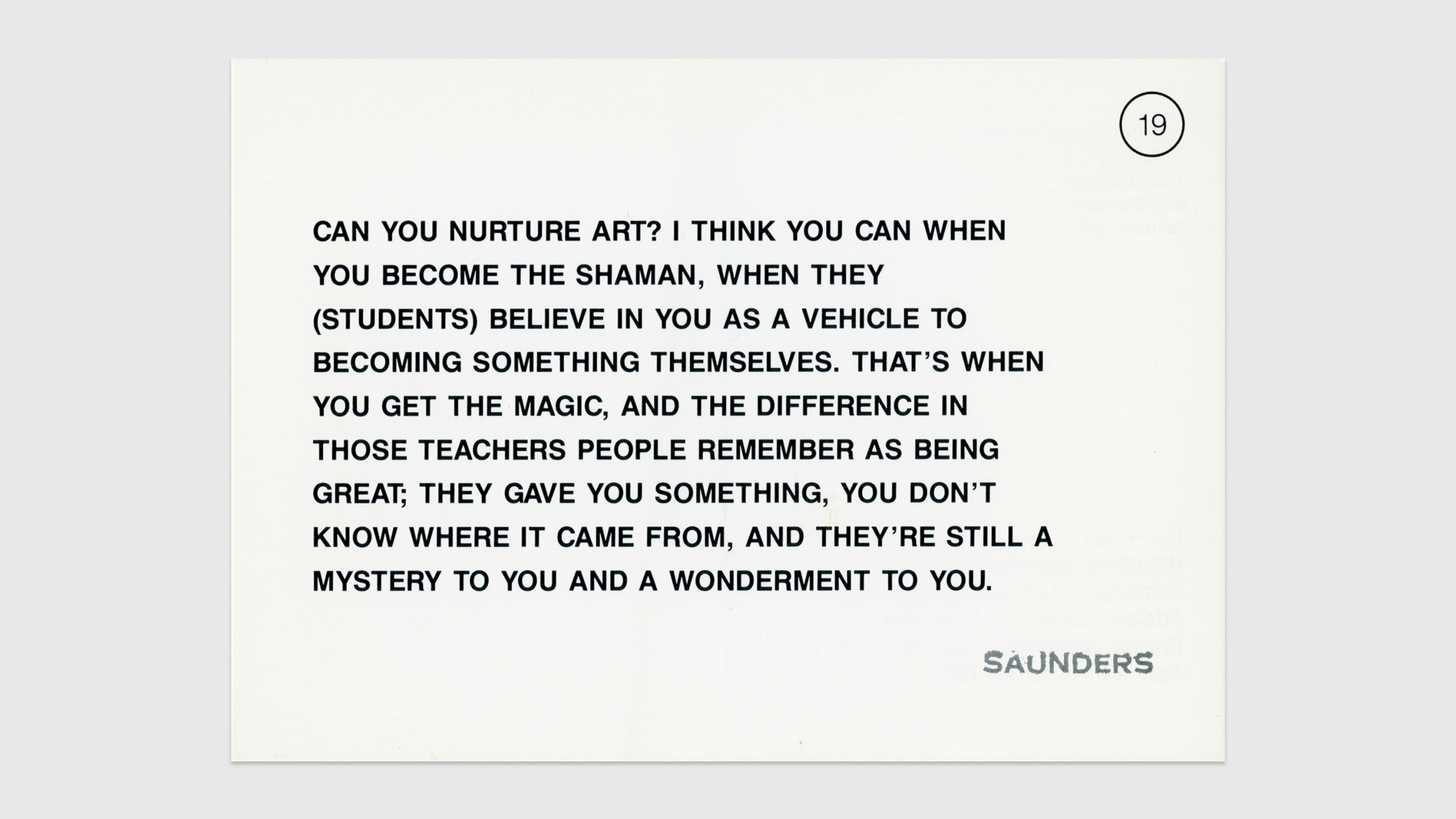
A postcard from the series Nothing to Say by Raymond Saunders in conversation with the writer Christopher Cook, 1987
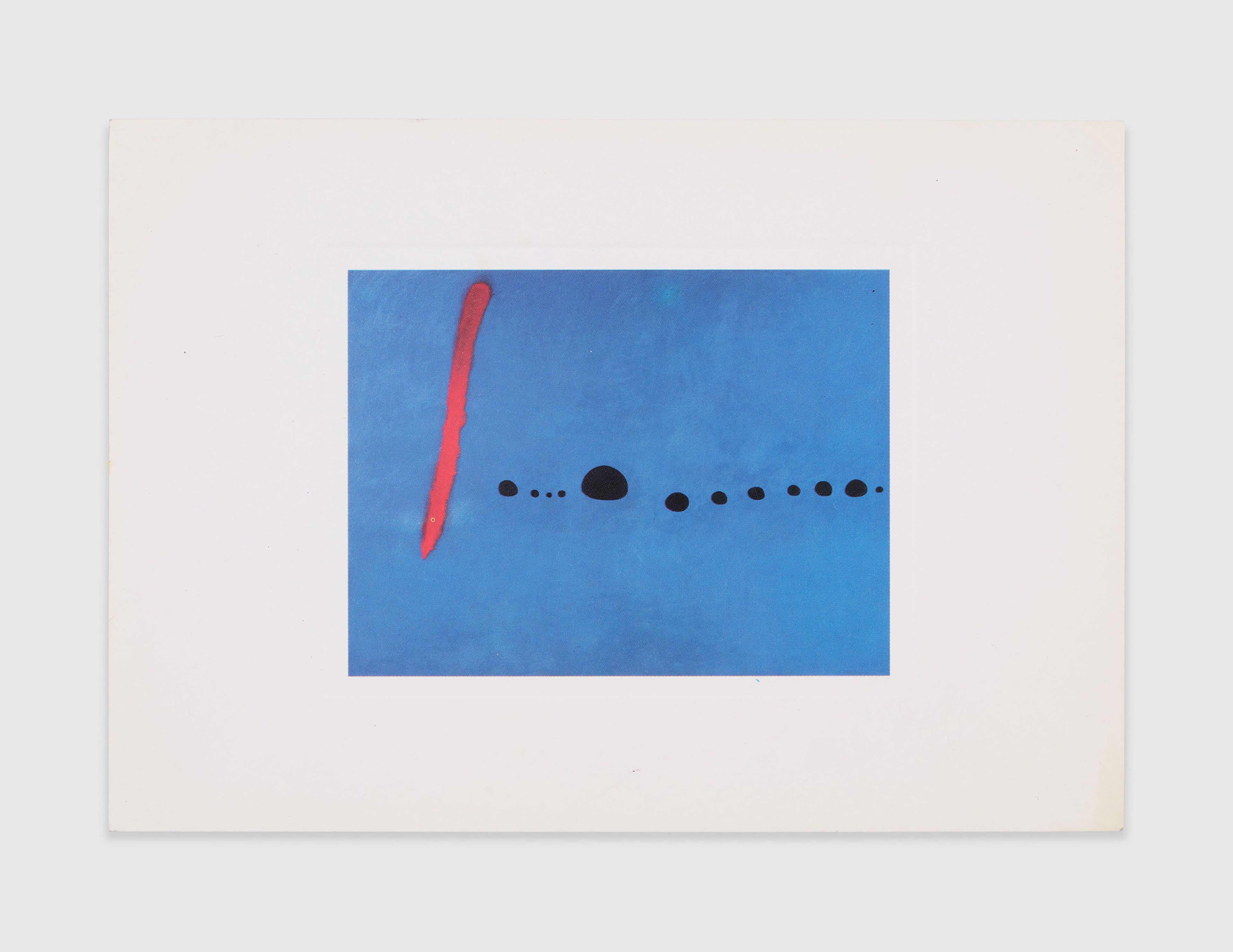
Joan Miró, Blue II, 1961, reproduced as part of a selection of postcards from Saunders’s collection, gathered by the artist throughout his domestic and international travels over the years
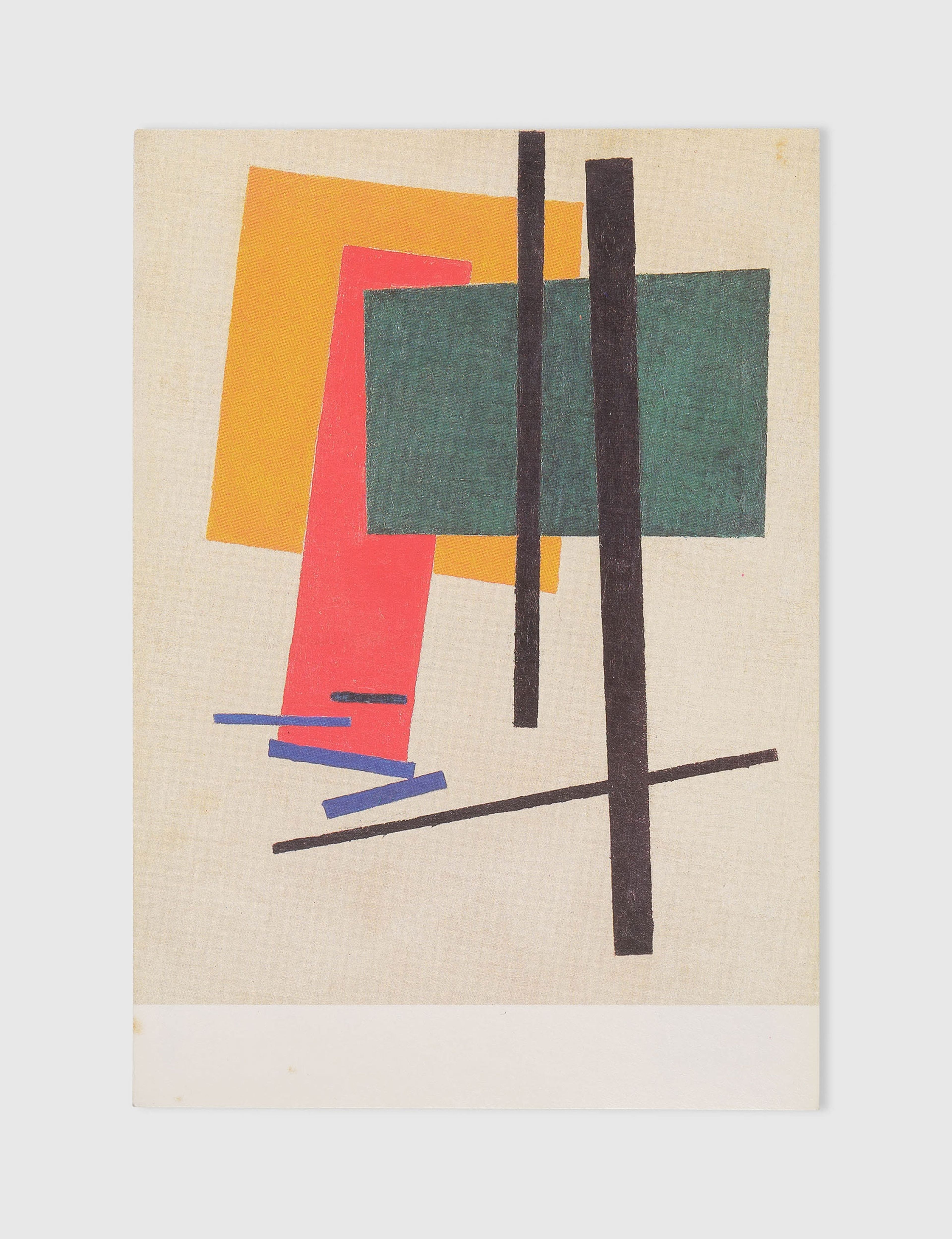
Kazimir Malevich, Suprematism, 1915–1916, reproduced as part of a selection of postcards from Saunders’s collection, gathered by the artist throughout his domestic and international travels over the years
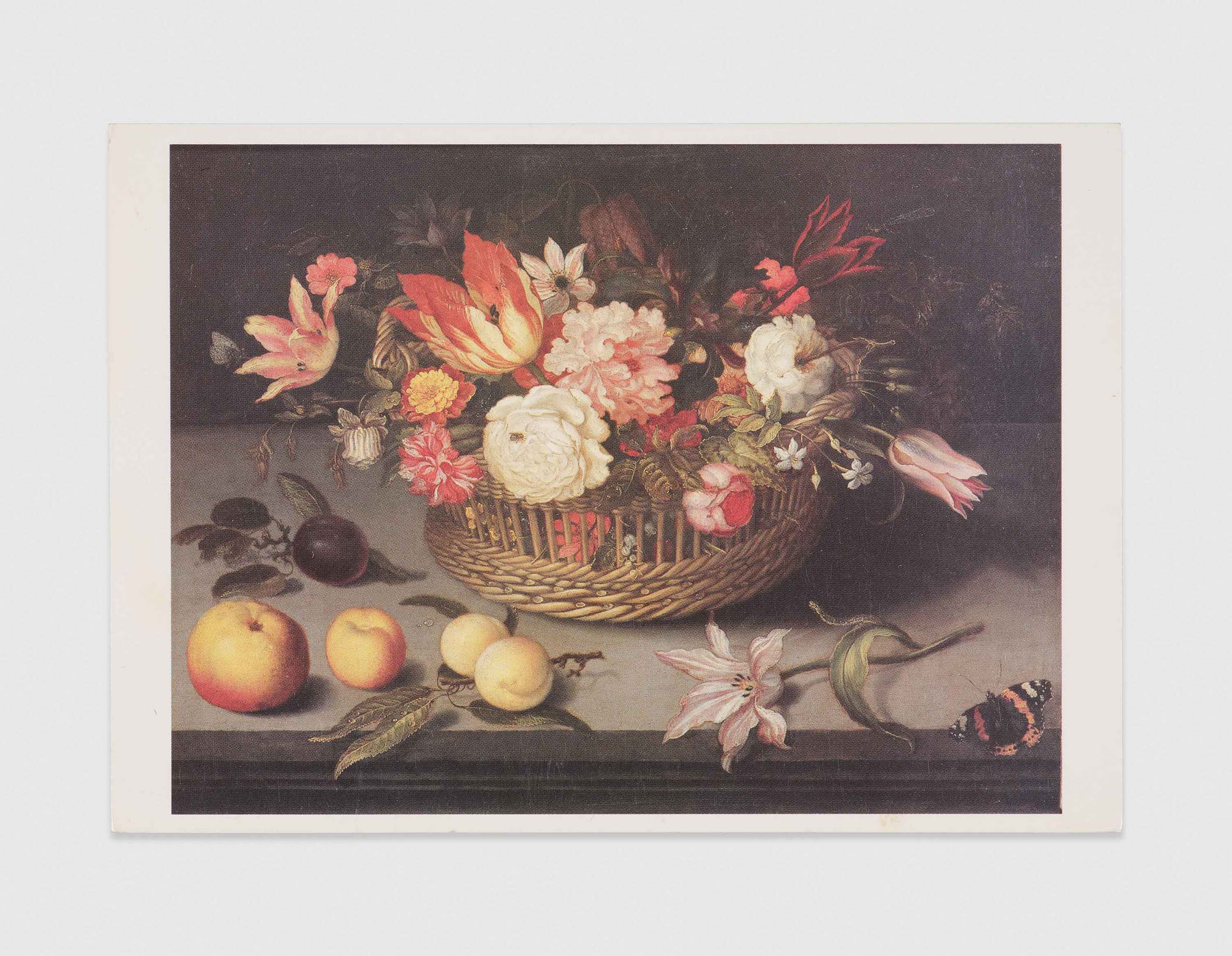
Balthasar van der Ast, Basket of Flowers, c. 1622, reproduced as part of a selection of postcards from Saunders’s collection, gathered by the artist throughout his domestic and international travels over the years
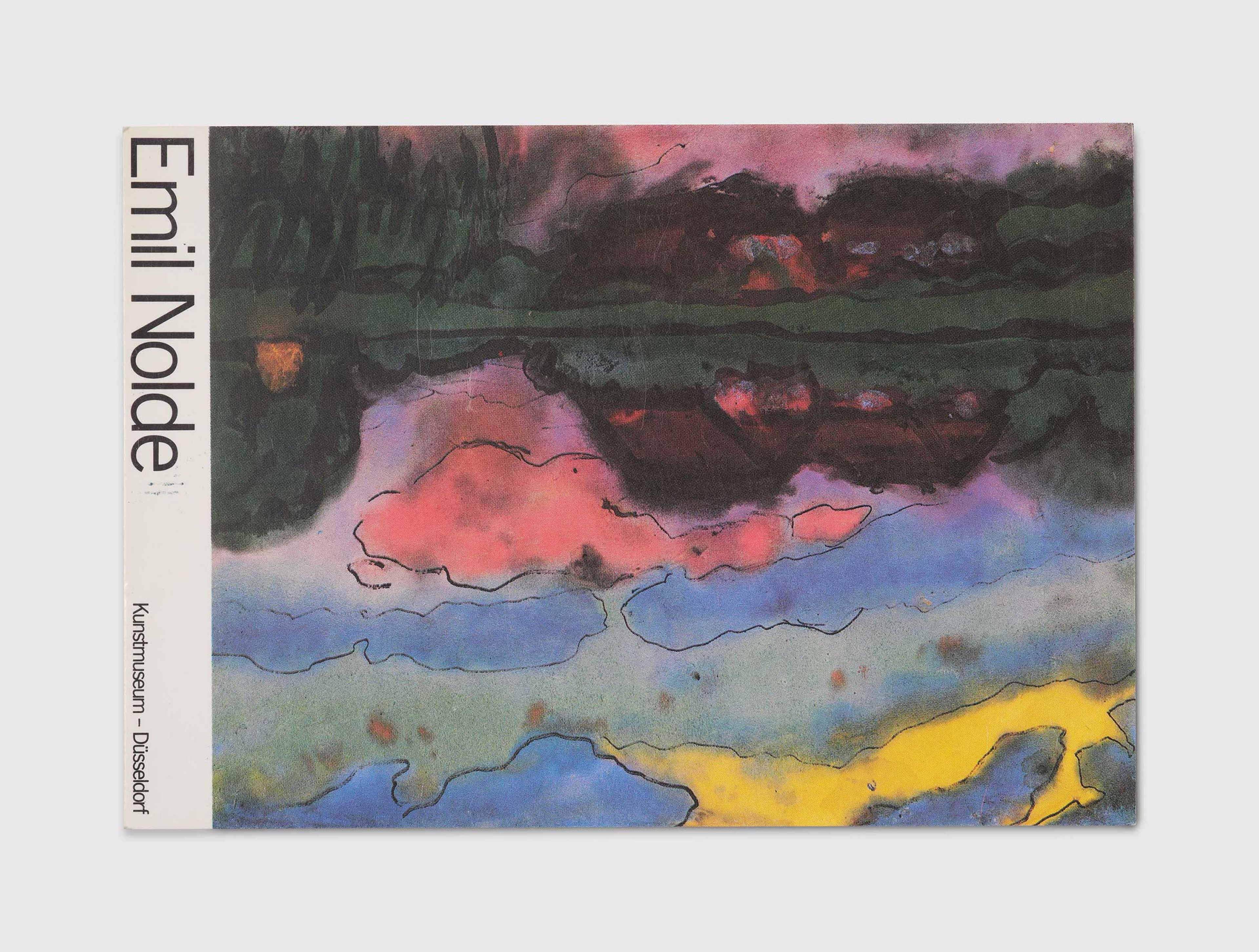
Emil Nolde, Twilight, early twentieth century; part of a selection of postcards from Saunders’s collection, gathered by the artist throughout his domestic and international travels over the years
A consummate student as well as a dedicated teacher, Saunders collected images of other artists’ work, as discussed in an interview with Judith Wilson in 1980:
“I need what they do.... It makes me who I am.... It’s like a piece of music, and someone says, ‘How does it make you feel?’ You cannot ever say how it makes you feel, but you will continue to listen. And in that same sense, I can’t tell you what it does, but I’d hate to be without it.... But because it’s someone else’s [art], I can leave it alone. I can be happy with it ... because it’s theirs.... But I’m not happy because, thank you, but I want to do something else.”
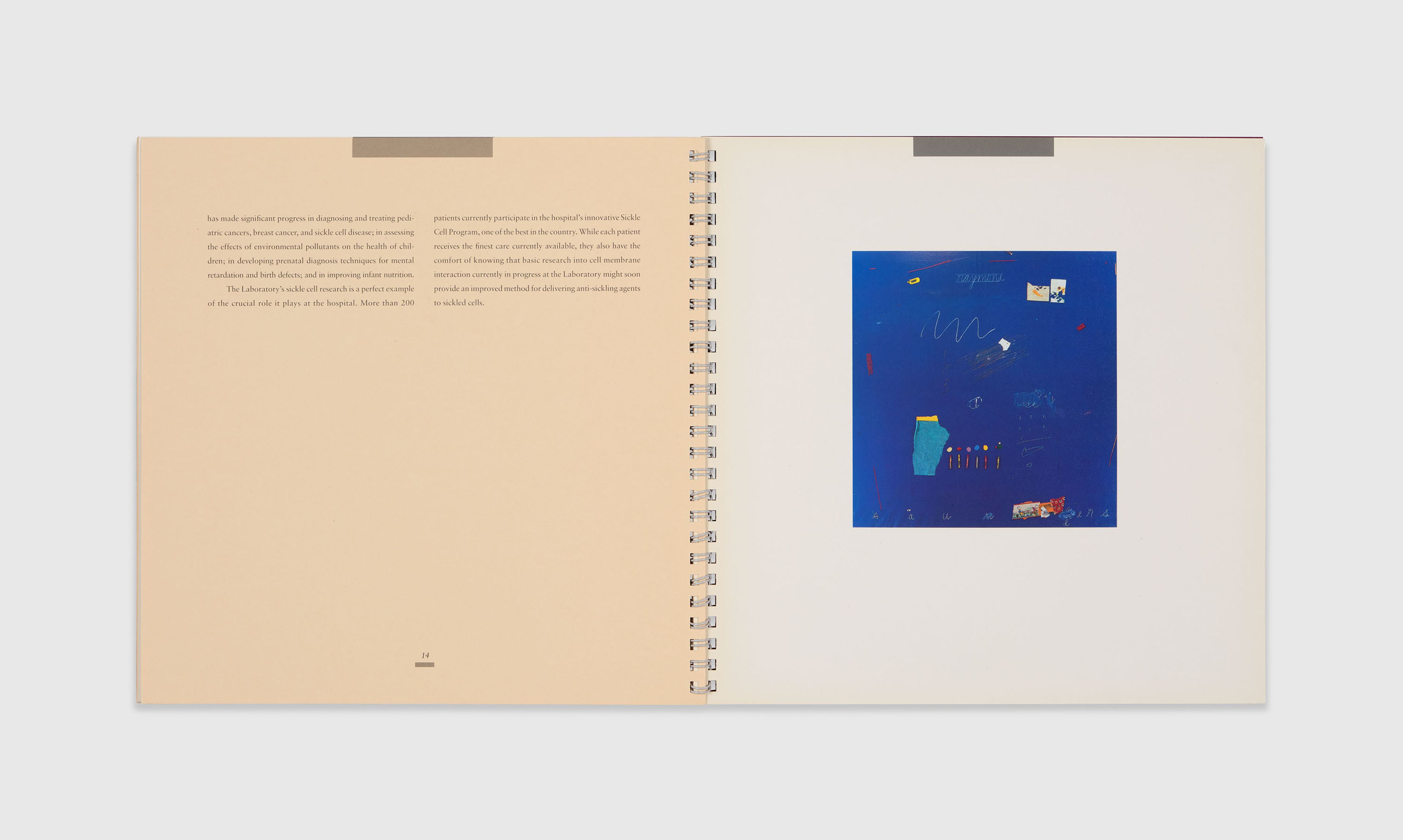
A spread from Here for the Children, a fundraising booklet published to benefit the Children’s Hospital Medical Center of Northern California in the mid-1980s
Raymond Saunders discussing his work and process in an interview, 1994

Raymond Saunders: Notes from LA