Exceptional Works: Marlene Dumas
Against the Wall
“A painting needs a wall to object to.”
—Marlene Dumas, in a letter written to David Zwirner in 2010 that is included in the catalogue for Marlene Dumas: Against the Wall, a solo exhibition at David Zwirner New York in 2010. All subsequent quotes by the artist are taken from this text.

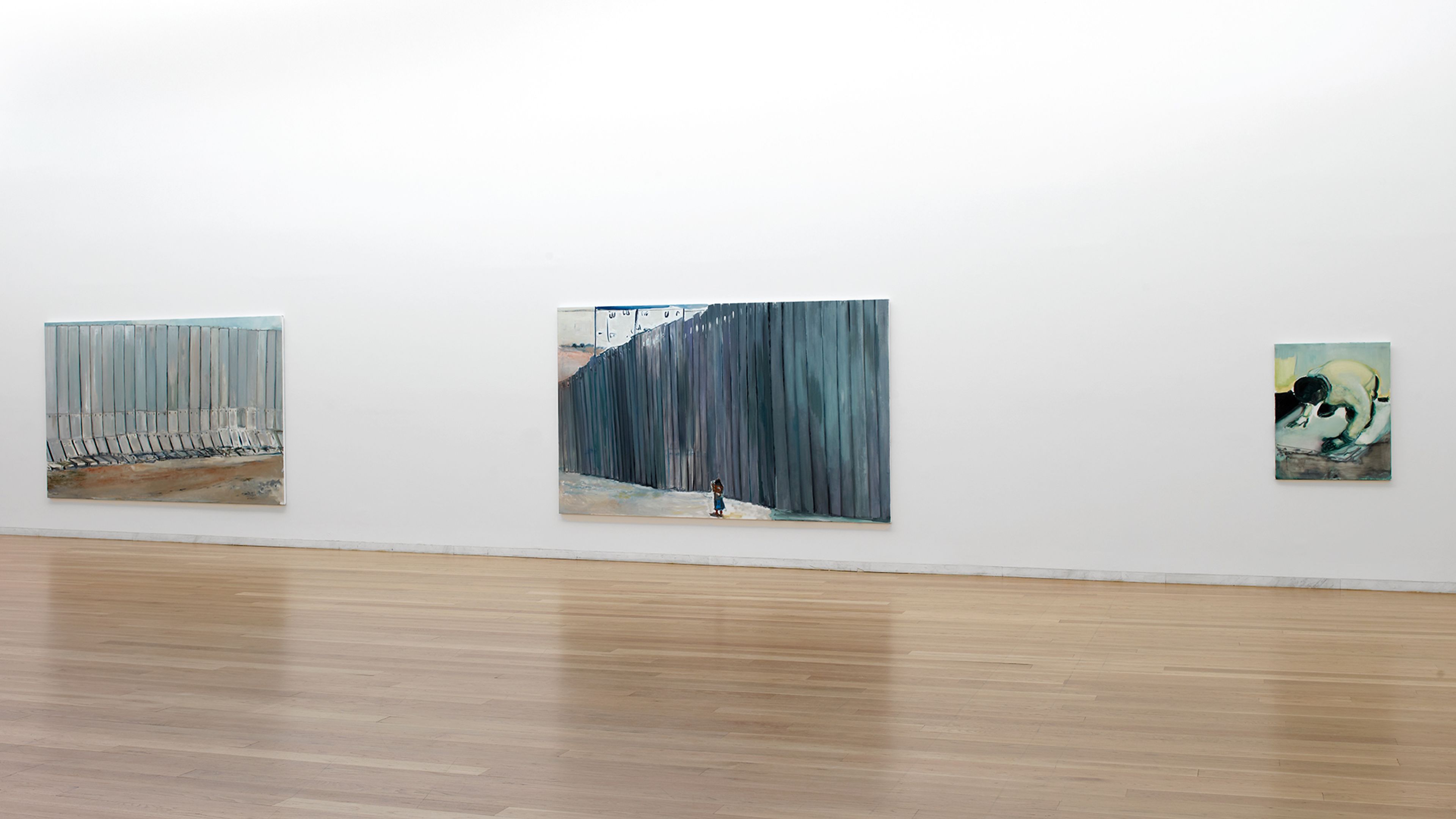
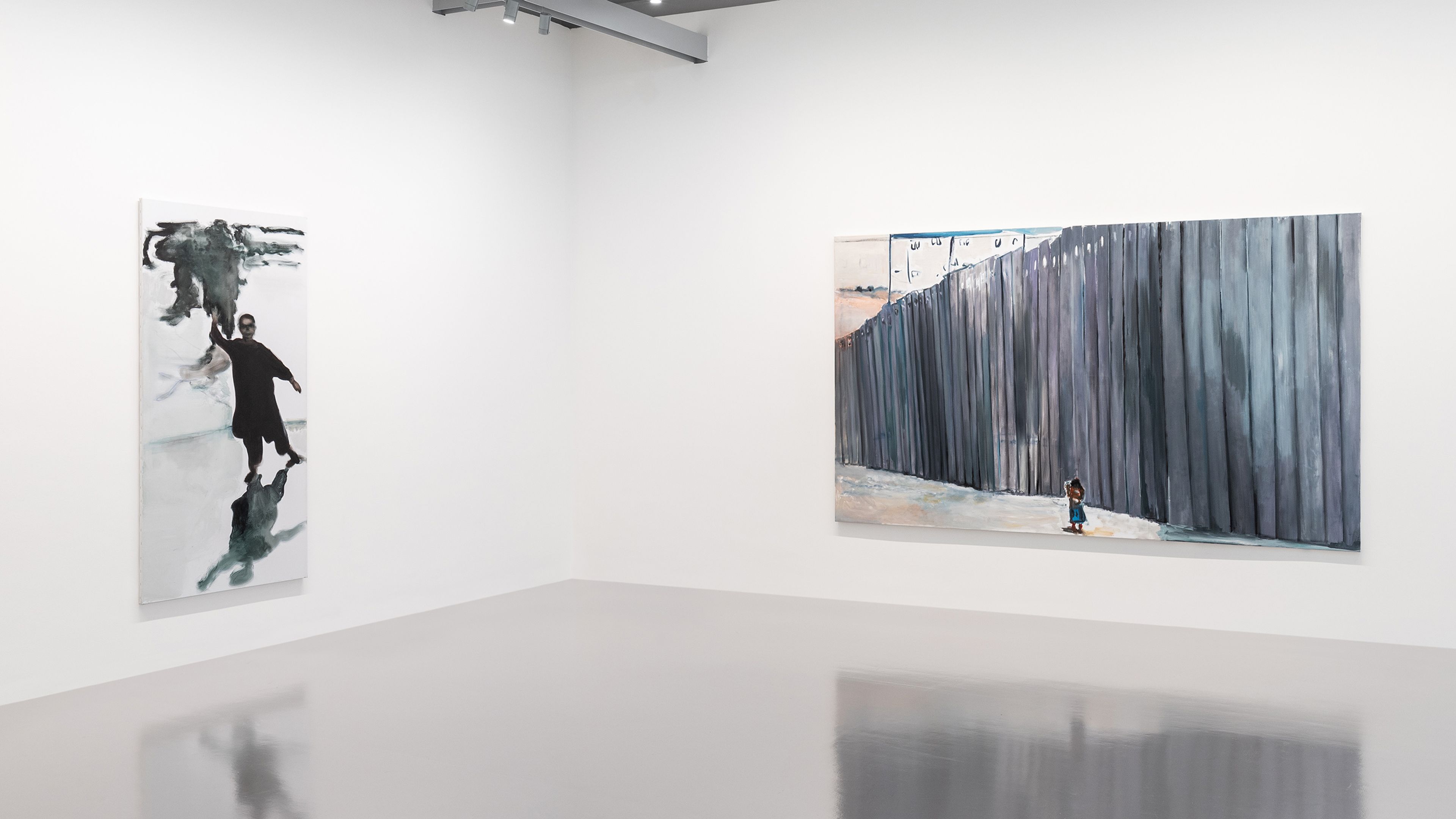
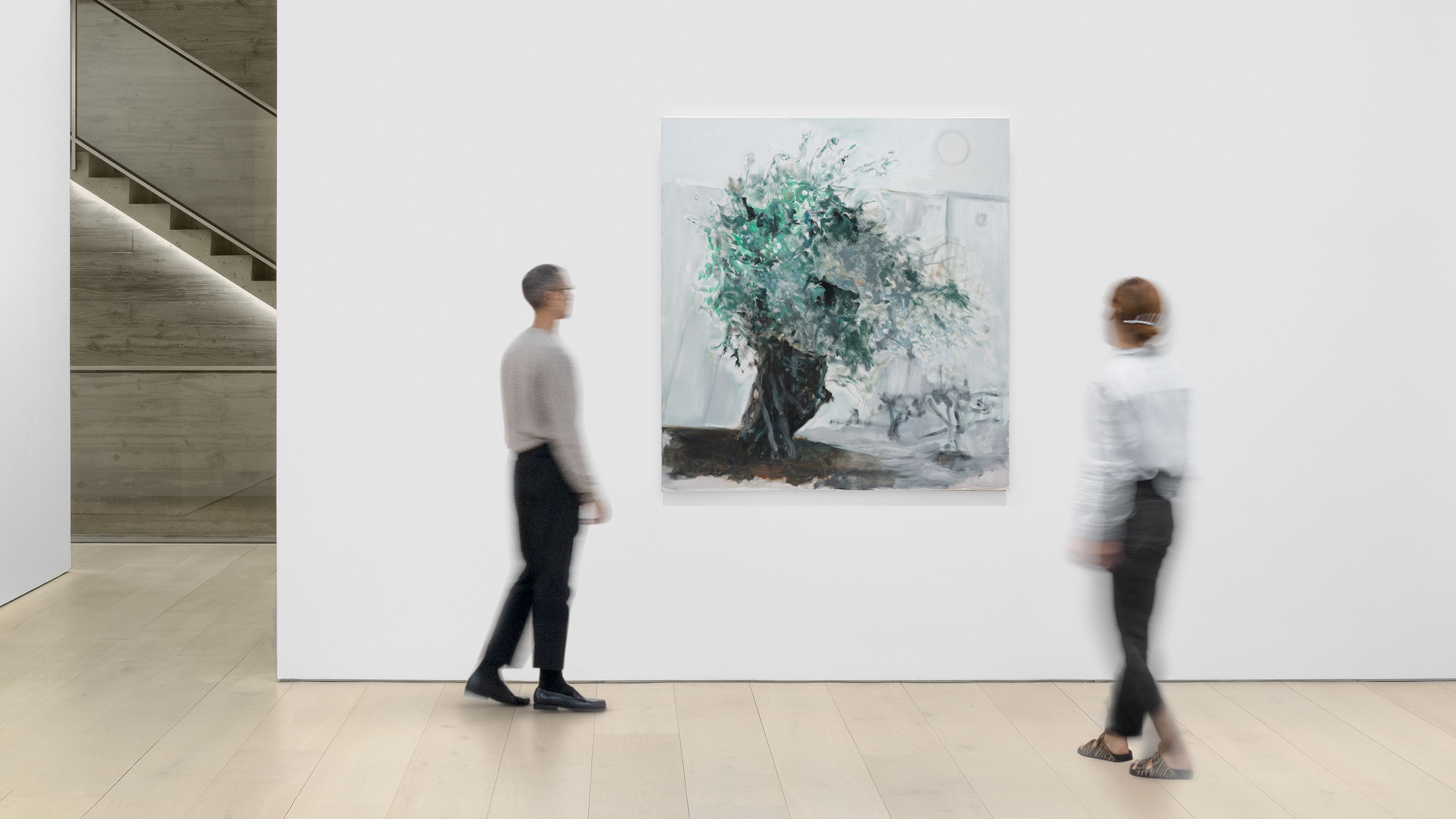
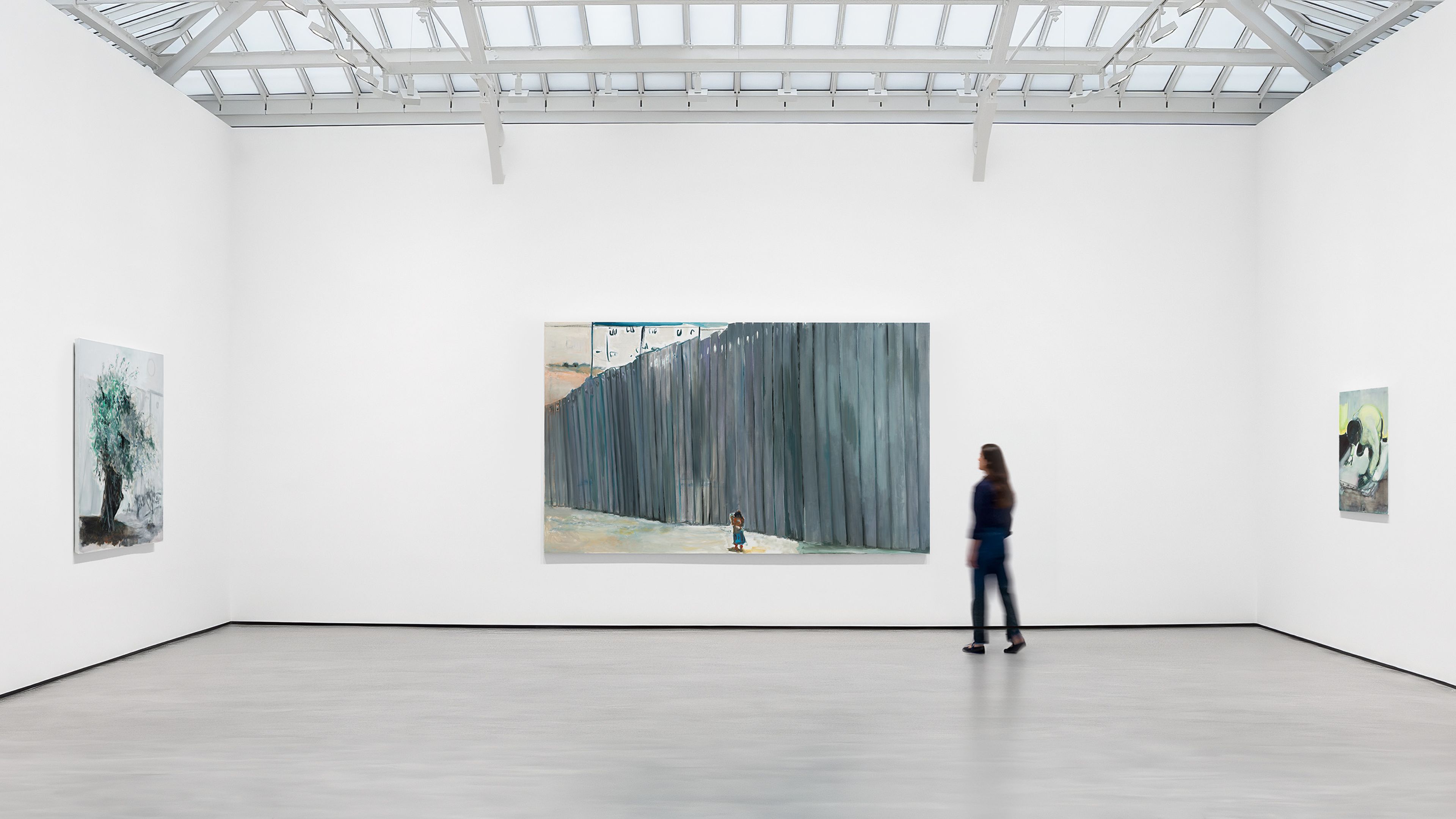
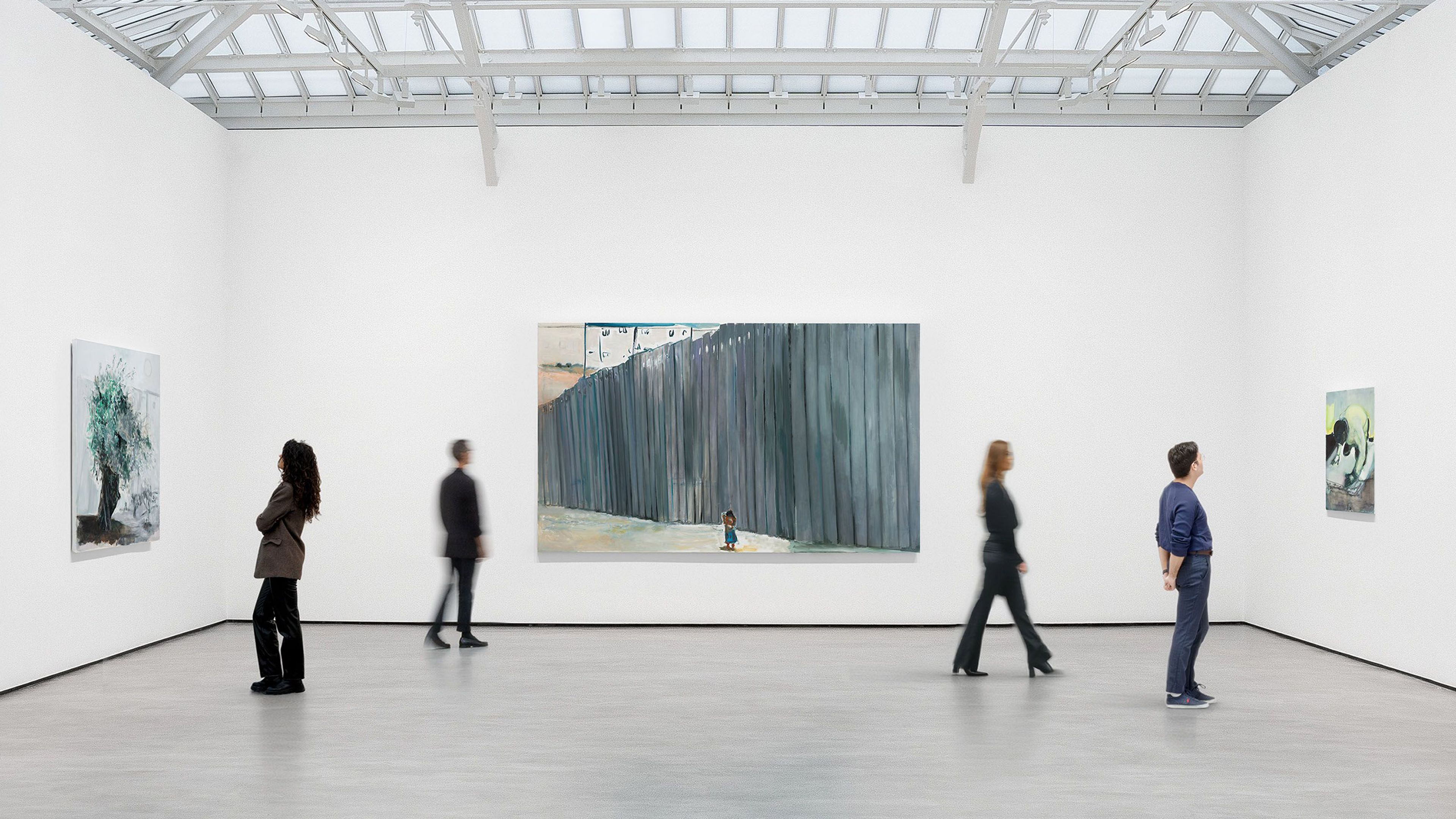
Installation view, Marlene Dumas’s Olive Tree, Figure in a Landscape, and Living on Your Knees (all 2010), from the artist's Against the Wall series
David Zwirner is pleased to participate in Art Basel Qatar’s inaugural edition with a presentation of three paintings by Marlene Dumas. Dumas (b. 1953) is widely regarded as one of the most influential painters working today. Her paintings and drawings, frequently devoted to depictions of the human form, typically reference a vast archive of source imagery collected by the artist, including art historical materials, mass media images, and personal snapshots of friends and family. Gestural, fluid, and frequently spectral, Dumas’s works reframe and recontextualize her subjects, exploring the ambiguous and shifting boundaries between public and private selves.
Figure in a Landscape, Living on Your Knees, and Olive Tree (all 2010) belong to Dumas’s Against the Wall series (2009–2010). Dumas first presented Against the Wall in a 2010 solo exhibition at David Zwirner New York, a version of which traveled to the Serralves Museum in Porto, Portugal.
Works from the Against the Wall series are held in the permanent collections of The Museum of Modern Art, New York; The Metropolitan Museum of Art, New York; Museum of Contemporary Art Chicago; The Broad, Los Angeles, and the Dallas Museum of Art, among other important collections.

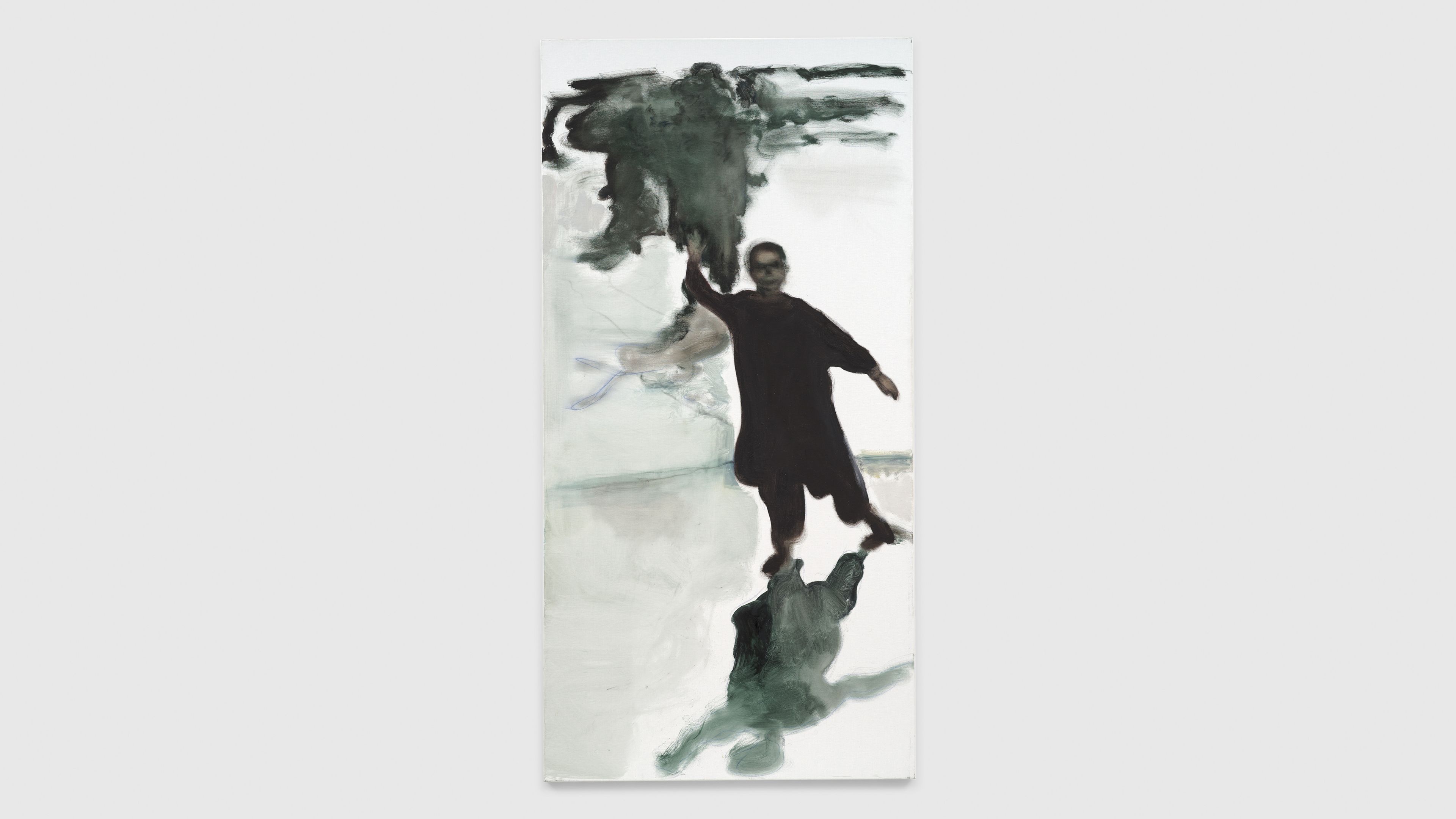
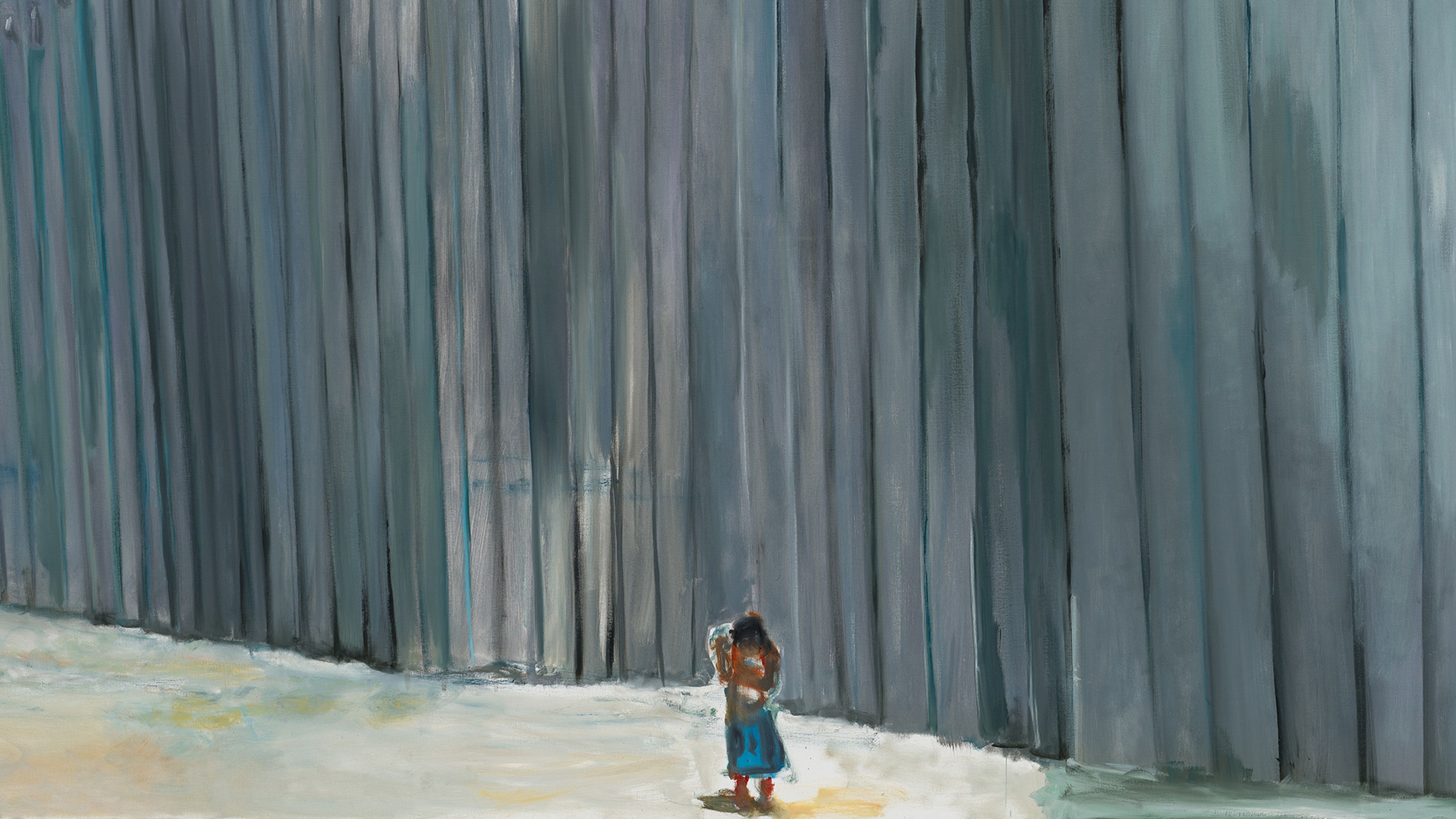
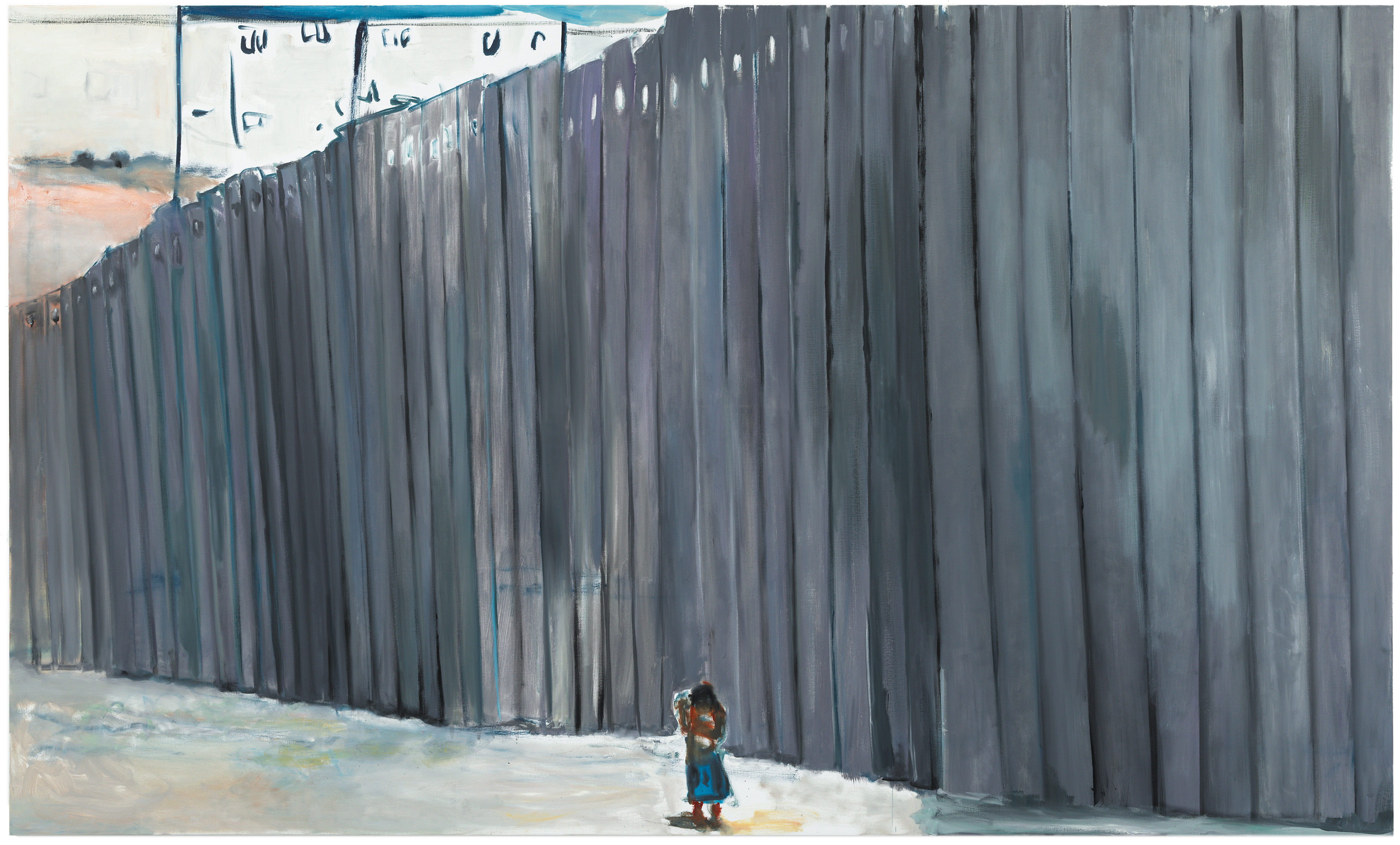
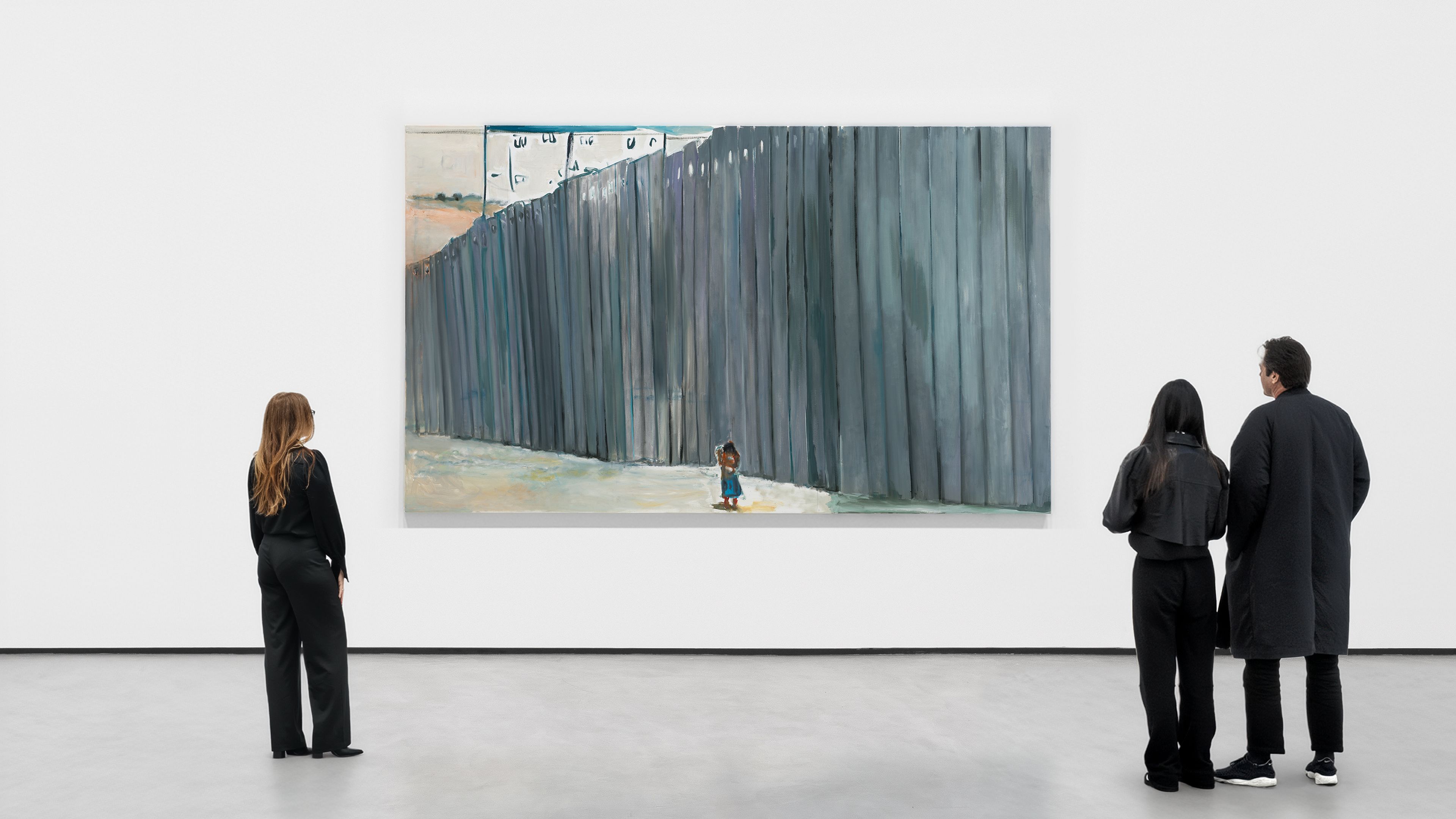
Marlene Dumas, Figure in a Landscape, 2010
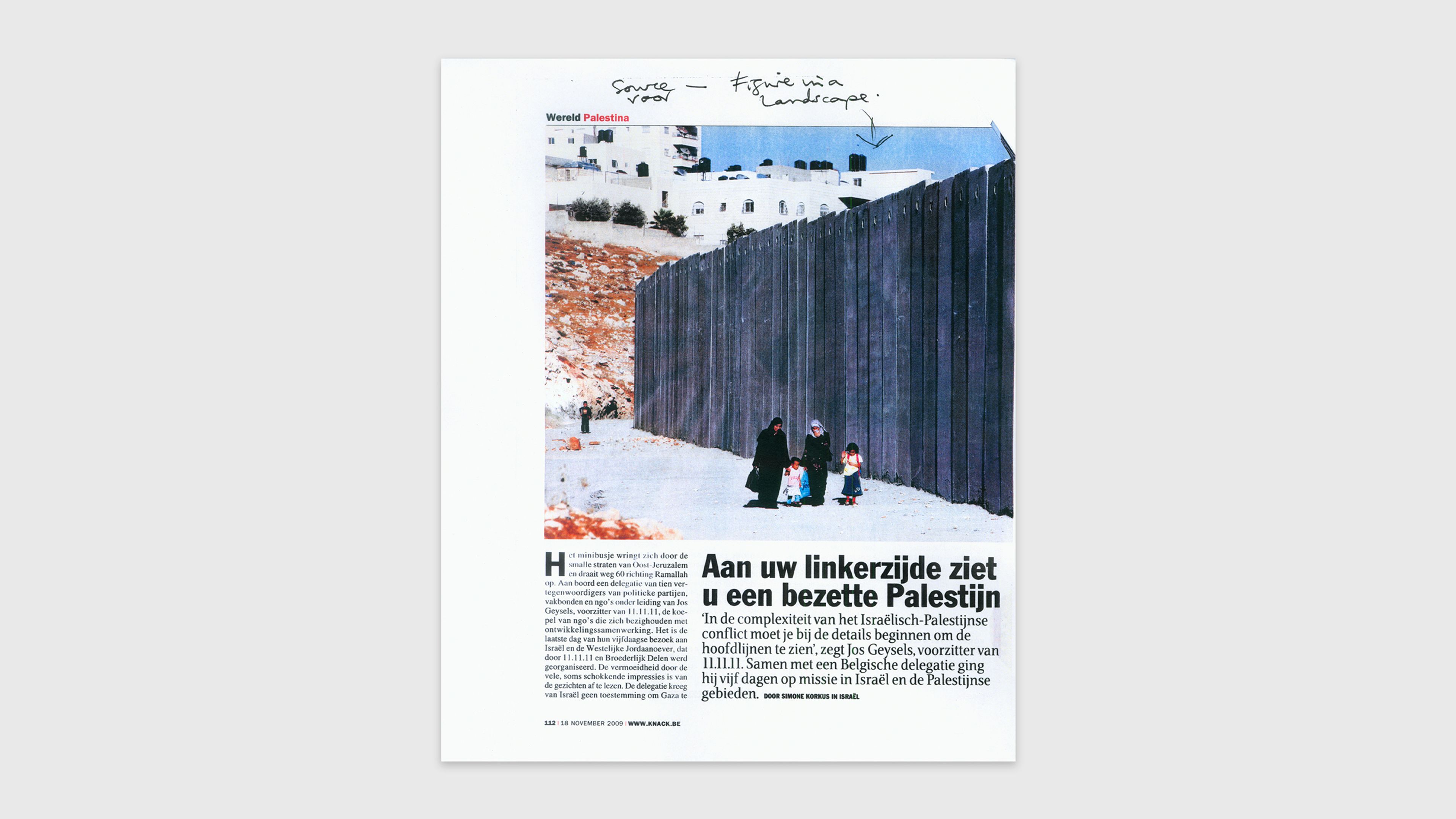
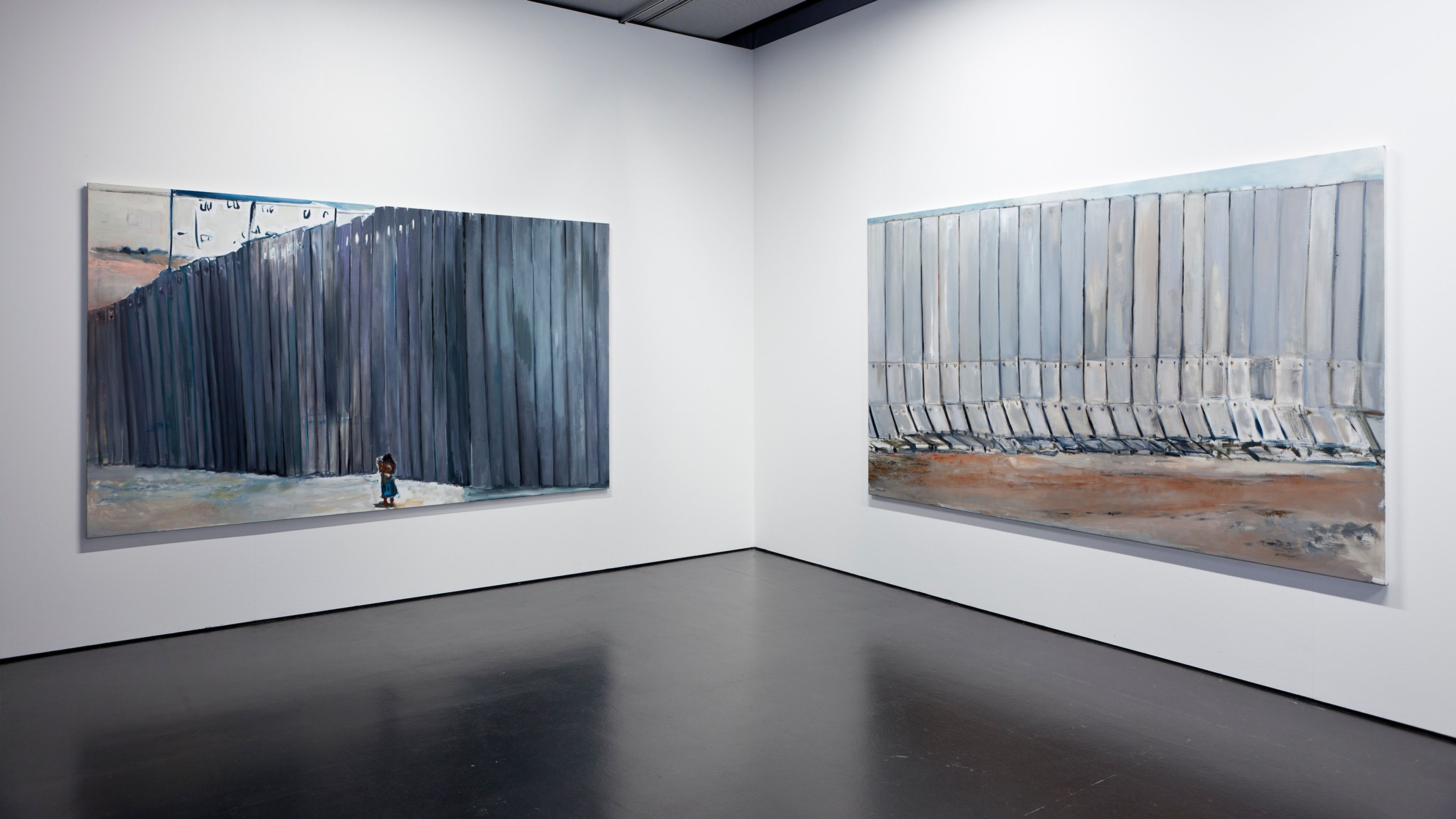
Figure in a Landscape (2010) is based on an image published in a Dutch newspaper showing two women and two young girls walking past a security wall erected to separate Palestinian and Israeli territories. In her composition, Dumas has chosen to depict a single child, who appears diminutive against the barrier.
Dumas’s representations acknowledge universal themes of instability and isolation. The titles of these works not only describe the motifs depicted but also refer to the artist’s struggle with the boundaries of her chosen medium.

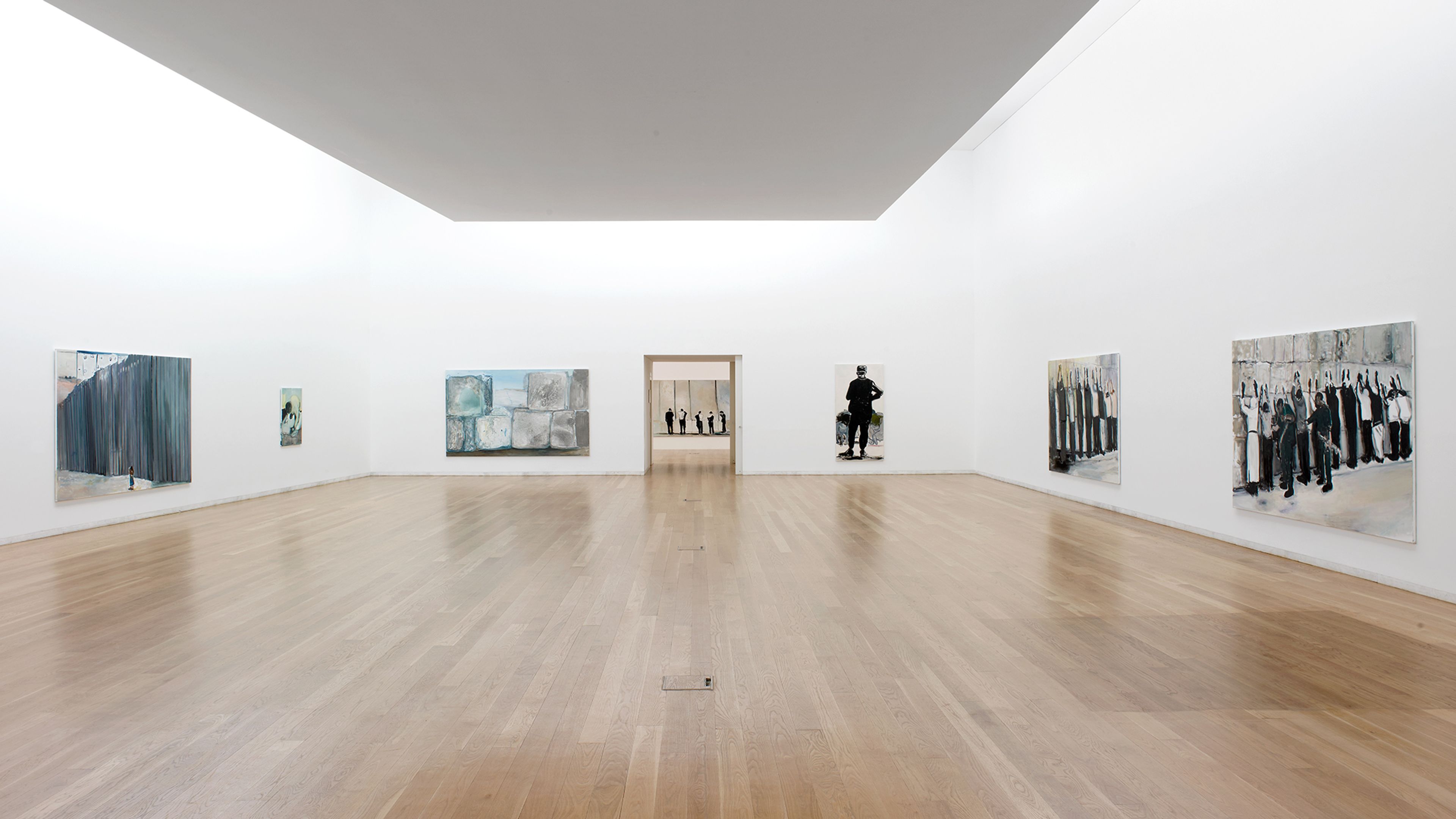
Installation view, Marlene Dumas’s Figure in a Landscape (2010; center) alongside other works from the Against the Wall series, on view in Marlene Dumas: Contra o Muro, Serralves, Porto, Portugal, 2010

Installation view, Marlene Dumas’s Figure in a Landscape (2010; left) among other works from the Against the Wall series, on view in Marlene Dumas: Contra o Muro, Serralves, Porto, Portugal, 2010
“In a sense they are my first landscape paintings, or should I say ‘territory paintings.’ That is why they are so big.”
—Marlene Dumas, 2010

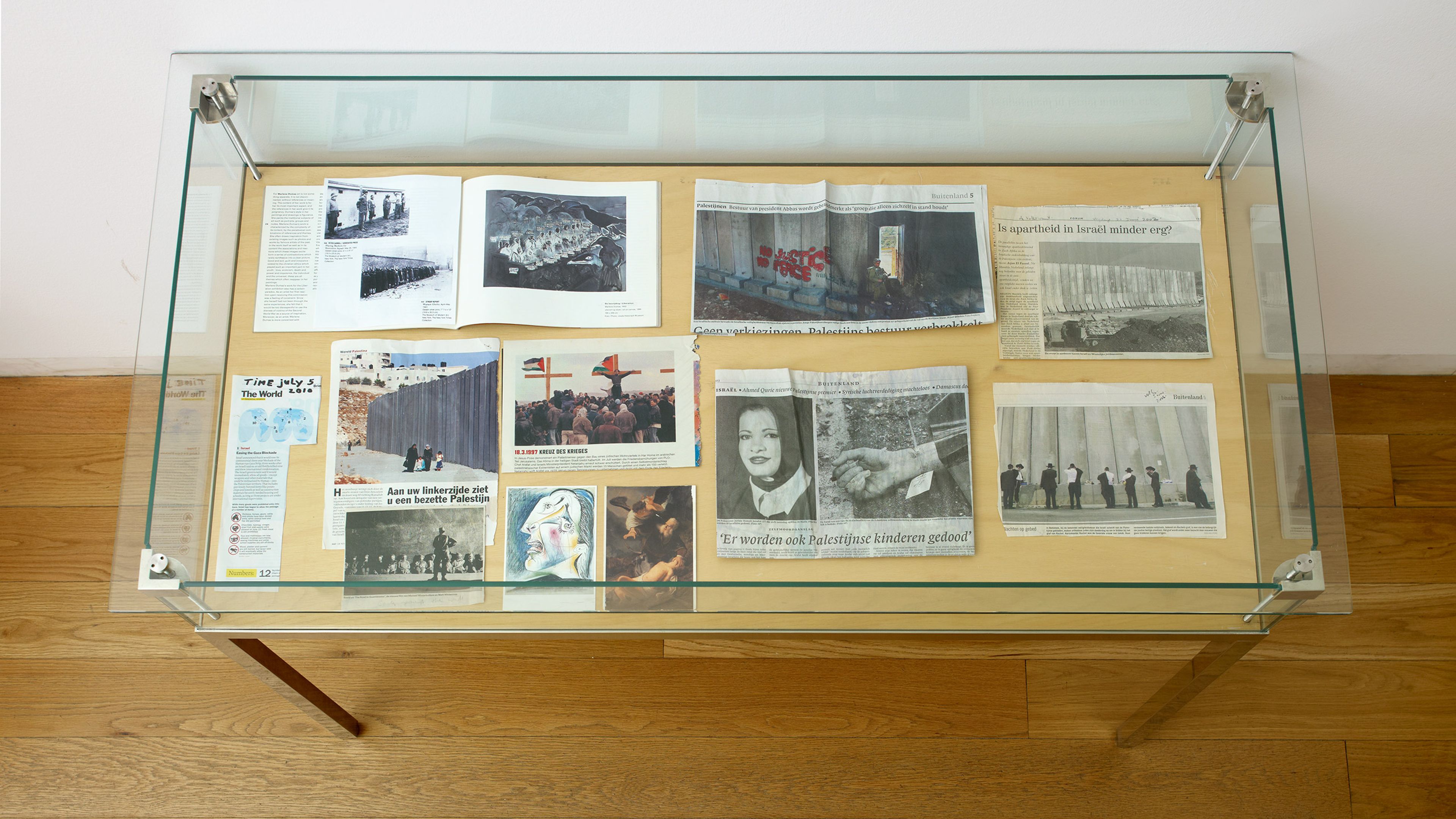
Installation view of a vitrine of source imagery for the Against the Wall series in Marlene Dumas: Contra o Muro, Serravles, Porto, Portugal, 2010

Source image and artist's notes relating to Figure in a Landscape, 2010

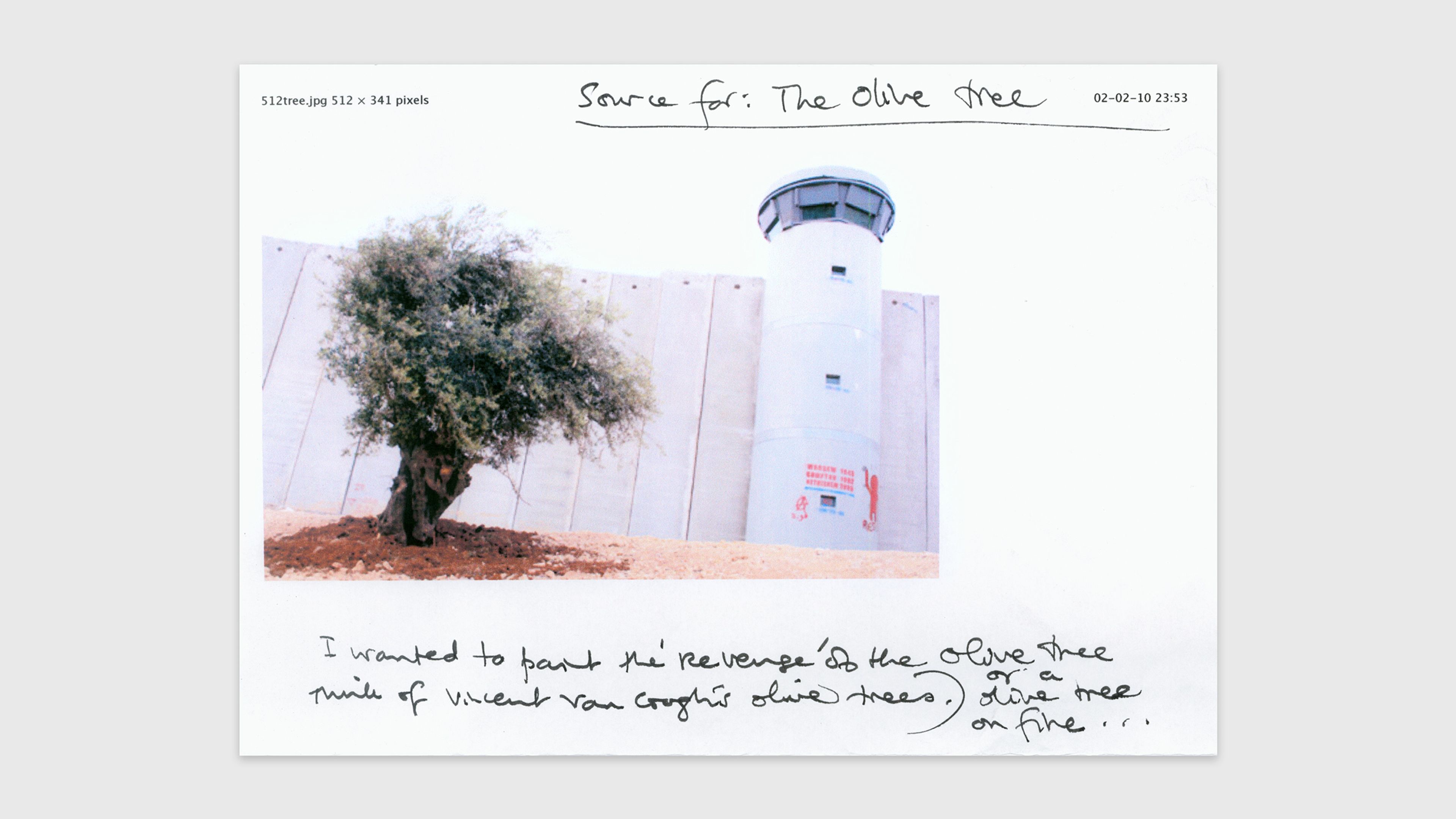
Source image and artist's notes relating to Olive Tree, 2010
The works in this series derive primarily from media imagery and newspaper clippings documenting Israel and Palestine that Dumas sourced around this time.

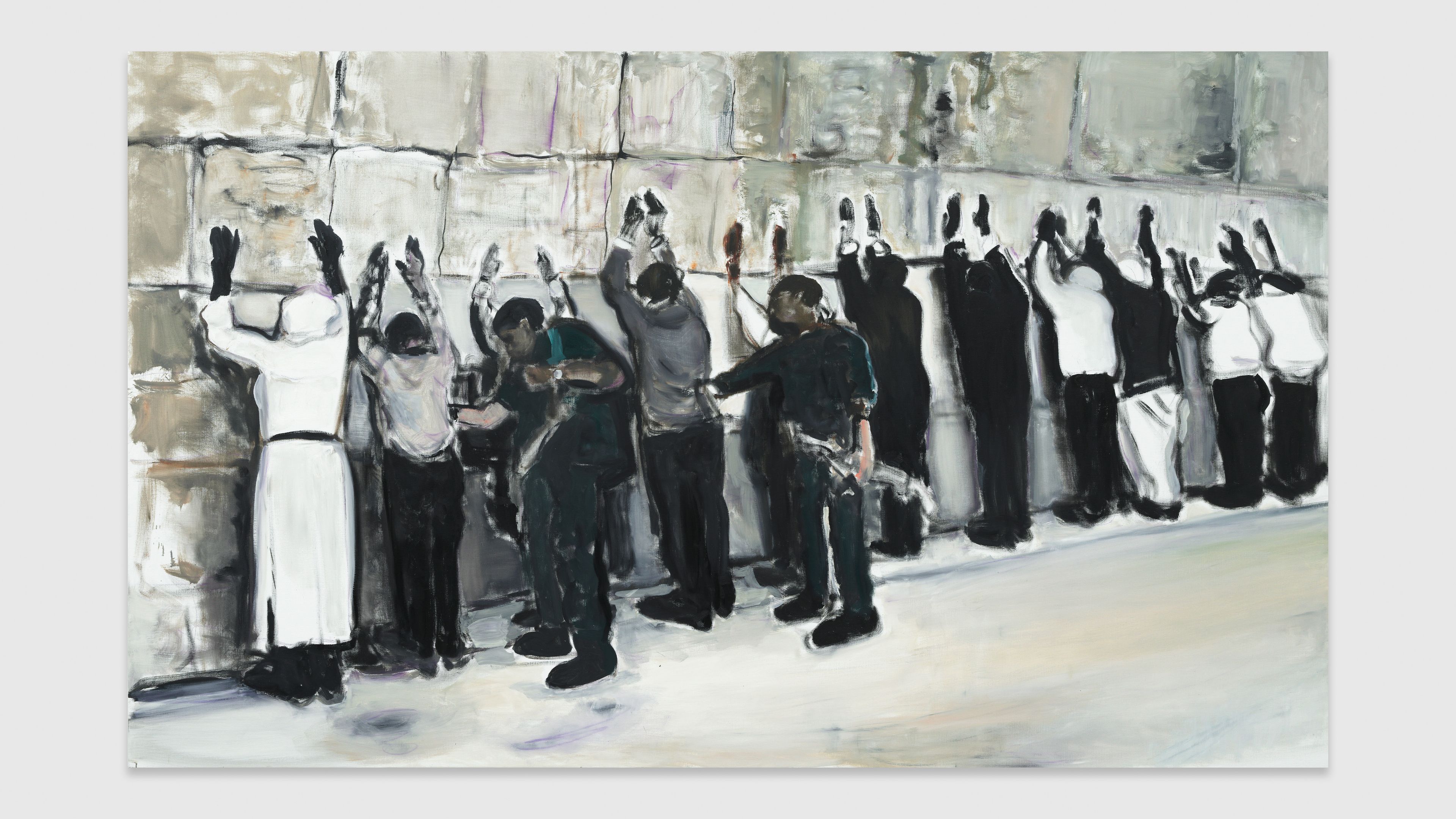
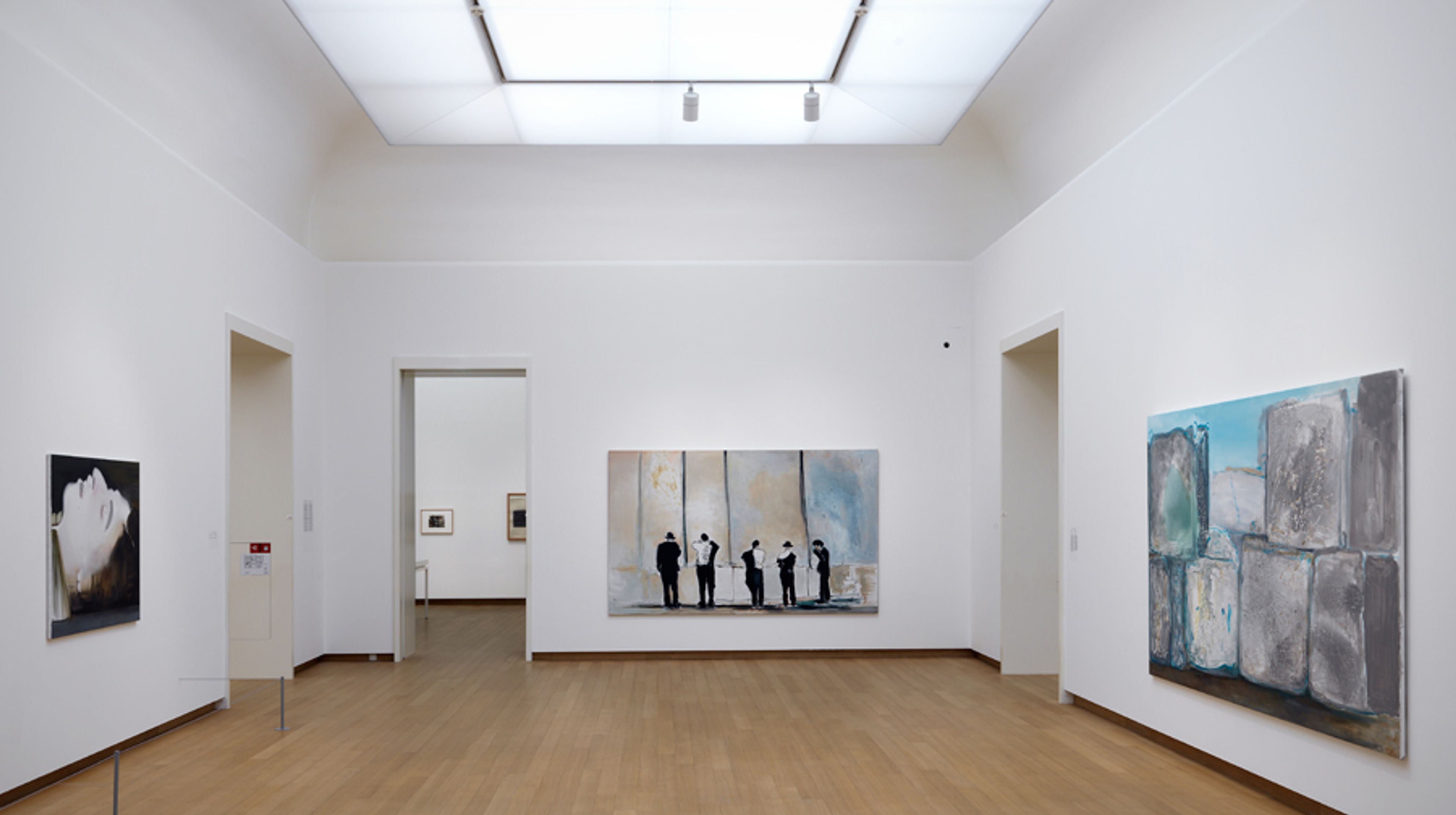
Marlene Dumas, Wall Wailing, 2009. The Museum of Modern Art, New York

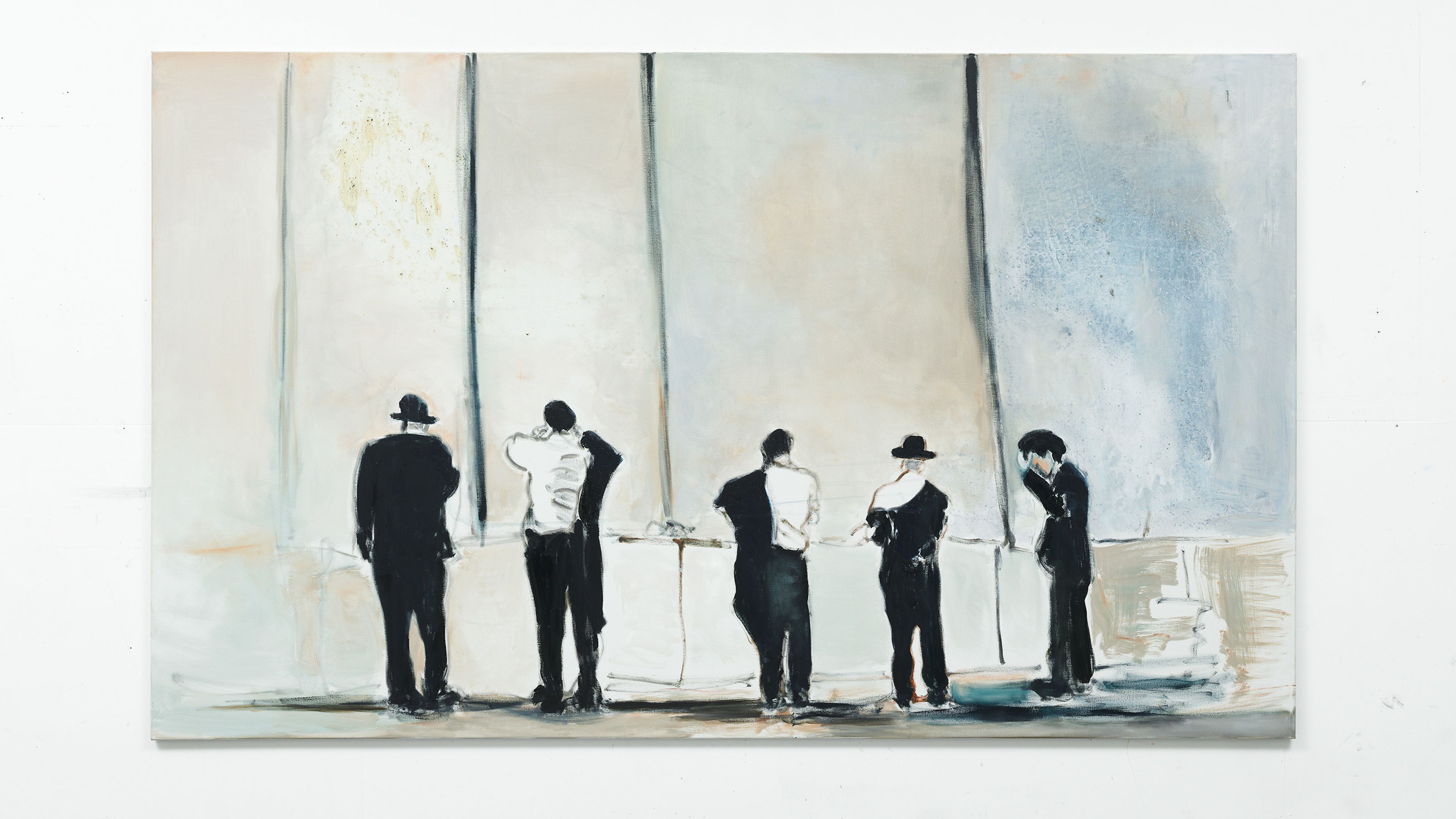
Marlene Dumas, The Wall, 2009. Dallas Museum of Art

Marlene Dumas, Wall Weeping, 2009. The Broad, Los Angeles

Marlene Dumas, Child Waving, 2010. Metropolitan Museum of Art, New York

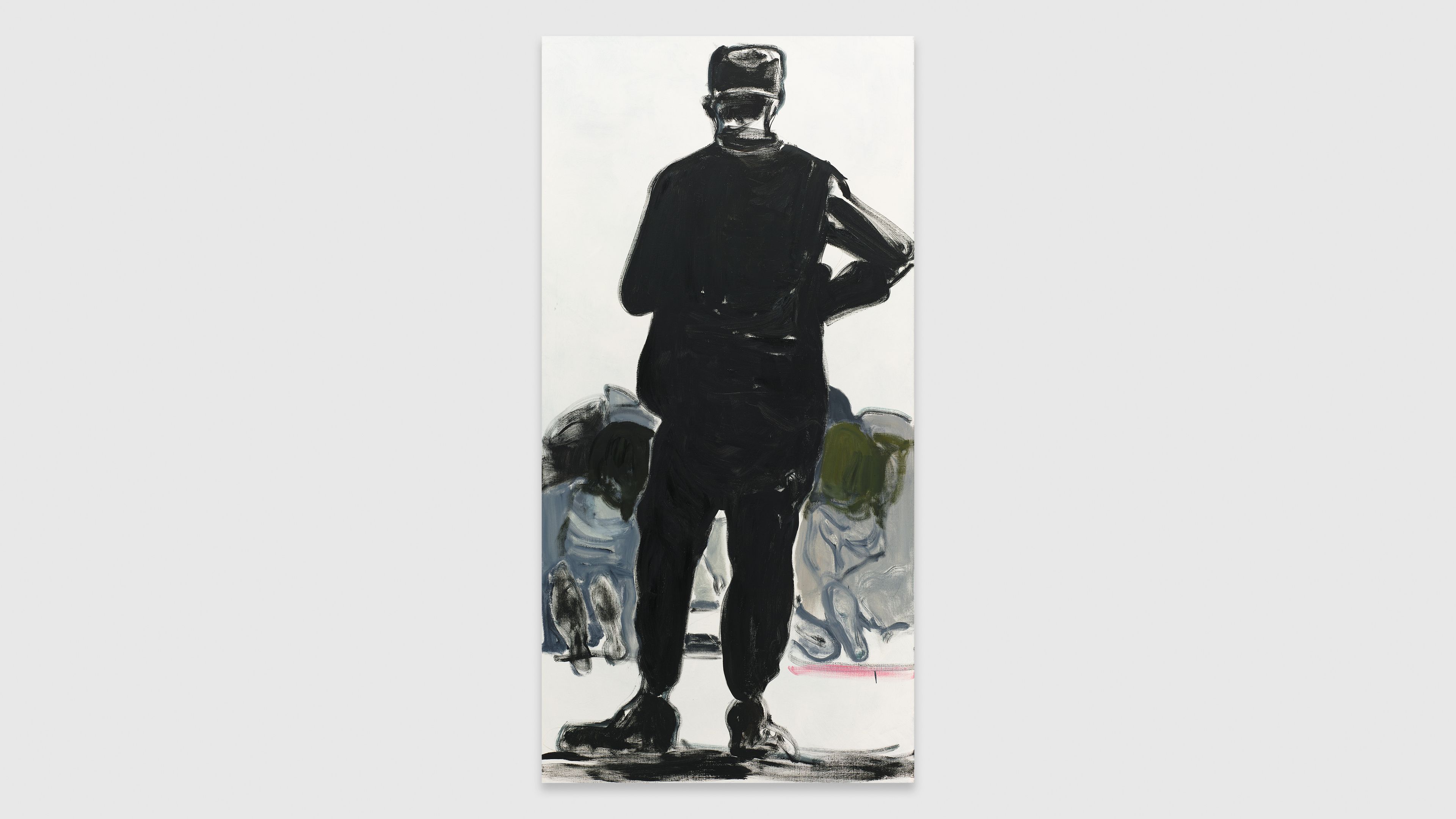
Marlene Dumas, Man Watching, 2009. Museum of Contemporary Art, Chicago
As Dumas wrote in a 2010 letter to David Zwirner, which is included in the Against the Wall exhibition catalogue, “Which painting started the others? It is the one called The Wall. I saw this rather tranquil image in a Dutch newspaper and at first glance I assumed it was the Wailing Wall. Until I read the caption.”

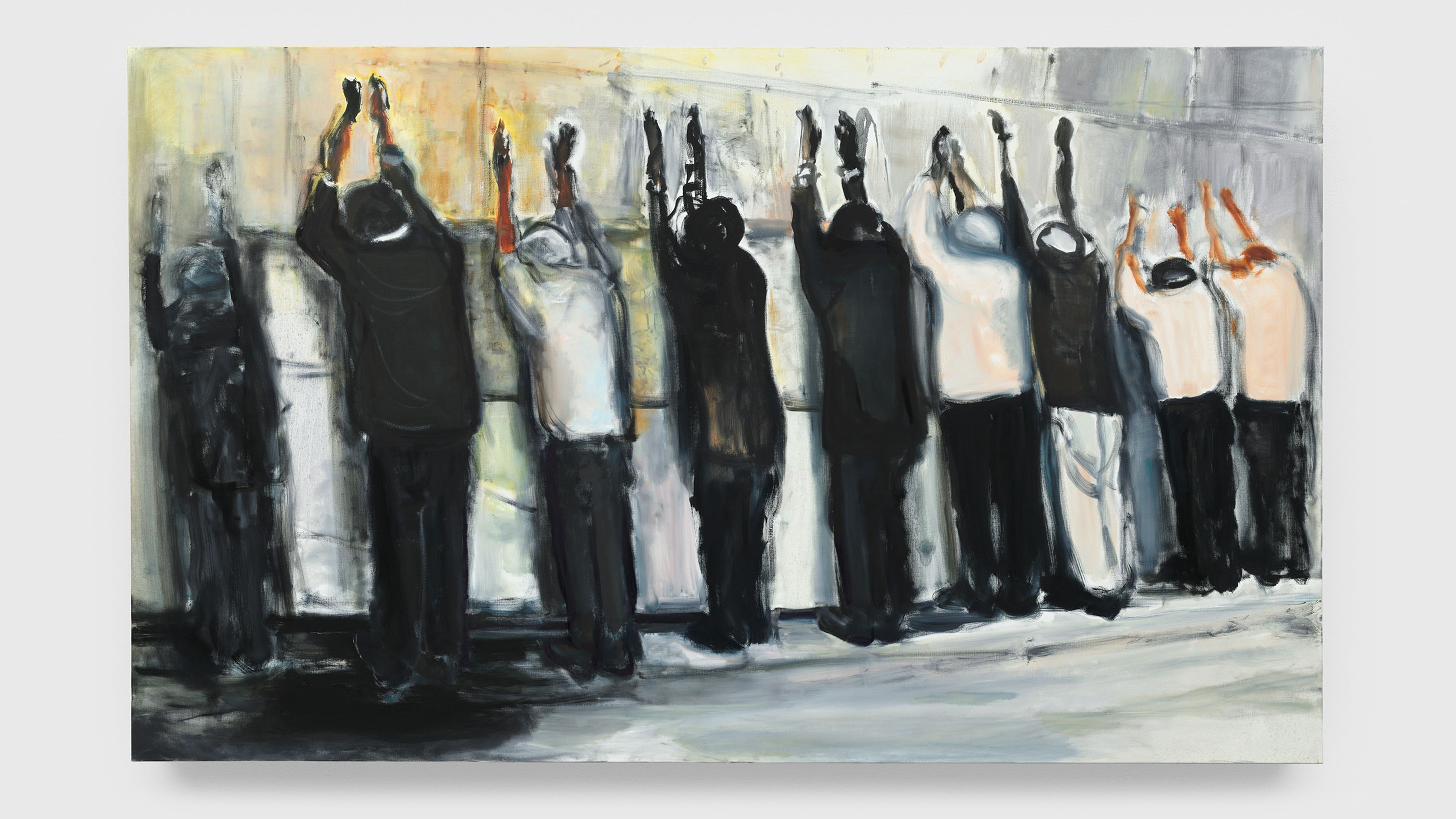
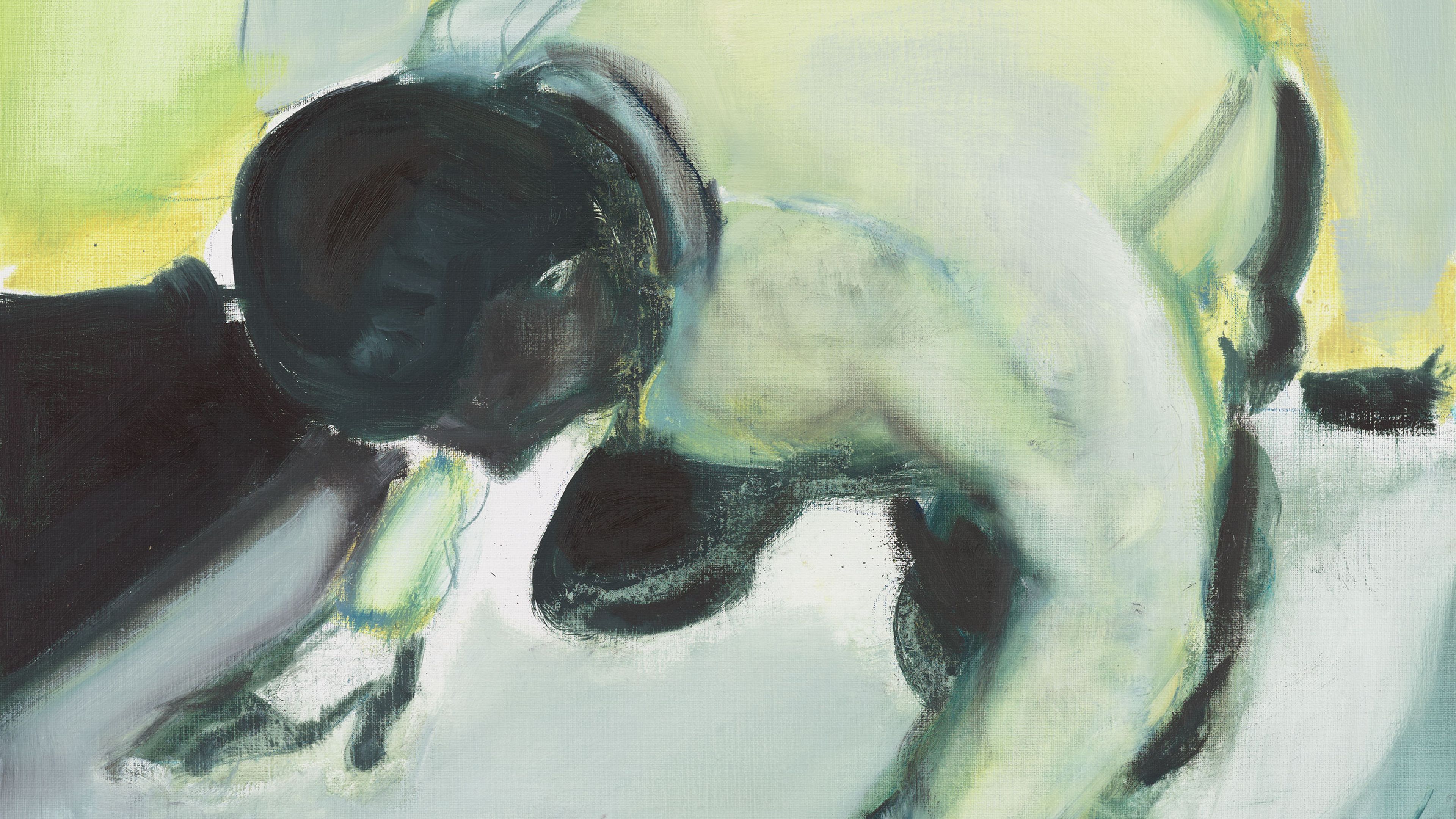
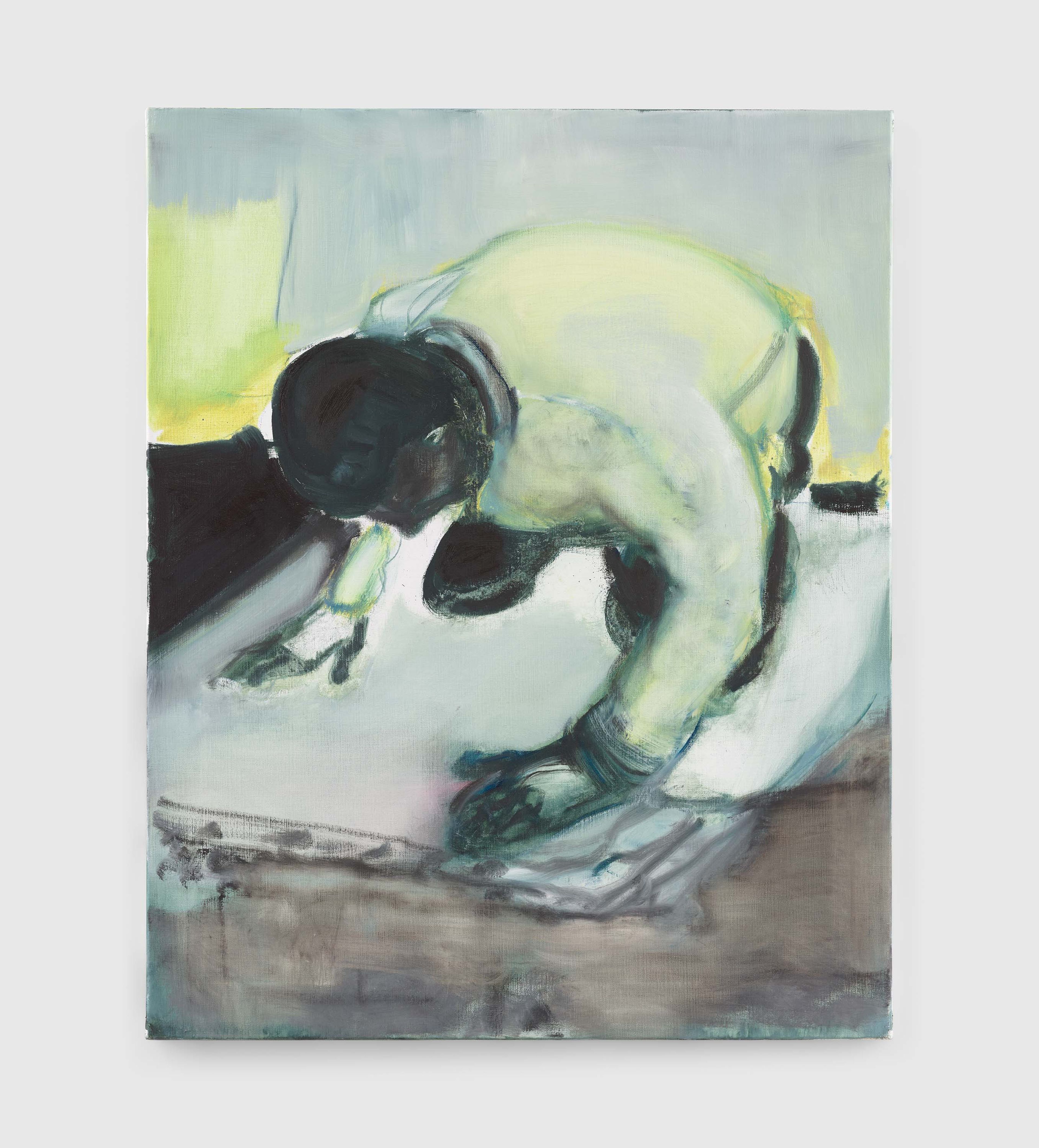
Marlene Dumas, Living on your Knees, 2010 (detail)
Living on your Knees (2010) is inspired by a newspaper showing a Palestinian man praying by the ruins of his home. Whereas the wreckage is visible in the original source image, here the background and context are more ambiguous; yet Dumas conveys the sense of tragedy and mourning through the earnestness of her depiction of the figure.

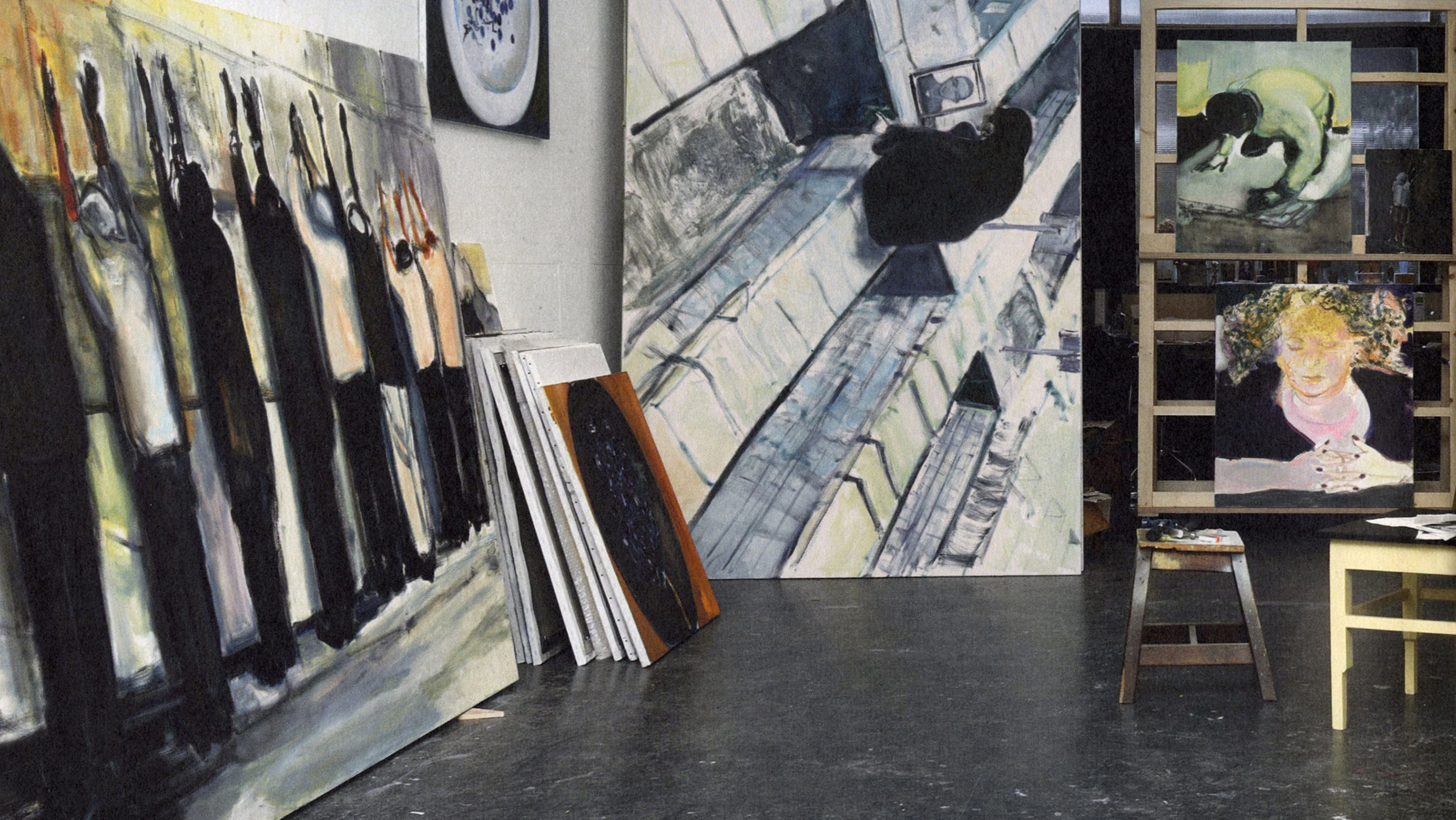
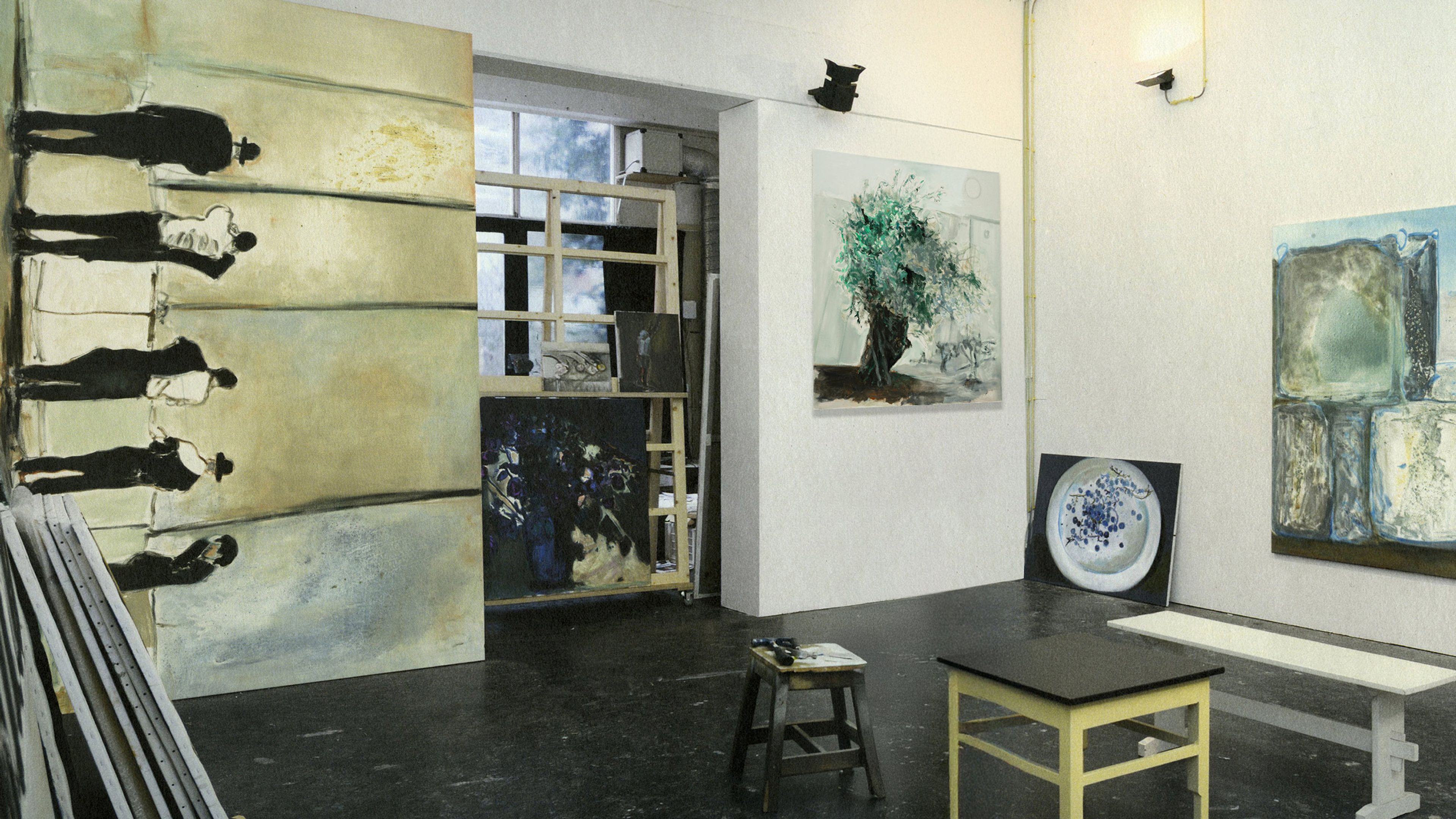
Works from the Against the Wall series in the artist’s studio, Amsterdam
“The image comes first, then the thoughts.
I ‘fall’ from the one wall to the other,
From one type of arms into another.
First out of context and then into context.
From belief into disbelief.
But the more I understand, the less I can speak.”
—Marlene Dumas, 2010

Installation view, Marlene Dumas’s Child Waving (2010) and Figure in a Landscape (2010), on view in Marlene Dumas: open-end, Palazzo Grassi, Venice, Italy, 2022

Installation view, Marlene Dumas’s The Wall (2009), on view in Marlene Dumas: The Image as Burden, Stedilijk Museum, Amsterdam, Netherlands, 2014–2015

Installation view, Marlene Dumas’s Figure in a Landscape (2010) and Under Construction (2009), on view in ARTandPRESS, Gropius Bau, Berlin, 2012
“When Dumas paints a wall—the ‘Security Wall,’ a wall in Old Town of Jerusalem, or a roadblock—it ‘closes’ the painting. The image of the wall replicates and reinforces the impenetrability of the canvas.… As paintings, these works defy the solidity of the wall that defines the place where the image is displayed, the wall of an exhibition space or dwelling. The resistance against the given wall is embodied in the notion of the painting as a window. Dumas, however, accomplishes and subverts the defiance of the actual wall with a painting of a wall that shuts the metaphorical window.”
—Ulrich Loock, critic and curator, 2014

Marlene Dumas, The Wall (2009) and Olive Tree (2010) in the artist’s studio, Amsterdam
In a 2008 New York Times article, Dumas told Deborah Solomon, “I still want to try before I die to do a tree.”
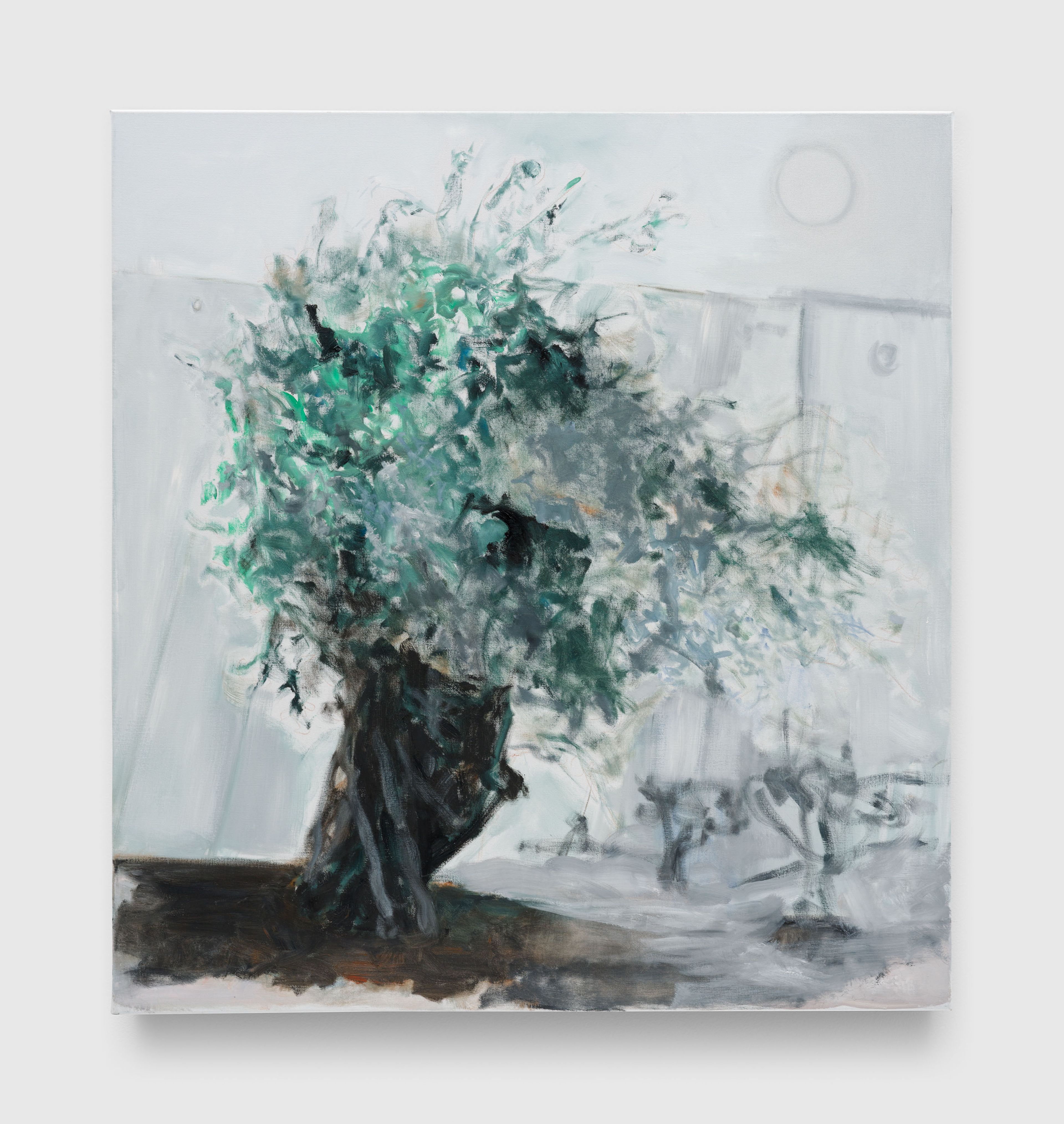
For the 2010 David Zwirner exhibition Dumas painted Olive Tree (2010), featuring a brushy and gestural olive tree—frequently regarded as a symbol of peace and prosperity. At first sight, the scene appears serene, with several other loosely rendered trees placed at regular intervals in the distance, as in a grove. Faintly visible in the background, however, is the security wall erected to separate Palestinian and Israeli territories. Dumas’s inspiration for the painting was derived from an oft-cited line by Palestinian poet Mahmoud Darwish: “If the olive trees knew the hands that planted them / Their oil would become tears.”
“I’ve always thought it must be possible to make a portrait of a tree. They are as strong and as attractive as a human being but I felt I never could do it. I started thinking and reading about all the different types of trees that are being removed to build the Wall, because in order to build the Wall it takes up space and it takes over space. So then the link was the olive tree and the wall.”
—Marlene Dumas, 2010
While the paintings in this series comprise a critique of the wall separating the West Bank from Israel, they ultimately lament the failure of co-existence. Dumas explores how image making is implicitly involved not only in the cultural processes of objectification but also in the way in which events are documented and collectively understood. As museum director João Fernandes has observed, Against the Wall explores “the condition of the human being confronted with an adverse world.”

Marlene Dumas, Olive Tree, 2010
“I don’t decide to represent anything except myself. But that self is a collective memory.”
—Marlene Dumas, 2010

Installation view, Marlene Dumas’s Olive Tree, Figure in a Landscape, and Living on Your Knees (all 2010), from the artist's Against the Wall series

Inquire about available works by Marlene Dumas