Exceptional Works: Fairfield Porter
Iced Coffee, 1966
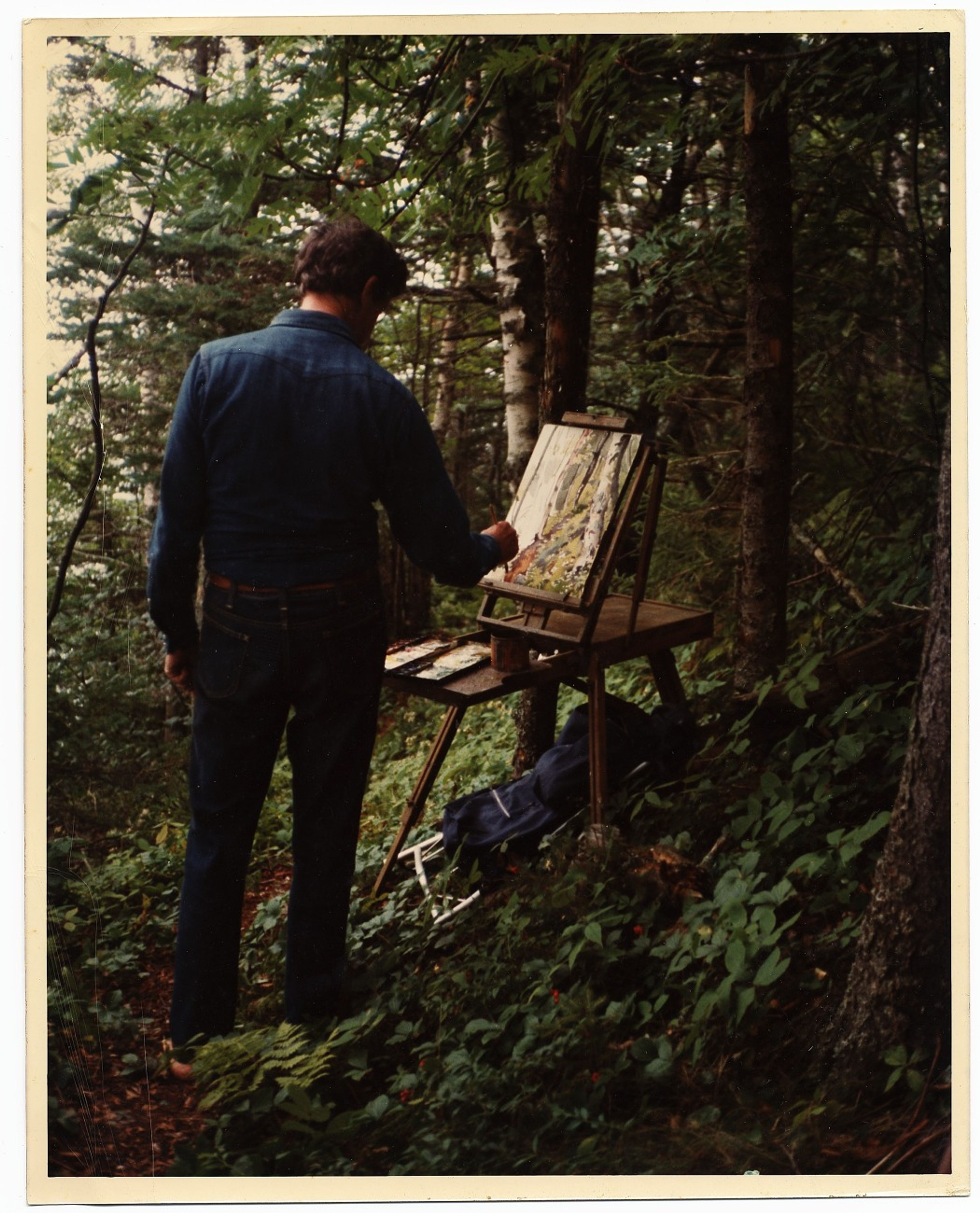
Fairfield Porter painting in the woods in Maine, 1975. Courtesy Archives of American Art, Smithsonian Institution
Porter studied fine art at Harvard in 1928 before moving to New York City, where he studied under Thomas Hart Benton at the Art Students League. His 1938 encounter with the intimate decorative interiors and colors of the French post-impressionist painters Pierre Bonnard and Édouard Vuillard—two of the founding members of the group Les Nabis—in Chicago imparted lessons on directness and close observation that Porter would explore in earnest a decade later. At the same time, his friendship with Willem de Kooning, whose work he admired and wrote on often, started to inform a looser and more energetic style.
When he began exhibiting regularly in the 1950s, Porter’s paintings demonstrated a sophisticated synthesis of the Nabis’ aesthetic sensibilities and abstract expressionism’s all-over consideration of the canvas and gestural application of pigment.
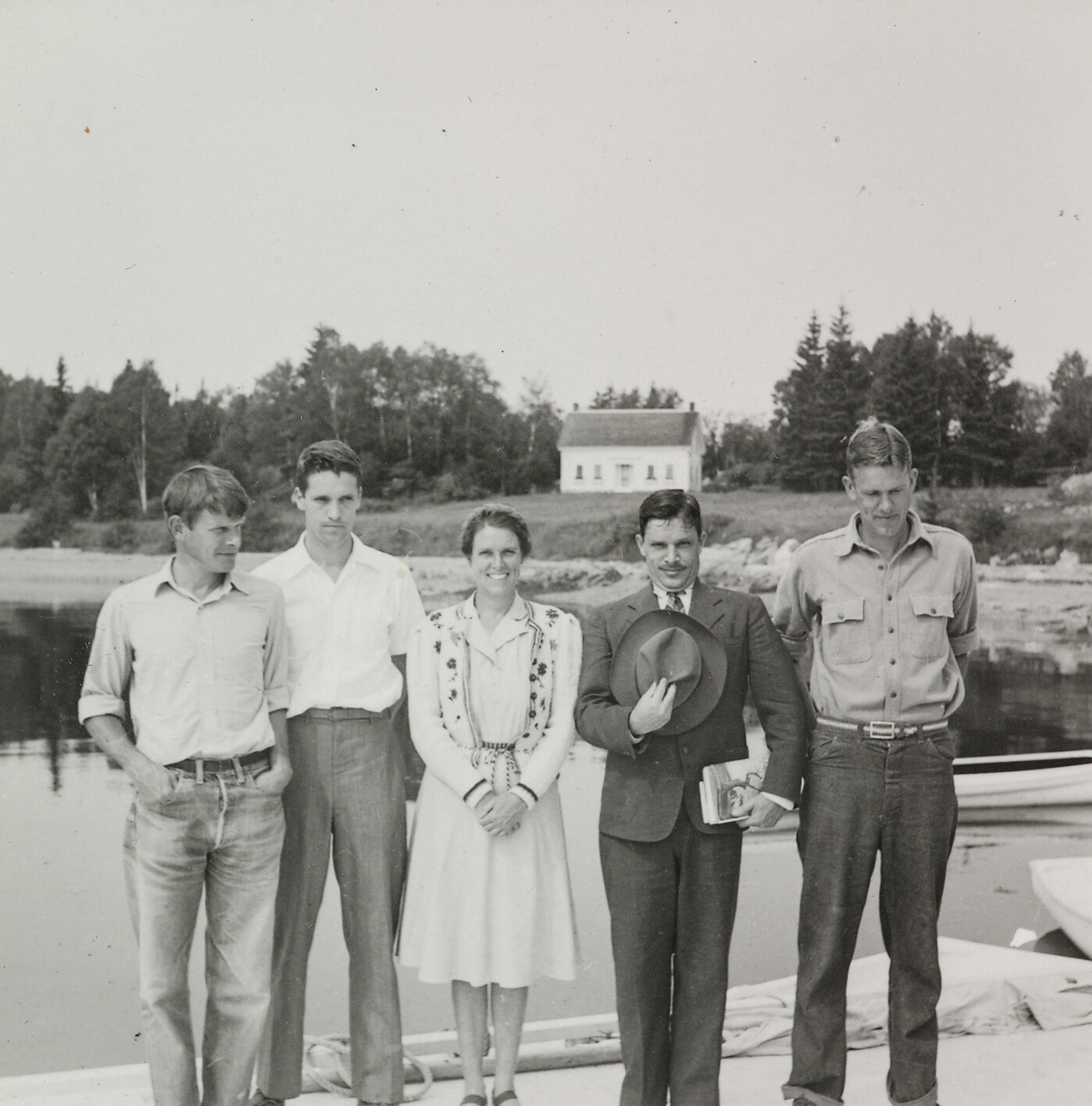
Eliot, Fairfield, Nancy, Edward, and John Porter, Great Spruce Head Island, Maine, July 1942. Amon Carter Museum of American Art, Fort Worth, Texas, Bequest of Eliot Porter
“The realist thinks he knows ... what reality is, and the abstract artist what art is, but it is in its formality that realist art excels, and the best abstract art communicates an overwhelming sense of reality.”
—Fairfield Porter
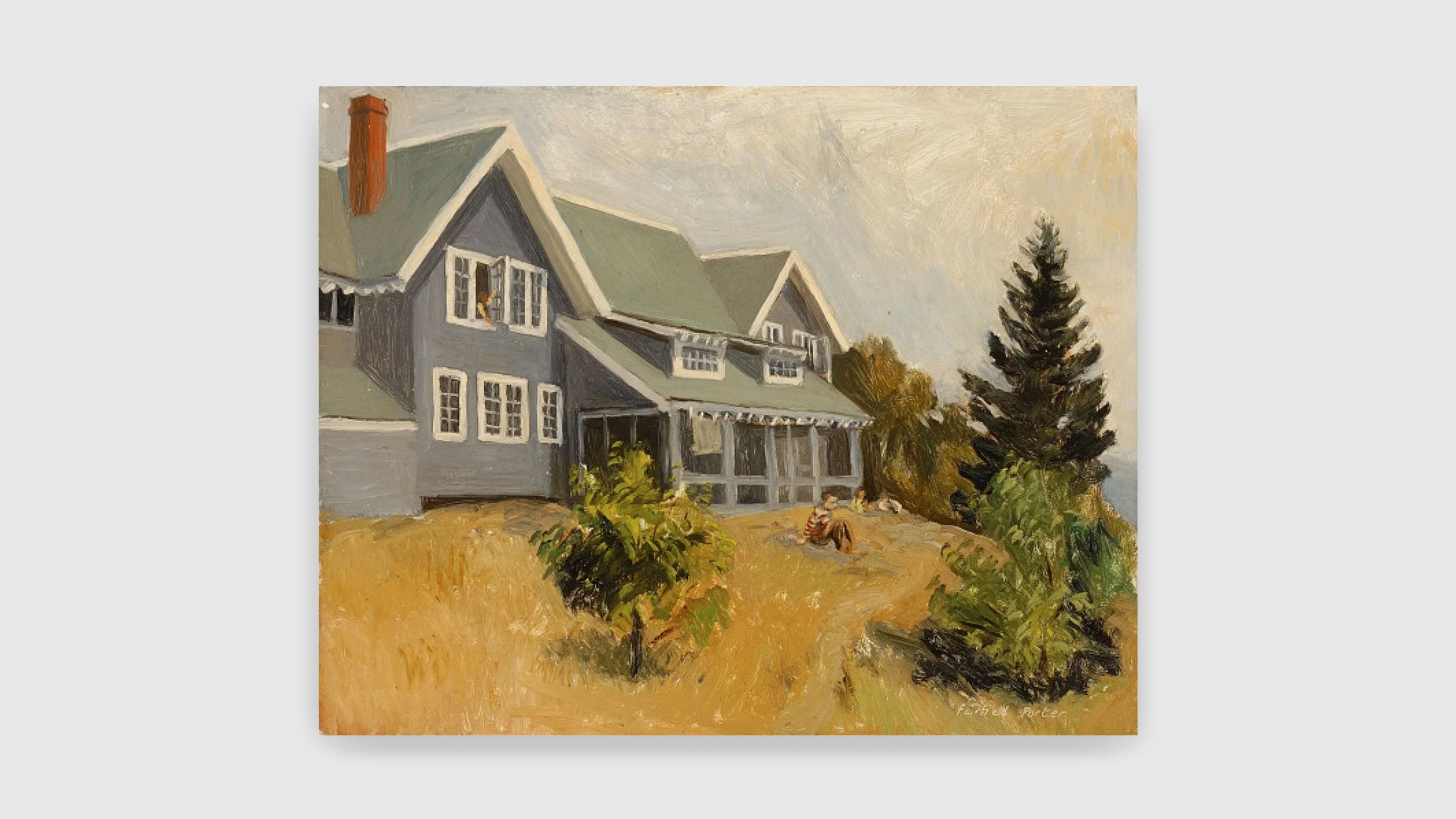
Fairfield Porter, House, Great Spruce Head Island, c.1948. © 2026 The Estate of Fairfield Porter / Artists Rights Society (ARS), New York
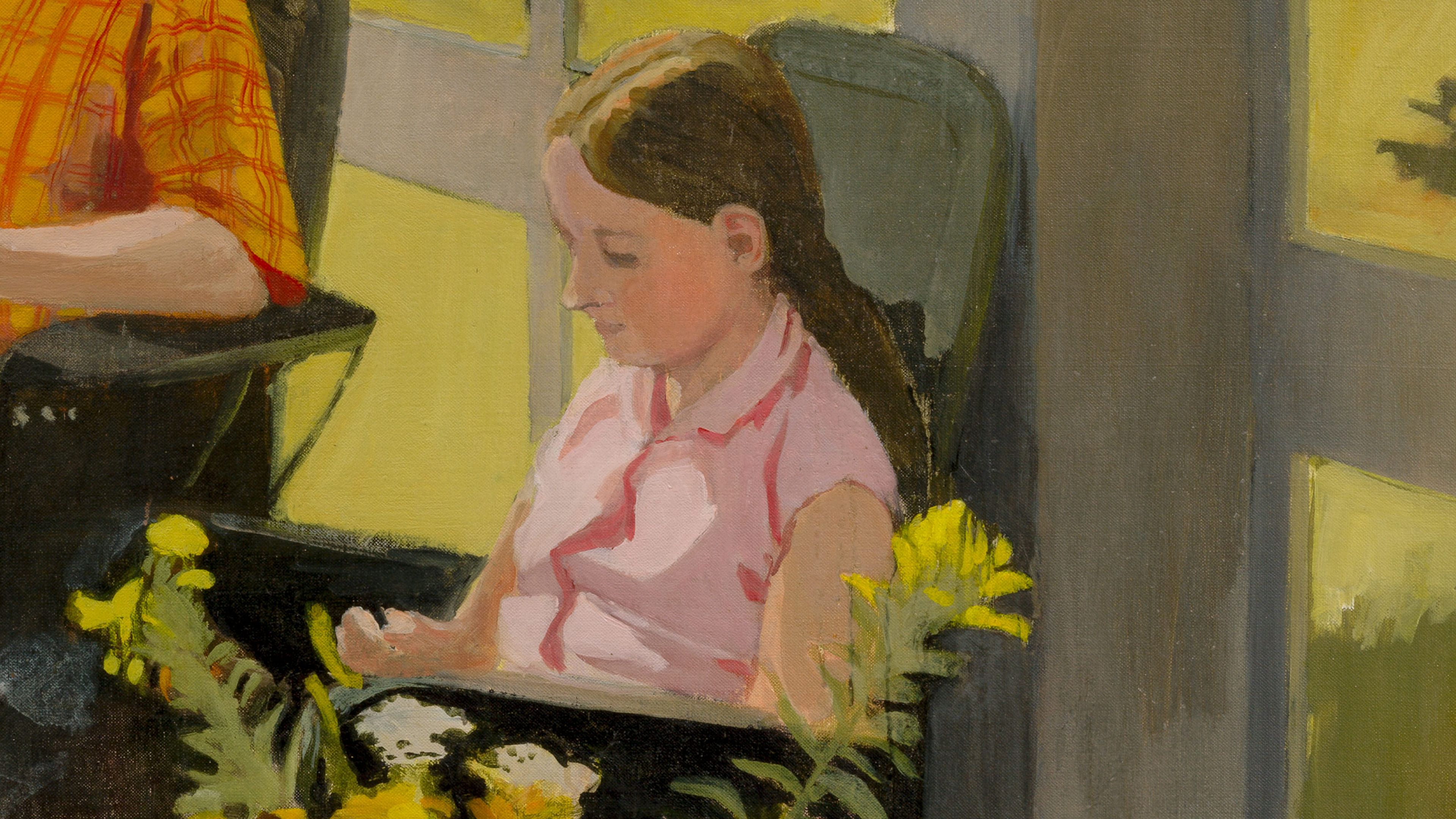
Fairfield Porter, Iced Coffee, 1966 (detail)
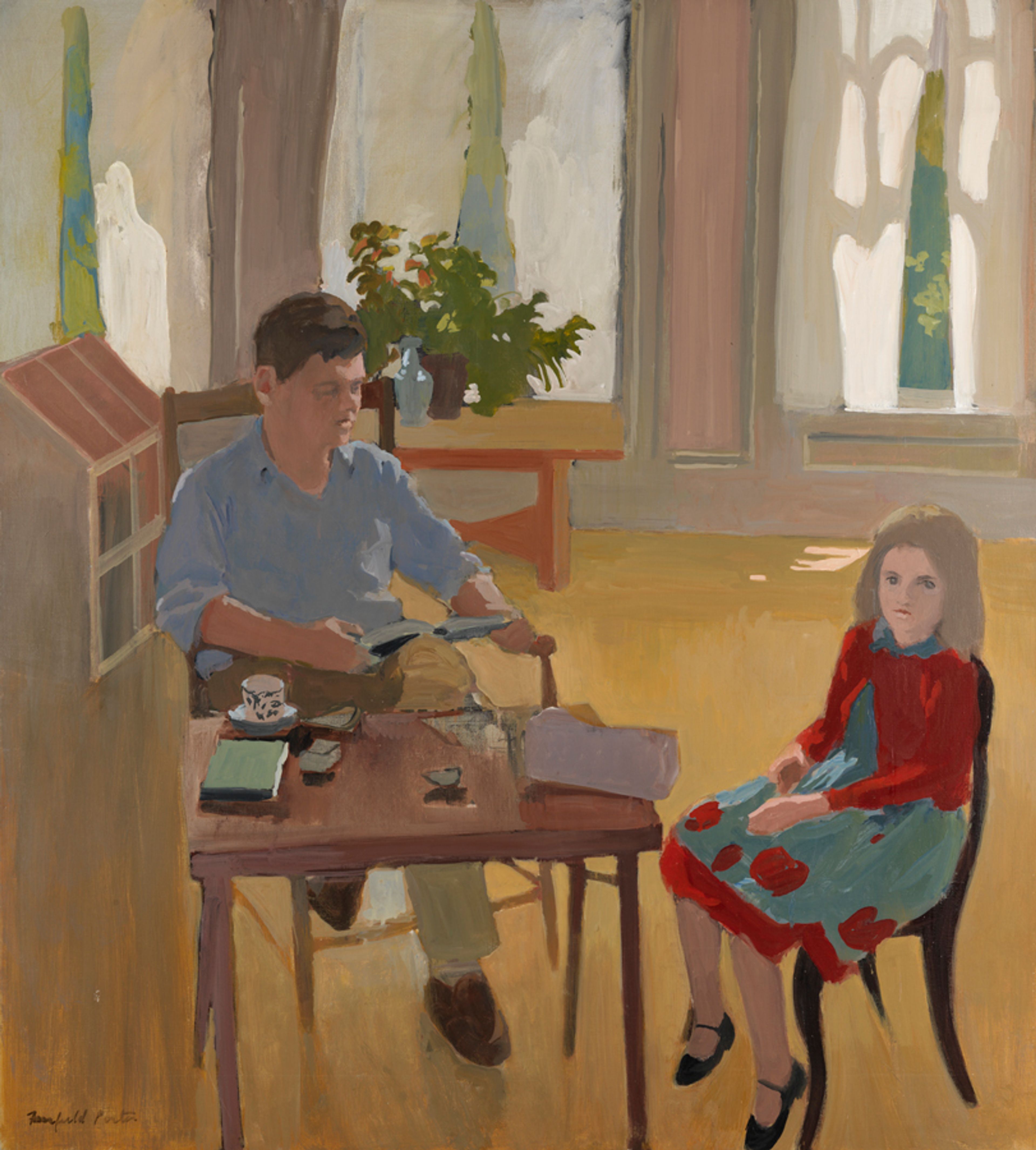
Fairfield Porter, Jimmy and Liz, c.1963. Pennsylvania Academy of the Fine Arts. © 2026 The Estate of Fairfield Porter / Artists Rights Society (ARS), New York
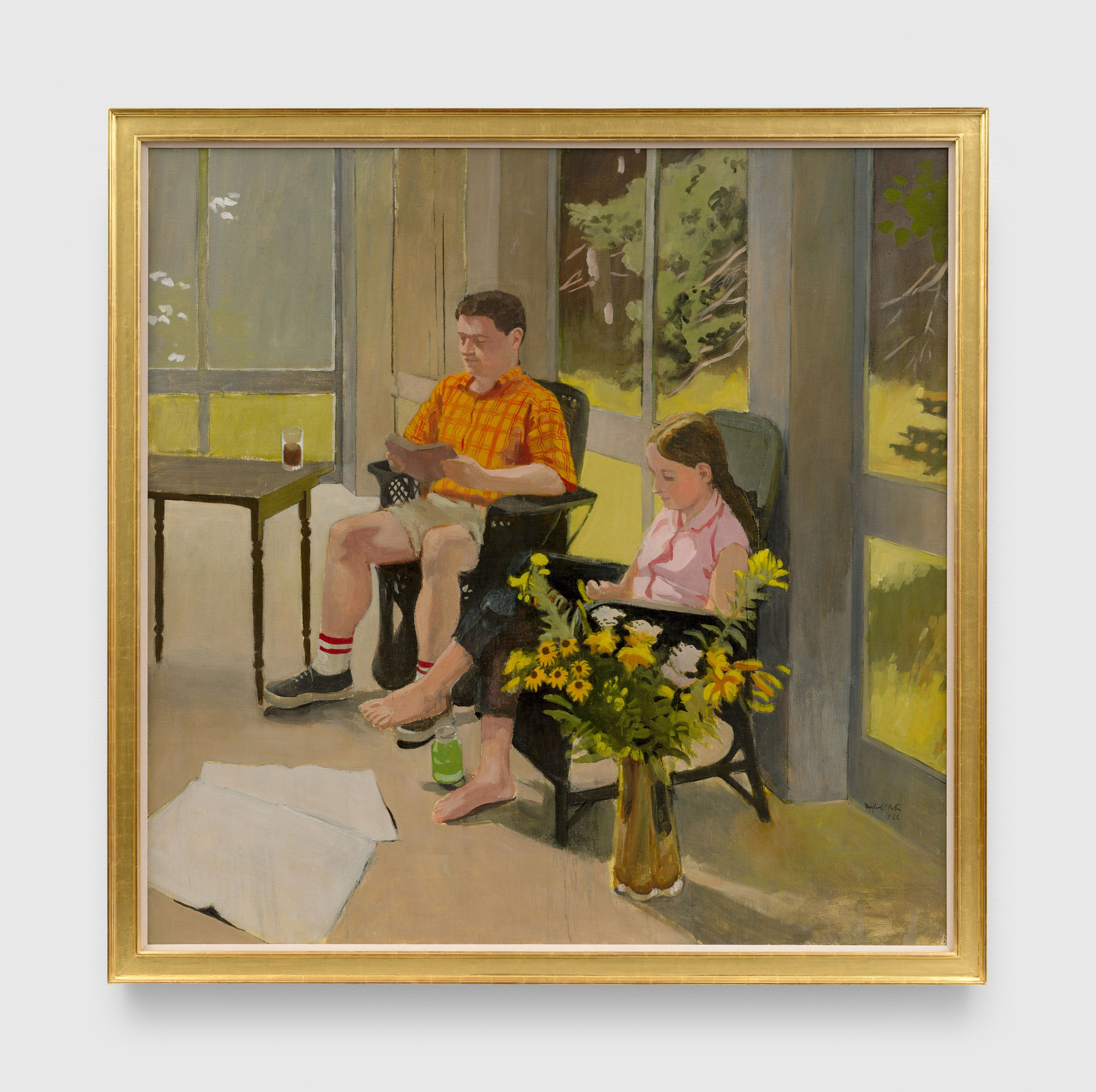
Porter’s paintings operate not on the level of the symbolic, but the literal. In Iced Coffee’s casual yet measured composition, the vase of freshly cut wildflowers in the foreground and the glass of iced coffee poised on the table capture the “presentness” that defines Porter’s practice. The work’s title emphasizes the scene’s everyday quality, evoking the ritual comfort of idle summer afternoons spent on the porch. “It’s a mistake to think Porter was simply painting his lifestyle,” the artist and writer Rob Colvin has observed. “Rather, he committed himself to what Édouard Vuillard, Pierre Bonnard, and Henri Matisse had: to attend to the vitality of everyday things.”
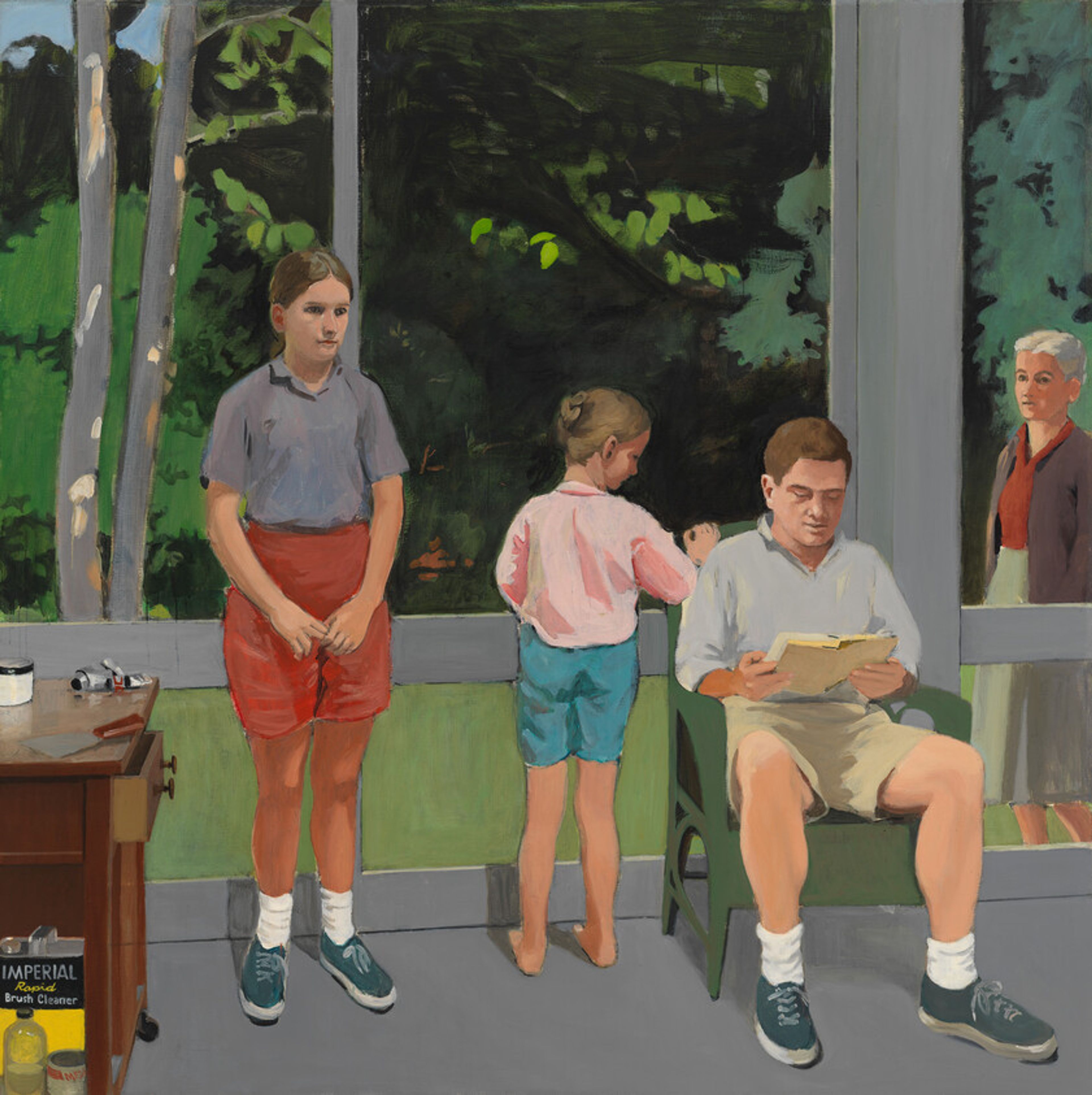
Fairfield Porter, The Screen Porch, 1964. Whitney Museum of American Art, New York. © 2026 The Estate of Fairfield Porter / Artists Rights Society (ARS), New York
“[For Iced Coffee] I wanted to do a big painting and wanted to have figures in it, and that was the easiest thing to do. The light was pretty good…. I could get it the proper distance, and I could do it just straight from the models. As for what it is, it just means this environment to me.”
—Fairfield Porter
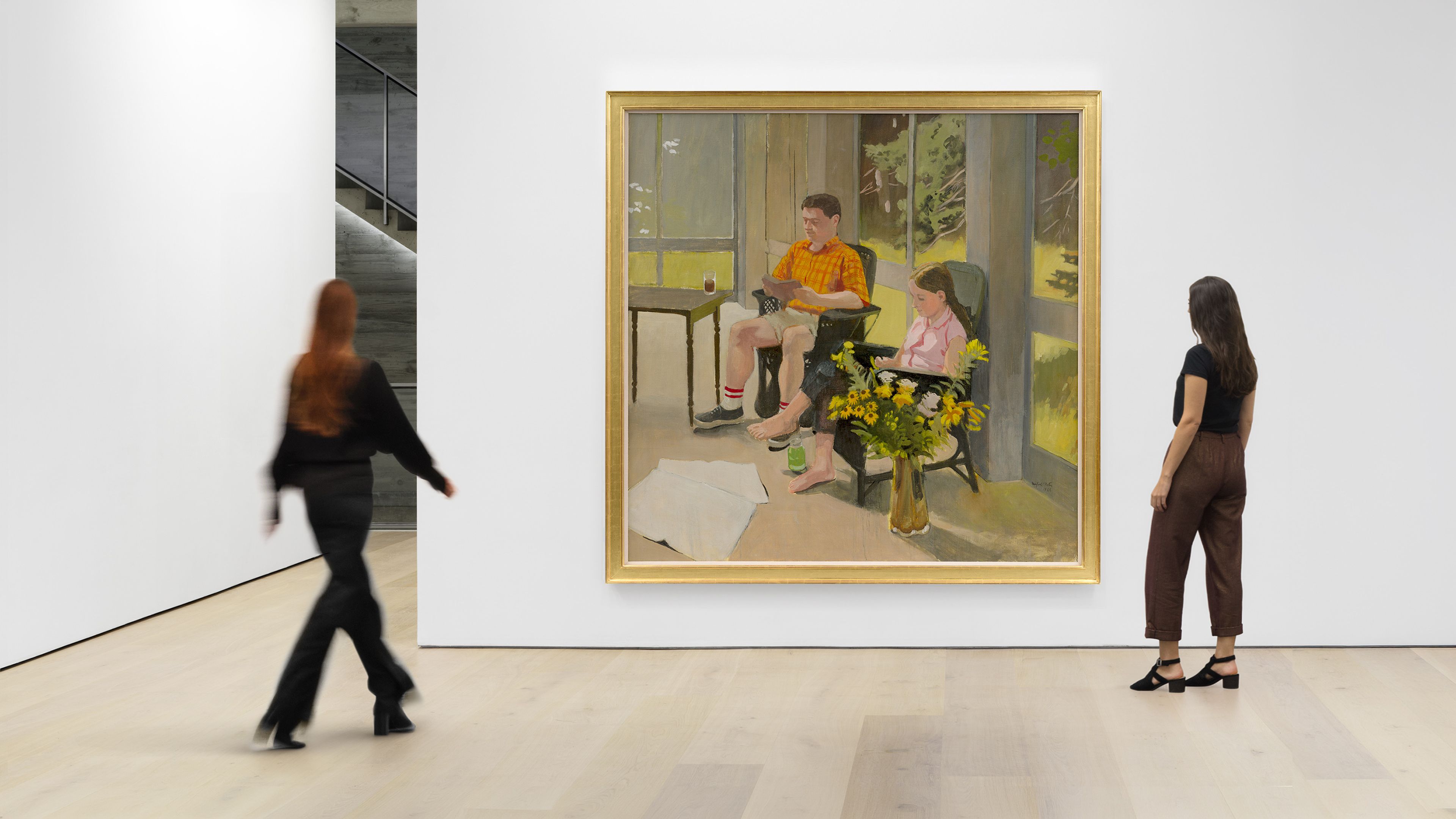
Installation view, The Great Unseen Collection: A Selection of Works from Joel and Carole Bernstein, David Zwirner, New York, 2026
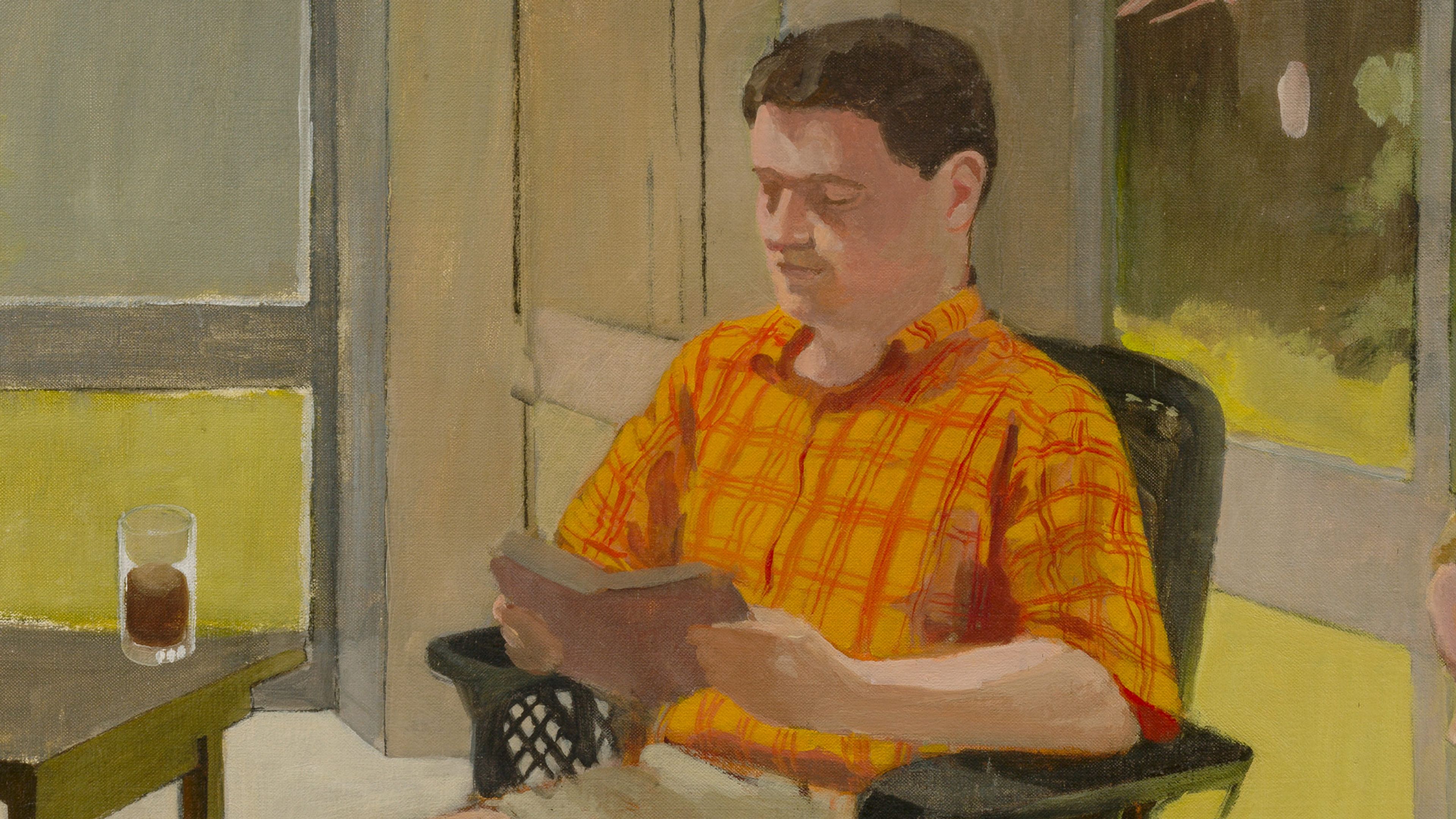
Fairfield Porter, Iced Coffee, 1966 (detail)
Fairfield Porter, Iced Coffee, 1966 (detail)
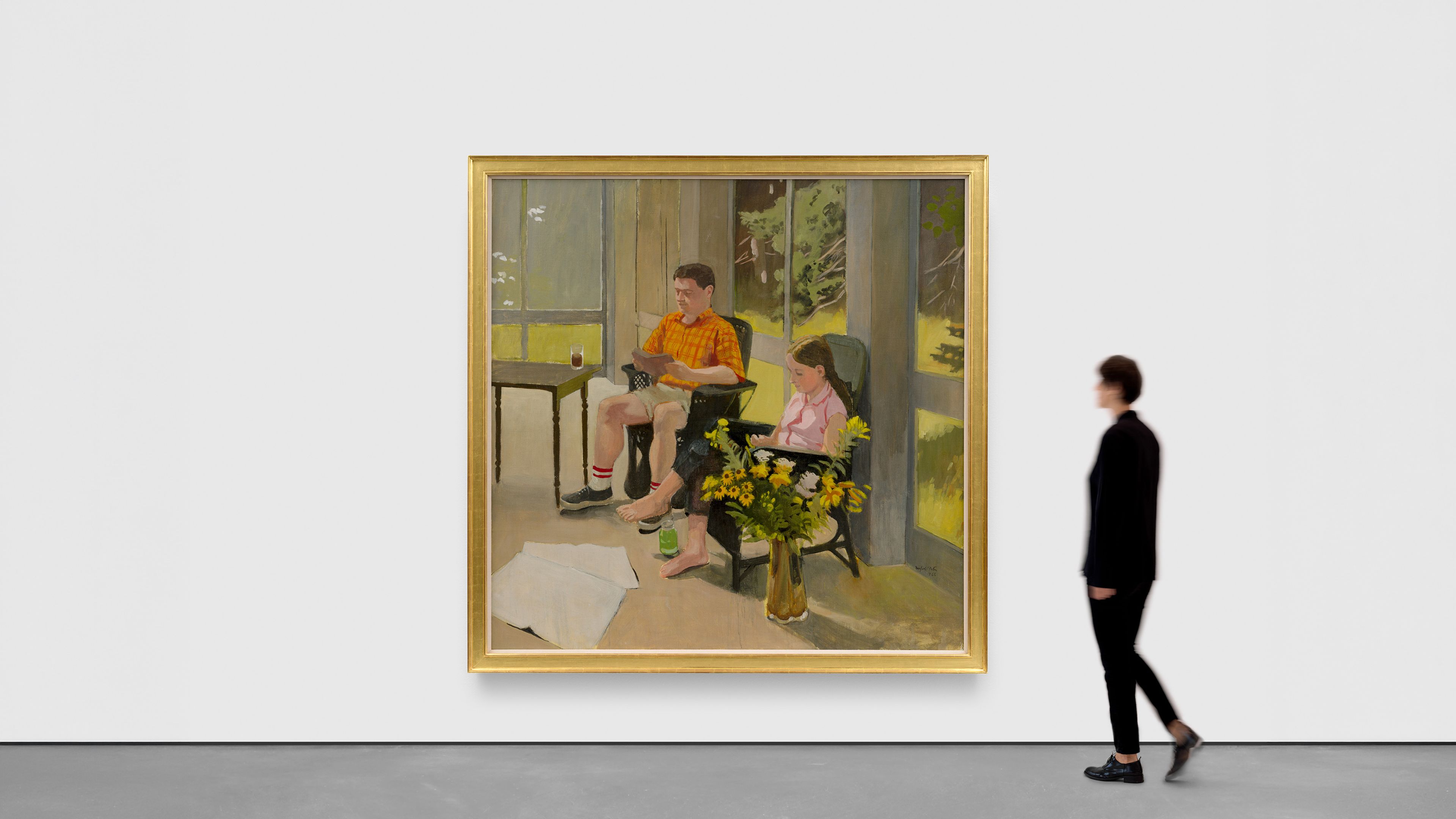

The Great Unseen Collection: A Selection of Works from Joel and Carole Bernstein