Exceptional Works: Dan Flavin

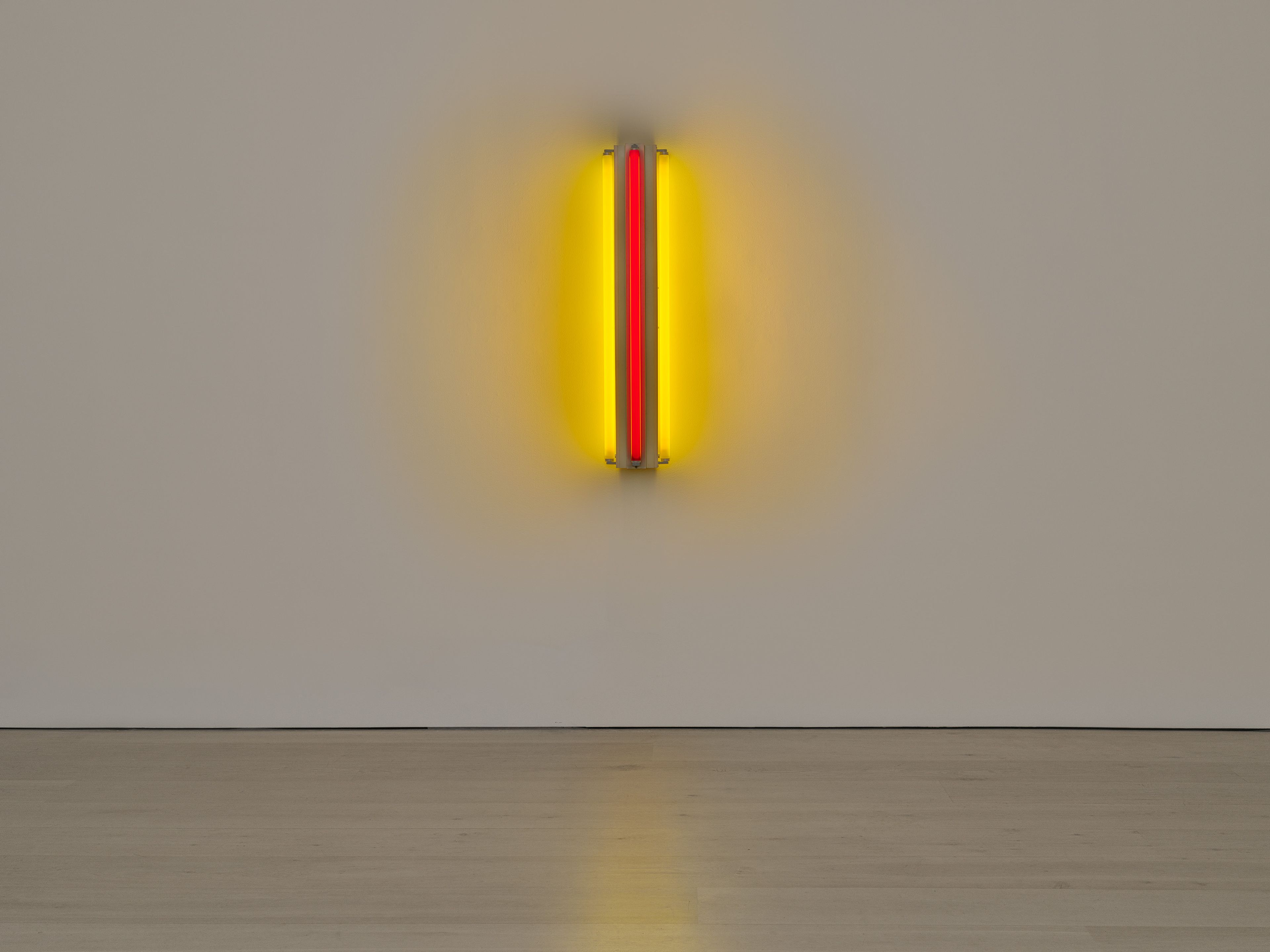
three fluorescent tubes, 1963
“Dan Flavin introduced a simple, fluorescent tube of light. Almost ethereal in its brilliance … it was a profound choice that combined the industrial, the phenomenological … even the spiritual.”

—Michael Auping, “Radiant Bones: The Church of the Phenomenal,” in Dan Flavin: Corners, Barriers and Corridors, 2016

Dan Flavin (1933–1996) produced a body of work that changed the course of twentieth-century art. Using commercially available fluorescent lamps to create installations (or “situations,” as he preferred to call them), Flavin created light constructions that transform space.

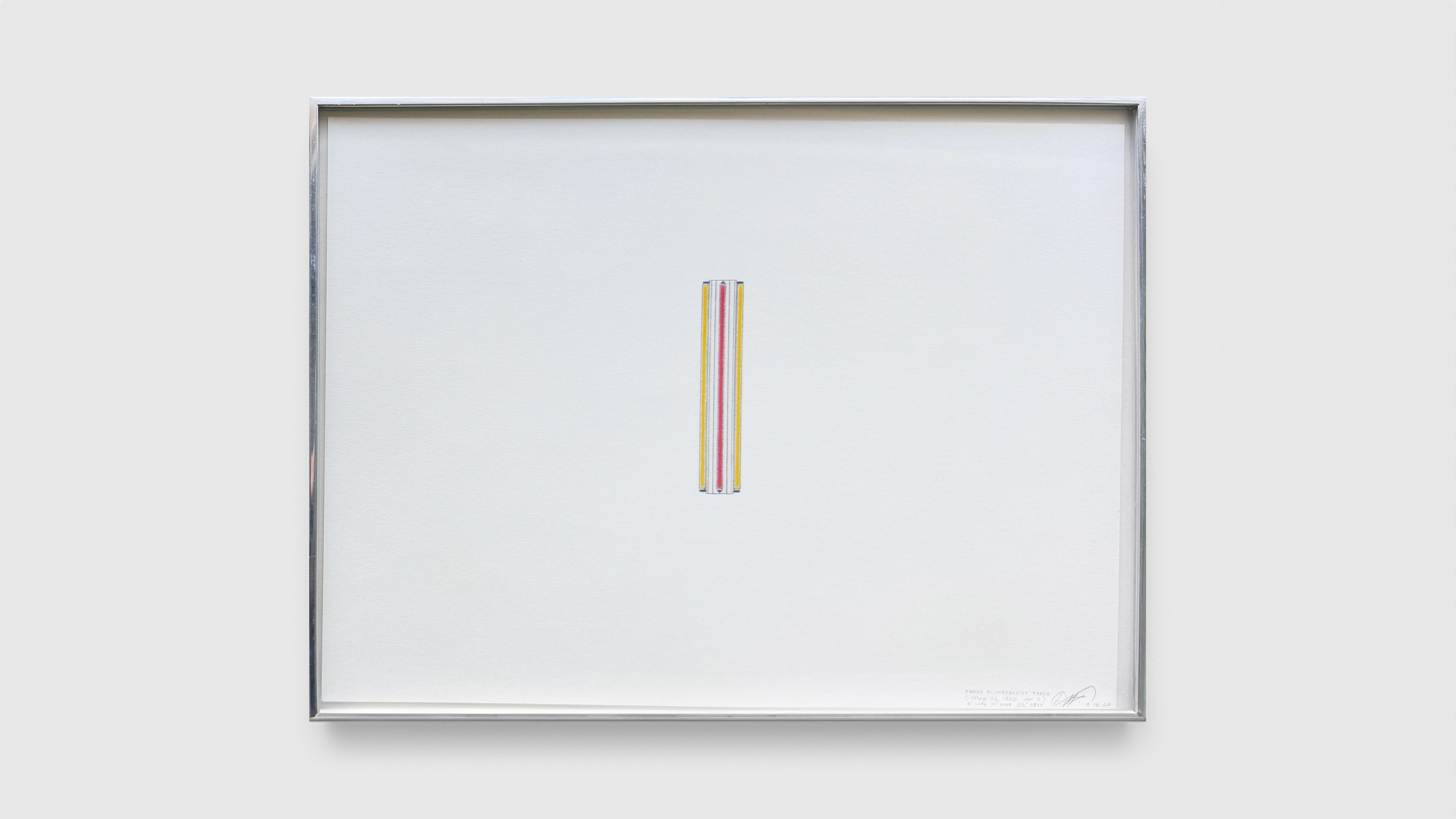
Three fluorescent tubes (1963) is a rare early work exploring the possibilities of colored light. The work is accompanied by a drawing inscribed: THREE FLUORESCENT TUBES / (May 26, 1963 no. 11) / 4' LONG 10" WIDE 6½" DEEP / DNF 9/15/64.

Dan Flavin, drawing inscribed “THREE FLUORESCENT TUBES / (May 26, 1963 no. 11) / 4' LONG 10" WIDE 6½" DEEP / DNF 9/15/64.”
“While walking the floor as a guard in the American Museum of Natural History, I crammed my uniform pockets with notes for an electric light art.... These notes began to find structural form in the fall.... Then, for the next three years, I was off at work on a series of electric light ‘icons.’”

—Dan Flavin, “‘… in daylight or cool white.’ an autobiographical sketch,” Artforum, 1965

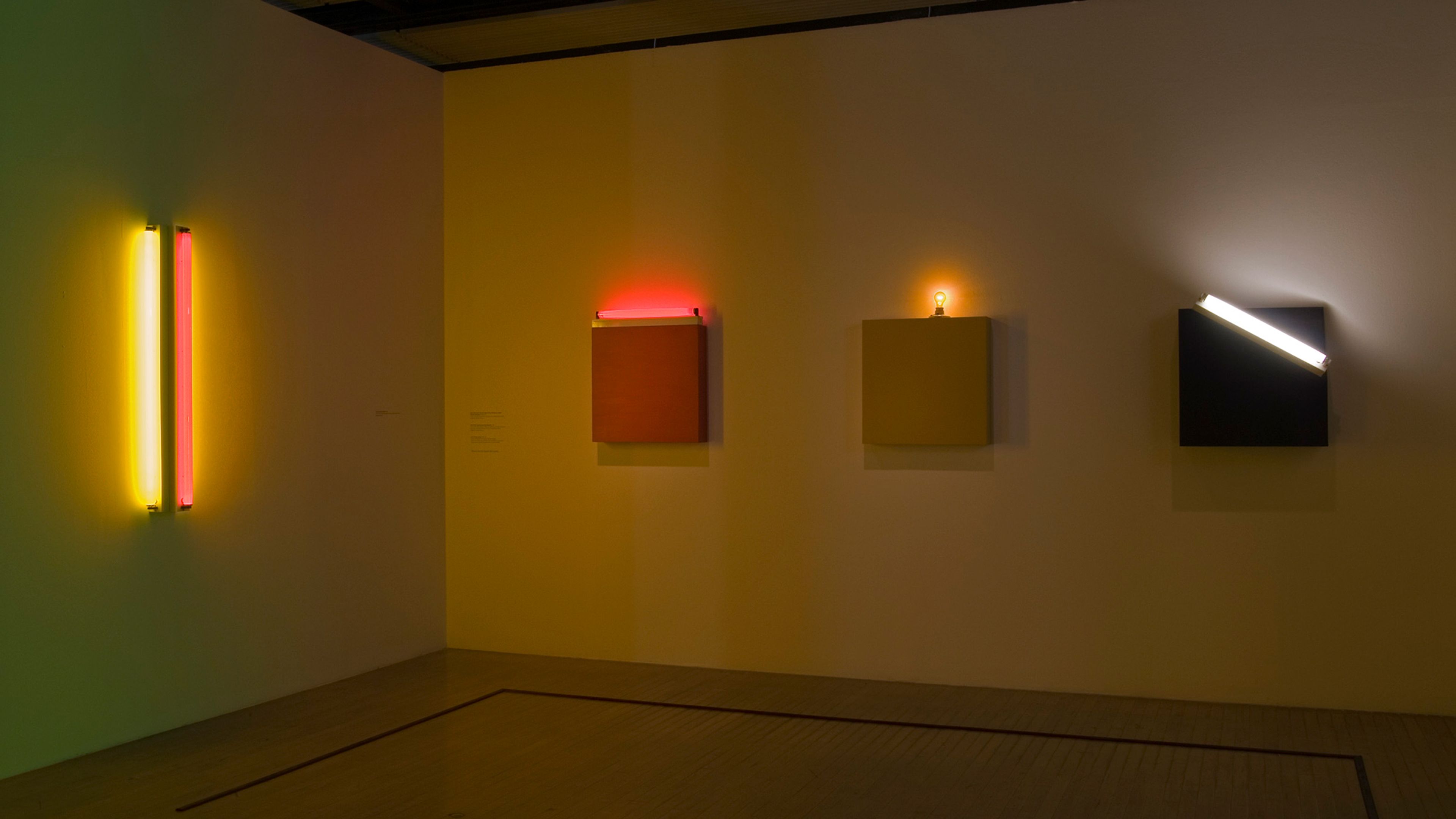
Installation view, Dan Flavin: A Retrospective, Hayward Gallery, London, 2006. Three fluorescent tubes (1963) is seen on the left, adjacent to a selection of the artist’s “icons.”
In 1961, Flavin began conceiving of an art form incorporating electric light. Later that year, he translated his sketches into works he called “icons”—a series of handmade, painted wood constructions with lighting elements affixed to them, marking a key transition to light-based works.

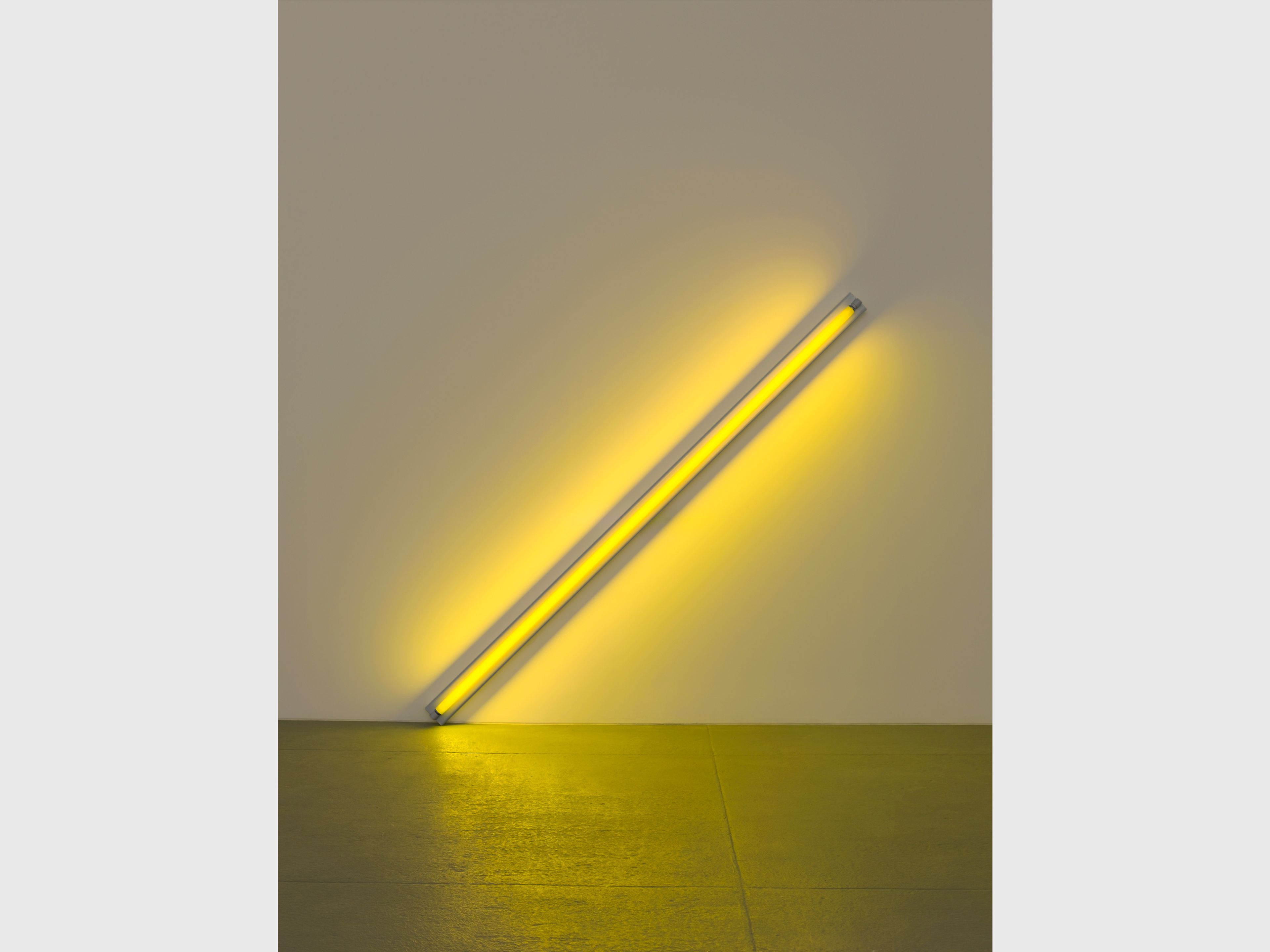
In the spring of 1963, Flavin reached a breakthrough in his practice when he affixed a single yellow lamp diagonally to the wall, marking the first instance in which he used fluorescent light alone to make a work.

Dan Flavin, the diagonal of May 25, 1963 (to Constantin Brancusi). Dia Art Foundation, New York
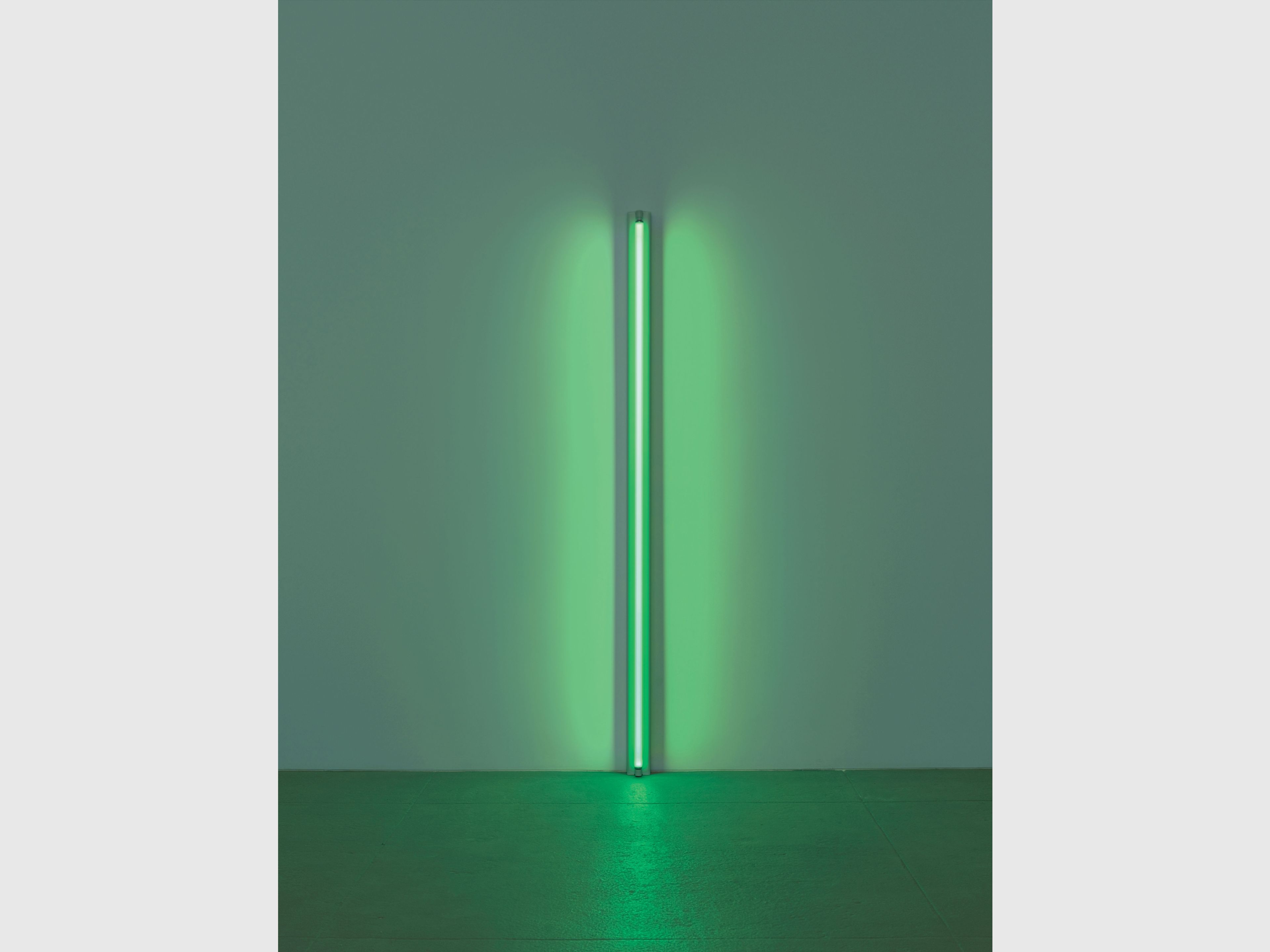
Dan Flavin, untitled, 1963. Solomon R. Guggenheim Museum, New York
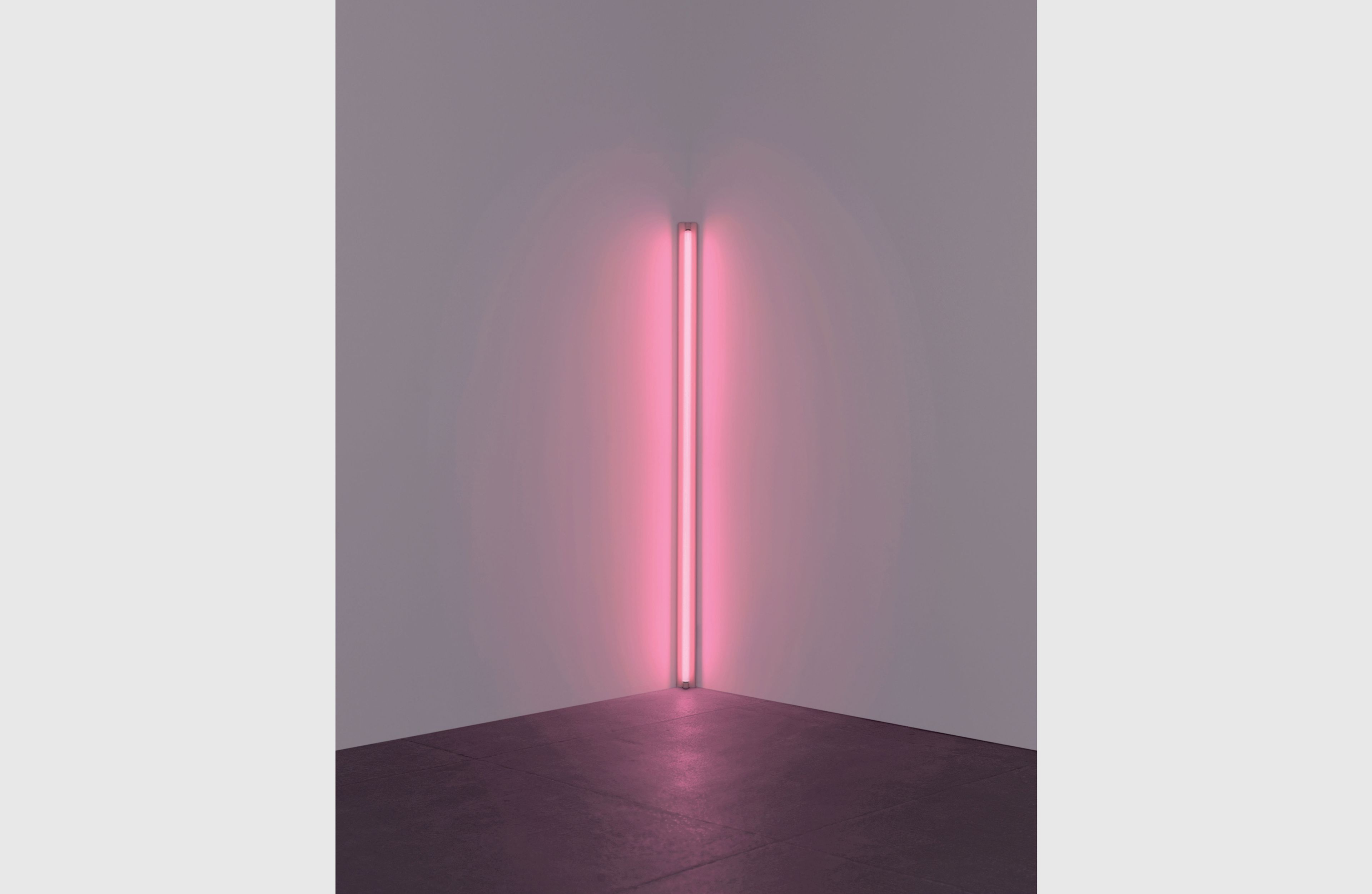
Dan Flavin, “pink out of a corner (to Jasper Johns), 1963. Museum of Modern Art, New York

Three fluorescent tubes is unique, and a rare early work by Flavin that is hand-built. The only other example with this kind of construction is one of May 27, 1963 (1963), now in the collection of the Art Institute of Chicago. Three fluorescent tubes, however, more closely resembles the artist’s later works.

Following a series of nine single-lamp diagonals in different colors, three fluorescent tubes marks Flavin’s first use of multiple lamps in a single work. Also showing his process in assembling the lamps sculpturally, three fluorescent tubes is an important bridge between the “icons” and the later works.

Three fluorescent tubes was conceived by the artist on May 26, 1963, in an outpouring of creativity just one day after the diagonal of May 25, 1963 (to Constantin Brancusi). Three fluorescent tubes represents a significant expansion of his initial idea, and anticipates the artist’s more complex compositions.
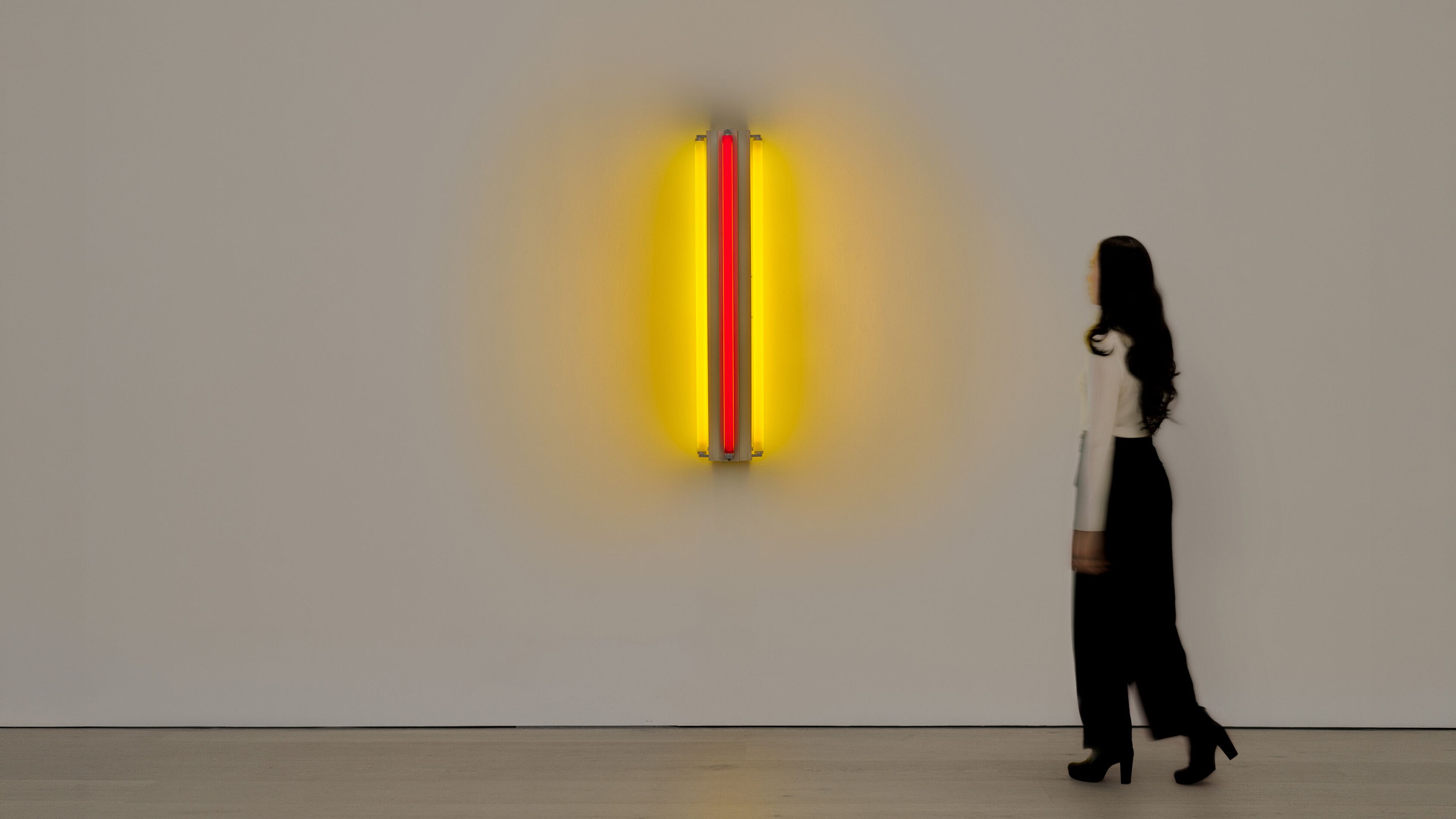
Dan Flavin, three fluorescent tubes, 1963
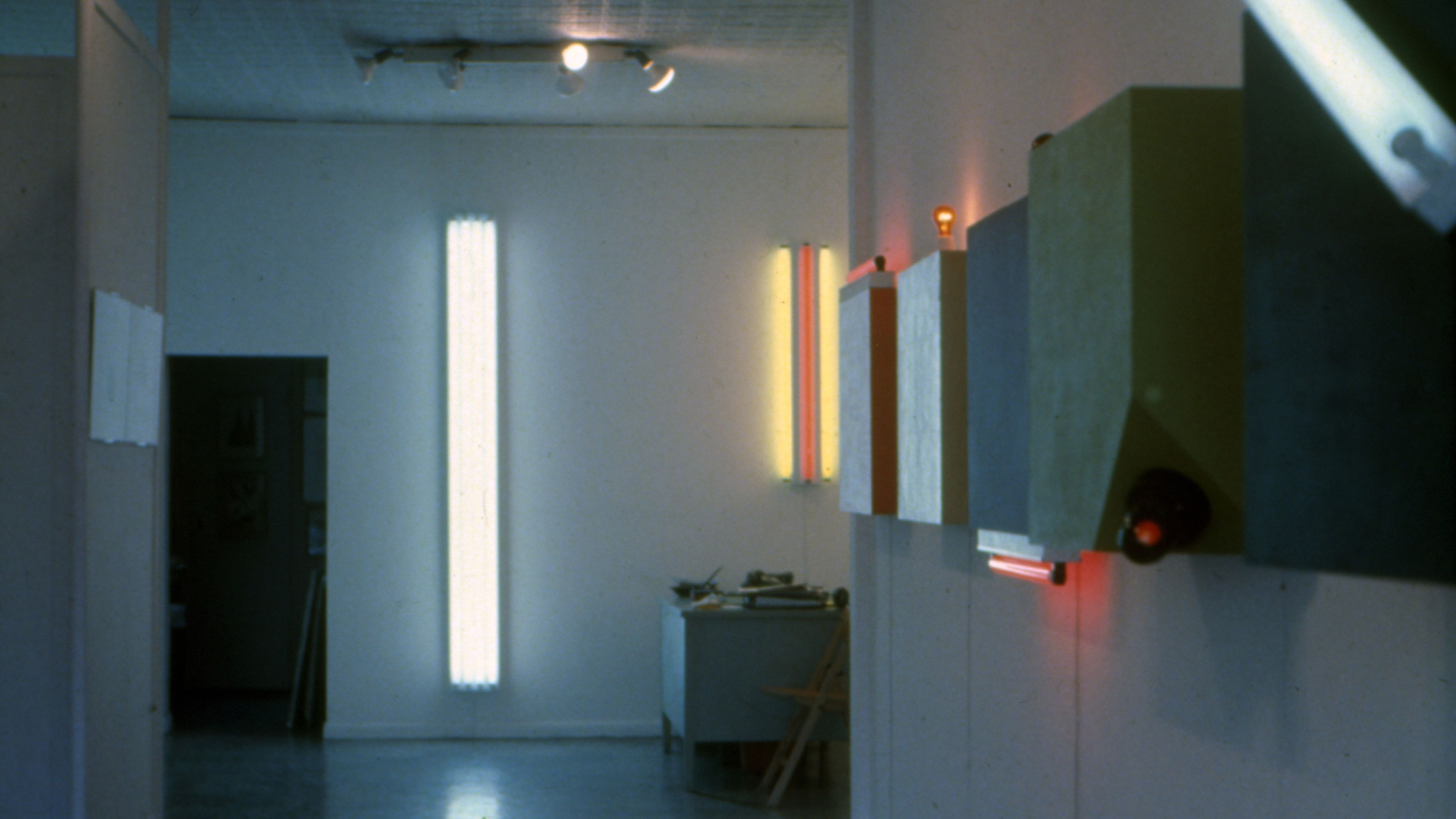
Comprising two vertically oriented yellow lamps that flank a single vertical red lamp, which protrudes slightly from the wall to form a pyramidal arrangement, three fluorescent tubes is also the first work in the artist’s oeuvre to incorporate multiple colors of light. Flavin’s considered and sophisticated use of color to affect the viewer’s experience would become one of the defining features of his work.

Three fluorescent tubes debuted in Flavin’s important show at Kaymar Gallery, New York, in March 1964—his first solo exhibition to include works made only from fluorescent light, presented alongside his “icons.” In that exhibition, the present work’s title included a dedication to Ward Jackson, an abstract painter and close friend of Flavin’s with whom he worked in the mail room of the Solomon R. Guggenheim Museum, New York. In 1971, Flavin dedicated a large-scale, site-specific installation for the Guggenheim to Jackson.

Installation view, dan flavin: some light, Kaymar Gallery, New York, 1964
“Dan Flavin is not a sculptor and his medium is light rather than color. Half of this show consists of fluorescent fixtures hanging diagonally or vertically on the wall without further embellishment. In their shiny white metal settings, these lines of softly glowing white or colored luminosity become ‘paintings in light’ rather than recognizable everyday objects.”

—Lucy Lippard, in an Artforum review of dan flavin: some light, Kaymar Gallery, New York, 1964

Morris Louis, 1-68, 1962. The Solomon R. Guggenheim Foundation / Art Resource, NY

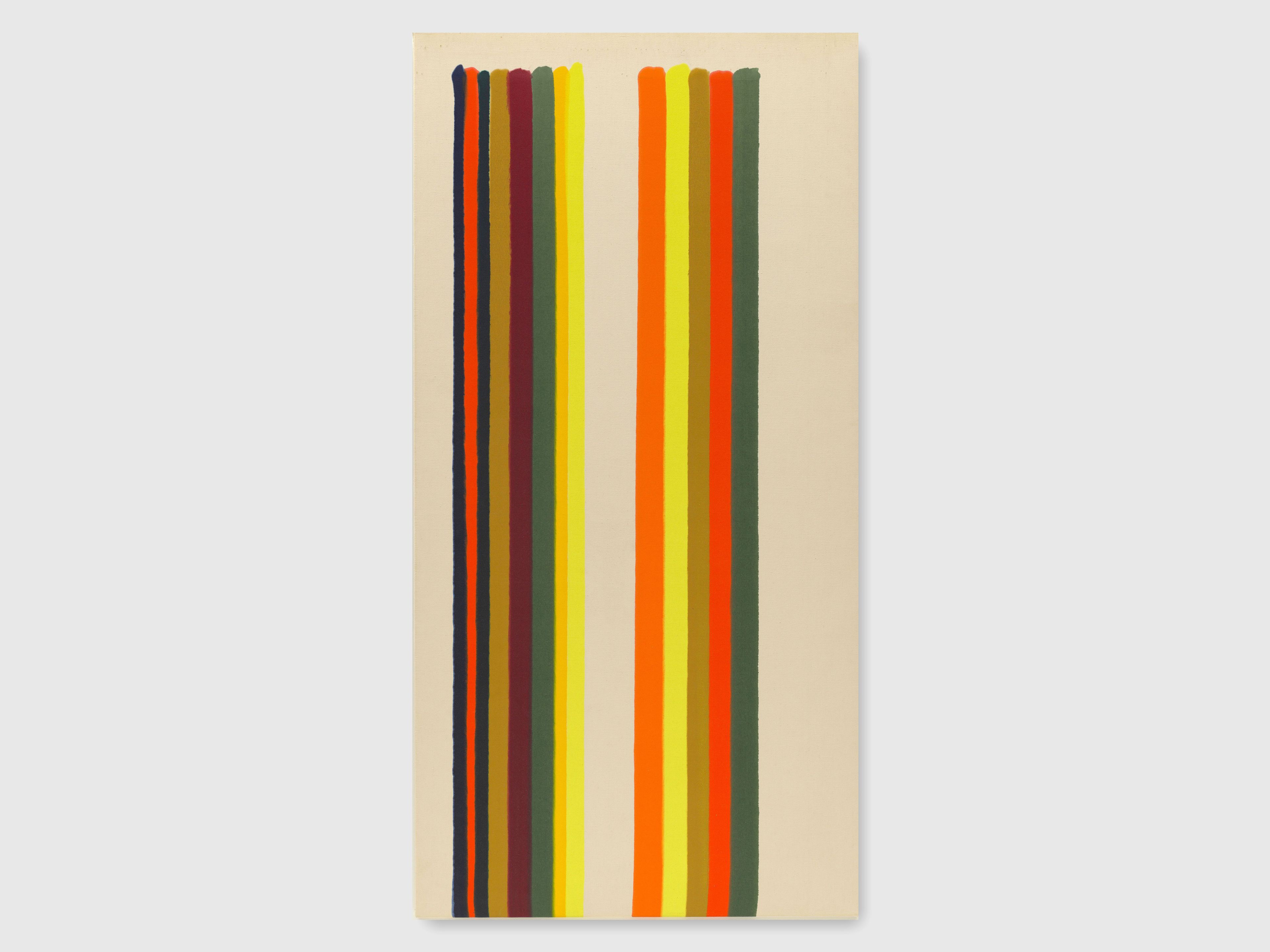
Flavin met Donald Judd in 1962. The two artists became firm friends and, as a critic, Judd wrote a review in Arts Magazine of Flavin’s Kaymar exhibition: “Flavin’s show is one of the most interesting I’ve seen this year.” Referring specifically to three fluorescent tubes, he wrote: “The simple, unstressed unconcluded placing of the adjacent lines relates to that kind of placing in Morris Louis’s last paintings. The light is more particular and strong though, and the lines are not within an area.”

Flavin also figured prominently in Judd’s canonical essay “Specific Objects,” written the following year, and Judd selected an image of three fluorescent tubes to accompany its initial publication.
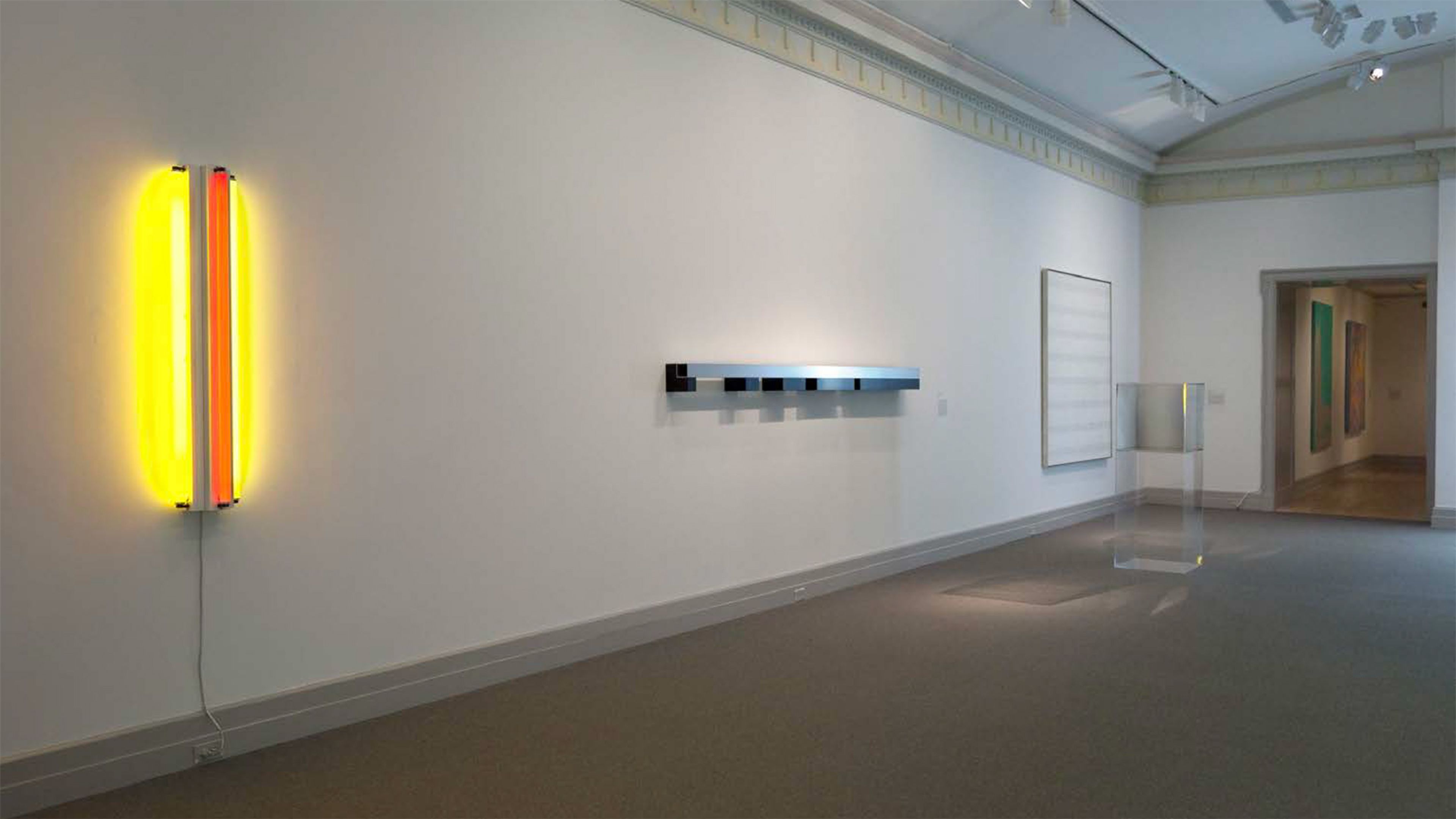
Installation view, Aspects of Minimalism: Selections from East End Collections, Guild Hall, East Hampton, 2016
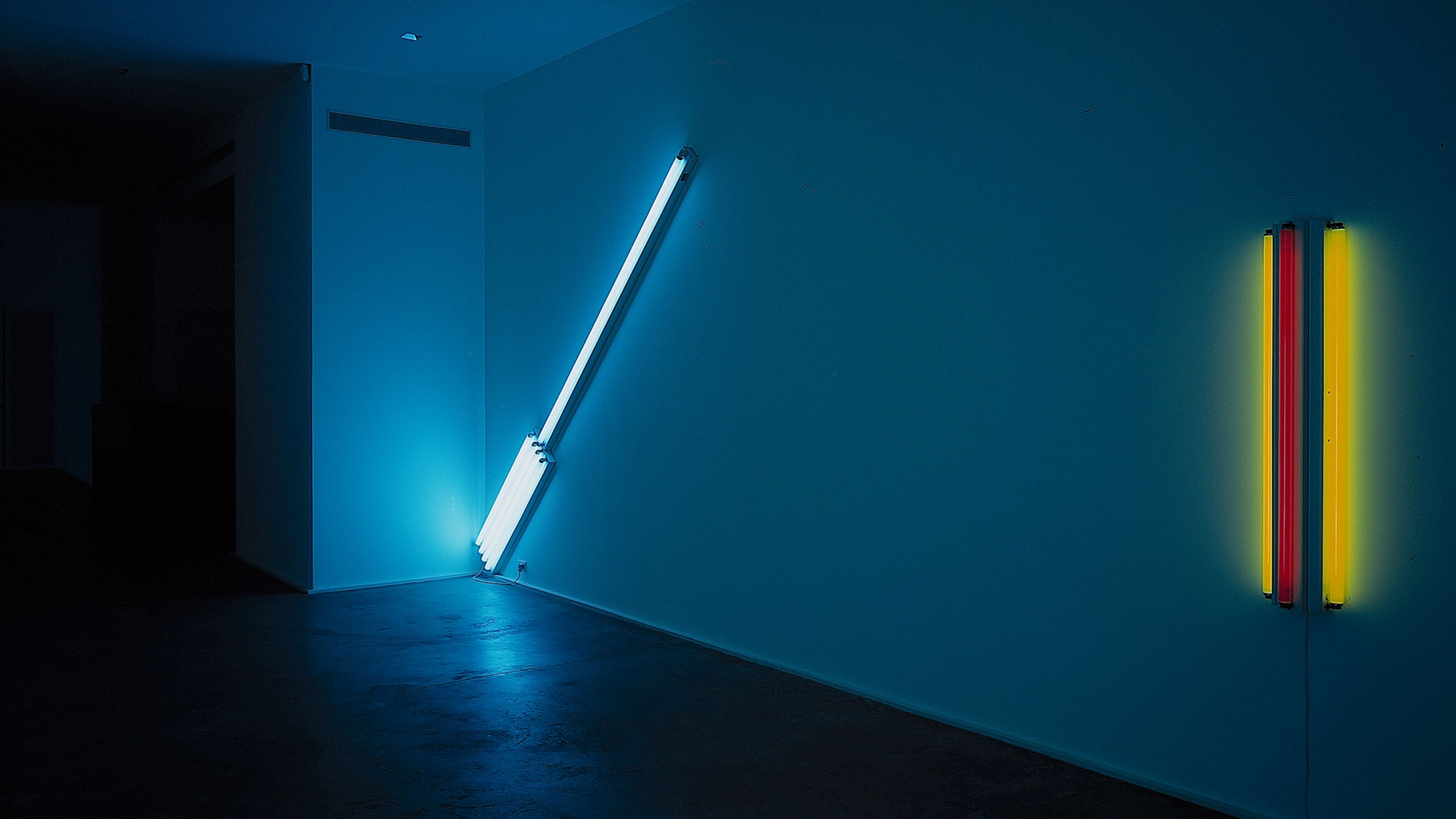
Installation view, Dan Flavin: Works from the 1960s, Zwirner & Wirth, New York, 2000
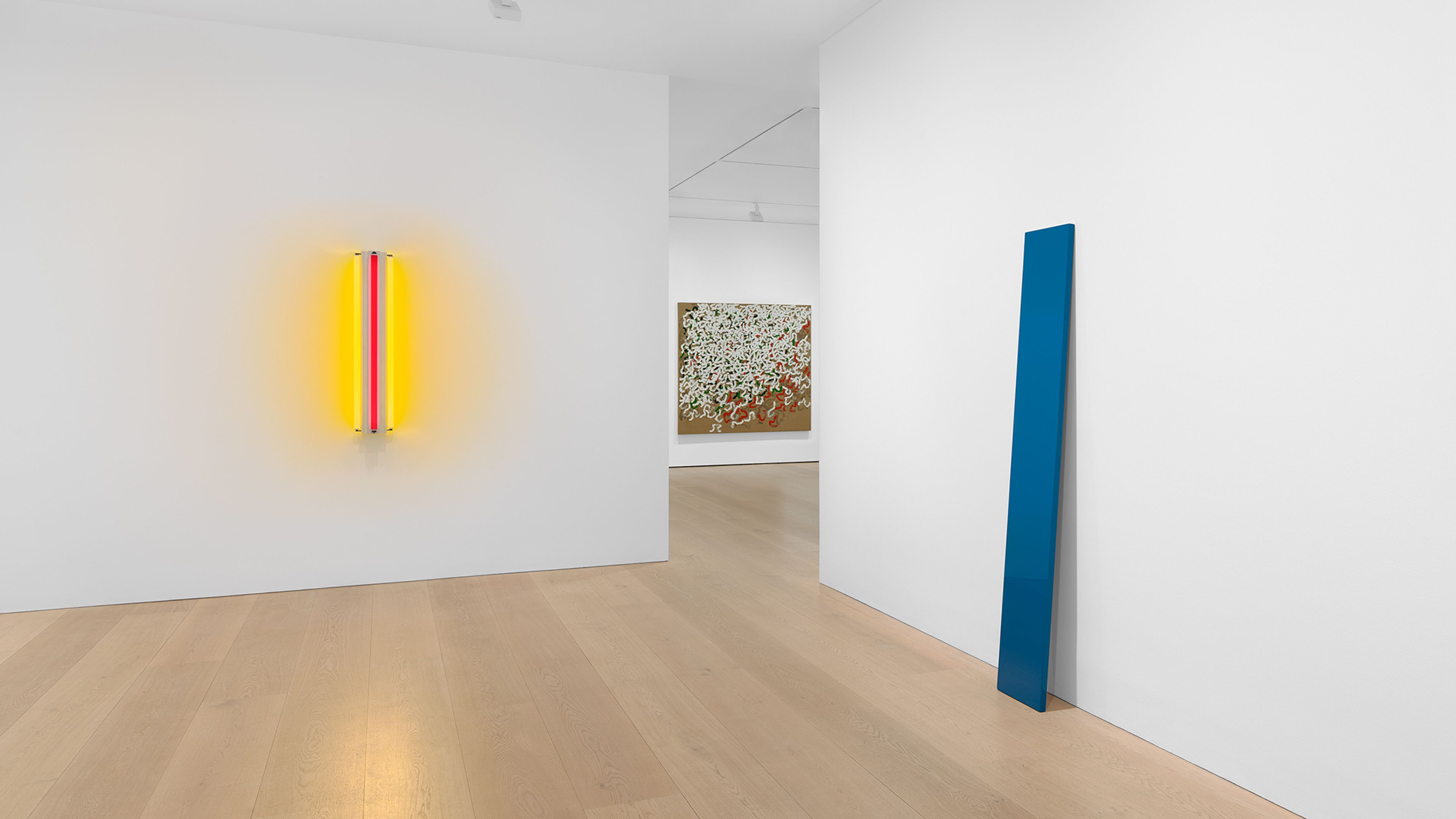
 

Three fluorescent tubes was originally owned by the noted architect and collector Hanford Yang, who was known for bridging the gap between art and architecture in his designs and was an early supporter of Flavin’s work. “Contemporary works of art counterbalance the rational and regular life I lead as an architect,” Yang is quoted as saying in 1965. The work later passed into the prestigious collection of Reinhard Onnasch, a major European supporter of postwar American art.

Installation view, Flavin, Judd, McCracken, Ryman, Sandback, David Zwirner, London, 2026
“Flavin is the most magical and emblematic of the Minimalists.”

—Roberta Smith, The New York Times, 2018

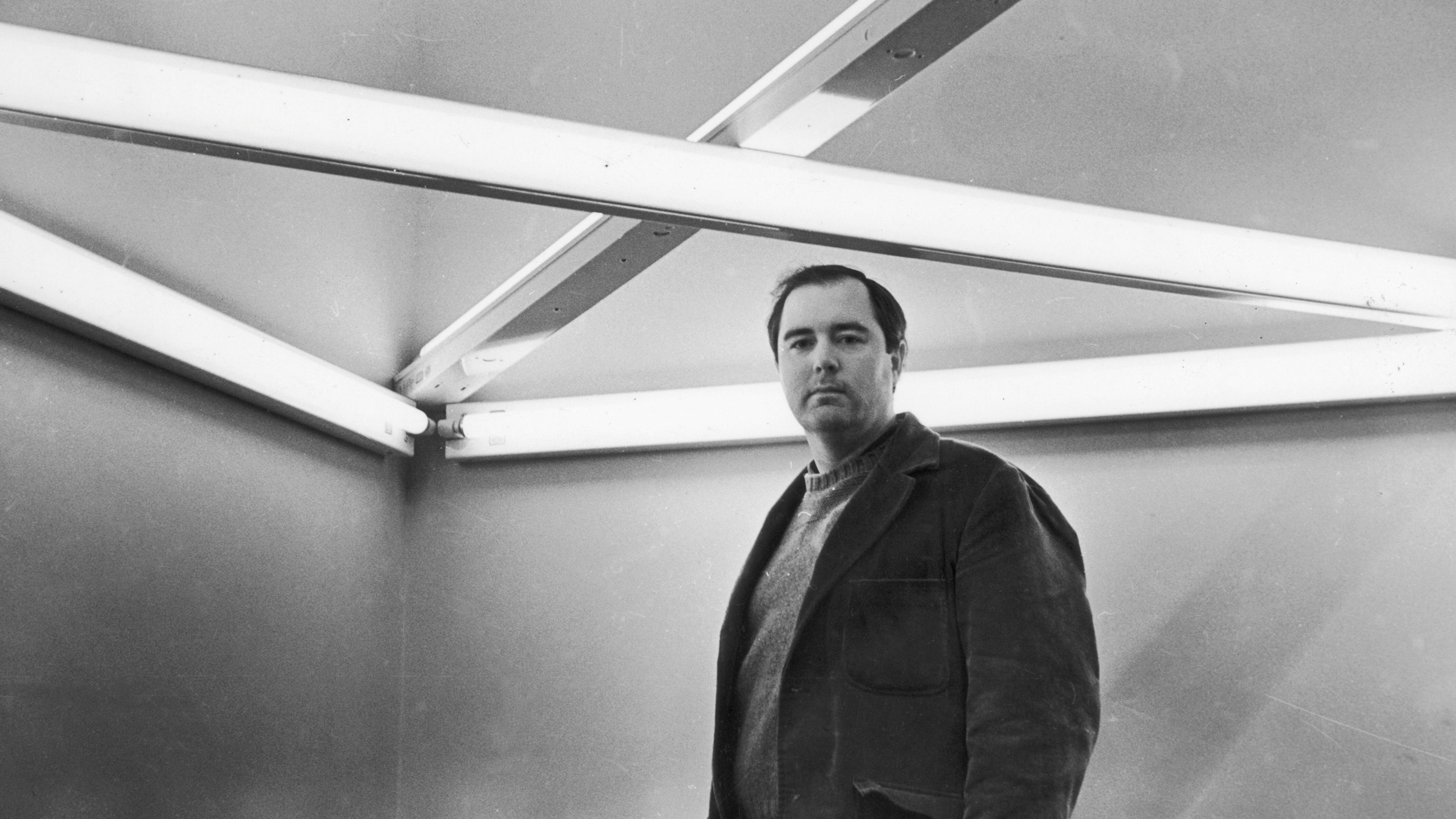
Dan Flavin, April 30, 1966. Photo by Fred W. McDarrah/MUUS Collection via Getty Images

Cover Image: Dan Flavin at Virginia Dwan Gallery, New York, 1968 (detail)

Black background, no image

Flavin, Judd, McCracken, Ryman, Sandback