Exceptional Works: Alex Katz
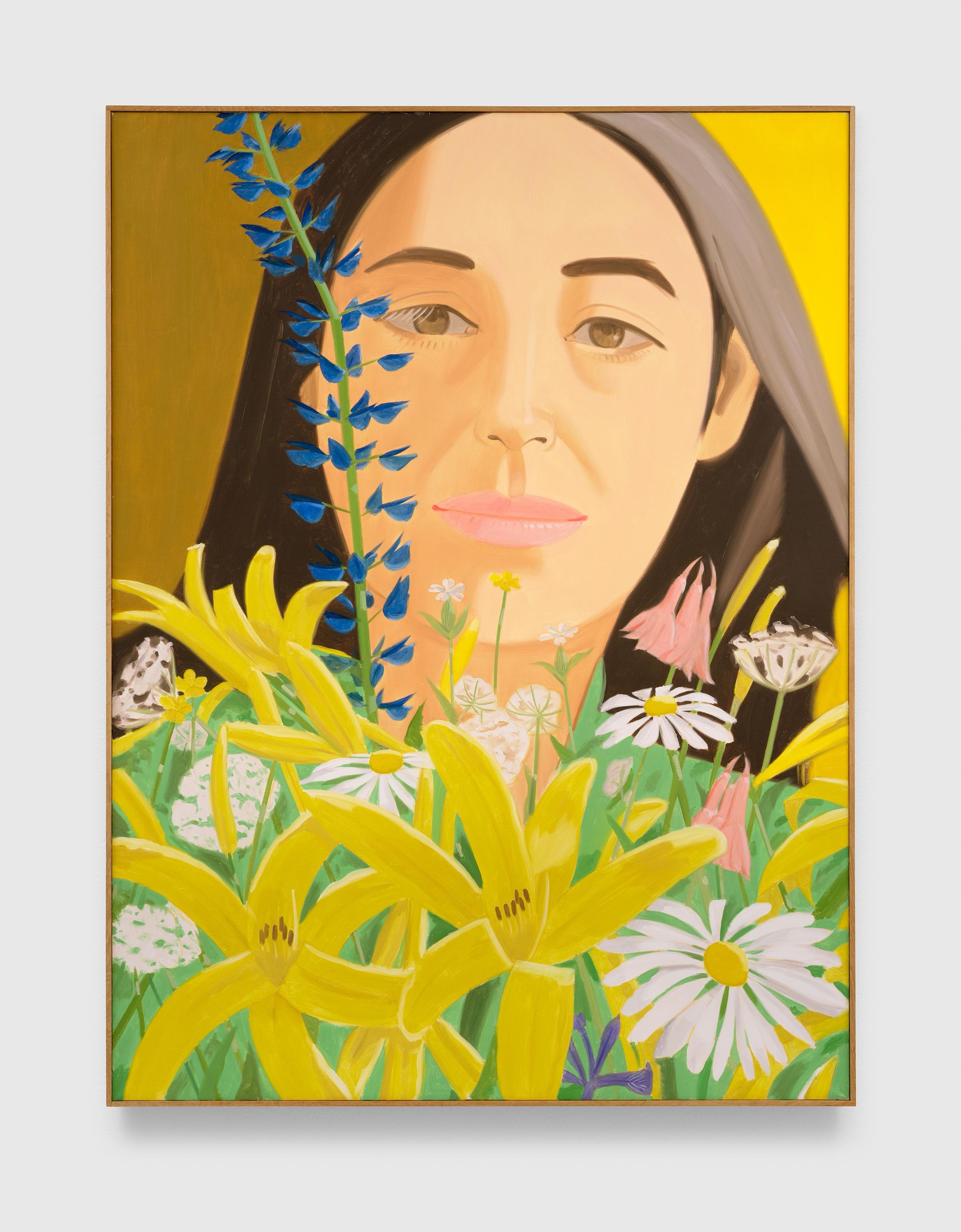
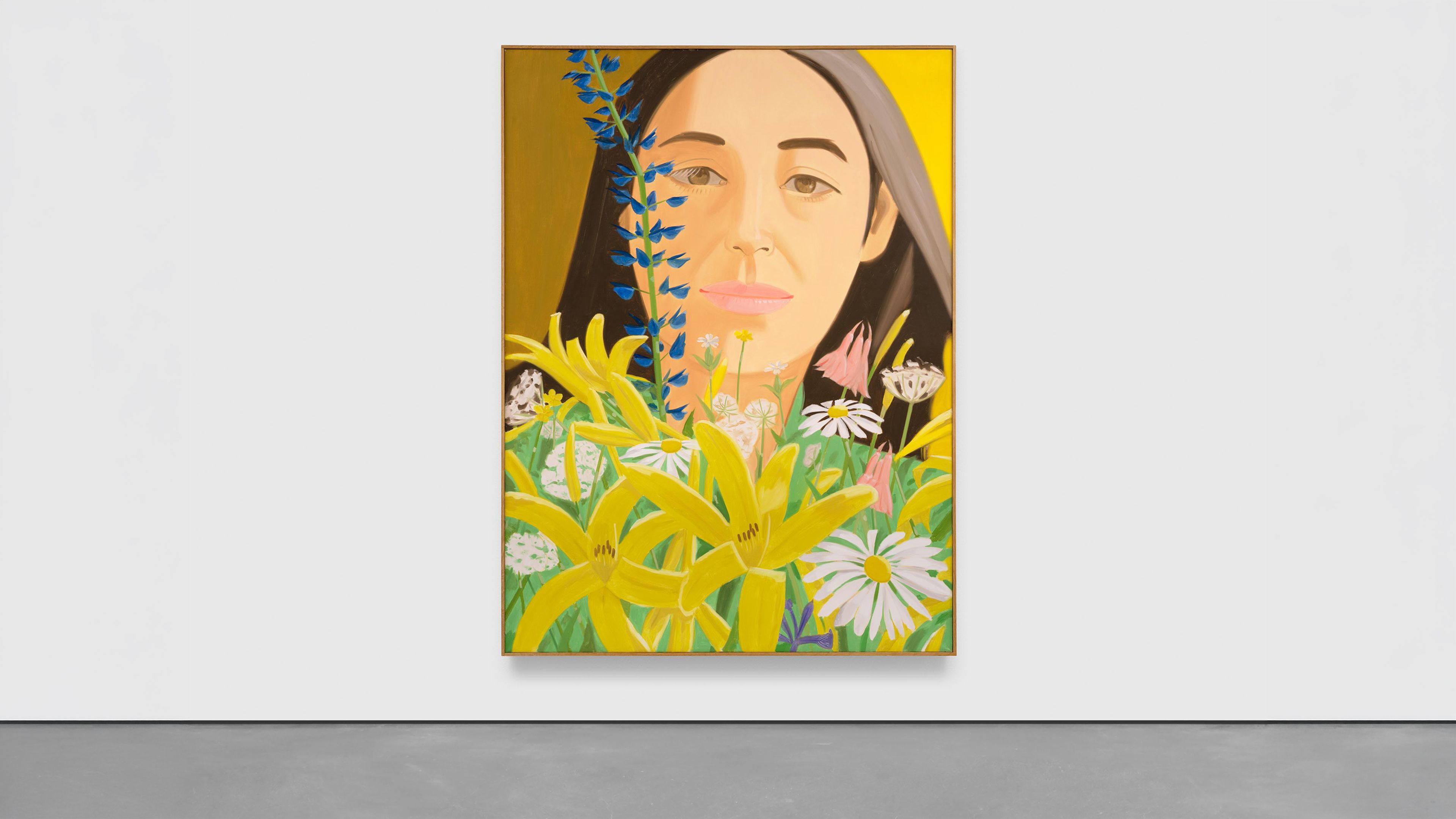
Ada and Flowers, 1980

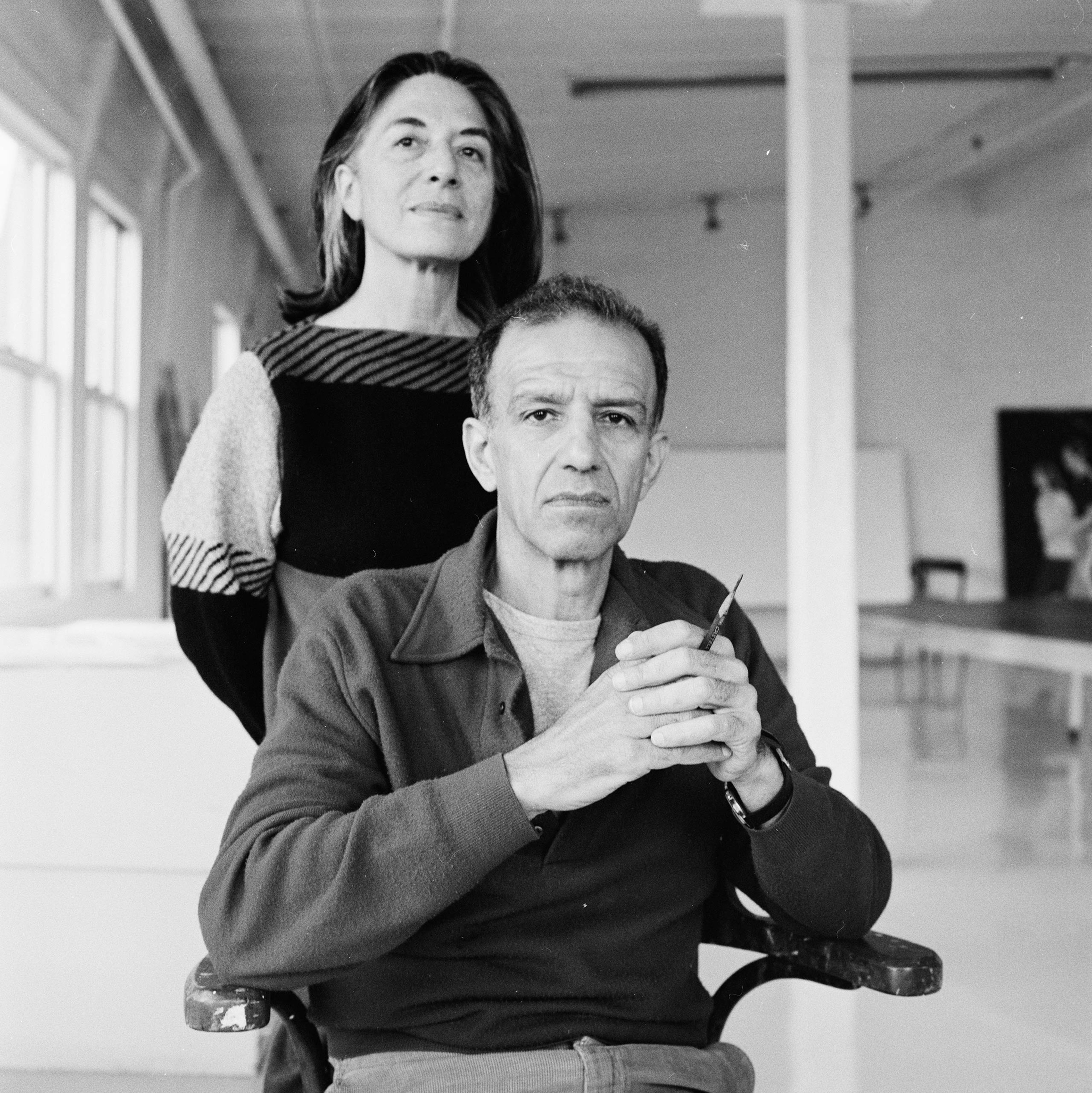
Alex and Ada Katz in New York, November 1985. Photo by Allen Ginsberg. © Allen Ginsberg Estate
“I think of myself as a modern person and I want my paintings to look that way,” Katz has explained. “They’re responsive to the immediate.”
Educated at Cooper Union, Katz garnered acclaim as part of the New York School in the late 1940s and early 1950s. Rather than aligning himself with the gestural abstraction being pursued by contemporaries including Jackson Pollock and Willem de Kooning, however, Katz sought to pair his admiration for Cézanne, Bonnard, and Matisse—whose cut out collages particularly influenced him—with a distinctly modern sensibility.
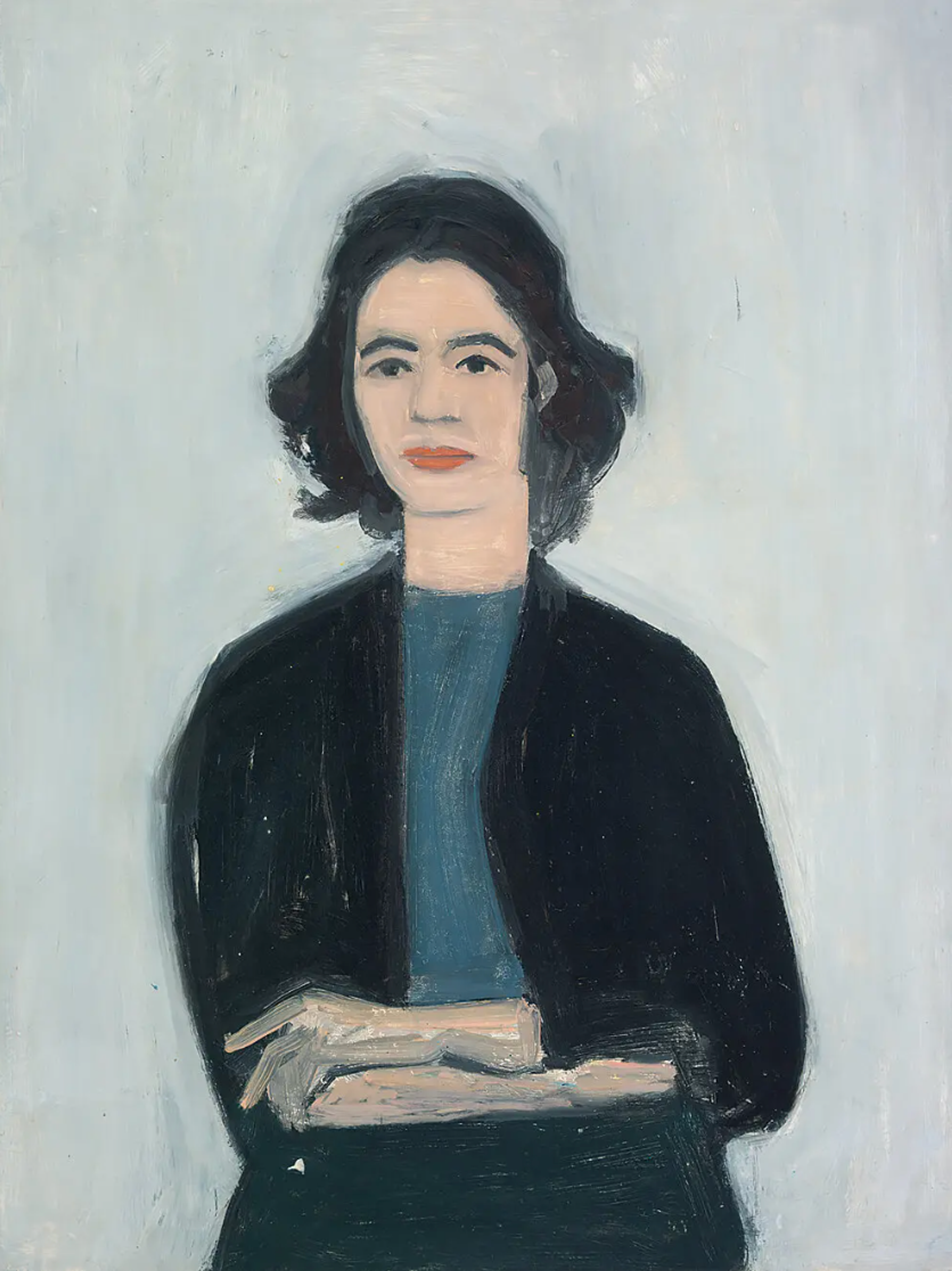
Alex Katz, Ada in Black Sweater, 1957. Photo courtesy of Colby College Museum of Art. © 2026 Alex Katz / Artists Rights Society (ARS), NY
In the late 1950s, even as American art turned decisively away from representation, Katz became increasingly interested in portraiture. His monumental, stylized images are instantly recognizable. “I’m not interested in narrative,” the artist has said. “I’m interested in presence.”
The artist met his future wife, née Ada Del Moro, in October 1957 at an opening for his two-person show at the Tanager Gallery in New York; he painted his first portrait of her the same year, and the couple were married in 1958. Ada has been a constant subject, appearing in more than two hundred and fifty portraits over the course of six decades. As Katz’s friend, the critic Stanford Schwartz, observed, “Ada gave him a complex human presence that I don’t think I had seen before in his work.”
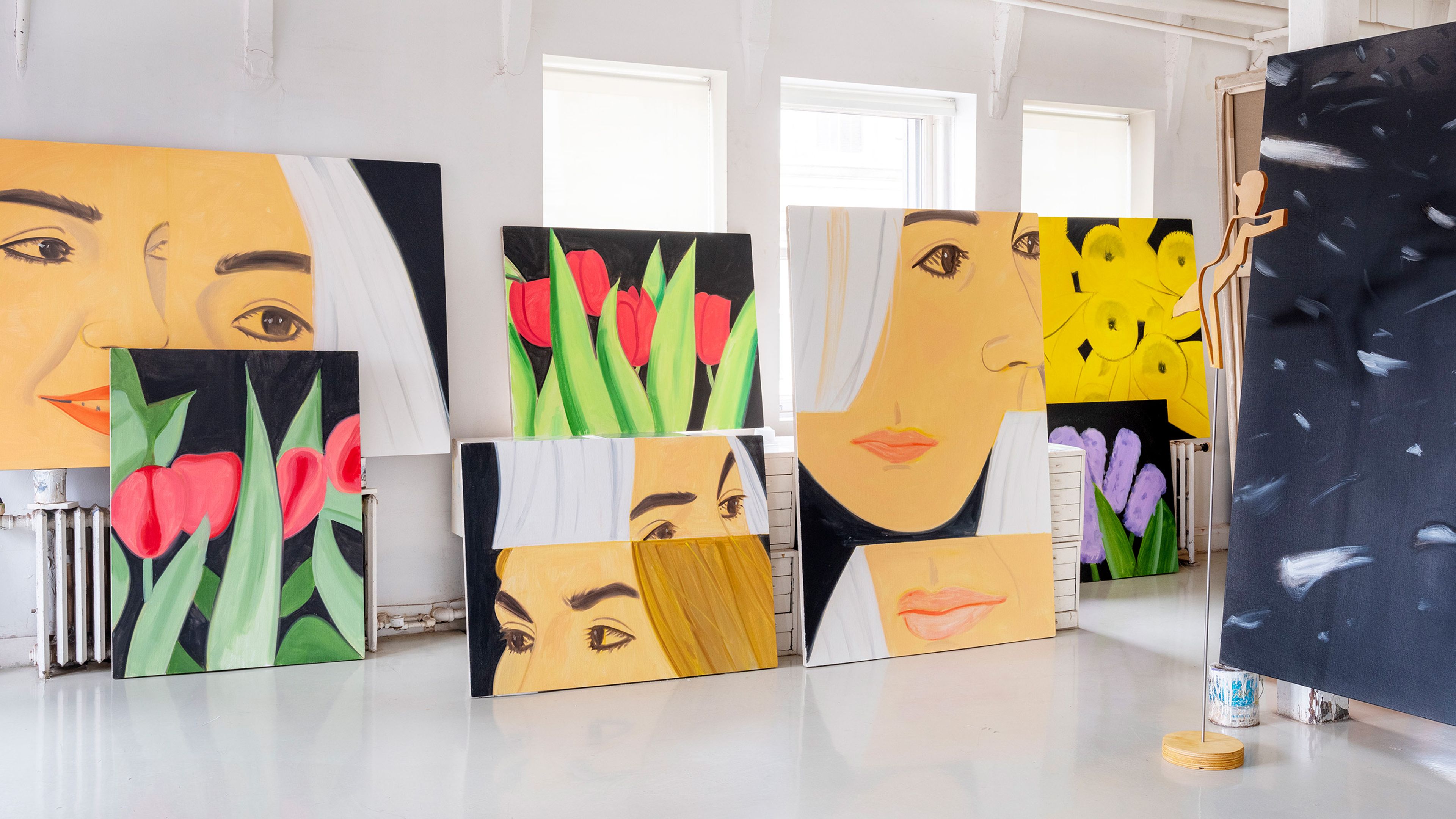
Alex Katz’s studio, 2022. Photo by Alec Soth. © 2026 Alex Katz / Artists Rights Society (ARS), NY
Alex Katz, Ada and Flowers, 1980 (detail)

Alex Katz, Ada with Superb Lily, 1967. Rose Art Museum. © 2026 Alex Katz / Artists Rights Society (ARS), NY
The floral arrangement harkens to Katz’s earliest depictions of singular blooms in the late 1960s. These extreme close-ups on small canvases were often sketched en plein air and painted during the artist’s summer residencies in Maine. The cluster in Ada and Flowers additionally prefigures a shift in Katz’s subject matter toward landscapes by the end of the 1980s. Katz returned to the subject of flowers in the early 2000s, producing paintings at larger scale that showcase numerous blooms isolated against monochromatic backdrops in his signature flat, vividly colored style.
In his dozens of portraits of Ada, Katz rarely couples her with flowers, with the exception of the earlier Ada with Superb Lily (1967; Rose Art Museum, Massachusetts). A related, smaller painting on Masonite titled Ada with Wild Flowers (1980) is in the collection of the Yale University Art Gallery, New Haven.
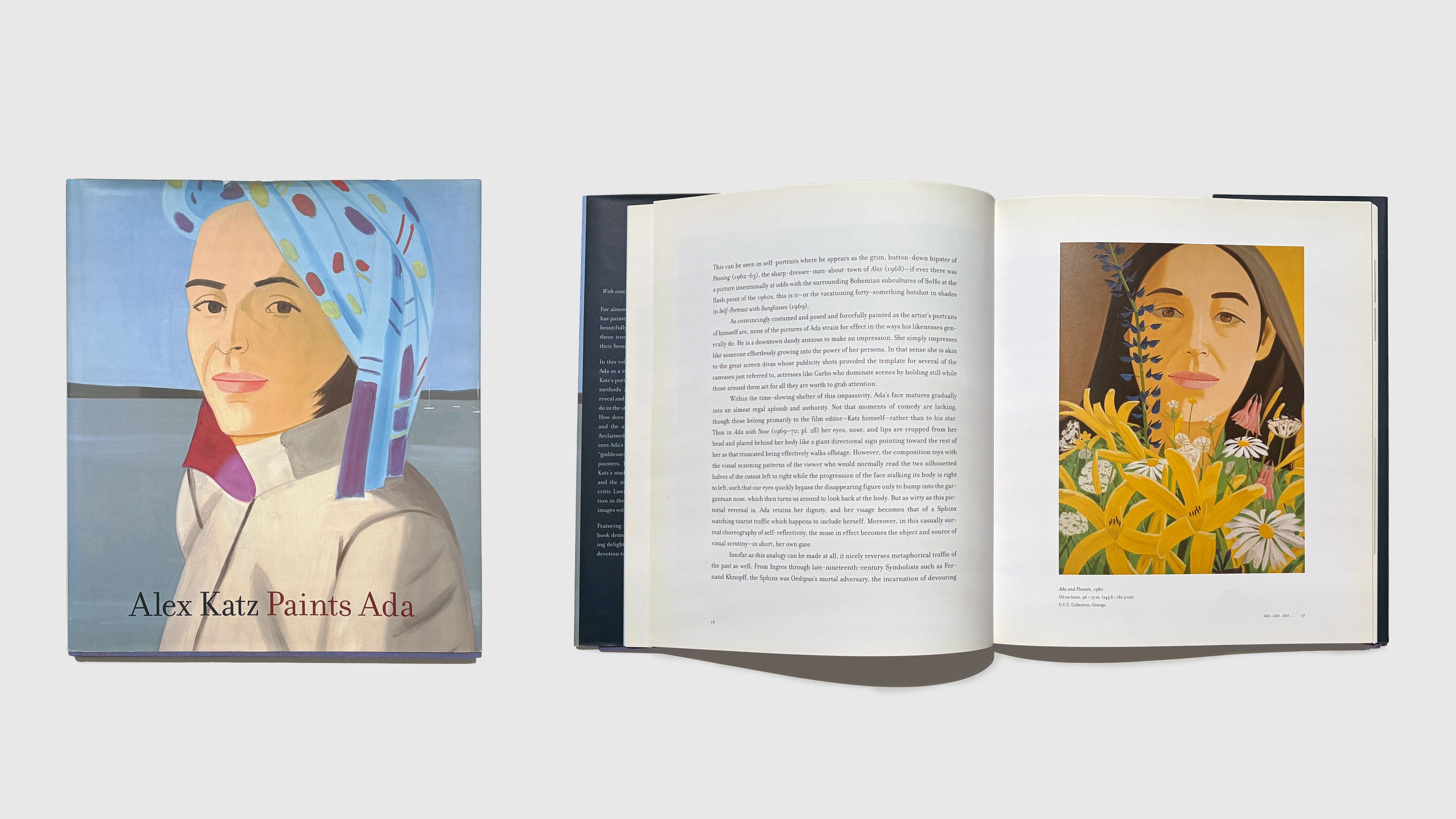
Cover and spread from Alex Katz Paints Ada, 2006
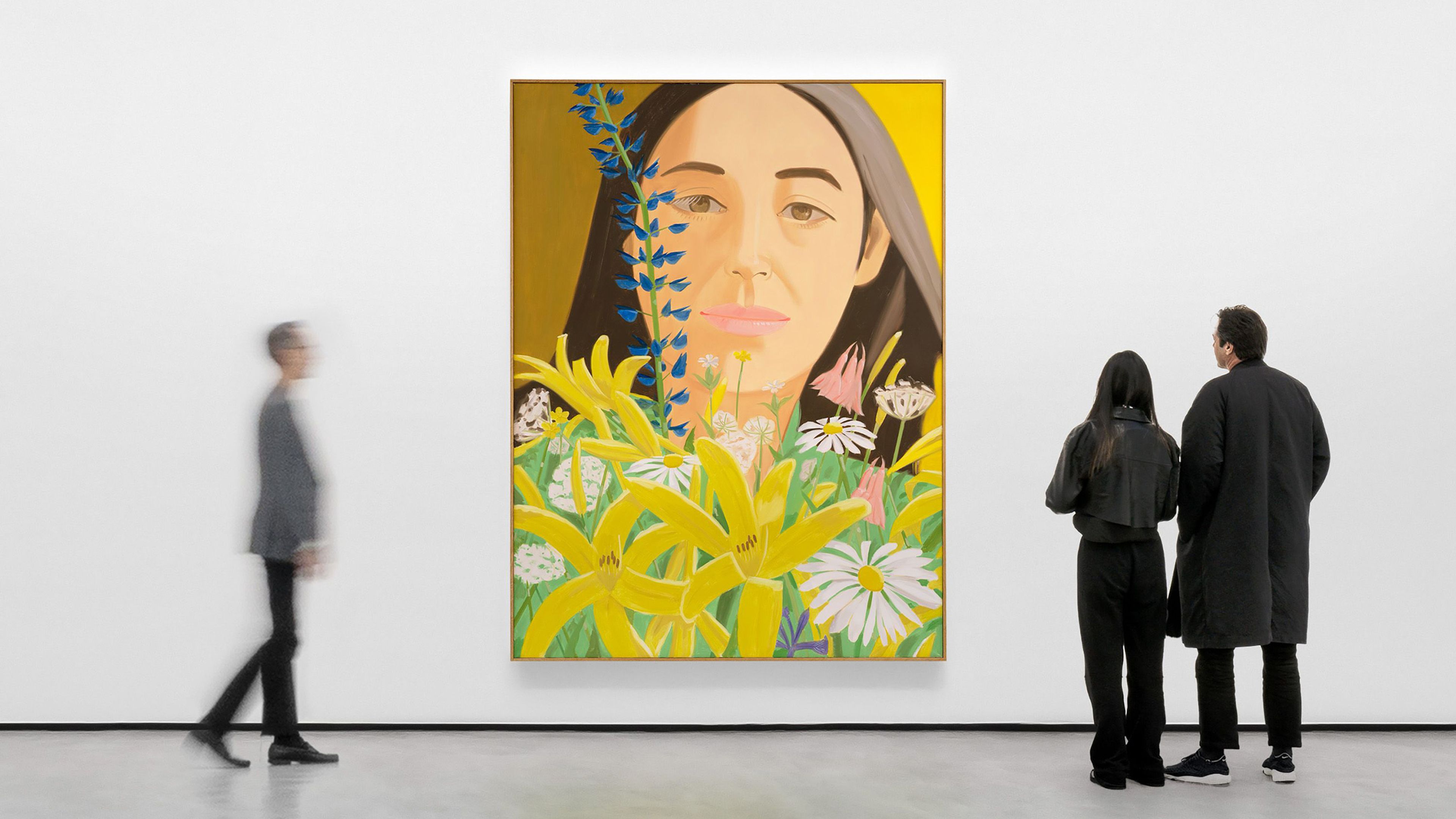
Installation view, The Great Unseen Collection: A Selection of Works from Joel and Carole Bernstein, David Zwirner, New York, 2026
Cover image: Ada and Alex Katz in Maine, 1990

The Great Unseen Collection: A Selection of Works from Joel and Carole Bernstein