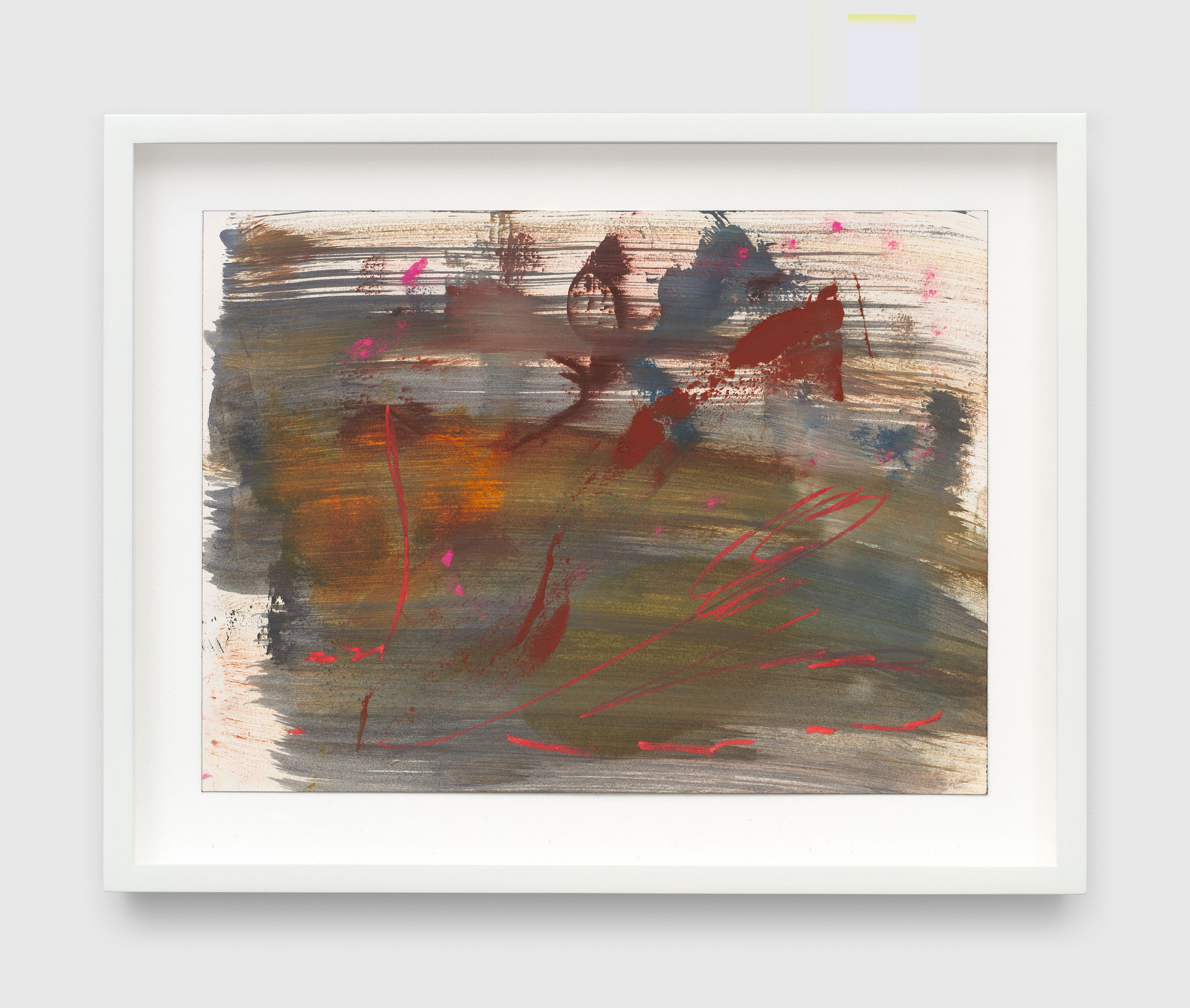
Emma McIntyre: This body holds / swamp stuff
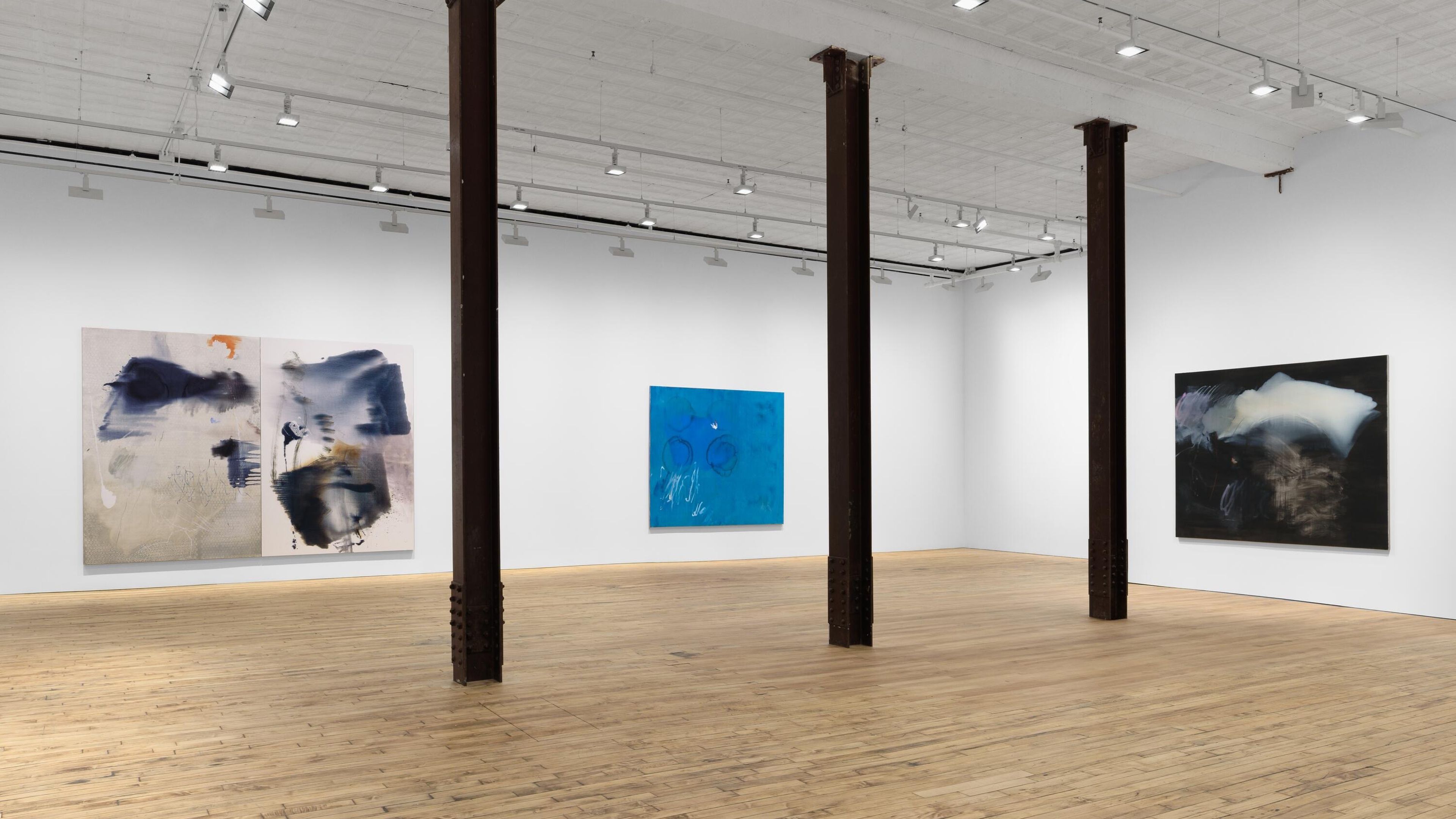
Installation view, Emma McIntyre: This body holds / swamp stuff, David Zwirner, New York, 2026

Now Open

September 18—October 24, 2026

Opening Reception

Friday, September 18, 6–8 PM

Location

New York: Tribeca

52 Walker Street

New York, New York 10013

Tue, Wed, Thu, Fri, Sat: 10 AM-6 PM

David Zwirner is pleased to present an exhibition of new paintings and works on paper by New Zealand–born and Los Angeles–based artist Emma McIntyre at the gallery’s Tribeca location in New York. Titled after a line from a poem by Diane di Prima, This body holds / swamp stuff is McIntyre’s third solo show with the gallery.

             this body holds swamp stuff     thick viscous life-generating Mud

—Diane di Prima, “Show Me Your Other Body”

Explore

Emma McIntyre:  This body holds /
swamp stuff
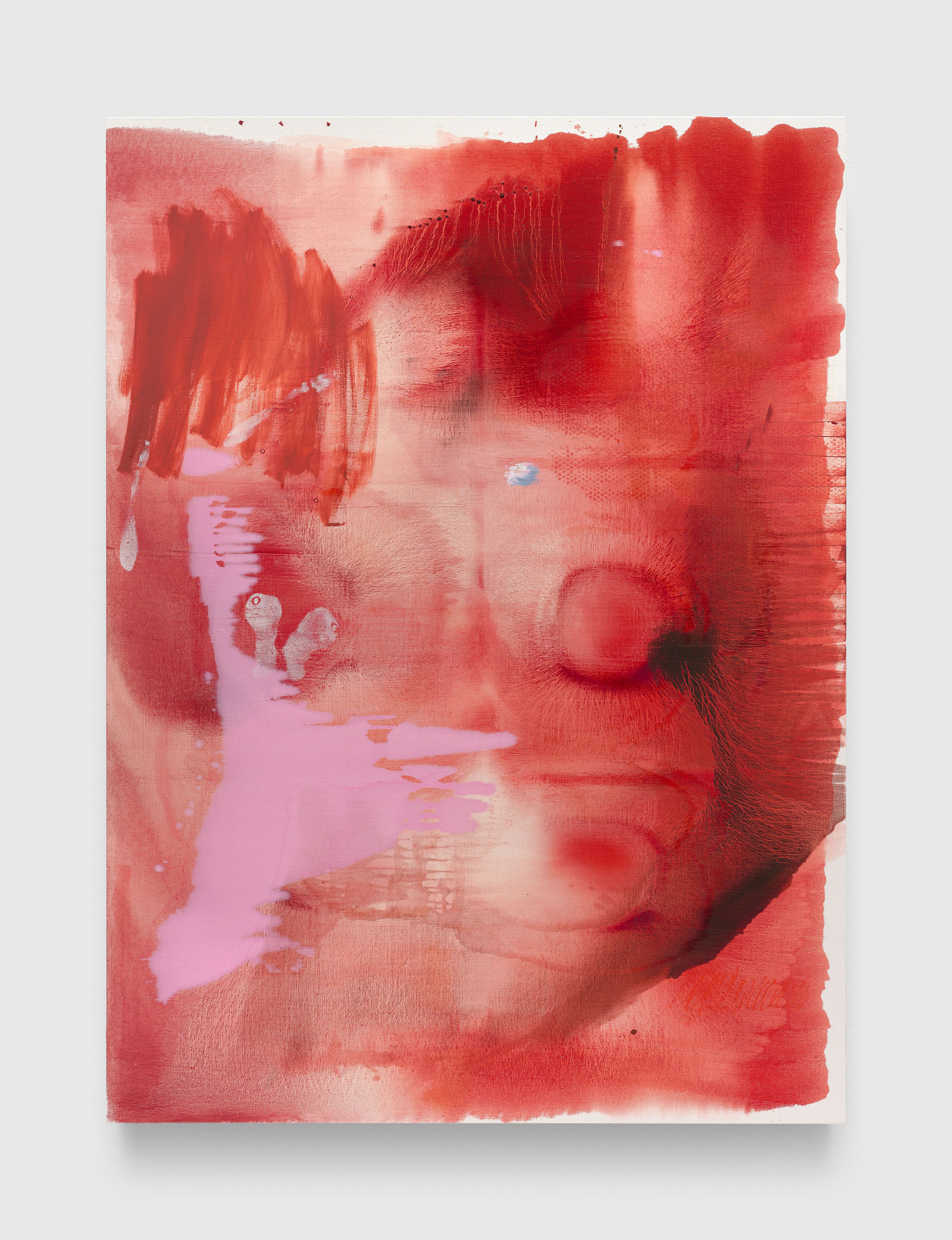
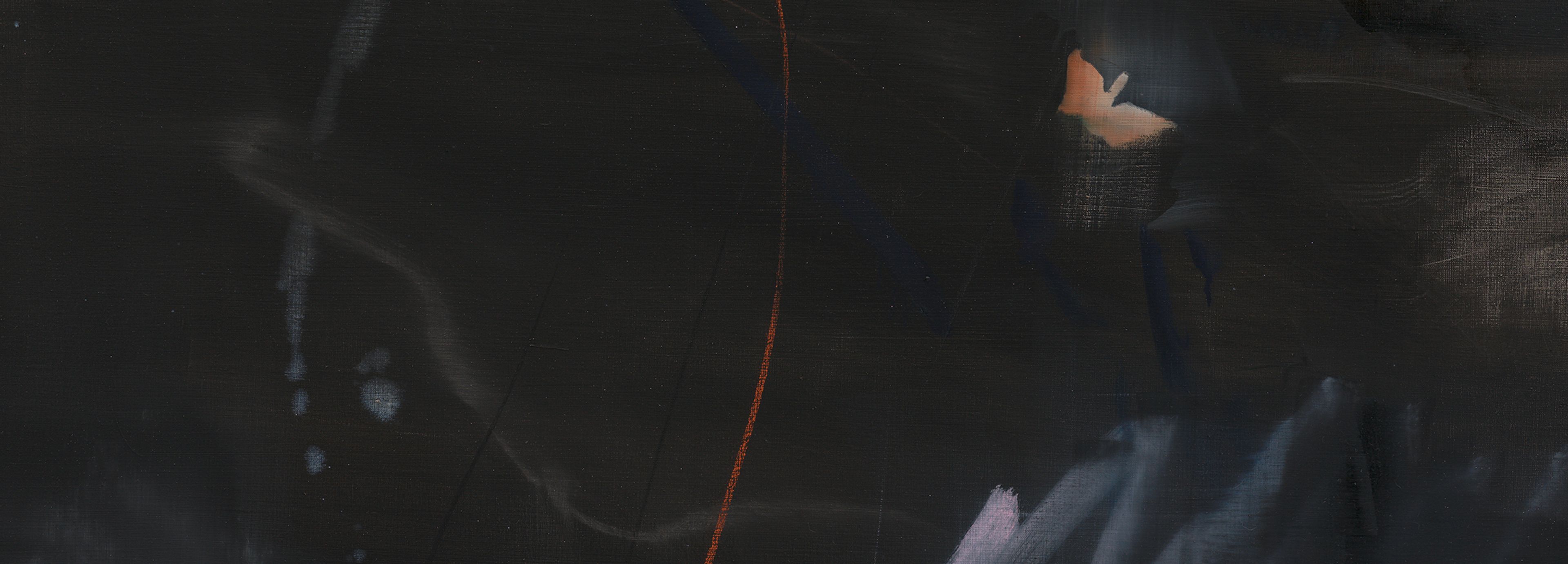
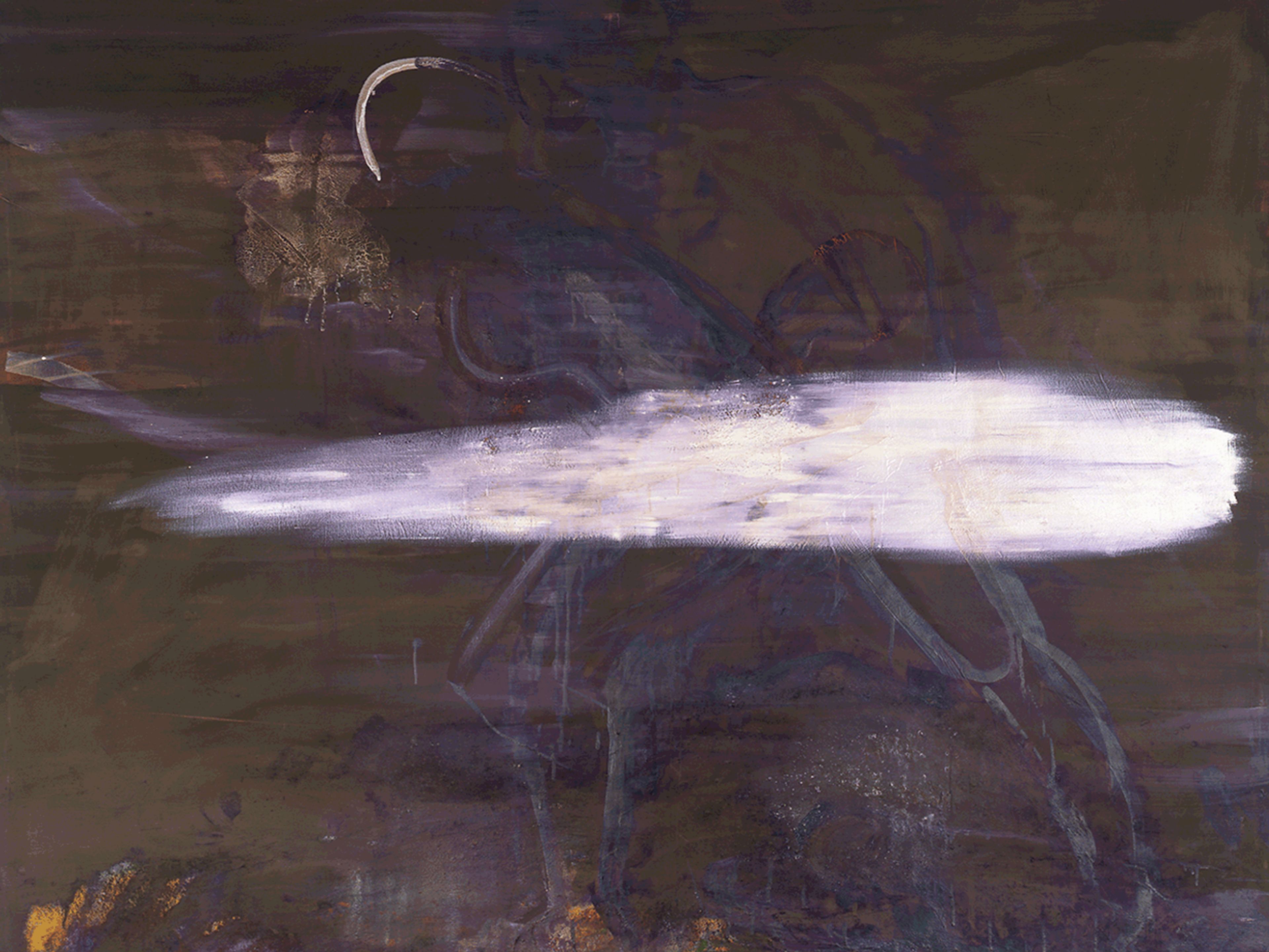
Thrumming with gestural and somatic energy, McIntyre’s abstractions probe the alchemical possibilities of the painted medium. The artist initiates a call and response between her hand and her materials, which include oils as well as unconventional substances such as oxidized iron and copper. McIntyre pours, impresses, and combines these pigments across the canvas, creating atmospheric and multilayered paintings that revel in a state of flux; slipping between order and chaos, spontaneity and deliberation, their surfaces shift constantly as she works—and as the viewer beholds them.

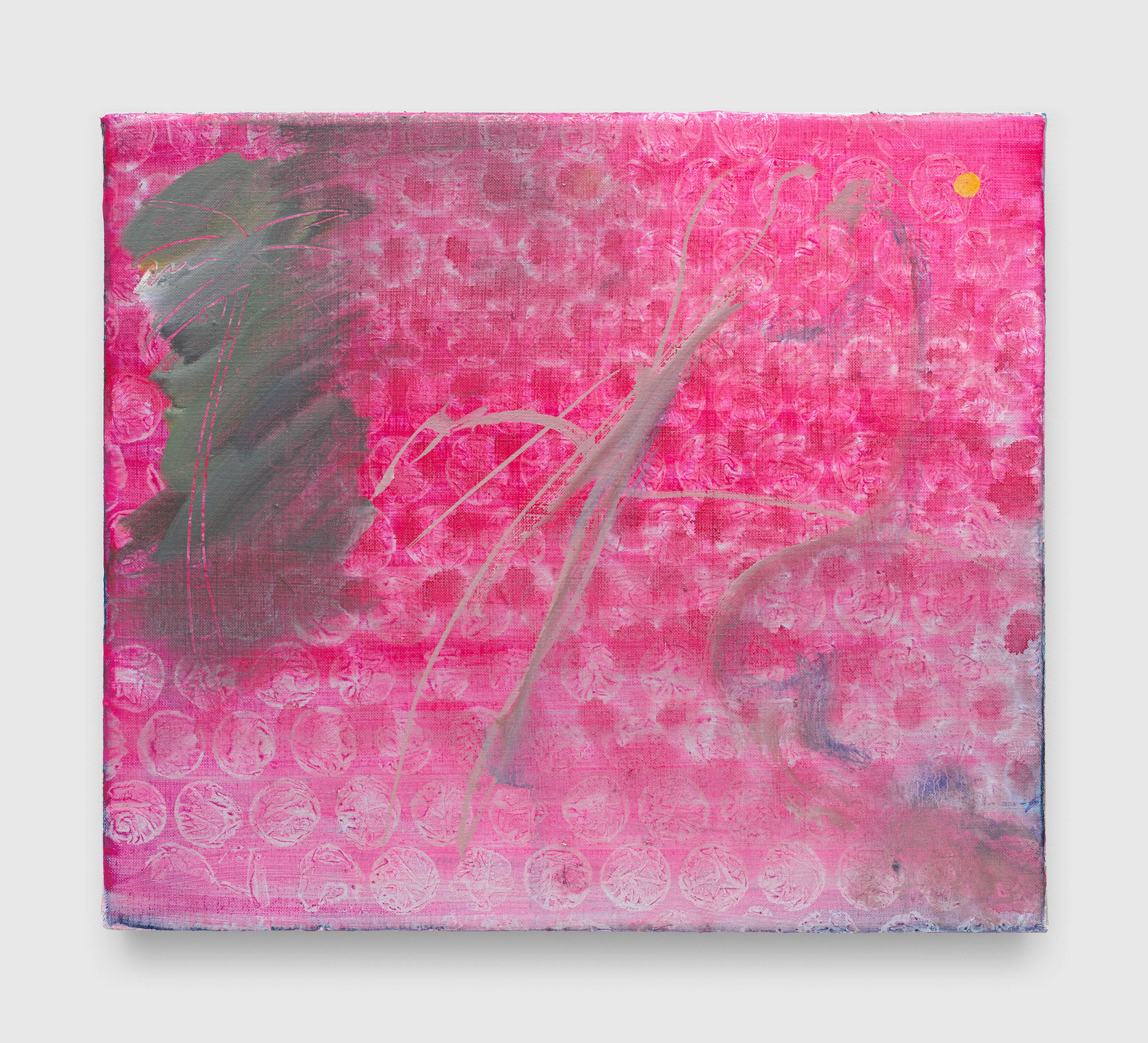
The works on view, all made in 2026, present material as a central point of interest. With its vivid and visceral palette of scarlet red, salmon, and bright pink, This iliaster flowers like the wind, serves as a kind of internal landscape, capturing the contours and forms of the inner body—as also suggested by an impression of the artist’s own arms and torso that is visible in white paint at the left edge of the composition. Ghostly imprints of the canvas’s stretcher bars emerge across the painting, nodding subversively to the modernist motif of the grid.

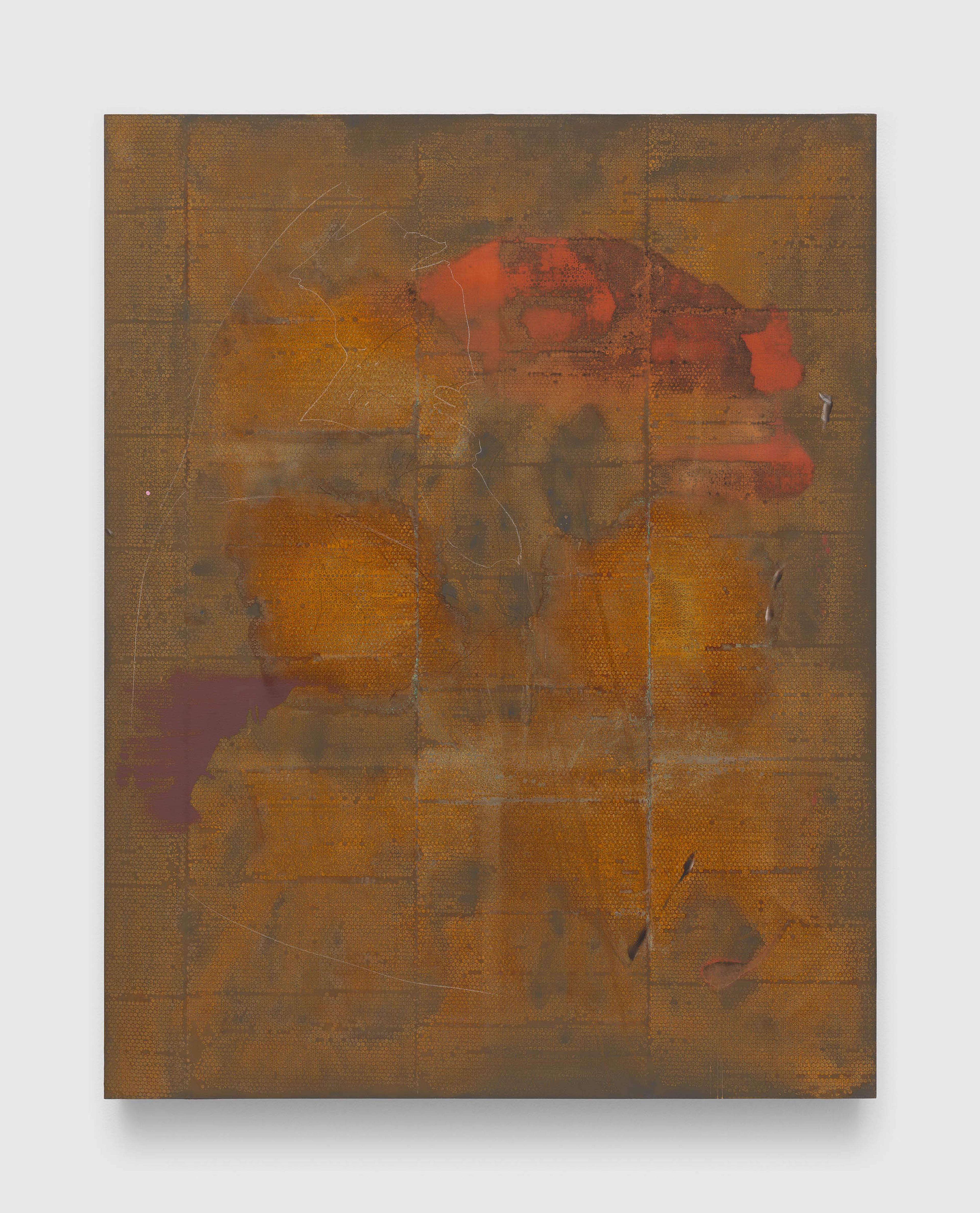
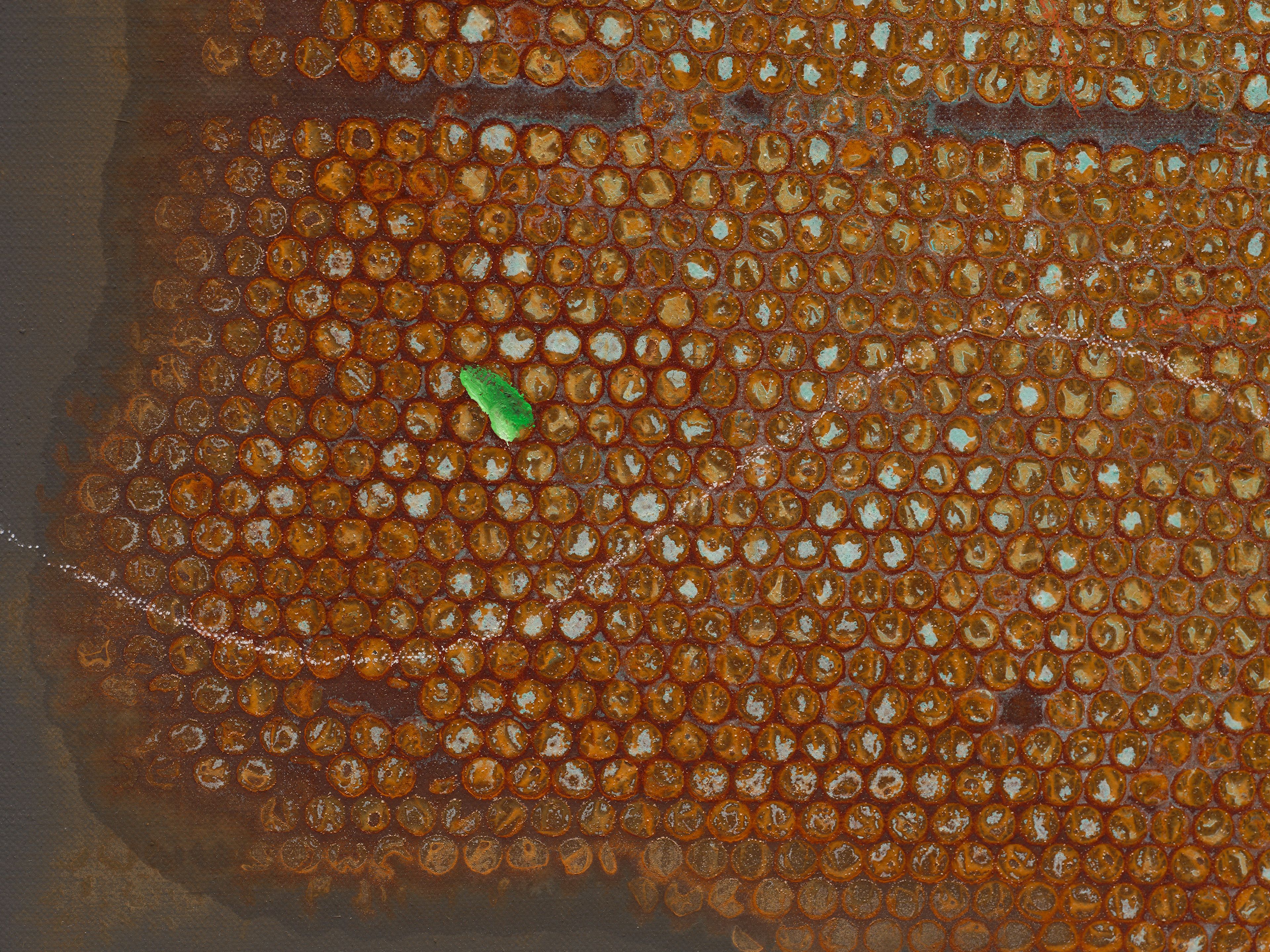
In Solve et coagula, a gray-ground painting, McIntyre pours an oxidizing agent over iron-based paint, creating vibrant rust-orange blooms that spread across the composition.

Sigmar Polke, Komet (Comet), 1982. Red lead, artificial resin, lacquer, and pigment on canvas

“I was thinking about Polke and where autonomy lies between the painter and the painting. I liked the idea that the rust would continue to change beyond my intervention.”

—Emma McIntyre

“Emma McIntyre paints abstractions that feel like warped-speed journeys through centuries of art.”

—J. Cabelle Ahn, writer and art historian
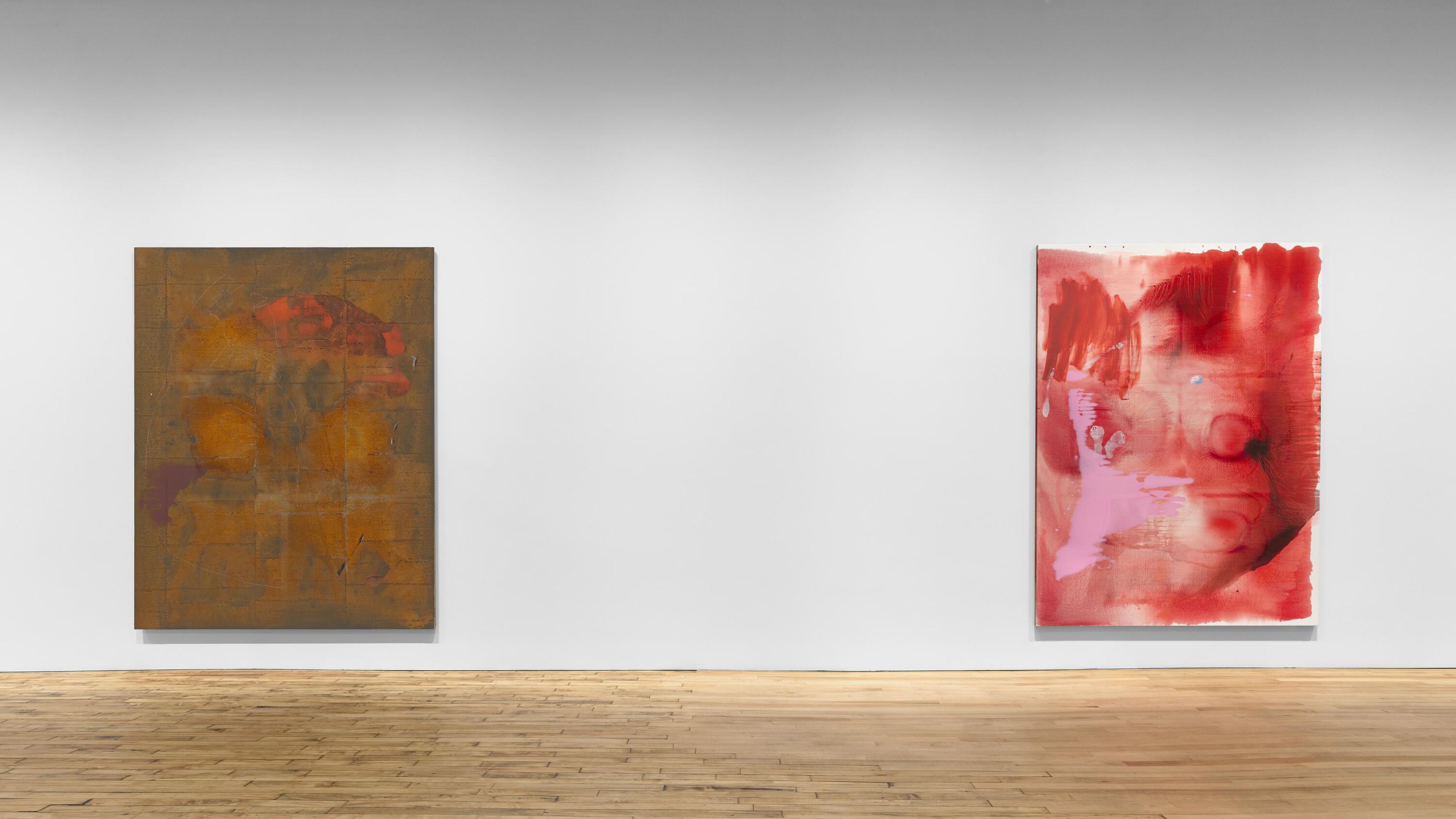
Installation view, Emma McIntyre: This body holds / swamp stuff, David Zwirner, New York, 2026
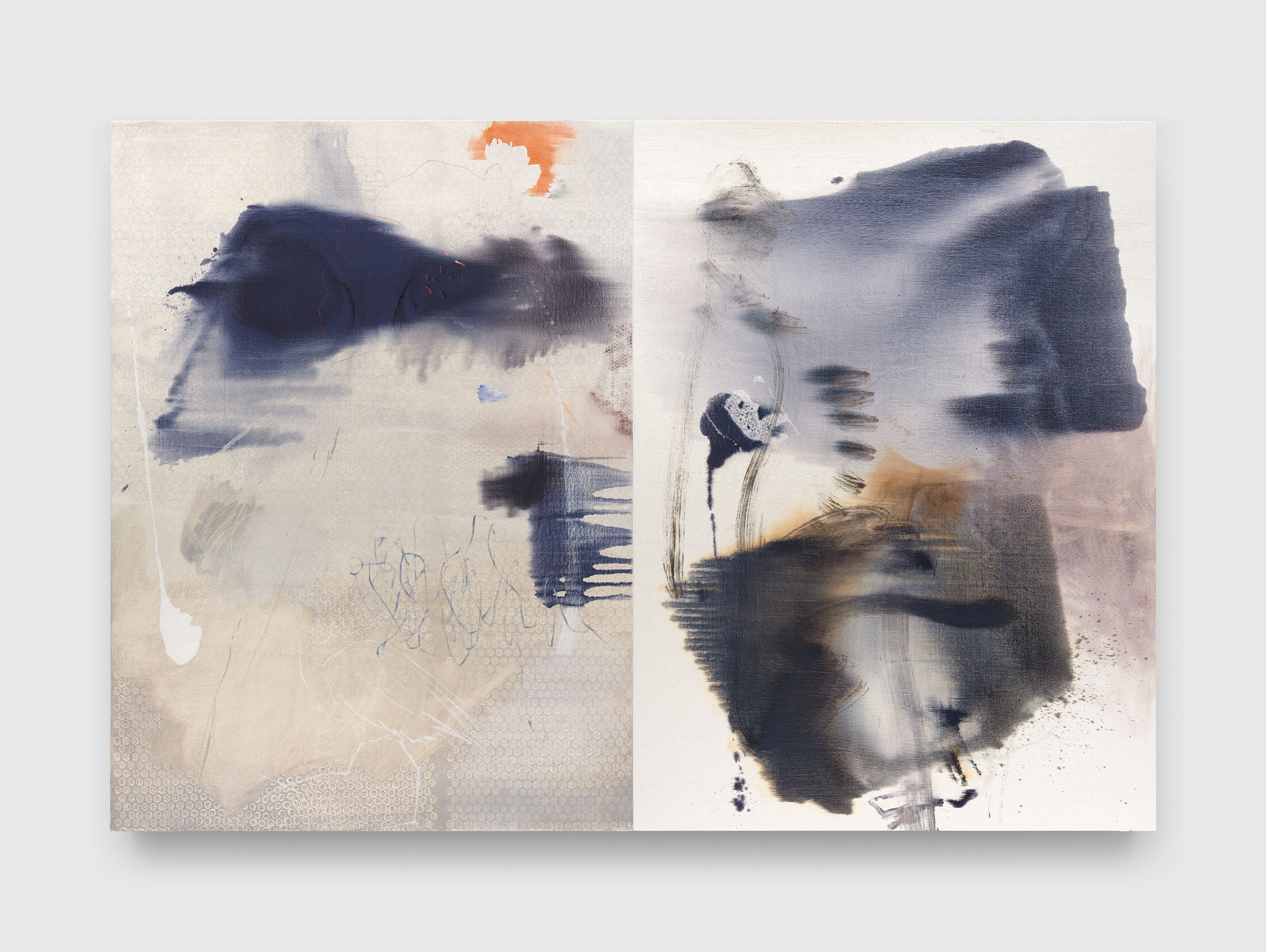
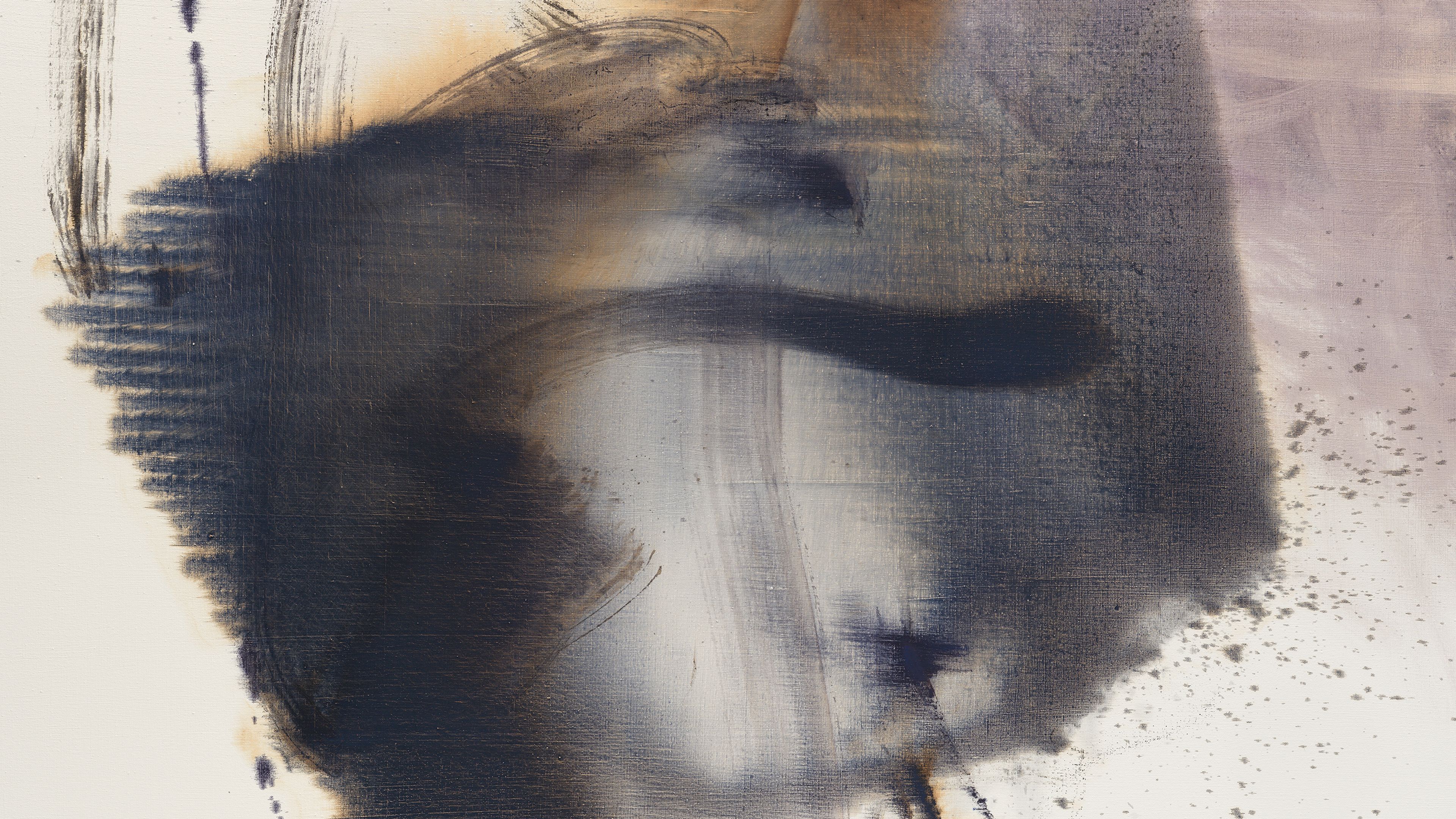
Colors and motifs echo between diverse compositions throughout the show, establishing an overarching poetic rhythm that ebbs and flows in a manner akin to Earth’s shifting seasons and weather systems.

Emma McIntyre, Violet for the temple veil, 2026 (detail)
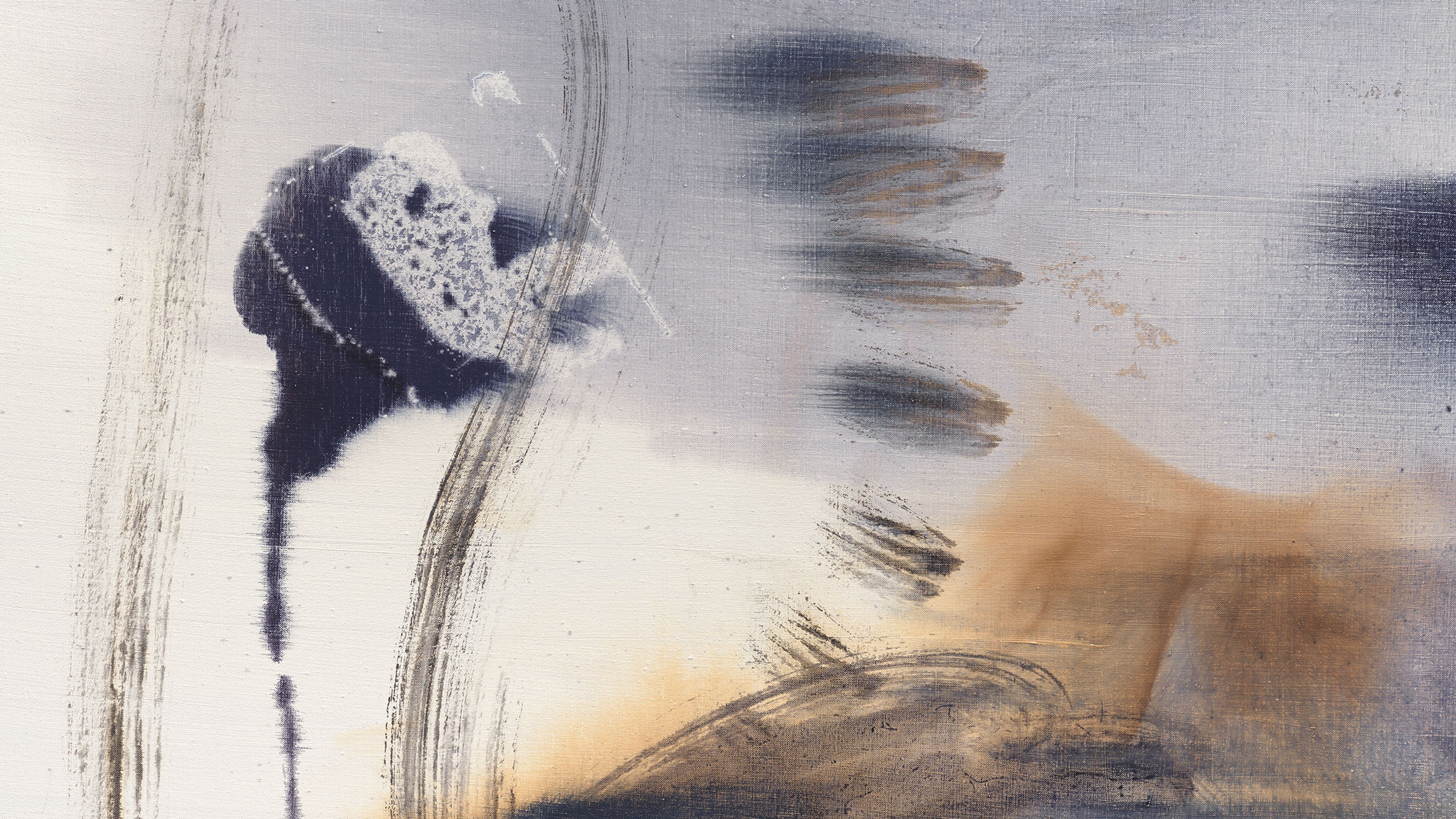
Emma McIntyre, Violet for the temple veil, 2026 (detail)
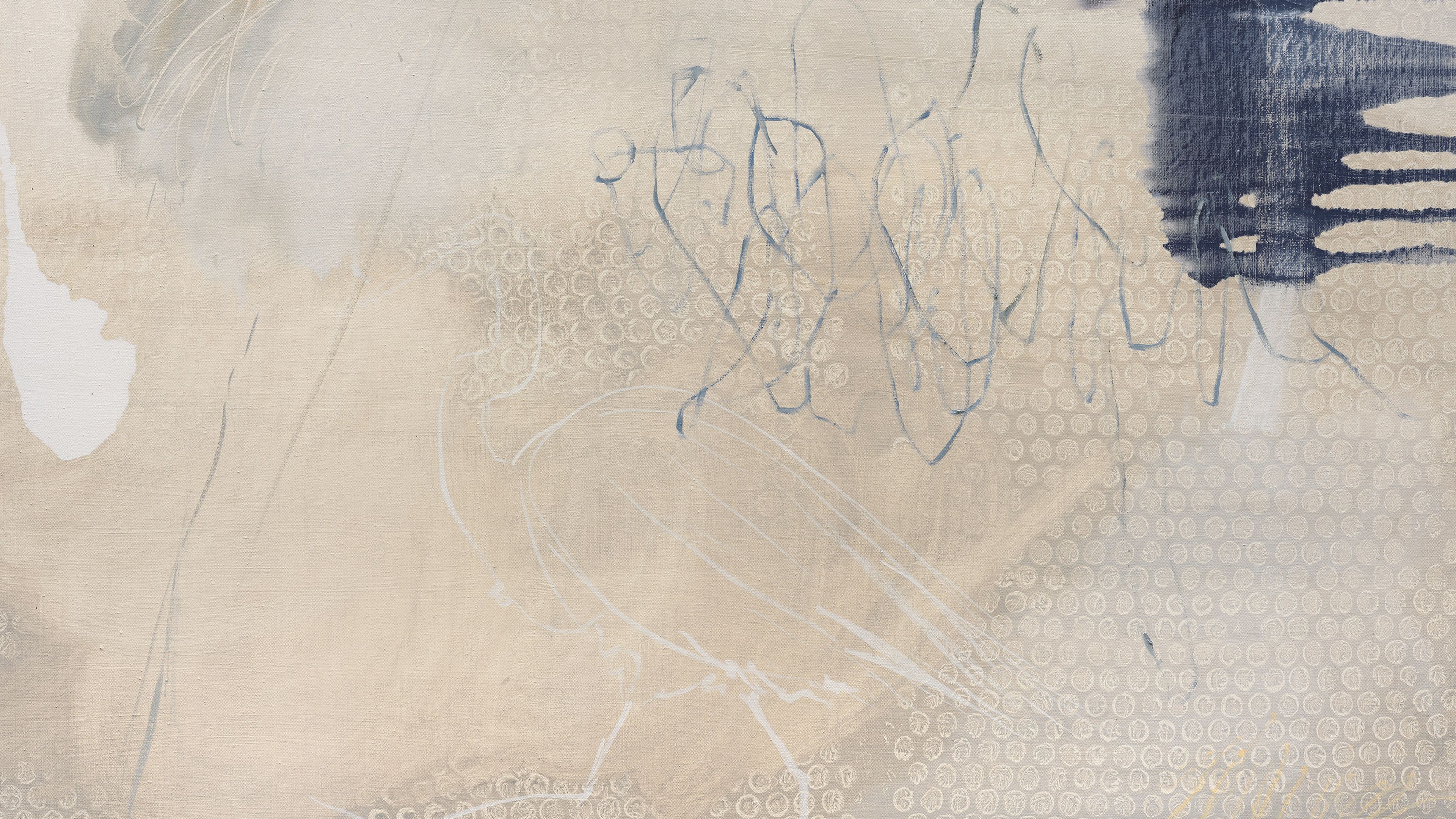
Emma McIntyre, Violet for the temple veil, 2026 (detail)


“A flick of the wrist can evoke a millennium of painting.”

—Emma McIntyre
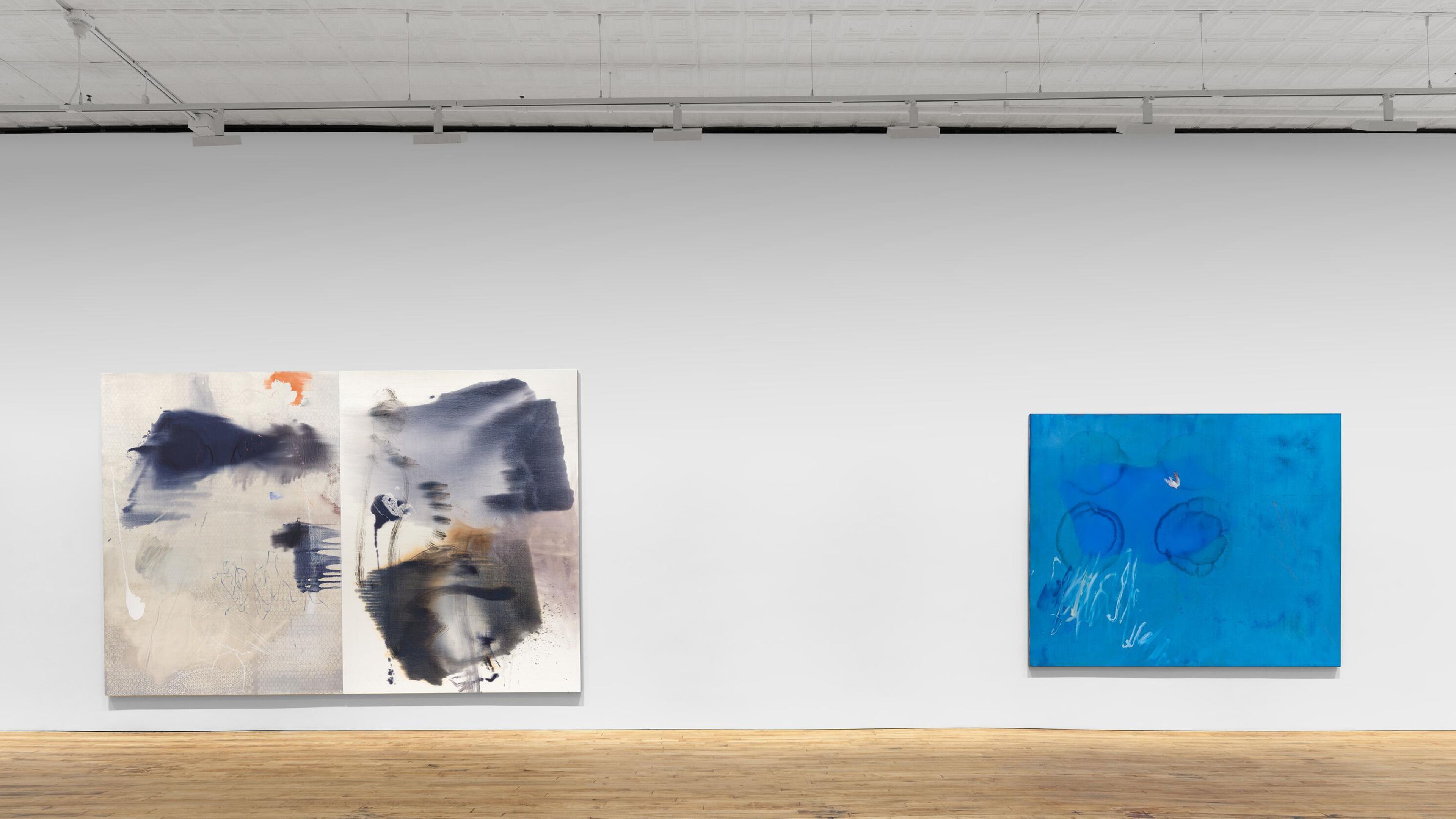
Installation view, Emma McIntyre: This body holds / swamp stuff, David Zwirner, New York, 2026
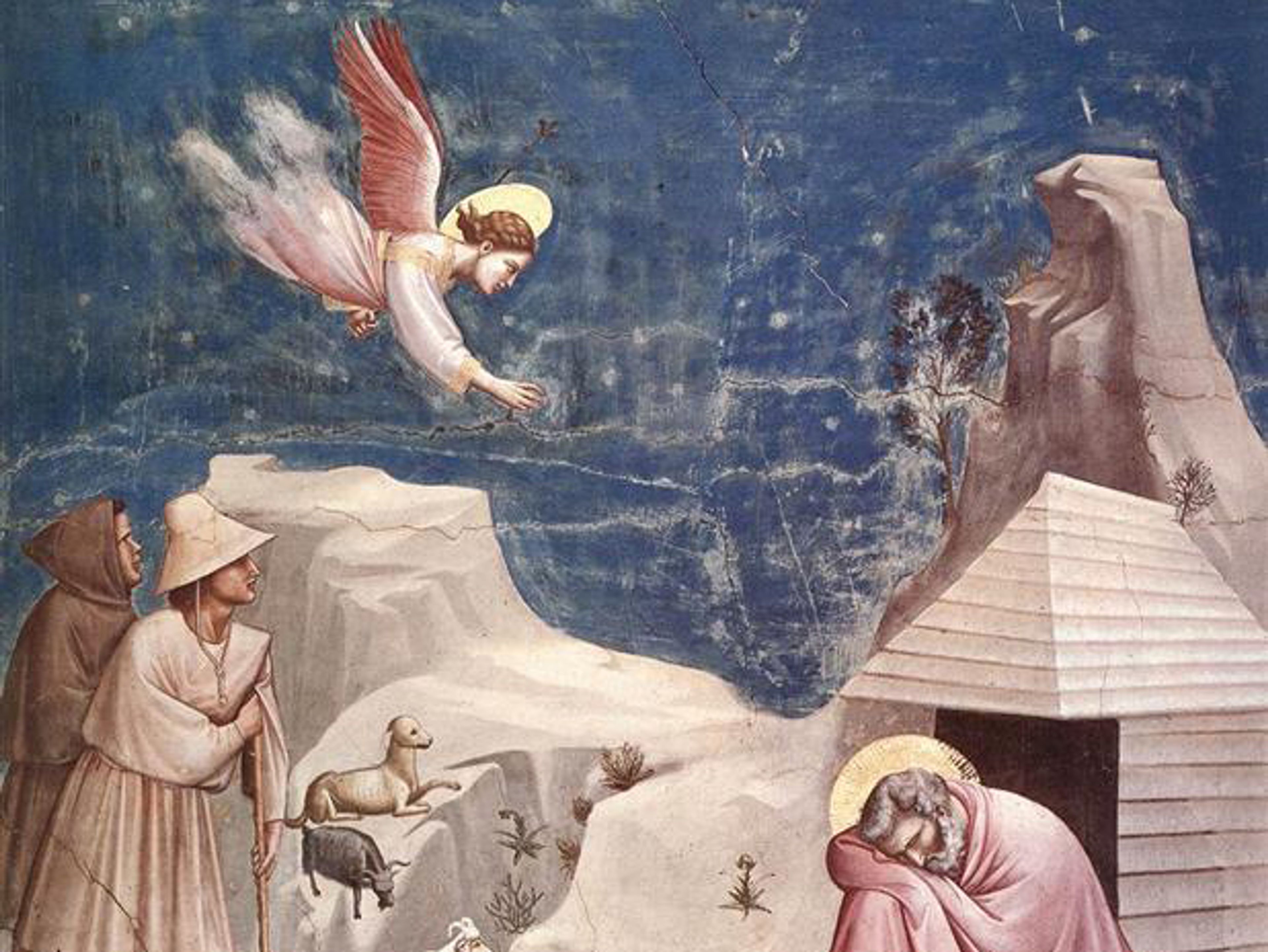
Giotto di Bondone, The Dream of Joachim, (detail) from the Scrovegni Chapel, c. 1303-1305
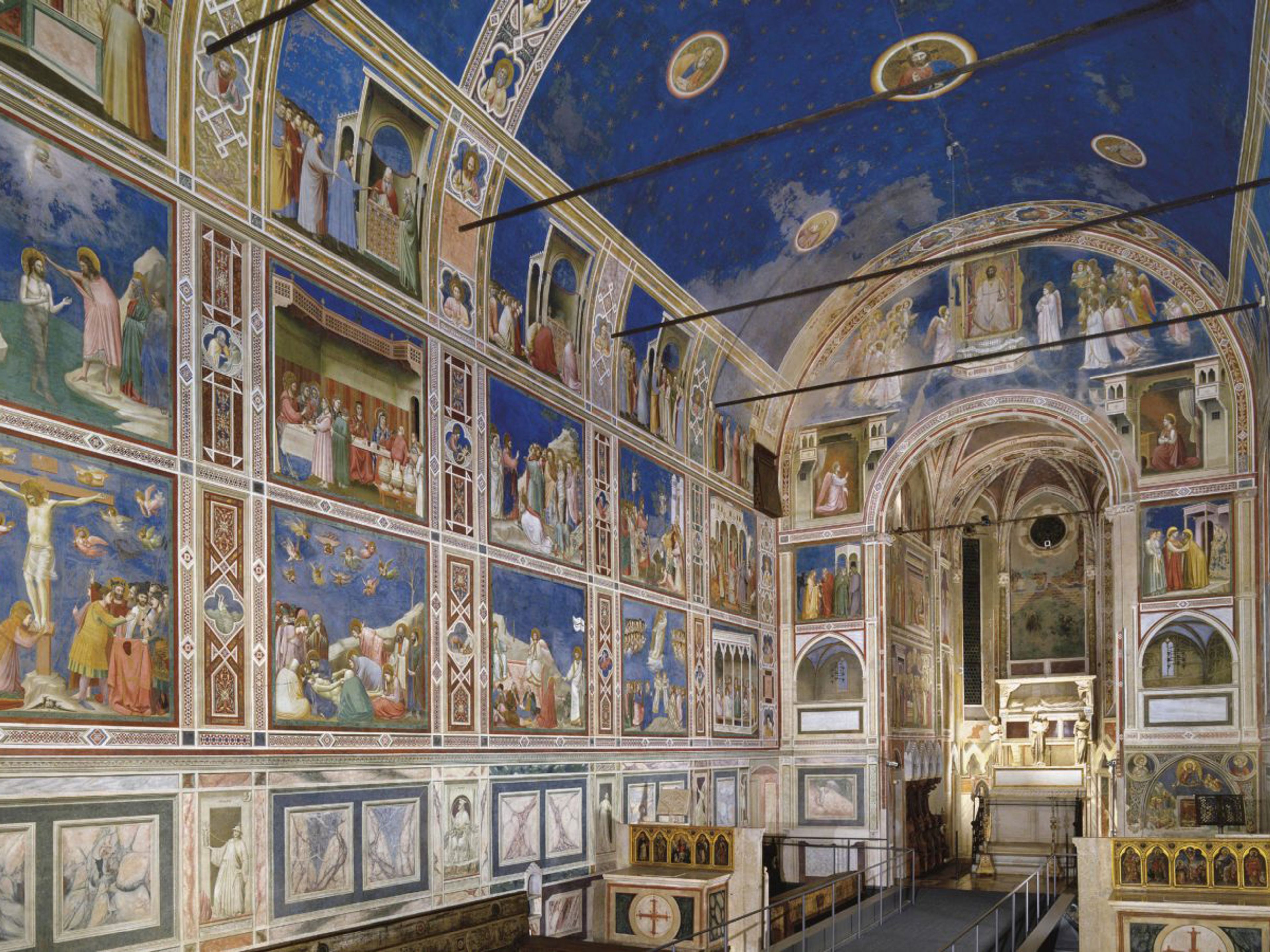
Giotto di Bondone, Scrovegni Chapel, c. 1303-1305, Padua

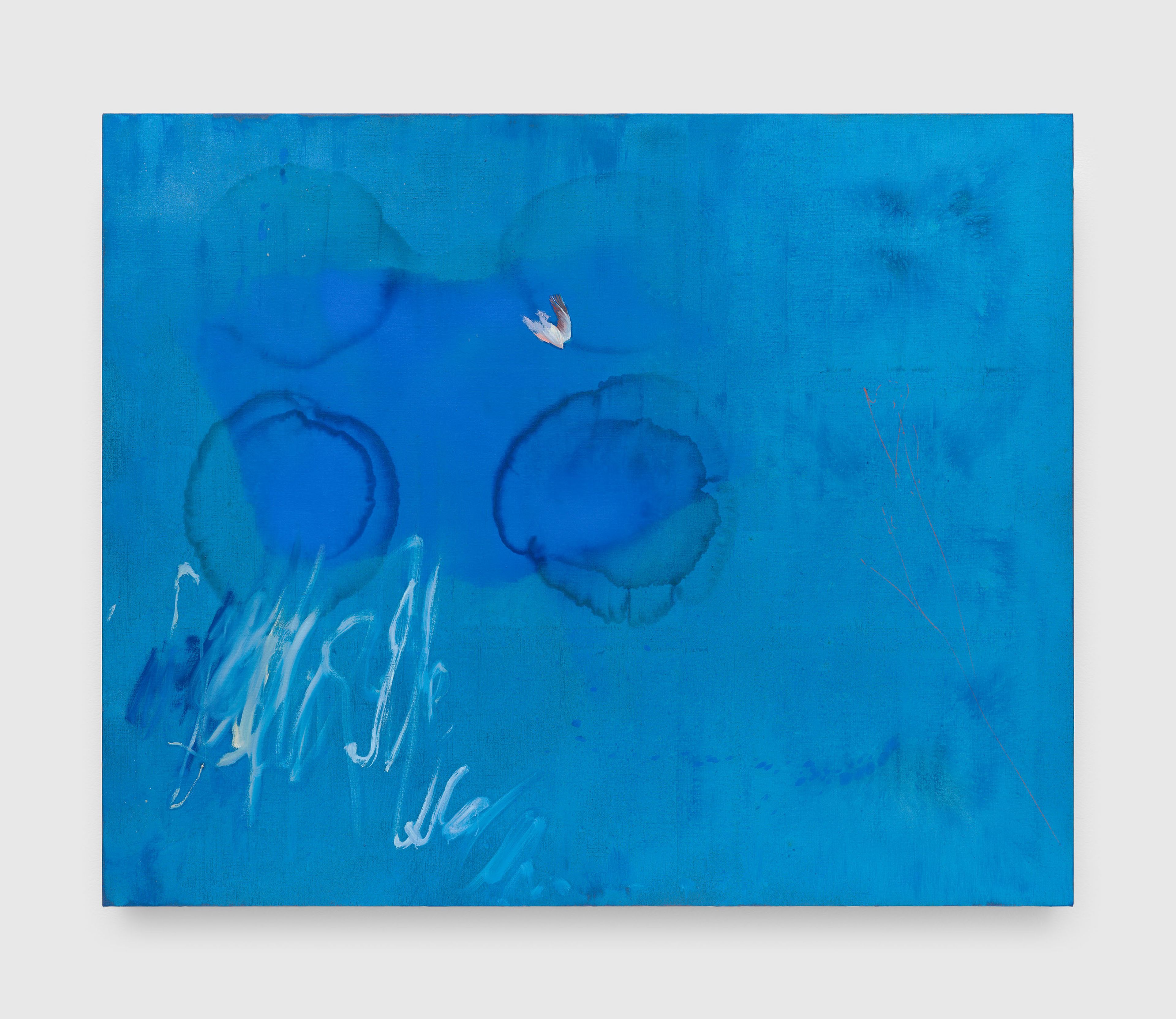
Beautiful old lies introduces a new material in McIntyre’s expansive practice: oxidized copper paint, which produces a striking azure hue across the entire composition, conjuring associations with early Renaissance painter Giotto di Bondone’s use of coveted lapis lazuli pigment to depict the heavenly sky in his fourteenth-century Scrovegni Chapel frescoes in Padua. Following this layer of oxidized copper paint, McIntyre painted atop the surface with cobalt blue, mining the subtle interplay of texture and hue—the cobalt leaning powdery and purplish, and the copper oxide more stainlike and green-toned—that arises between these two pigments.   At the center of the work is a semiabstract mark that McIntyre excerpted from an angel’s wing in the Scrovegni Chapel fresco known as The Dream of Joachim. Rendered in a crisp and contrastingly realist style, this enigmatic feathered form alights delicately on the canvas like a bird caught in a moment of transformation.

 “I love how I can rush myself—and hopefully the viewer—through time by creating a chain of references that might move from a Greek myth straight to the present day.”

 —Emma McIntyre

“The alchemy of McIntyre’s canvases lies in her ability to synthesize and harmonize a dizzying stable of references, ranging from Impressionist brushwork to psychically charged Rococo landscapes, to create a world that is at once familiar and abstract, historical and endlessly contemporary.”

—J. Cabelle Ahn, writer and art historian
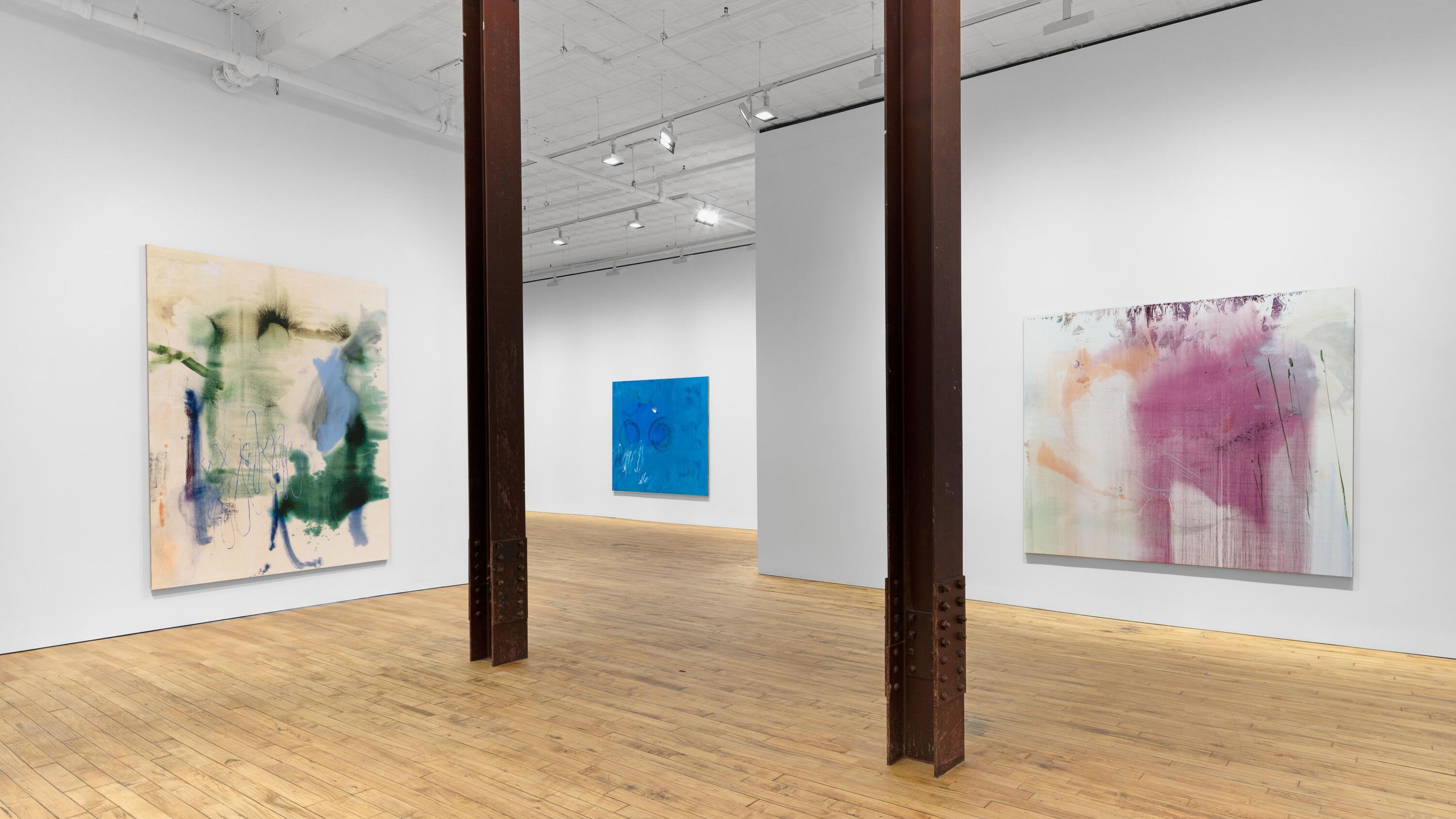
Installation view, Emma McIntyre: This body holds / swamp stuff, David Zwirner, New York, 2026
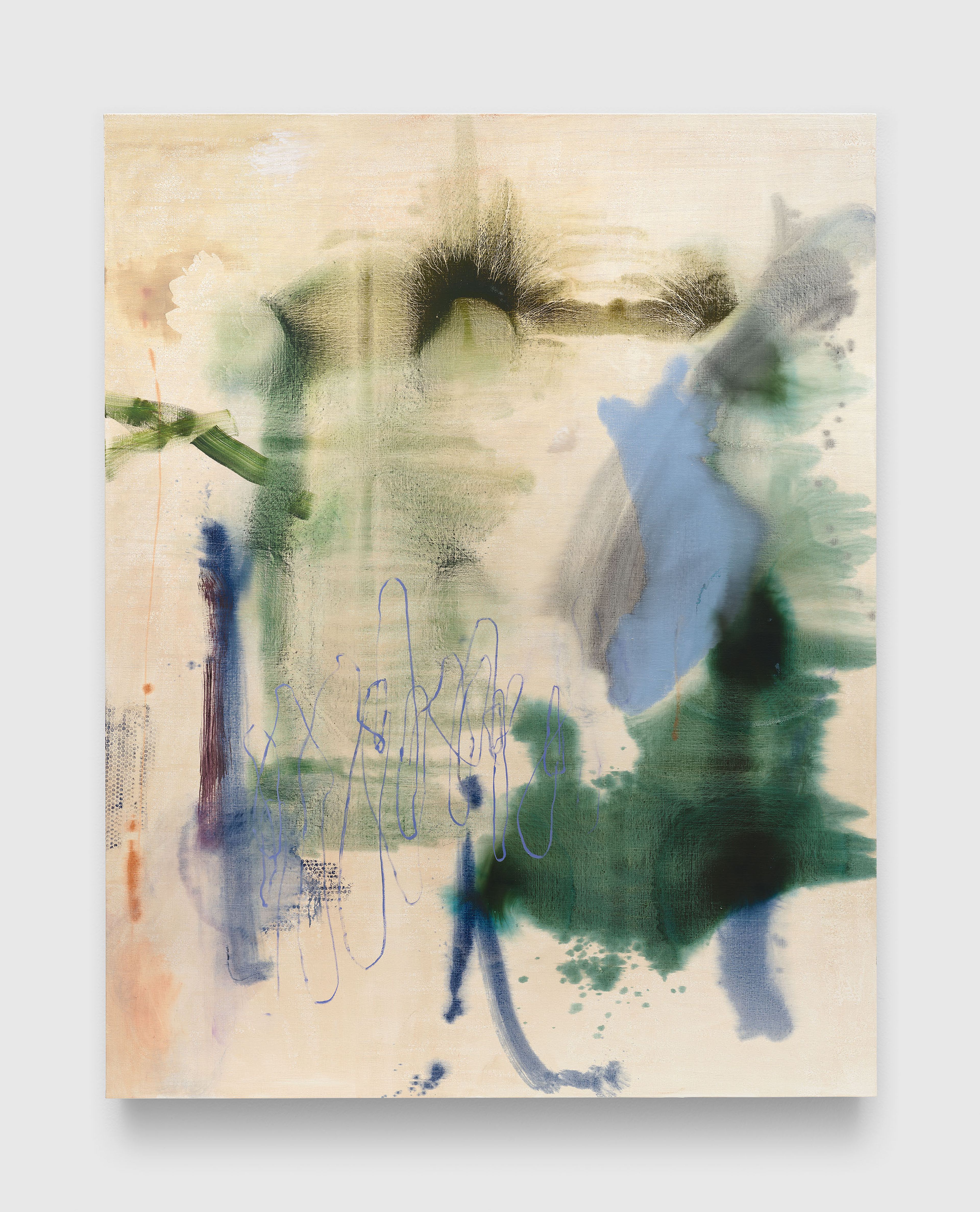
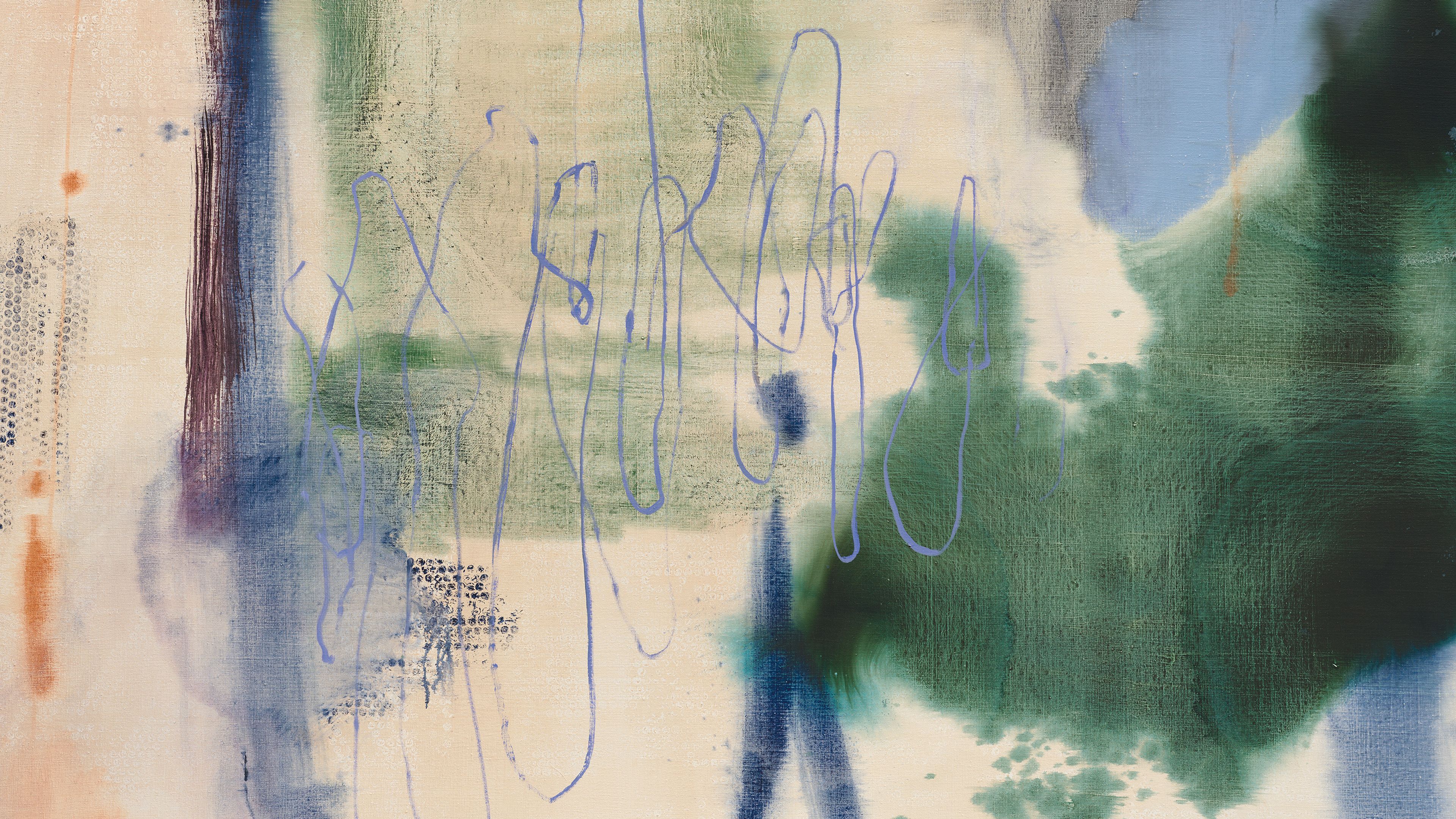
The ivory-white background of Those muted those rain tones features a subtle circular pattern made by pressing bubble wrap onto the canvas. McIntyre then poured various hues of green and blue across the painting, reveling in the distinct physical transformations—such as cracking, staining, and shifts in hue—that arise as two pigments interact on the surface of the work. Traversing the bottom half of the painting is a scriptlike scrawl, also seen in the artist’s contemporaneous works on paper, that attenuates McIntyre’s recurring peony motif into a graphic motif reminiscent of Twombly’s linework.

Emma McIntyre, Those muted those rain tones, 2026 (detail)
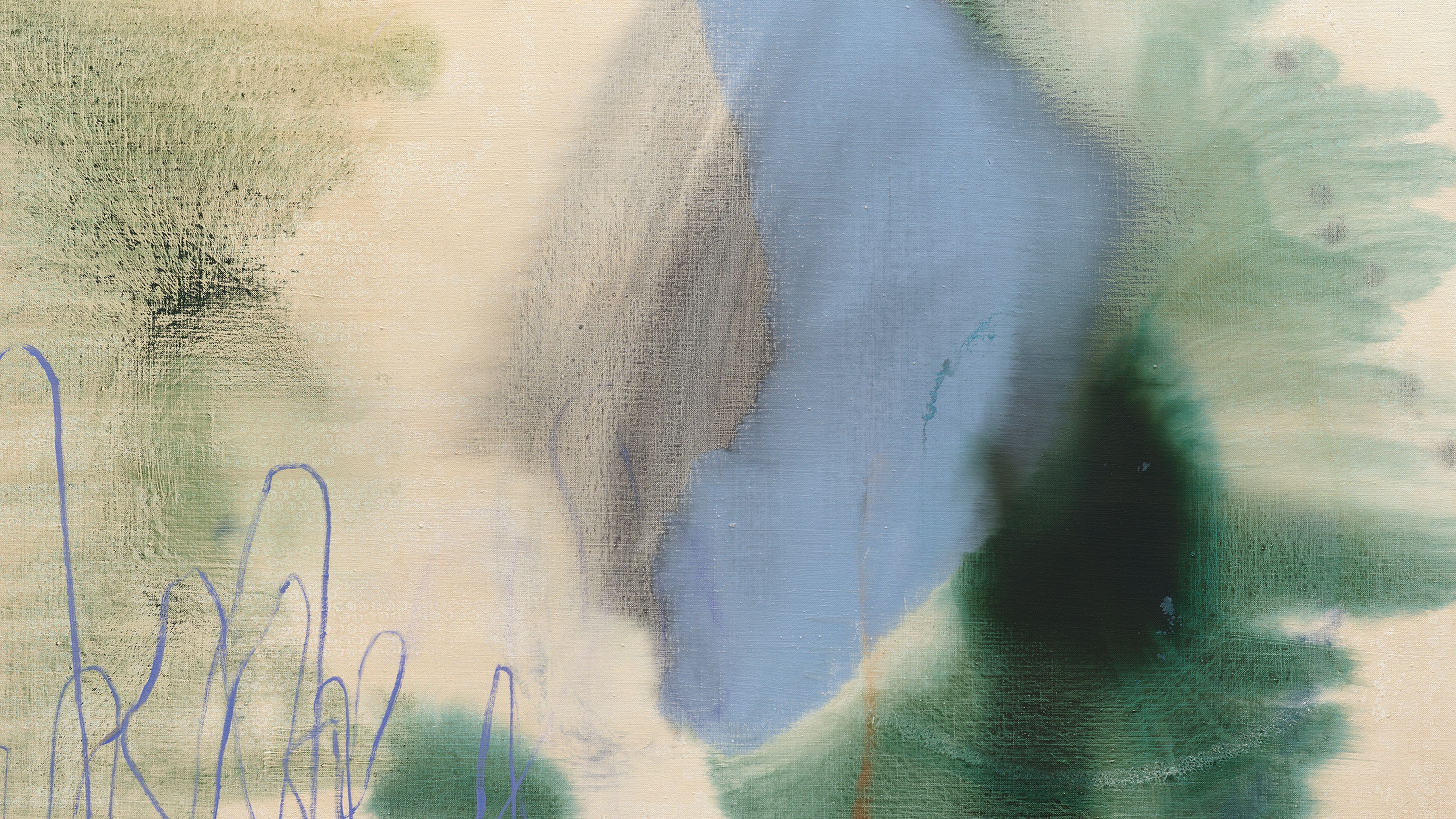
Emma McIntyre, Those muted those rain tones, 2026 (detail)
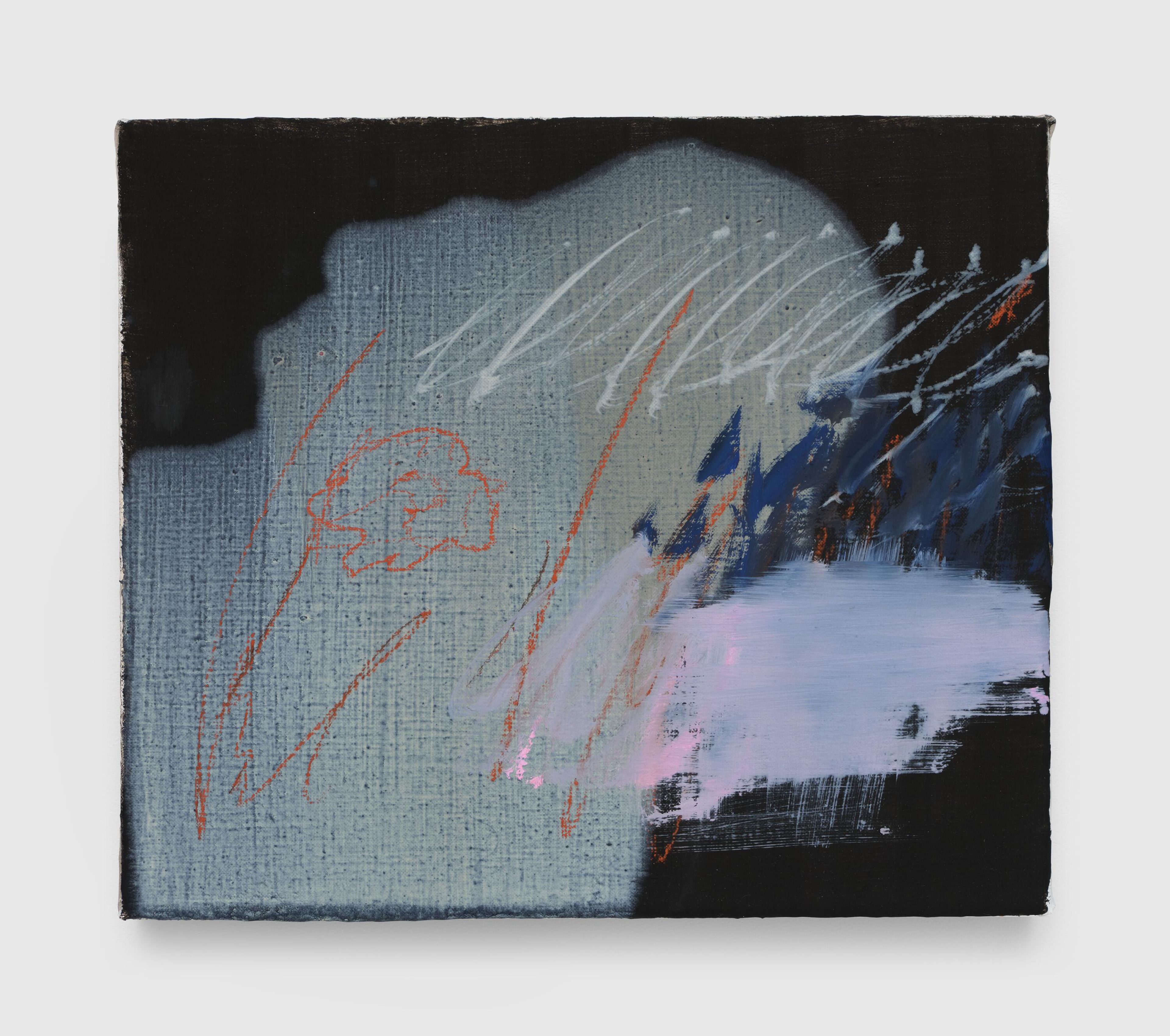
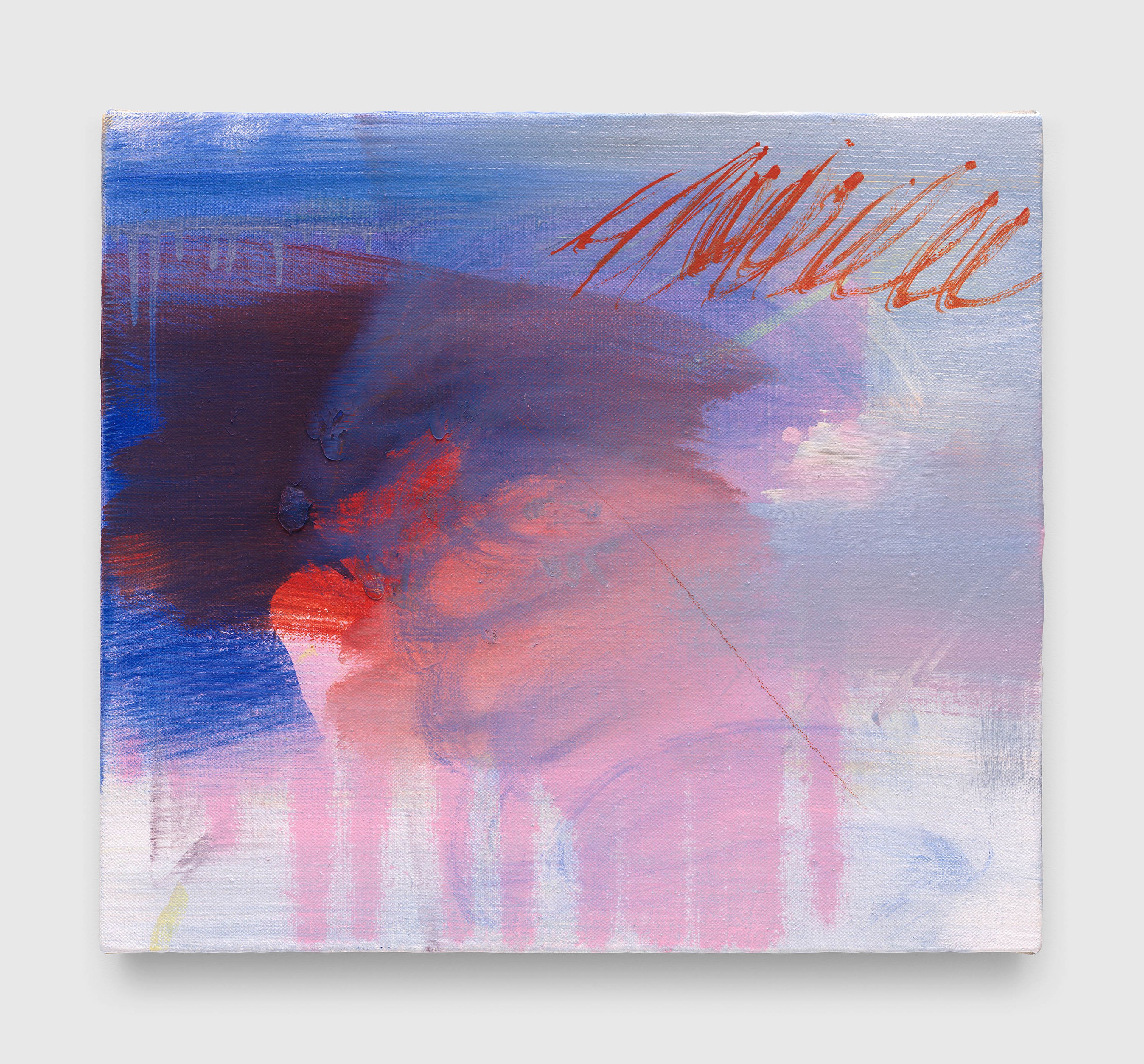
 

McIntyre works at two scales, creating vast paintings as well as intimate works. The small canvases are sites of experimentation for the artist, where she tests new color combinations, motifs, or ways of layering paint. Symbols and gestures discovered at a smaller scale materialize in her larger paintings, and vice versa, enacting a feedback loop and creating harmony across the two poles. The dense, built-up surfaces of the smaller works find synchrony with the sprawling compositions that feature multiple visual climaxes.

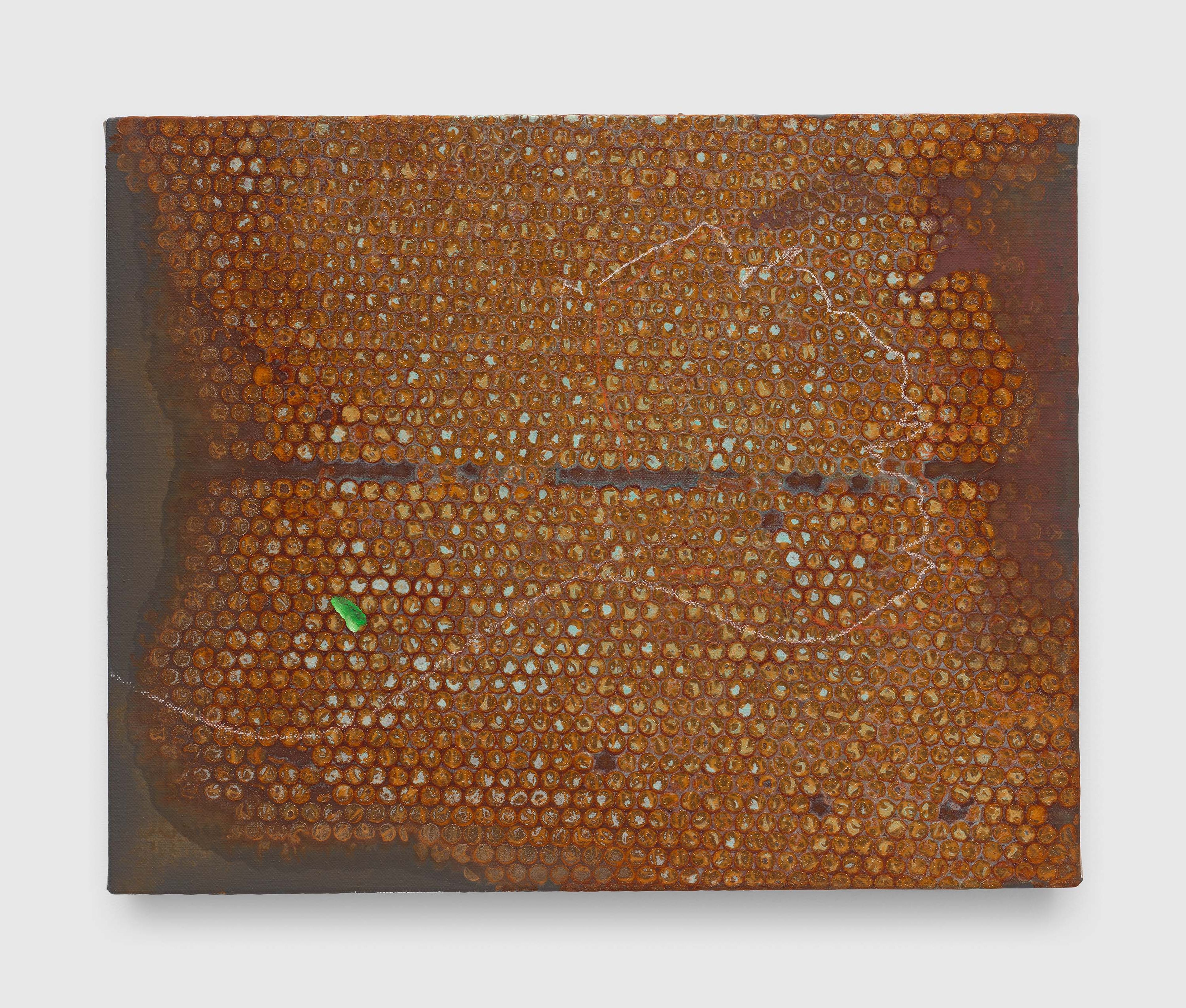
Throughout the exhibition, exuberant brushwork collides with unexpected geometries: rings of stained pigment are formed from the close application of a spray bottle. In Bright medusas, gridded honeycomb patterns arise from panels of bubble wrap placed directly on paint, and in other works, prints of the artist’s own body float and blend with organic pools of color.

Emma McIntyre, Pearls of ambergris, 2026 (detail)

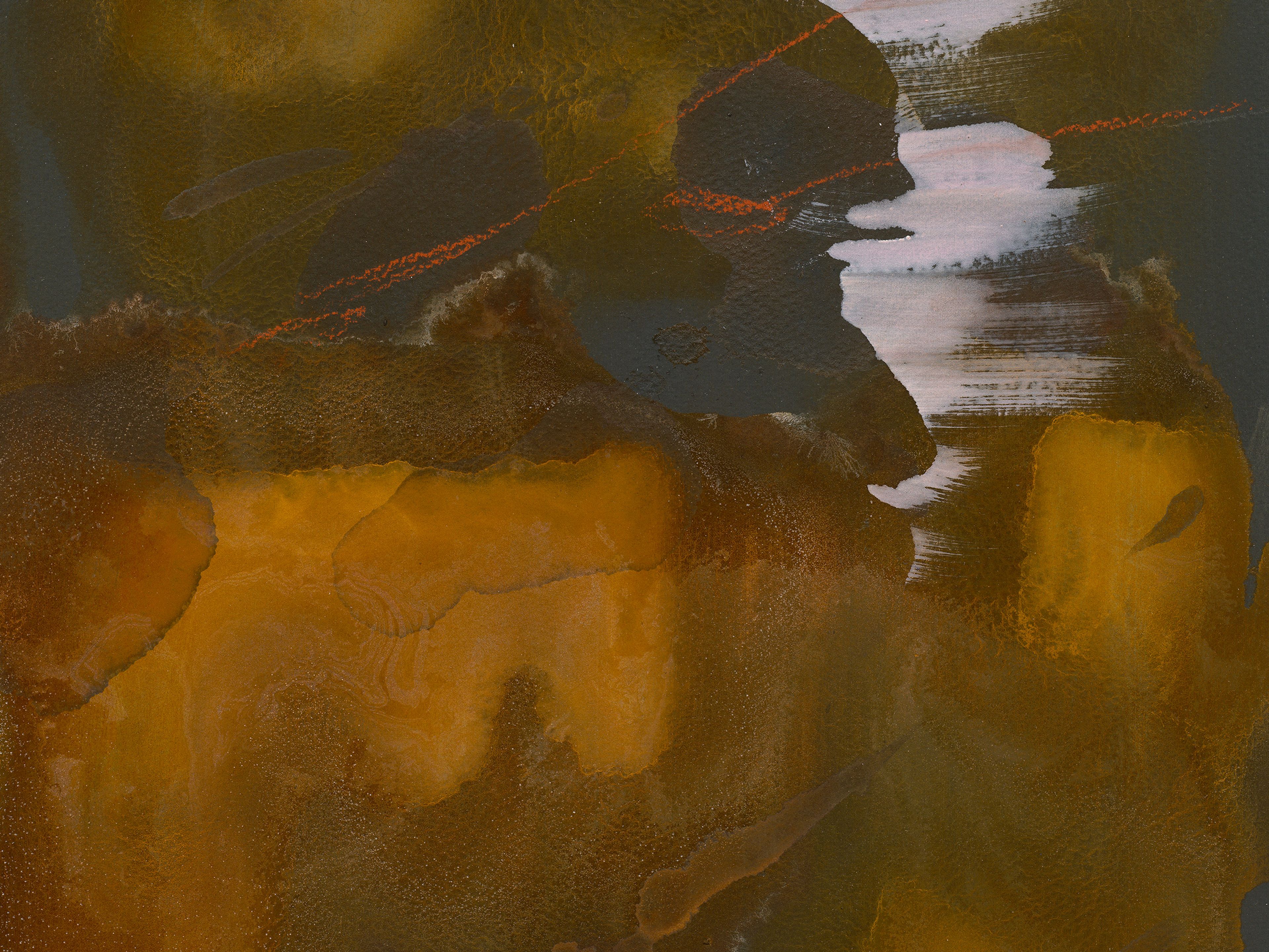
Pearls of ambergris exemplifies McIntyre’s central interest in materiality. To make this work, she poured an oxidizing agent over iron-based paint, creating vibrant rust-orange blooms that spread across the composition. While the paint was still wet and in the midst of this chemical transformation, McIntyre covered the entire canvas in plastic bubble wrap, resulting in a highly textural honeycomb pattern.
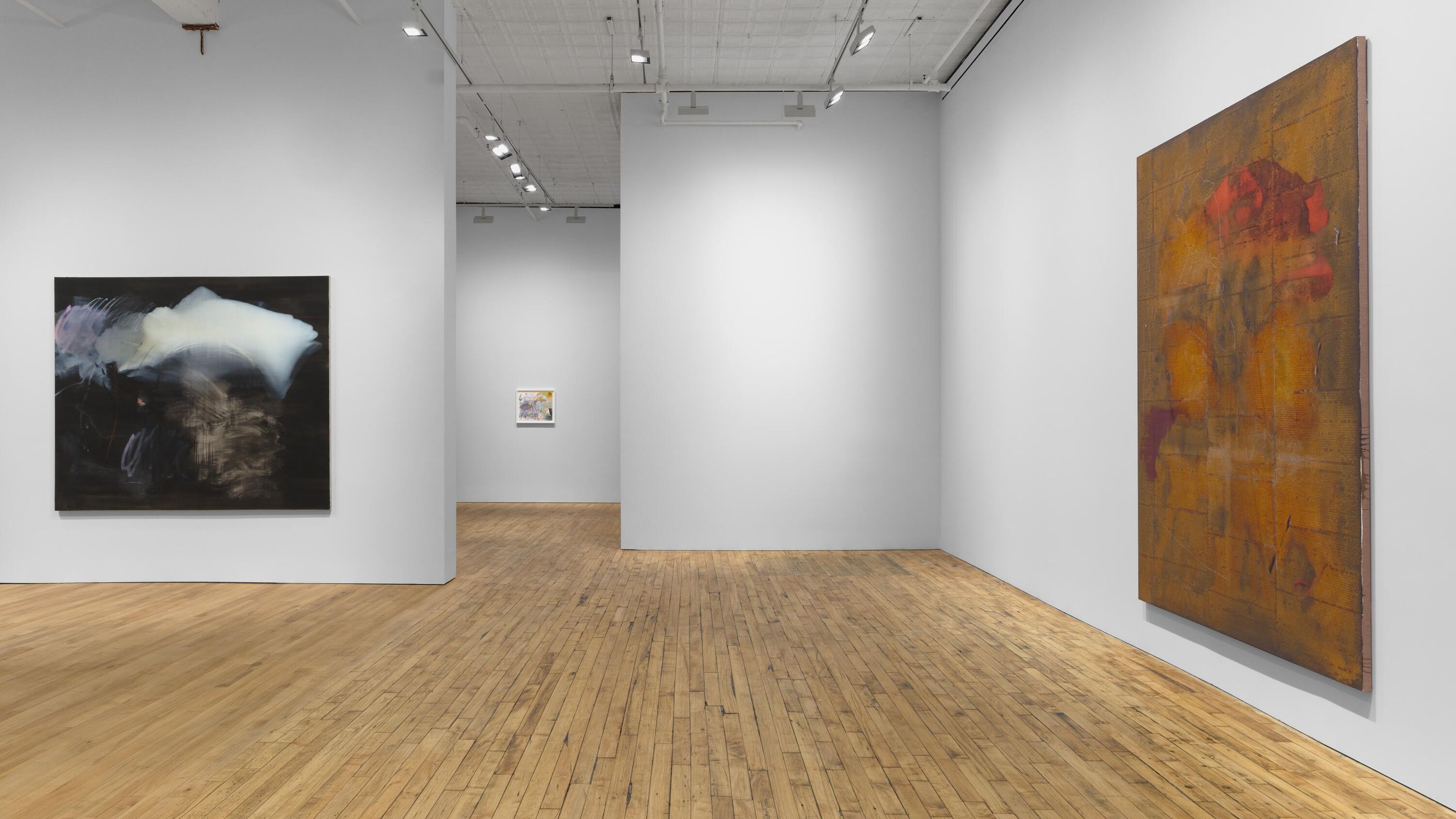
Installation view, Emma McIntyre: This body holds / swamp stuff, David Zwirner, New York, 2026
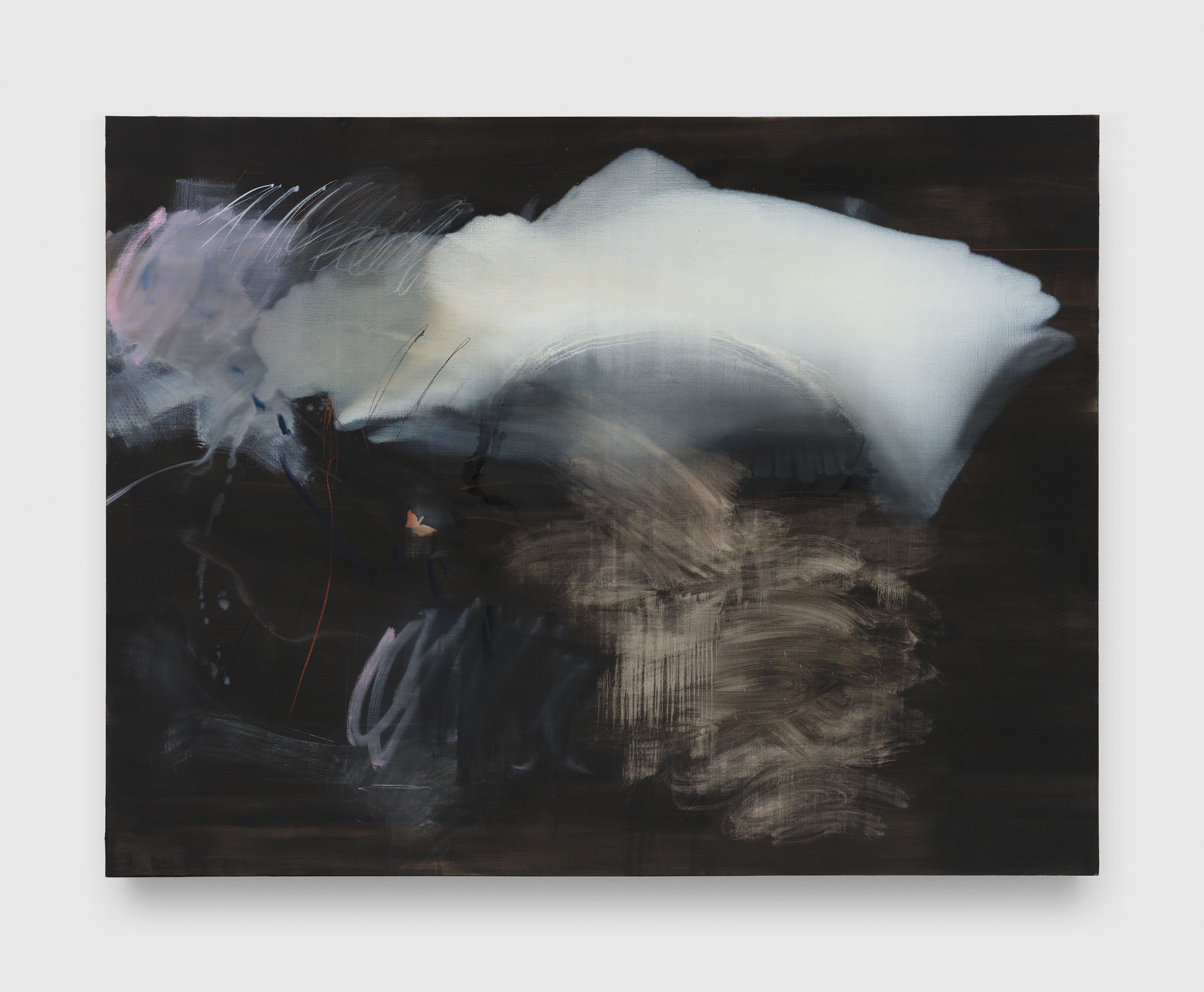
Crackle and drag features a palette that leans toward the monochrome. To make this work, McIntyre poured a wash of white paint atop a ground of bone black, a natural pigment made with charred animal bones that is notable for its chalky finish. She then partially rubbed away the black paint at the center of the work to reveal bare canvas underneath—furthering her experiments with the layering and handling of paint to create effects of opacity, transparency, and luminosity.

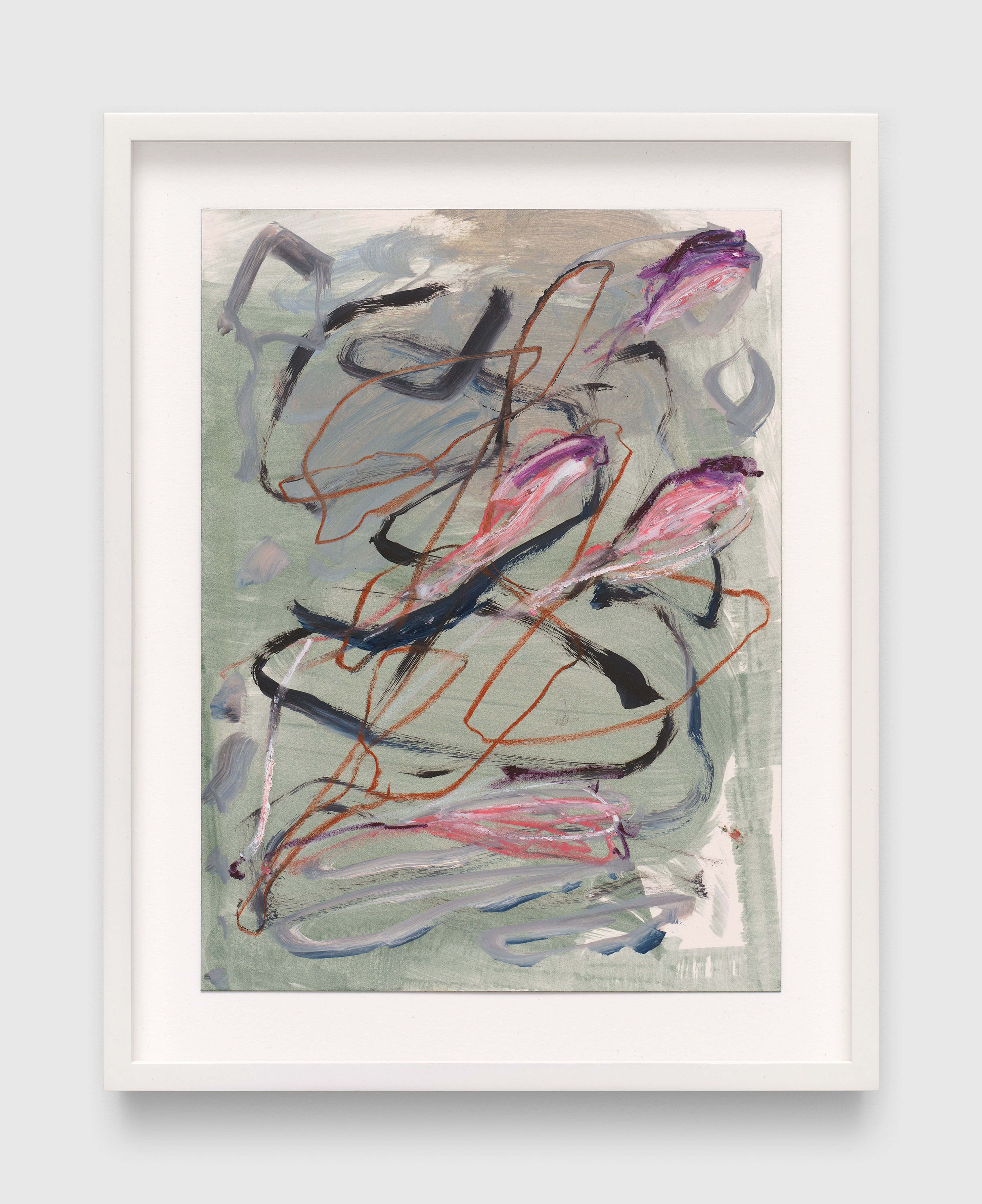
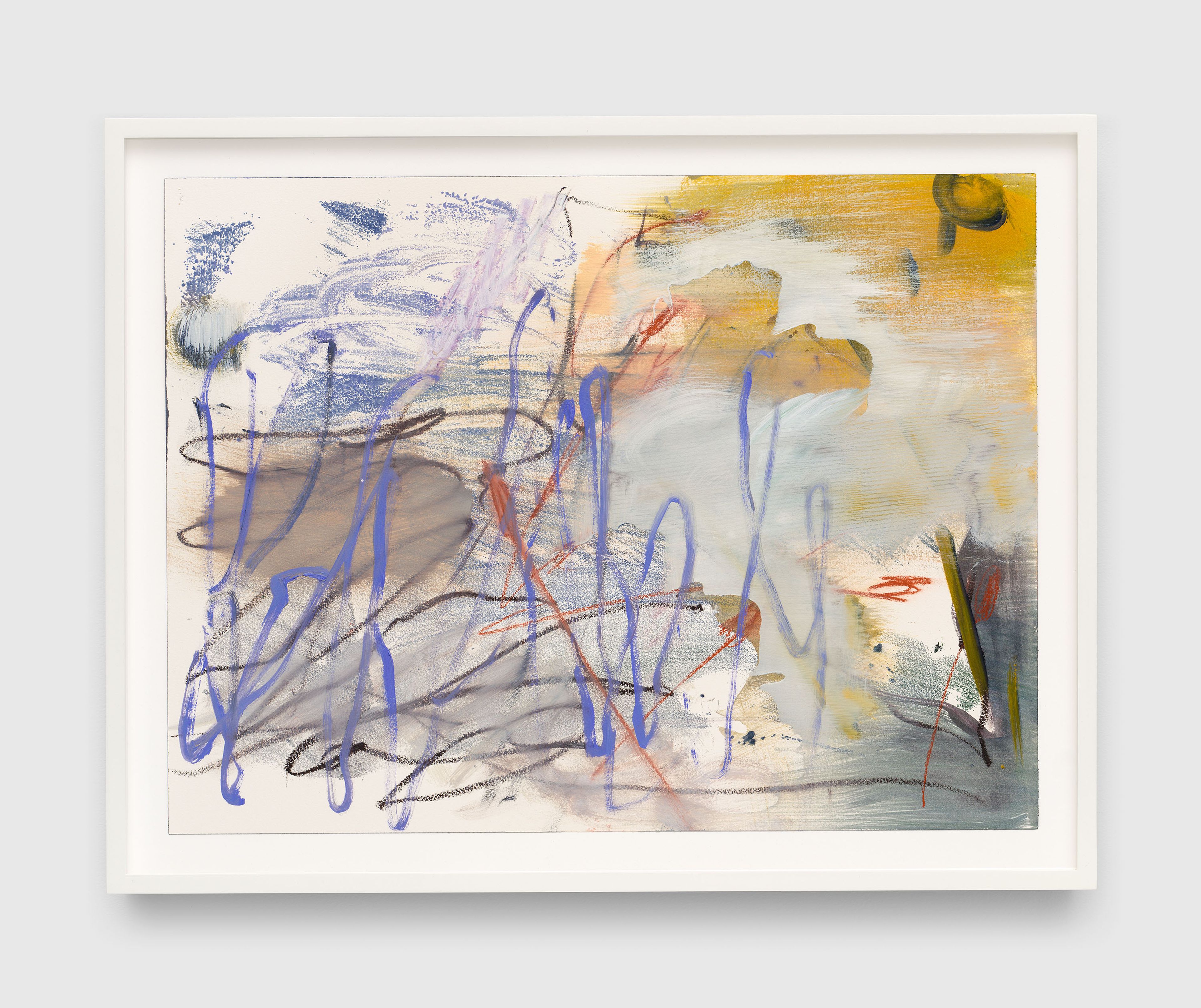
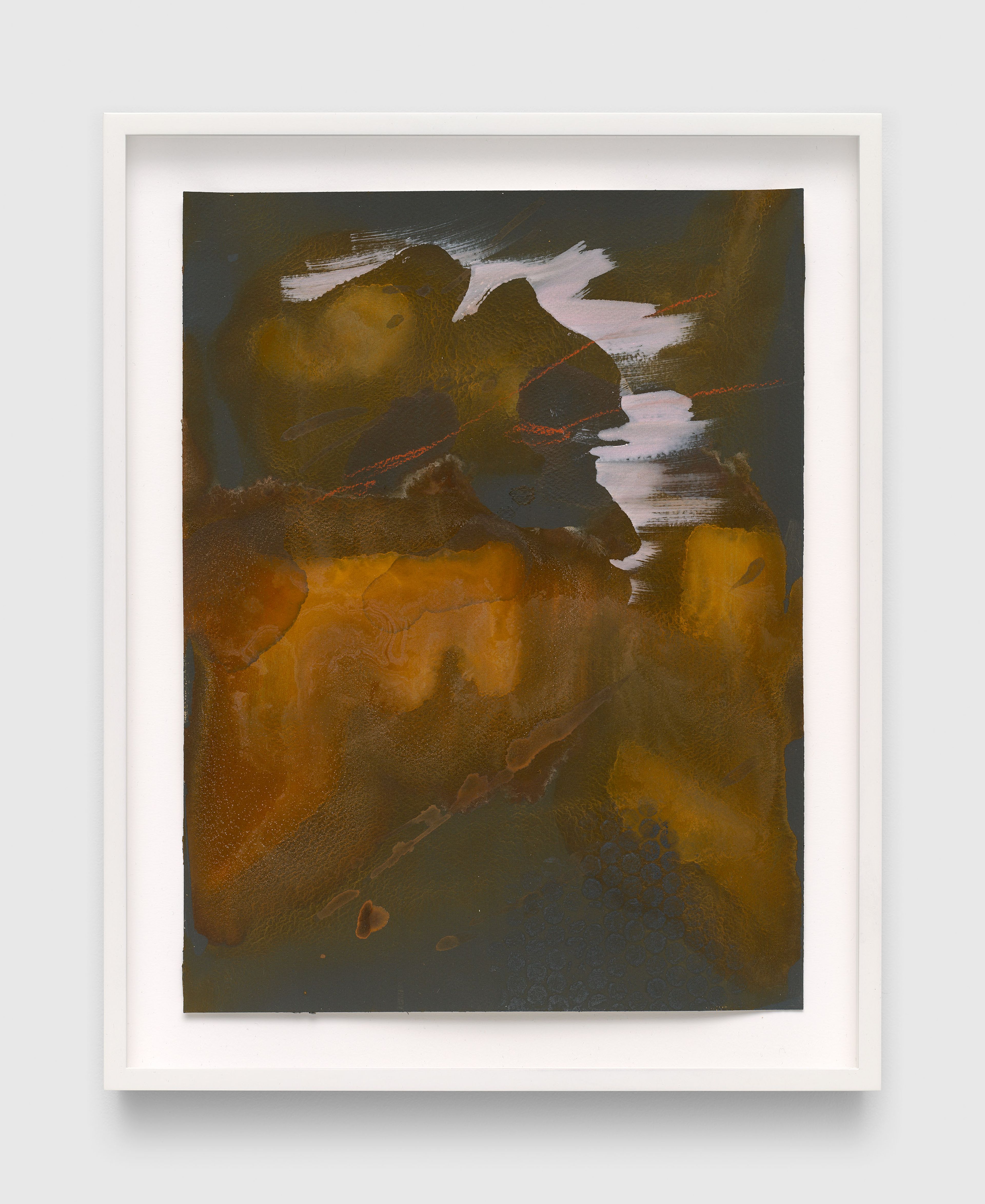
McIntyre’s works on paper exemplify the inherently rhizomatic nature of her practice; each composition shares roots with the ones made before and after it, enacting a process of generation and discovery. Featuring gestural oil stick scrawls juxtaposed with pigmented washes, these compositions catalyze ideas for McIntyre’s paintings. At the same time, the works on paper often begin from paints the artist has mixed for previous canvases—and sometimes even feature physical impressions of her palette—thus situating the works as both a beginning and an end to her cyclical creative process.

Emma McIntyre, The blue hour, 2026 (detail)

“I am obsessed with the materiality of painting, material experimentation, and the unexpected chance events that paint can reveal to me. Something new happens whenever I start a new work and pour color. The work begins slightly out of my control, and I have to work with whatever’s happened.” 

—Emma McIntyre

“I think of painting as world building … at a time when it feels meaningful to be able to suggest another world is possible.”

—Emma McIntyre

Emma McIntyre in her studio, 2023. Photo by Chantal Anderson

Black background, no image

Inquire About Works by  Emma McIntyre