To define a feeling: Joan Mitchell, 1960–1965
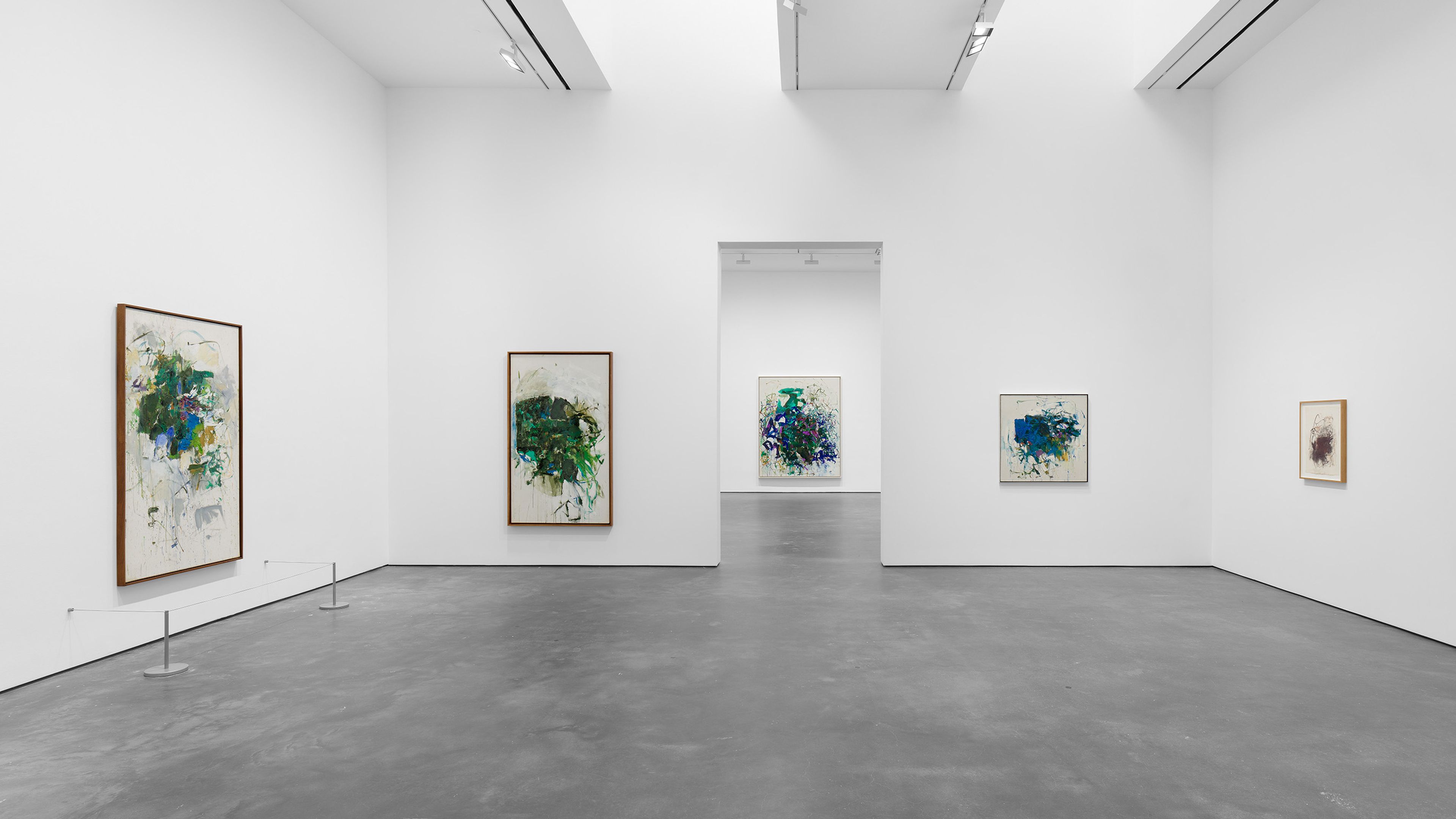
Installation view, To define a feeling: Joan Mitchell, 1960-1965, David Zwirner, New York, 2025
Past
November 6—December 13, 2025
Opening Reception
Thursday, November 6, 6–8 PM
Opening Reception
Thursday, November 6, 6–8 PM
Location
New York: 20th Street
537 West 20th Street
New York, New York 10011
Tue, Wed, Thu, Fri, Sat: 10 AM-6 PM
Artist
Curators
Sarah Roberts
Explore
Explore All Works
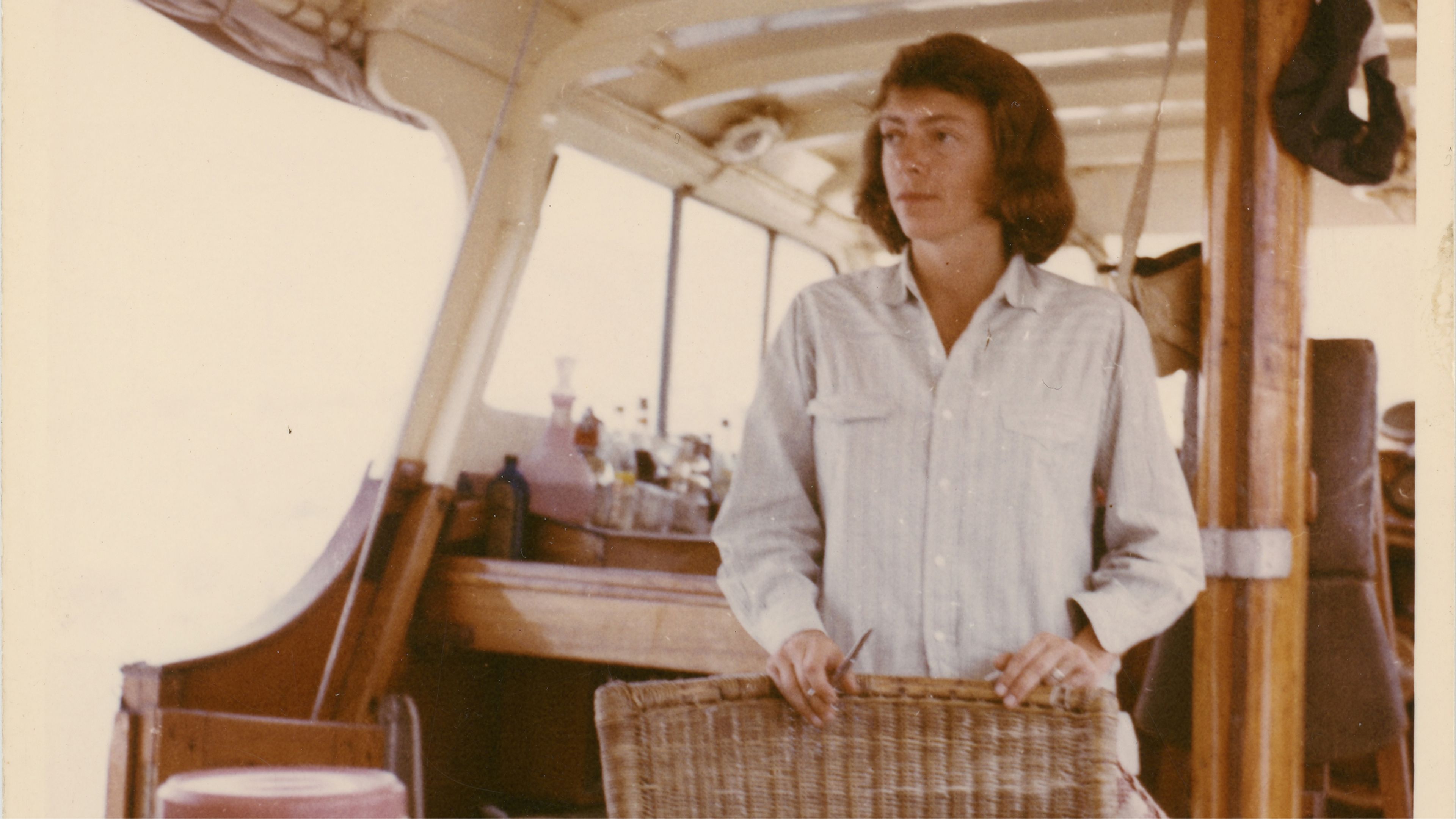
Joan Mitchell aboard the Fantasia, 1959. Photographer unknown, Joan Mitchell Foundation Archives
“That particular thing I want can’t be verbalized.... I’m trying for something more specific than movies of my everyday life: To define a feeling.”
—Joan Mitchell in ARTnews, April 1965
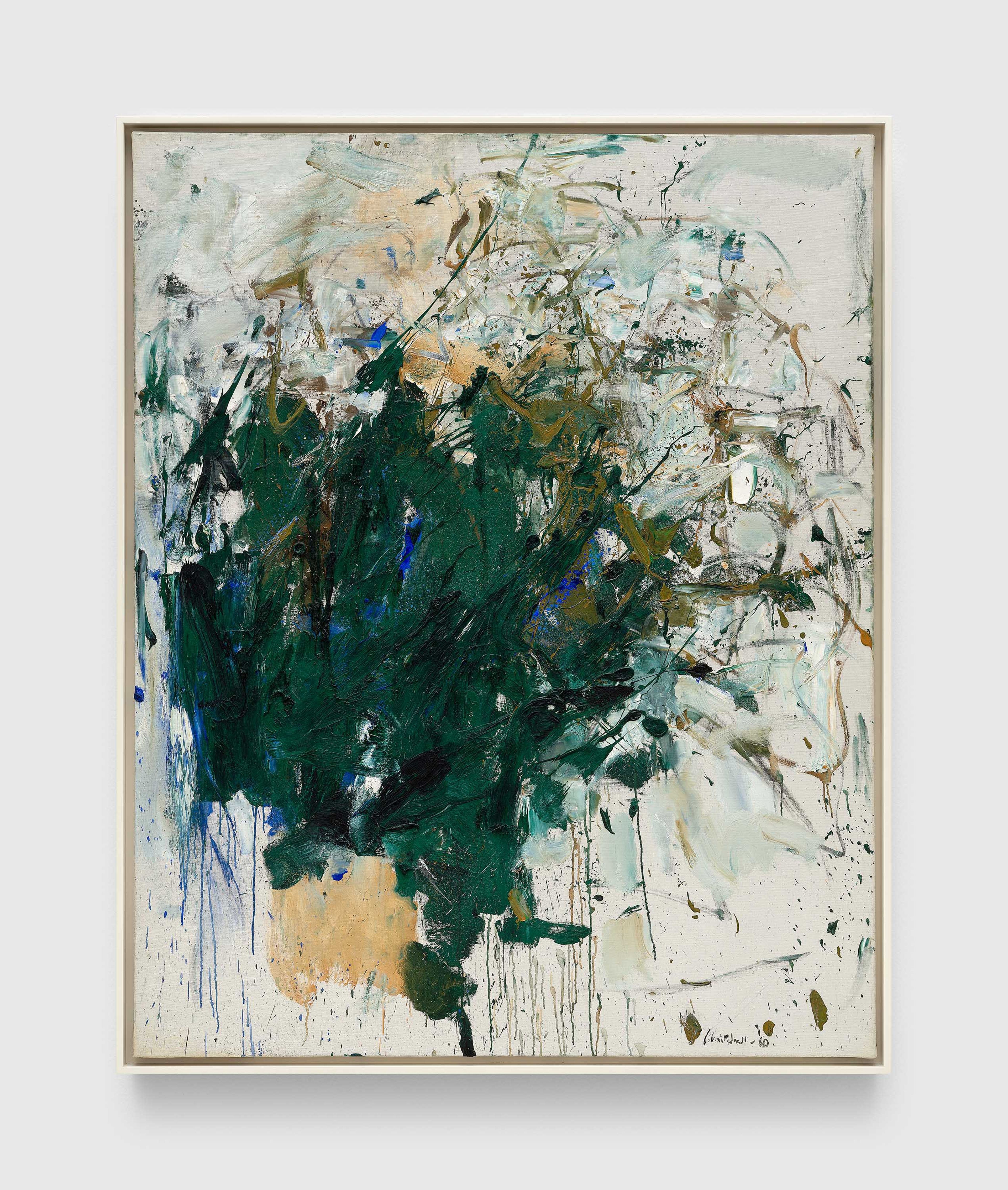
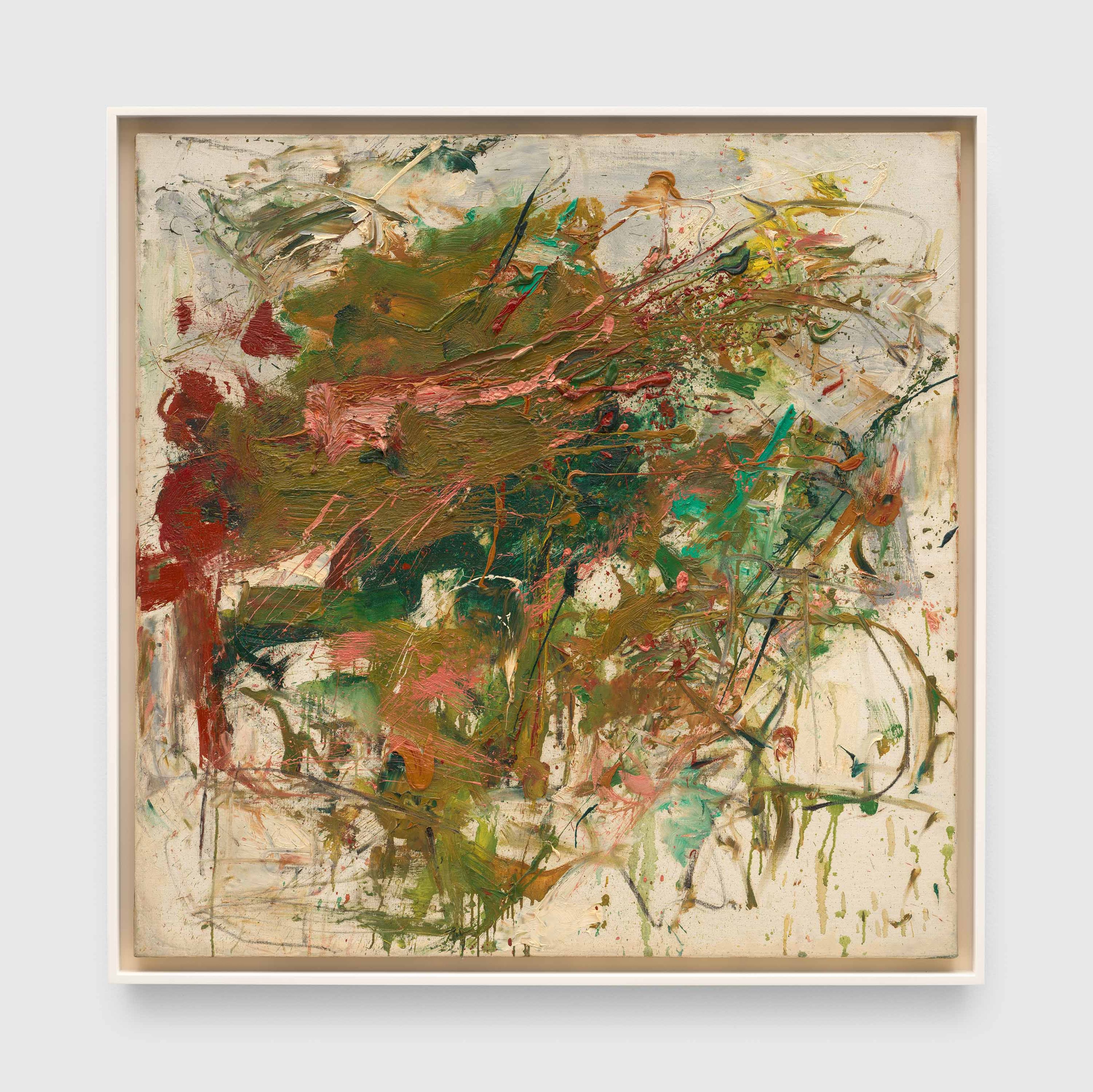
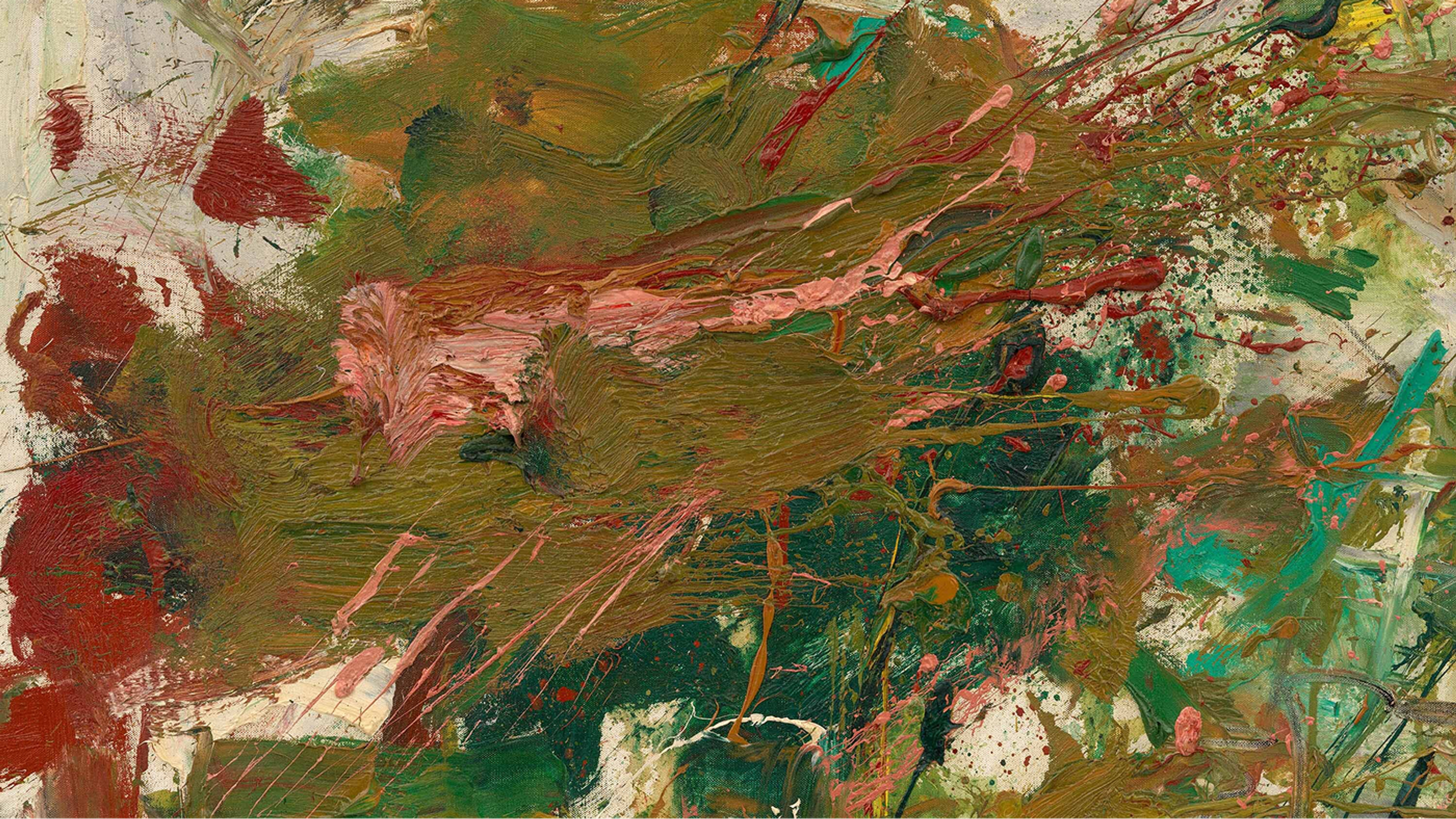
Joan Mitchell, Untitled, 1961 (detail)
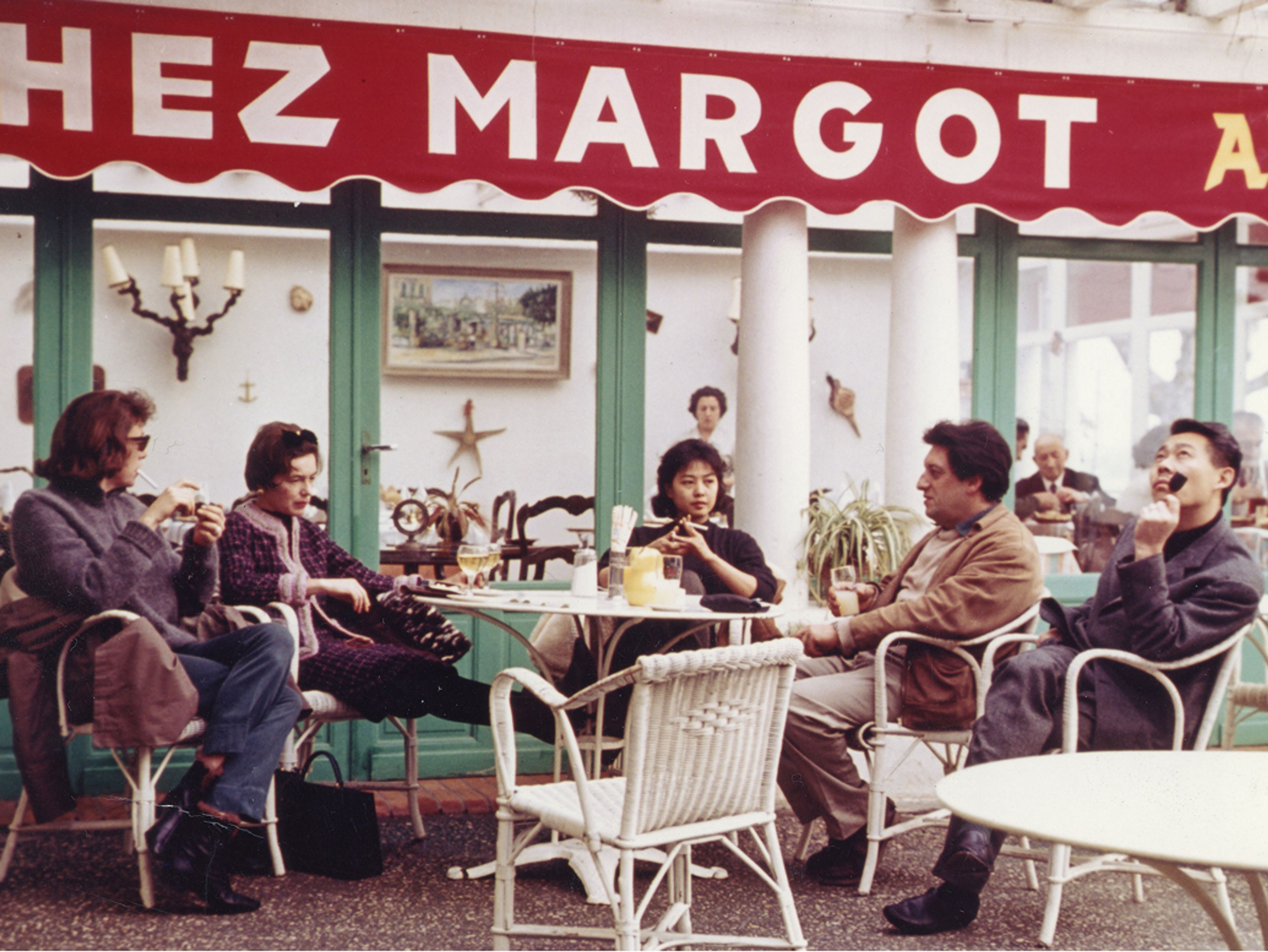
Joan Mitchell, Patricia Matisse, Zao May, Jean Paul Riopelle, and Zao Wou-ki at Chez Margot, Golfe-Juan, 1962. Photographer unknown, Joan Mitchell Foundation Archives
“These seasons in the South of France were highly social and the most family-oriented phase of Mitchell's adult life.... Many artists, curators, and gallery owners also summered in the area, part of a broader upsurge in Mediterranean travel in the 1950s and 1960s that brought everything from artists seeking exposure to classical culture on a modern version of the grand tour, to the formation of bohemian artist colonies.”
—Sarah Roberts, in the exhibition catalogue for Joan Mitchell, San Francisco Museum of Modern Art, 2021–2022
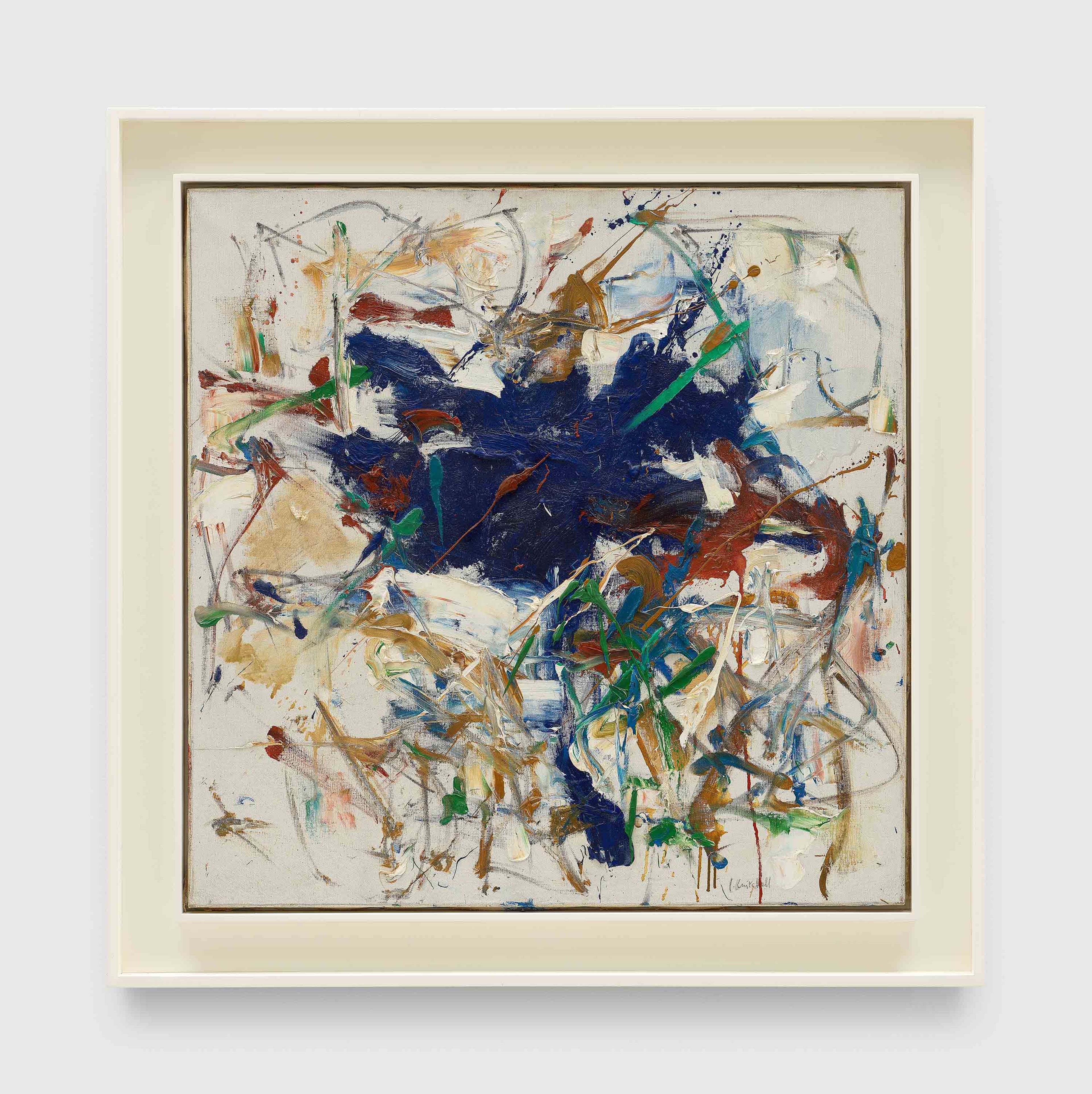
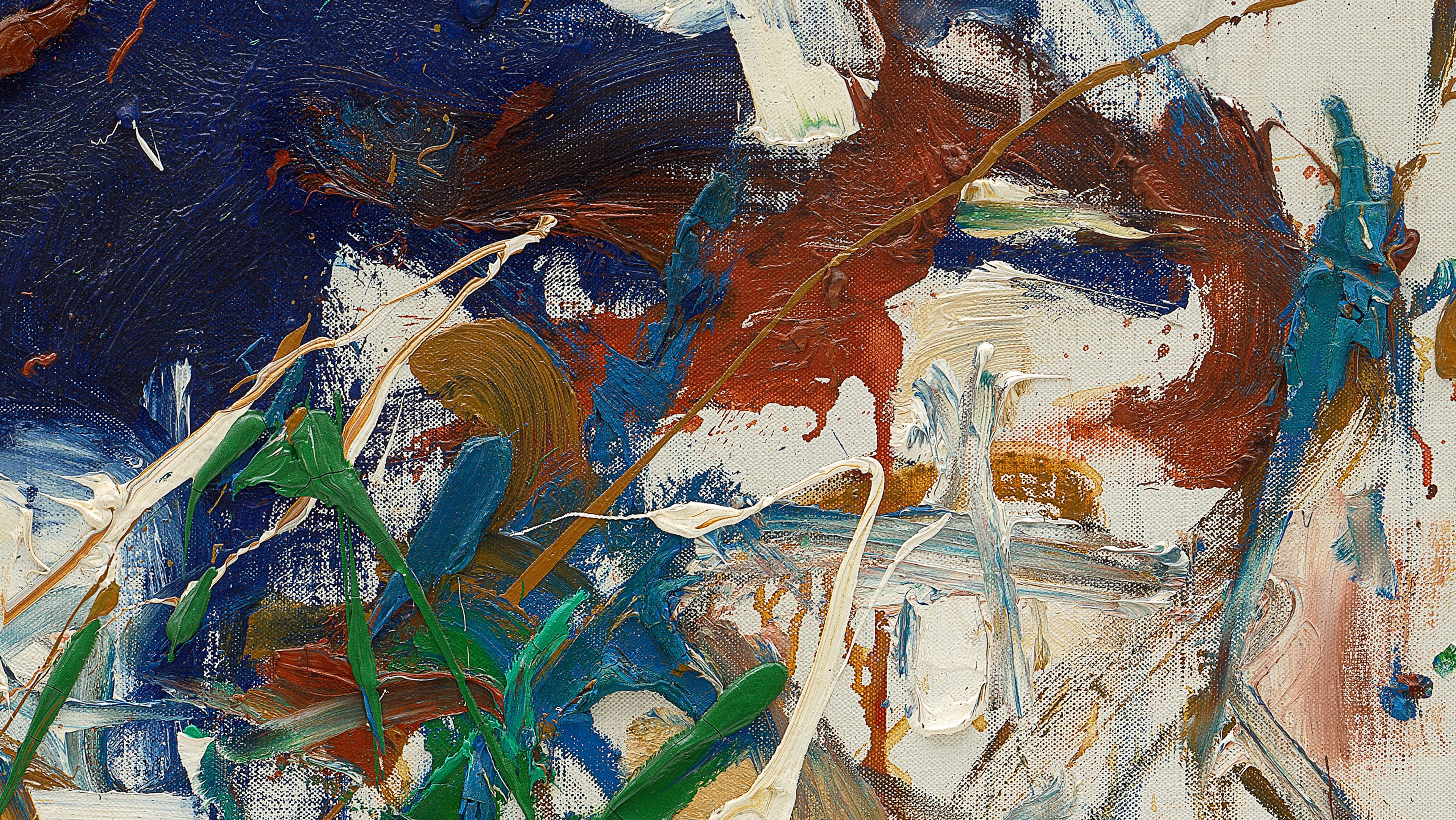
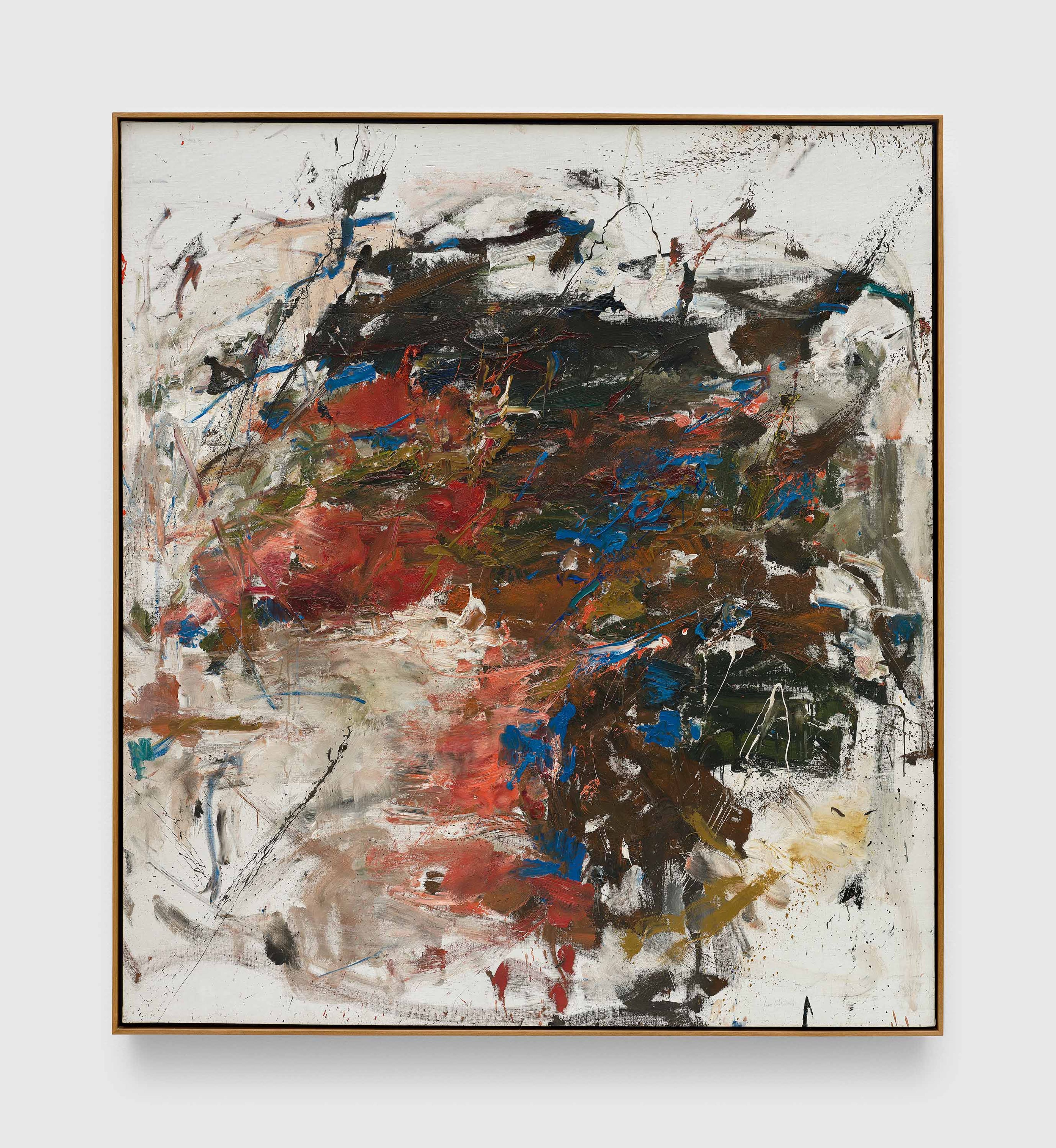
Joan Mitchell, Composition, 1962–1963 (detail)
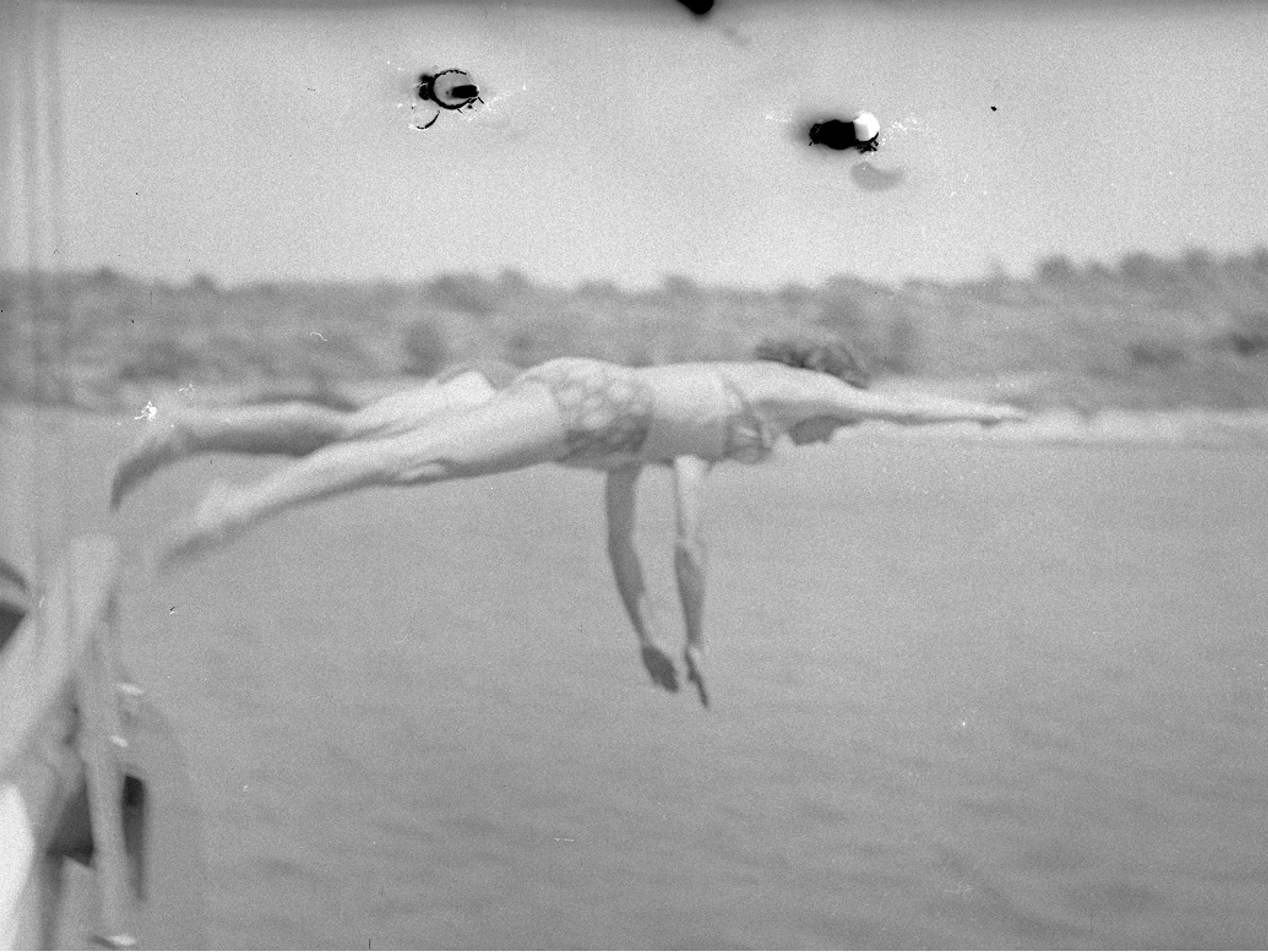
Joan Mitchell diving off the Fantasia, 1959. Photographer unknown, Joan Mitchell Foundation Archives
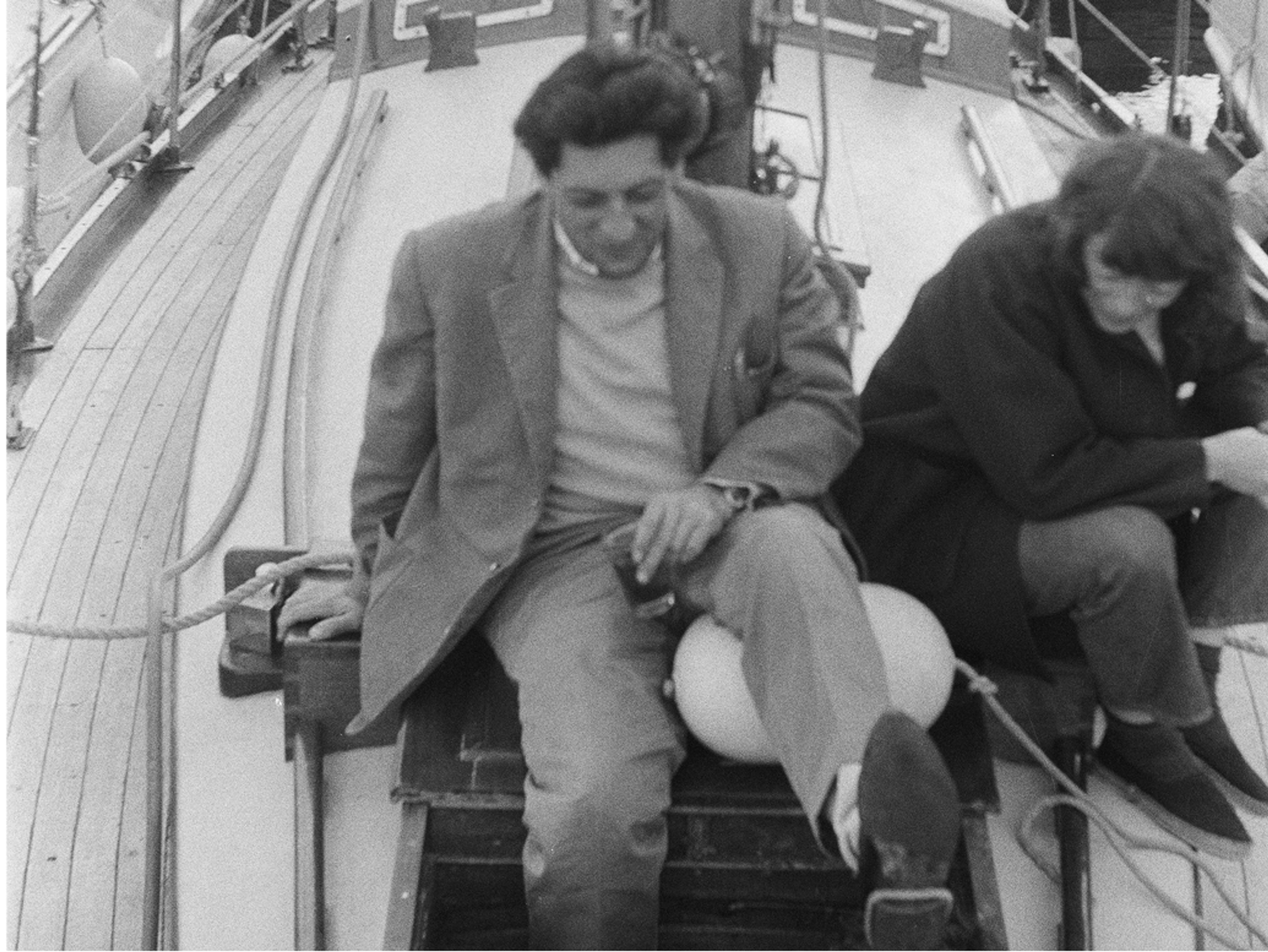
Joan Mitchell and Jean Paul Riopelle aboard the Serica, 1964. Photographer unknown, Joan Mitchell Foundation Archives
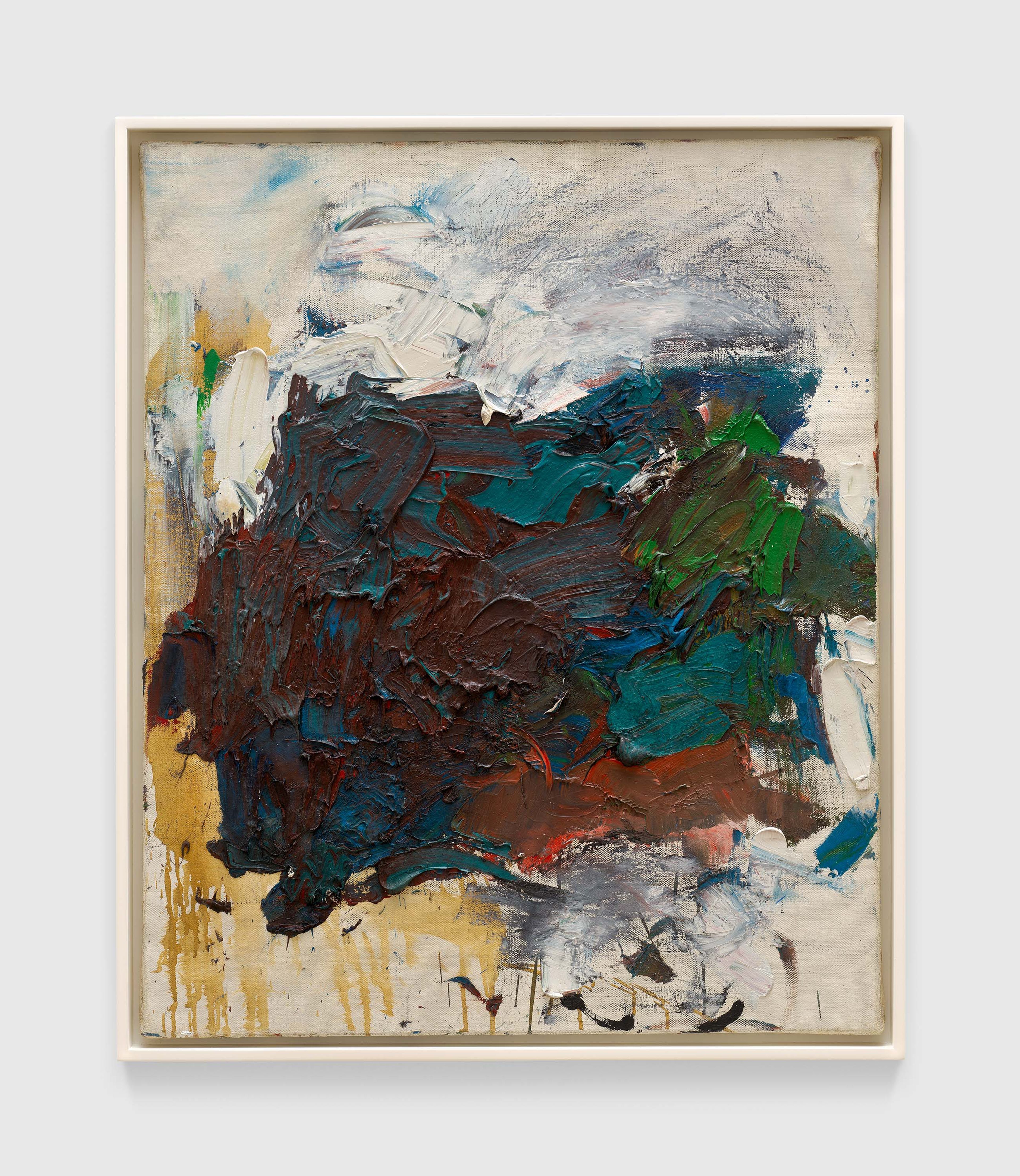
During these years, Mitchell spent many weeks each summer living on a sailboat and exploring the Mediterranean from a home base along France's Côte d’Azur with her companion, painter Jean Paul Riopelle, and her works from this period are inflected by these voyages and coastal sites. Back in her Parisian studio, Mitchell drew on the experience of looking out at the water, horizon, and rocky coasts, resulting in paintings that depart radically from those of the preceding years, and are distinct from those that would follow.
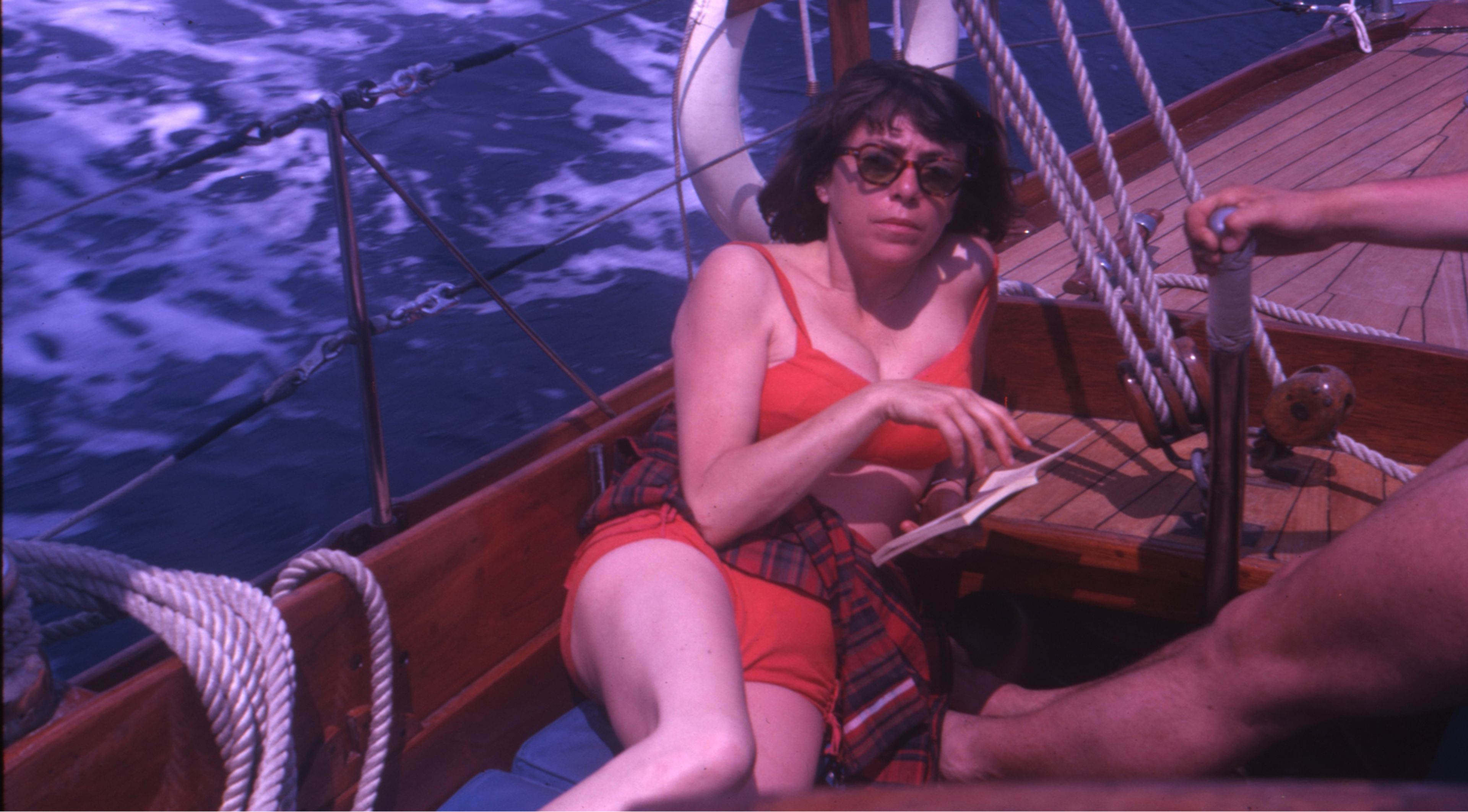
Joan Mitchell aboard the Serica, 1963. Photographer unknown, Joan Mitchell Foundation Archives
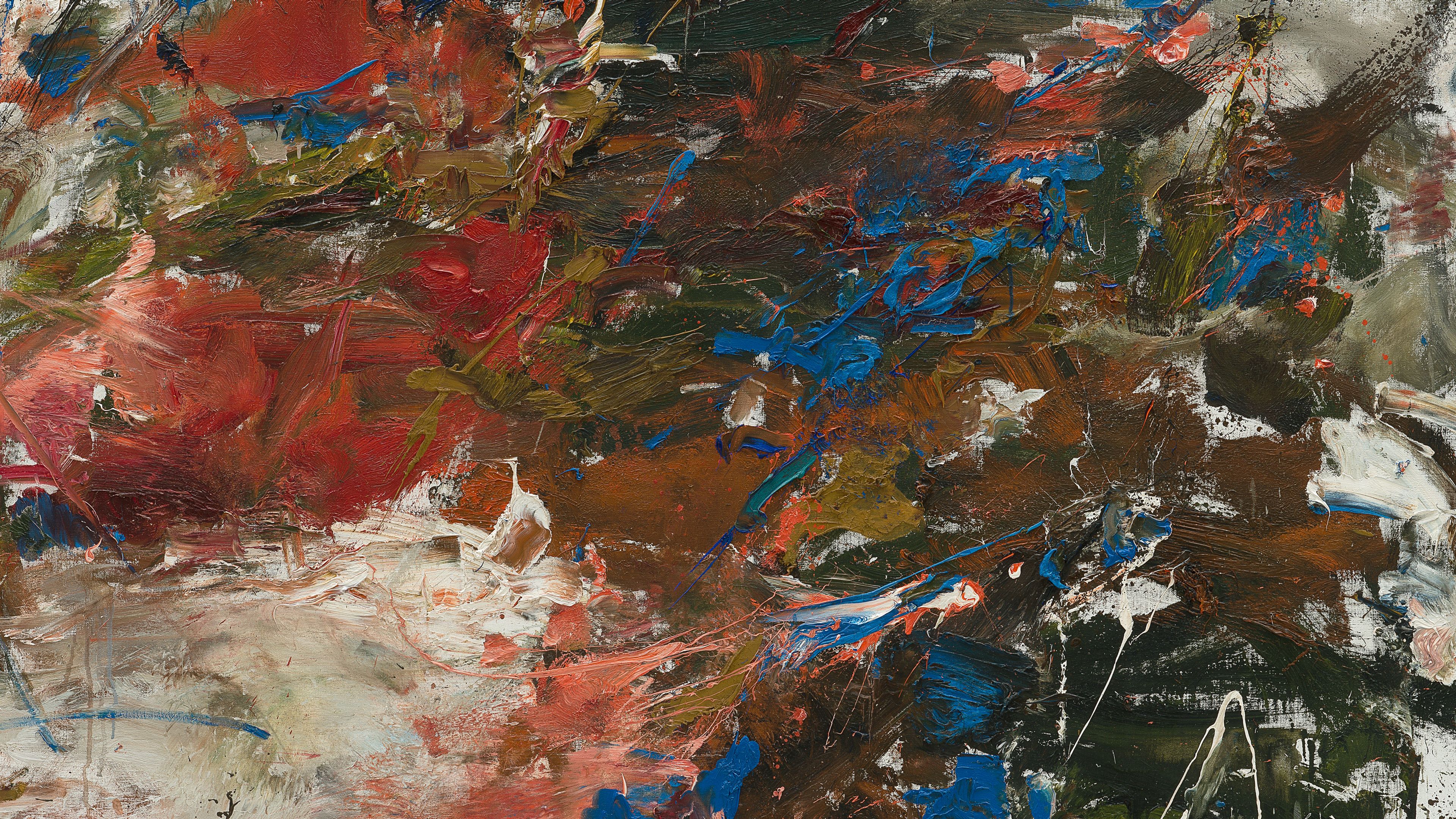
Joan Mitchell, Mandres, 1962 (detail)
“One’s feelings about nature are at different removes from it. There will be elements of the things seen even in the most abstracted impression; otherwise the feeling is likely to disappear and leave an object in its place.... We move in and out of these episodes, coherent or enigmatic ones, always with a sense of feeling at home with the painter’s language, of understanding what [Mitchell] is saying even when we could not translate it.”
—John Ashbery, “Paris Letter: May–June 1962,” Art International 6, no. 7, 1962
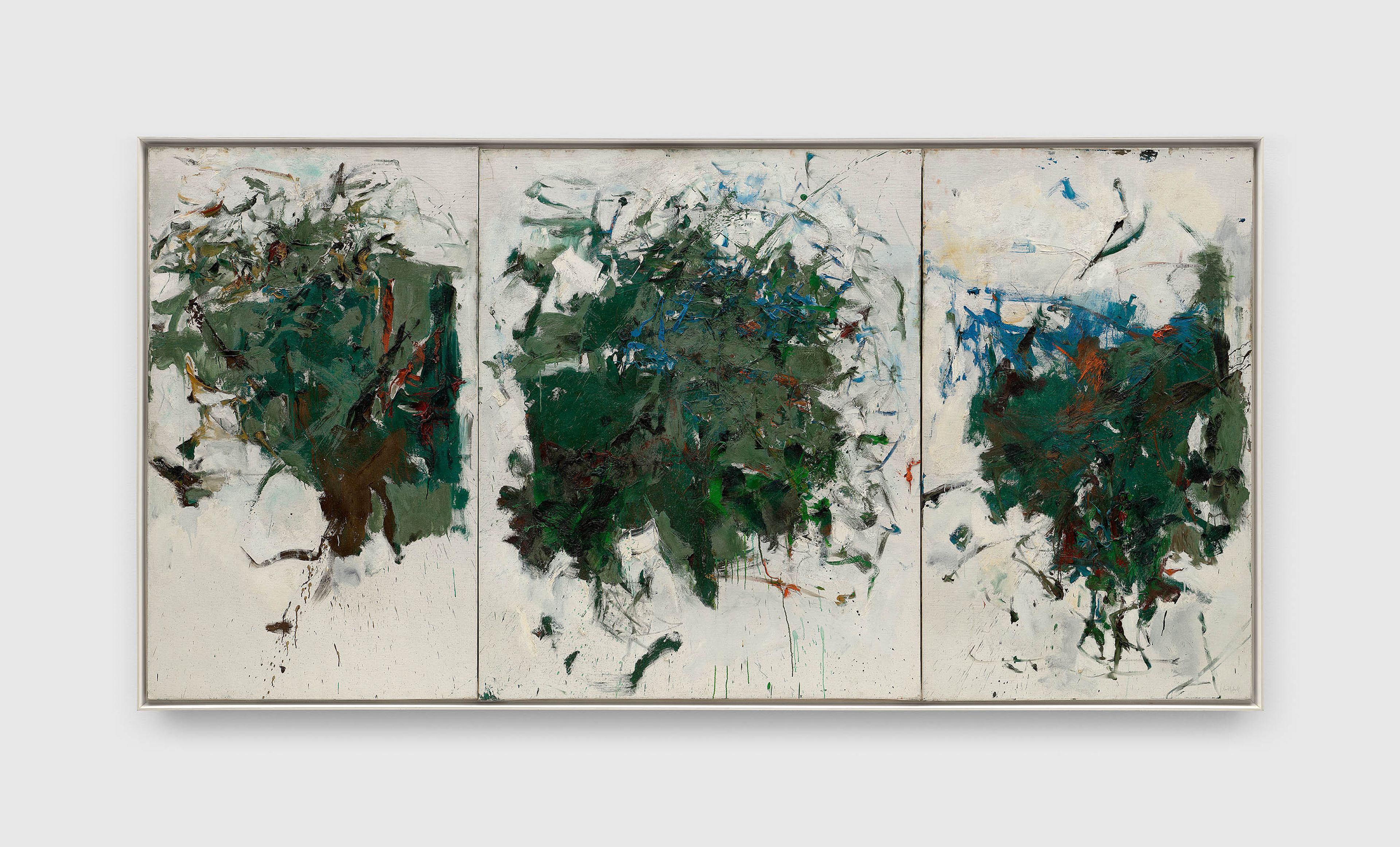
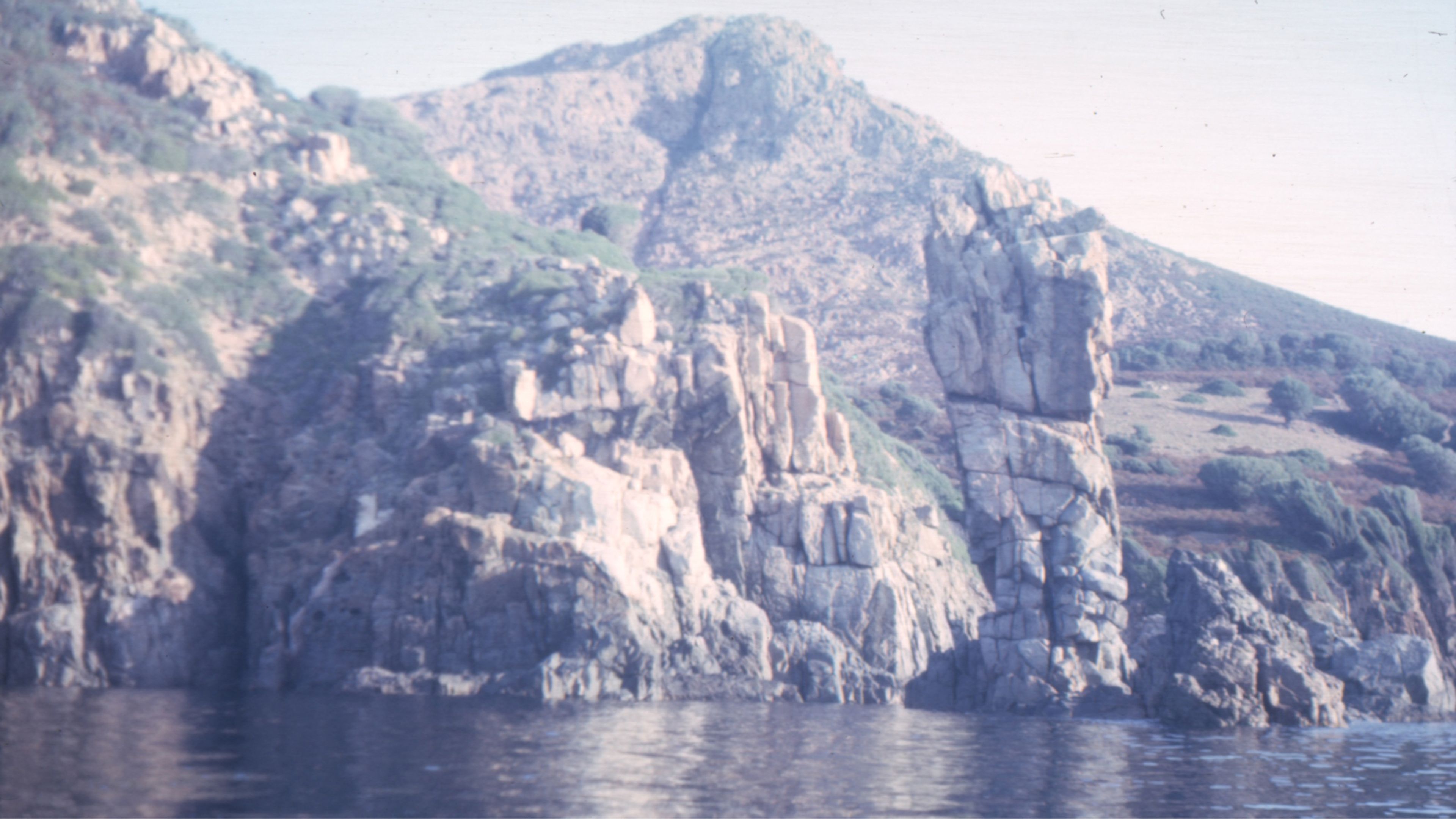
Rock formations off the coast of Capu Rossu, Corsica, 1967. Photographer unknown, Joan Mitchell Foundation Archives
“I’m trying to remember what I felt about a certain cypress tree and I feel if I remember it, it will last me quite a long time.”
—Joan Mitchell, 1965
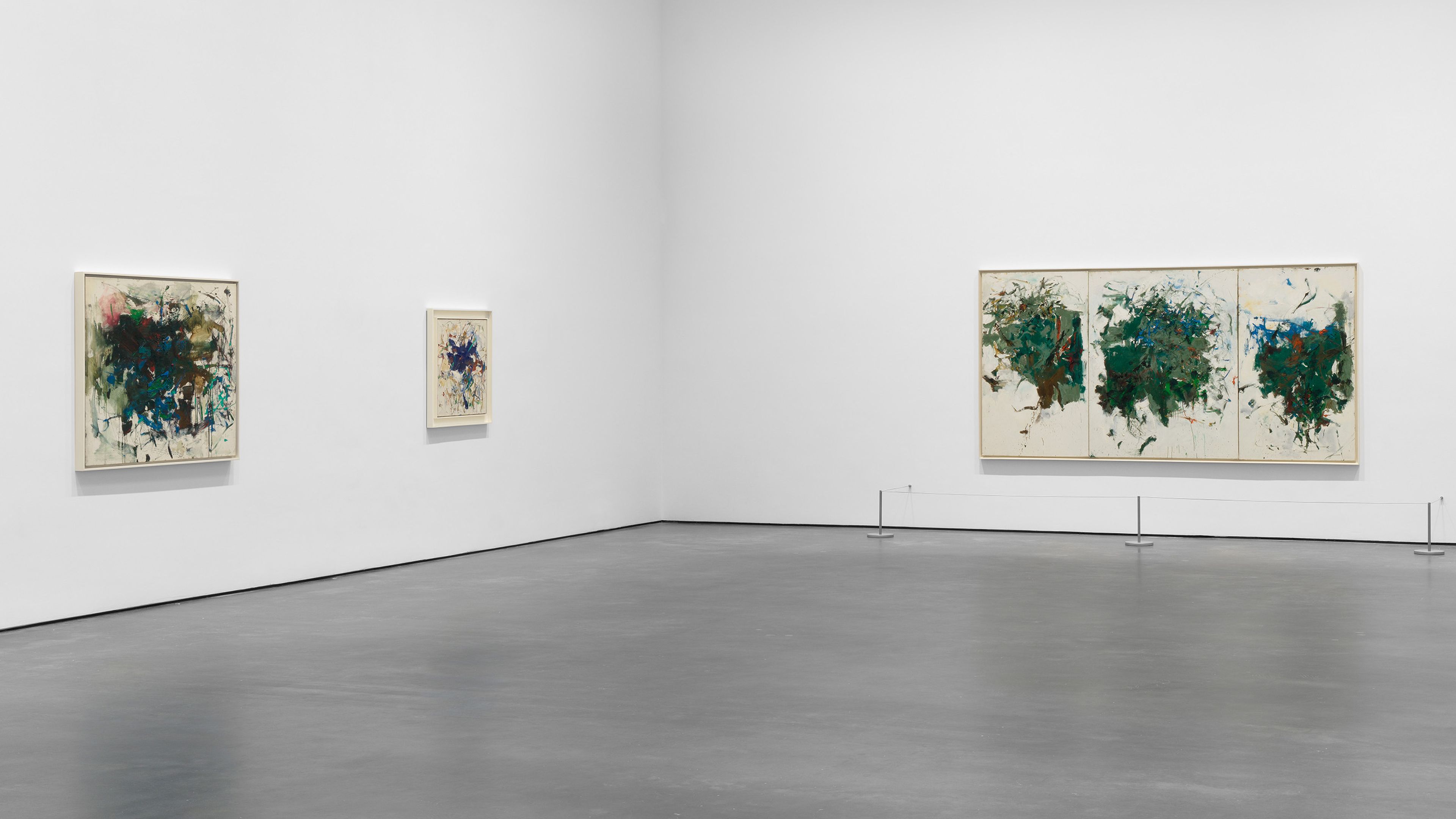
Installation view, To define a feeling: Joan Mitchell, 1960-1965, David Zwirner, New York, 2025
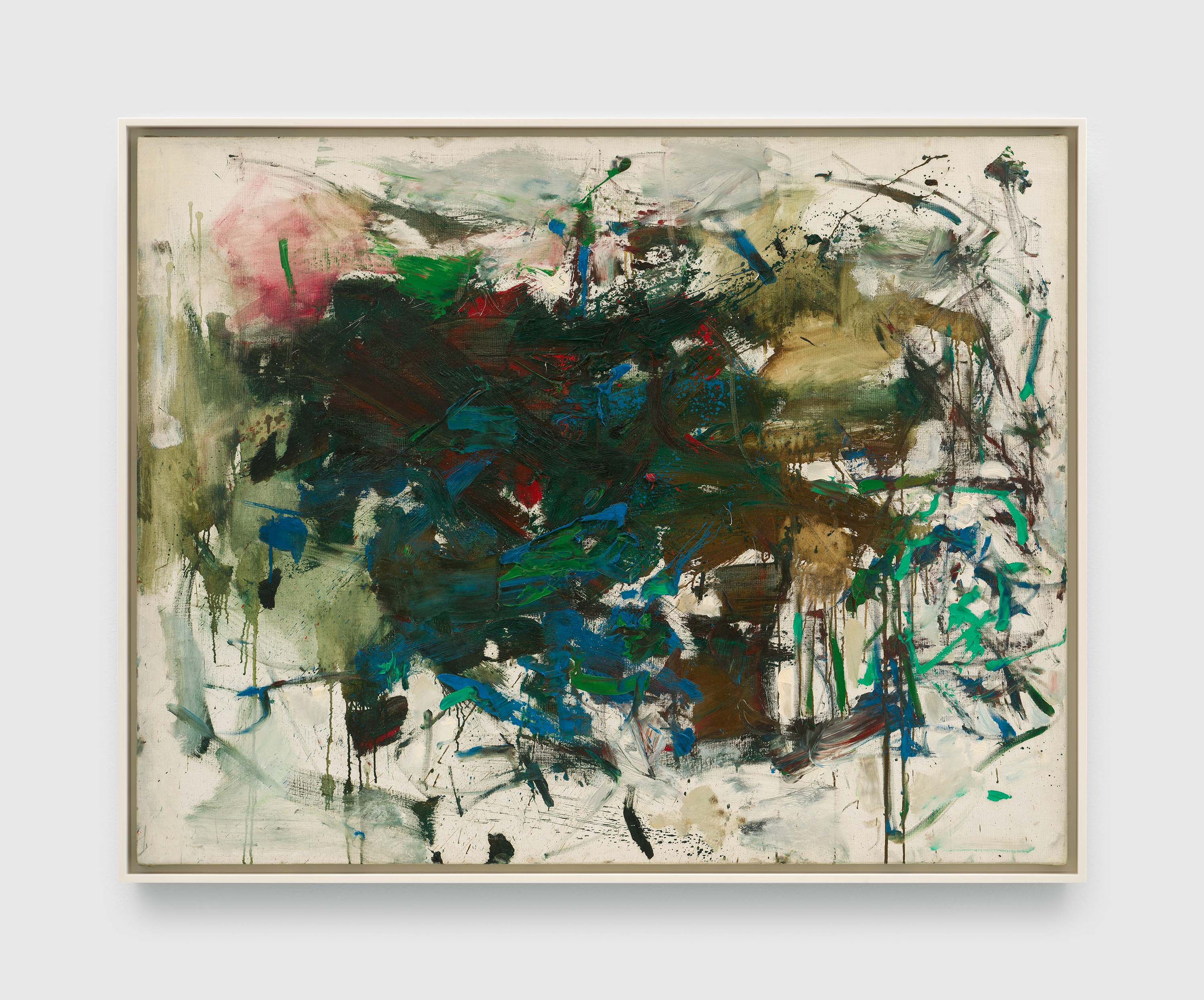
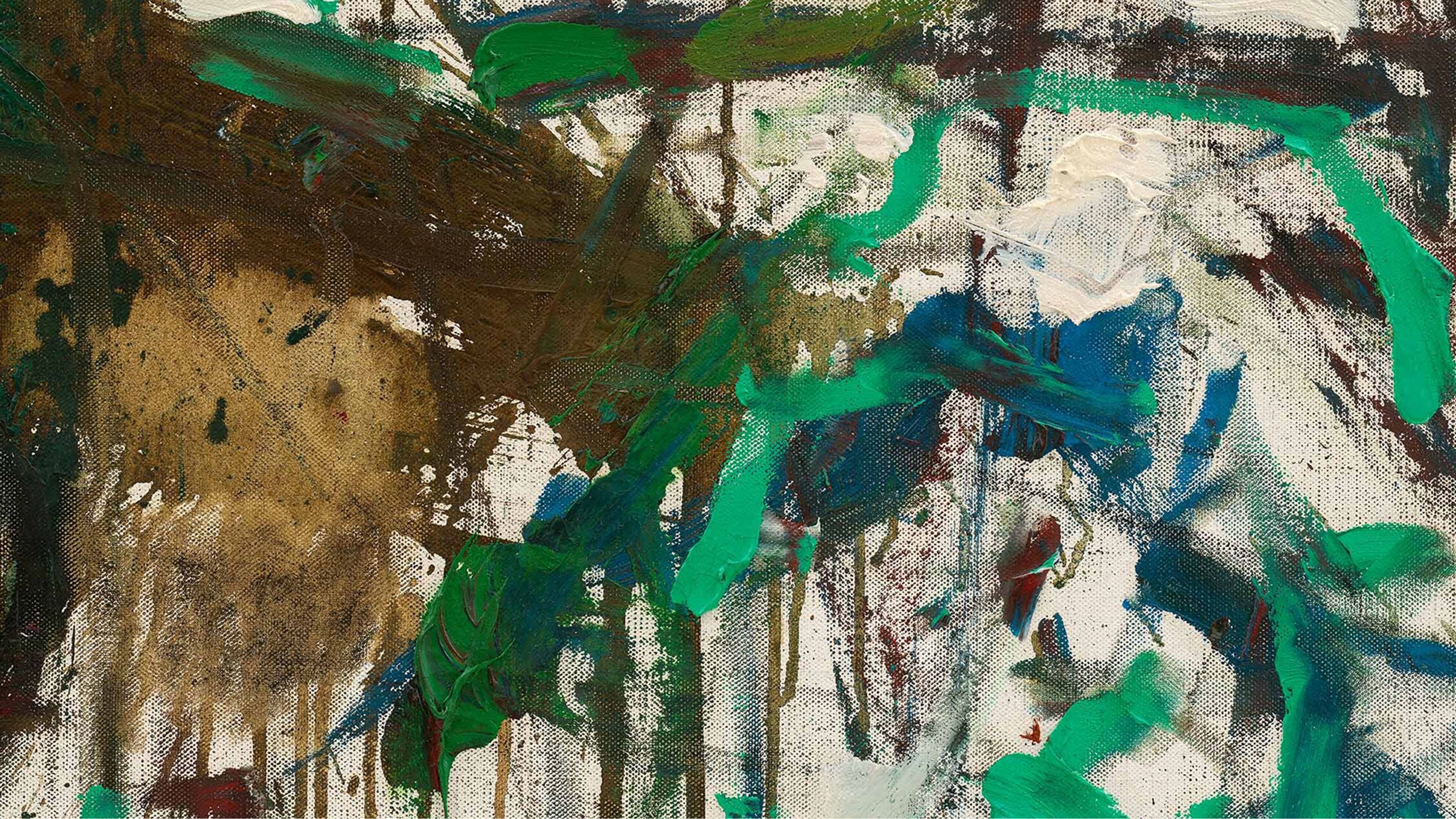
Joan Mitchell, Untitled, 1963 (detail)
“The early 1960s ... were a time of division without rupture, of moving across two places.... [Mitchell’s work] delivers a storm of painterly gestures from this fertile in-between, an emanation of the artist’s own skilled precision in transforming lucid feeling into ferocious virtuosity.”
—Amy Rahn, in the exhibition catalogue for Joan Mitchell, San Francisco Museum of Modern Art, 2021–2022
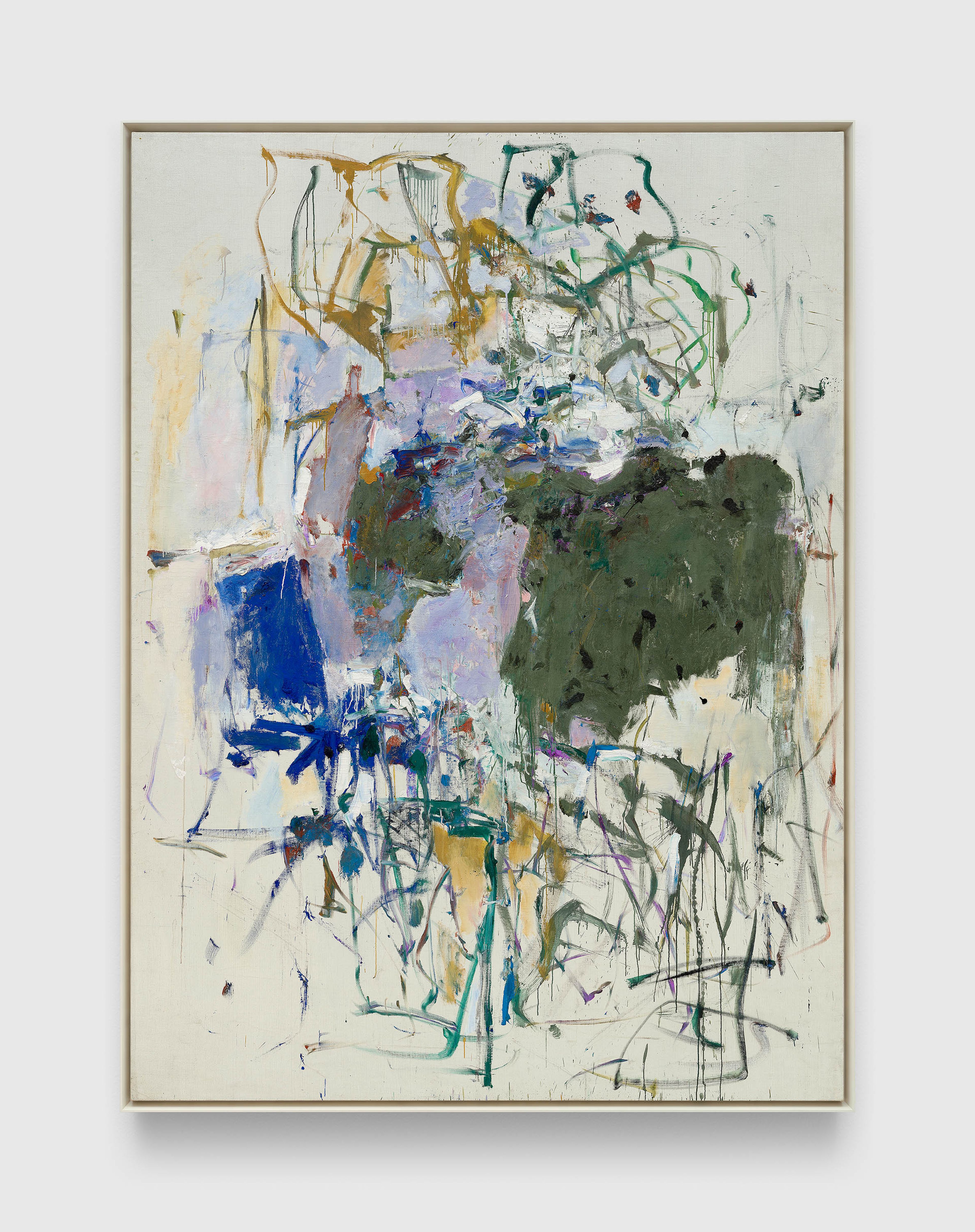
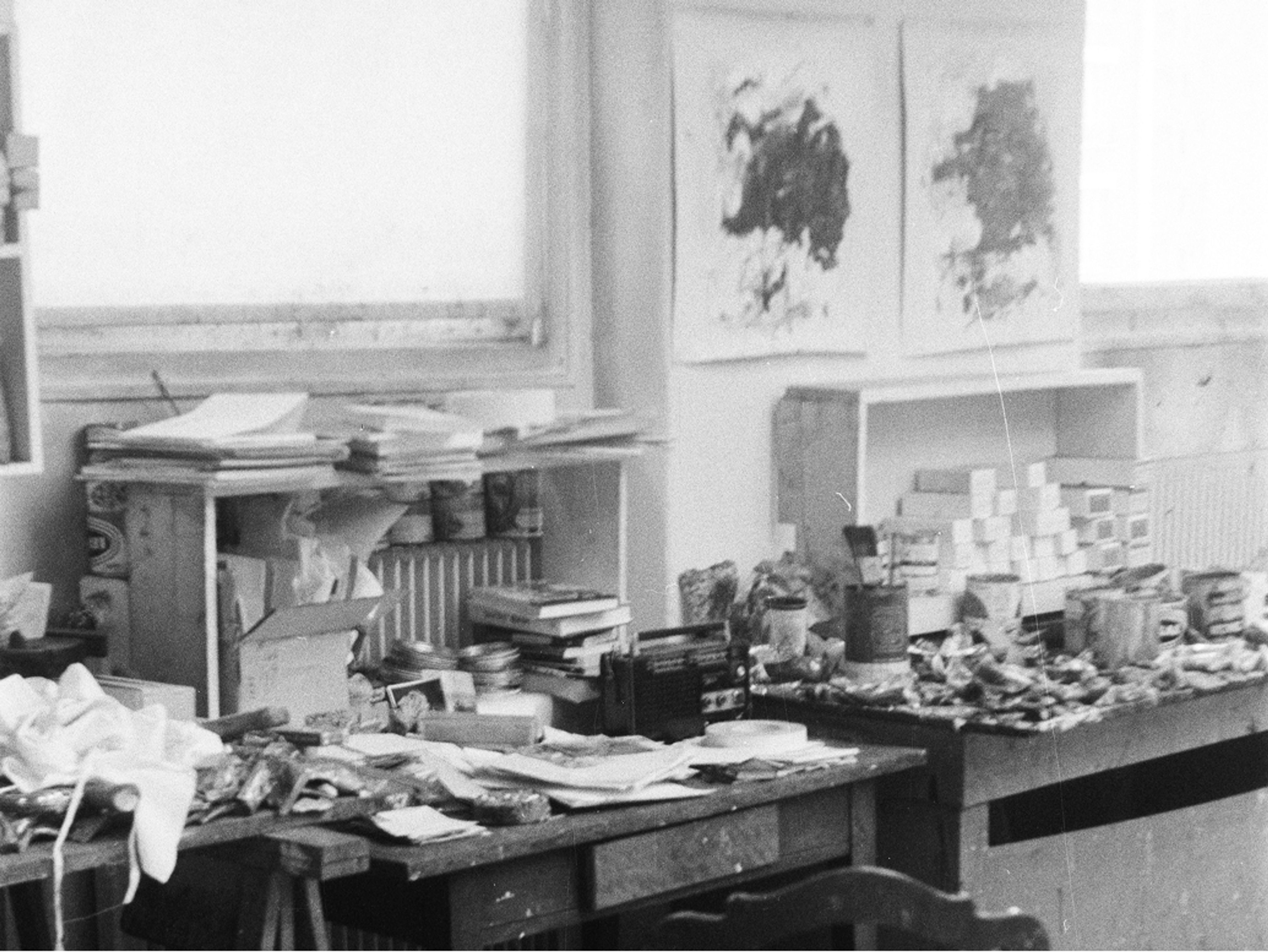
Joan Mitchell's studio at 10 rue Frémicourt, Paris, c. 1964. Photographer unknown, Joan Mitchell Foundation Archives
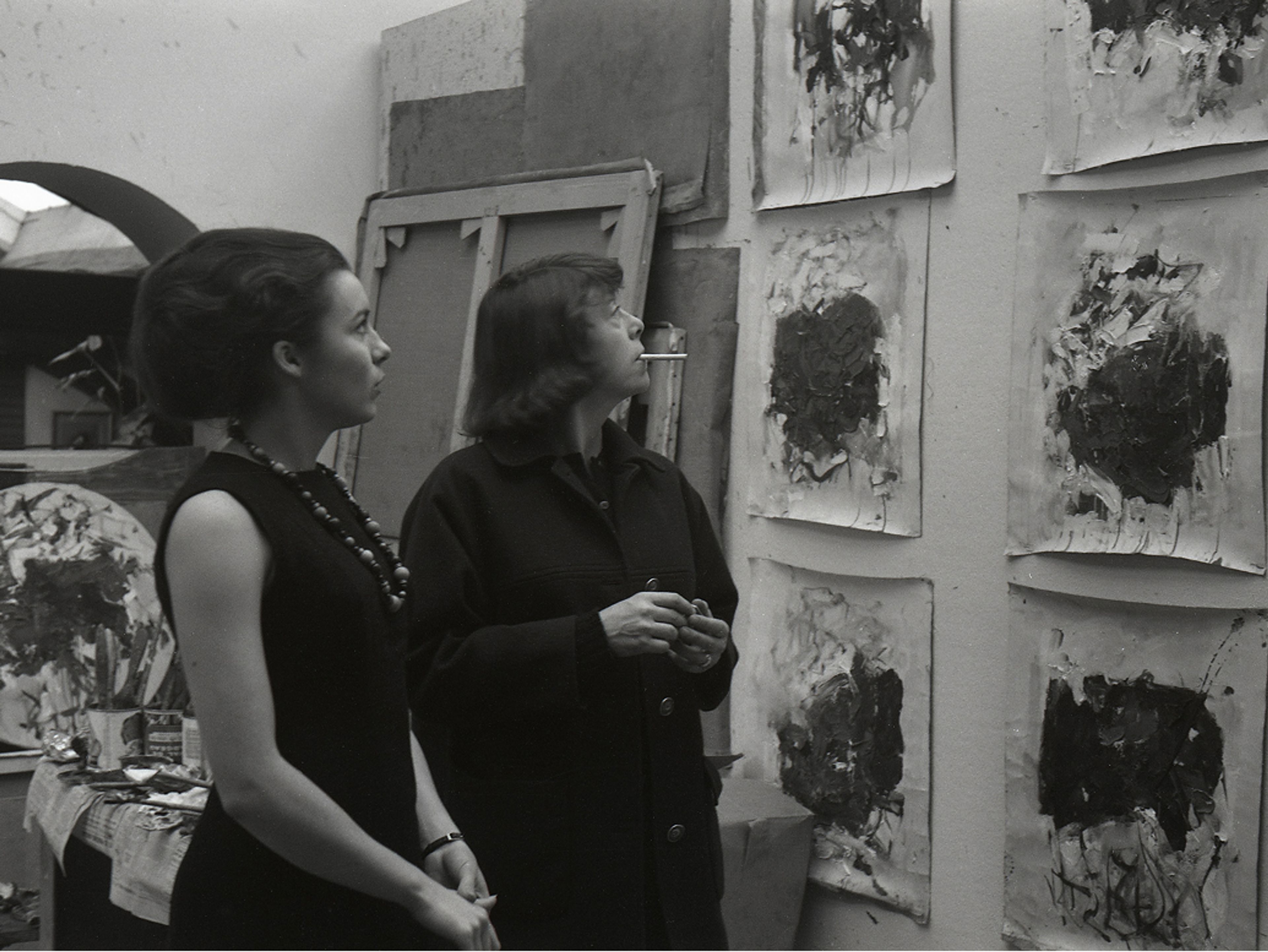
Yseult Riopelle and Joan Mitchell at 10 rue Frémicourt, c. 1964. Photographer unknown, Joan Mitchell Foundation Archives
“Instead of complementary color juxtapositions, through which Mitchell generally evokes an impression of light, these pictures depend on tonal contrasts and modulations. She referred to them as her ‘new black paintings,’ adding ‘although there’s no [pure] black in any of them.”
—Judith Bernstock, in the exhibition catalogue for Joan Mitchell, Corcoran Gallery of Art, Washington, D.C., 1988
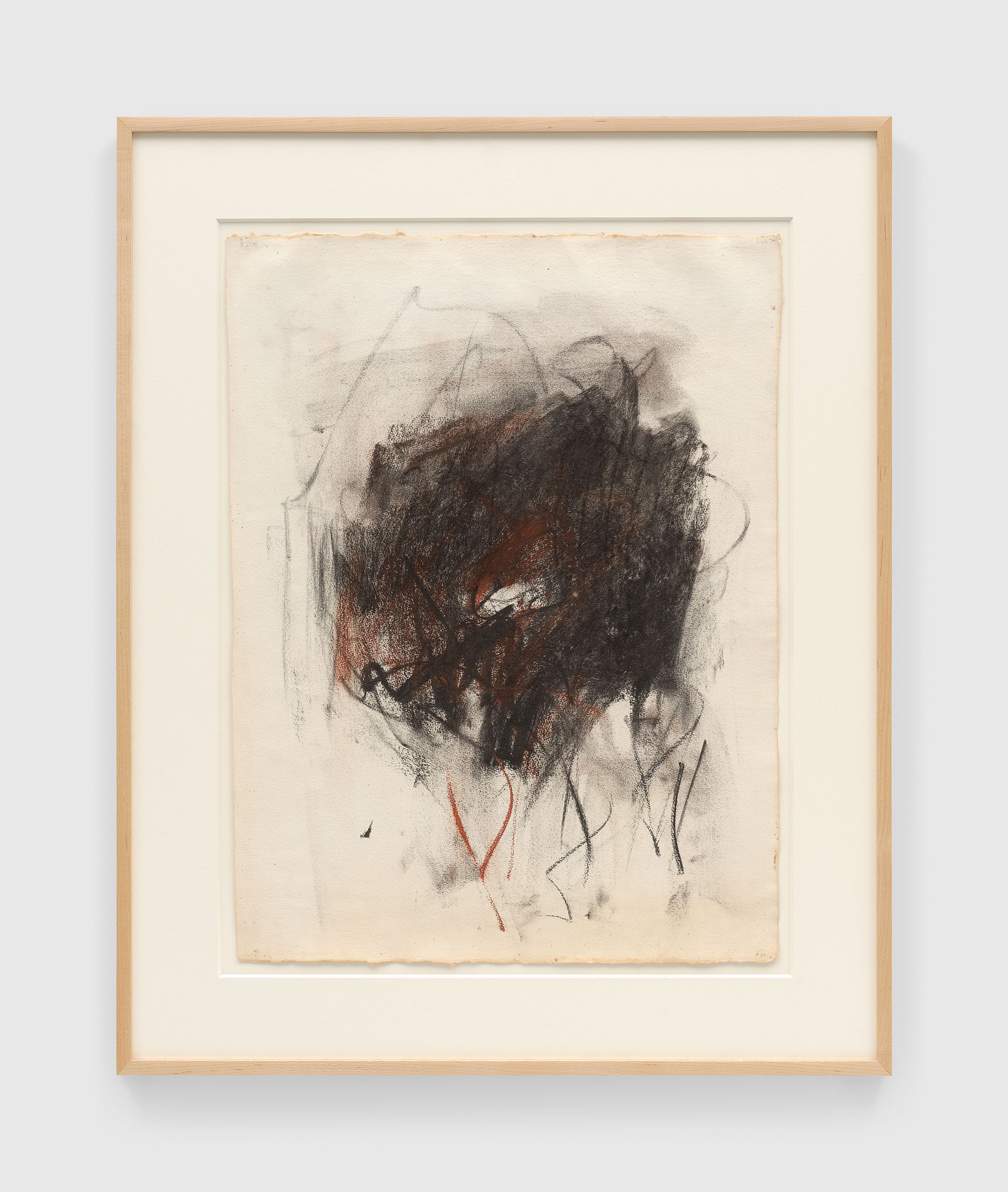
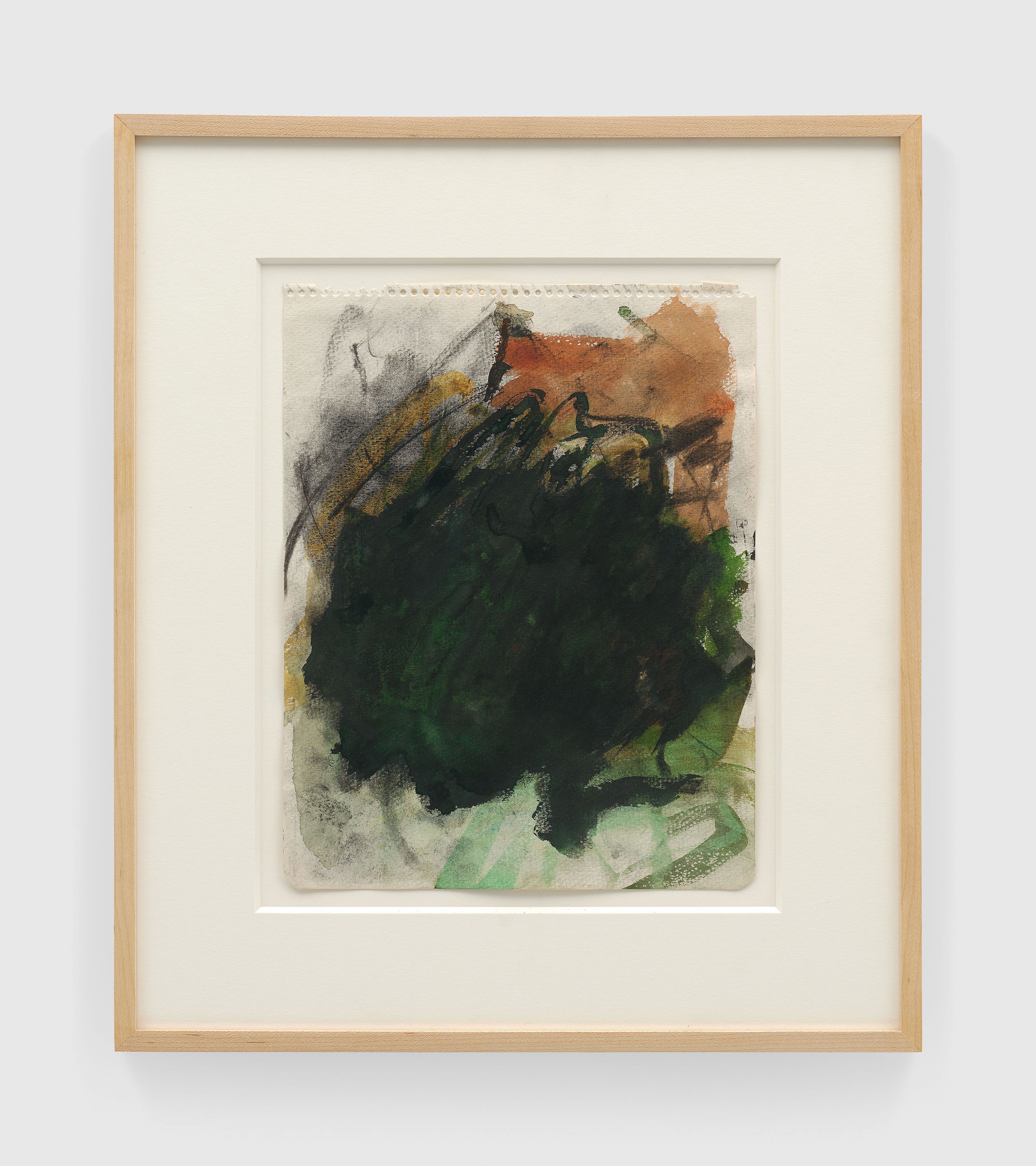
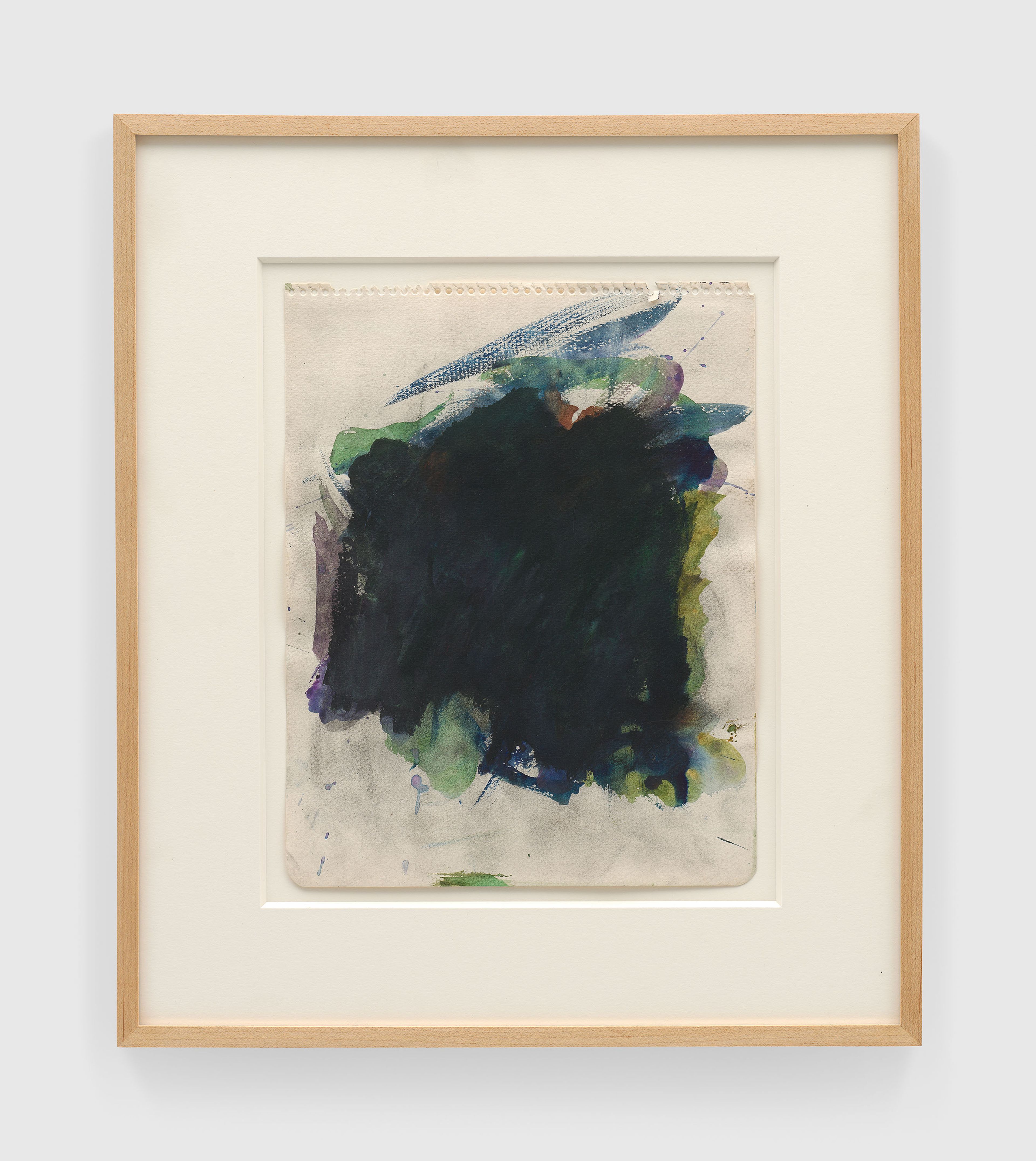
“In her works on paper, with their swift tenacious lines, scumbled fields, decisive layering, and optical collisions, the viewer has an intimate encounter with a sumptuous but harsh lyricism that constantly courts but never succumbs to chaos.”
—John Yau, Joan Mitchell: Works on Paper 1956–1992, 2007
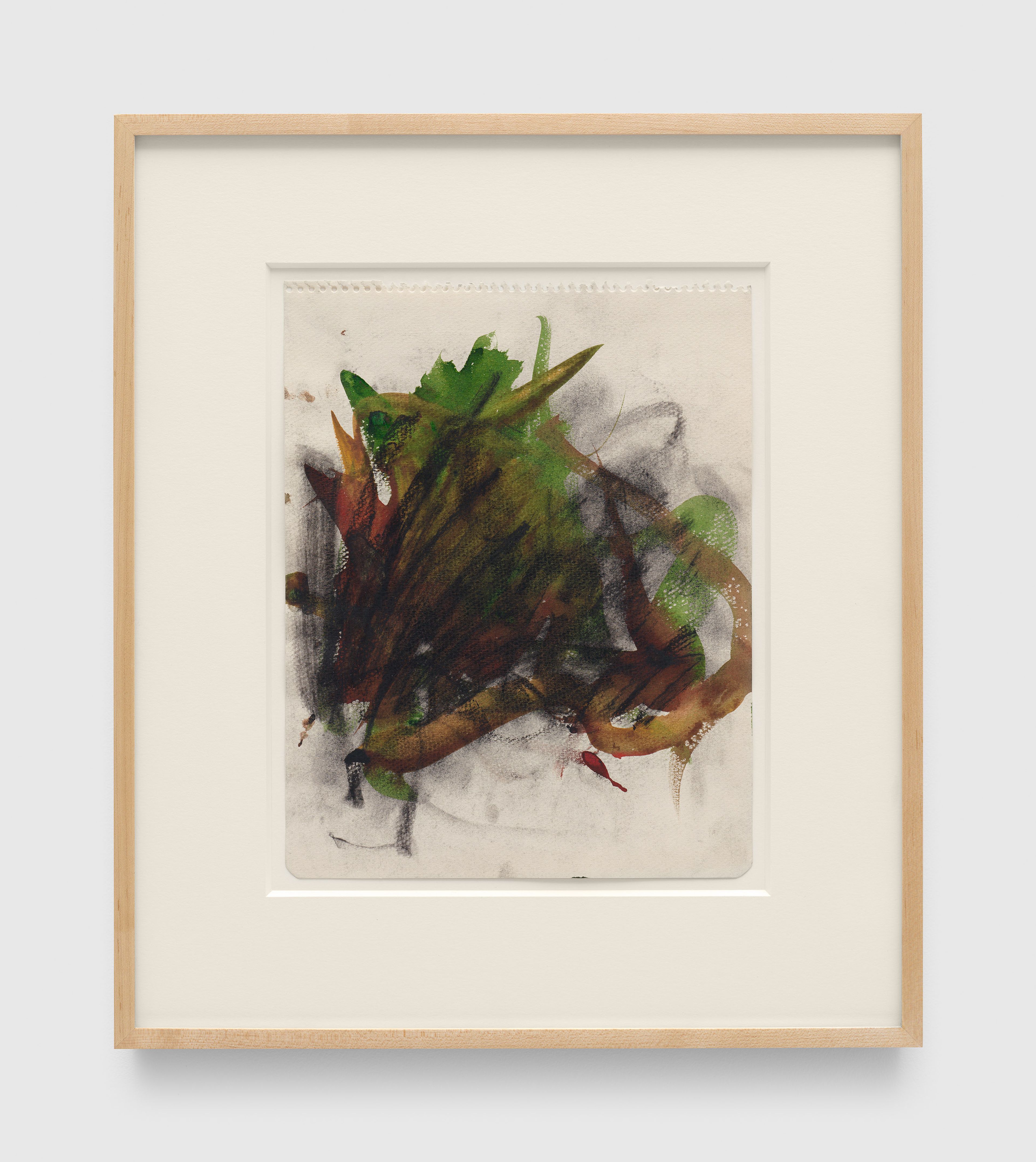
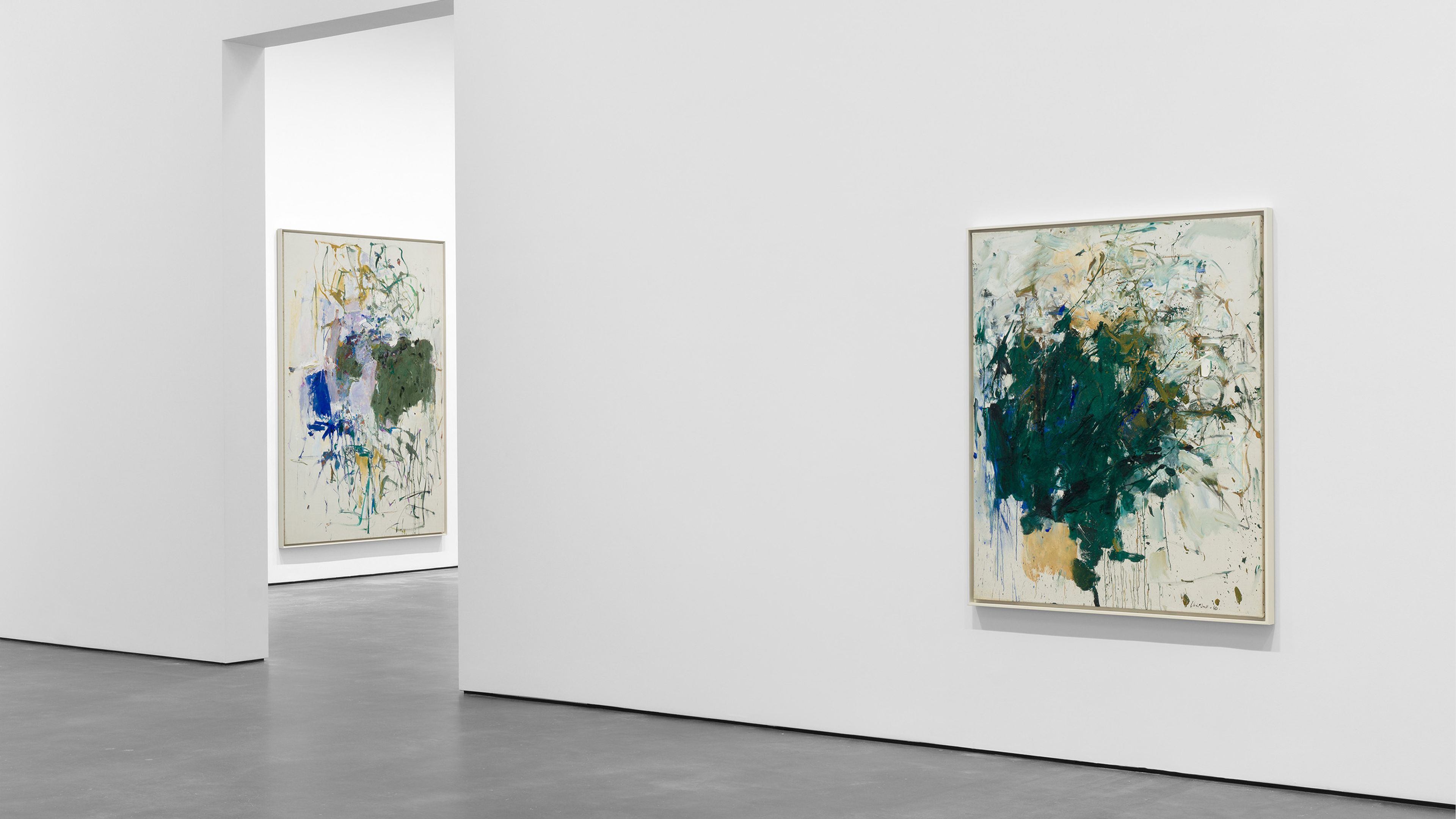
Installation view, To define a feeling: Joan Mitchell, 1960-1965, David Zwirner, New York, 2025
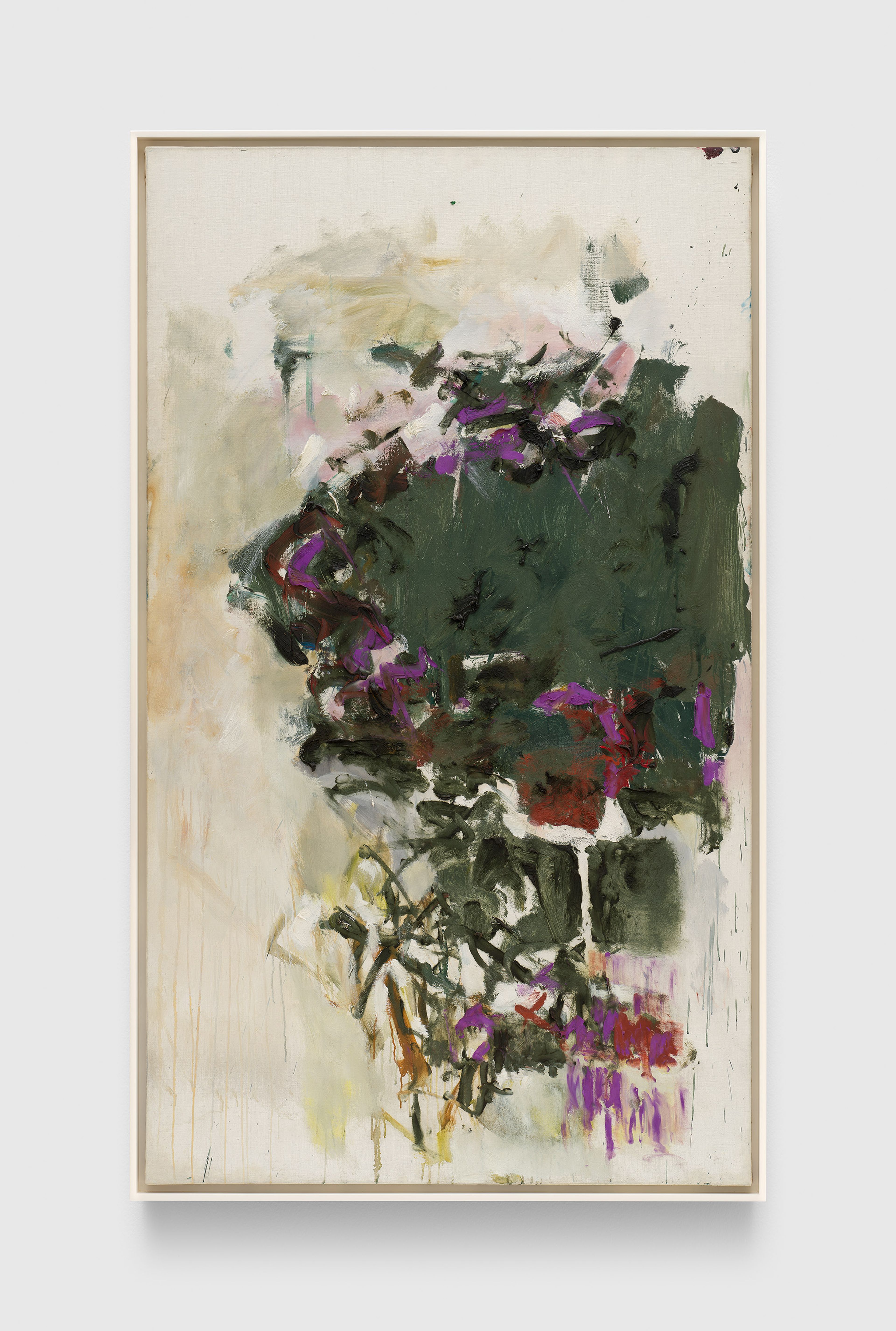
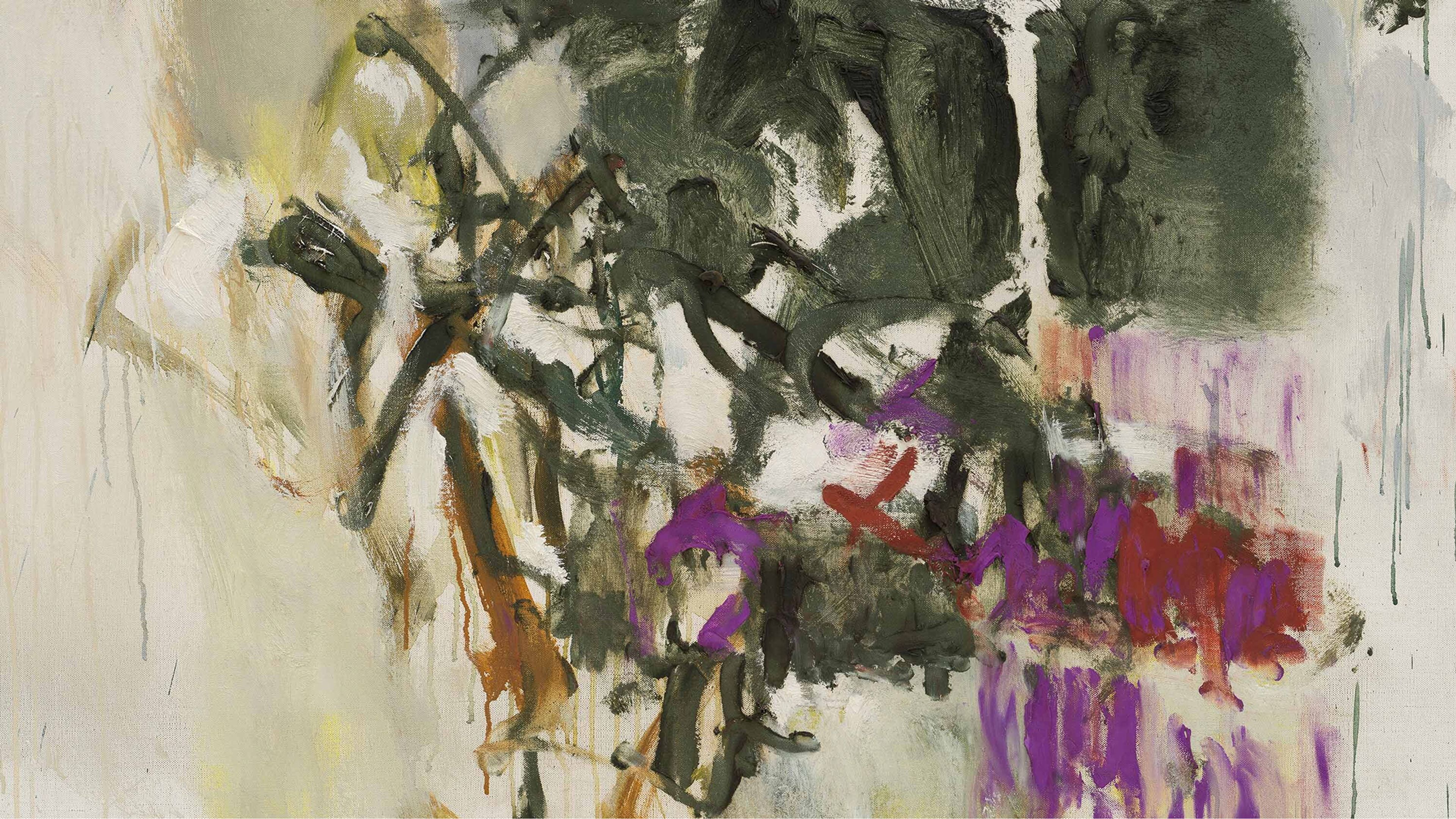
Joan Mitchell, Untitled, c. 1965 (detail)
“This roving lifestyle slowed Mitchell’s productivity, resulting in fewer opportunities to produce work in the dogged manner to which she was accustomed. Her solution was to return to memories of landscapes, sublimating emotions and sensations into cascades of color and wash.... She had managed to bestow upon her painting the power to be truly transportive, taking her audience to depths she alone had traversed.”
—Tausif Noor, “The Roots of Joan Mitchell’s Greatness,” in The New York Times, September 2, 2021
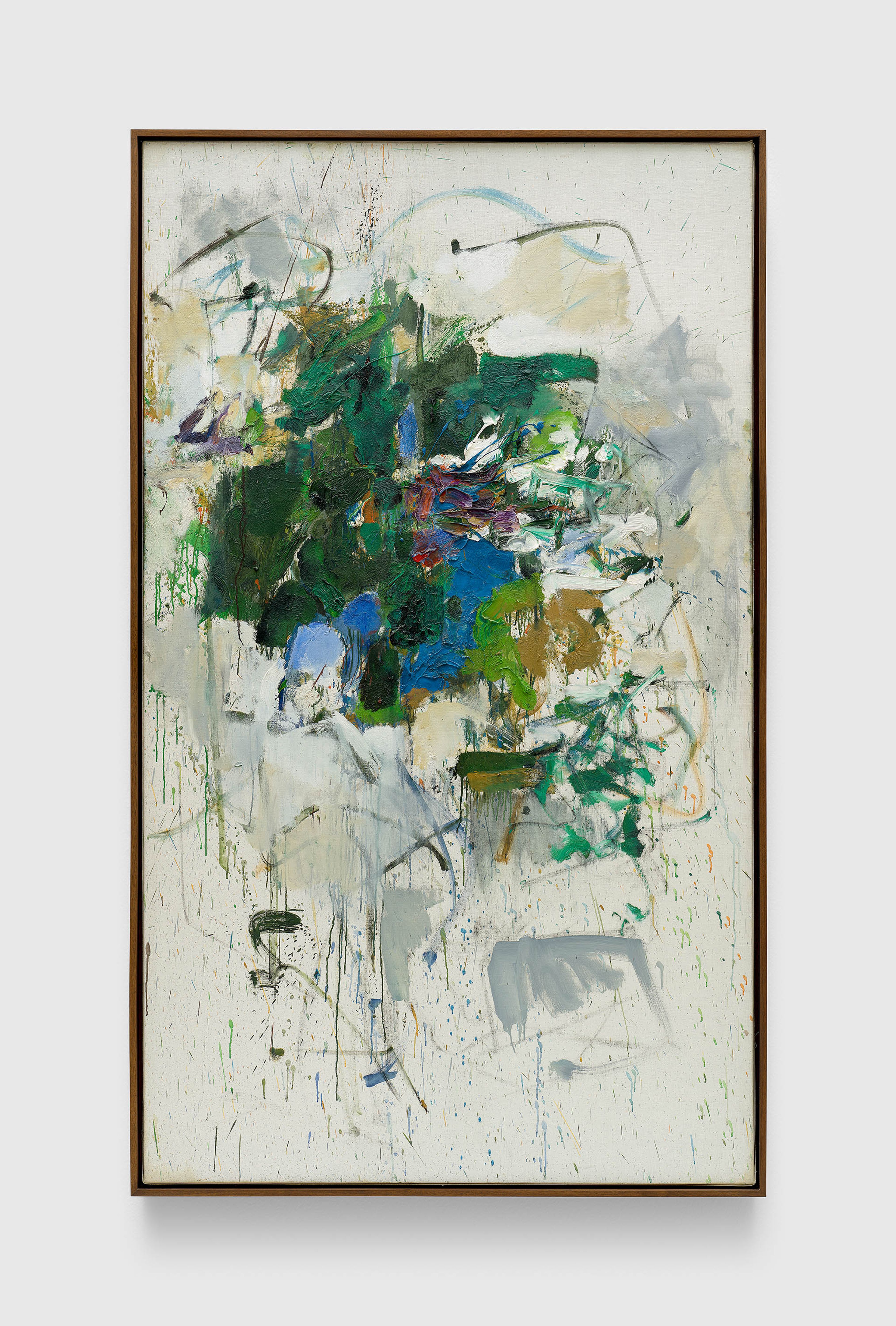
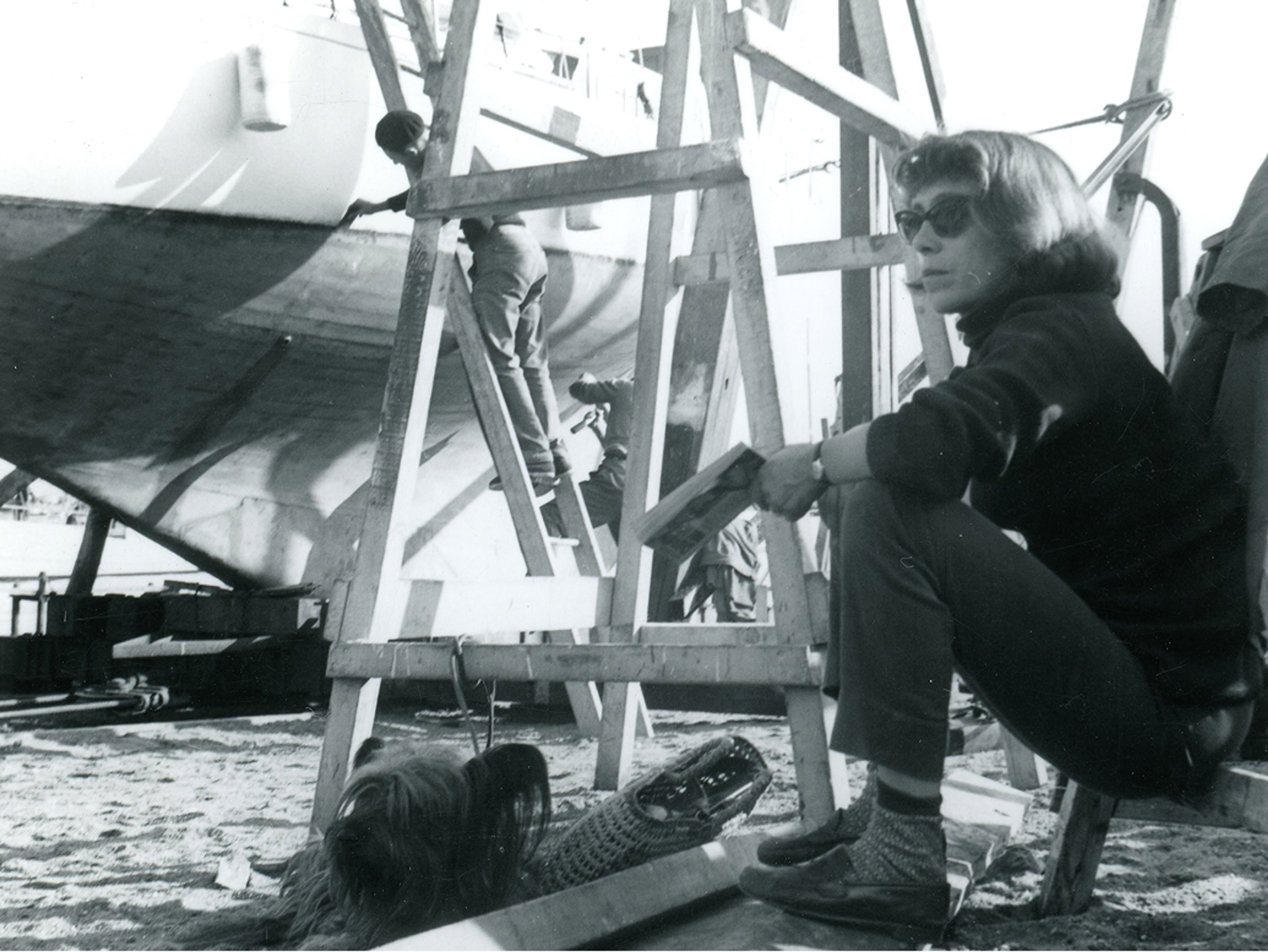
Joan Mitchell and one of her Skye terriers, ca. 1963. Photographer unknown, Joan Mitchell Foundation Archives
The works from the early 1960s feature unexpected tonal contrasts, slightly off-center focal points, and active edges where the background becomes part of the drama. The atmosphere evokes both the luminosity and ruggedness of Mediterranean landscapes, their rocky terrain mirrored in the vigorous, forceful handling of paint—yielding one of the most introspective and audacious phases of Mitchell’s career.
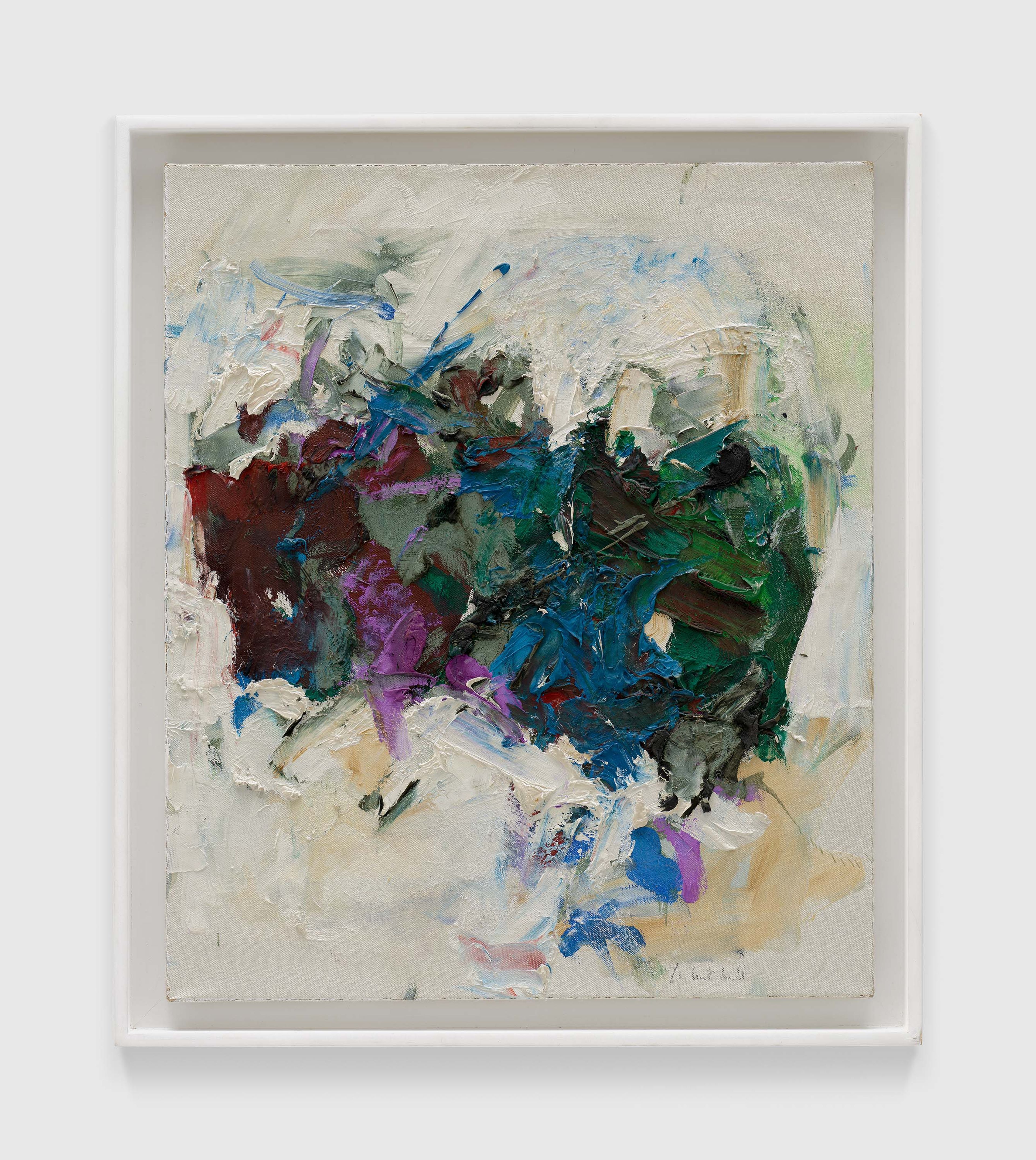
“The views that Mitchell remembered and painted previously were defined by their surrounding structures, whether she was looking out through windows high above Lake Michigan, toward the Brooklyn Bridge, or over Paris rooftops, or walking among tall Manhattan buildings.... Indeed, confronted with the open sea, she painted not the water but its walls—the trees at water’s edge and the limestone bluffs of Corsica, sun-bleached and studded with scrub and cypresses.”
—Sarah Roberts, in the exhibition catalogue for Joan Mitchell, San Francisco Museum of Modern Art, 2021–2022
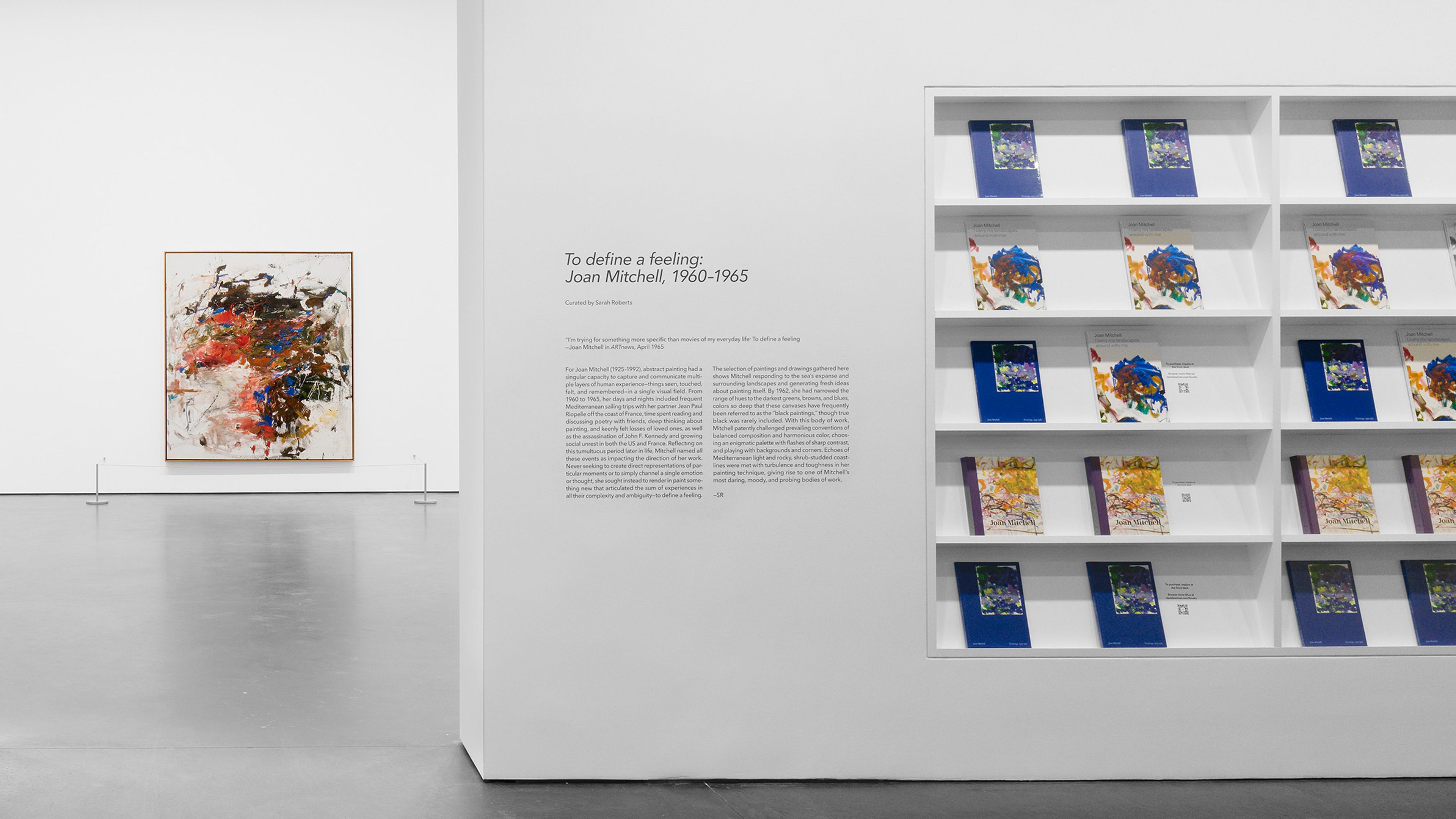
Installation view, To define a feeling: Joan Mitchell, 1960-1965, David Zwirner, New York, 2025

Inquire about works by Joan Mitchell