Josef Albers
Josef Albers (1888–1976) was one of the most influential abstract painters and art teachers of the twentieth century. Albers's artistic career, which bridged European and American modernism, consisted mainly of a tightly focused investigation into the perceptual properties of color and spatial relationships.
Learn MoreSurvey
Exhibitions

Explore Exhibitions
Stories

Biography
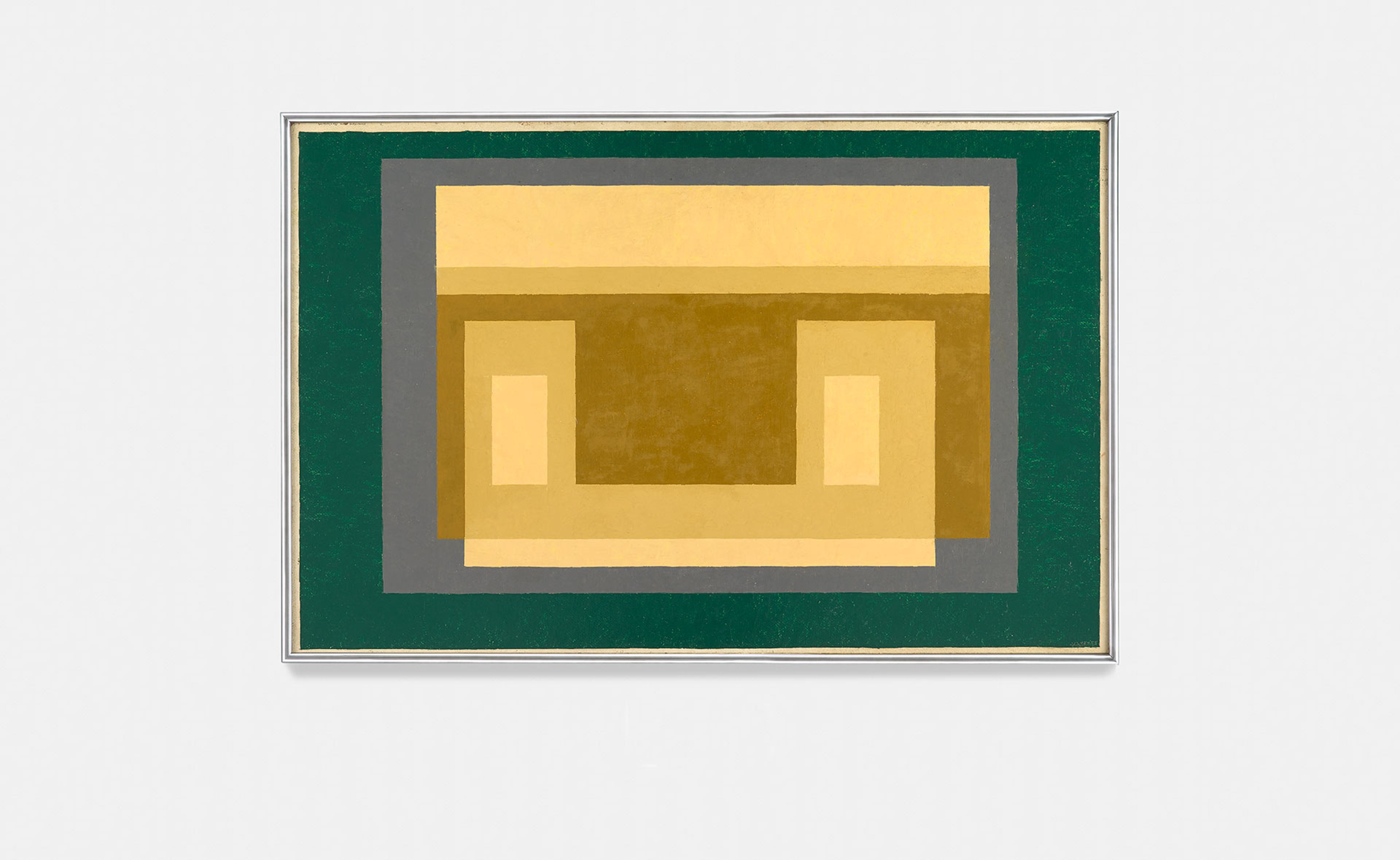
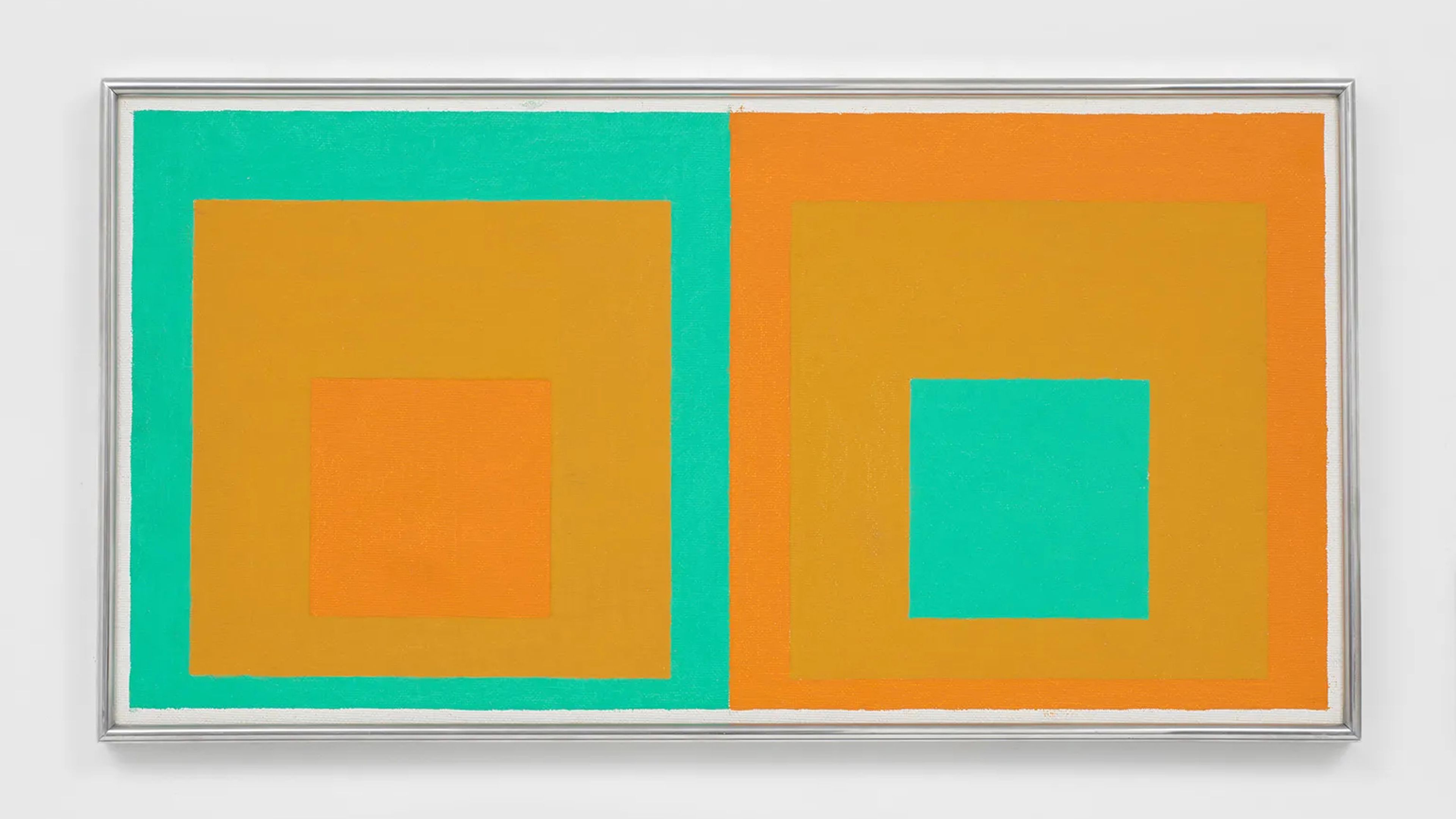
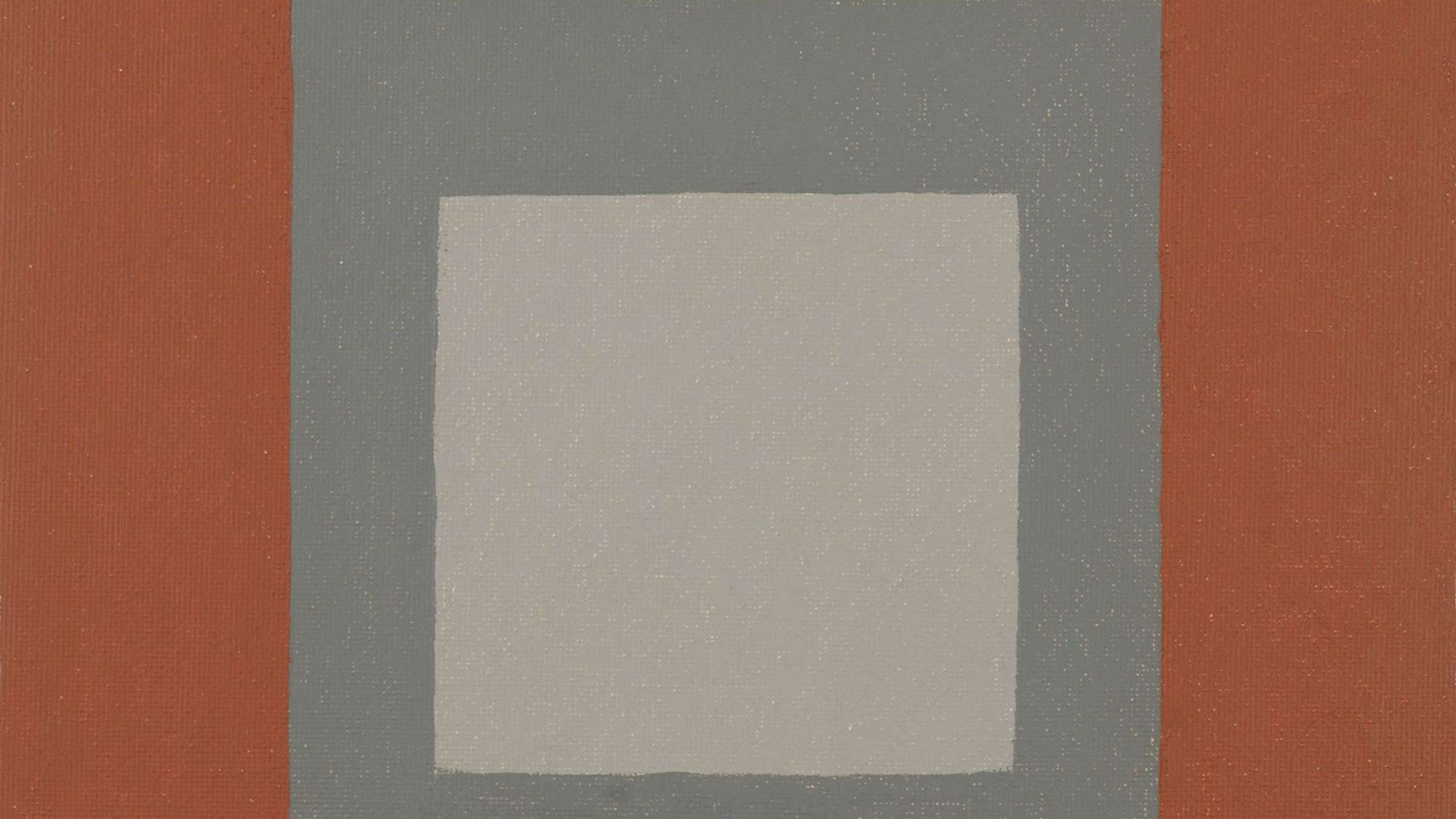
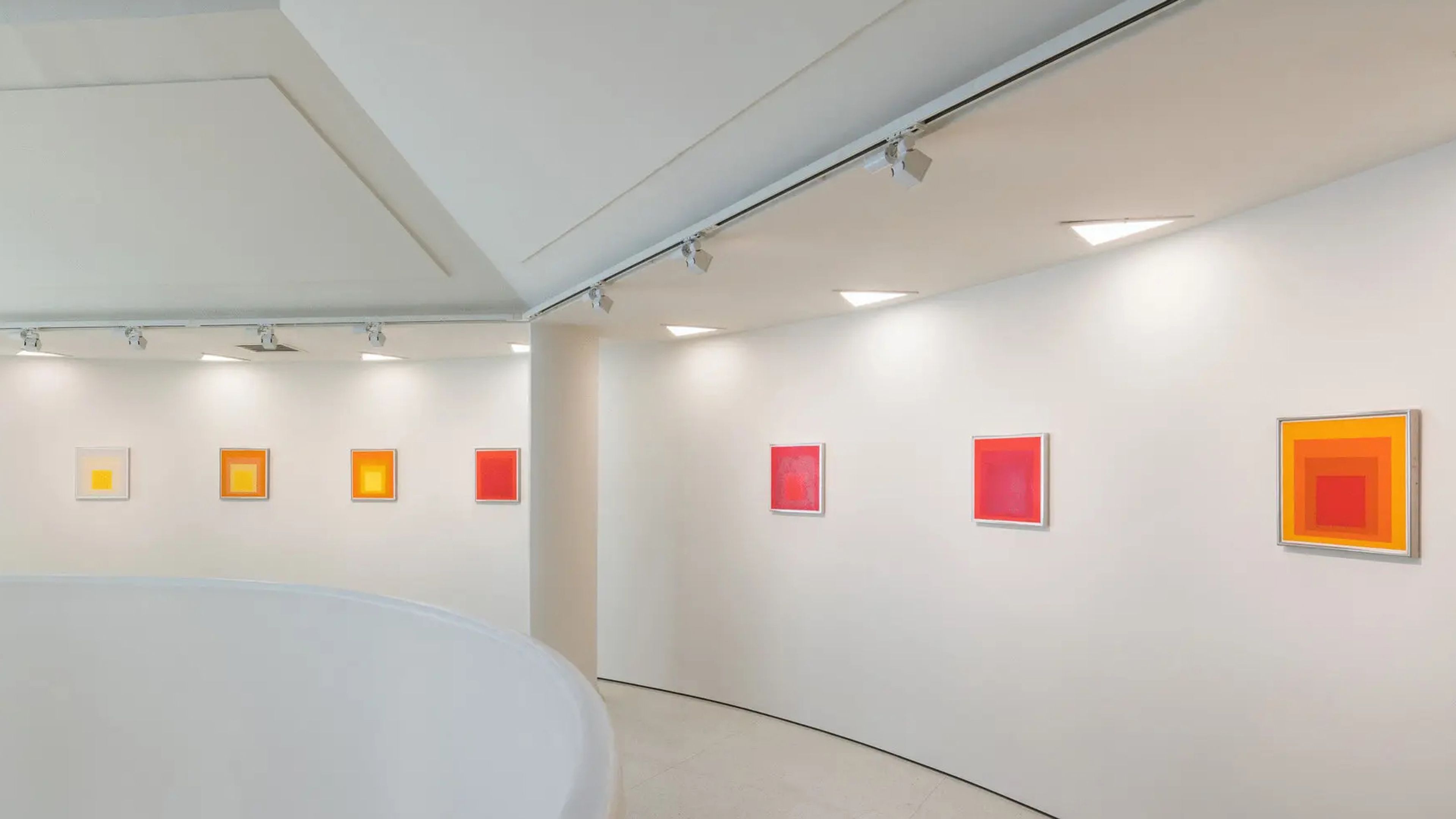
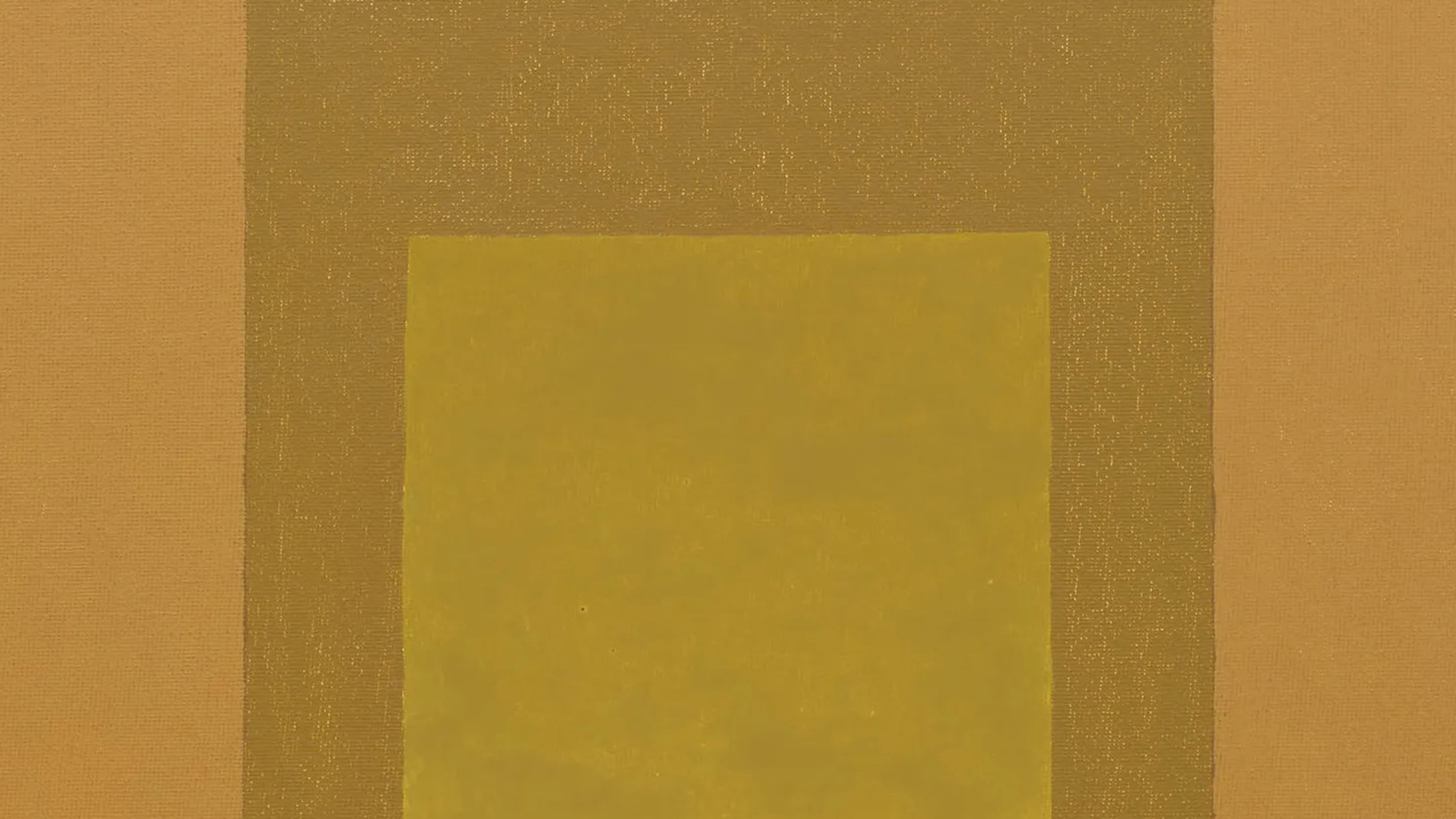
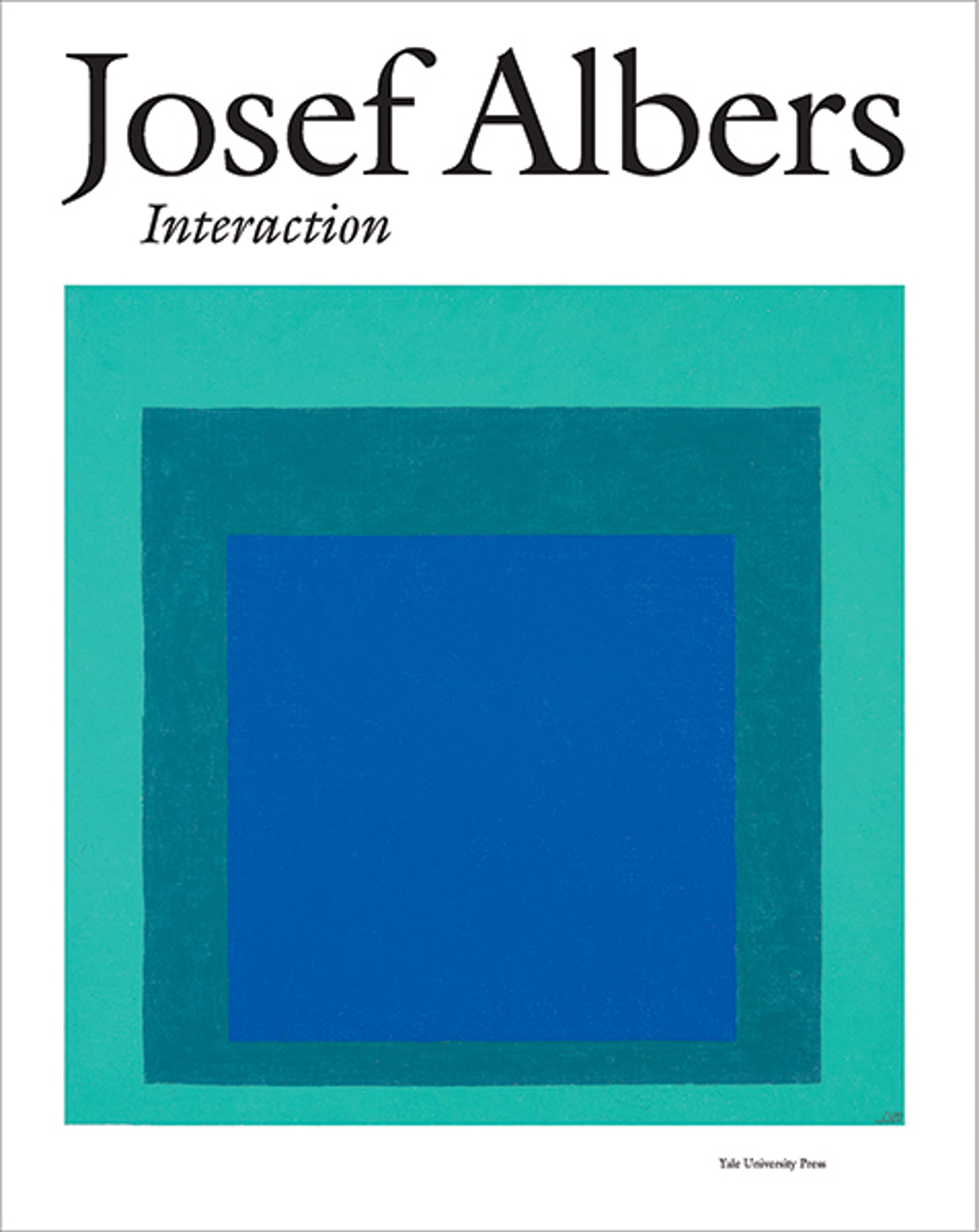
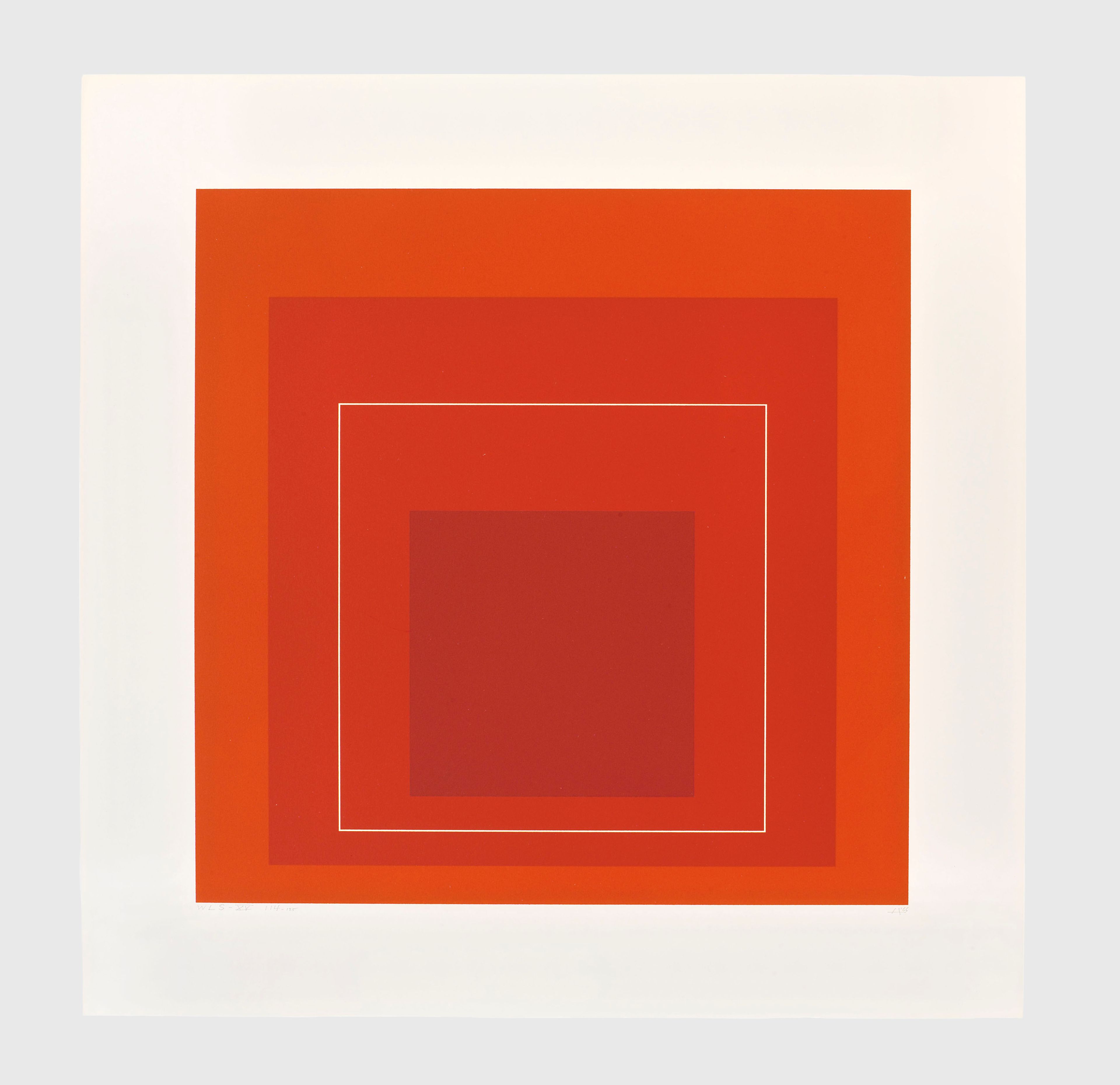
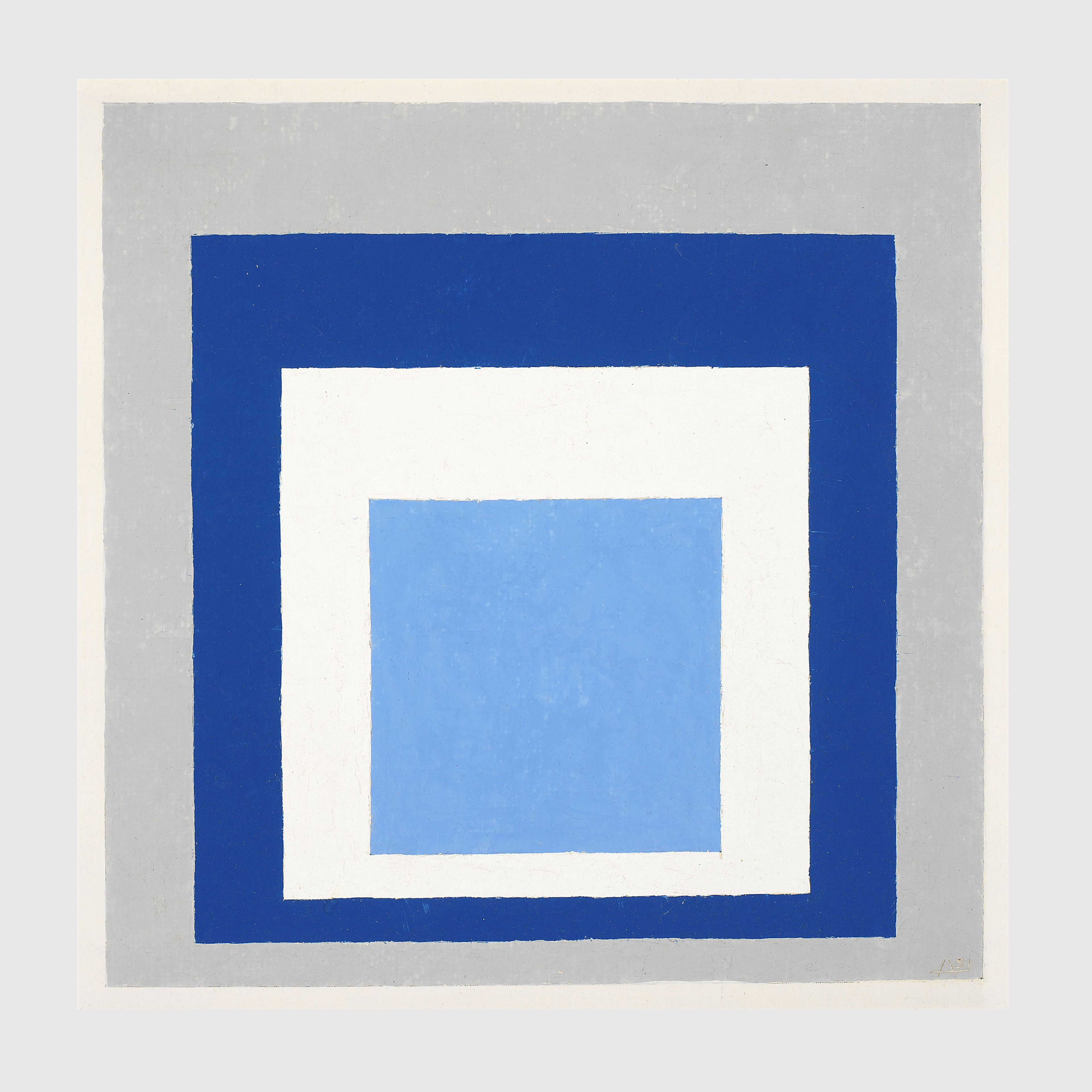
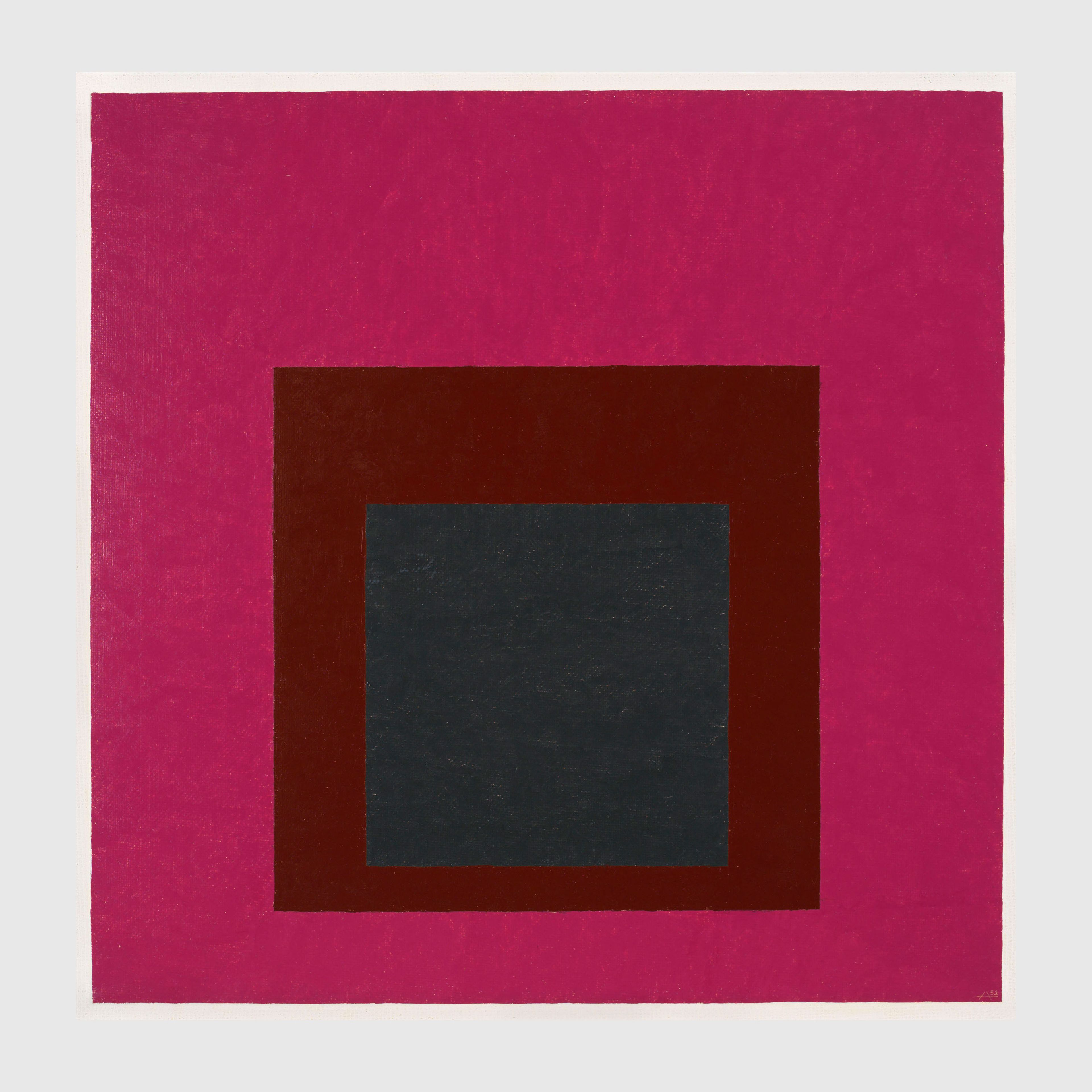
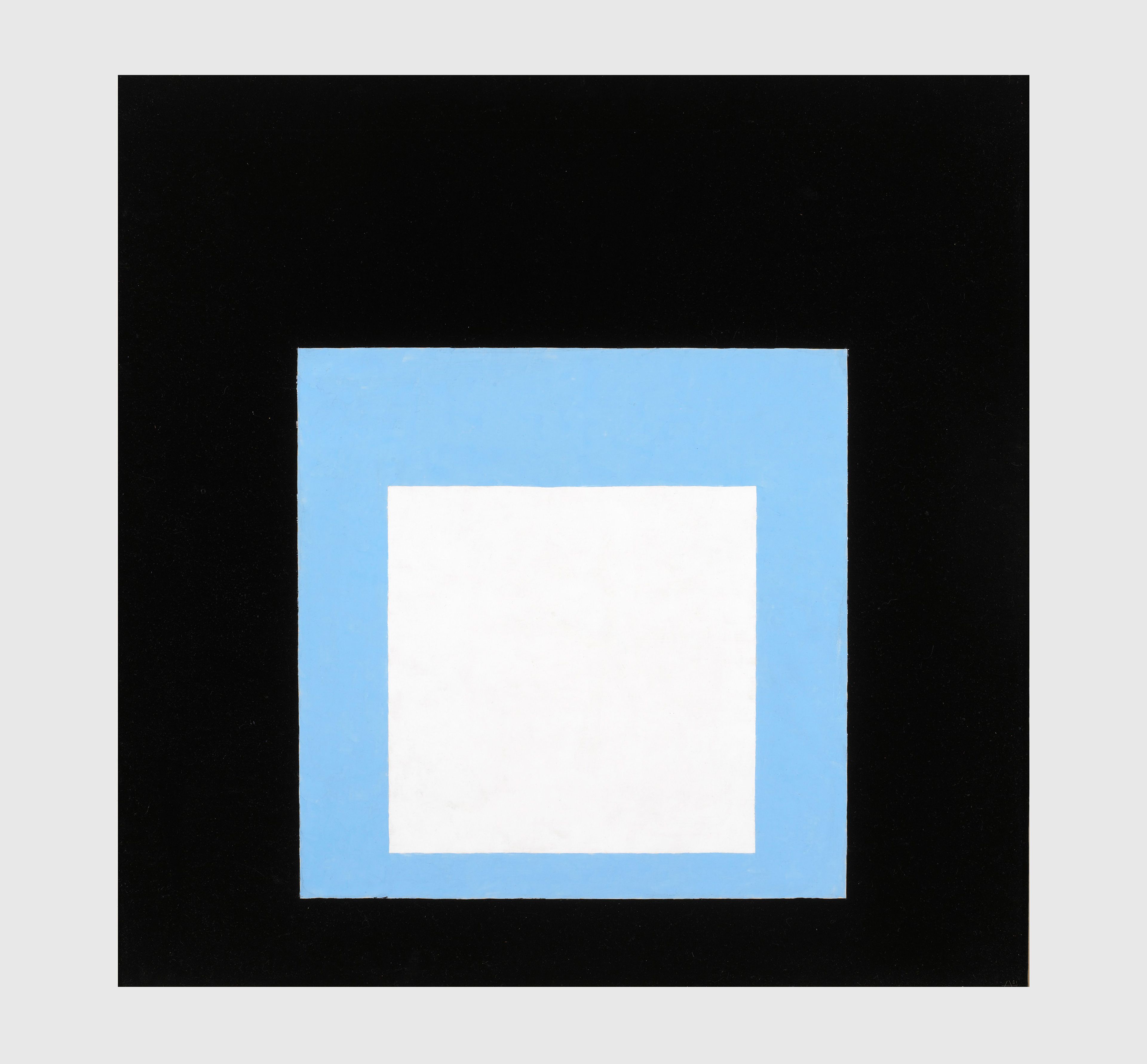
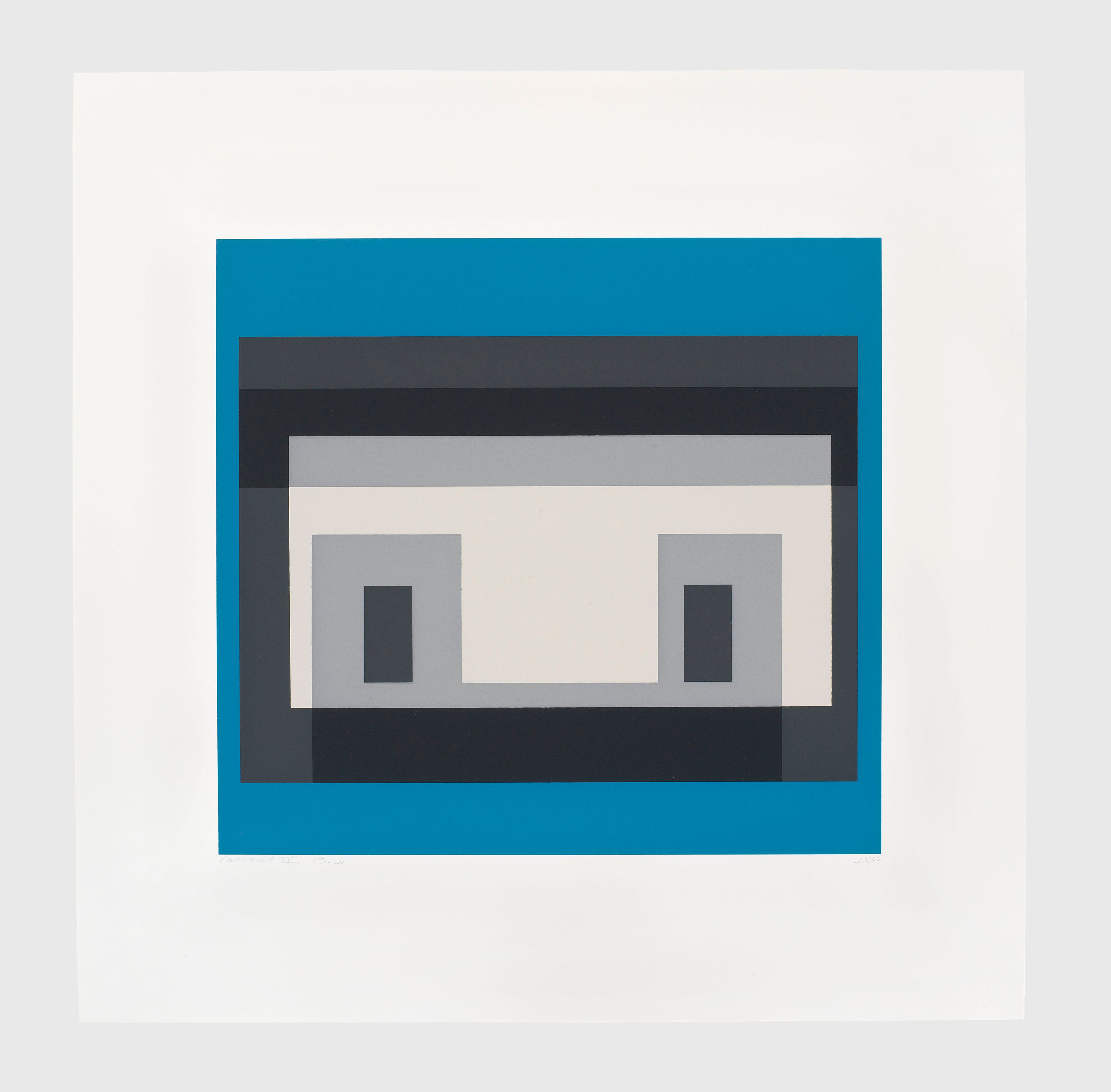
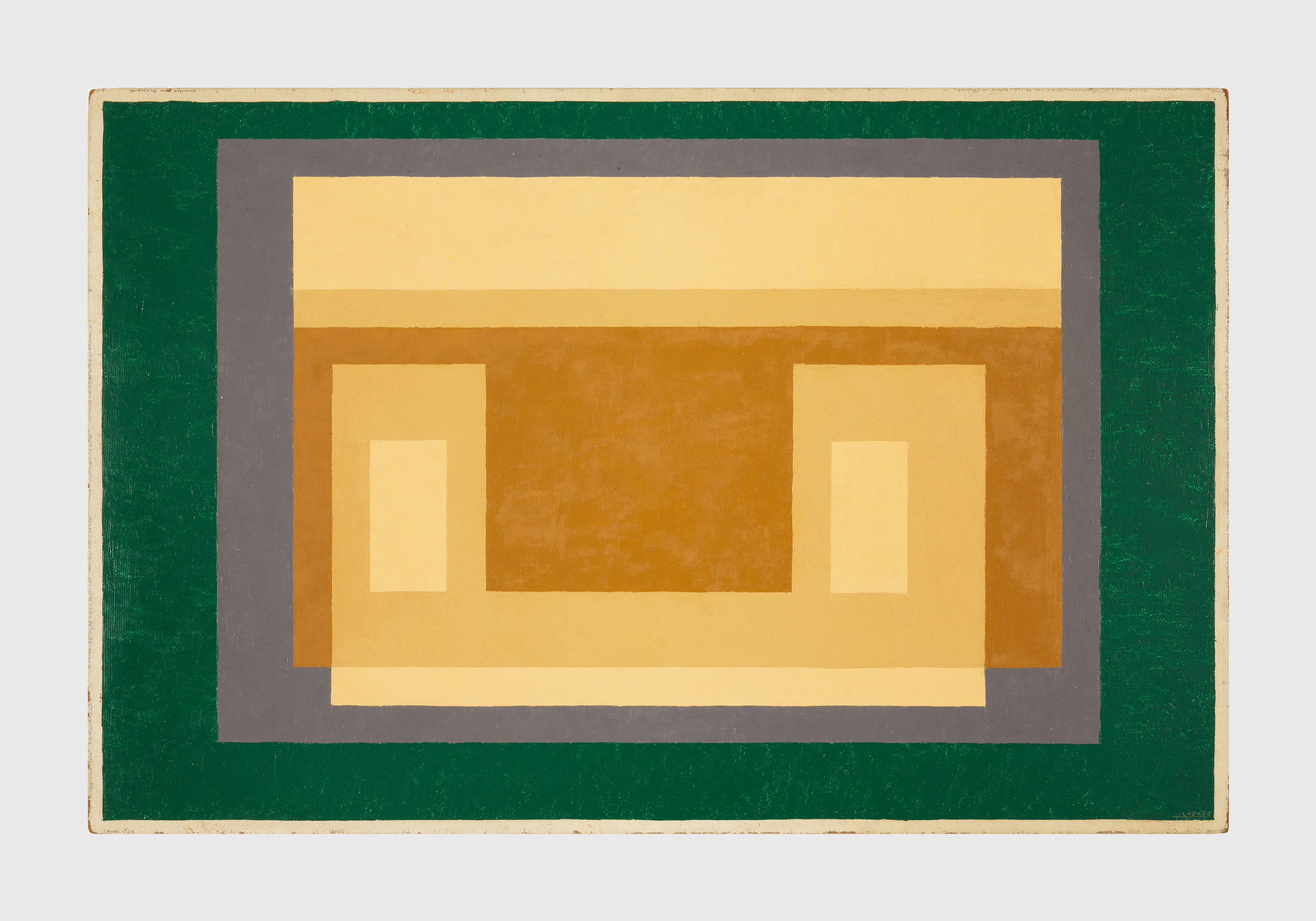
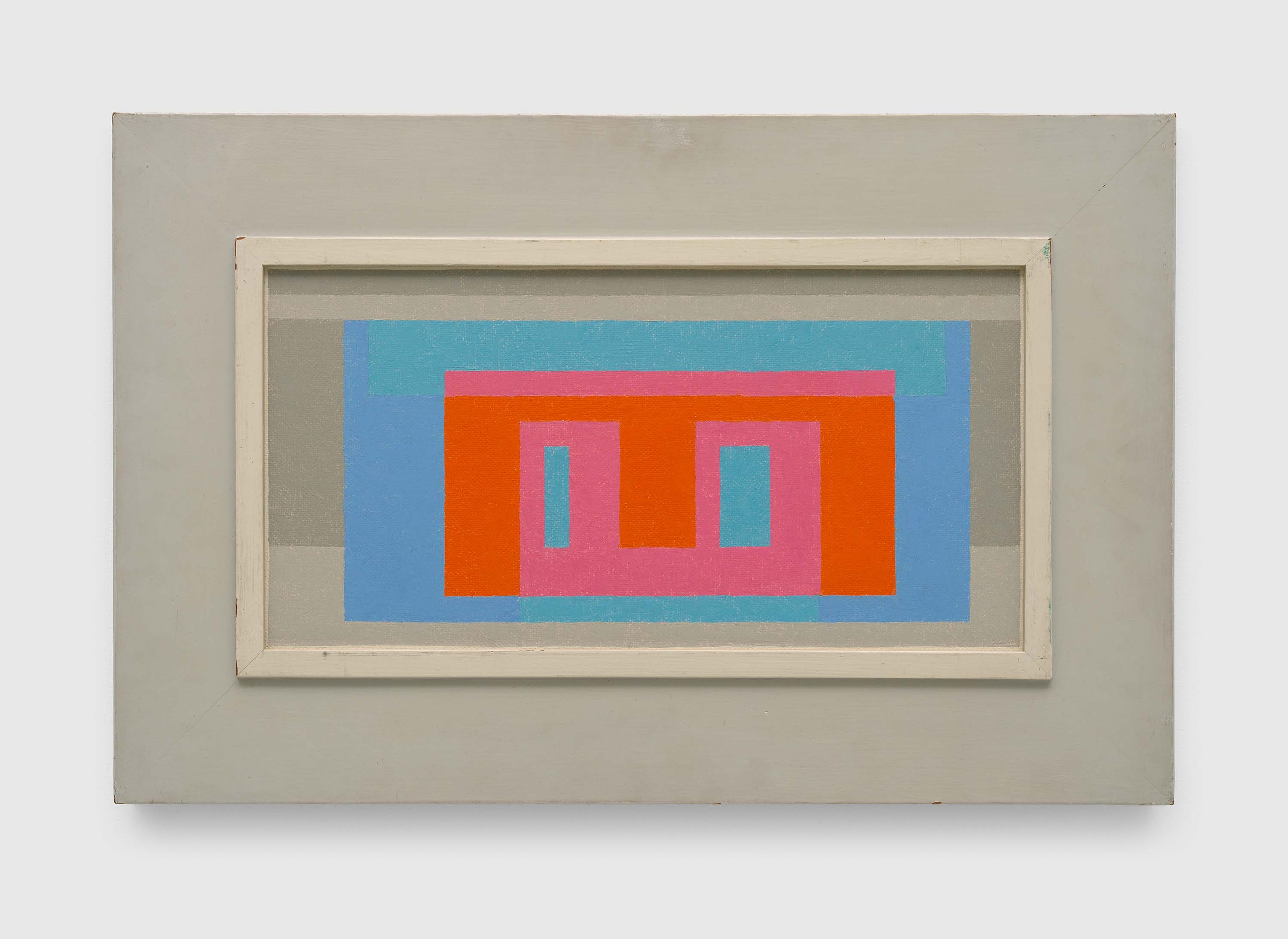
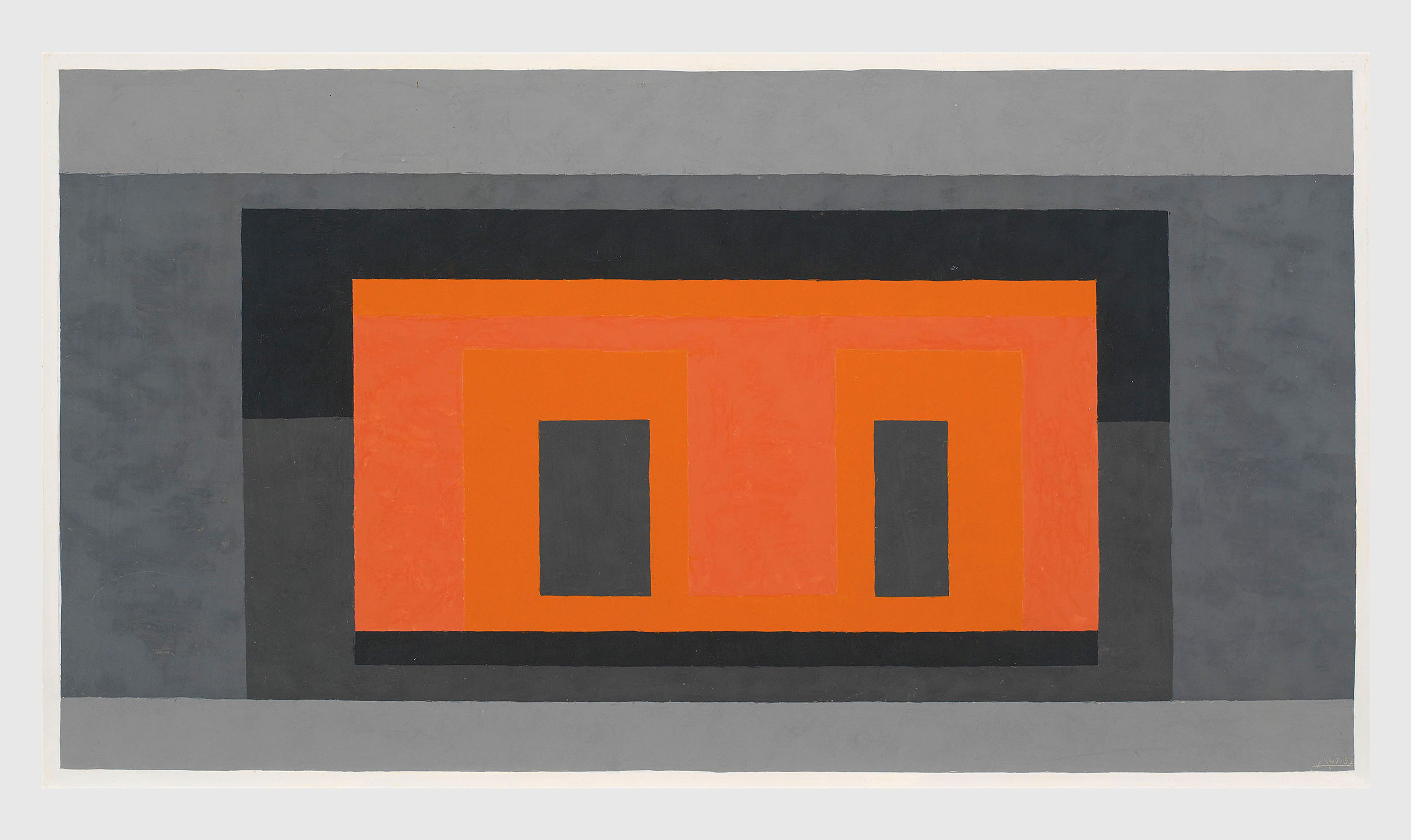
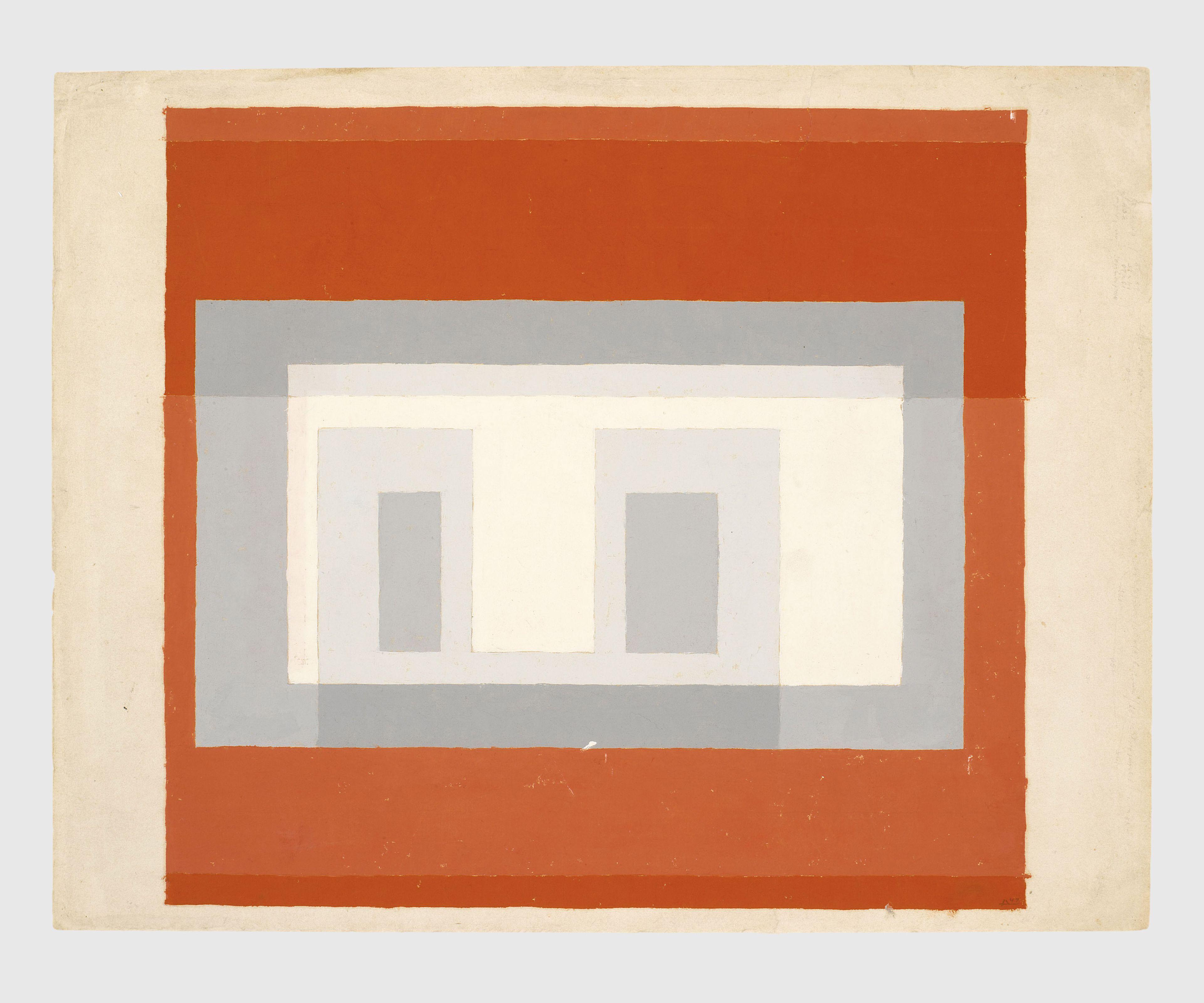
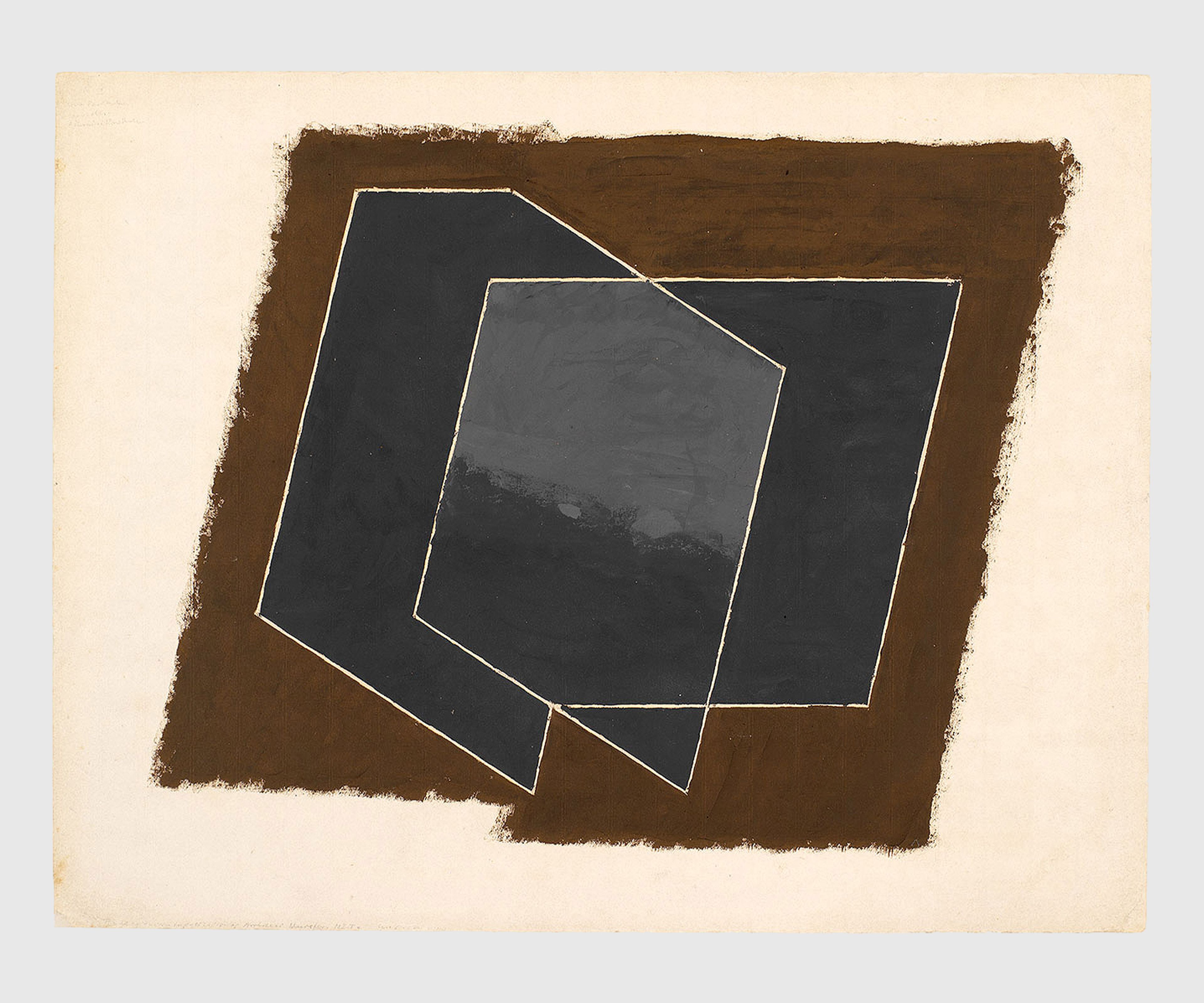
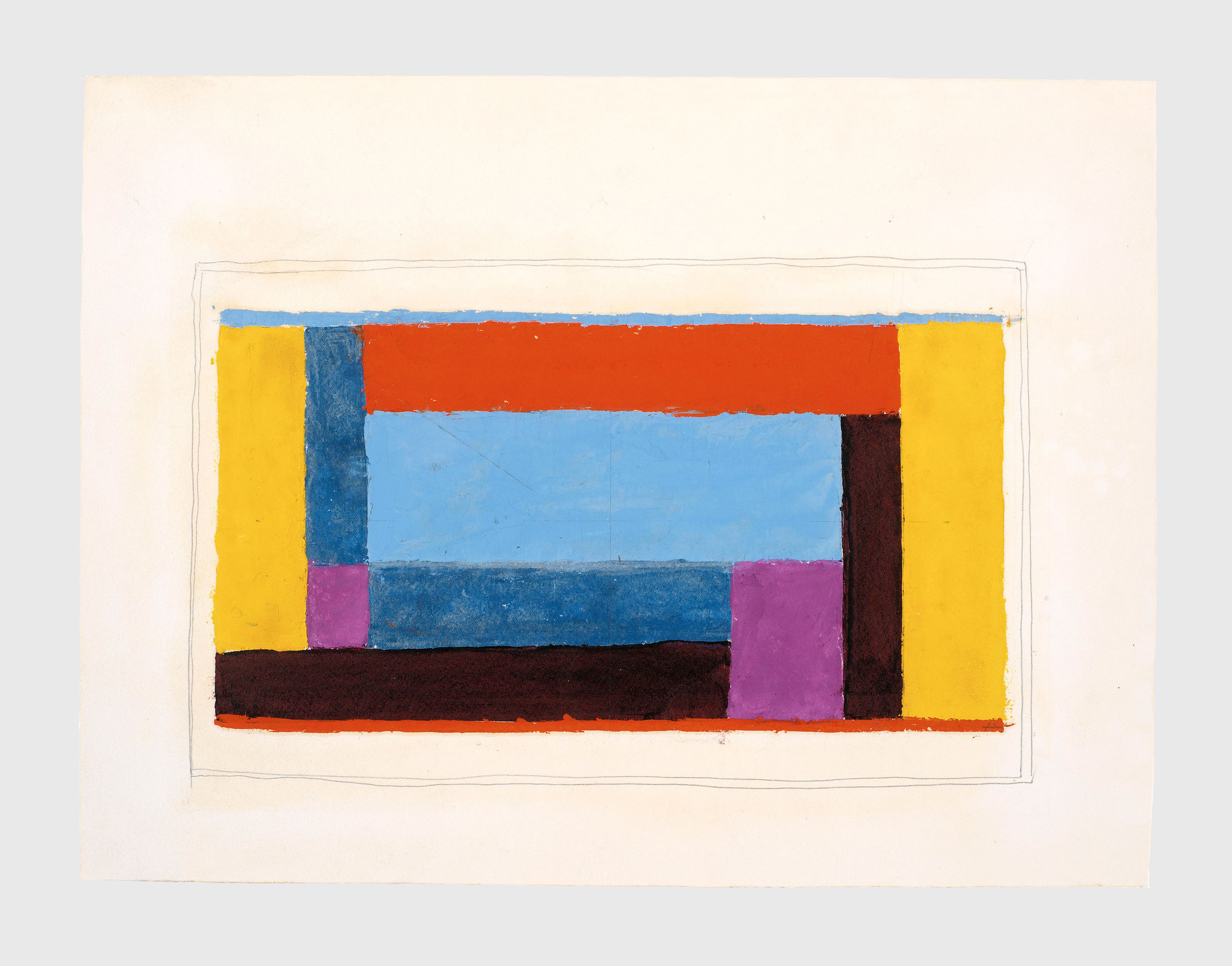
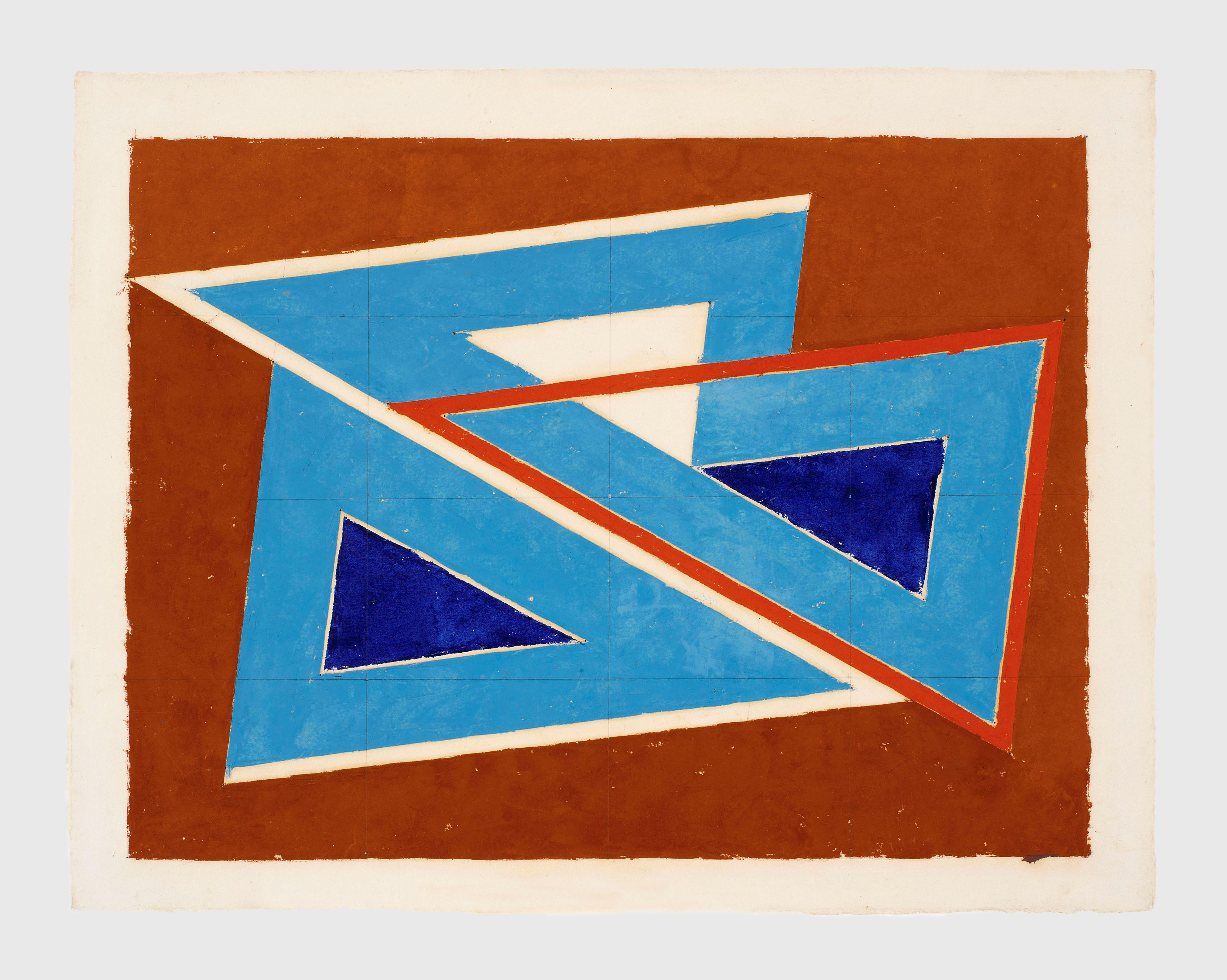
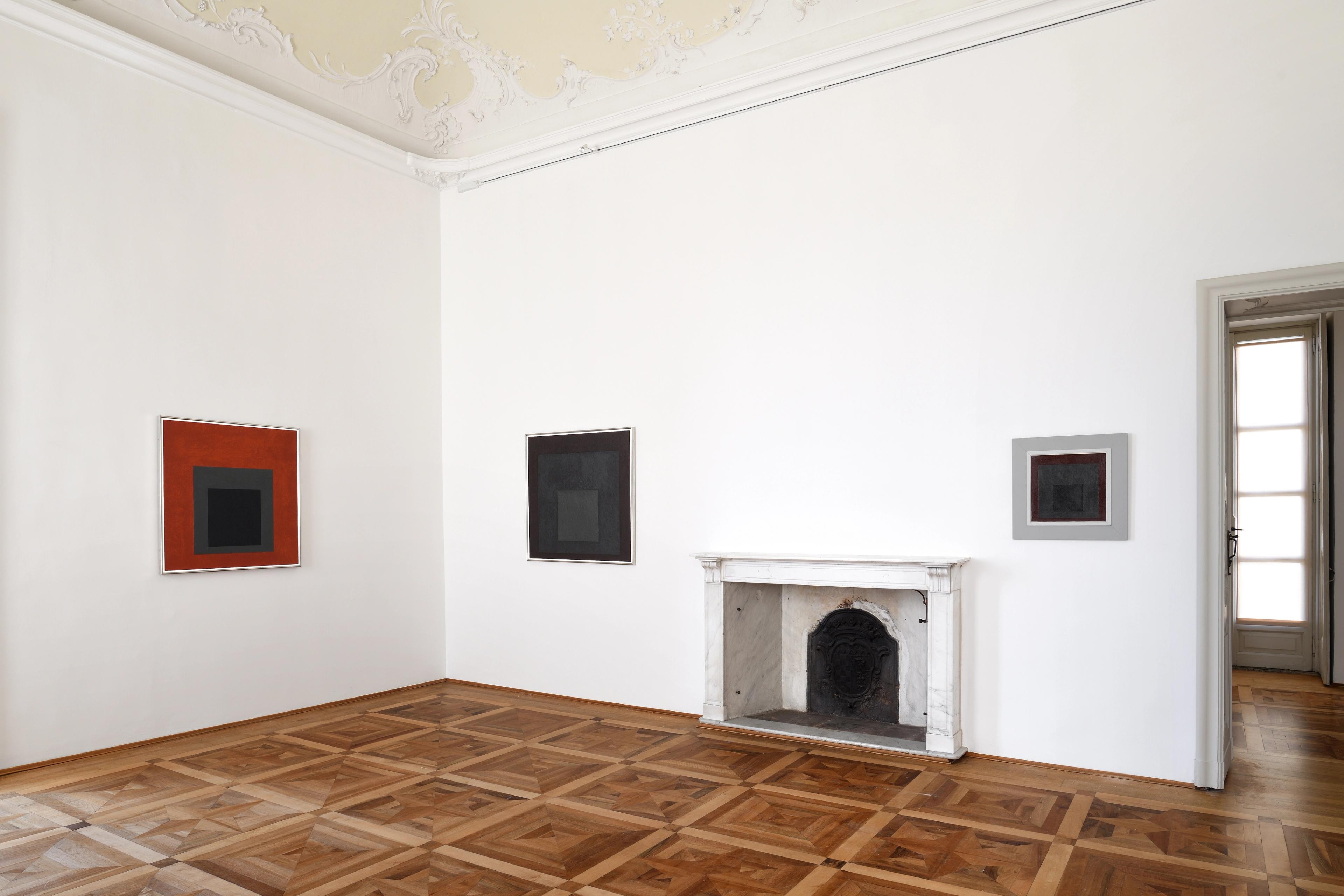
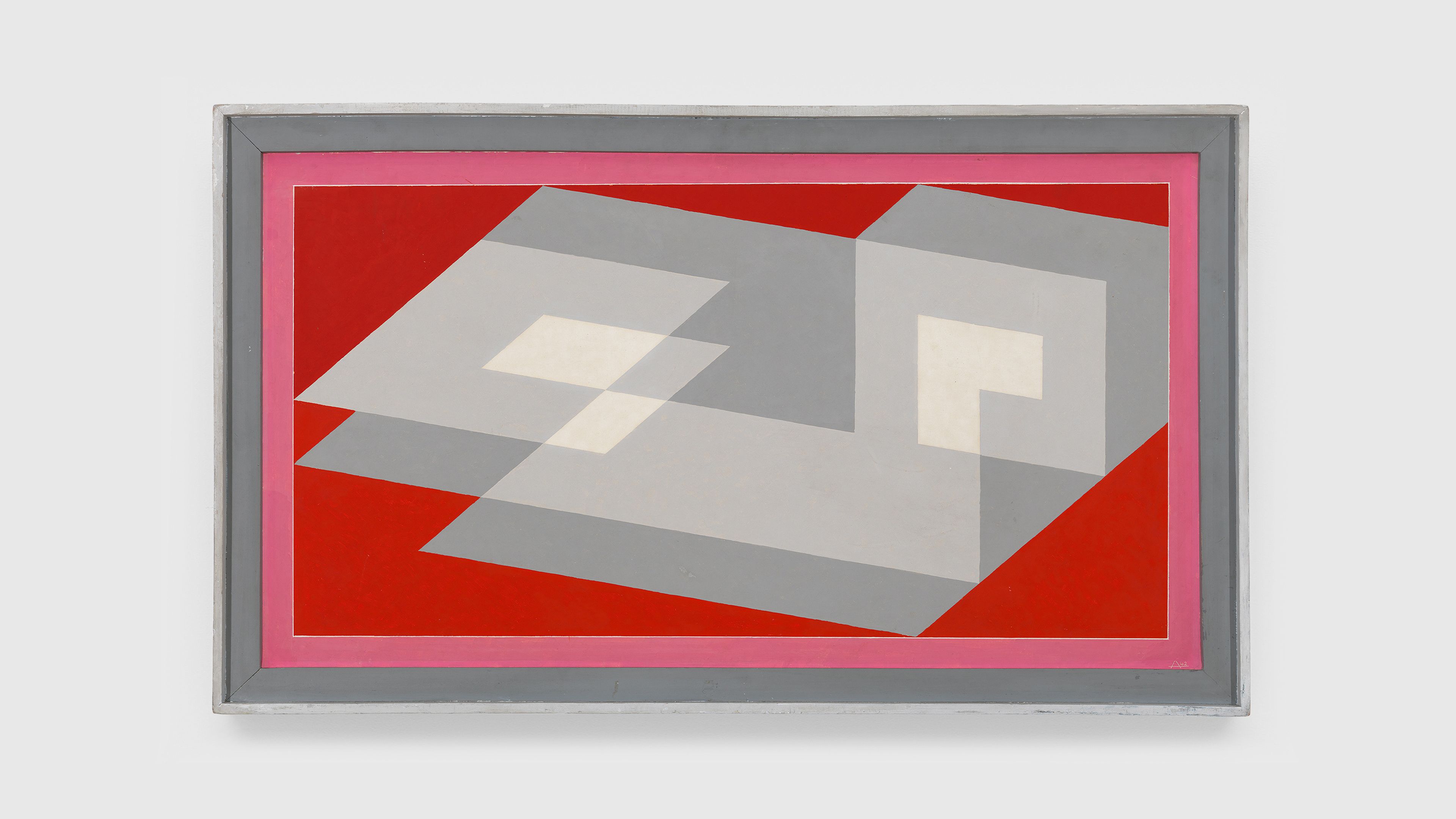
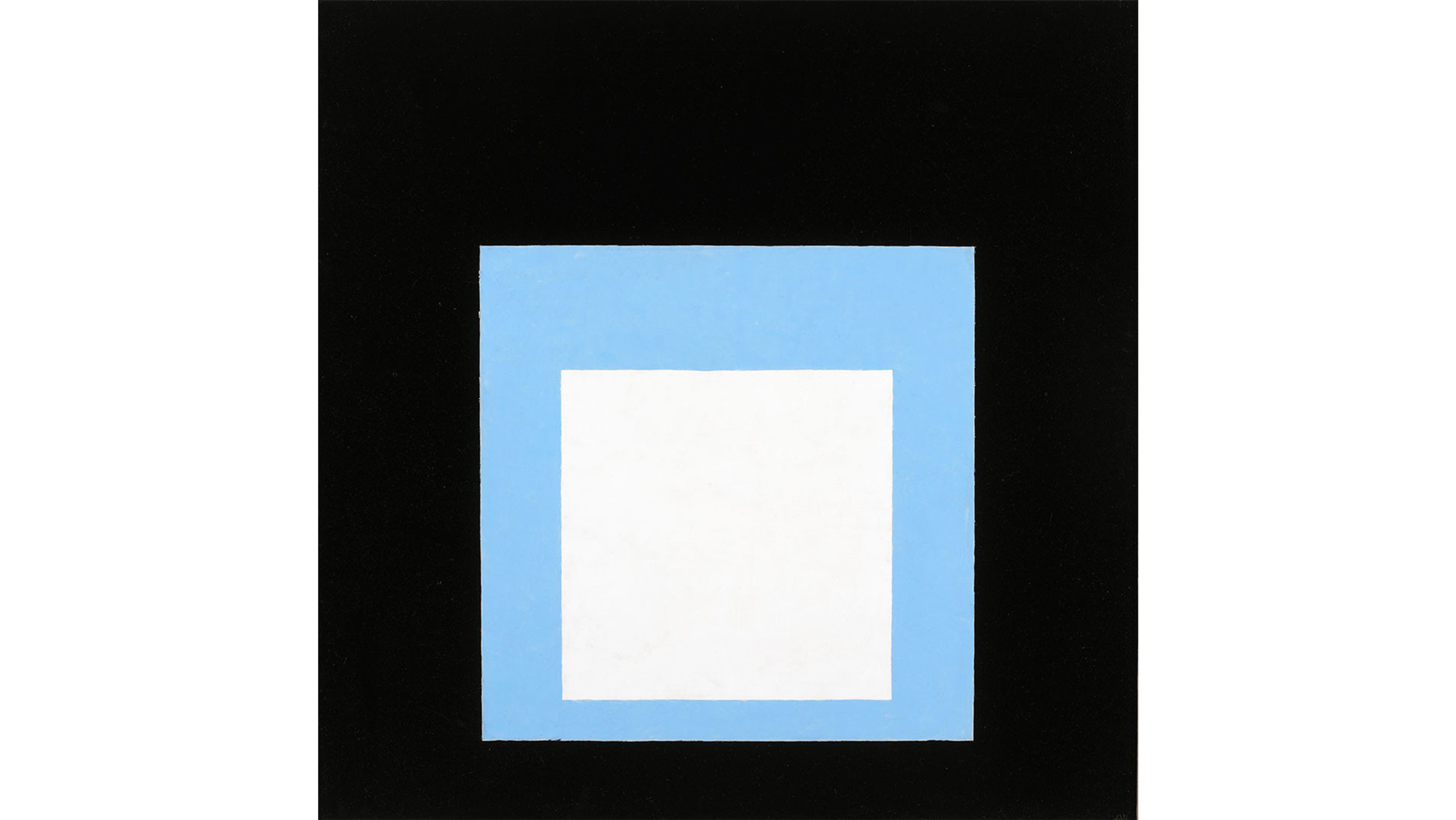
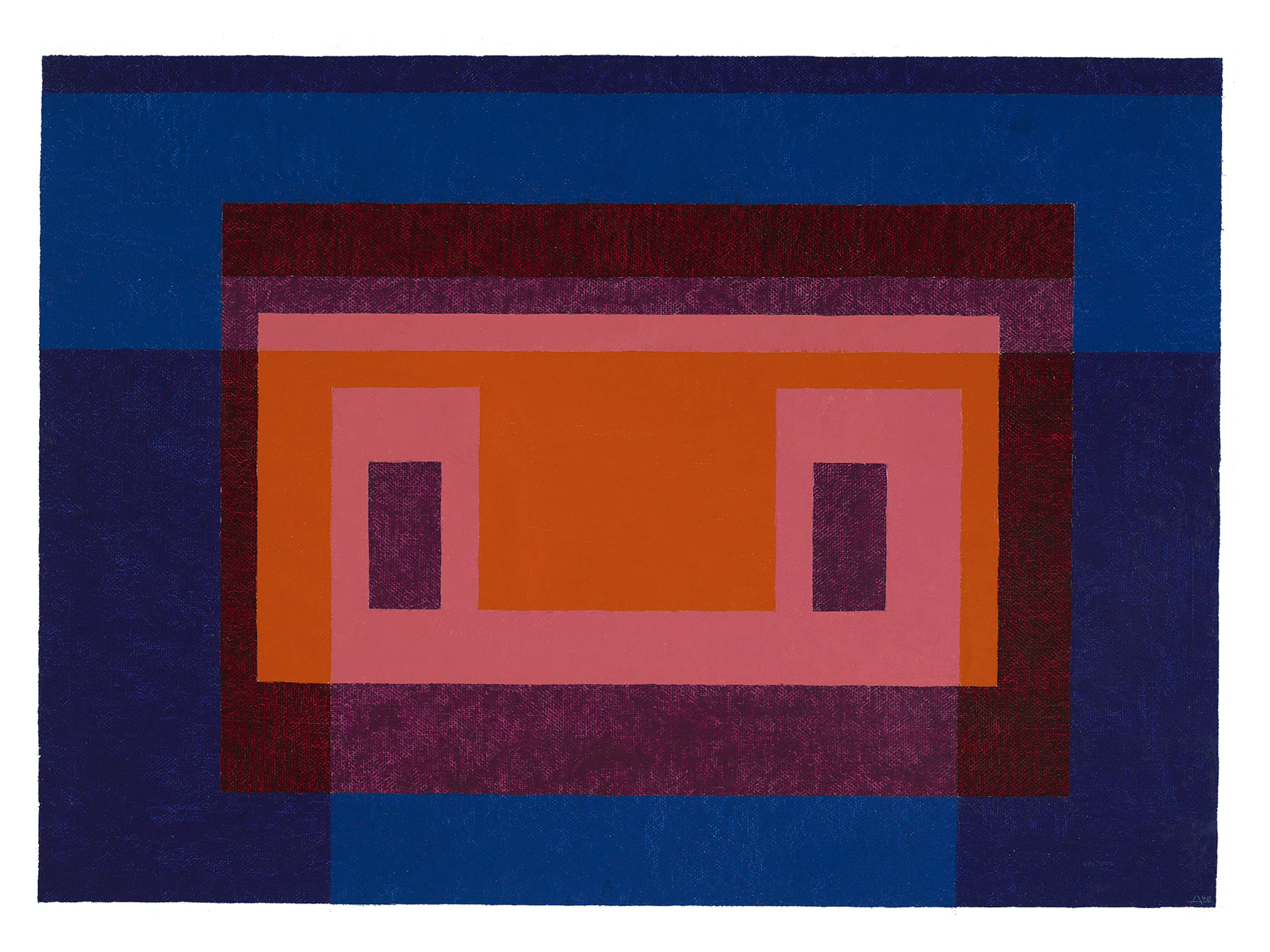
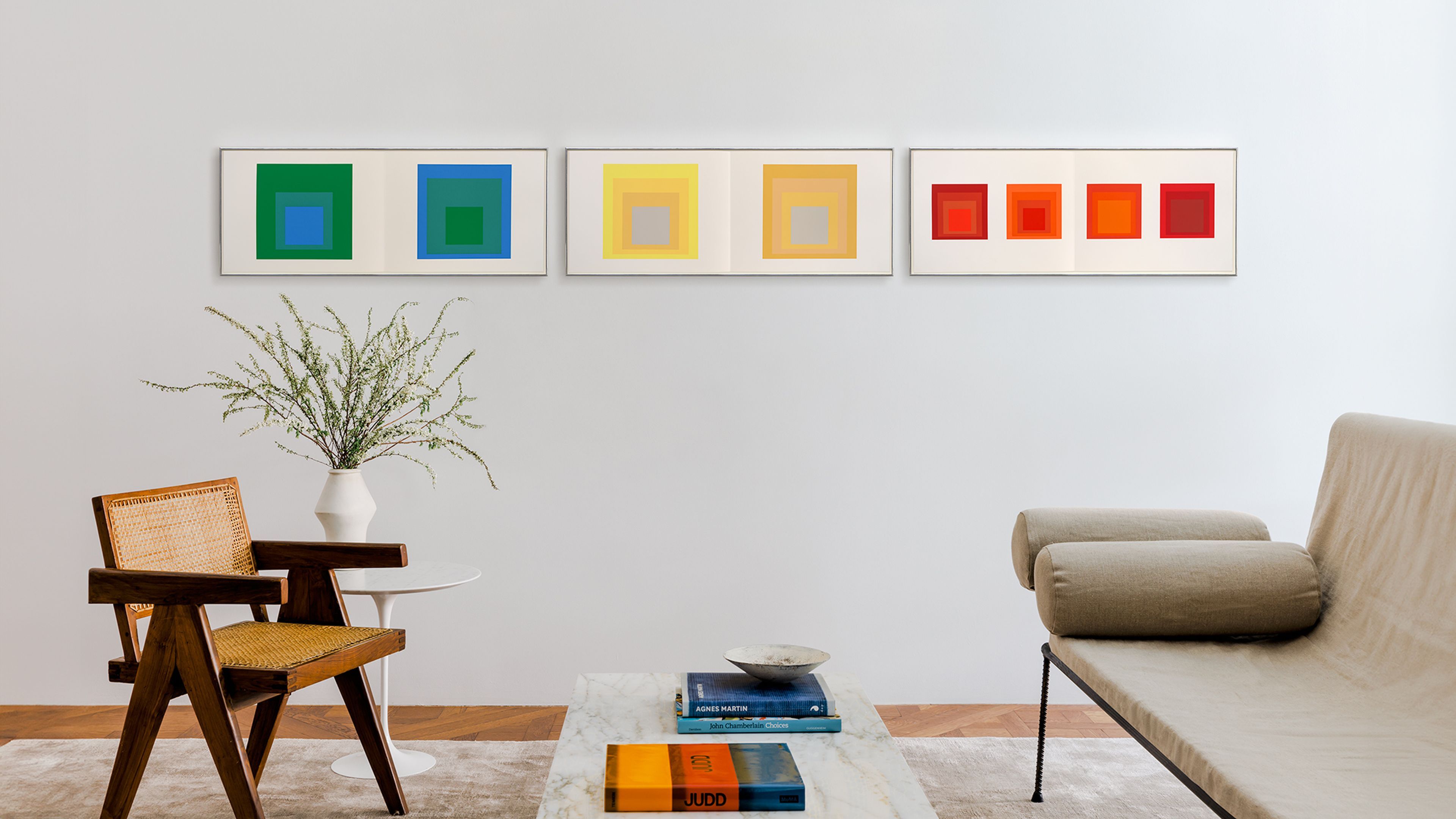
Josef Albers (1888–1976) was one of the most influential abstract painters and art teachers of the twentieth century. Albers's artistic career, which bridged European and American modernism, consisted mainly of a tightly focused investigation into the perceptual properties of color and spatial relationships. Working with simple geometric forms, Albers sought to produce the effects of chromatic interaction, in which the visual perception of a color is affected by the hues adjacent to it. Albers’s precise application of color also created plays of space and depth, as the planar colored shapes that make up most of his works appear to either recede into or protrude out of the picture plane.
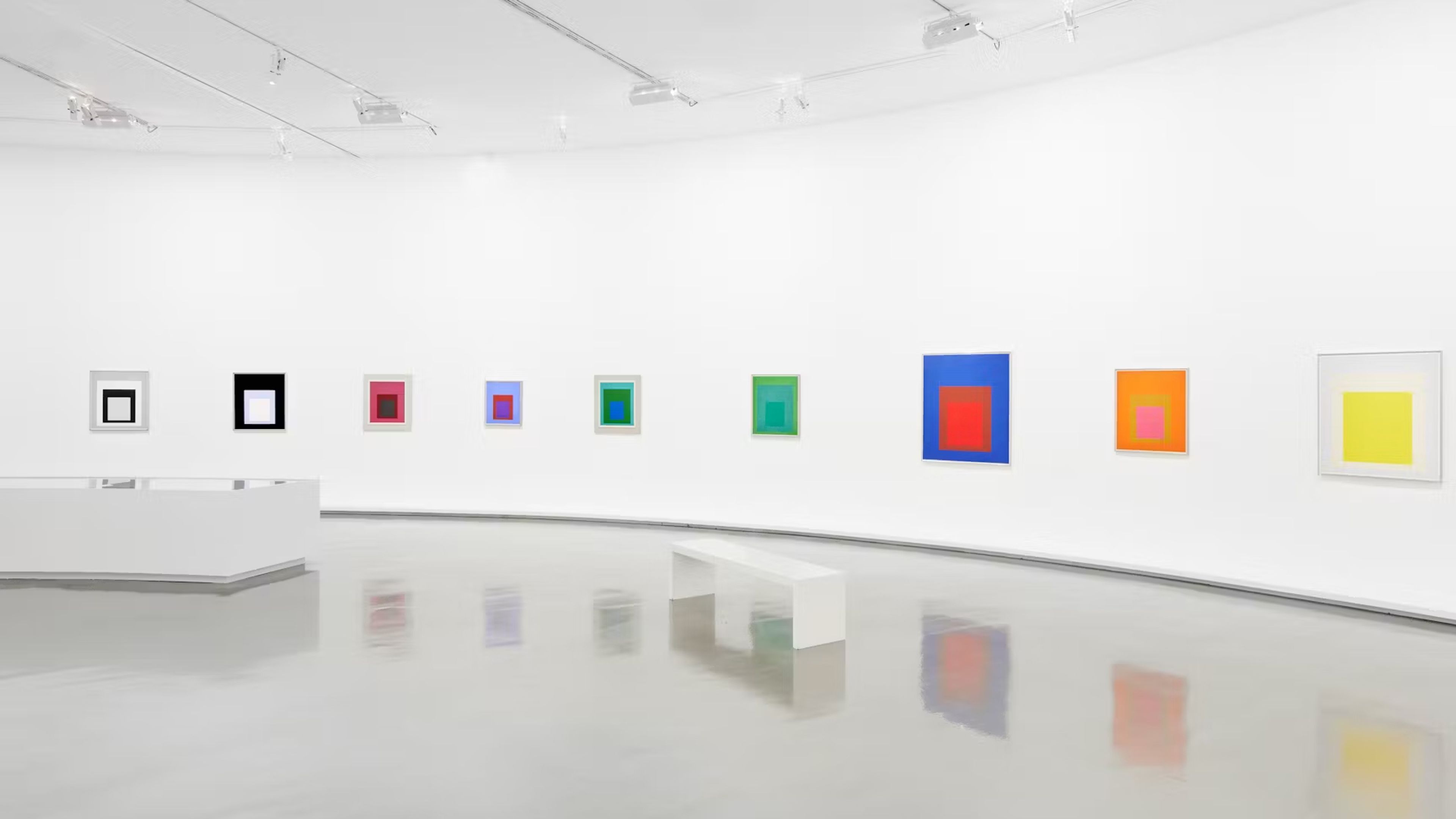
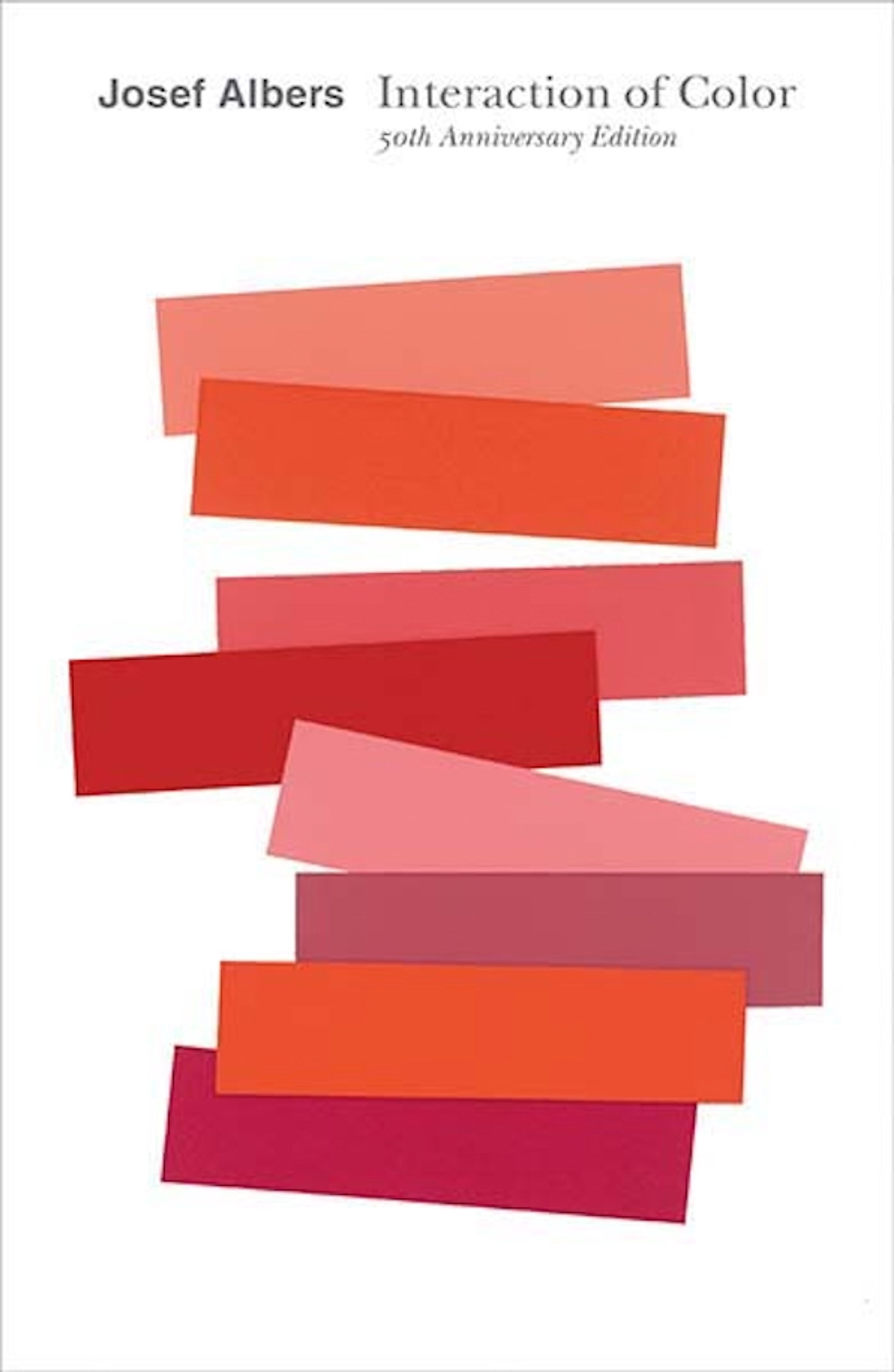
Albers was born in Bottrop, Germany, and studied briefly at the Königliche Bayerische Akademie der Bildenden Kunst, Munich, in 1919, before becoming a student at the Weimar Bauhaus in 1920. In 1922, Albers joined the school’s faculty, first working in stained glass and, starting in 1923, teaching design. In 1933, he and Anni Albers emigrated to North Carolina, where they founded the art department at Black Mountain College. During their time at Black Mountain, Albers began to show his work extensively within the United States, including solo exhibitions at the Addison Gallery of American Art, Andover, Massachusetts (1935); J.B. Neumann’s New Art Circle, New York (1936, 1938); The Germanic Museum at Harvard University, Cambridge, Massachusetts (1936); Katharine Kuh Gallery, Chicago (1937); San Francisco Museum of Art (1940); and the Nierendorf Gallery, New York (1941). The Alberses remained at Black Mountain until 1949 and, in 1950, moved to New Haven, Connecticut, where Josef Albers was invited to direct a newly formed department of design at the Yale University School of Art. In 1950, too, he developed what would become his seminal Homage to the Square series, which he continued to elaborate until his death in 1976. This body of work was featured in a major exhibition organized by The Museum of Modern Art, New York, in 1964 that traveled to twenty-two venues in the United States and Latin America. Albers retired from teaching in 1958, a few years prior to the publication of his important text Interaction of Color (1963), which was reissued in two volumes in 2013. Following numerous gallery and museum exhibitions, as well as his participation in Documenta I (1955) and Documenta 4 (1968), Albers became the first living artist to be the subject of a solo exhibition at The Metropolitan Museum of Art, New York, with his career-spanning retrospective there in 1971.
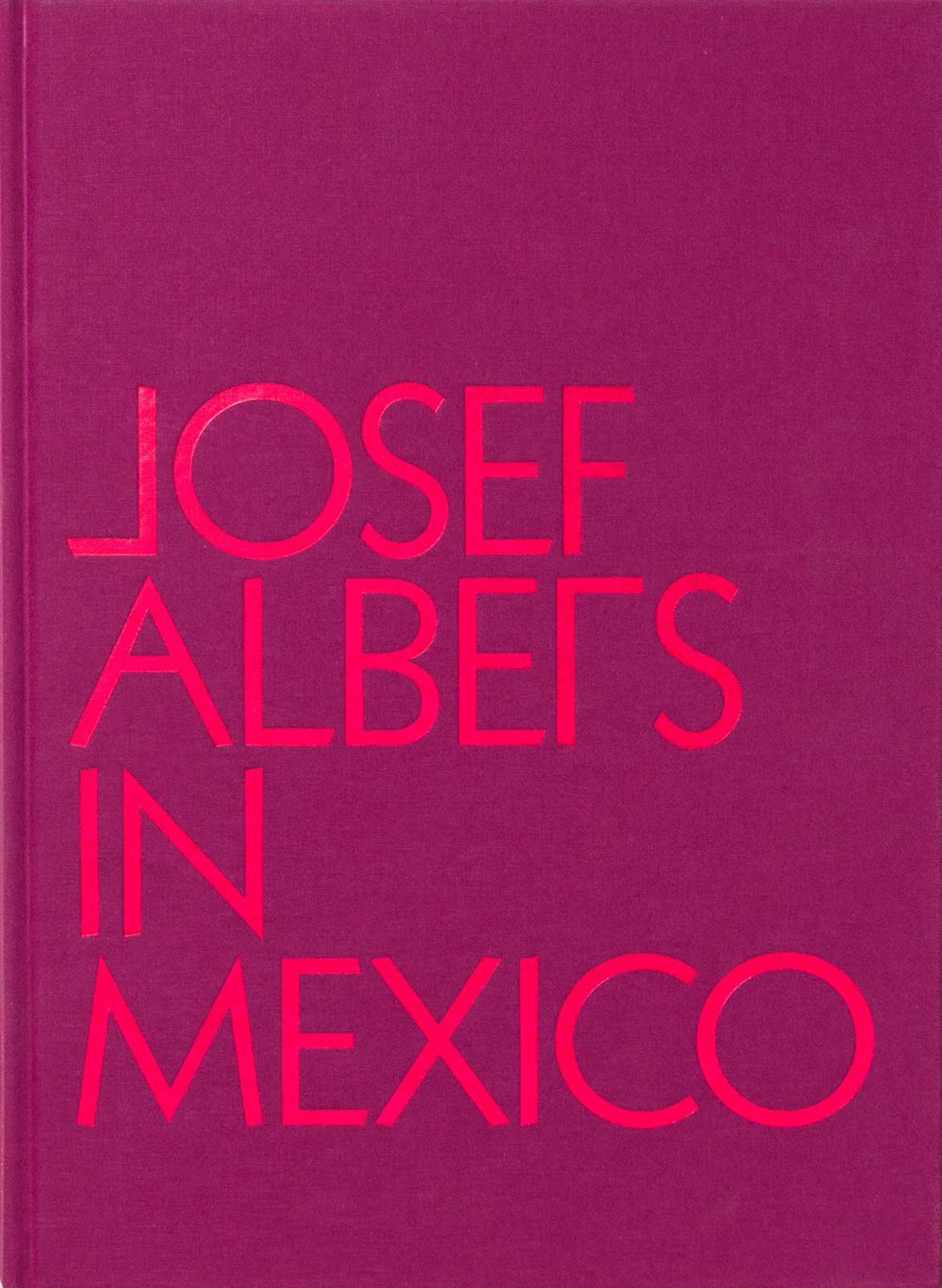
More recent exhibitions include Painting on Paper: Josef Albers in America, which originated at the Pinakothek der Moderne, Munich (2010; traveled to Josef Albers Museum, Quadrat, Bottrop, Germany; Louisiana Museum of Modern Art, Humlebæk, Denmark; Kunstmuseum Basel; Centre Georges Pompidou, Paris; Centro de Arte Moderna, Gulbenkian Museum, Lisbon; and the Morgan Library and Museum, New York); Josef Albers: Minimal Means, Maximum Effect at the Fundación Juan March, Madrid (2014; traveled to Henie Onstad Art Centre, Høvikodden, Norway); and A Beautiful Confluence: Anni and Josef Albers and the Latin American World at Mudec, Museo delle Culture, Milan (2015–2016). From 2016 to 2017, The Museum of Modern Art, New York, presented One and One Is Four: The Bauhaus Photocollages of Josef Albers. In 2017, Josef Albers in Mexico was presented at the Solomon R. Guggenheim Museum, New York, and traveled to the Peggy Guggenheim Collection, Venice, in 2018. Anni and Josef Albers: Art and Life was on view at the Musée d'Art Moderne de Paris in 2021 and subsequently traveled to IVAM (Instituto Valenciano de Arte Moderno), Valencia, Spain, in 2022. At the Josef Albers Museum in Bottrop, Germany, Josef Albers: Homage to the Square was on view from 2022 to 2023. The artist’s first retrospective exhibition in Japan, Josef Albers: Pedagogical Experiments, was on view at the Kawamura Memorial DIC Museum of Art, Sakura, Japan, in 2023.
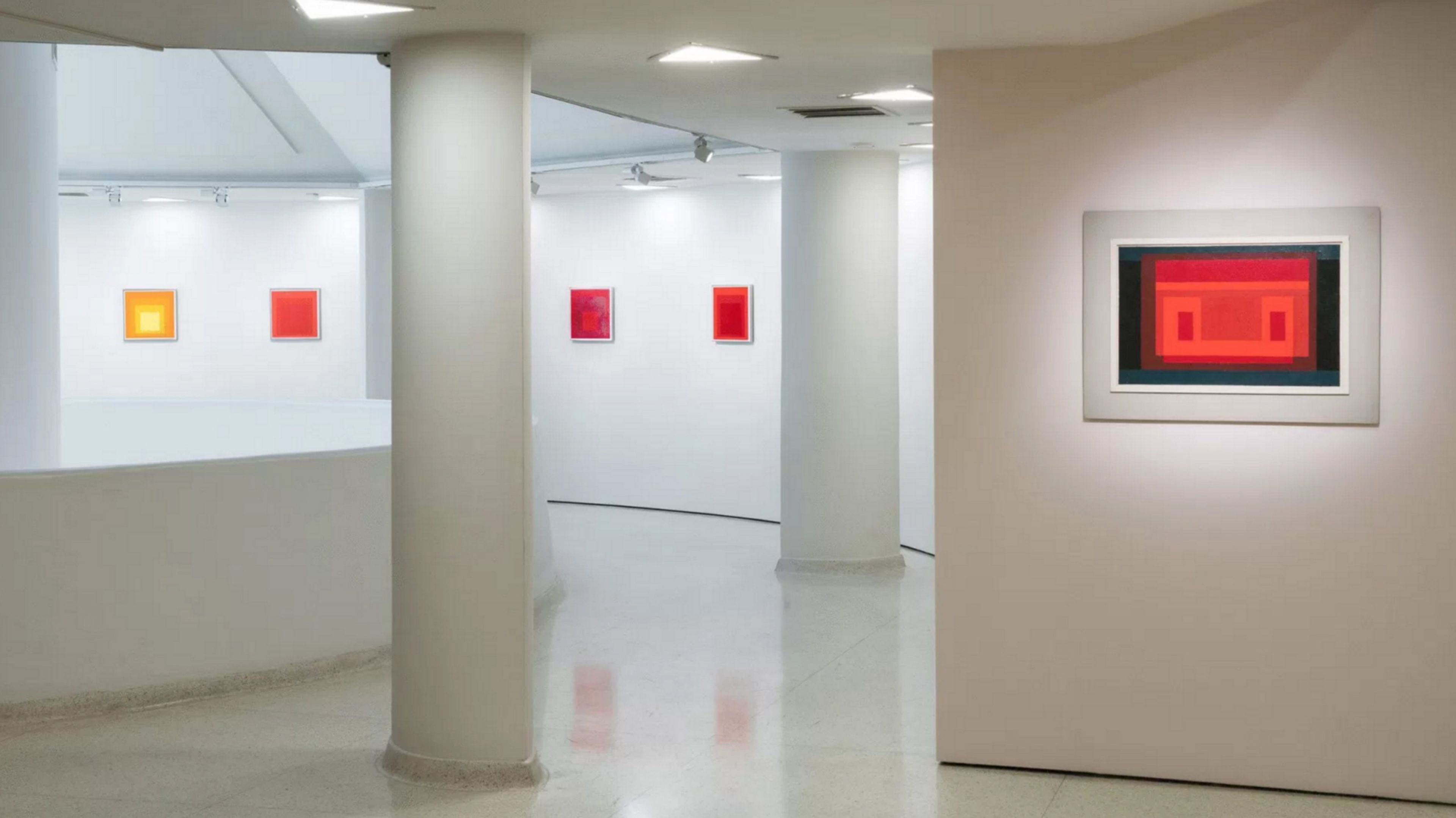
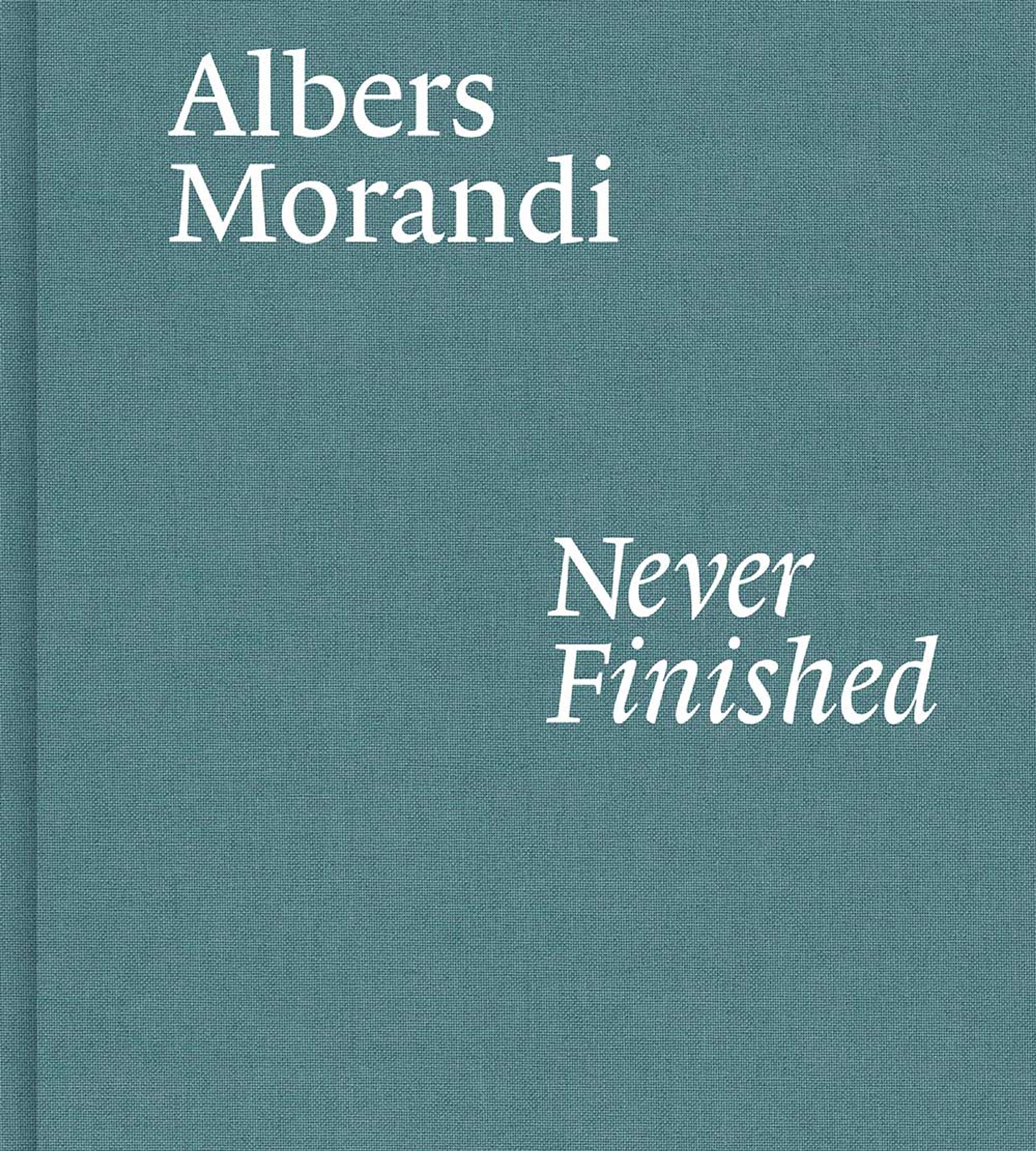
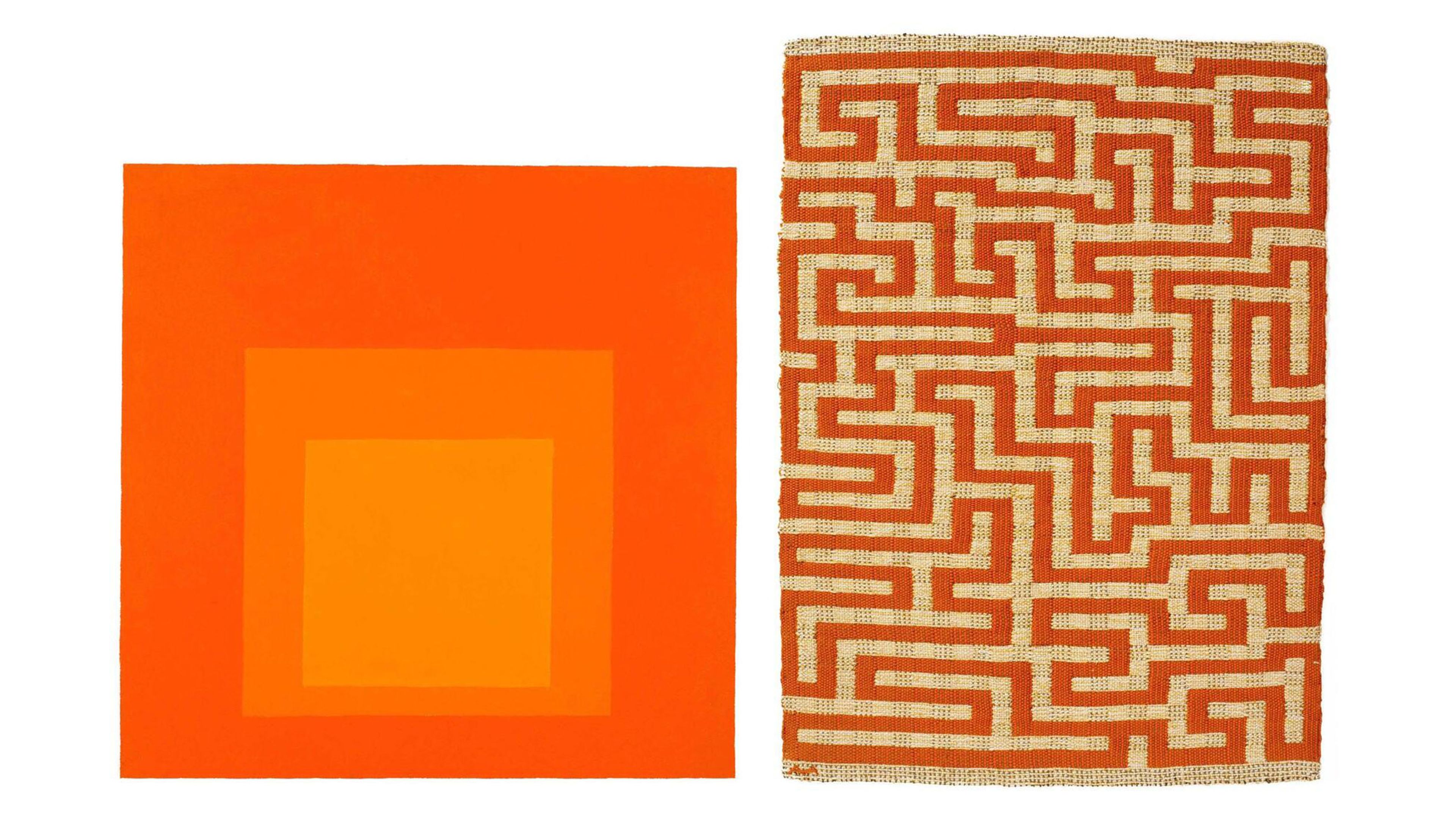
In 2016, David Zwirner announced the exclusive representation of The Josef and Anni Albers Foundation. The same year, Josef Albers: Grey Steps, Grey Scales, Grey Ladders was presented at the gallery’s New York location. The artist has since been the subject of numerous solo exhibitions at David Zwirner, including Josef Albers: Sunny Side Up (London, 2017); Josef Albers: Sonic Albers (New York, 2019); Josef Albers: Primary Colors (Hong Kong, 2022); and Josef Albers: Paintings Titled Variants (London, 2023). Josef Albers: Duets was presented at the gallery’s Paris location in early 2026. An iteration of the presentation is currently on view at David Zwirner Los Angeles. Work by the artist has also been featured in several group and two-person exhibitions presented by the gallery, including Albers and Morandi: Never Finished (New York, 2021); Black Mountain College: The Experimenters (London, 2023); and Affinities: Anni Albers, Josef Albers, Paul Klee (New York, 2025).
Work by Albers is held in important public and private collections worldwide.