Chronology
1933
Daniel Nicholas Flavin Jr. is born April 1 in Queens, New York, followed by fraternal twin, David John Flavin, a few minutes later. Flavinâs father, Daniel Nicholas Sr., of Irish Catholic descent, was a professional baseball player for a time, then a teacher in programs for immigrants studying for U.S. citizenship, and finally a supervisor of attendance for the Board of Education in Queens. Flavinâs mother, Viola Marion Bernzott, of German descent, was formerly an executive secretary.
1947
Graduates from Saints Joachim and Anne Parochial School, Queens.
1952
Graduates from the high school department of the Cathedral College of the Immaculate Conception Preparatory Seminary of Brooklyn, New York.
1953â57
Joins brother in enlisting in the United States Air Force. Receives training as an air weather meteorological technician.
1954
While working as a meteorological aid at the Fifth Air Force Headquarters, Osan-ni, Republic of Korea, attends classes in the adult extension program offered by the University of Maryland.
Purchases a drawing by August Rodin while on leave in Tokyo, the first acquisition in what would become an eclectic collection of drawings, prints, paintings, and objects gathered throughout the artistâs lifetime.
1956
While stationed at Roslyn Air Force base, visits art galleries in New York, including Urban Gallery, Hansa Gallery, and Stable Gallery. Meets Reva and Albert Urban, Richard Bellamy, Ivan Karp, Allan Kaprow, Richard Stankiewicz, George Segal, Miles Forst, Jan and Dodie Mueller, and Lily Brodie. Attends four sessions at Hans Hofmannâs Eighth Street School for drawing and painting, and takes a class in Northern Renaissance Art at the New School for Social Research.
1957â59
Attends General Studies Program at Columbia University, New York, for three semesters, intending to become an art historian to support his efforts as an artist. Sits in on lectures given by the renowned art historian Meyer Schapiro. Makes many small drawings and watercolors, collaged with and on torn papers and cardboard.
Lives in Morningside Heights, Manhattan. Holds various low-wage jobs for the Kingâs County Municipal Court, the Seven-Up Bottling Company, the New York Life Insurance Company, the Great Atlantic and Pacific Tea Company, and the Solomon R. Guggenheim Museum. In the mailroom of the Guggenheim, meets painter Ward Jackson, who becomes an influential and helpful friend. During these years also meets Barbara Rose, John Reeves, and Bruce Glaser.
1959â60
Employed as a guard and elevator operator at the Museum of Modern Art, where he meets Sol LeWitt, Michael Venezia, Robert Ryman, Robert Mangold, Sonja Severdija, and Lucy Lippard.
1959
Moves to 787 Washington Street (near Jane Street), into an unheated apartment in the meatpacking district of Manhattan, near Gansevoort Street Pier, where he makes drawings of the Hudson River. Devotes more and more time to making watercolors, collages with found objects, and architectural photographs.
1960â61
Employed as a guard at the American Museum of Natural History.
1961
Has first solo exhibition at the Judson Gallery, New York.
Marries first wife, Sonja Severdija, an art history student at New York University and assistant office manager at the Museum of Modern Art. The couple moves to a loft at 17 Broadway, the former Brooklyn Ferry Terminal, in Williamsburg.
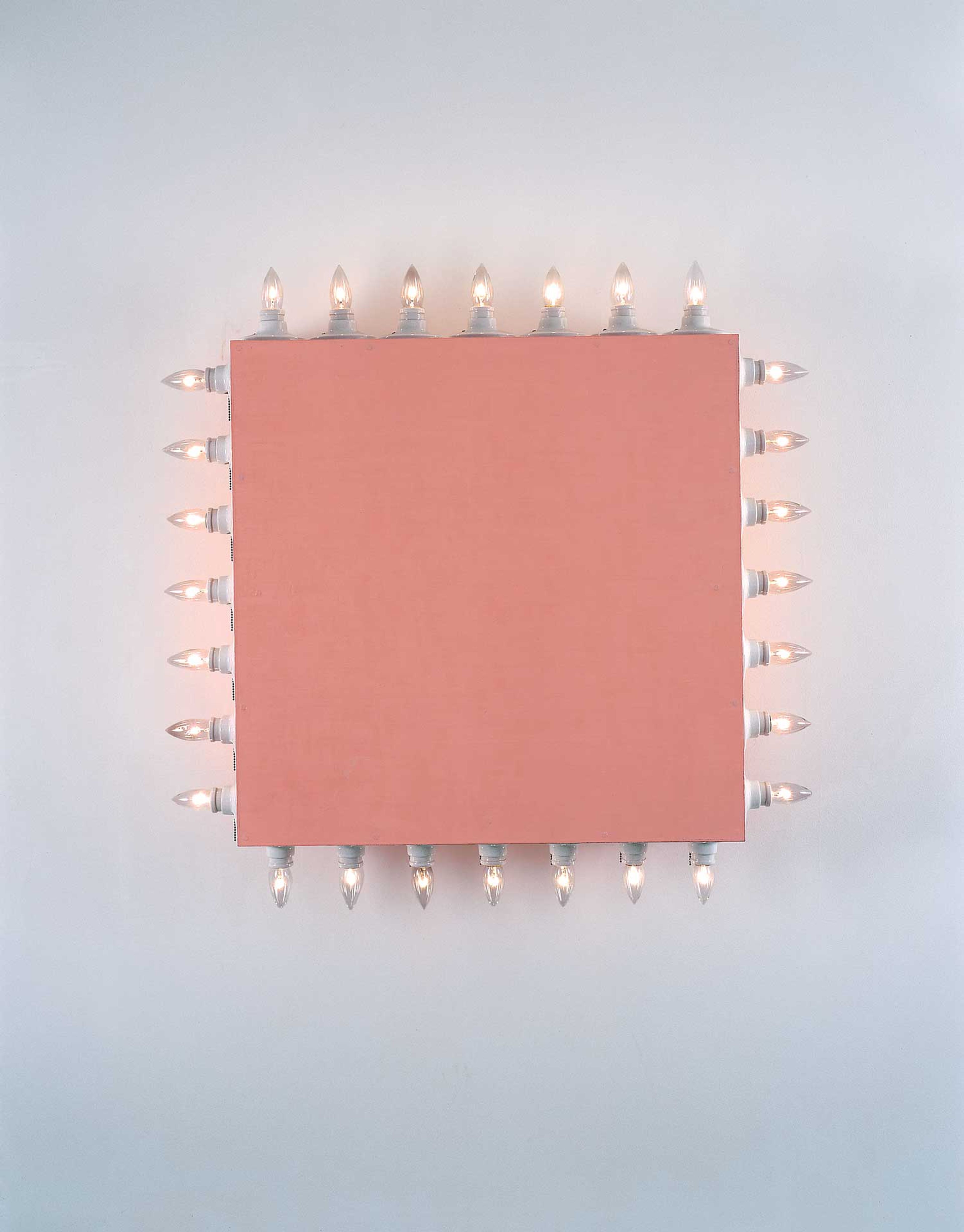
Begins work on his series of icons.
1962
Meets artists Donald Judd and John Anderson at a meeting in a Brooklyn apartment organized to discuss the starting of an artistâs cooperative gallery.
Brother, David John Flavin, dies October 8 of polio, after several years of illness.
1964
First solo exhibition using electric light opens March 5 at Kaymar Gallery, New York. Organizes âEleven Artistsâ at the Kaymar Gallery, which includes his work and that of Jo Baer, Walter Darby Bannard, Irwin Fleminger, Ward Jackson, Donald Judd, Sol LeWitt, Larry Poons, Robert Ryman, Frank Stella, and Leo Valledor.
Son, Stephen Conor Flavin, is born July 7.
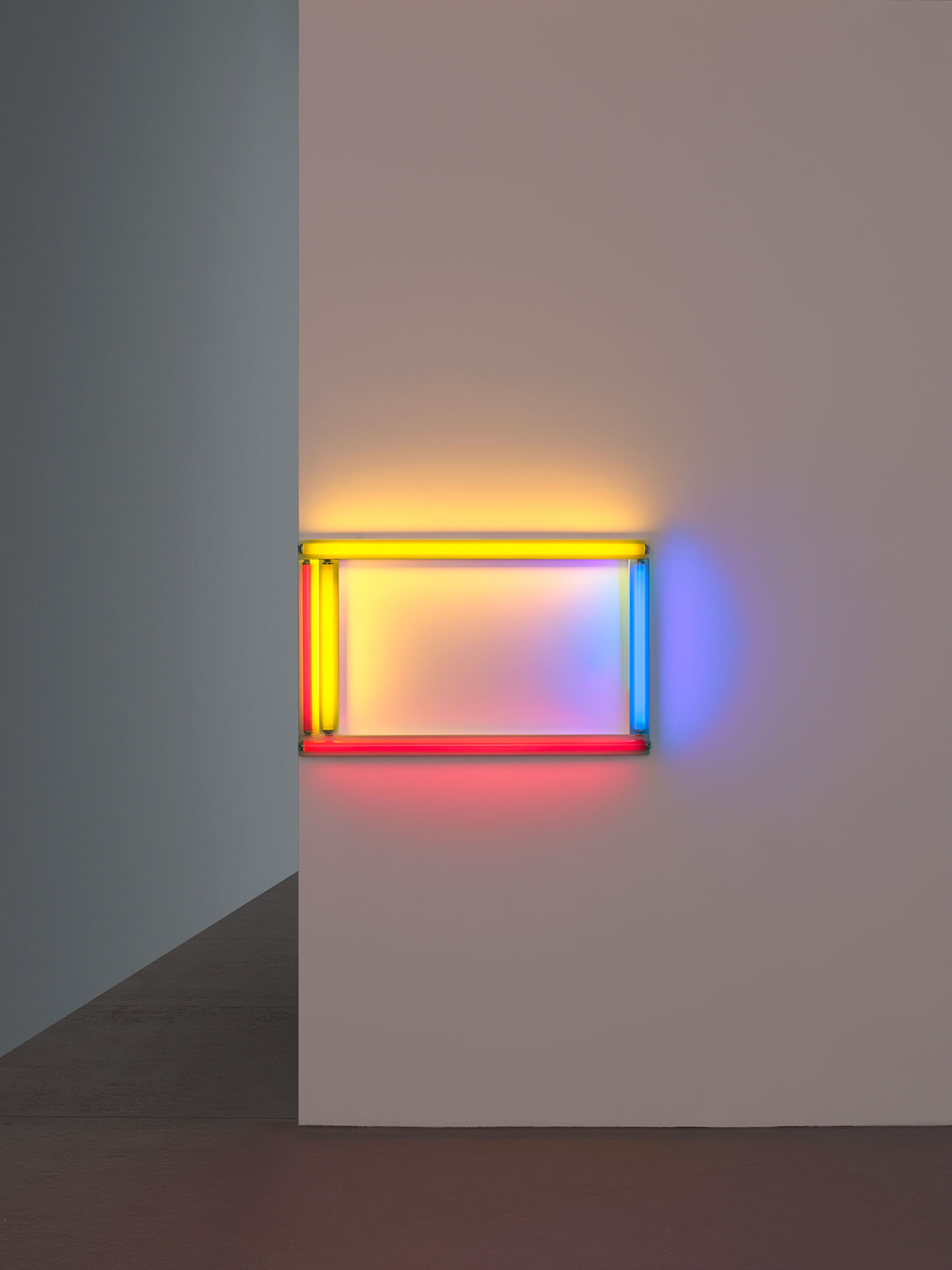
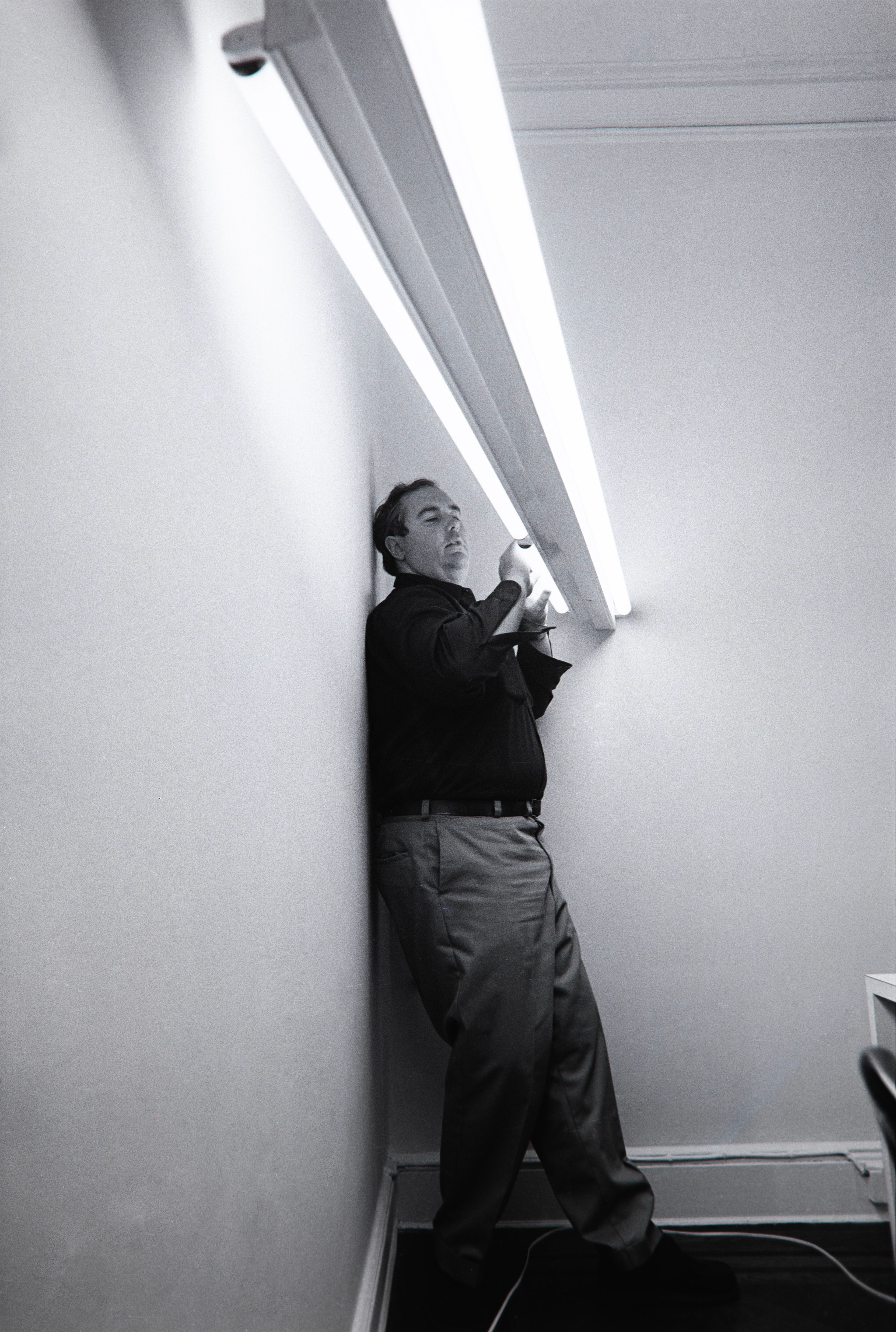
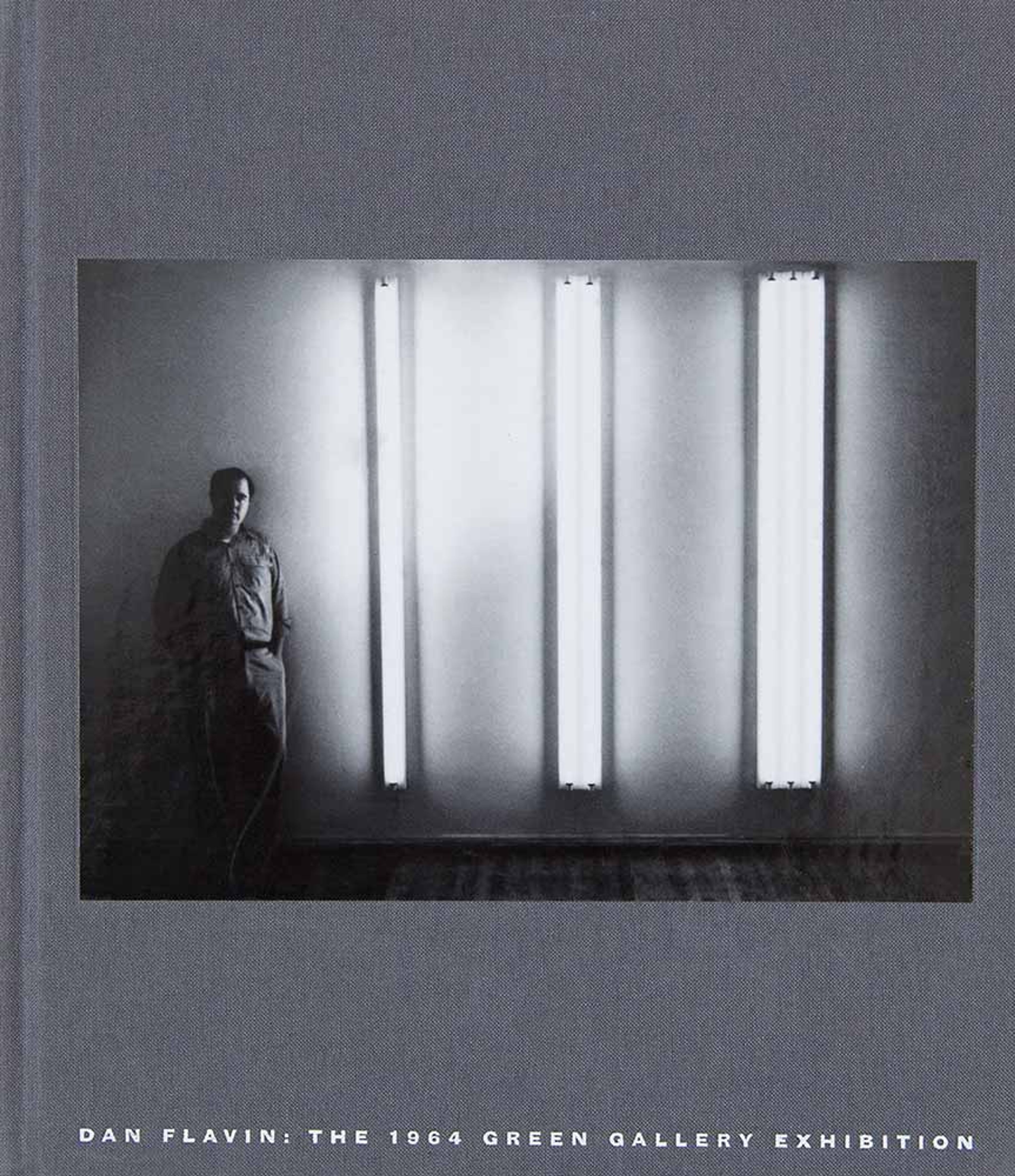
First solo exhibition using only fluorescent light opens November 18 at the Green Gallery, New York.
While lecturing at the Brooklyn Museum Art School, December 18, presents first draft of ââ… in daylight or cool white.â an autobiographical sketch,â along with selected readings from the letters of Vincent van Gogh and descriptions of Kurt Schwittersâs Merz Theatre and Vladimir Tatlinâs constructions.
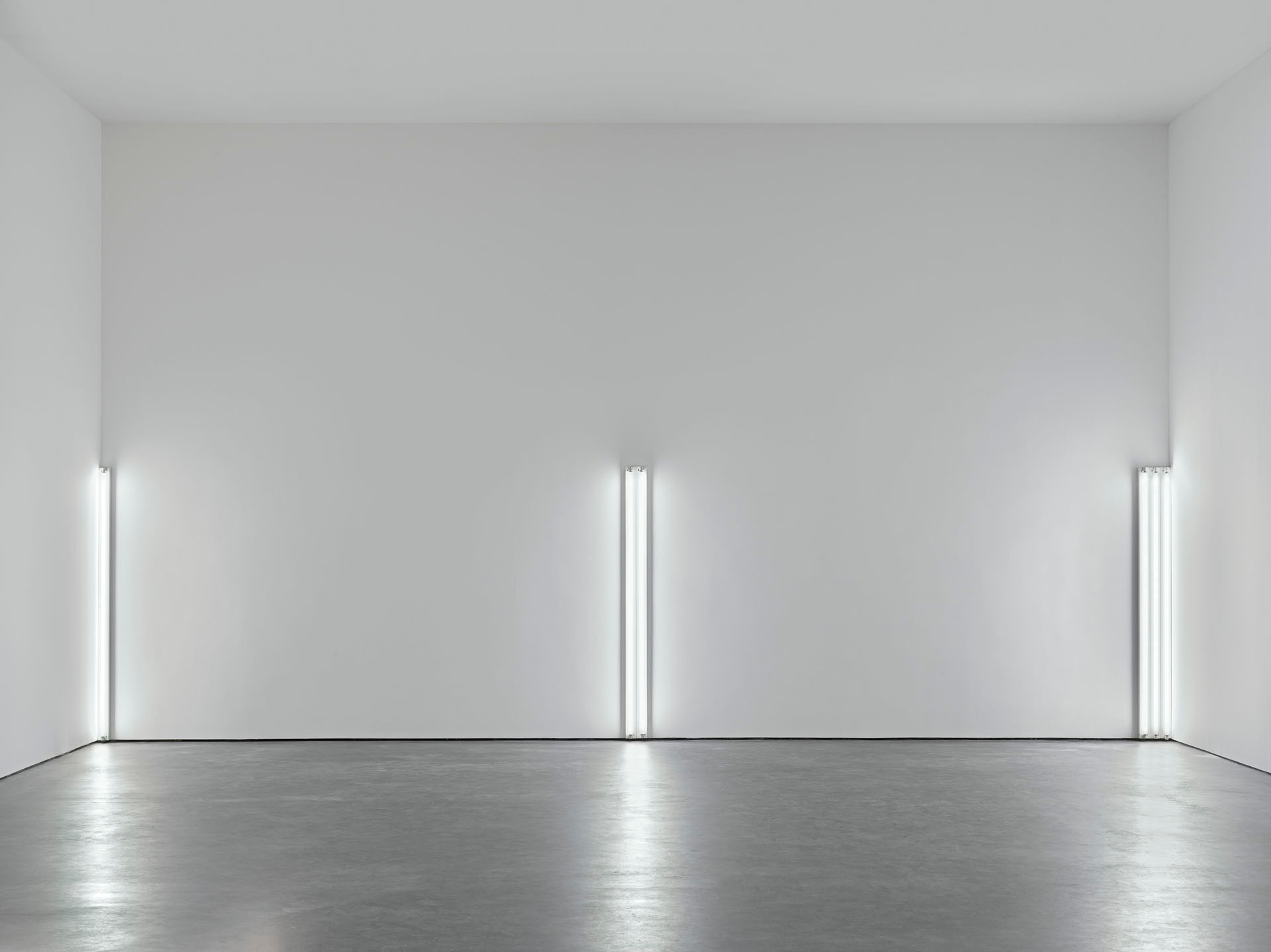
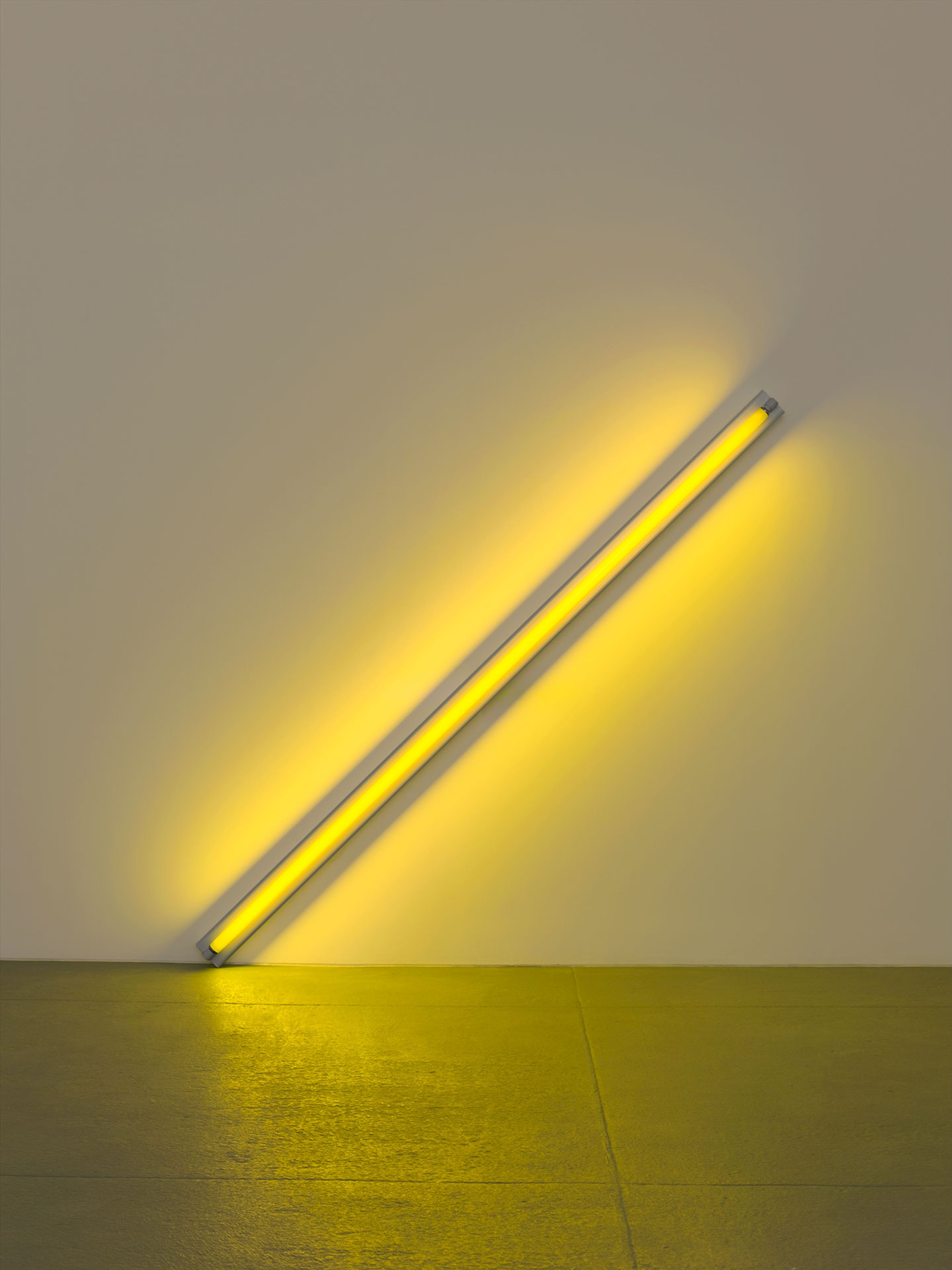
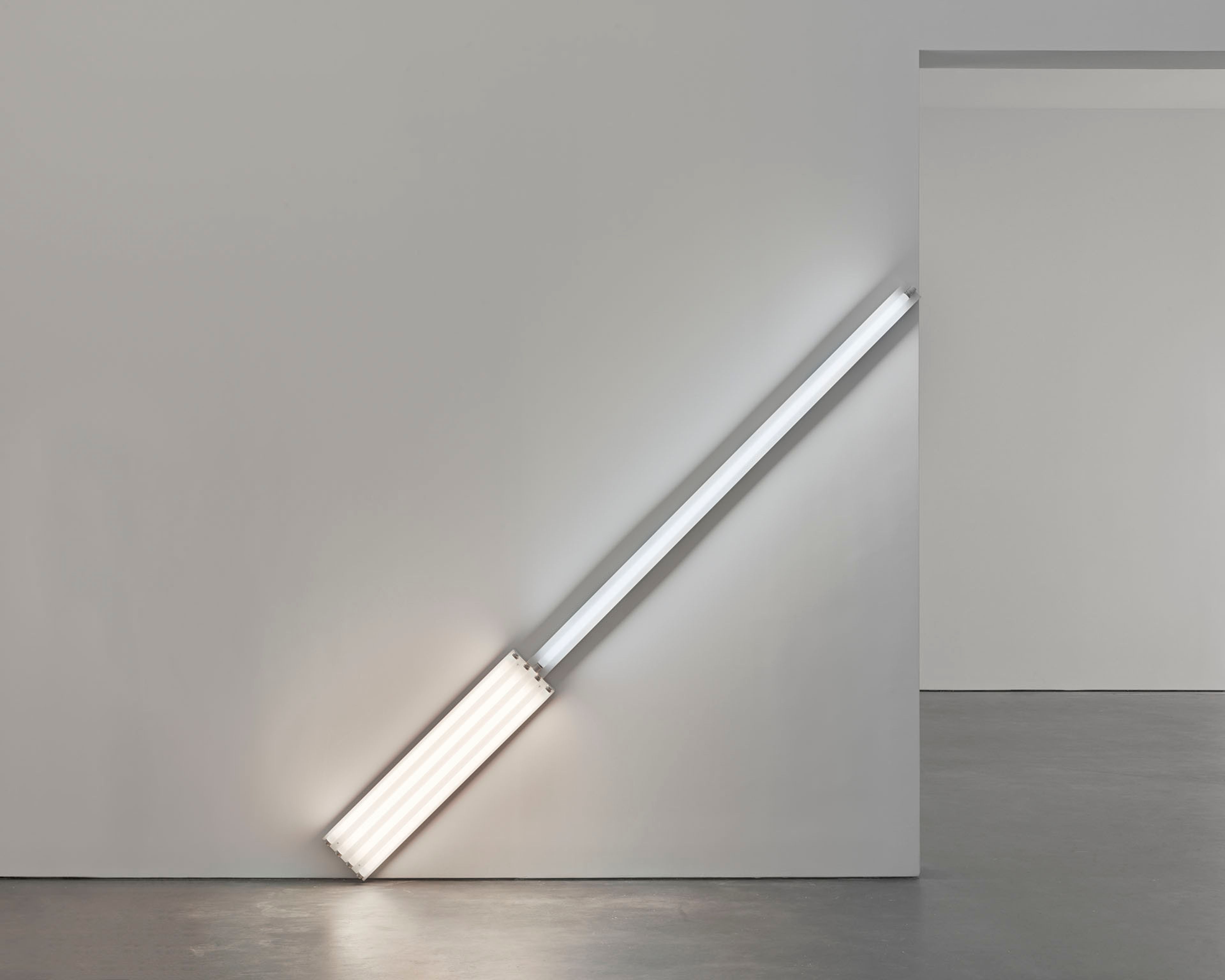
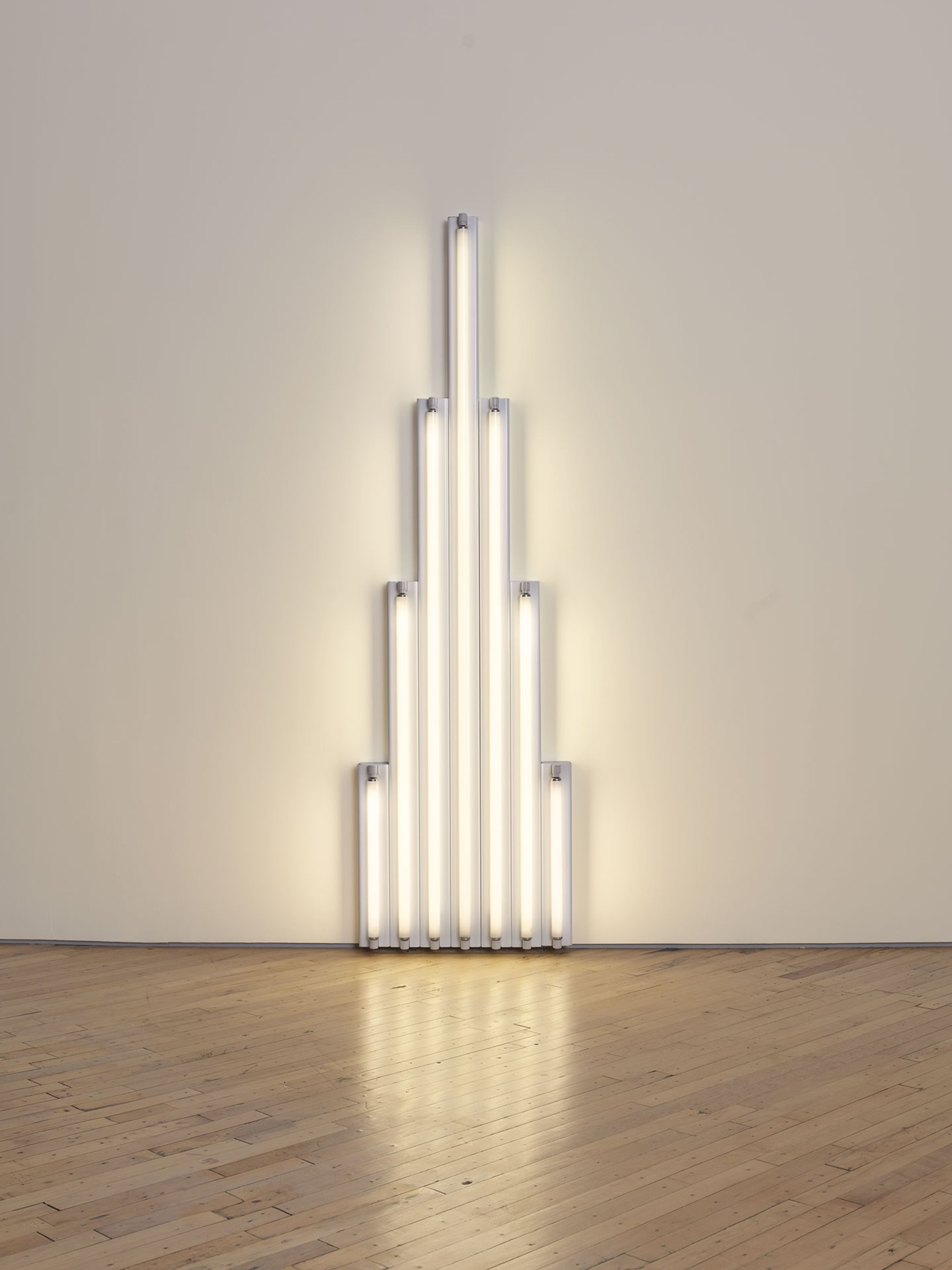
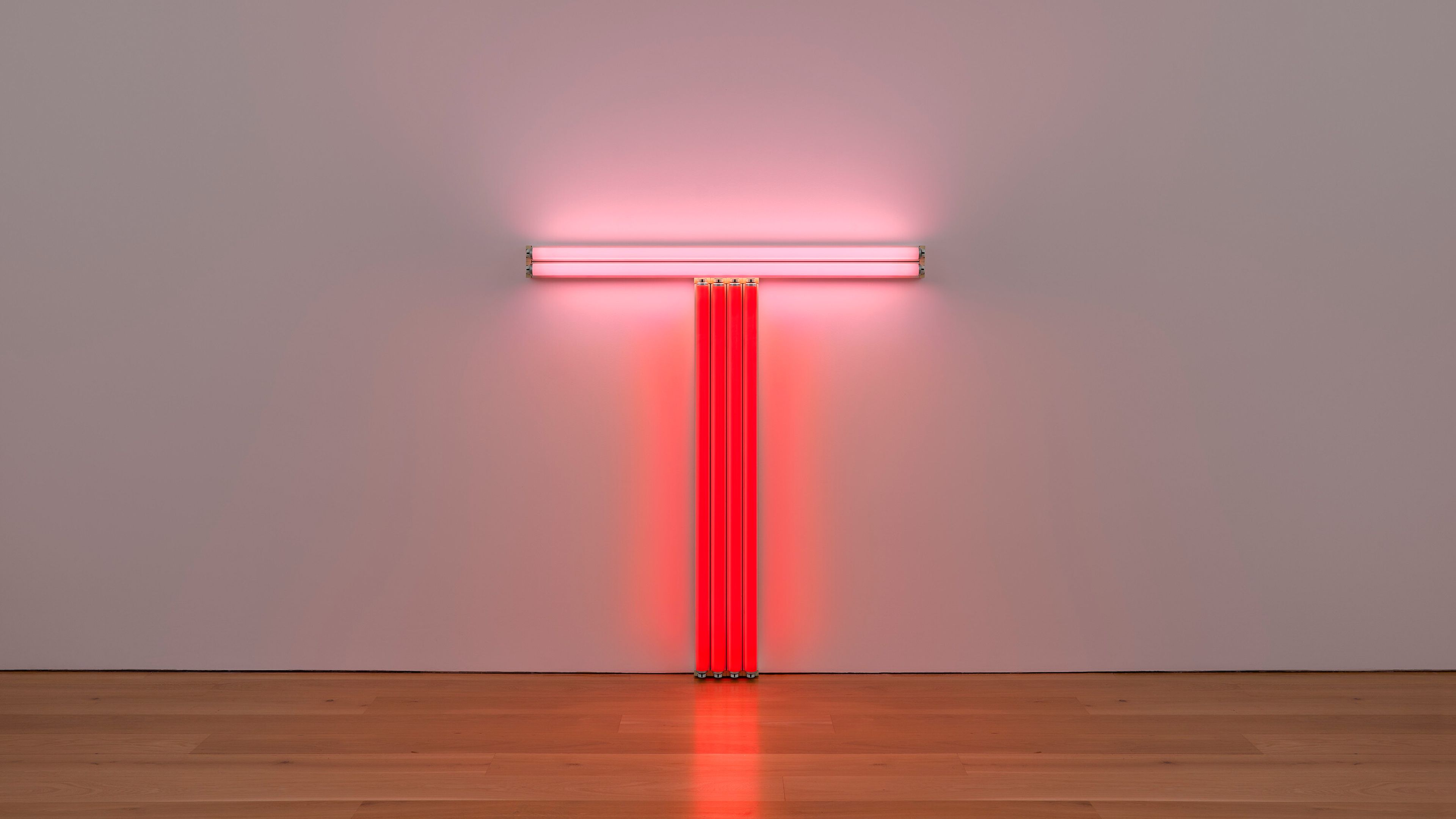
Makes initial plans for a series of âmonumentsâ for V. Tatlin; will produce a total of fifty works of these works, dated between 1964 and 1990.
Receives award from the William and Norma Copley Foundation, Chicago, with a recommendation from Marcel Duchamp.
1965
Moves with family to the village of Cold Spring, New York, in the Hudson River Valley. With Richard Bellamyâs help, purchases a former meat market building at 109 Main Street in Cold Spring.
Gives testimony to a House of Representatives Subcommittee on National Parks and Recreation on behalf of a Hudson Highlands Scenic Riverway bill.
Begins affiliation with the Kornblee Gallery, New York, after the Green Gallery closes.
First major article, ââ…in daylight or cool white.â an autobiographical sketchâ is published in Artforum. Through 1969, publishes several other articles in this magazine and in Studio International.
1966
Moves with family to Lake Valhalla, New York, which was then a private community outside of Cold Spring.
Receives award from the National Foundation on the Arts and the Humanities, Washington, D.C. (the first NEA awards granted to individual artists).
First European solo exhibition opens September 16 at Galerie Rudolf Zwirner, Cologne.
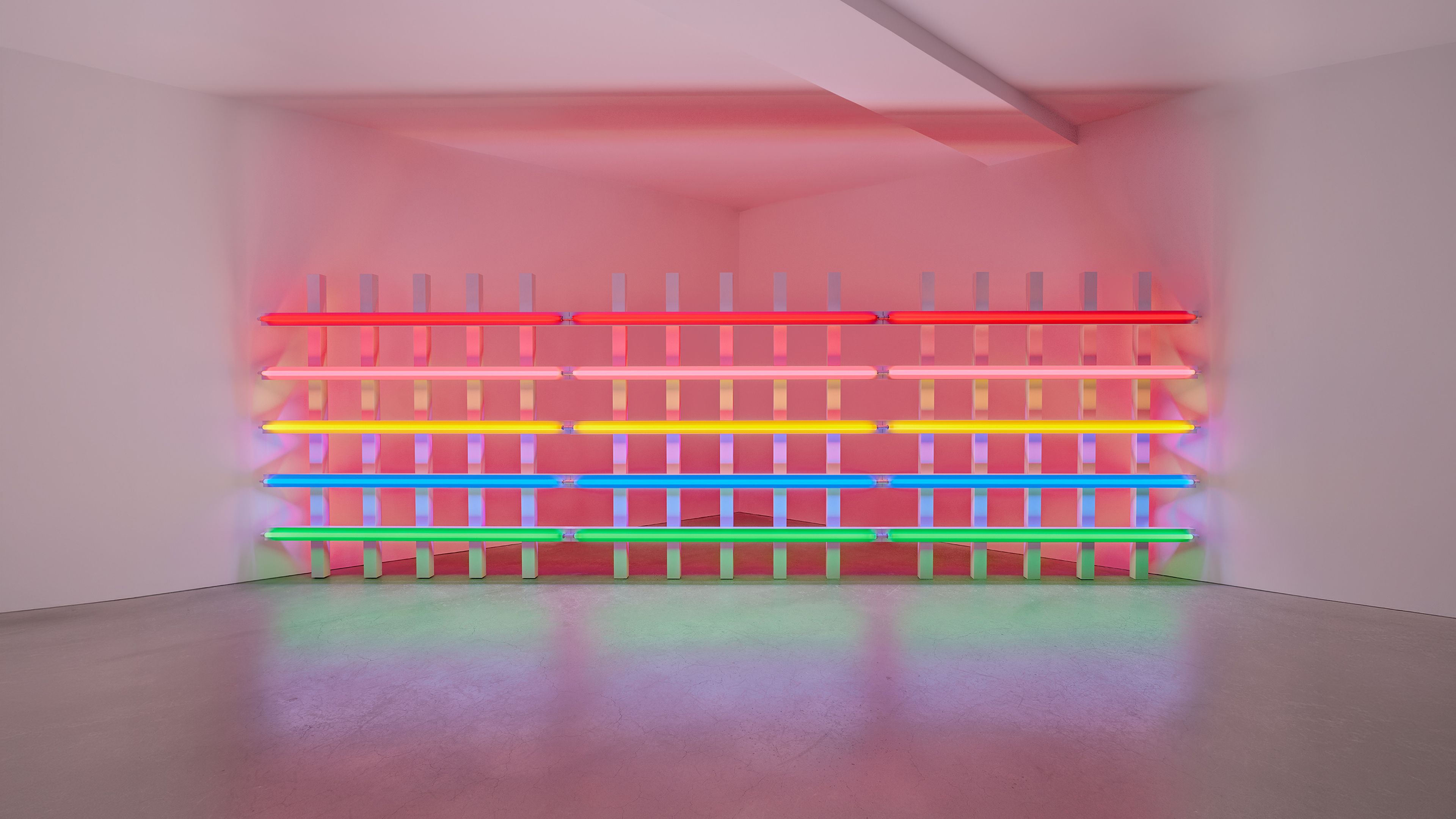
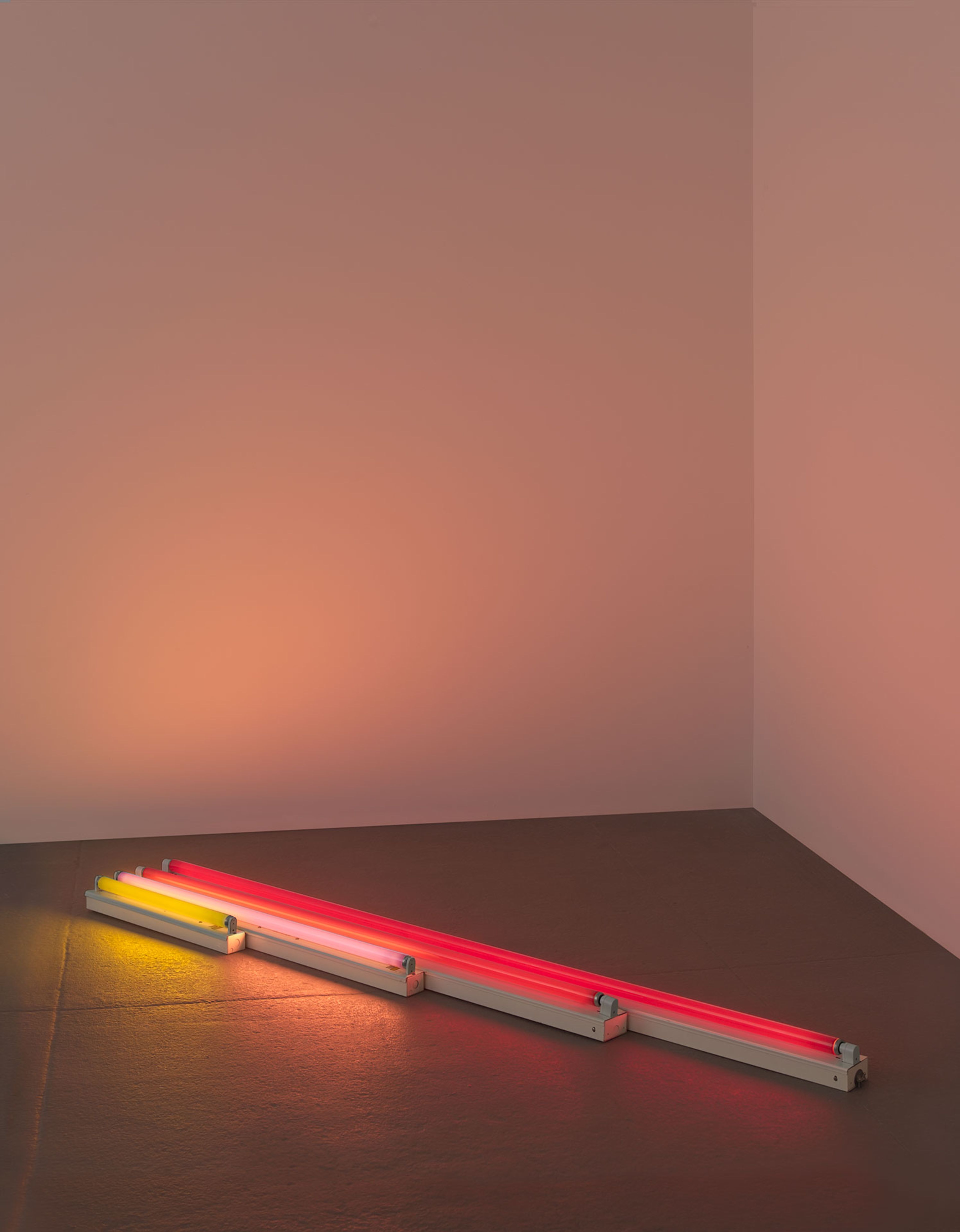
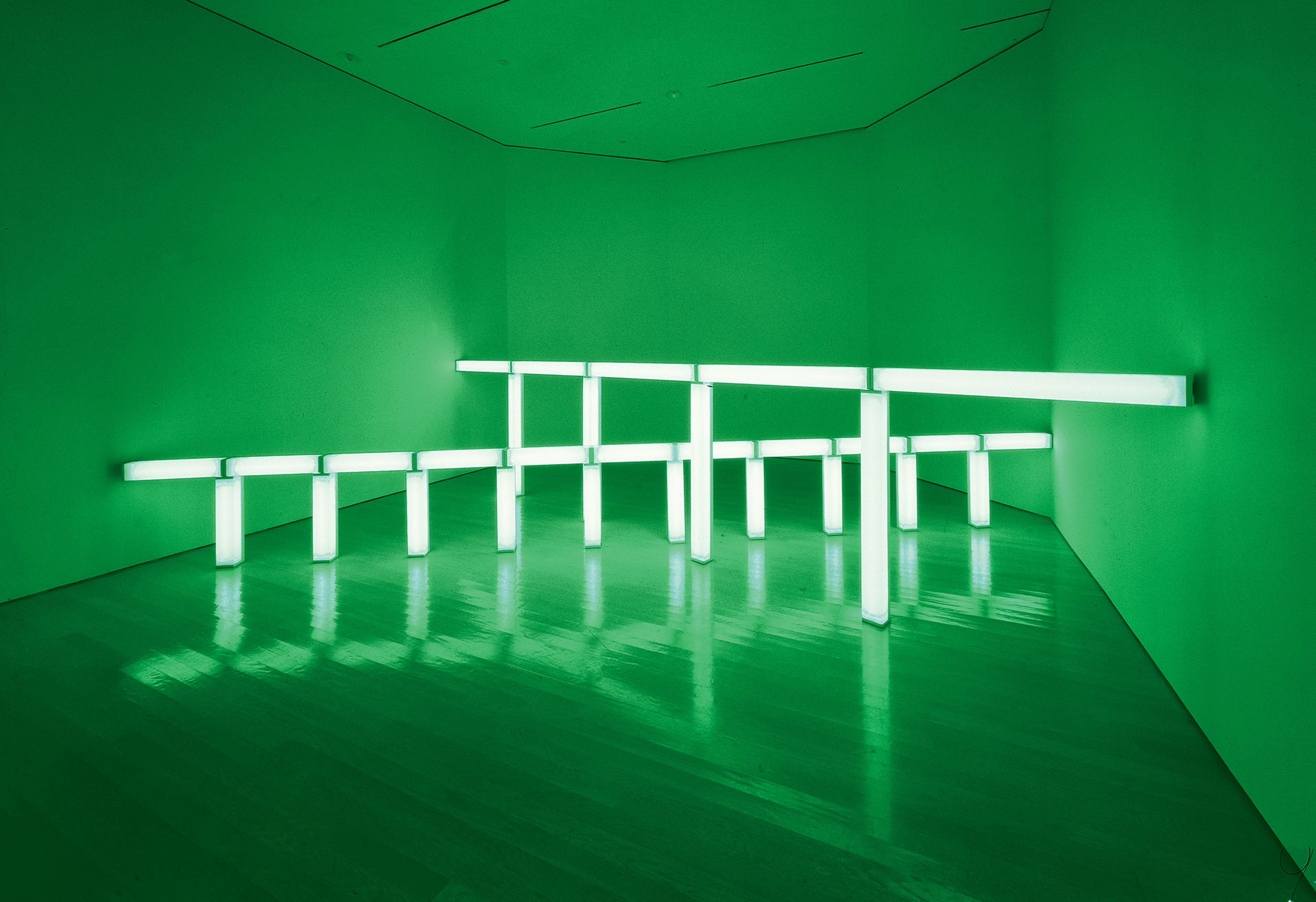
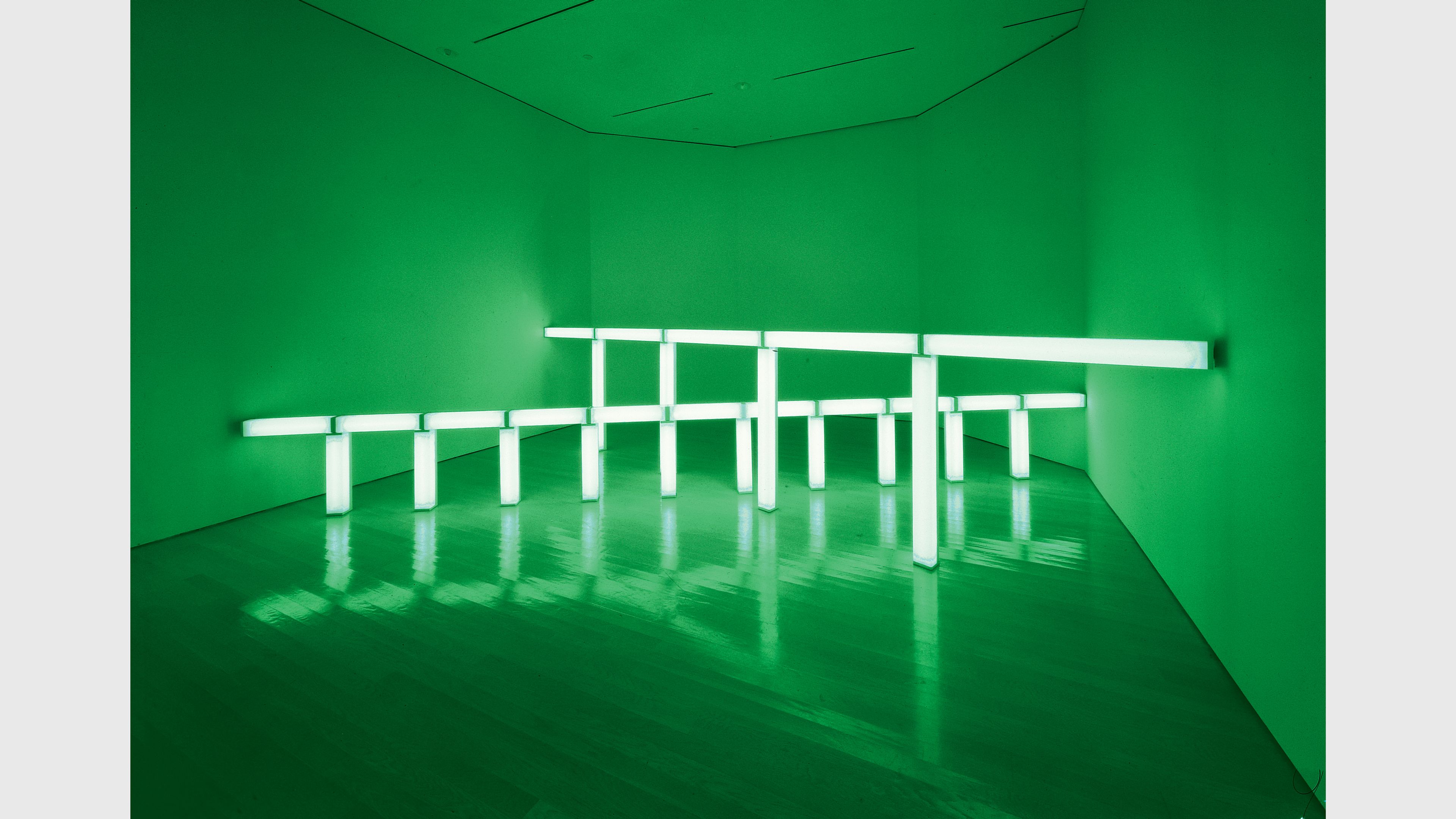
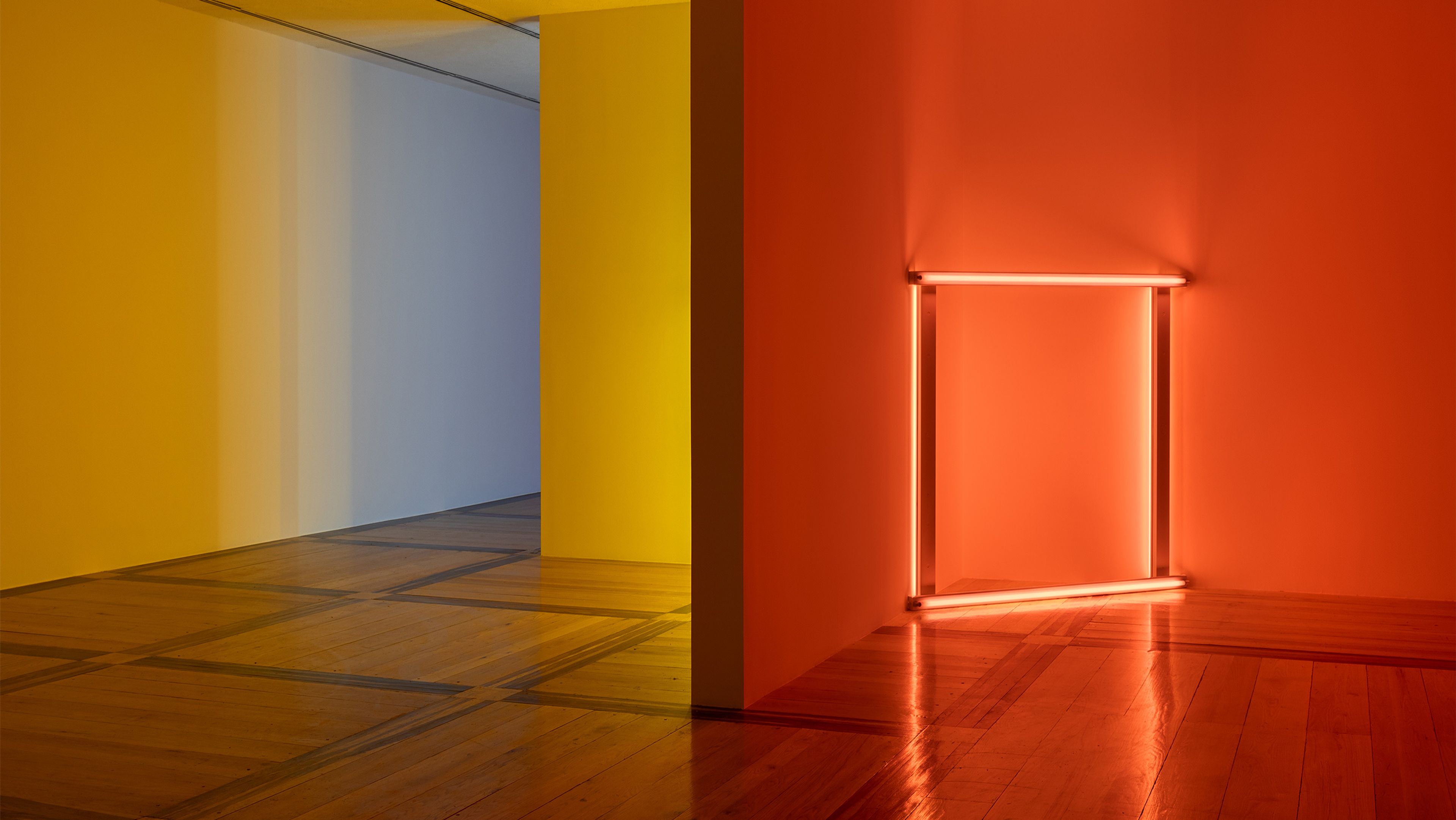
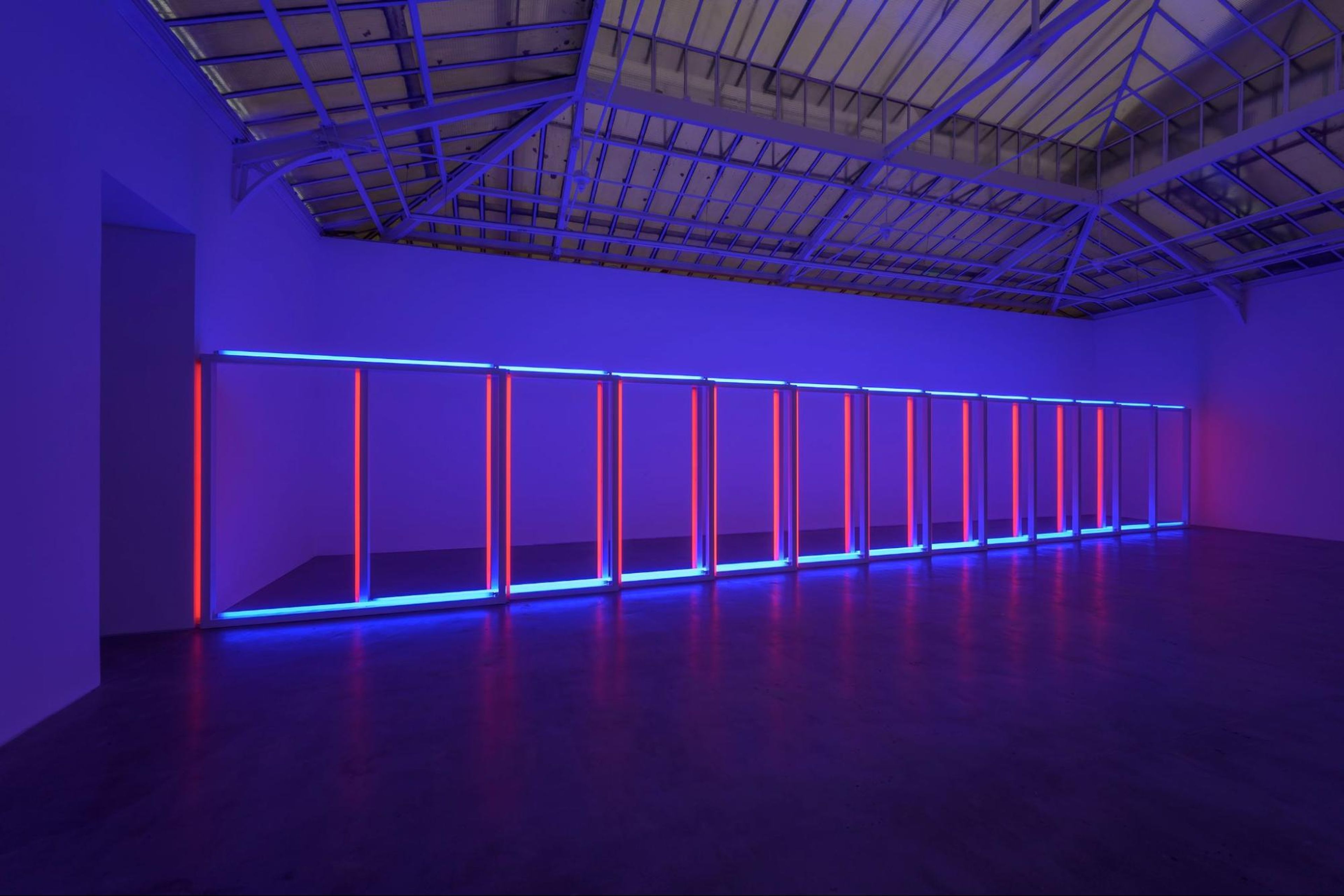
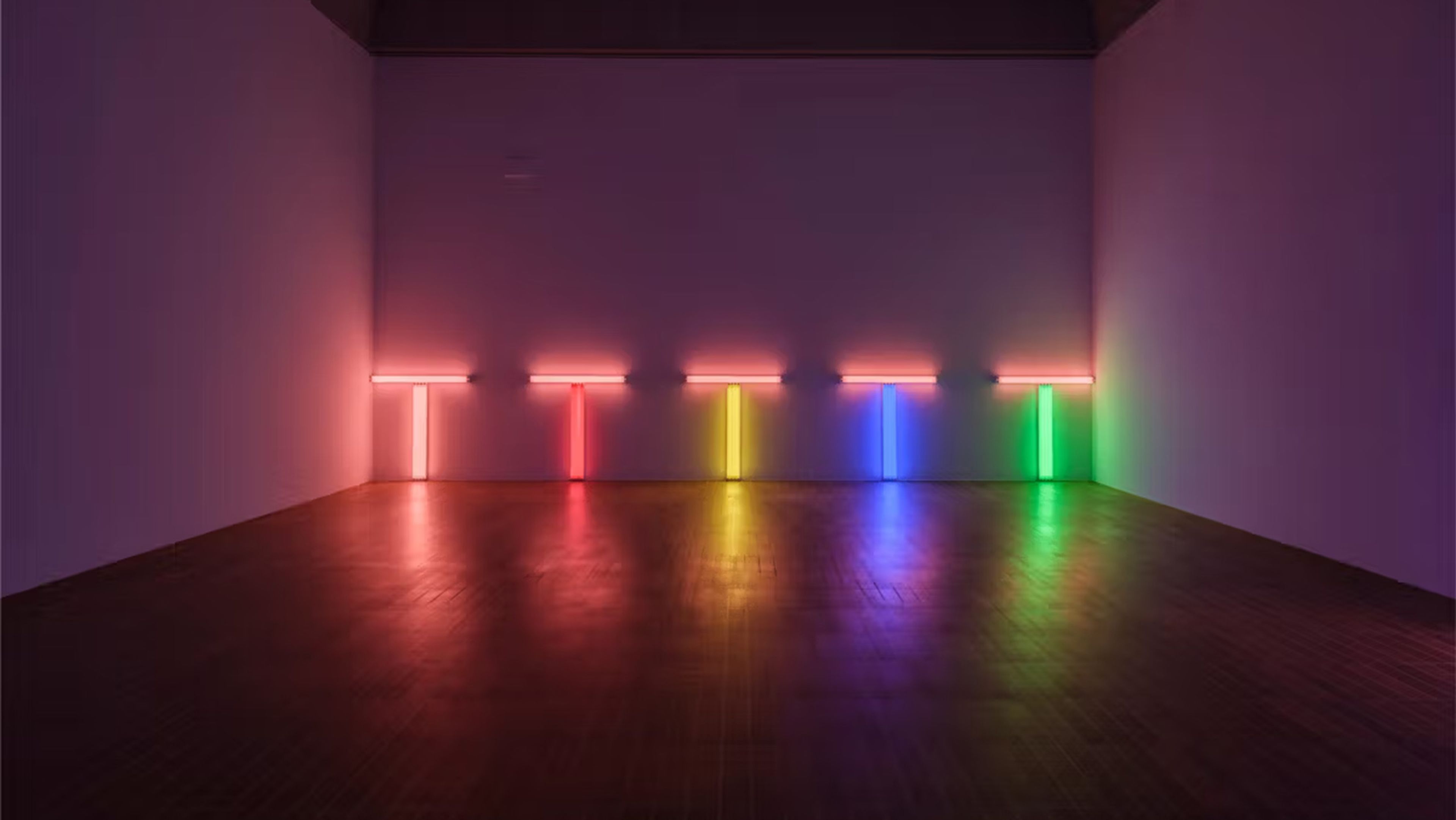
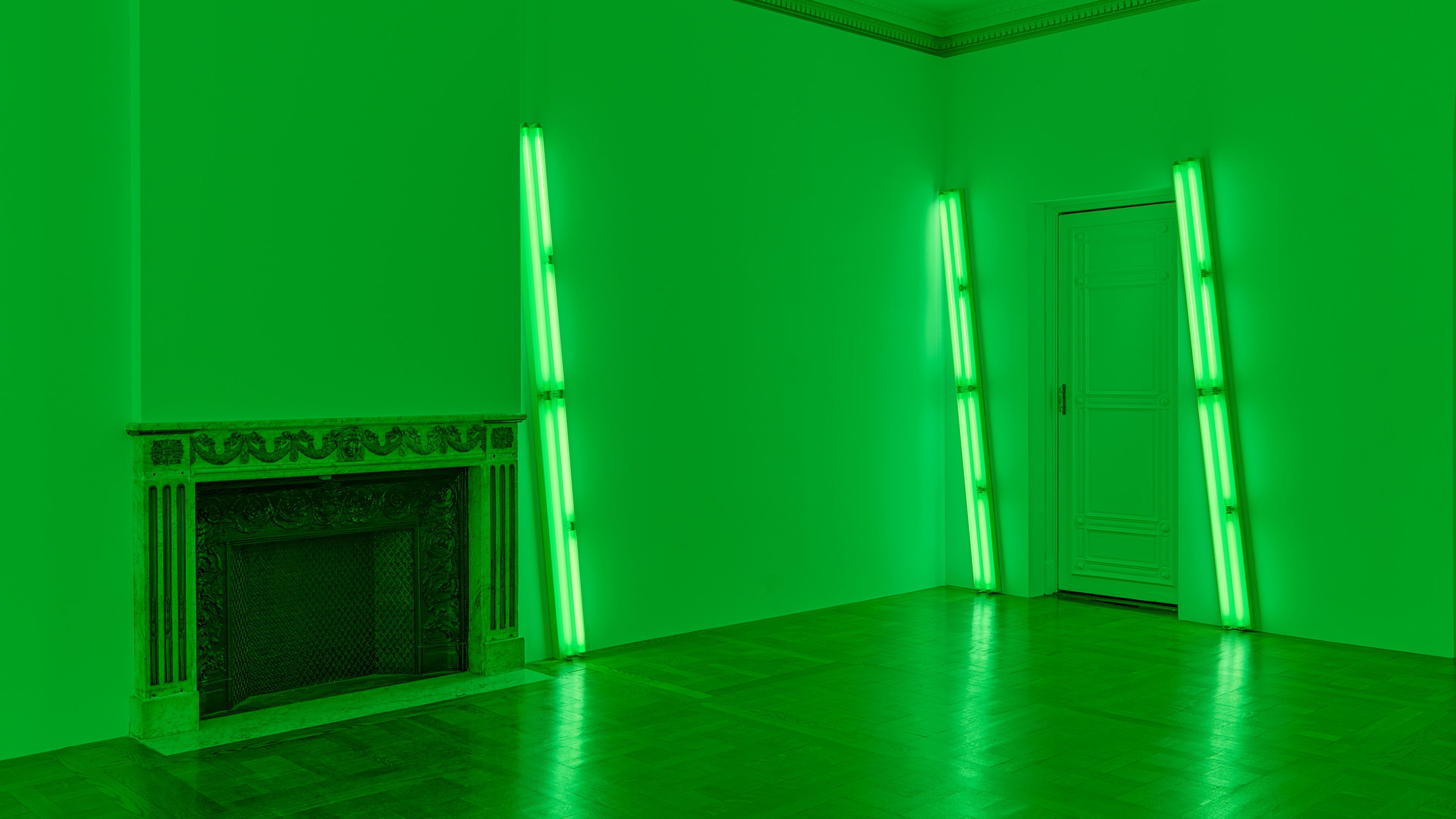
Installs greens crossing greens (to Piet Mondrian who lacked green) at the Stedelijk Van Abbemuseum, Eindhoven, Netherlands, as part of the exhibition âKunst Licht Kunstâ (opening September 25). This work is his first constructed âbarrier,â a fencelike structure (in this case, two fencelike sections) made of free-standing fixtures and lamps that extend across a room, blocking access to one side. He would make several more âbarriersâ during his career.
1967
Begins affiliation with Dwan Gallery, New York, where John Weber is a director.
Is a guest lecturer in Design for one semester at the University of North Carolina at Greensboro.
Give first presentation of â⊠on an American artistâs education âŠâ at the Graduate Art Education summer conference at Pennsylvania State University, State College, University Park.
First solo museum exhibition, âDan Flavin: alternating pink and âgold,ââ opens December 9 at the Museum of Contemporary Art, Chicago.
1968
Begins involvement with the German art dealer Heiner Friedrich, whose first gallery was in Munich. Friedrich later became a founder of the Dia Art Foundation.
1969
Begins divided representation between Dwan Gallery and Leo Castelli Gallery. When John Weber closes the Dwan Gallery in 1971, continues his association, with the new John Weber Gallery, New York, throughout the 1970s.
Traveling retrospective exhibition âfluorescent light, etc. from Dan Flavinâ opens September 13 at the National Gallery of Canada, Ottawa. Opening comments by Barnett Newman. Brydon Smith, who becomes a lifelong friend and supporter, is the curator.
1970
Purchases a converted barn for residence in Garrison, New York.
1971
At the invitation of the architects involved, presents plans for lighting for the Munich Olympic games. The proposals are ultimately rejected.
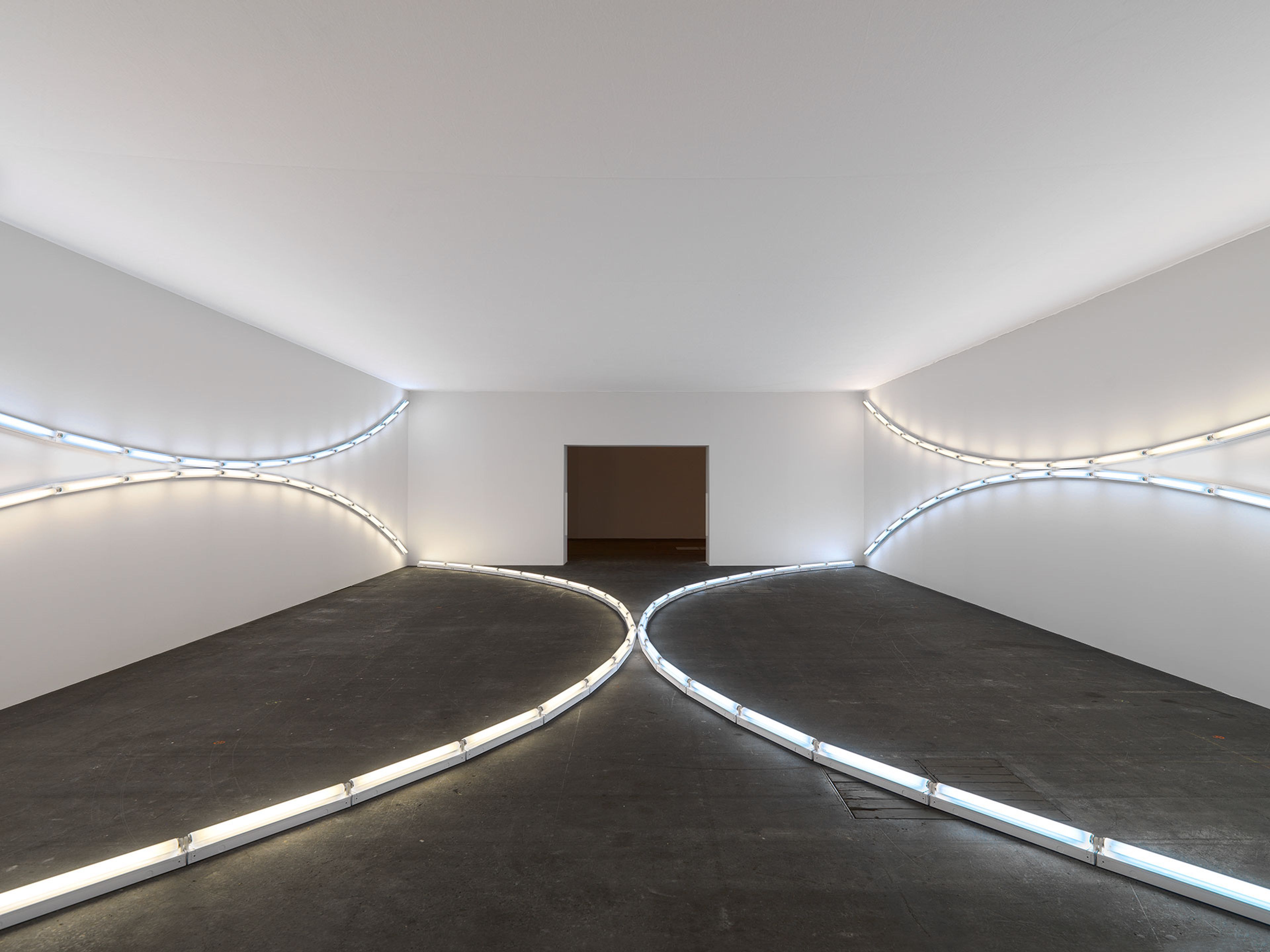
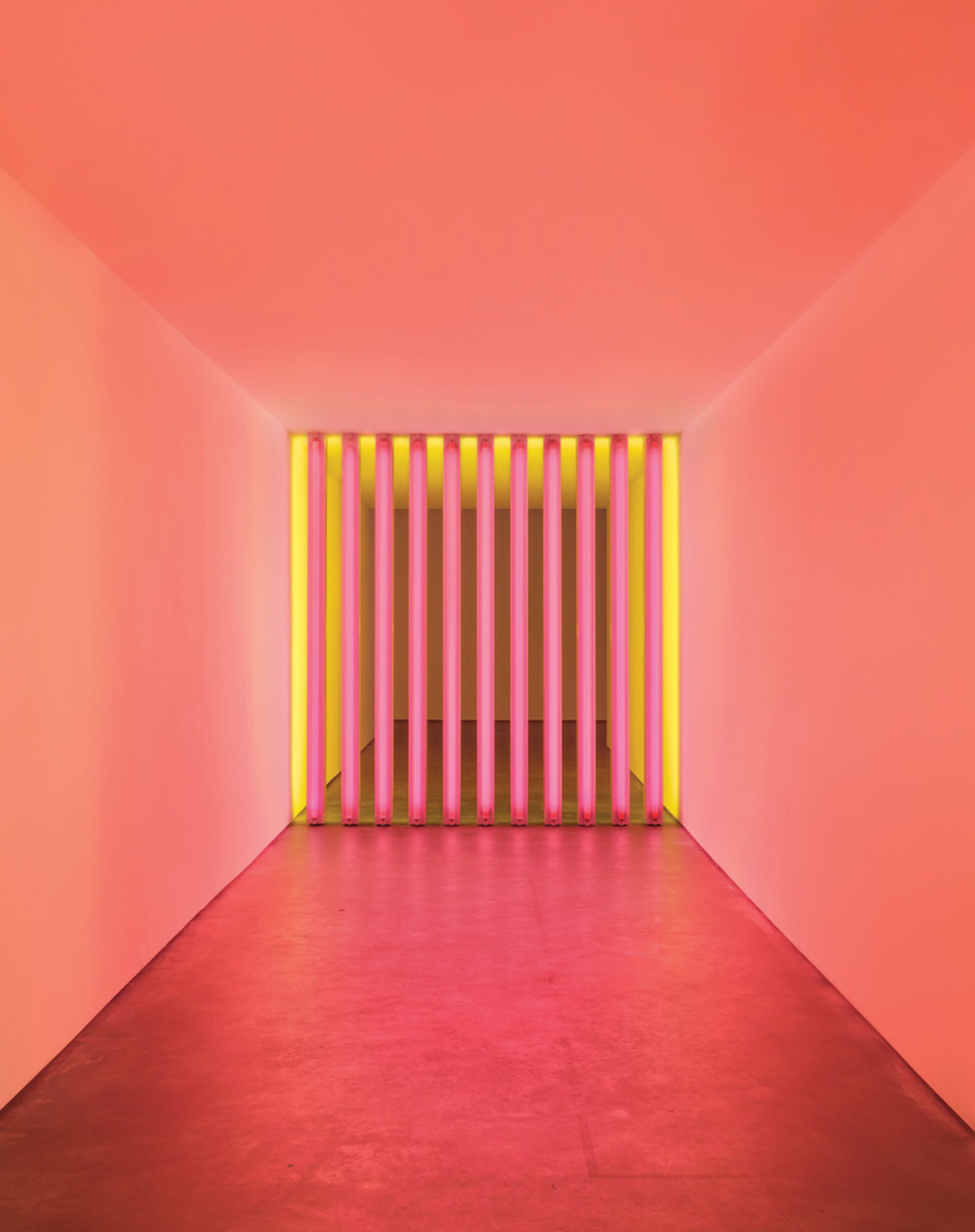
Meets Richard Koshalek, a curator at the Walker Art Center in Minneapolis, while planning and installing a large corridor, untitled (to Elizabeth and Richard Koshalek) (1971), for the inaugural exhibition of the museumâs new building. Koshalek becomes a major supporter and good friend.
1972
Purchases summer house in Bridgehampton, New York, on Long Island.
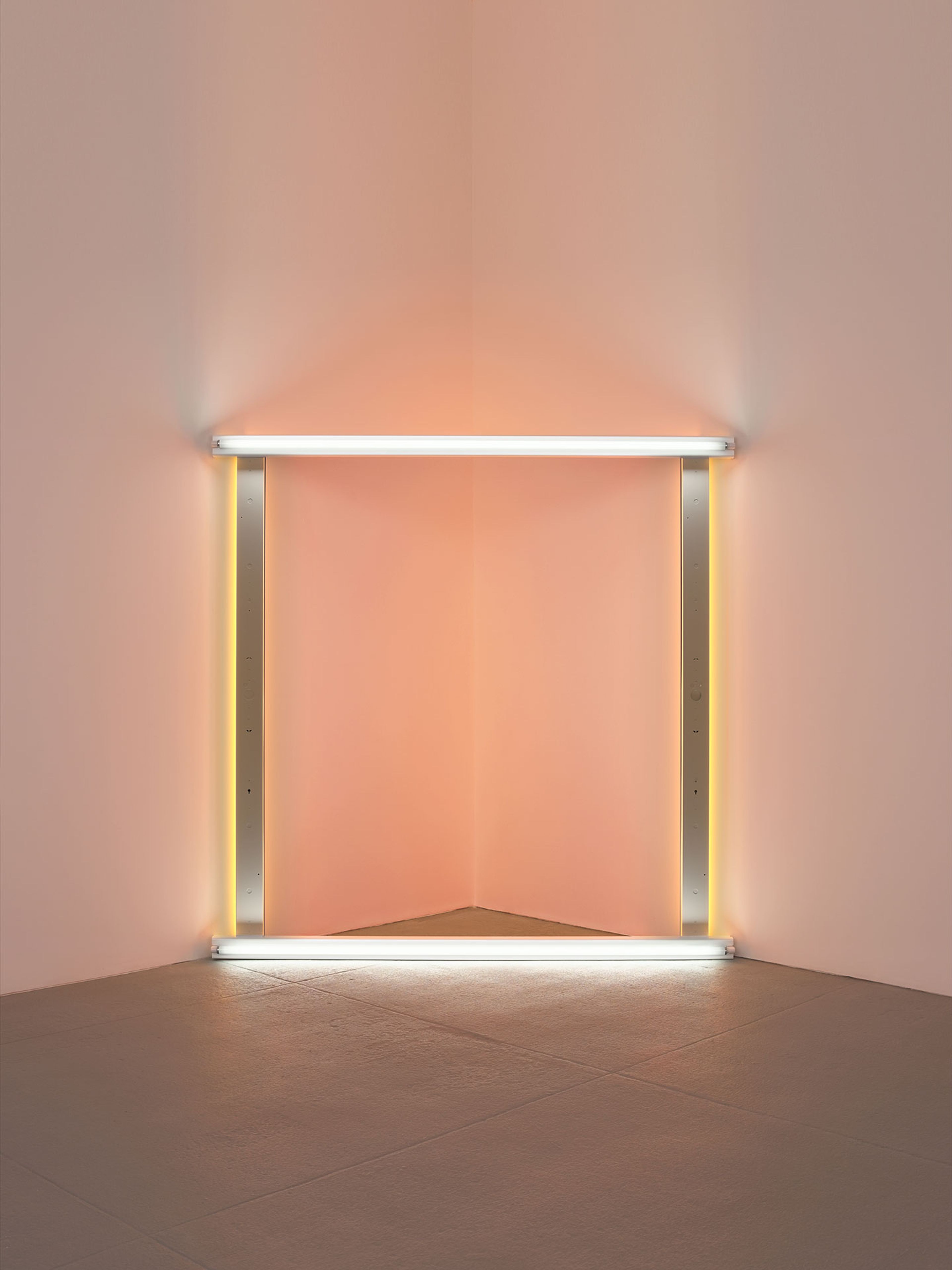
Exhibition including first use of circular fluorescent lights opens May 13 at the Albright-Knox Art Gallery, Buffalo, New York.
Works on the Art for McGovern campaign in support of Senator George McGovernâs run for the presidency, creating a campaign poster and acting as spokesperson for artists who support the candidate.
1973
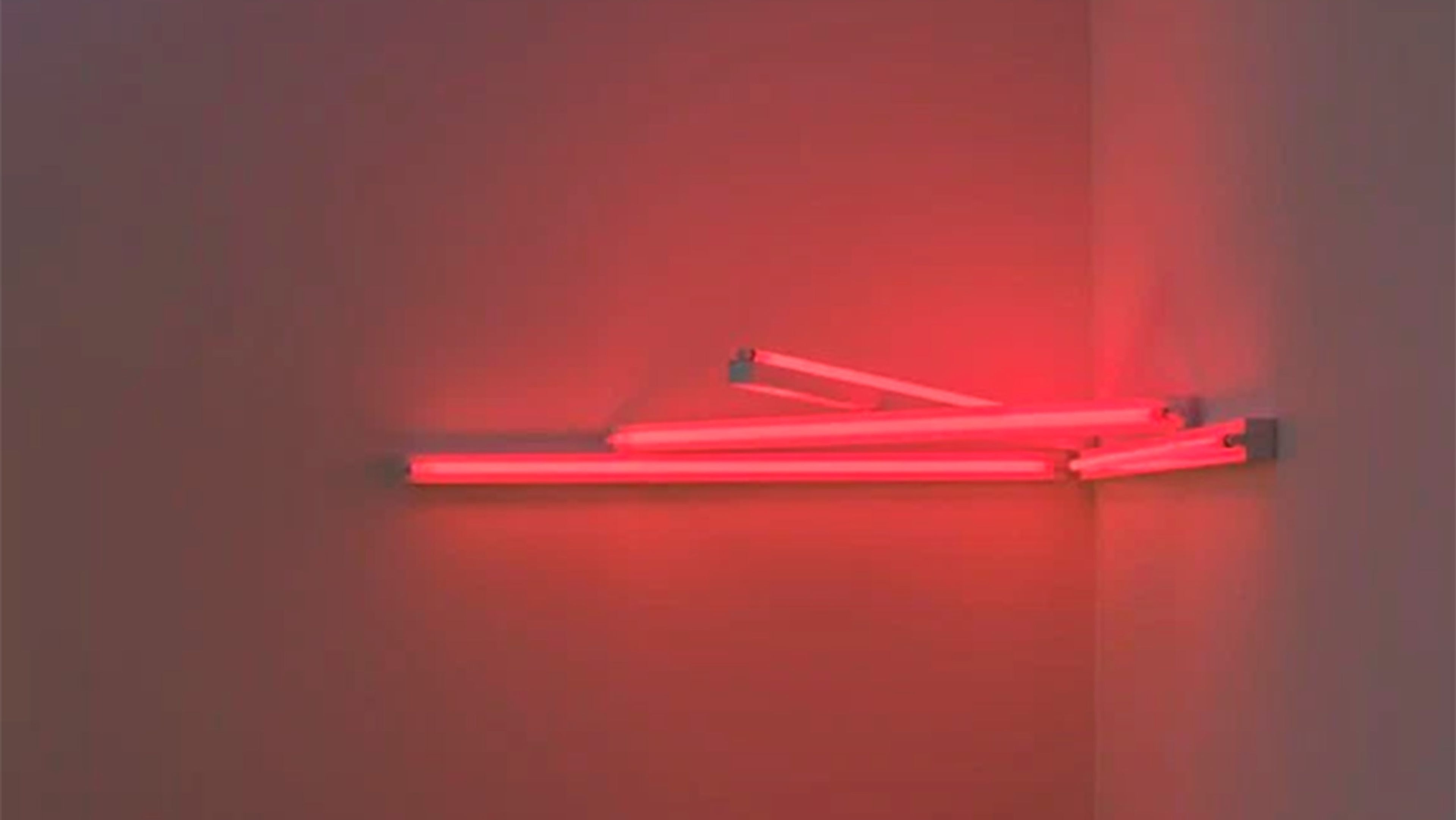
âcorners, barriers and corridors in fluorescent light from Dan Flavinâ opens January 26 at the St. Louis Art Museum, Missouri.
Named Albert Dorne Visiting Professor at the University of Bridgeport, Connecticut.
1974
Father dies in January.
1975
Presents opening comments at Donald Juddâs retrospective exhibition at the National Gallery of Canada, Ottawa.
âDan Flavin: installations in fluorescent light 1972â1975â opens November 23 at the Fort Worth Art Museum, Texas. This solo exhibition is accompanied by âlight on the American scene 1875â1941,â an exhibition of works selected by Flavin from the permanent collection of the Fort Worth Art Museum.
1976
Receives Skowhegan Medal of Sculpture from Skowhegan School of Painting and Sculpture, Maine.
Separation from Sonja.
Helene Geary (later McQuade) becomes Flavinâs office manager and companion.
âDan Flavin, installations in fluorescent lightâ opens August 14 at the Scottish Arts Council and Scottish National Gallery of Modern Art in Edinburgh.
Makes final presentation (after four years of negotiations) of proposal to light pedestrian and bicycle tunnels under the Maas River in Rotterdam. After plans are completed and designs approved, the proposal is turned down by the city of Rotterdam in 1978 for lack of funding.
1977
Robert Skolnik begins work as Flavinâs first full-time studio assistant, a job he holds until 1983.
Installs lights on the platforms of tracks 18â19, 39â40, 41â42 of Grand Central Station, New York, with support from the Dia Art Foundation.
1979
Dia Art Foundation purchases Dickâs Castle in Garrison, New York, with the intention of turning it into a museum for permanently installed works by Flavin; the artist is contracted to direct the renovation of the building, devise the program for the museum, and install his art. Begins acquiring a collection of nineteenth-century Hudson River School drawings on behalf of the Dia Art Foundation for exhibition in one wing of the castle. After many meetings and plans, the project terminates without completion in the mid-1980s due to lack of funding.
Mother dies in May from complications related to diabetes.
Divorce from Sonja finalized.
1980
Completes drawings for the lighting of a pedestrian tunnel in the New York City subway system. Negotiations between the Dia Art Foundation, representing Flavin, and the Metropolitan Transit Authority began in 1977, remained unresolved, and were discontinued after 1982.
Purchases an eighteenth-century saltbox house in Wainscott, New York, on Long Island. After restoration and renovation, moves into the house in 1981. This would be the artistâs primary residence for the remainder of his life.
1981
Abandons plan for an installation of lights in the lobby of one tower of the World Trade Center in New York. Negotiations had begun in 1975 and included resolution of the design for the lights, but ultimately broke down over plans for the maintenance of the art.
1982
Installs three corridors of light in a design collaboration with Vignelli Associates at the newly opened Hauserman Showroom at the Pacific Design Center in Los Angeles. The colors of the lamps were changed after one year, after which the work remained on display for some time before being dismantled.
1983
Completes installation of lights at 155 Mercer Street, a building purchased by the Dia Art Foundation to become a center for dance performance. As the plans for the building developed, it became a mosque. Though Flavin voiced some resistance to the change in program, the completed installation respected the various functions of the building.
A permanent installation of lights, commissioned and maintained by the Dia Art Foundation, opens June 18 at the Dan Flavin Art Institute, Bridgehampton, New York. Flavin names the exhibition building for James Schaeufele, the construction manager of this project and later building manager for many Dia projects, who became a close friend of the artistâs. As director, in addition to overseeing exhibitions of his own work, Flavin organizes over the next few years several temporary exhibitions, including a small retrospective of Michael Veneziaâs paintings, a show of James Brooksâs works on paper, and an exhibition of arts and crafts of Eastern Long Island from the 1890s to the 1920s.
1984
Travels to numerous dog shows with Airily, Flavinâs golden retriever, who wins several competitions, including the Golden Retriever Club of America National Specialty Show, and receives the top ranking for this breed in the United States. Dedicates a number of light works to Airily.
ââmonumentsâ for V. Tatlin from Dan Flavin, 1964â1983â opens April 21 at MoCA Temporary Contemporary, Los Angeles. This exhibition travels to the Corcoran Gallery of Art, Washington, D.C.; CAPC, MusĂ©e d’art contemporain, Bordeaux, France; and the Rijksmuseum Kröller-MĂŒller, Otterlo, Netherlands. Flavin supervises the installation of the lights at each venue.
Is hospitalized for complications due to diabetes.
1986â87
As financial assistance for projects sponsored by the Dia Art Foundation is suspended, Flavin begins, with the encouragement of Morgan Spangle of the Leo Castelli Gallery, affiliations with a number of American and European galleries, including the Margo Leavin Gallery, Los Angeles; the Donald Young Gallery, Chicago; the Texas Gallery, Houston; Annemarie Verna Galerie, Zurich; and Galerie Nikki Diana Marquardt, Paris.
1986
Alec Drummond begins work as fabricator of Flavinâs lights, a position he maintains until 1991. Between 1983 and 1986, Flavin had received fabrication assistance from Mel Zeigler, an artist, and Bill Bremenour, among others.
1987
Two large-scale site-specific installations open March 14 at Musée St. Pierre Art Contemporain, Lyon.
Spends extended time in a hospital in New York, again with serious complications related to diabetes. Has surgery to remove parts of both feet, narrowly avoiding amputation of both legs.
1989
Solo exhibition âNeue Anwendungen fluoreszierenden Lichts mit Diagrammen, Zeichnungen und Drucken von Dan Flavin/new uses for fluorescent light with diagrams, drawings and prints from Dan Flavinâ opens February 26 at the Staatliche Kunsthalle Baden-Baden, Germany.
1990
Prudence Fairweather begins work as Flavinâs office manager and maintains that position until the artistâs death.
1991
Begins brief affiliation with the Pace Gallery, New York.
Steve Morse begins work as Flavinâs studio manager.
1992
Installation of lights completely filling the newly renovated Frank Lloyd Wright building of the Solomon R. Guggenheim Museum, New York, opens June 24
Marries Tracy Harris June 25 in the rotunda of the Solomon R. Guggenheim Museum, New York.
Completes commission for lighting in the Metrotech Center, Brooklyn, for Chase Manhattan Bank.
1993
âDan Flavin: LichtrĂ€umeâ (Light spaces) opens February 25 at StĂ€dtische Galerie im StĂ€del, Frankfurt am Main.
1994
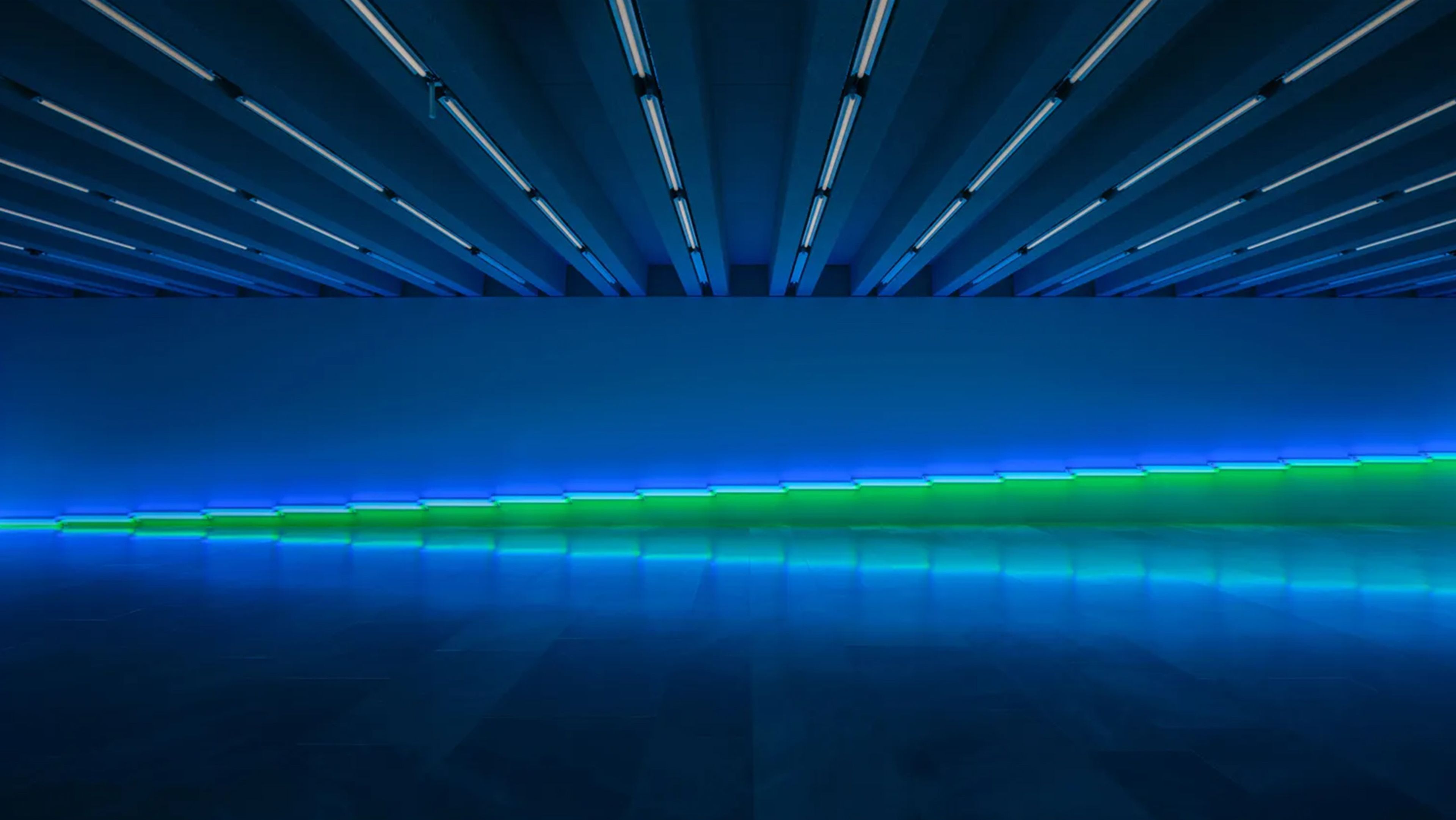
Installation of lights opens April 30 at the Kunstbau Lenbachhaus, a reconstructed subway station in Munich.
1996
Dies November 29 in Riverhead, New York, on Long Island.
Several installations are completed posthumously, including: Chiesa di Santa Maria Annunciata in Chiesa Rossa, Milan (installed 1997); Richmond Hall, Menil Collection, Houston, Texas (installed 1998); and Chinati Foundation, Marfa, Texas (installed 2000).